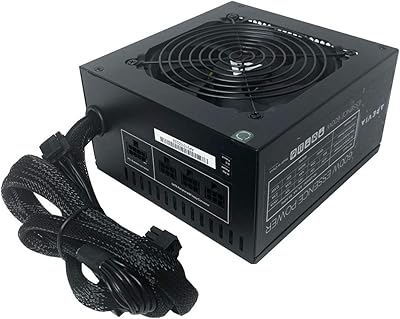
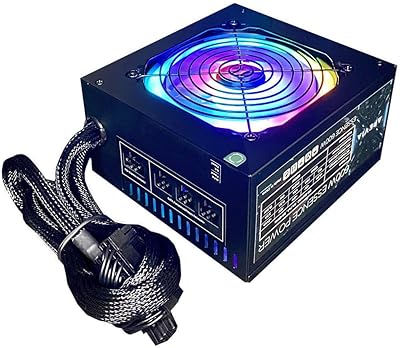
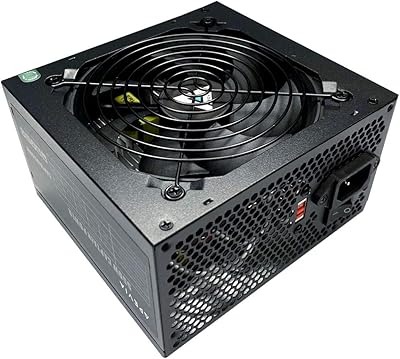
Overview

The Apevia ITX-PFC500W 500W Flex ATX Power Supply enters a niche but genuinely underserved market: compact builders who need real wattage in a chassis barely larger than a hardcover book. Apevia is not a boutique brand chasing audiophile-grade efficiency certifications — they target practical, cost-conscious builders in North America, and this unit reflects that positioning honestly. What stands out immediately is the fully modular design, which matters enormously when your case offers almost no room to tuck away spare cables. The wide 90–264V input range also means it works anywhere in the world without a manual voltage switch.
Features & Benefits

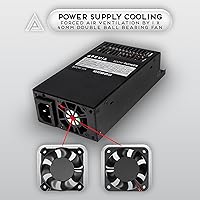
The fully modular cable system is the headline feature here, and it earns its billing — in a Flex ATX or 1U enclosure, every unused cable you avoid routing is a genuine thermal and assembly win. The dual 6+2 PCIe connectors open the door to entry- and mid-range discrete GPUs, though the +12V rail delivering around 396W sets a practical ceiling at roughly a 200–250W GPU. The 24-pin and 8-pin CPU connectors both split for older or compact motherboards, which is a thoughtful touch. One honest caveat: the 40mm cooling fan spins fast under load, and in a quiet room you will hear it.

Best For

This compact PSU is a strong pick for anyone building a mini-ITX gaming rig, home-theater PC, or compact workstation inside a Flex ATX chassis where standard ATX units simply will not fit. It also suits POS system integrators and AIO desktop builders who need a slim, dependable power source without custom fabrication. Builders upgrading a cramped SFF desktop from a non-modular supply will immediately appreciate the cable flexibility. That said, if your GPU alone pulls close to 250W TDP — think RTX 4080 territory — look elsewhere. This unit is not built for flagship discrete graphics cards or multi-GPU setups.

User Feedback

Buyers who have put this SFF power unit to work generally land around 4 out of 5 stars, and the most consistent praise centers on cable management ease inside tight builds where every centimeter counts. Compatibility with popular mini-ITX cases and compact motherboards has gone smoothly for most. The recurring complaint, and it is worth taking seriously, is fan noise at load — a 40mm fan has to spin aggressively to move enough air, and several owners flag it as distracting in silent environments. A handful of DOA reports exist, though that pattern does not appear outsized for the category. Overall, buyers feel the value holds up well for the price tier.

Pros

  • Fully modular design eliminates cable clutter in ultra-tight Flex ATX and 1U enclosures.
  • Dual 6+2 PCIe connectors support entry- and mid-range discrete GPUs without adapters.
  • Compact footprint fits standard Flex ATX cases with no modification needed.
  • Splittable CPU and motherboard connectors extend compatibility to older compact motherboards.
  • Full-range 90–264V input works globally without any manual voltage switching.
  • Five-layer protection suite guards components against overvoltage, overload, and short circuits.
  • Double ball bearing fan outlasts sleeve-bearing alternatives common in budget Flex ATX units.
  • Buyers consistently report strong value for a fully modular unit at this price tier.
  • Straightforward installation with intuitive modular connectors that seat firmly and stay put.

Cons

  • The 40mm fan produces noticeable noise under load — a real issue in quiet desktop environments.
  • Only two SATA connectors limits multi-drive builds without additional adapters.
  • No 80 PLUS efficiency certification makes real-world power draw harder to predict.
  • Included cables are stiff and short, creating routing challenges in non-standard chassis depths.
  • DOA and early-failure reports, while not alarming, appear at a higher rate than premium brands.
  • Long-term reliability beyond two years is uncertain given limited internal component transparency.
  • Thermal headroom under sustained heavy loads in warm ambient conditions is uncomfortably thin.
  • Brand support and warranty service infrastructure outside North America is minimal.

Ratings

The Apevia ITX-PFC500W 500W Flex ATX Power Supply has been scored below using AI analysis of verified global buyer reviews, with spam, bot-generated, and incentivized feedback actively filtered out. Scores reflect the honest consensus of real builders — from mini-ITX hobbyists to POS integrators — and both the strengths and the frustrations are represented without softening either side.
Cable Management
88%
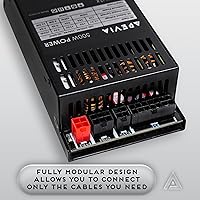
Buyers consistently call out the fully modular design as a genuine build-saver inside cramped Flex ATX cases. Being able to plug in only the cables you actually need keeps airflow cleaner and assembly far less frustrating when working in a chassis with almost no spare room.
The included cables are on the shorter side, which a few builders found limiting when routing through cases with unconventional layouts. Those working in taller SFF enclosures occasionally needed cable extensions, adding a small extra cost.
Form Factor Compatibility
91%
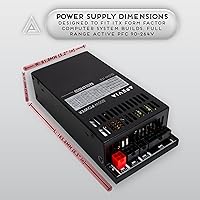
The compact 160 x 73.66 x 35.5mm footprint slots cleanly into standard Flex ATX and 1U slots, and real-world reports of fitment issues are rare. Builders upgrading older SFF desktops or assembling POS systems specifically praise how predictably it drops in without modification.
It is not a universal fit — a small number of users discovered their specific case had non-standard internal clearances or mounting point offsets that required minor workarounds. Always verify chassis dimensions before ordering.
Power Delivery & Rail Stability
79%
21%
For mainstream SFF gaming with mid-range GPUs like an RX 6600 or RTX 3060, the +12V rail handles sustained loads without reported voltage sag or instability. Builders running modest discrete graphics alongside a modern Ryzen or Intel Core CPU report stable operation under typical gaming workloads.
The 500W ceiling becomes a real constraint with anything above a 200–250W GPU. Users who attempted to pair this compact PSU with higher-TDP cards reported system instability or shutdowns under load, confirming this unit is not spec'd for flagship graphics hardware.
Fan Noise & Acoustics
54%
46%
The double ball bearing fan is durable and keeps thermals in check even during sustained load, which matters in an enclosure with almost no passive cooling headroom. Builders using this unit in server closets or under-desk setups where ambient noise masks the fan report no complaints.
In a quiet room or a desktop sitting on your desk, the 40mm fan is noticeably loud at load — this is a physics problem as much as a brand problem, since small fans must spin fast to move adequate air. Multiple buyers specifically flagged audible whine during gaming sessions as their primary frustration.
Build & Component Quality
72%
28%
The unit feels solid in hand for the price tier, and the modular connector housing shows no flex or looseness during cable insertion. Most buyers report the connectors seat firmly and the overall construction inspires reasonable confidence for daily use in a compact build.
Apevia is not competing with Seasonic or Corsair on internal component quality, and that is reflected in a modest but real pattern of DOA units and early-failure reports scattered across reviews. It is not alarming for the category, but it is worth acknowledging.
Value for Money
83%
At its price point, finding a fully modular Flex ATX unit with dual PCIe connectors and a full protection suite is genuinely difficult. Buyers who needed exactly this form factor and wattage consistently feel they got fair value, especially for secondary builds, HTPC projects, or POS deployments.
If you plan to push it hard for years in a gaming rig, the long-term reliability question lingers enough that some buyers wish they had stretched the budget slightly toward a more established brand. For light-duty or intermittent-use builds, the value calculus is much more favorable.
Connector Variety
76%
24%
Having two 6+2 PCIe connectors is a practical advantage at this form factor, and the splittable 24-pin and 8-pin CPU connectors make it compatible with a wider range of compact motherboards than many competing units. The inclusion of Molex alongside SATA covers legacy and modern drives.
Only two SATA connectors is limiting if you are building a compact NAS or a system with multiple storage drives. Builders who needed three or four SATA connections had to add adapters, which slightly undercuts the clean modular premise.
Installation Experience
84%
Most builders report a smooth installation process, with the modular connectors being intuitive enough that the manual is largely optional. The splittable CPU and motherboard connectors work as described — pushing the sections apart requires a firm hand but causes no damage.
The product listing includes several bold warnings about the PSU not powering on without all connectors attached, which confused a few first-time SFF builders who expected standard ATX behavior. Better upfront labeling on the unit itself would prevent this friction.
Thermal Management
67%
33%
For the physical constraints of a 1U enclosure, the forced-air cooling keeps the unit within safe operating temperatures during typical workloads. The double ball bearing fan is rated for longer lifespan than sleeve-bearing alternatives, which is a meaningful reliability advantage.
Under sustained heavy loads in warm ambient conditions, thermal headroom gets tight. A handful of users in warmer climates or poorly ventilated enclosures reported thermal throttling or shutdowns, suggesting the cooling design has little margin for adverse conditions.
Protection Features
86%
The five-layer protection stack — covering overvoltage, overload, overcurrent, overtemperature, and short circuit — covers all the scenarios that matter for protecting a compact build investment. Several users specifically mentioned that short circuit protection triggered correctly and saved their system during a cable mishap.
Protection features work as a safety net, not a substitute for proper installation. A few users who ignored the power-on warnings and connected the PSU incorrectly still experienced issues, suggesting the protections have limits when the root cause is user error.
Modular Cable Quality
69%
31%
The cables are adequately sleeved and feel durable enough for a build you assemble once and leave running. Connector retention on the PSU side is firm, with no reported cases of cables working loose during normal operation.
The cables are not the most flexible, which makes tight bends in constrained routing paths mildly frustrating. A few builders also noted the cable lengths feel calculated to fit reference-style Flex ATX cases, leaving less slack for anything slightly deeper.
Long-Term Reliability
61%
39%
The majority of buyers who have run this SFF power unit for six months to a year report no issues, and the double ball bearing fan is a positive signal for longevity compared to cheaper sleeve-bearing designs in competing budget units at this form factor.
A consistent minority of reviews describe failures between the six-month and two-year mark, which is below what most builders expect from a PSU. Without an 80 PLUS efficiency rating or detailed internal component disclosures, it is harder to predict lifespan with confidence.
Global Voltage Compatibility
89%
The full-range active PFC input spanning 90–264V means this compact PSU works on any grid worldwide without a manual switching toggle — a practical advantage for international deployments, imported chassis builds, and POS integrators supplying units across different regions.
This feature is table stakes on modern PSUs at this tier and does not meaningfully differentiate the unit. Buyers outside North America still report occasional import friction, as the brand has limited distribution and support infrastructure internationally.

Suitable for:

The Apevia ITX-PFC500W 500W Flex ATX Power Supply is purpose-built for builders who have accepted the constraints of small form factor computing and just need a reliable, well-specced power source that actually fits. It shines in mini-ITX gaming rigs and home-theater PCs where a standard ATX unit is physically impossible, and the fully modular design makes it especially practical in chassis where routing even one unnecessary cable creates real airflow and assembly headaches. POS system integrators and AIO desktop builders will appreciate the slim 1U profile and the wide input voltage range, which covers international deployments without any manual switching. Hobbyists building compact NAS boxes or light workstations will find the connector selection covers most modern needs, and anyone upgrading from an older non-modular SFF supply will notice an immediate improvement in build cleanliness. If your GPU sits in the RTX 3060 or RX 6600 class and your total system draw stays comfortably under 400W, this compact PSU has enough headroom to run your build without drama.
Not suitable for:

The Apevia ITX-PFC500W 500W Flex ATX Power Supply is the wrong tool the moment your GPU alone starts approaching 250W TDP — pairing it with an RTX 4070 or anything above that tier invites instability under load, and no amount of careful cable management changes that math. Buyers who run systems continuously for years and prioritize long-term reliability above all else should temper their expectations; Apevia does not carry the same track record or internal component transparency as established PSU brands, and a real minority of users report failures before the two-year mark. Acoustic-sensitive environments are also a genuine problem — if your build sits on your desk in a quiet room, the 40mm fan noise under load will be hard to ignore. Those needing more than two SATA connections for multi-drive storage builds will run into limitations without adding adapters. And if you are assembling a high-availability server or a production workstation where downtime carries real cost, the modest reliability ceiling makes this SFF power unit a risky foundation.

Specifications

  • Form Factor: Follows the Mini-ITX / Flex ATX / 1U standard, measuring 160 x 73.66 x 35.5mm (6.3″ x 2.9″ x 1.4″), making it compatible with the vast majority of slim SFF and 1U chassis on the market.
  • Rated Wattage: Delivers a maximum continuous output of 500W, with the critical +12V rail rated at 33A (396W) to power the CPU and GPU in a compact gaming or workstation build.
  • Modular Design: Fully modular — every cable detaches from the PSU side, so builders can connect only what their system actually needs and leave the rest out of the chassis entirely.
  • Input Voltage: Accepts a full input range of 90–264V AC with active Power Factor Correction, meaning it operates correctly on any standard electrical grid worldwide without a manual voltage selector.
  • +12V Rail: The primary +12V rail outputs up to 33A, providing approximately 396W of capacity dedicated to powering the CPU and discrete GPU in typical SFF configurations.
  • +5V Rail: The +5V rail is rated at 14A, supplying stable power to storage devices, USB headers, and other low-voltage motherboard components.
  • +3.3V Rail: The +3.3V rail delivers up to 12A, covering RAM, chipset logic, and other onboard components that draw from this lower-voltage plane.
  • Cooling: A single 40mm double ball bearing fan provides forced-air ventilation; ball bearing construction is rated for a longer service life than sleeve-bearing fans common in budget alternatives.
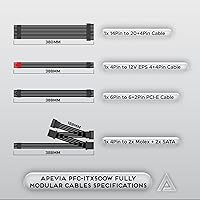
  • Connectors: Ships with one 20+4-pin motherboard connector, one 4+4-pin CPU connector, two 6+2-pin PCIe connectors, two SATA power connectors, and two 4-pin Molex connectors.
  • Connector Splitting: Both the 24-pin motherboard and the 8-pin CPU connectors are physically splittable into smaller configurations, extending compatibility with compact motherboards requiring 20-pin or 4-pin inputs.
  • Protection Suite: Includes five hardware protection layers: Overvoltage Protection (OVP), Overload Protection (OLP), Overcurrent Protection (OCP), Overtemperature Protection (OTP), and Short Circuit Protection (SCP).
  • Efficiency Rating: No 80 PLUS efficiency certification is listed for this unit, so real-world efficiency figures under varying load conditions are not independently verified by a third-party standard.
  • Dimensions: Physical dimensions are 160mm x 73.66mm x 35.5mm (6.3″ x 2.9″ x 1.4″), conforming to the standard Flex ATX outline used across compatible cases and 1U rack enclosures.
  • Weight: The unit weighs 2.07 pounds (approximately 939g), which is typical for a fully modular Flex ATX PSU at this wattage class.
  • Fan Size: The single cooling fan measures 40mm in diameter — the standard size for Flex ATX and 1U power supplies, where larger fans cannot physically fit within the enclosure height.
  • Brand & Model: Manufactured by Apevia Corp, a North American budget-to-mid-range PC components brand; the specific model designation is ITX-PFC500W.
  • Availability Date: This model was first made available for purchase on February 29, 2024, making it a relatively recent addition to Apevia's SFF power supply lineup.
  • Market Ranking: Holds a Best Sellers Rank of #54 in the Computer Power Supplies category on Amazon, based on a 4.2-star average across 187 verified ratings at time of review.

Related Reviews
Apevia ITX-PFC400W 400W Flex ATX Power Supply
73%
88%
Modular Design
83%
Value for Money
91%
Form Factor Fit
54%
Fan Noise
63%
Cable Length
More
Apevia TFX-PFC500W 500W Power Supply
85%
92%
Value for Money
85%
Cooling Efficiency
87%
Build Quality
71%
Noise Level
90%
Power Delivery Stability
More
Apevia Venus 500W ATX Power Supply
86%
92%
Value for Money
88%
Cooling Efficiency
91%
Protection Features
84%
Build Quality
85%
Compatibility with Components
More
Apevia Raptor 500W ATX Power Supply
72%
83%
Value for Money
88%
Ease of Installation
74%
Connector Availability
58%
Reliability & Longevity
79%
Fan Noise
More
Apevia TFX-AP300W 300W Flex ATX Power Supply
80%
83%
Performance
89%
Value for Money
78%
Build Quality
75%
Cooling Efficiency
60%
Noise Level
More
SilverStone FX500-G 500W Flex ATX 80 Plus Gold Power Supply
85%
88%
Value for Money
92%
Power Efficiency
85%
Build Quality
90%
Size and Form Factor
83%
Cooling Performance
More
Apevia ATX-SP700 Spirit 700W ATX Power Supply
85%
93%
Power Output
88%
Build Quality
85%
Cooling Performance
90%
Value for Money
80%
Ease of Installation
More
Apevia ATX-ES600W Essence 600W ATX Semi-Modular Power Supply
85%
88%
Value for Money
84%
Performance under Load
87%
Cooling Efficiency
90%
Cable Management Ease
82%
Build Quality
More
Apevia ATX-ES700-RGB Essence 700W ATX Semi-Modular Power Supply
81%
85%
Performance & Power Output
78%
Cooling & Noise Control
82%
Build Quality
90%
Installation & Cable Management
87%
RGB Customization & Aesthetics
More
Apevia CAPTAIN550 550W ATX Power Supply
70%
78%
Value for Money
54%
Reliability
83%
Cable Quality & Aesthetics
81%
Connector Compatibility
84%
Ease of Installation
More

FAQ

In the vast majority of standard Flex ATX and 1U chassis, yes — the dimensions conform to the accepted specification for that form factor. That said, always cross-check the internal PSU bay dimensions in your specific case manual before ordering, since a small number of cases have proprietary clearances or offset mounting holes that can cause fitment issues even with a spec-compliant unit.

This compact PSU will not power on by simply connecting it to the wall — it requires all relevant power cables to be properly seated in the motherboard and components first, just like any standard ATX supply. It does not have a standalone power switch, so the motherboard's power circuit is what triggers it. If your system still does not post, double-check that the 24-pin and CPU connectors are fully clicked in.

Practically speaking, you want to stay at or below roughly 200–250W GPU TDP to leave adequate headroom for the CPU, storage, and other components. Cards like the RTX 3060, RTX 4060, or RX 6600 sit comfortably in that range. Anything in the RTX 4070 class or above will push this SFF power unit too close to its ceiling under sustained gaming loads, which can cause instability or unexpected shutdowns.

At idle or light loads, it is fairly quiet. Under sustained gaming or CPU-intensive workloads, the 40mm fan spins up noticeably and produces an audible high-pitched tone that some users find distracting in a quiet room. If acoustics matter to you and your build sits on your desk, this is worth factoring into your decision — it is a known characteristic of small-fan PSU designs, not a defect specific to this unit.

Yes. The 24-pin motherboard connector is designed to physically split into a 20-pin plus a separate 4-pin section, so it works with older boards that only accept a 20-pin connection. The same applies to the CPU connector — the 8-pin splits into two 4-pin sections for boards with a 4-pin CPU power socket.

Yes — the full-range active PFC input covers 90V to 264V without any manual switching, so it is compatible with virtually every residential and commercial electrical standard worldwide. There is no voltage selector to set or forget, which removes a common installation error.

It can work for a light NAS setup, but the two included SATA power connectors are a real limitation if you plan to run three or more drives. You can use Molex-to-SATA adapters to add more connections, but that adds cost and some cable complexity. For a four-drive or larger NAS, you may be better served by a unit with more native SATA outputs.

Most buyers report trouble-free operation in the one-to-two-year range, and the double ball bearing fan is a positive sign for mechanical longevity. That said, there is a real minority of reviews describing failures before the two-year mark, and without an 80 PLUS certification or transparent component disclosures, it is difficult to project lifespan with confidence. For mission-critical or always-on systems, a more established brand with a stronger warranty track record may be worth the additional cost.

For most standard mini-ITX builds with one GPU and two storage devices, the included cable set covers your needs. Where buyers run into gaps is with storage-heavy builds needing more than two SATA connections, or with chassis that have unusual routing paths that make the included cable lengths feel tight. If your case is deeper than a reference Flex ATX design, budget for extension cables just in case.

It is a reasonable fit for POS and AIO use cases where the system runs typical retail or office workloads — the slim profile, global voltage compatibility, and protection suite all make practical sense in that context. The main caveat for commercial deployments is long-term reliability; if the unit is running continuously in a production environment, factor in the brand's more modest reliability track record compared to enterprise-grade alternatives and plan your maintenance cycles accordingly.

Where to Buy