Overview

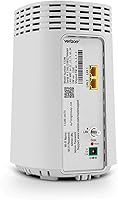
The Fios E3200 Tri-Band Wi-Fi 6 Extender is built specifically for Verizon Fios subscribers — and that distinction is worth spelling out upfront. This is not a universal extender you can drop into any home network; it is designed to work within the Fios ecosystem, which makes setup straightforward but limits flexibility for anyone outside it. Under the hood, it runs on Wi-Fi 6 (802.11ax), which delivers real efficiency improvements over older standards, particularly in homes with many connected devices. Manufactured by Arcadyan Technology Corporation — the OEM behind numerous ISP-branded devices — this Fios mesh extender has been on the market since late 2019, giving it a solid real-world track record to evaluate.

Features & Benefits

The tri-band configuration is where the E3200 separates itself from cheaper alternatives. Running one 2.4 GHz band alongside two 5 GHz bands means it can dedicate an entire band to the backhaul connection — the link between the extender and your router — while still serving client devices on the remaining bands. That arrangement cuts down on the speed penalty that plagues most dual-band extenders. The AX3000 aggregate rating sounds impressive, but keep expectations grounded: real-world throughput is always a fraction of that combined figure. The two Gigabit Ethernet ports are genuinely useful, letting you hardwire a console or smart TV directly and sidestep wireless congestion entirely.

Best For

This Wi-Fi 6 booster makes the most sense for Verizon Fios households dealing with coverage gaps in larger homes, split-level layouts, or sprawling floor plans where a single router simply cannot reach. If your household runs 4K streams, video calls, and online gaming at the same time — and most busy households do — the extra bandwidth headroom helps. The plug-and-play setup also means you do not need to be a networking enthusiast to get it running. And if you have a gaming console, desktop, or smart TV nearby, plugging it into one of the Ethernet ports gives you a noticeably more stable wired connection than relying on wireless alone.

User Feedback

Across 227 ratings, the E3200 holds a 4.1 out of 5 — respectable, but the critical reviews are worth reading before you buy. Owners consistently praise how quickly it gets up and running, and most report a clear improvement in signal coverage throughout their home. Where frustration surfaces is around the strict Fios-only compatibility; buyers who overlooked that detail and own a non-Fios router have been vocal about it. A handful of longer-term users have also flagged firmware reliability concerns, noting occasional drops in performance after updates. The physical unit is on the larger side at 6 by 8 by 10 inches, so placement options can feel limited in tighter spaces.

Pros

  • Plug-and-play setup with Fios routers means most users are online in minutes, no technical knowledge required.
  • The tri-band design dedicates a full 5 GHz band to backhaul, keeping speeds noticeably more stable than dual-band alternatives.
  • Two Gigabit Ethernet ports let you hardwire consoles, smart TVs, or desktops for rock-solid wired connections.
  • Wi-Fi 6 support handles dense device environments far better than older Wi-Fi 5 extenders.
  • Dead zone coverage is consistently praised by owners across a wide range of home layouts.
  • Access Point Mode adds useful flexibility if you ever want to repurpose the unit in a fully wired setup.
  • The LED indicator makes it easy to find an optimal placement spot without needing a companion app.
  • As an officially Fios-branded device, compatibility with Fios routers is reliable out of the box.
  • A multi-year track record since 2019 means real-world performance data is widely available and not just theoretical.

Cons

  • Strictly limited to Verizon Fios hardware — completely unusable for any other ISP or router brand.
  • At 6 by 8 by 10 inches and nearly 5 pounds, the unit is bulky and awkward to place discreetly.
  • Some long-term owners report performance drops or instability following firmware updates.
  • The AX3000 rating is an aggregate figure; real-world throughput on any single band will be considerably lower.
  • No dedicated mobile app for management or diagnostics, which limits remote troubleshooting options.
  • Faces stiff competition from third-party Wi-Fi 6 extenders that offer broader compatibility at comparable prices.
  • Ranked #225 in the Repeaters category, suggesting it is not a dominant choice even within its niche.
  • Buyers outside the Fios ecosystem who purchased this by mistake report no straightforward workaround or refund path.
  • Physical size and weight make it poorly suited for apartments, small offices, or rooms with limited surface space.

Ratings

The scores below were generated by our AI after analyzing verified global user reviews for the Fios E3200 Tri-Band Wi-Fi 6 Extender, with spam, bot activity, and incentivized feedback actively filtered out to ensure accuracy. Each category reflects a balanced synthesis of what real buyers praised and where they ran into genuine frustrations. No score has been inflated — the pain points are represented just as transparently as the strengths.

Ease of Setup
88%
For Fios subscribers, getting the E3200 running is genuinely straightforward — most users report being online within minutes of plugging it in, with no router login or manual credential entry required. The plug-and-play design is a real differentiator compared to third-party extenders that demand app downloads and multi-step pairing processes.
A small segment of users encountered hiccups when their Fios router firmware was outdated, requiring a Verizon support call before the extender would sync properly. The lack of a dedicated setup app also means troubleshooting blind spots are harder to diagnose without some networking intuition.
Wi-Fi Coverage
83%
Dead zone elimination is the single most praised outcome in user reviews — owners of two-story homes and larger ranch-style layouts consistently report signal reaching rooms and corners that their primary Fios router never could. The mesh-style handoff keeps devices connected without manual network switching as users move through the home.
A handful of users in homes exceeding 3,000 square feet found that a single E3200 unit still left weak spots at the far edges of coverage, suggesting very large properties may need more than one extender. Thick concrete or brick walls also limit how far the signal penetrates compared to expectations.
Network Stability
74%
26%
Day-to-day stability is solid for the majority of users, with streaming sessions, video calls, and gaming sessions maintaining consistent connections over extended periods. The dedicated backhaul band meaningfully reduces the congestion that causes drops on cheaper dual-band alternatives.
The recurring concern in critical reviews is post-firmware instability — a notable subset of long-term owners experienced performance degradation or random disconnects following automatic updates. This is not universal, but it surfaces often enough to be a legitimate consideration for anyone who relies on uninterrupted connectivity for remote work.
Throughput Performance
71%
29%
Under normal household load — a mix of 4K streaming, browsing, and video calls running simultaneously — the E3200 holds up well, with most users reporting speeds that feel comparable to what they get near their primary router. Wi-Fi 6 efficiency improvements are particularly noticeable on newer laptops and phones that support the standard.
The AX3000 figure is an aggregate across all three bands, so single-device throughput in real conditions is considerably more modest. Users with symmetrical gigabit Fios plans often note they cannot fully realize those speeds wirelessly through the extender, which is a frustration for performance-focused buyers.
Ecosystem Compatibility
61%
39%
Within the Verizon Fios ecosystem, compatibility is essentially flawless — the E3200 pairs reliably with Fios routers and integrates cleanly into the existing network without requiring any manual configuration or third-party software. For Fios households, this native integration is a genuine advantage over generic extenders that require workarounds.
Outside the Fios ecosystem, this device is simply non-functional, and that limitation generates a disproportionate share of the negative reviews. Buyers who switched ISPs after purchasing, or who misread the product listing, have no recourse — it will not pair with Xfinity, AT&T, or any non-Fios hardware regardless of configuration attempts.
Physical Design
54%
46%
The unit has a clean, inoffensive appearance that blends reasonably well into a home office or living room shelf setting. The LED indicator on the front is practical rather than decorative, giving users an at-a-glance signal strength reading without requiring an app to assess placement quality.
At 6 by 8 by 10 inches and nearly 5 pounds, this is a desk appliance, not a discreet plug-in — and that catches some buyers off guard. Users in smaller apartments or homes with limited shelf space find placement genuinely difficult, and the weight rules out any wall-mount or outlet-based positioning options entirely.
Firmware Reliability
58%
42%
When firmware is stable, the device runs quietly in the background without needing attention — a quality that most satisfied users highlight as one of the reasons they forget it is even there. Verizon does push updates periodically, which in the best cases add minor performance improvements.
Firmware updates are where the E3200 shows its most consistent weakness in user feedback. Several owners report that updates pushed without warning introduced new connectivity problems, and because there is no granular app-based control, rolling back or diagnosing the issue requires contacting Verizon support directly.
Value for Money
67%
33%
For committed Verizon Fios subscribers who need a reliable, ISP-native coverage extension with Wi-Fi 6 support and wired port options, the price reflects a capable and well-matched product. Buyers who get full use out of both Gigabit Ethernet ports tend to feel the investment is justified by the combined wireless and wired flexibility.
The Fios-only limitation is where the value equation becomes harder to defend against competing products. Third-party Wi-Fi 6 extenders at similar price points offer broader router compatibility, and for buyers who might change ISPs in the near future, locking into this ecosystem carries real financial risk.
Multi-Device Handling
79%
21%
Wi-Fi 6 OFDMA technology allows the E3200 to serve multiple devices more efficiently than older standards, and users in busy households with 20 or more connected devices report noticeably less congestion during peak usage hours compared to their previous extenders. Streaming on multiple TVs simultaneously is a frequently cited success case.
In very large smart home setups with 40-plus devices, a few users noted occasional slowdowns during peak load, particularly on the 2.4 GHz band where older IoT devices cluster. The extender handles mainstream device loads well but is not positioned as an enterprise-grade solution for extreme density scenarios.
Wired Connectivity
86%
The dual Gigabit Ethernet ports are consistently highlighted as a practical bonus, especially by users who hardwire gaming consoles or smart TVs to eliminate wireless latency entirely. Several reviewers specifically note that their gaming ping improved noticeably after switching from Wi-Fi to a direct Ethernet connection through the E3200.
Two ports is sufficient for most households but can feel limiting in media rooms or home offices where multiple wired devices are clustered together, potentially requiring an additional switch. There is also no link aggregation support, so the two ports cannot be bonded for higher throughput on a single device.
Placement Flexibility
55%
45%
The LED signal indicator does make finding an optimal placement location easier than on extenders with no physical feedback — users can walk around and find the spot with the best backhaul signal before committing. The flat-bottomed design sits securely on any horizontal surface without risk of tipping.
The bulk of the unit significantly restricts where it can practically live — hallway shelves, entertainment centers, and home office desks are the main options. Users in open-plan homes or those hoping to place it near a ceiling or in a closet find the form factor limits their ability to optimize signal geometry.
Long-Term Durability
72%
28%
The majority of users who have owned the E3200 for two or more years report that the hardware itself remains functional and does not show signs of degradation in signal output or port reliability over time. The Arcadyan build quality is generally considered solid for an ISP-tier device.
Long-term satisfaction is complicated by the firmware concerns mentioned by repeat reviewers — hardware durability alone does not guarantee a consistent experience if software updates introduce instability over a multi-year ownership period. A few users also note that Verizon customer support for this specific device has become less responsive as it ages.

Suitable for:

The Fios E3200 Tri-Band Wi-Fi 6 Extender is a strong fit for Verizon Fios subscribers who are genuinely struggling with dead zones in larger homes, multi-story houses, or layouts where a single router cannot reach every corner. If your household runs several bandwidth-heavy activities at once — someone streaming 4K in one room, another on a video call, a third gaming online — the tri-band architecture gives you the headroom to handle that without everything grinding to a halt. It also works well for people who want a capable upgrade without spending hours configuring settings; the plug-and-play integration with Fios hardware keeps the setup process short. Anyone with a gaming console, smart TV, or desktop sitting near the extender will appreciate the two Gigabit Ethernet ports, which deliver a noticeably more reliable connection than Wi-Fi alone. In short, if you are a Fios customer looking to extend coverage efficiently and stay within a familiar ecosystem, this is a well-matched solution.

Not suitable for:

If you are not a Verizon Fios subscriber, stop here — the Fios E3200 Tri-Band Wi-Fi 6 Extender is not designed to work with other ISPs or third-party routers, and buyers who overlook this detail consistently end up frustrated. It is also not the right pick for renters or anyone working with limited shelf or floor space, since the unit is physically large and heavy enough that placement options in smaller rooms can feel genuinely constrained. Budget-conscious shoppers may find the price hard to justify given that competing Wi-Fi 6 extenders from other brands offer broader compatibility at a similar or lower cost. If you have already invested in a third-party mesh system like Eero or Orbi, adding this unit to that network is not an option — it operates within the Fios ecosystem, period. And if long-term firmware reliability is a priority, it is worth knowing that some users have reported inconsistent performance following software updates, which could be a concern for those who prefer a set-it-and-forget-it device.

Specifications

  • Wi-Fi Standard: Operates on Wi-Fi 6 (802.11ax), offering improved efficiency, reduced latency, and better performance in device-dense environments compared to Wi-Fi 5.
  • Frequency Bands: Tri-band configuration with one 2.4 GHz band and two 5 GHz bands, allowing one 5 GHz band to be reserved exclusively for backhaul traffic.
  • Throughput Rating: Rated at AX3000 aggregate throughput, a combined figure across all three bands — individual band speeds will be lower in real-world conditions.
  • Ethernet Ports: Includes two Gigabit Ethernet ports suitable for wired device connections or wired backhaul to the primary router.
  • Dimensions: Measures 6 x 8 x 10 inches, making it one of the larger extender units on the market and requiring deliberate placement planning.
  • Weight: Weighs 4.69 pounds, which is notably heavier than most compact Wi-Fi extenders and rules out wall-outlet mounting.
  • Model Number: Officially designated as model E3200, as assigned by Verizon and manufacturer Arcadyan Technology Corporation.
  • Manufacturer: Built by Arcadyan Technology Corporation, a Taiwan-based OEM with an established history of producing hardware for major ISPs worldwide.
  • Compatibility: Designed exclusively for use with Verizon Fios routers and modems — it is not compatible with other ISP gateways or third-party routers.
  • Setup Type: Supports plug-and-play setup within the Fios ecosystem, requiring no manual configuration of network credentials or IP settings.
  • Special Features: Includes Access Point Mode for use in fully wired network environments, and an LED indicator to assist with signal-strength-based placement.
  • Network Role: Functions as a mesh network extender, communicating with the primary Fios router to extend the same network name and credentials across a wider area.
  • Release Date: First made available in December 2019, giving the device over five years of real-world deployment and user feedback to draw from.
  • Market Rank: Holds a Best Sellers Rank of #225 in the Repeaters category on Amazon, indicating a moderate but competitive market position.
  • User Rating: Carries an average rating of 4.1 out of 5 stars based on 227 customer ratings at the time of review.

Related Reviews
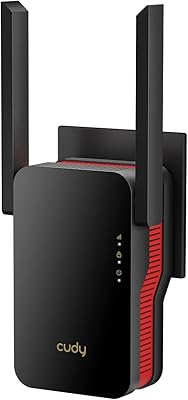
Cudy RE3000 AX3000 Wi-Fi 6 Extender
74%
88%
Setup & Ease of Use
76%
Wi-Fi Coverage
67%
5 GHz Band Performance
81%
2.4 GHz Band Reliability
63%
Real-World Speed Throughput
More
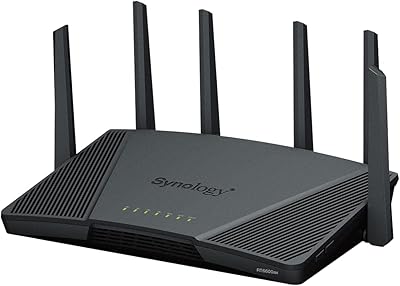
Synology RT6600ax Tri-Band Wi-Fi 6 Router
84%
91%
Wi-Fi Performance
89%
Coverage Area
84%
Setup & Installation
90%
Security Features
86%
Reliability & Stability
More
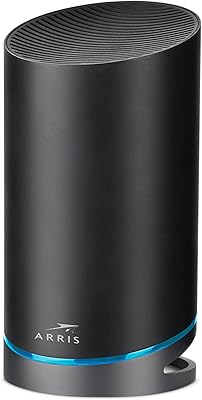
ARRIS SURFboard mAX W30 Wi-Fi 6 Router
71%
78%
Wi-Fi Speed & Throughput
74%
Coverage & Range
76%
Mesh Performance
53%
App Experience
82%
Parental Controls
More
ARRIS SURFboard mAX Pro W133 Mesh Router
71%
83%
Wi-Fi Coverage
71%
Wi-Fi Speed Performance
52%
App & Software Experience
58%
Network Reliability & Stability
91%
Wired Port Availability
More
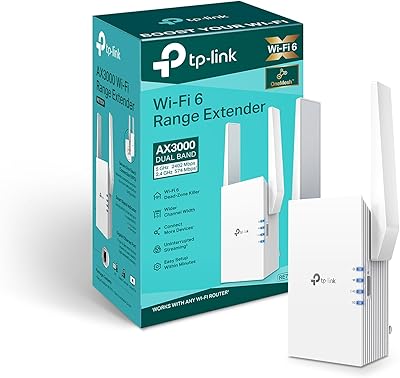
TP-Link RE705X AX3000 Wi-Fi 6 Range Extender
79%
88%
Setup & Installation
79%
Signal Coverage
74%
Wi-Fi Speed Performance
71%
OneMesh Roaming
91%
Ethernet Port Utility
More
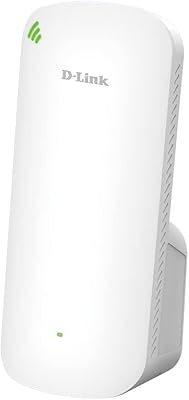
D-Link AX1800 Mesh Wi-Fi 6 Range Extender
84%
90%
Wi-Fi Range and Coverage
85%
Setup and Installation
88%
Device Compatibility
80%
Wi-Fi Speed and Stability
93%
Security Features
More
TP-Link TL-WPA7817 KIT Powerline Wi-Fi 6 Extender
75%
88%
Setup & Installation
67%
Powerline Speed Performance
91%
Wired Connection Quality
53%
Placement Flexibility
76%
Value for Money
More
Wyze Mesh Router Pro Wi-Fi 6E Router
73%
91%
Setup & Ease of Use
78%
Wi-Fi Speed & Throughput
72%
Coverage & Range
66%
Connection Stability
69%
6 GHz Band Performance
More
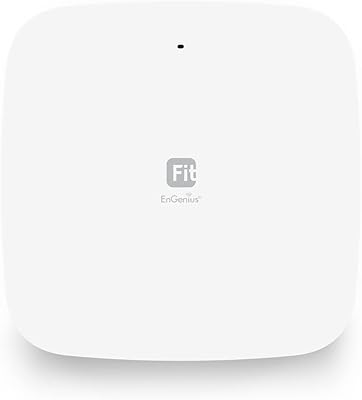
EnGenius EWS356-FIT Wi-Fi 6 Dual-Band Access Point
83%
91%
Wi-Fi Performance
89%
Ease of Setup
87%
Coverage Area
82%
Software and App Experience
90%
Security Features (WPA3)
More
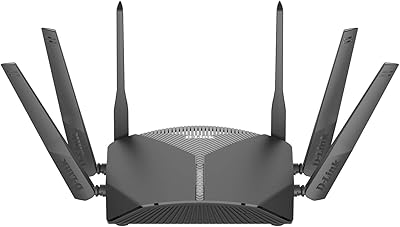
D-Link DIR-3040 AC3000 Tri-Band Wi-Fi Router
83%
88%
Performance
91%
Mesh Networking Coverage
85%
Ease of Setup
78%
Voice Control Integration
90%
Parental Controls
More

FAQ

No — the Fios E3200 Tri-Band Wi-Fi 6 Extender is built specifically for Verizon Fios hardware and will not function with routers or gateways from other ISPs. If you are not a Fios subscriber, you will need to look at a different extender that supports your specific router.

In most cases, no. The E3200 is designed for plug-and-play use within the Fios ecosystem, so it typically syncs with your existing Fios router automatically once powered on. Some users find it helpful to use the My Fios app to confirm the connection, but it is not usually required.

Some speed reduction is normal with any extender, but the tri-band design helps minimize it by reserving a dedicated 5 GHz band for the backhaul link between the extender and your router. In practice, most users report the drop is modest and not noticeable during everyday tasks like streaming or browsing.

Yes, and this is one of the more practical features of this Wi-Fi booster. It includes two Gigabit Ethernet ports, so you can hardwire a console, smart TV, or desktop directly for a more stable, lower-latency connection than Wi-Fi provides.

It is worth taking seriously. At 6 by 8 by 10 inches and nearly 5 pounds, the E3200 is closer in size to a small router than a typical plug-in extender. It needs to sit on a shelf or surface, so if you were hoping to tuck it behind furniture or mount it on a wall outlet, that is not an option here.

It extends your existing Fios network, so your devices stay connected under the same network name as they move around your home. You will not need to manually switch between a router network and an extender network, which is one of the advantages of a mesh-style setup over older range extenders.

Access Point Mode lets you run this Fios mesh extender as a wired access point rather than a wireless extender — useful if you have an Ethernet cable running to a remote room and want to create strong Wi-Fi coverage there without relying on a wireless backhaul. It is a niche use case, but handy if your home is already wired.

A small but consistent group of long-term users have reported performance issues following firmware updates, including occasional drops in stability or throughput. It does not appear to affect the majority of users, but it is a pattern worth being aware of if rock-solid reliability is a top priority for you.

Wi-Fi 6 is specifically engineered to handle dense device environments more efficiently than older standards, using technologies like OFDMA to serve multiple devices simultaneously with less congestion. For a typical household with 15 to 30 connected devices, the E3200 should handle the load without significant degradation — though very large smart home deployments may still strain any single extender.

If your dead zones are minor — a weak signal in one room, for example — you might get adequate results from a simpler and less expensive solution. This Wi-Fi 6 booster is better justified in larger homes, multi-floor layouts, or households with heavy simultaneous bandwidth demands. For a small apartment or mild coverage gaps, the investment may be more than the situation requires.