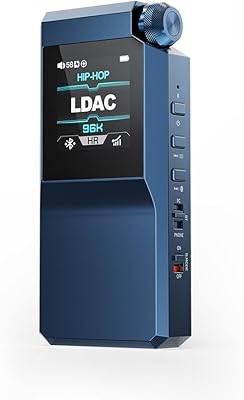
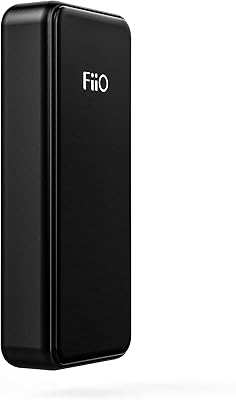
FiiO BTR13 Bluetooth DAC Headphone Amplifier

FiiO BTR13 Bluetooth DAC Headphone Amplifier — image 1

FiiO BTR13 Bluetooth DAC Headphone Amplifier — image 2

FiiO BTR13 Bluetooth DAC Headphone Amplifier — image 3

FiiO BTR13 Bluetooth DAC Headphone Amplifier — image 4

FiiO BTR13 Bluetooth DAC Headphone Amplifier — image 5

FiiO BTR13 Bluetooth DAC Headphone Amplifier — image 6

FiiO BTR13 Bluetooth DAC Headphone Amplifier — image 7

FiiO BTR13 Bluetooth DAC Headphone Amplifier — image 8
FiiO BTR13 Bluetooth DAC Headphone Amplifier — image 9
80%
20%

Overview

The FiiO BTR13 Bluetooth DAC Headphone Amplifier landed in mid-2024 as a compact but genuinely capable option for listeners who refuse to choose between wireless convenience and audio quality. At roughly the size of a lighter, it weighs just 28.6g — you genuinely forget it's clipped to your collar. What sets it apart from similarly priced rivals like the Qudelix-5K is the dual CS43131 DAC configuration, giving each stereo channel its own dedicated chip. Then there's the three-mode switch — PC, Bluetooth, or phone — which sounds minor until you realize how often you're unplugging and re-pairing just to change devices.

Features & Benefits

The BTR13 covers essentially every Bluetooth codec you'd encounter — LDAC, aptX Adaptive, aptX HD, aptX LL, AAC, and SBC — so whether you're on an iPhone or a high-end Android, it connects and works at the best quality your source supports. The 4.4mm balanced output pushes 220mW per channel, which is substantial for a pocketable device; just don't expect miracles with full-sized planar headphones. Each channel has its own dedicated DAC chip, keeping stereo crosstalk low and improving imaging noticeably. The parametric EQ via FiiO's app is thoughtfully designed — preset sharing means you can import a tuning profile someone else has already optimized, genuinely useful if you'd rather not spend an evening adjusting frequencies manually.

Best For

This Bluetooth DAC/amp makes the most sense for people whose audio life spans multiple devices throughout the day — imagine starting the morning with your laptop in USB DAC mode, switching to your phone via Bluetooth on your commute, then flipping back to PC mode at the office without re-pairing anything. It's also a solid pick for IEM enthusiasts who already own balanced cables and want to actually use them on the go. Upgraders from the BTR3K or BTR5 will notice a real bump in output headroom. Casual Bluetooth listeners who just want background music from their earbuds, though, may find the feature depth more than they need.

User Feedback

With around 75 ratings and a 4.3-star average, the feedback picture is promising but still early — these trends could shift as more buyers weigh in. Consistent praise centers on codec versatility and the compact build, with several users noting the sound quality punches above what they expected at this price tier. Criticism tends to cluster around app reliability — occasional pairing hiccups and UI quirks come up more than once. A few users also flag that battery life drops noticeably when running the balanced output at high volumes. Microphone quality for calls gets mixed marks, which is worth knowing if hands-free use matters to you.

Pros

  • Covers every major Bluetooth codec, including LDAC and aptX Adaptive, ensuring best-quality connection across almost any device.
  • The three-position mode switch lets you flip between PC, phone, and Bluetooth sources instantly — no app needed.
  • Dual CS43131 DAC chips, one per channel, deliver noticeably cleaner stereo imaging than single-chip rivals.
  • Balanced 4.4mm output provides real driving power for IEMs and moderately demanding headphones.
  • Parametric EQ with shareable presets makes sound tuning accessible even for users who have never touched an equalizer before.
  • USB DAC mode supports up to 96kHz, making it a capable desktop sound card substitute in a pinch.
  • At 28.6g, it is light enough to clip on and genuinely forget about during a commute.
  • The independent amplifier power supply keeps output stable regardless of how much battery remains.
  • Early buyer feedback consistently praises build quality as feeling solid and well above the price tier.

Cons

  • Battery life takes a noticeable hit when running the balanced output at higher volume levels.
  • The FiiO app has reported stability issues — occasional pairing drops and UI hiccups appear consistently in early reviews.
  • iPhone and iOS users cannot access LDAC or aptX codecs, limiting them to AAC at best.
  • Microphone performance for calls is mediocre, making it a poor choice if hands-free clarity matters.
  • No water or dust resistance at all — rain, sweat, or a gym bag is a real risk.
  • The rating pool is still small at around 75 reviews, so long-term reliability patterns are not yet clear.
  • Balanced output benefits are only realized with headphones and cables that actually support the 4.4mm standard.
  • The app-dependent EQ setup adds friction for users who prefer hardware-only operation.

Ratings

Our AI rating engine analyzed verified global buyer reviews for the FiiO BTR13 Bluetooth DAC Headphone Amplifier, actively filtering out incentivized, bot-generated, and duplicate feedback to surface what real users genuinely experience. The scores below reflect both the standout strengths and the honest pain points reported across daily use cases — nothing is inflated or glossed over.

Sound Quality
88%
Users consistently praise the dual CS43131 DAC setup for producing a notably clean and detailed sound, particularly through IEMs. The low crosstalk between channels comes through in practice — listeners describe wider, more precise stereo imaging compared to single-chip competitors they had used before.
A handful of users feel the sound signature leans slightly analytical and that at very high volumes through the 3.5mm output, some harshness creeps in. These are minor complaints, but they do suggest the BTR13 rewards careful headphone pairing rather than working equally well with any gear.
Codec Support
93%
The breadth of Bluetooth codec support is genuinely one of the BTR13's most praised attributes — Android users with LDAC phones report a meaningful step up in wireless audio quality, and the inclusion of aptX Adaptive keeps the device relevant for newer source devices. Almost no buyer reported a compatibility gap with their phone or laptop.
iOS users consistently flag that Apple's AAC ceiling means they never access LDAC or aptX Adaptive, making the codec list feel misleading for iPhone-only households. This is a platform limitation, not a product flaw, but it catches buyers off guard often enough to be worth flagging.
Build Quality
84%
For its size and weight, users are frequently surprised by how solid the BTR13 feels in hand — the chassis does not flex, the mode switch has a satisfying click, and the overall finish reads as a step above what the price tier typically delivers. Several upgraders from older BTR models specifically noted the improved feel.
A few buyers noticed minor fit-and-finish inconsistencies around the output jacks, and the clip mechanism, while functional, does not inspire long-term confidence for daily on-body use. Nothing critical, but the detail work is not quite at the level of premium desktop DAC/amps.
Portability
91%
At 28.6g, this portable amp barely registers on your collar or shirt pocket — commuters and travelers repeatedly mention forgetting it is there during a full workday. The compact footprint means it fits in any bag pocket without the bulk that plagues larger DAC/amp alternatives.
The lack of any water or dust resistance is a real-world limitation that portability-focused buyers notice. For gym use or outdoor runs, that gap in protection makes the BTR13 a risky choice, and several users who bought it for exercise later replaced it with something more ruggedized.
Multi-Device Versatility
89%
The three-position physical switch is the feature buyers mention most when explaining why they chose this over a rival — the ability to flip from USB DAC on a work laptop to Bluetooth from a phone without touching an app is a genuine daily convenience. Remote workers in particular call it out as a workflow improvement.
The mode switch can occasionally require a double-flip to register the change properly, and a small number of users report that the PC mode sometimes needs a USB re-plug after waking a computer from sleep. These are infrequent but noticeable in a daily workflow.
Balanced Output Power
86%
Users with balanced-cable IEMs and efficient headphones consistently report that the 4.4mm output delivers clean, dynamic sound with plenty of volume headroom to spare. Upgraders from the BTR3K note the power increase is real and audible, not just a spec sheet improvement.
The balanced output advantage disappears entirely for users without balanced cables or balanced-terminated headphones, and a few buyers did not realize this before purchasing. High-impedance full-sized headphones also push the limits of what this portable amp can comfortably drive.
Battery Life
67%
33%
Under moderate use — Bluetooth at medium volume through the 3.5mm output — most users report battery life that comfortably gets through a standard commute or workday. The independent amp power supply means output quality does not degrade noticeably as the battery drains.
Running the 4.4mm balanced output at higher volumes is a known battery drain, with several users reporting significantly shorter runtimes under those conditions. This is one of the more consistent criticism patterns in user feedback, and buyers who plan to use balanced output heavily should factor it into their decision.
App Experience
63%
37%
When the FiiO app works well, users appreciate the parametric EQ interface and especially the preset sharing feature — being able to import a community-tuned EQ profile for a specific IEM saves real time and effort for those who find manual tuning tedious.
App stability is one of the most cited recurring complaints — pairing dropouts, occasional UI freezes, and inconsistent behavior after phone OS updates appear regularly enough to form a pattern. The web interface is a useful fallback, but it adds friction for users who expected a smooth mobile experience.
EQ Flexibility
82%
18%
The parametric EQ implementation is more capable than most buyers expect at this price point, offering control over frequency, gain, and bandwidth rather than just a simple graphic EQ. The shareable preset ecosystem gives beginners a practical starting point without requiring any audio engineering knowledge.
Getting the most out of the EQ requires either some learning curve or reliance on community presets, which are not always available for less common IEMs. Users who wanted a simple bass-boost slider occasionally find the interface more complex than they bargained for.
Microphone Quality
51%
49%
The built-in microphone allows hands-free calls without unplugging the device, which is a useful fallback for users who need occasional voice calls during a commute. In quiet environments, call recipients can understand the speaker without complaint.
In any moderately noisy setting, the microphone performance drops off noticeably — background noise bleeds in and voice clarity suffers. Multiple users specifically called out call quality as disappointing, and anyone who relies heavily on voice calls throughout the day will likely find this aspect underwhelming.
Value for Money
83%
Buyers who understood what they were getting — a dual-DAC portable amp with full Qualcomm codec support and a 4.4mm balanced output — consistently describe the BTR13 as well-priced for its capability tier. Comparisons to the Qudelix-5K frequently end with users feeling the BTR13 offers a compelling hardware spec advantage.
For casual listeners who just want Bluetooth audio from their earbuds, the price feels high relative to their actual usage of the feature set. The value equation only stacks up cleanly for buyers who will actively use the codec support, balanced output, or multi-device switching.
Setup & Ease of Use
78%
22%
Initial Bluetooth pairing is straightforward, and the physical mode switch means most day-to-day device changes require zero interaction with any app or screen. Users who had never owned a dedicated DAC/amp generally reported getting up and running quickly.
USB DAC mode occasionally needs manual audio output selection on certain Windows configurations, and new users sometimes find the three-position switch counterintuitive until they read the manual. The app dependency for EQ also adds a layer of setup that plug-and-play buyers may not expect.
Compatibility
87%
The BTR13 connects to essentially any Bluetooth source and works in USB DAC mode with both Windows and Mac without driver installation in most cases. IEM and headphone users with 3.5mm or 4.4mm connections are fully covered out of the box.
iOS users lose access to the premium codec stack, and some users with older Android phones reported that aptX Adaptive connectivity required manual codec selection in developer settings. Neither issue is a deal-breaker, but both add friction depending on the buyer's existing setup.

Suitable for:

The FiiO BTR13 Bluetooth DAC Headphone Amplifier is purpose-built for listeners whose audio setup spans multiple devices throughout the day — someone who starts a work call on their laptop, commutes with a phone, and wants one device to handle all of it without fussing with menus or re-pairing. Android users with LDAC-capable phones get the most out of the codec stack, since they can stream at near-lossless quality wirelessly. IEM enthusiasts who have already invested in balanced cables will find the 4.4mm output genuinely useful, not just a checkbox feature. Upgraders from older BTR-series devices — particularly the BTR3K — will notice a tangible jump in output headroom for harder-to-drive gear. Anyone who enjoys fine-tuning their sound but wants the option to borrow a trusted EQ preset rather than build one from scratch will also find the app ecosystem worth their time.

Not suitable for:

The FiiO BTR13 Bluetooth DAC Headphone Amplifier is not the right tool for everyone, and it helps to be honest about that. Casual listeners who just want wireless audio from standard earbuds will find themselves paying for layers of functionality they will never touch — a simpler and cheaper option would serve them better. iPhone users are inherently limited here: Apple's Bluetooth stack caps out at AAC, so the LDAC and aptX Adaptive support that anchor much of this portable amp's appeal simply go unused. People who rely heavily on hands-free calls should also temper expectations, since microphone quality in DAC/amp devices at this tier is rarely a strong suit. And if you need something rugged for outdoor or gym use, the complete lack of water or dust resistance is a genuine concern worth factoring in.

Specifications

  • Bluetooth Chip: Powered by the Qualcomm QCC5125 chip, which handles all wireless decoding and supports the full range of modern Bluetooth audio codecs.
  • Supported Codecs: Compatible with LDAC, aptX Adaptive, aptX HD, aptX LL, AAC, and SBC, covering virtually every device and streaming quality tier available today.
  • DAC Configuration: Uses dual Cirrus Logic CS43131 chips, with one dedicated chip per stereo channel to minimize crosstalk and improve channel separation.
  • Balanced Output: The 4.4mm balanced output delivers 220mW per channel, providing meaningful headroom for IEMs and moderately demanding headphones.
  • Unbalanced Output: A standard 3.5mm unbalanced output is also included for headphones and IEMs without balanced cables.
  • USB DAC Mode: When connected via USB to a PC or Mac, the device functions as an external sound card supporting up to 96kHz sampling rate.
  • Mode Switch: A three-position physical switch allows instant selection between PC (USB DAC), Bluetooth, and phone (wired USB audio) modes.
  • EQ System: Parametric EQ is available through the FiiO Music app and a web interface, with support for custom tuning and community preset sharing.
  • Weight: The unit weighs just 28.6g, making it light enough to wear clipped to clothing without discomfort during daily use.
  • Package Dimensions: The retail package measures 6.02 x 3.66 x 1.65 inches, with the unit itself being considerably more compact inside.
  • Battery: Includes a built-in rechargeable lithium-ion battery; capacity is not officially published, but the unit ships with the battery pre-installed.
  • Power Supply: The headphone amplifier section uses an independent power supply circuit to maintain stable output regardless of battery charge level.
  • Water Resistance: The BTR13 has no official water or dust resistance rating and should be kept away from moisture, rain, and sweat.
  • Compatible Devices: Works with smartphones, laptops, desktop computers, and any Bluetooth-enabled audio source or headphone-capable device.
  • Control Method: Day-to-day control is handled via the physical mode switch on the unit itself, with deeper settings managed through the FiiO app.
  • Release Date: The BTR13 was first made available in August 2024, placing it among FiiO's more recent additions to their portable DAC/amp lineup.
  • Included Accessories: A cable is included in the box; no additional carry case, ear tips, or adapters are listed as bundled accessories.
  • Impedance Rating: Listed with a nominal impedance reference of 16 ohms, reflecting typical compatibility with low-impedance IEMs and earphones.

Related Reviews
FiiO Q11
FiiO Q11
78%
88%
Sound Quality
74%
Driving Power
91%
Battery Life
83%
Build Quality
61%
Noise Floor & IEM Compatibility
More
FiiO KA15
FiiO KA15
84%
93%
Sound Quality
91%
Output Power
82%
Battery Impact & Power Management
74%
EQ & App Experience
78%
Build Quality
More
FiiO K11
FiiO K11
80%
91%
Value for Money
88%
Output Power & Headphone Driving
82%
Sound Quality
79%
Build Quality
71%
Balanced Output Implementation
More
FiiO Q3 MQA Portable DAC Amplifier
80%
88%
Sound Quality
83%
MQA Decoding
86%
Battery Life
81%
Balanced Output Performance
91%
Build Quality
More
iFi GO blu
iFi GO blu
77%
93%
Sound Quality
89%
Codec Performance
91%
Balanced Output (4.4mm)
78%
Portability & Form Factor
84%
Build Quality
More
Khadas Tea
Khadas Tea
82%
88%
Sound Quality
91%
Build Quality
93%
Portability & Form Factor
86%
MagSafe Integration
79%
Bluetooth Performance
More
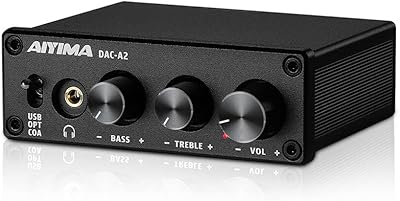
AIYIMA DAC-A2
AIYIMA DAC-A2
77%
83%
Sound Clarity Improvement
79%
Tone Controls (Bass & Treble)
86%
Input Versatility
74%
Headphone Amplifier Performance
53%
Build Quality & Materials
More
FiiO K7
FiiO K7
84%
93%
Sound Transparency
91%
Amplifier Power
89%
Connectivity & Inputs
92%
Value for Money
78%
Build Quality
More
FiiO BTR3K
FiiO BTR3K
80%
88%
Sound Quality
91%
Balanced Output Performance
86%
Bluetooth Codec Support
72%
Connection Stability
93%
Portability & Form Factor
More
FiiO BTR17
FiiO BTR17
81%
93%
Sound Quality
91%
Amplifier Power & Output
88%
Bluetooth Codec Support
89%
Versatility & Multi-Mode Operation
79%
Parametric EQ & App Control
More

FAQ

Yes, the BTR13 pairs with iPhones without any issues, but there is an important caveat: Apple limits Bluetooth audio to the AAC codec, so you will not get LDAC or aptX Adaptive on iOS regardless of what the device supports. AAC is still a solid codec and will sound good, but Android users with LDAC-capable phones get considerably more out of this portable amp in wireless mode.

In most cases, yes. The BTR13 should be recognized as a USB audio device on both Windows and Mac without needing third-party drivers, since it follows the standard USB audio class specification. Just flip the mode switch to PC mode, plug it in, and select it as your audio output in your system settings.

It is a small physical slider on the unit with three positions: PC for USB DAC mode, BT for Bluetooth, and PHONE for wired connection to a smartphone via USB. Switching is instant and requires no app interaction, which makes it genuinely fast to move between your laptop and phone during a workday without any re-pairing steps.

It depends entirely on your headphones. If you own IEMs or headphones that came with a 4.4mm balanced cable, or if you have recabled them, the balanced output here is real and delivers more power than the 3.5mm option. For casual listeners using standard single-ended earbuds, the 3.5mm output is perfectly capable and the balanced jack will not matter.

Both are strong contenders in the portable Bluetooth DAC/amp space. The Qudelix-5K has a strong reputation for its app, EQ depth, and the parametric EQ implementation has been refined over time. The BTR13 counters with dual DAC chips per channel, a broader codec list including aptX Adaptive, and the three-mode physical switch which the Qudelix does not have. Sound preference between them tends to be subjective, so both are worth researching if you are deciding between the two.

It can drive many full-sized headphones reasonably well, especially through the balanced output, but it has practical limits. Very high-impedance or low-sensitivity planar magnetic headphones may not reach satisfying volume levels or dynamics from a 28.6g clip-on device. For IEMs and efficient dynamic driver headphones, it is well-suited. Think of it as a strong portable source rather than a desktop amp replacement.

Connection stability is generally reported as solid, which is expected given the Qualcomm QCC5125 chip — Qualcomm has a good track record here. That said, dense wireless environments like crowded subway stations or airports can introduce occasional dropouts with any Bluetooth device. Most users in everyday commuting scenarios report reliable performance.

The BTR13 does include microphone support for calls, but microphone quality is an area where expectations should be modest. Early user feedback suggests call audio is functional but not impressive — your voice will come through, but do not expect the clarity you would get from a dedicated headset or your phone's own microphone. It works for occasional calls but is not a selling point.

The EQ settings are configured through the FiiO app or web interface, and once you save a preset, it should remain active on the device without needing the app open during playback. However, if you want to adjust or switch presets, you do need the app. For users who prefer a set-and-forget approach, this is workable; for those who want quick on-the-fly EQ changes without a phone, it is less convenient.

Yes, there is a real risk. The BTR13 carries no water or dust resistance rating whatsoever, so exposure to rain, sweat, or humidity could damage it. It is designed for everyday portability in controlled environments — commuting, office use, travel — rather than outdoor exercise or any wet conditions. If you plan to use it at the gym or on runs, you should factor that risk into your decision.

Where to Buy