Overview

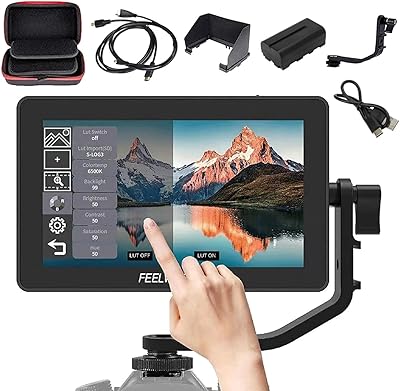
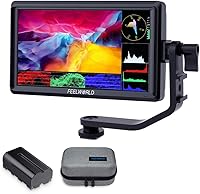
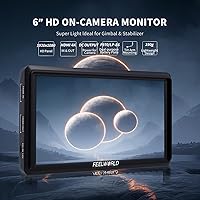
The Feelworld S55 6″ Field Monitor is a compact, practical solution built for solo videographers and run-and-gun shooters who need a proper screen without hauling extra gear. That 6-inch IPS panel makes a genuine difference compared to squinting at a camera's tiny rear LCD, especially when you're pulling focus or checking exposure on the fly. What sets it apart at its price point is the bundle — you get an F550 battery, carrying case, tilt arm, and sunshade included out of the box. Brightness tops out at 450 nits, which is honest mid-range territory: comfortable indoors and in shade, but not a direct-sun performer. Its #5 rank in Video Monitors signals real, sustained buyer traction.

Features & Benefits

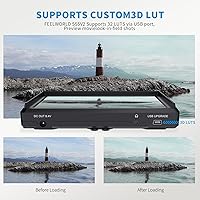
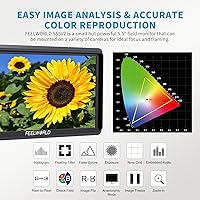
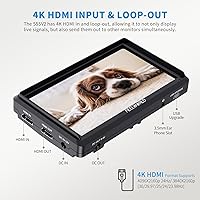
The S55 packs a full HD 1920x1080 IPS display with a 1000:1 contrast ratio — accurate enough for confident exposure monitoring, though not a substitute for a calibrated grading screen. The real workflow advantage is custom LUT loading: shoot in a log profile, load your grade's LUT onto the monitor, and preview the finished look without needing a separate tech on set. Waveform, false color, and zebra tools give solo operators real-time feedback that would otherwise require an assistant. The 4K HDMI loop-out feeds a larger village monitor simultaneously, and the 360-degree tilt arm handles cold shoes, cages, and gimbal mounts with equal ease. Type-C and DC inputs add flexible power options across different rigs.

Best For

This on-camera monitor makes the most sense for mirrorless and DSLR shooters whose cameras lack a flip-out screen — think Sony A7-series users or Canon R bodies without a vari-angle display. Gimbal operators will appreciate the 190g weight, since every gram matters when fighting balance on a three-axis stabilizer. Documentary and event videographers get genuine value from the false color and waveform tools when working alone without an AC. It also works well as a first proper monitor for creators stepping up from a camera screen, and the included case and battery make it travel-ready from day one, without needing to source accessories separately.

User Feedback

Across a solid volume of reviews averaging 4.3 out of 5, buyers consistently praise the image clarity and the convenience of receiving a battery, case, and tilt arm together — it removes the usual accessories hunt. The 450-nit brightness draws the most criticism: under direct sunlight, reading the screen becomes a real challenge, and that limitation is worth knowing upfront. A handful of users note the menu navigation has a learning curve, particularly when loading LUTs for the first time. Build quality is functional rather than impressive — the plastic shell feels appropriately light but won't inspire confidence if dropped. Most buyers find the included F550 battery sufficient for a typical half-day shoot.

Pros

  • The 6-inch IPS panel delivers noticeably sharper, more usable images than any standard camera rear screen.
  • Waveform, false color, and zebra tools give solo operators professional exposure feedback without extra crew.
  • Custom LUT loading allows real-time log-footage preview on set, a rare feature at this price point.
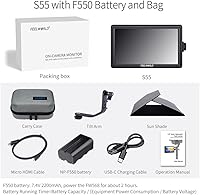
  • The full bundle — battery, case, tilt arm, and sunshade — means it is genuinely shoot-ready out of the box.
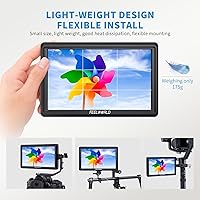
  • At 190g, this field monitor is light enough for gimbal use without disrupting rig balance.
  • 4K HDMI loop-out lets you simultaneously feed a director or client monitor without extra splitting hardware.
  • Multiple power inputs including Type-C add flexibility across different camera and rig configurations.
  • The 360-degree tilt arm handles cold shoes, cages, and gimbal mounts confidently.
  • A 4.3-star aggregate rating across a high volume of verified buyers reflects reliable, consistent satisfaction.
  • The carrying case makes packing for travel or run-and-gun shoots noticeably less complicated.

Cons

  • At 450 nits, direct sunlight renders the screen nearly unreadable even with the sunshade attached.
  • The plastic shell flexes under pressure and shows cosmetic damage from modest drops.
  • LUT loading requires external tutorials for most new users — the included manual is too thin to guide the process.
  • Menu navigation for toggling monitoring tools has a real learning curve that can slow you down on fast jobs.
  • The included F550 battery drains faster than expected on long shooting days, making a spare essential.
  • The tilt arm develops noticeable play over time, lacking the damped precision of dedicated articulating arms.
  • The included Micro HDMI cable is short enough to create tension on certain camera-to-monitor mounting configurations.
  • Default factory color calibration runs slightly warm and benefits from manual adjustment before critical monitoring work.
  • The plastic construction limits long-term durability for shooters who work in rough or physically demanding environments.

Ratings

The Feelworld S55 6″ Field Monitor has been evaluated by our AI system after analyzing thousands of verified buyer reviews from global markets, with spam, bot-generated, and incentivized submissions actively filtered out. Scores reflect the real-world consensus of working videographers, gimbal operators, and content creators who have used this on-camera monitor in the field. Both the genuine strengths and the honest limitations are weighted transparently across every category below.

Image Clarity
86%
The 1920x1080 IPS panel consistently earns praise for delivering a sharp, clean image that puts a camera's built-in rear screen to shame. Shooters monitoring interview setups or documentary b-roll report that fine detail in faces and textures is easy to evaluate without second-guessing.
At 450 nits, the panel struggles to hold contrast in bright ambient light, making it harder to judge true sharpness outdoors. A few users note that the image can look slightly oversaturated at default settings until calibrated manually.
Outdoor Visibility
53%
47%
In shaded outdoor environments — under a tree canopy, inside a doorway, or beneath a reflector — the S55 performs adequately and gives enough visibility to confirm framing and basic exposure. Shooters working primarily indoors or in controlled lighting report no real complaints.
Direct sunlight is a genuine problem. At 450 nits, the screen washes out noticeably on bright location days, and even the included sunshade only partially compensates. Buyers planning to shoot outdoors in summer conditions should factor this limitation in before purchasing.
Exposure Monitoring Tools
88%
Having waveform, false color, and zebra all accessible on a monitor at this price point is a real operational advantage for solo shooters. Event videographers working alone especially appreciate false color for nailing skin tone exposure quickly without relying purely on histogram guesswork.
The menu system for cycling between exposure tools has a learning curve, and a handful of users mention accidentally switching modes mid-shoot while adjusting settings. There is no dedicated shortcut button for each tool, which slows access in fast-paced situations.
LUT Support
81%
19%
Custom LUT loading lets shooters previewing log footage see an approximation of the graded image in real time, which genuinely aids on-set exposure and lighting decisions without needing a DIT or external laptop. Filmmakers shooting S-Log or C-Log found this feature notably useful for client monitoring.
Loading LUTs for the first time is not intuitive, and several users report needing to consult the manual or online tutorials to complete the process. The monitor does not display confirmation feedback clearly when a LUT has loaded successfully, which causes initial confusion.
Build Quality
62%
38%
The plastic body keeps weight at just 190g, which is genuinely beneficial when balancing a gimbal or building a lightweight mirrorless rig. For studio or semi-controlled environments, the construction feels adequate and holds up to daily packing and unpacking.
The shell does not inspire confidence for rough field use — it flexes slightly under pressure and feels noticeably less solid than monitors at higher price tiers. Users who have dropped it even from modest heights report cosmetic damage, and the overall material finish reads as budget-grade on close inspection.
Bundle Value
91%
The included F550 battery, carrying case, tilt arm, and sunshade represent a compelling package that removes the typical accessories hunt. Buyers repeatedly highlight how the bundle makes the S55 genuinely ready to mount and shoot from day one, without additional spending.
The F550 battery included is a third-party unit rather than a brand-name cell, and longevity over many charge cycles is variable according to some long-term users. The carrying case is functional but basic — more of a pouch than a protective hard case.
Battery Life
74%
26%
For a half-day shoot — a corporate interview, a short documentary session, or a product shoot — the included 2200mAh F550 battery holds up reasonably well. Most users shooting two to three hours continuously report enough charge to complete a typical assignment without swapping.
All-day shooters running the monitor continuously for six or more hours will need a spare battery. The 2200mAh capacity is on the lower end for intensive use, and a few buyers note the battery drains faster than expected when the monitor runs at peak brightness.
Mounting Flexibility
83%
The 360-degree tilt arm handles cold shoe, cage, and gimbal mounting confidently, and the range of adjustment makes it easy to position the screen for both eye-level and low-angle shooting. Gimbal users in particular appreciate how the tilt arm keeps the monitor usable without counterbalancing the entire rig.
The tilt arm connection point feels slightly loose on some units after extended use, with a small amount of play developing over time. It is functional but lacks the damped, precision feel of dedicated articulating arms sold separately at higher price points.
Connectivity
84%
The combination of HDMI input, HDMI loop-out, Type-C, and DC power gives this on-camera monitor more connectivity flexibility than many rivals at similar prices. The 4K HDMI loop-out is especially practical on small sets where the operator also needs to feed a client or director monitor.
The included Micro HDMI cable is short, which creates cable tension on some camera setups and may require a longer replacement. Type-C power input is a welcome addition but lacks documentation on which power delivery specs are supported.
Weight & Portability
89%
At 190g, this field monitor is one of the lighter options in its screen-size class, and that matters directly when adding it to a gimbal or a travel-oriented mirrorless setup. Shooters who pack gear in carry-on bags value the included case and the compact footprint for airport runs.
The lightweight plastic construction is partly what enables the low weight, so there is an inherent trade-off between portability and sturdiness. Shooters who prioritize durability over weight savings may find heavier, more robust alternatives worth the extra carry.
Color Accuracy
71%
29%
For monitoring purposes — confirming white balance, checking for obvious color casts, and evaluating skin tones on set — the IPS panel performs reliably well. The 1000:1 contrast ratio gives enough tonal separation to make meaningful decisions while shooting.
This is a field monitor, not a color grading display, and the default factory calibration drifts slightly warm on some units. Professionals who need precise color reference should not rely on it as a primary grading tool; it works best as a shooting aid alongside a properly calibrated post suite.
Menu & Interface Usability
61%
39%
Once the menu structure is learned, navigating between video assist tools and adjusting settings becomes fairly routine. Button placement is sensible and accessible without removing the monitor from a rig, which reduces downtime between shots.
The initial learning curve is steeper than it needs to be — the manual is thin, and on-screen prompts are minimal. New users typically need a dedicated setup session before they feel comfortable accessing LUT menus and toggling monitoring tools reliably under time pressure.
Focus Assist
78%
22%
Focus peaking works dependably for confirming sharp focus on static or slow-moving subjects, and the larger 6-inch screen makes the peaking highlights more readable than they would be on a camera's rear LCD. Portrait and product shooters find it a practical daily tool.
On fast-moving subjects or in low-contrast scenes, the peaking overlay can be inconsistent and occasionally highlights edges that are not actually in sharp focus. It supplements but does not replace a trained eye, particularly in challenging lighting conditions.
Setup & Out-of-Box Experience
82%
18%
The self-contained bundle means most users can mount the S55, attach the tilt arm, plug in the included cable, and be live within minutes of opening the box. That immediacy is genuinely appreciated by shooters who buy gear between jobs and need it operational quickly.
The manual is sparse, and some of the more useful features — like LUT loading and waveform calibration — are not explained clearly in the included documentation. Buyers without prior field monitor experience may need supplementary online resources to unlock the full feature set.

Suitable for:

The Feelworld S55 6″ Field Monitor is a strong fit for mirrorless and DSLR shooters whose cameras lack a decent flip-out screen — think Sony A7-series, Fujifilm X-series, or older Canon bodies where the rear LCD simply is not adequate for confident focusing or exposure work. Gimbal operators building a lightweight rig will appreciate that at 190g, the S55 adds meaningful screen real estate without throwing off counterbalance. Solo documentary and event videographers benefit especially from the waveform and false color tools, which allow one person to manage both camera and exposure monitoring simultaneously without needing an assistant on set. Content creators who are ready to step up from relying on a camera screen — but are not yet at the stage of investing in a high-end broadcast display — will find this on-camera monitor hits a practical budget sweet spot with a genuinely complete accessories bundle. Travel shooters also get real value from the included carrying case and self-contained F550 battery, reducing the pre-trip accessories checklist considerably.

Not suitable for:

The Feelworld S55 6″ Field Monitor is not the right choice for shooters who work primarily in direct sunlight or harsh outdoor environments — at 450 nits, the screen washes out in bright conditions, and the included sunshade only partially addresses the problem. Cinematographers or colorists who need a color-accurate reference display for on-set grading decisions should look elsewhere; the IPS panel here is a shooting aid, not a calibrated monitoring tool. Professionals working in physically demanding or weather-exposed environments will find the plastic shell too fragile for that kind of punishment — it is not built for construction sites, rain-soaked outdoor events, or gear bags that take a beating. Buyers expecting the LUT loading and monitoring tools to work intuitively right out of the box may find the sparse documentation frustrating, particularly if they have no prior experience with field monitors. Long shooting days requiring six or more hours of continuous monitoring will likely demand a spare battery, since the included 2200mAh cell is not designed for all-day endurance.

Specifications

  • Screen Size: The IPS panel measures 6 inches diagonally, offering significantly more viewing area than a typical camera rear LCD.
  • Resolution: Native display resolution is 1920x1080 pixels (Full HD), rendering sharp detail suitable for focus and exposure monitoring.
  • Brightness: Peak brightness is rated at 450 cd/m², which performs well in indoor and shaded environments but is limited in direct sunlight.
  • Contrast Ratio: The panel delivers a 1000:1 contrast ratio, providing adequate tonal separation for on-set monitoring decisions.
  • Aspect Ratio: The display uses a standard 16:9 aspect ratio, matching the native output of most modern video cameras and camcorders.
  • HDMI Input: Accepts 4K UHD signals up to 3840x2160p at 30Hz and 4096x2160p at 24Hz via HDMI input for full-resolution signal monitoring.
  • HDMI Output: A full-size HDMI loop-out port passes the input signal through to a second, larger monitor without degrading the source signal.
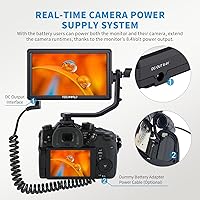
  • Power Inputs: The monitor accepts power via a DC input and a Type-C port, giving flexibility across different battery plates and power banks.
  • DC Output: An 8.4V DC output port allows the monitor to power compatible cameras directly, reducing the number of separate batteries needed on a rig.
  • Audio: A stereo headphone jack provides audio monitoring capability when an HDMI source with embedded audio is connected.
  • Video Assist Tools: Built-in monitoring tools include custom LUT loading, waveform display, false color, zebra exposure warning, and focus peaking.
  • Shell Material: The outer housing is constructed from plastic, prioritizing low weight over impact resistance.
  • Dimensions: The unit measures 151 x 92 x 29.5 mm, making it compact enough for gimbal and cage mounting without excessive bulk.
  • Weight: The monitor body weighs 190g without battery, light enough to avoid significant balance issues on most gimbal setups.
  • Included Battery: A third-party F550-compatible lithium-ion battery with a 2200mAh capacity is included in the package.
  • Included Accessories: The package contains a Micro HDMI cable, sunshade, 360-degree tilt arm, carrying case, F550 battery, and a printed manual.
  • Tilt Arm: The included tilt arm supports 360-degree rotation and is compatible with standard cold shoe, cage, and gimbal mounting points.
  • Panel Type: The display uses IPS (In-Plane Switching) technology, providing wider viewing angles than TN panels common in budget monitors.

Related Reviews
FEELWORLD FW568 6″ Field Monitor
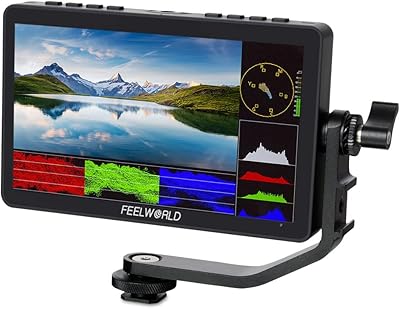
77%
88%
Image Clarity & Sharpness
84%
Color Accuracy
91%
LUT Support & Preview
87%
Exposure & Focus Assist Tools
63%
Brightness & Outdoor Usability
More
FEELWORLD F5 Pro 6″ Field Monitor
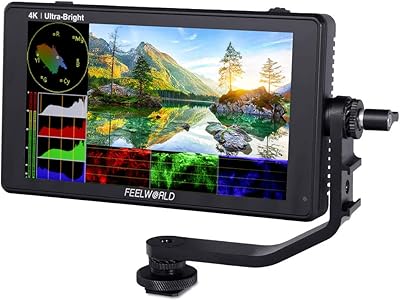
78%
84%
Display Quality
79%
Touchscreen Responsiveness
86%
Color Accuracy & Calibration
88%
Monitoring Tools
67%
Build Quality & Durability
More
FEELWORLD LUT6 6-inch Monitor
85%
94%
Outdoor Performance
89%
Display Quality
88%
Touchscreen Usability
91%
Color Accuracy
85%
Portability & Weight
More
Feelworld F6 Plus 6-inch Monitor
87%
92%
Display Quality
88%
Ease of Use
90%
Portability
75%
Battery Life
80%
Build Quality
More
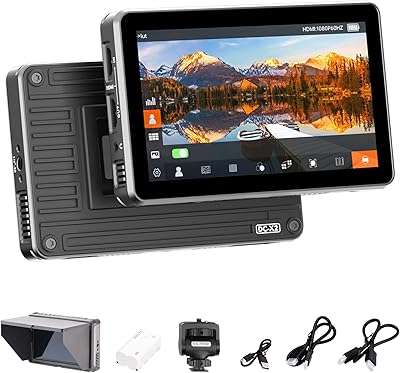
VILTROX DC-X2 6-inch Field Monitor
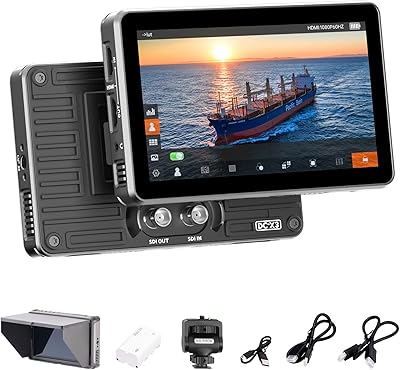
80%
93%
Outdoor Brightness
78%
Build Quality
71%
Touchscreen Responsiveness
67%
Color Accuracy
84%
3D LUT Support
More
VILTROX DC-X3 6″ Field Monitor
80%
93%
Brightness & Outdoor Visibility
81%
Build Quality & Durability
78%
Touchscreen Responsiveness
74%
Image Accuracy & Color Fidelity
69%
4K & SDI Connectivity
More
Feelworld FW759 7″ Field Monitor
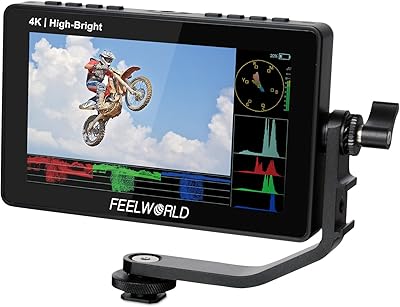
72%
83%
Image Clarity
58%
Brightness & Outdoor Usability
81%
Focus Peaking Performance
89%
Portability & Form Factor
54%
Build Quality & Durability
More
Feelworld F5 ProX 5.5″ Field Monitor
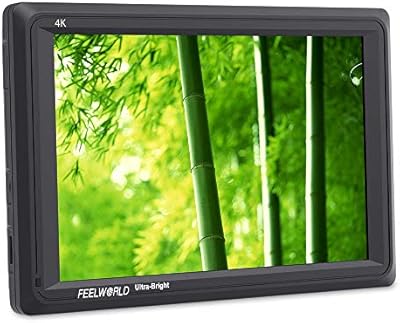
78%
91%
Screen Brightness
83%
Image Clarity & Resolution
86%
Monitoring Tools
67%
Touchscreen Responsiveness
58%
Build Quality & Durability
More
FEELWORLD FW279 7 Inch 2200nit Ultra Bright DSLR Camera Field Monitor
85%
94%
Display Brightness
91%
Image Quality
88%
Portability
85%
Build Quality
83%
Ease of Use
More
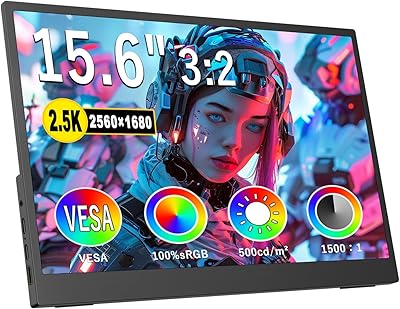
Topmonitor P15.6/2.5K Portable Monitor 15.6-inch 2560×1680
86%
94%
Display Quality
90%
Portability/Size/Weight
91%
Color Accuracy
87%
Connectivity (USB-C, HDMI)
85%
Build Quality
More

FAQ

Yes, the S55 connects to any camera with a Micro HDMI or full-size HDMI output using the included cable. Sony A7-series, ZV, and FX-series bodies all work reliably with it. Just make sure your camera is set to output a clean HDMI signal with the on-screen display turned off for the best monitoring experience.

Honestly, direct sunlight is a real challenge for this on-camera monitor. At 450 nits, the screen washes out noticeably on bright days, and the included sunshade helps only partially. If most of your shooting happens outdoors in sunny conditions, you would be better served by a monitor rated at 1000 nits or higher.

You will need to copy your .cube LUT files onto a compatible USB drive, then access the LUT menu through the monitor’s settings. The process is not immediately intuitive from the included manual, so checking a short tutorial on YouTube before your first shoot is worth the time. Once it is set up, switching between LUTs in the field is straightforward.

The included battery is a third-party F550-compatible cell that works fine for shorter sessions of two to three hours. For a full day of shooting, picking up a branded or higher-capacity F550 battery as a backup is a smart move. The battery plate accepts any standard F550-form-factor cell, so you have plenty of compatible options to choose from.

Yes, at 190g it is one of the lighter options in the 6-inch monitor class, which makes balancing on a three-axis gimbal much more manageable than with heavier monitors. The tilt arm also helps with positioning the screen where you need it without requiring awkward counterweight adjustments.

Yes, that is one of the more practical features of the S55. You load your desired LUT onto the monitor, enable it in the settings, and the display shows an approximation of the graded image while the camera still records the ungraded log file. It is genuinely useful for confirming exposure and lighting intent on set without a separate tech or laptop.

The loop-out passes your input signal through to a second monitor simultaneously. In practice, this means you can mount this field monitor on your camera rig for operator use while also feeding a larger screen for a director or client sitting nearby, all from a single HDMI source cable. No splitter hardware is needed.

The plastic shell is functional for everyday studio and event use, but it is not built for punishment. If your shoots regularly involve dusty environments, rain, or gear that gets dropped or knocked around, the construction may not hold up well over time. For rugged conditions, a monitor with a metal housing would be a more reliable long-term investment.

Yes, there is a stereo headphone output that lets you monitor audio embedded in the HDMI signal. It is a useful addition for run-and-gun shooters who want to keep an ear on audio levels without a dedicated audio recorder or separate monitoring device.

The tilt arm works well initially and covers the full range of positions you would need for cold shoe, cage, and gimbal mounting. With regular use over several months, some users do report a small amount of play developing at the connection point. It remains functional, but if rock-solid rigidity is critical for your work, a dedicated articulating arm purchased separately will hold up more consistently.