Overview

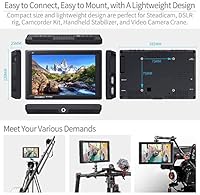
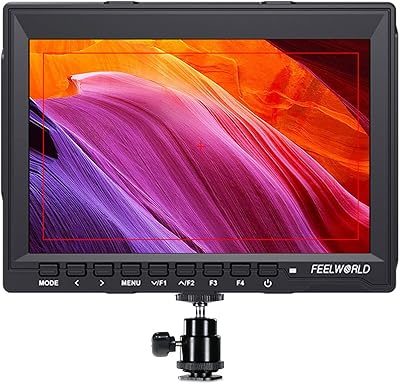
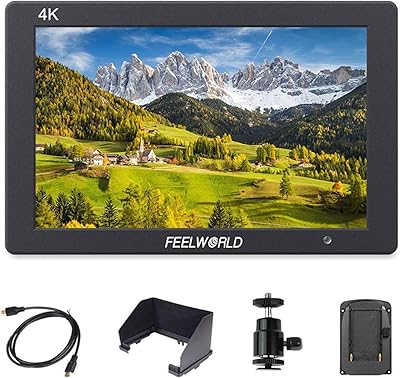
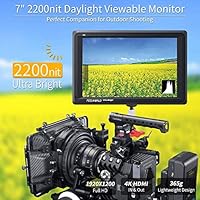
The FEELWORLD FW279 7-Inch Field Monitor sits in the middle of a crowded field monitor market, but it earns its place by solving one very specific problem: shooting outdoors without squinting at a dim screen. At 365 grams, it is light enough to mount on a gimbal without upsetting your balance, yet the panel is large enough to actually read focus on a busy set. This is a working monitor built for run-and-gun filmmakers, documentary crews, and solo operators who need reliable image feedback in changing lighting conditions — not a studio luxury item.
Features & Benefits

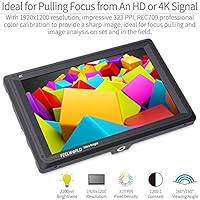
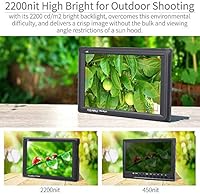
The standout spec here is the 2200 nit brightness — in practical terms, that means you can work on a sunny rooftop or a beach without a sun hood blocking your peripheral vision. The IPS panel runs at 1920x1200 with a 16:10 aspect ratio, which gives you a touch more vertical real estate than a standard 16:9 screen, useful for checking headroom and horizon lines. HDMI input and loop output support signals up to 4K at 30fps, so it plays well with current mirrorless and DSLR bodies. On-board tools like Focus Assist and False Colors are genuinely useful on set, and two programmable shortcut buttons let you call them up fast.

Best For

This 7-inch monitor is a natural fit for outdoor cinematographers and documentary shooters tired of shielding their screen with a free hand. Focus pullers who rely on accurate visual feedback — rather than guessing through a loupe — will appreciate the sharpness and the assist tools. It also works well for gimbal and Steadicam operators, since the lightweight build will not push a rig out of balance. If you are shooting 4K with a Sony, Canon, or Fuji mirrorless body, the HDMI loop-through lets you feed a second monitor without extra adapters. It is less suited to studio environments where a larger, color-critical display would serve better.

User Feedback

Most buyers highlight the outdoor brightness as the main reason they chose the FW279 over cheaper alternatives — and by most accounts, it delivers. Where opinions split is on the glossy panel surface, which catches reflections at sharp angles even if it handles direct sunlight well. Build quality gets mixed reviews; some find the plastic chassis feels appropriately light, while others expected something sturdier at this price point. Color accuracy out of the box is reported as decent but not precise, with a few users recommending a calibration pass before critical work. One detail that catches buyers off guard: the power adapter is sold separately, so factor that into your budget.

Pros

  • Reads clearly in direct sunlight without a sun hood, a genuine differentiator for outdoor shooting
  • At 365 grams, it sits on a gimbal or Steadicam without upsetting a carefully balanced rig
  • Focus Assist and False Colors are responsive and actually useful during fast-paced documentary work
  • 4K HDMI loop-through lets you feed a director or client monitor without extra hardware
  • Two programmable shortcut buttons put your most-used tools within one press during a live shoot
  • Compatible out of the box with Sony, Canon, Fuji, and Panasonic mirrorless systems without firmware workarounds
  • The 16:10 panel gives a touch more vertical framing reference than a standard widescreen display
  • F970 battery plate is included, making it easy to integrate into an existing Sony-compatible power setup
  • Professional assist tools are included at a price point where many competitors cut corners

Cons

  • Power adapter is not included in the box, which catches many buyers off guard on first use
  • Glossy screen surface causes distracting reflections at oblique angles even in moderate ambient light
  • Plastic chassis feels noticeably thin under hand and does not inspire confidence for rugged location use
  • Color calibration is needed before the panel can be trusted for exposure-critical monitoring decisions
  • Menu navigation is non-intuitive and slows down in-field adjustments during live shooting situations
  • No SDI input makes it incompatible with broadcast and cinema camera workflows
  • Built-in speaker and headphone output are too limited to provide meaningful audio quality assessment
  • Battery runtime drops significantly when running at maximum brightness for extended periods
  • HDMI input tops out at 4K 30fps, limiting usefulness for high-frame-rate slow-motion monitoring workflows

Ratings

The FEELWORLD FW279 7-Inch Field Monitor has been evaluated by our AI rating system after analyzing verified purchase reviews from buyers across North America, Europe, and Asia-Pacific — with spam, incentivized, and bot-flagged submissions actively filtered out before scoring. The result is a transparent breakdown that reflects what working videographers and cinematographers actually experience in the field, not just on paper. Both the genuine strengths and the real-world frustrations are factored into every score below.
Outdoor Brightness
93%
This is the category where the FW279 consistently earns high praise. Shooters working on sun-drenched locations — rooftops, beaches, outdoor events — report they can confidently read focus and exposure without rigging a sun hood or contorting their body to block the light. For a monitor at this price tier, that level of usable brightness is genuinely hard to find.
A small number of users note that peak brightness draws noticeably more power, which shortens runtime on F970-style batteries. In extreme midday desert or snow conditions, a few operators still encountered washout in the corners of the glossy panel, suggesting brightness alone cannot fully compensate for surface reflections.
Panel Sharpness & Clarity
88%
The 1920x1200 resolution across a 7-inch screen translates to a pixel density that makes fine detail genuinely readable. Focus pullers checking critical sharpness on a subject's eyelashes or a textured background report feeling confident in their assessments, which is precisely the job this monitor is meant to do on a working set.
The 16:10 aspect ratio, while useful for vertical framing checks, can feel slightly awkward when monitoring standard 16:9 footage, as thin black bars appear at the top and bottom. A handful of users also noted that the panel's color rendering out of the box skews slightly warm, which can affect exposure judgment until a calibration profile is dialed in.
Color Accuracy
71%
29%
With Rec.709 calibration on board and a 1200:1 contrast ratio, the FW279 offers a reasonable color reference for on-set decisions. Colorists and DPs who took a few minutes to run a calibration pass through the monitor's settings reported solid results for a monitor in this category, sufficient for exposure and white balance calls in documentary and commercial work.
Straight out of the box, color accuracy is not precise enough for critical grading reference work. Several users found the default color profile to be visually pleasing but not technically accurate, and without an external calibration tool, dialing in true neutrality is more of a guessing game than a workflow step.
Build Quality & Durability
67%
33%
For a monitor that weighs only 365 grams, the chassis holds together well under everyday use. Shooters who regularly move between locations appreciate that it survives bumps in a camera bag without showing obvious damage, and the button feedback is firm enough to operate without looking down.
Multiple buyers describe the plastic shell as feeling thinner than expected for a mid-range professional tool. A few noted flex in the body when pressure is applied near the mounting points, and the overall tactile impression does not inspire confidence for shoots in demanding environments like rain or high-humidity outdoor conditions.
Mounting Flexibility
84%
The combination of VESA 75 holes on the rear and an included hot shoe adapter covers most practical rigging scenarios out of the box. Gimbal operators and Steadicam users report straightforward integration with standard arms and articulating mounts, and the compact footprint means it does not create awkward leverage issues on lighter rigs.
The included hot shoe mount is functional but not heavy-duty. Users running demanding rig configurations — particularly those with additional accessories clamped nearby — report some play in the mount over time, suggesting an aftermarket cold shoe or dedicated monitor arm is worth considering for serious production use.
Monitoring Tools (Focus Assist, False Colors, Histogram)
82%
18%
The on-board professional tools are responsive and genuinely practical in a fast-paced shooting environment. False Colors in particular gets strong marks from operators monitoring exposure on run-and-gun documentary work, and the two programmable shortcut buttons mean the most-used functions are always one press away without navigating menus mid-shot.
The menu system for configuring these tools has a learning curve that some users find steeper than expected, especially compared to competing monitors at similar price points. A few operators also noted that the Focus Assist peaking overlay, while effective, offers limited color and intensity customization compared to higher-end field monitors.
HDMI Connectivity
81%
19%
The 4K HDMI loop-through is a practical feature for small crews running a director's monitor alongside the camera operator's display. Compatibility with Sony, Canon, Fuji, and Panasonic mirrorless bodies is widely confirmed by users, and the signal handshake is generally reported as fast and reliable during normal shooting conditions.
The HDMI input is capped at 4K 30fps, which limits its usefulness for operators shooting higher frame rates for slow-motion workflows. A small number of users also reported occasional signal dropout when using the loop-out function under extended use, though this appears to be an edge case rather than a systematic issue.
Weight & Portability
91%
At 365 grams, this is one of the lighter monitors in its screen-size class, and that matters a great deal when it is attached to a gimbal that has been carefully balanced. Shooters moving quickly between setups — event videographers, journalists, one-person documentary crews — consistently single out the weight as a reason they keep reaching for it.
The light weight is partly a function of the plastic construction, which means some of the portability benefit comes with a trade-off in perceived sturdiness. Users who need a monitor that feels solid in hand during handheld or shoulder-rig shooting sometimes find the lightness works against the overall sense of confidence in the tool.
Audio Monitoring
58%
42%
The 3.5mm headphone jack is a useful inclusion for solo shooters who want to keep a basic check on audio levels without carrying a separate audio monitor. In quiet environments, the built-in speaker can give you a rough sense of whether audio is being passed through the HDMI signal correctly.
The built-in speaker is too quiet and too low-fidelity for any practical audio assessment in a real shooting environment. Even the headphone output is described by several users as usable only for checking that audio is present, not for evaluating quality — which is honestly consistent with what any monitor at this price point can realistically offer.
Value for Money
79%
21%
For shooters who need outdoor-capable brightness and professional monitoring tools without moving into broadcast monitor pricing territory, the FW279 represents a reasonable return on investment. The core feature set — bright IPS panel, 4K HDMI loop, on-board assist tools — competes credibly with monitors sold at noticeably higher prices.
The missing power adapter is a recurring frustration in user reviews and is the most commonly cited reason buyers feel the purchase was not as straightforward as the price suggested. Factoring in a 3A adapter and a quality battery, the true out-of-pocket cost is meaningfully higher than the listed unit price implies.
Setup & Ease of Use
74%
26%
Initial physical setup is straightforward — the monitor attaches quickly via hot shoe, the HDMI connection is standard, and most cameras are recognized without fuss. For shooters who want to get up and running on a shoot without reading a manual, the basic functions are accessible within minutes.
The on-screen menu system draws repeated criticism for being non-intuitive, particularly when accessing less frequently used settings like anamorphic mode or custom picture profiles. Users who rely on quick in-field adjustments find that navigating more than one or two levels deep in the menu costs them time during live shooting scenarios.
Compatibility with Camera Systems
86%
Real-world compatibility across mainstream DSLR and mirrorless camera systems — including Sony Alpha, Canon EOS R, Fujifilm X and GFX, and Panasonic Lumix lines — is consistently confirmed by verified buyers. The standard HDMI implementation means most modern cameras connect without needing firmware updates or workarounds.
Users working with older camera bodies that output only 1080i or non-standard HDMI signal formats occasionally report compatibility issues requiring format adjustments on the camera side. There is no SDI input, which fully excludes the monitor from broadcast and cinema camera workflows where SDI is the standard connection.
Glossy Screen Surface
55%
45%
The glossy finish contributes to perceived color vibrancy and contrast in controlled or overcast outdoor lighting, which some users in portrait and commercial work find beneficial for compositing and color-checking tasks where they are not fighting direct sun.
In anything other than controlled lighting, the glossy surface introduces reflections that compete with the image — particularly at oblique viewing angles where the IPS panel already loses some brightness. Several users note that a matte screen option would make the monitor significantly more versatile across shooting environments without any brightness penalty.
Battery Life & Power Options
62%
38%
The F970 battery plate included in the box makes it easy to adopt the same batteries used by many video shooters already invested in Sony-compatible power ecosystems. Users running a full 6600mAh F970 battery report reasonable runtimes for a full shooting day when brightness is managed thoughtfully.
Running at full 2200 nit brightness shortens battery life noticeably, and the absence of a bundled power adapter means first-time buyers often discover they cannot even power the monitor on arrival. The 7V DC input requirement is also a constraint for shooters wanting to power from generic USB-C or V-mount battery solutions without additional adapters.

Suitable for:

The FEELWORLD FW279 7-Inch Field Monitor is a strong choice for outdoor videographers and documentary filmmakers who regularly deal with bright ambient light and need a screen they can actually trust in those conditions. Solo shooters working event coverage, travel filmmaking, or corporate video production will appreciate how the high-brightness panel eliminates the need to shade the screen with a hand or rig a cumbersome sun hood. Focus pullers and assistant camera operators on small-to-mid-size productions will find the on-board assist tools — particularly False Colors and Focus Peaking — responsive enough to support fast-moving shoots where there is no time to dig through menus. Gimbal and Steadicam operators will also find the 365-gram weight a genuine advantage, since adding a heavy monitor to a balanced rig creates real headaches that this unit largely avoids. If your camera system outputs via HDMI and you want to feed a second display for a director or client without carrying an extra signal splitter, the loop-through functionality covers that need cleanly. For anyone shooting 4K with a current Sony, Canon, or Fujifilm mirrorless body, compatibility is well-established and the setup is straightforward.
Not suitable for:

The FEELWORLD FW279 7-Inch Field Monitor is not the right tool for shooters who need a color-critical reference display for on-set grading or final look approval. Color accuracy out of the box requires calibration work before it can be trusted for precise decisions, and even then it is not a substitute for a properly profiled broadcast or cinema monitor. Users working in professional broadcast or narrative film environments where SDI connectivity is standard will find the HDMI-only input a hard limitation with no workaround. The glossy panel surface, while bright, creates noticeable reflections when the light source shifts to an oblique angle, which makes it less reliable as an all-conditions solution than the brightness figures alone might suggest. Anyone expecting a complete ready-to-shoot package should also know upfront that a power adapter is not included — a 3A adapter needs to be purchased separately, and the cost and inconvenience of discovering this on shoot day is a recurring frustration among buyers. Finally, operators who prioritize a rugged, confidence-inspiring chassis for demanding physical environments may find the plastic build feels underpowered for the wear and tear of frequent location work.
Specifications

  • Screen Size: The panel measures 7 inches diagonally, providing a usable viewing area large enough for critical focus evaluation on a working camera rig.
  • Resolution: Native resolution is 1920x1200 pixels (UXGA Wide), delivering a pixel density of approximately 323 PPI for sharp, detailed image rendering.
  • Aspect Ratio: The screen uses a 16:10 aspect ratio, which adds a small amount of extra vertical space compared to standard 16:9 field monitors.
  • Panel Type: An IPS panel is used, offering a 160-degree viewing angle so the image remains accurate when viewed from the side or at a slight vertical offset.
  • Brightness: Maximum backlight brightness is rated at 2200 cd/m2, making the display usable in direct sunlight without requiring an external sun hood.
  • Contrast Ratio: The panel delivers a 1200:1 contrast ratio, providing clear separation between highlight and shadow detail during on-set monitoring.
  • Color Standard: Factory calibration follows the Rec.709 color standard, the broadcast and video production reference used for HD content evaluation.
  • HDMI Connectivity: The monitor includes both a 4K HDMI input and a 4K HDMI loop output, supporting signals up to 4Kp30 for pass-through to a second display.
  • Audio Output: A 3.5mm stereo headphone jack and a built-in speaker are included for basic audio signal monitoring directly from the HDMI feed.
  • Weight: The unit weighs 365 grams without battery or mounting hardware attached, keeping rig balance manageable on gimbals and Steadicam setups.
  • Mounting Options: VESA 75 threaded mounting holes are recessed into the rear panel, and a standard hot shoe mount adapter is included in the box.
  • Battery Compatibility: The monitor uses an F970-compatible battery plate, accepting Sony NP-F series and third-party F550, F750, and F970 format batteries.
  • Input Voltage: DC power input operates at 7 volts, requiring a 3A power adapter that is sold separately and not included in the retail package.
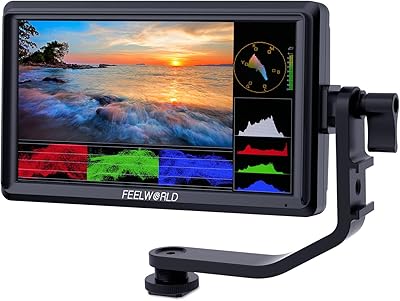
  • Monitoring Tools: On-board professional tools include Focus Assist peaking, False Colors, Exposure Histogram, Zebra, and two user-programmable shortcut buttons.
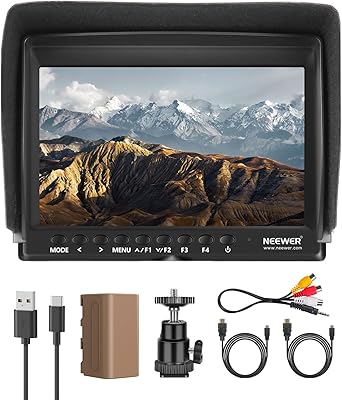
  • Package Contents: The retail box includes the monitor unit, one mini HDMI cable, one hot shoe mount, one F970 battery plate adapter, and a printed operation manual.
  • Dimensions: The physical unit measures approximately 1 inch deep, 7 inches wide, and 4.7 inches tall, making it compact enough for most standard monitor arms.
  • Screen Surface: The panel uses a glossy screen surface, which contributes to perceived color vibrancy but can introduce reflections at oblique lighting angles.
  • Model Number: The official manufacturer model number for this unit is FW279, as designated by FEELWORLD for the US market variant.

Related Reviews

Feelworld FW759 7″ Field Monitor
72%
83%
Image Clarity
58%
Brightness & Outdoor Usability
81%
Focus Peaking Performance
89%
Portability & Form Factor
54%
Build Quality & Durability
More
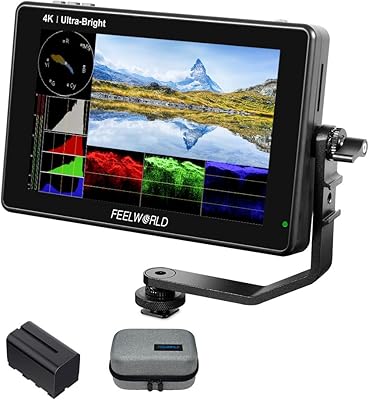
FEELWORLD T7 Plus 7-Inch Camera Monitor
80%
88%
Build Quality
91%
Display Clarity
83%
Color Accuracy
54%
Sunlight Visibility
79%
3D LUT & Monitoring Tools
More
NEEWER F100 7-inch Field Monitor
78%
83%
Image Quality
66%
Outdoor Visibility
71%
Build Quality
68%
Ball Head & Mounting
78%
Battery Life
More
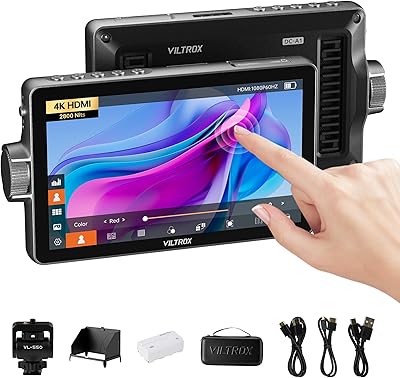
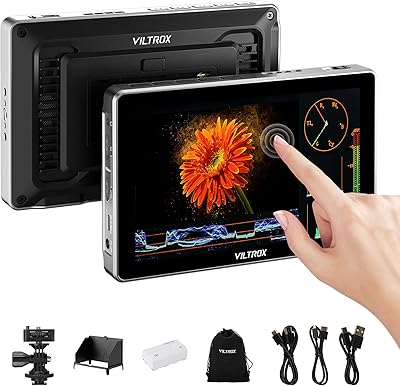
VILTROX DC-A1 7″ Camera Field Monitor
78%
93%
Outdoor Brightness
88%
Touchscreen Responsiveness
84%
Build Quality
67%
Menu & Usability
86%
3D LUT Performance
More
FEELWORLD FW568 6″ Field Monitor
77%
88%
Image Clarity & Sharpness
84%
Color Accuracy
91%
LUT Support & Preview
87%
Exposure & Focus Assist Tools
63%
Brightness & Outdoor Usability
More
FEELWORLD LUT7 7″ Field Monitor
77%
91%
Daylight Visibility
84%
Image Clarity
53%
Build Quality
71%
Touchscreen Usability
88%
Monitoring Scope Suite
More
Feelworld F5 ProX 5.5″ Field Monitor
78%
91%
Screen Brightness
83%
Image Clarity & Resolution
86%
Monitoring Tools
67%
Touchscreen Responsiveness
58%
Build Quality & Durability
More
VILTROX DC-L1 7-Inch Touchscreen Camera Field Monitor
87%
93%
Display Quality
89%
Portability
85%
Power Options
91%
Sunshade Effectiveness
88%
Ease of Use
More
FEELWORLD F570 5.7-Inch Full HD DSLR On-Camera Monitor
87%
88%
Display Quality
94%
Portability & Size
90%
Build Quality
85%
Brightness & Outdoor Use
91%
Ease of Use
More
VILTROX DC-70 II 7″ Field Monitor
75%
88%
Value for Money
83%
Focus Peaking Performance
61%
Display Resolution & Sharpness
78%
Build Quality & Durability
74%
HDMI Connectivity
More

FAQ

No, and this is the detail that catches the most buyers off guard. The retail package includes the monitor, a mini HDMI cable, a hot shoe mount, and an F970 battery plate — but no power adapter. You will need to purchase a compatible 3A DC adapter separately before you can power the unit from a wall outlet.

Yes, compatibility with Sony Alpha bodies is widely confirmed by users. You connect via the HDMI output on your camera, and the monitor recognizes the signal without requiring any special settings changes on most Sony bodies. Just make sure your camera is set to output a clean HDMI signal if you want to avoid on-screen overlays appearing on the monitor.

That is precisely what the high-brightness backlight is designed for. Most users report being able to read the image clearly in direct outdoor sunlight without adding a sun hood to the rig. The glossy panel surface can still pick up some reflections at sharp angles, but the brightness level is sufficient to overcome ambient light in the majority of outdoor shooting conditions.

The monitor accepts F970-format batteries via the included battery plate, which covers Sony NP-F series cells and compatible third-party options. Runtime depends heavily on brightness settings — running at full brightness will drain a standard 6600mAh F970 battery considerably faster than running at a reduced brightness level. For a full shooting day, most operators carry at least two F970-class batteries.

Yes, if you are running a small crew where both the camera operator and a director or client want a live feed, the loop-out lets you chain a second monitor without needing a signal splitter or additional hardware. The signal passes through cleanly up to 4K at 30fps, which covers most current mirrorless and DSLR output configurations.

Straight out of the box, the color is usable but not precisely calibrated — it tends to skew slightly warm on the default profile. For general exposure and framing decisions, it works fine. For critical color reference work, most experienced users recommend spending a few minutes adjusting the picture settings or running a calibration pass before relying on it for anything where color accuracy really matters.

At 365 grams, the FEELWORLD FW279 7-Inch Field Monitor is light enough to mount on most gimbal arms without requiring a major rebalance from a typical camera-only setup. That said, any added weight will shift your center of gravity, so you will still need to make minor balance adjustments after mounting. The hot shoe adapter makes the physical attachment straightforward on most gimbals.

Honestly, the menu takes some getting used to. The basic functions — brightness, focus assist, false colors — are accessible quickly once you learn the button layout, and the two shortcut buttons help a lot for tools you use constantly. Where it gets frustrating is when you need to dig into less-used settings mid-shoot; the menu depth is not the most intuitive, so it is worth spending time with it before your first job.

There is no official IP or weather-sealing rating on this monitor, and the plastic chassis is not designed for wet or dusty conditions. For outdoor shooting in dry or mildly challenging environments it holds up well day-to-day, but if you are regularly shooting in rain, high humidity, or sandy locations, you should treat it as a unit that needs protection rather than assuming it can handle exposure.

The 16:10 panel is slightly taller than a 16:9 display of the same diagonal measurement, which means when you are monitoring standard widescreen 16:9 footage, thin black bars will appear at the top and bottom of the screen. Some operators find the extra vertical space useful for checking headroom and horizon framing at a glance, while others find the bars mildly distracting. It is a minor difference in practice but worth knowing before you buy.

Where to Buy