Overview

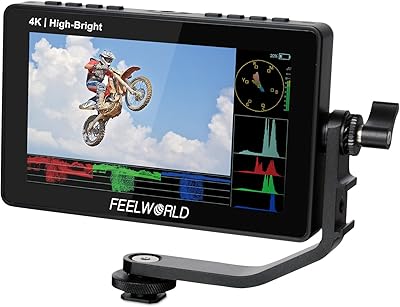
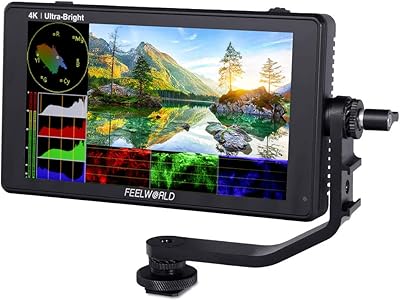
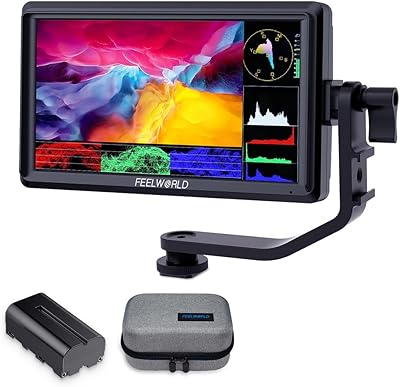
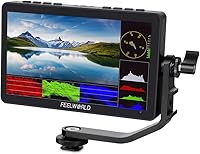
The FEELWORLD F5 Pro 6″ Field Monitor sits comfortably in the mid-range of the on-camera monitor market, offering a meaningful step up from relying on your camera's built-in screen. With a 6-inch IPS panel running at full 1080p and calibrated to REC-709 standards, colors look accurate and consistent under challenging lighting. At 500 nits, it holds up reasonably well outdoors. What makes this on-camera monitor stand out in a crowded category is the F970 external kit — a practical mounting system that lets you attach and power accessories like wireless transmitters or LED lights directly from the battery plate, keeping your rig compact.
Features & Benefits

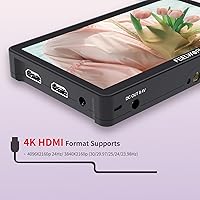
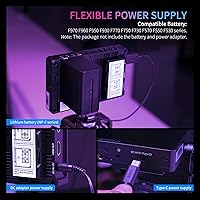
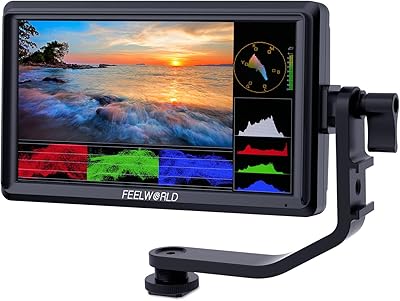
The touchscreen interface on the F5 Pro is genuinely useful on a busy set — pinch-to-zoom lets you quickly check focus without hunting through menus. For exposure work, false color and histogram overlays give reliable readings in real time, while focus peaking highlights edges clearly enough to trust during a fast-moving shoot. The 3D LUT support and REC-709 calibration mean what you see on screen actually reflects your intended color grade. On the connectivity side, 4K HDMI loop-out lets you feed a second monitor or recorder simultaneously. Power options are flexible: Type-C, F970 battery, or DC input covers most field situations.

Best For

This field monitor is a natural fit for solo shooters and run-and-gun videographers who need accurate monitoring without hauling a heavy rig. If you're working with a DSLR or mirrorless camera and have been squinting at a 3-inch LCD, the jump to a 6-inch calibrated display makes a real difference when nailing exposure on the fly. It also suits interview and event shooters who rely on consistent framing and focus checks throughout a long day. Anyone who regularly uses wireless video transmitters will appreciate the F970 power kit, which consolidates accessories onto one battery rather than juggling separate power sources across the whole setup.

User Feedback

Buyers consistently praise the bright, responsive screen and note that the build quality feels solid relative to the price point. Touch response gets positive marks, and most users find the monitoring tools — particularly false color — accurate enough for professional work. That said, a few frustrations come up regularly: the battery is not included, which catches some buyers off guard, and the tilt arm works fine but feels noticeably basic compared to third-party alternatives. Menu navigation can feel slightly unintuitive at first. Long-term durability concerns surface occasionally around the plastic housing, though warranty support from FEELWORLD is generally reported as responsive.

Pros

  • REC-709 calibration and 3D LUT support deliver genuinely accurate color for on-location monitoring.
  • Pinch-to-zoom touchscreen makes critical focus checks fast and intuitive between takes.
  • False color and histogram overlays are reliable enough for professional exposure decisions.
  • 4K HDMI loop-out lets you feed a recorder and client monitor at the same time.
  • Three power input options — Type-C, F970 battery, and DC — adapt to almost any field setup.
  • The F970 external kit consolidates accessory power into a single battery, reducing rig complexity.
  • At under 250g, the F5 Pro adds almost no noticeable weight to a mirrorless or DSLR setup.
  • Broad camera compatibility means it works across Sony, Canon, Nikon, Fujifilm, and Blackmagic bodies.
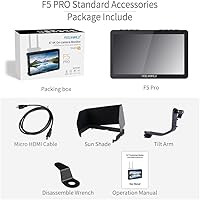
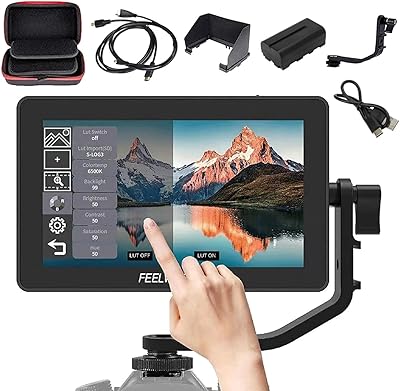
  • The included sunshade, tilt arm, and micro HDMI cable get you shooting quickly without extra purchases.
  • For its price tier, the feature depth genuinely competes with monitors that cost significantly more.

Cons

  • No battery or power adapter included — budget for a compatible F970 cell before your first shoot.
  • The plastic housing feels noticeably fragile compared to metal-chassis monitors in a similar price range.
  • The tilt arm is functional but wobbly under a loaded rig; many users replace it quickly.
  • Menu navigation has a real learning curve that can disrupt workflow during fast-moving shoots.
  • Touchscreen responsiveness drops noticeably in cold weather or during extended menu navigation.
  • The micro HDMI port shows early signs of wear with repeated cable connections over time.
  • 500-nit brightness struggles in direct midday sunlight even with the sunshade fully deployed.
  • Focus peaking sensitivity lacks a fine-tuning option, leading to occasional false positives on textured surfaces.
  • Loading custom 3D LUTs through the menu is a clunky process compared to competing monitors.
  • Long-term durability concerns around the plastic shell appear regularly in reviews after extended field use.

Ratings

The FEELWORLD F5 Pro 6″ Field Monitor earns a well-rounded score across most categories, based on AI analysis of verified global buyer reviews with spam, bot, and incentivized feedback actively filtered out. Across thousands of real-world accounts from indie filmmakers, event videographers, and content creators, this on-camera monitor shows clear strengths in display quality and feature depth for its price tier. Both the highlights and the genuine frustrations are reflected honestly in the scores below.

Display Quality
84%
Most users are genuinely impressed by how sharp and color-accurate the IPS panel looks during outdoor and studio shoots alike. The REC-709 calibration means skin tones and highlights read predictably, which matters when you are monitoring a live interview or a narrative scene without time to second-guess exposure.
At 500 nits, the screen handles moderate sunlight reasonably well, but direct midday sun on a reflective surface can still wash out detail even with the included sunshade attached. A handful of users shooting in very bright environments wished for closer to 700 nits.
Touchscreen Responsiveness
79%
21%
The capacitive touch panel draws consistent praise for being snappy enough to use with one hand while adjusting a camera with the other. Pinch-to-zoom in particular gets called out as a genuinely practical tool for checking critical focus between takes rather than a gimmick.
A noticeable segment of reviewers reports occasional missed taps or slightly sluggish response when navigating deeper menu layers, especially in colder temperatures. The touchscreen works well for core tasks but is not quite as polished as what you would find on a flagship monitor at twice the price.
Color Accuracy & Calibration
86%
The built-in 3D LUT support and factory REC-709 calibration give this field monitor credibility beyond its price point. Colorists and DPs report that what they see on screen aligns closely enough with their editing suite to make confident on-set decisions without major surprises in post.
Out-of-the-box calibration is solid but not reference-grade. Some color-critical users noted slight inconsistencies toward the cooler end of the color temperature range, and loading custom 3D LUTs via the menu can feel clunky compared to more expensive competitors.
Monitoring Tools
88%
False color, histogram, focus peaking, and frame guides are all present and functional in ways that genuinely assist exposure and focus decisions on a real shoot. Videographers shooting events or run-and-gun documentary work especially appreciate having these tools available without needing a separate device.
The nine-grid and some of the overlay tools lack fine-tuning options that more experienced operators might want. A few users noted that the focus peaking sensitivity could benefit from an additional adjustment level to avoid false positives on textured backgrounds.
Build Quality & Durability
67%
33%
For its weight class — just 245g — the F5 Pro feels adequately sturdy during everyday use, and the compact footprint makes it easy to slip into a bag without adding bulk to a travel kit. Most users report no issues with the unit itself after months of regular use.
The all-plastic housing is the most common source of skepticism in long-term reviews. Users who have owned premium metal-bodied monitors find the shell feels noticeably less confident, and a few have reported cosmetic damage from minor drops that a more robust chassis might have shrugged off.
Power Flexibility
82%
18%
Having three power input options — Type-C, F970 battery plate, and DC — means this on-camera monitor adapts well to different shooting setups without carrying a bag full of adapters. The 8.4V DC output for accessories is a practical touch that lets you run a small wireless transmitter off the same battery.
The fact that no battery or power adapter is included in the box continues to catch buyers off guard, and a few reviewers felt this was a meaningful omission at this price point. You will need to budget separately for at least one F970-compatible battery to use the monitor untethered.
F970 External Kit & Mounting
74%
26%
The F970 external kit concept — mounting accessories like wireless video transmitters or small LED panels directly to the monitor and powering them from the battery plate — is a genuinely clever space-saving solution that solo shooters appreciate when building a minimal rig.
The execution is functional but not refined. The kit feels slightly improvised in practice, and the mounting tolerances are loose enough that some users prefer using dedicated cold shoe arms instead. It works as advertised, but it is not something you would describe as confidence-inspiring.
Tilt Arm Quality
58%
42%
The included tilt arm provides a basic range of motion and is adequate for getting the screen to a comfortable viewing angle when the monitor is mounted on a hot shoe. It does its job without requiring an immediate replacement for casual use.
This is one of the more consistent complaints across reviews — the tilt arm feels lightweight and slightly wobbly under the weight of a fully assembled rig. Many users end up replacing it with a sturdier third-party option relatively quickly, which adds to the real-world cost of ownership.
HDMI Connectivity
83%
4K HDMI input paired with loop-out is a practical combination that lets you feed a recorder or second monitor simultaneously — something you actually use on multi-camera setups or when a client monitor is needed on set. The signal pass-through is clean and consistent according to the majority of users.
The micro HDMI connection point, while common on monitors of this size, draws some criticism for feeling fragile over time with repeated plugging and unplugging. A few users reported cable fit issues with certain third-party micro HDMI cables not seating firmly.
Menu & Interface Usability
63%
37%
Once you have spent a few sessions with the menu system, most users find it navigable enough for quick adjustments between shots. Core settings like brightness and overlay tools are accessible without too many layers of navigation during a live shoot.
The learning curve is steeper than it should be for a touchscreen device, and new users frequently mention spending time in the manual before feeling comfortable. The menu logic is not always intuitive, and toggling between certain monitoring tools mid-shoot can break your concentration at a critical moment.
Portability & Form Factor
89%
At under 250g and with a slim 20mm profile, this field monitor genuinely disappears into a camera bag. Travel-focused videographers and one-person crews note that it adds almost no perceptible weight to a mirrorless setup, which matters across a full day of shooting.
The 6-inch size is the sweet spot for most users, but operators coming from 7-inch monitors occasionally feel the screen real estate is slightly limiting when using multiple overlays simultaneously. This is a personal preference rather than a design flaw, but worth considering.
Value for Money
81%
19%
At its price point, the F5 Pro delivers a feature set that would have cost significantly more just a few years ago. Buyers who compared it directly with similarly priced alternatives from competing brands generally felt it offered a better balance of display quality and monitoring tools.
The missing battery and the basic tilt arm are the two factors that consistently chip away at perceived value. If you account for purchasing a compatible F970 battery separately, the effective entry cost is higher than the listed price suggests, which some buyers felt was not clearly communicated.
Compatibility
85%
The combination of 4K HDMI input, Type-C power, and standard mounting threads means this on-camera monitor works with a wide range of cameras including Sony, Canon, Nikon, Fujifilm, and Blackmagic bodies without needing special adapters for most common setups.
A small number of users reported minor compatibility quirks with specific camera models when using the HDMI loop-out simultaneously, including occasional signal handshake delays. These appear to be edge cases rather than widespread issues, but worth verifying with your specific camera body before purchase.
Setup & Out-of-Box Experience
71%
29%
The box includes a sunshade, tilt arm, micro HDMI cable, and a small wrench for assembly, which covers the basics for getting started quickly. Most users report being up and running within a few minutes of opening the package.
The lack of a battery or power adapter means first-time buyers often face a delay between unboxing and actually using the monitor. The manual is adequate but written in translated English that occasionally requires interpretation, which adds friction to the initial setup for less technical users.

Suitable for:

The FEELWORLD F5 Pro 6″ Field Monitor is a strong match for solo videographers, indie filmmakers, and content creators who have outgrown their camera's built-in screen and need reliable, accurate monitoring without investing in a high-end professional unit. If you shoot interviews, corporate events, vlogs, or short-form documentary work, the combination of false color, focus peaking, and REC-709 calibration gives you the tools to nail exposure and focus consistently across a full shooting day. DSLR and mirrorless shooters in particular will notice an immediate and meaningful improvement over squinting at a 3-inch flip screen in changing light. The F970 external kit is a thoughtful addition for anyone already running a wireless video transmitter or small LED light — being able to consolidate power to a single battery plate keeps your rig lighter and your cable management cleaner. It also suits budget-conscious filmmakers who want a feature set that punches above its price tier without committing to a flagship monitor they may not fully need yet.

Not suitable for:

Buyers expecting a rugged, broadcast-grade tool should look elsewhere before committing to the FEELWORLD F5 Pro 6″ Field Monitor. The plastic shell is functional but not built for the kind of punishment a working professional on a high-stakes commercial shoot might put a monitor through — a single bad drop could mean cosmetic or structural damage that a metal-chassis competitor would shrug off. Colorists or directors of photography who require reference-level color accuracy for critical on-set grading will likely find the factory calibration adequate but not precise enough to replace a dedicated color-critical display. If you regularly shoot in direct, harsh sunlight for extended periods, 500 nits will test the limits of readability even with the sunshade in place. The menu system also requires a patience and a learning curve that operators who need to adjust settings quickly mid-shoot may find disruptive. And if you were expecting a complete out-of-the-box solution, note that this on-camera monitor ships without a battery or power adapter, meaning additional purchases are required before you can use it untethered.

Specifications

  • Screen Size: The display measures 6 inches diagonally, offering a meaningful viewing area for on-camera monitoring without adding excessive bulk to a rig.
  • Panel Type: An IPS panel is used, providing wider viewing angles and more consistent color representation compared to standard TN displays common at this price tier.
  • Resolution: The native resolution is 1920x1080 (Full HD), delivering sharp, detailed imagery suitable for critical focus and exposure evaluation.
  • Brightness: Peak brightness is rated at 500 nits, which handles mixed indoor and partially shaded outdoor conditions adequately with the sunshade attached.
  • Contrast Ratio: The contrast ratio is 1000:1, producing reasonably defined separation between highlights and shadows for accurate on-set exposure monitoring.
  • Aspect Ratio: The panel uses a standard 16:9 aspect ratio, matching the native output of most modern DSLR, mirrorless, and cinema cameras.
  • Color Calibration: Factory calibration targets the REC-709 color space, ensuring that the on-screen image closely matches standard broadcast and video post-production references.
  • HDMI Input: A 4K HDMI input accepts signals up to 4K resolution from compatible cameras, displayed downscaled on the Full HD panel.
  • HDMI Output: A loop-out HDMI port passes the input signal through to a second monitor or recorder simultaneously without degrading the source signal.
  • Power Inputs: Three power input options are supported: 5V USB Type-C, a rear-mounted F970 battery plate, and a standard DC barrel connector.
  • DC Output: An 8.4V DC output port allows compatible accessories — such as small wireless transmitters or LED panels — to draw power directly from the monitor's battery source.
  • Touch Interface: The capacitive touchscreen supports pinch-to-zoom gestures for magnifying a live image, as well as touch-based menu navigation throughout the interface.
  • Monitoring Tools: Built-in monitoring aids include false color, histogram, focus peaking, frame guides, nine-grid overlay, pixel-to-pixel mode, and embedded audio level meters.
  • 3D LUT Support: The monitor supports loading and displaying custom 3D LUTs, enabling on-set visualization of color grades before footage reaches the editing stage.
  • Unit Dimensions: Physical dimensions measure 148 x 93 x 20 mm, keeping the monitor compact enough for hot shoe or articulating arm mounting on most camera setups.
  • Unit Weight: The monitor weighs 245g without battery, contributing minimal additional load to handheld or gimbal-mounted camera configurations.
  • Shell Material: The outer casing is constructed from plastic, which keeps weight low but offers less impact resistance than aluminum-bodied monitors in higher price brackets.
  • Audio: A stereo headphone output is included for monitoring embedded audio directly from the HDMI signal fed into the monitor.
  • Included Accessories: The package contains a tilt arm, sunshade, micro HDMI cable, disassembly wrench, and printed manual; no battery or power adapter is included.
  • Connector Type: The primary video input uses a micro HDMI connector, which is standard for monitors of this size but requires care during repeated connections to avoid port wear.

Related Reviews

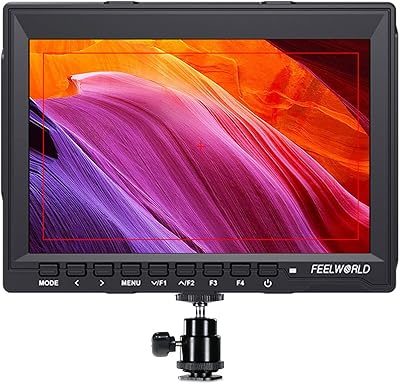
FEELWORLD FW568 6″ Field Monitor
77%
88%
Image Clarity & Sharpness
84%
Color Accuracy
91%
LUT Support & Preview
87%
Exposure & Focus Assist Tools
63%
Brightness & Outdoor Usability
More
Feelworld F5 ProX 5.5″ Field Monitor
78%
91%
Screen Brightness
83%
Image Clarity & Resolution
86%
Monitoring Tools
67%
Touchscreen Responsiveness
58%
Build Quality & Durability
More
FEELWORLD LUT6 6-inch Monitor
85%
94%
Outdoor Performance
89%
Display Quality
88%
Touchscreen Usability
91%
Color Accuracy
85%
Portability & Weight
More
Feelworld F6 Plus 6-inch Monitor
87%
92%
Display Quality
88%
Ease of Use
90%
Portability
75%
Battery Life
80%
Build Quality
More
Feelworld S55 6″ Field Monitor
77%
86%
Image Clarity
53%
Outdoor Visibility
88%
Exposure Monitoring Tools
81%
LUT Support
62%
Build Quality
More
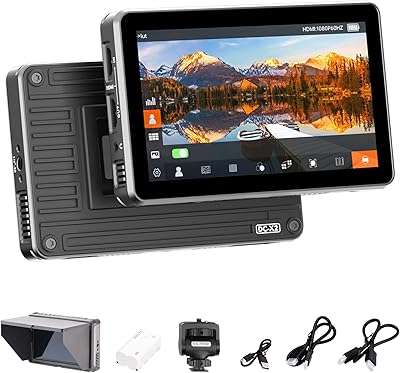
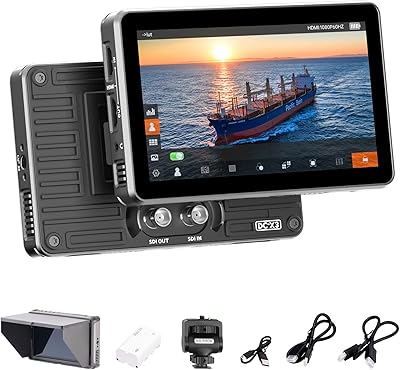
VILTROX DC-X3 6″ Field Monitor
80%
93%
Brightness & Outdoor Visibility
81%
Build Quality & Durability
78%
Touchscreen Responsiveness
74%
Image Accuracy & Color Fidelity
69%
4K & SDI Connectivity
More
VILTROX DC-X2 6-inch Field Monitor
80%
93%
Outdoor Brightness
78%
Build Quality
71%
Touchscreen Responsiveness
67%
Color Accuracy
84%
3D LUT Support
More
Feelworld FW759 7″ Field Monitor
72%
83%
Image Clarity
58%
Brightness & Outdoor Usability
81%
Focus Peaking Performance
89%
Portability & Form Factor
54%
Build Quality & Durability
More
MSI Pro MP161 E2 Portable Monitor 15.6″ FHD
84%
88%
Display Quality
94%
Portability & Weight
86%
Connectivity Options
92%
Setup & Installation
90%
Compatibility
More
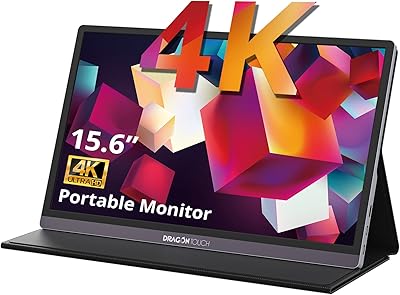
Dragon Touch S1 Pro 15.6-Inch 4K Portable Monitor
87%
94%
Display Quality
91%
Portability
88%
Gaming Performance
86%
Build Quality
62%
Audio Quality
More

FAQ

No, it does not. The FEELWORLD F5 Pro 6″ Field Monitor ships without a battery or power adapter, which catches a lot of first-time buyers off guard. You will need to purchase a compatible F970-type battery separately before you can use it untethered from a wall or USB source. FEELWORLD does sell compatible battery bundles, so searching for those alongside the monitor is worth doing at checkout.
Yes, it is compatible with Sony mirrorless cameras that output via HDMI, which covers most Alpha-series bodies. You just need the correct micro HDMI cable to connect them — one is included in the box. Check whether your specific camera model outputs a clean HDMI signal, as some Sony bodies require a menu setting to disable on-screen overlays before sending a clean feed to an external monitor.

It is genuinely useful for the most common tasks — particularly pinch-to-zoom for checking critical focus between shots. Most users find the touch response snappy enough for day-to-day operation. That said, navigating deeper menu layers through touch can feel slightly imprecise, especially in colder conditions, so some operators prefer using the physical buttons for menu access and reserving touch for the zoom function.

At 500 nits, this field monitor manages reasonably well in partially shaded outdoor conditions when you use the included sunshade. In direct midday sunlight, however, readability does become a challenge — you will find yourself repositioning to find shade or angling the tilt arm to reduce glare. If most of your shooting is outdoors in harsh sun, you may want to consider a higher-brightness option closer to 700 nits or above.

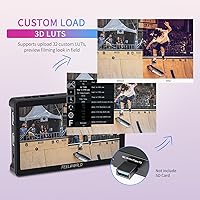
Yes, the F5 Pro supports 3D LUT loading, which lets you preview a color grade applied to your live footage on set. The process involves copying LUT files to a compatible memory card and importing them through the monitor's menu. It works, but the workflow is a bit clunky compared to monitors at higher price points — expect to spend a few minutes getting it set up before your first use.

The 8.4V DC output is designed to run small accessories that accept that voltage — common examples include Hollyland or Zhiyun wireless video transmitters, small LED fill lights, and certain video converters. It is a useful feature for keeping your rig's cable management clean, but always verify your accessory's power requirements before connecting, since not all accessories accept 8.4V input without a voltage regulator.

Honest answer: the included tilt arm is functional but basic. It holds the monitor at a usable angle for most casual setups, but under the weight of a fully loaded rig it can feel slightly wobbly. Many users do end up replacing it with a more solid articulating arm after a few shoots. If you already own a quality cold shoe arm or magic arm, you will likely skip the included one entirely.

No, the loop-out passes the signal through without processing or downscaling it, so your recorder receives the same signal the camera is outputting. This is the standard behavior for field monitor loop-outs and is exactly what you want when sending footage simultaneously to both a monitor and an external recorder like an Atomos or Blackmagic device.

There is a learning curve. The menu is touch-navigable but the logic is not always intuitive, and new users typically spend time with the manual during their first session. Once you have configured your preferred monitoring tools and brightness settings, you will not need to dig into the menus very often during a shoot. Most operators report feeling comfortable with it after two or three sessions.

It holds up well for regular indie and content creation use, but the all-plastic housing is a genuine consideration if your gear takes a beating on busy commercial sets. For documentary work, event videography, or solo content creation, most users report no issues after extended use. If you work in environments where gear regularly gets bumped, dropped, or exposed to the elements, a monitor with a metal chassis would offer more peace of mind for long-term durability.