Overview

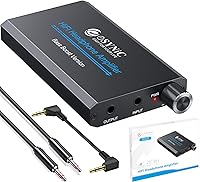
The eSynic ESY233 Portable Headphone Amplifier is a compact, no-frills device aimed at listeners who feel their phone or laptop simply isn't doing their headphones justice. Built from aluminum alloy, it feels noticeably more solid in hand than you'd expect at this price point — though it's worth keeping expectations grounded. It connects via a standard 3.5mm jack, so it works with virtually any source device. The bass boost switch is the main selling point, designed for genres where low-end punch matters most. USB recharging means you can top it up on a commute without hunting for batteries.
Features & Benefits

The pocket amp handles a wide range of headphone types — from ultra-sensitive in-ear monitors to full-size over-ears that demand more power than a phone can provide. In plain terms, it can drive headphones that are otherwise too demanding for typical portable devices, while also accommodating quieter IEMs without adding noticeable noise. The bass boost adds a meaningful low-frequency lift that works well for EDM and hip-hop, but may feel excessive for classical or acoustic listeners who prefer a flatter sound. Distortion stays impressively low at normal volumes, and battery life comfortably covers a full day of commuting. Both a short patch cable and a longer cable are included.

Best For

This portable amplifier makes the most sense for a few specific types of buyers. If your phone's headphone output sounds thin or can't drive your headphones to a satisfying volume, this is a practical fix. Bass-heavy music fans — think trap, electronic, or film scores with big orchestral lows — will get the most out of the boost switch. It's also a solid pick for commuters who want something pocketable that lasts through long travel days. And if you're shopping for a gift for someone just getting into better audio gear, the packaging and included accessories make it feel like more than a budget buy.

User Feedback

Buyers who upgraded from plugging headphones directly into a phone tend to notice a genuine improvement in volume and fullness, especially with mid-impedance cans. Build quality gets positive mentions — the aluminum shell does feel solid for the price. That said, a recurring criticism involves background hiss with highly sensitive in-ear monitors at higher volume settings, which is worth factoring in if IEMs are your primary earphone. Real-world battery life generally matches the stated rating for most users. Opinions on the bass boost are split: some find it satisfying for their genre, while others feel it's a touch heavy-handed. The included cables are functional but not a standout.

Pros

  • Immediately noticeable volume and fullness improvement over a typical phone headphone output.
  • The metal chassis feels genuinely solid and resists the everyday dents and drops of bag carry.
  • Bass boost switch adds real low-end weight for EDM, hip-hop, and cinematic listening.
  • All-day battery life holds up in real-world use, not just controlled lab conditions.
  • Works with a wide range of headphone types without any configuration or setup required.
  • Charges quickly via standard USB, compatible with most existing cables and bricks.
  • Ships ready to use — both a short patch cable and a longer listening cable are included.
  • Lightweight and slim enough to carry without noticing it is there.
  • Low distortion at normal listening volumes keeps the sound clean and composed.
  • Accessible entry point for anyone curious about portable amplification without a large investment.

Cons

  • Audible hiss with sensitive in-ear monitors is a consistent complaint, not an isolated case.
  • The bass boost is fixed-intensity — there is no way to apply a subtler or partial effect.
  • Requires a separate adapter for phones and tablets that lack a 3.5mm headphone jack.
  • Volume knob has no reference markings, making it hard to return to a preferred listening level.
  • Included cables are functional but feel cheap and are frequently swapped out by users.
  • The finish scuffs with regular pocket carry faster than the aluminum chassis marketing implies.
  • No pass-through charging, so listening while plugged in can introduce electrical noise for some users.
  • Headphone jacks and volume control show wear in longer-term use reports spanning several months.
  • No USB-C charging port, which feels like a missed opportunity given current device ecosystems.

Ratings

The eSynic ESY233 Portable Headphone Amplifier has been evaluated by our AI system after processing verified global buyer reviews, with spam, bot-generated, and incentivized feedback actively filtered out. The scores below reflect an honest cross-section of real listener experiences — commuters, casual audiophiles, and first-time amp buyers alike — capturing both what this pocket amp genuinely gets right and where it falls short of expectations.
Sound Quality Improvement
83%
Most buyers noticed a clear and immediate improvement over plugging headphones directly into a phone or laptop — fuller mids, better separation, and a more controlled low end. For listeners using mid-impedance headphones that smartphones typically underpower, the difference was described as night and day.
At very high volume settings, a small but consistent group of users reported subtle coloration creeping in, suggesting the amp is at its best when not pushed to its absolute limits. Audiophiles expecting studio-grade transparency may find the overall tuning slightly warm.
Bass Boost Performance
79%
21%
The bass boost switch lands well for EDM, hip-hop, and action movie soundtracks, adding genuine punch without completely overwhelming the midrange. Commuters using closed-back headphones in noisy environments particularly appreciated having that extra low-end weight on demand.
It is a one-size-fits-all boost with no adjustable intensity, which means some users found it too heavy-handed for genres like jazz, acoustic, or classical. Neutral-sound purists will likely leave it switched off permanently, making it a niche feature rather than a universal one.
Build Quality
77%
23%
The aluminum alloy chassis gives this portable amplifier a noticeably solid feel that punches above its price tier — it does not flex, rattle, or feel hollow. Several buyers mentioned it survived drops and daily bag-tossing without cosmetic damage.
A few users noted that the finish scuffs relatively easily with regular pocket carry, and the input and output jacks, while functional, feel slightly loose compared to higher-end units. It is still a budget product at heart, and close inspection reveals some tolerance gaps in the assembly.
Noise Floor & Hiss
61%
39%
With standard over-ear headphones and most on-ear models, the background noise floor is acceptably low during quiet musical passages. Buyers using dynamic driver headphones in the 32–150 ohm range generally reported a clean, quiet background.
This is the most commonly cited pain point: sensitive in-ear monitors reveal an audible hiss, particularly at medium-to-high gain settings. Users with high-sensitivity IEMs frequently flagged this as a dealbreaker, and it is worth considering carefully before purchasing if IEMs are your primary driver.
Battery Life
86%
Real-world usage reports closely tracked the stated rating, with most listeners getting through a full workday of listening on a single charge without anxiety. Commuters especially appreciated not having to charge it every night.
A handful of buyers reported slightly shorter runtime when running power-hungry headphones at higher volumes, which is physically expected but not clearly communicated in the product description. The battery capacity is not user-replaceable, which matters for long-term ownership.
Portability & Size
91%
At roughly the size of a small matchbox and light enough to forget it is in a jacket pocket, this portable amplifier is genuinely pocketable in a way that many competing units are not. It pairs naturally with a phone clipped together using a rubber band for on-the-go use.
The 3.5mm cable stack — source device, short cable, amp, another cable, headphones — does create a bit of a cable management puzzle when moving around. Some buyers found the dangling chain awkward during exercise or quick transit.
Recharge Speed & Convenience
84%
Charging from flat to full in roughly two and a half hours via standard USB is genuinely convenient, and the input is compatible with most existing charging bricks and power banks. Buyers appreciated not needing a proprietary cable.
The unit does not support pass-through charging, meaning you cannot listen while it charges without the audio quality being affected by electrical noise for some users. A USB-C port would have been a welcome modern upgrade over the current Micro-USB implementation noted by several reviewers.
Compatibility & Versatility
88%
The broad impedance support means this amp works across a wide range of headphones without needing any configuration — from lightweight earbuds to demanding full-size studio cans. Buyers connected it to phones, laptops, portable CD players, and DAPs without any issues.
It is limited strictly to the 3.5mm ecosystem, so users with newer phones that lack a headphone jack need a separate Lightning or USB-C to 3.5mm adapter, adding another link in the chain. There is no balanced output option for those wanting to step up.
Value for Money
89%
At its price point, the combination of metal construction, functional bass boost, and genuine amplification headroom is difficult to match from competing brands. First-time amp buyers consistently described it as a worthwhile upgrade over no amp at all.
Once buyers start comparing it against slightly pricier alternatives, the hiss issue and one-dimensional bass boost start to feel like meaningful compromises. It is excellent value within its tier but does have a ceiling.
Included Accessories
72%
28%
Shipping with both a short patch cable and a longer 1-meter cable is a practical touch that means you can use it straight out of the box without a separate purchase. The USB charging cable is also included, covering everything you need to get started.
The included cables are functional but clearly entry-level — the connectors feel plasticky and the cable itself is on the stiff side. Several buyers replaced them quickly with aftermarket options, suggesting they are adequate as a starter set but not a long-term solution.
RF Interference Shielding
78%
22%
The metal housing does a reasonable job of keeping electrical noise from nearby phones and Wi-Fi devices out of the audio signal, which is a real advantage when carrying it next to active electronics in a bag or pocket.
In very RF-dense environments — busy commuter trains, airport terminals — a small number of users reported occasional faint interference bleed, suggesting the shielding is effective but not absolute. This is a minor issue for most listeners.
Aesthetics & Design
81%
19%
The matte aluminum finish with minimal branding looks clean and understated, which is more than can be said for many competing budget amps. It reads as a professional accessory rather than a toy, which matters when using it in public.
The industrial simplicity is a design choice that not everyone appreciates — there are no indicator LEDs beyond the charge light, and some buyers wanted a volume display or at least a gain stage indicator. The overall look is functional rather than distinctive.
Ease of Use
93%
Plug in, flip the power switch, adjust the volume knob — there is no setup, no app, no pairing process. Buyers of all technical levels reported having it working within seconds of unboxing, which is genuinely appreciated for a category that can feel intimidating.
The single volume knob has no detent or reference marking, so returning to a preferred listening level after adjusting requires a bit of trial and error. For users sharing the device, this is a minor but recurring small frustration.
Durability Over Time
69%
31%
Short-term impressions of durability are positive — the chassis holds up well to the kind of everyday abuse a bag-carried device faces. Drop resistance claims appear to hold up for the majority of buyers who reported accidental falls.
Longer-term owners flagged some concerns about the headphone jacks developing looseness after several months of daily plugging and unplugging, and the volume knob developing slight channel imbalance at very low settings over time. These are not uncommon issues at this price tier but are worth noting.

Suitable for:

The eSynic ESY233 Portable Headphone Amplifier is a strong fit for listeners who feel their smartphone or laptop is leaving their headphones underpowered — which is more common than most people realize, especially with full-size headphones that need more electrical drive than a phone can comfortably provide. If you primarily listen to bass-heavy genres like hip-hop, electronic music, or big orchestral film scores and want a physical low-end boost without fiddling with software EQ, this pocket amp was essentially designed around your use case. Commuters and frequent travelers will appreciate that it runs all day on a single charge and slips into a jacket pocket without adding meaningful bulk. It also works well as a first step into the wider world of portable audio gear — the setup is trivially simple, the build feels considered, and the improvement over a direct headphone jack connection is immediately noticeable. Gift buyers looking for something audio-adjacent that feels like a real product rather than a cheap gadget will find the metal housing and included accessories make a reasonable impression out of the box.

Not suitable for:

The eSynic ESY233 Portable Headphone Amplifier has a specific and meaningful limitation that certain buyers should take seriously: if your primary headphones are highly sensitive in-ear monitors, the background hiss at moderate-to-high volume settings is a recurring complaint that is unlikely to disappear with use. Listeners who value a flat, neutral sound signature — particularly fans of acoustic, jazz, or classical music — will likely find the bass boost either unnecessary or actively detrimental, and since it is a fixed-level switch rather than a variable control, there is no way to dial it back to a subtler setting. Anyone whose phone or tablet lacks a 3.5mm headphone jack will need an additional adapter before this portable amplifier even enters the chain, which adds cost and another point of failure. If you are already using a dedicated digital audio player or a source device with a competent built-in amp stage, the audible improvement from adding this unit may be marginal and hard to justify. Finally, buyers expecting long-term durability comparable to a more expensive amp should be aware that the headphone jacks and volume knob have shown signs of wear in extended use reports.

Specifications

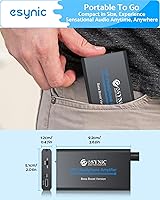
  • Dimensions: The unit measures 95 × 52 × 13mm, making it roughly the footprint of a standard matchbox with a slim profile that fits comfortably in a pocket.
  • Weight: At 85g, the amplifier is light enough to carry all day without adding noticeable bulk to a bag or jacket pocket.
  • Chassis Material: The enclosure is machined from 6061 aluminum alloy, a grade commonly used in aerospace and consumer electronics for its balance of rigidity and low weight.
  • Impedance Range: The amplifier is rated to drive headphones spanning 16 to 300 ohms, covering everything from sensitive in-ear monitors to demanding full-size studio headphones.
  • Output Power: Maximum output reaches 160mW when driving a 16-ohm load, stepping down to 25mW at 300 ohms to match the power needs of each headphone type.
  • Distortion Rating: Total harmonic distortion plus noise is specified at under 0.005%, indicating clean amplification at normal listening volumes with minimal audible coloration.
  • Bass Boost: The switchable bass boost applies approximately +13dB of lift centered around 50Hz, targeted at enhancing low-frequency impact for bass-heavy music genres.
  • Battery Capacity: An internal 1000mAh lithium battery powers the device, sized to support extended portable use without requiring daily recharging.
  • Battery Life: Rated battery life exceeds 8 hours under standard listening conditions, with real-world usage reports generally aligning closely with this figure.
  • Charge Time: The battery charges from empty to full in approximately 2.5 hours via a 5V/1A USB input, compatible with most standard wall adapters and power banks.
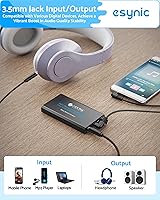
  • Connectivity: Both the input and output use standard 3.5mm stereo jacks, ensuring broad compatibility with phones, laptops, MP3 players, and virtually any portable audio source.
  • RF Shielding: The aluminum enclosure is rated to reduce radio frequency interference by approximately 42dB, helping to prevent noise pickup from nearby wireless devices.
  • Drop Resistance: The chassis has been tested to MIL-STD-810G standards, with rated drop survival from up to 1.5 meters onto hard surfaces.
  • Operating Voltage: The unit operates at 4V DC internally, supplied by the built-in rechargeable battery rather than requiring external power during use.
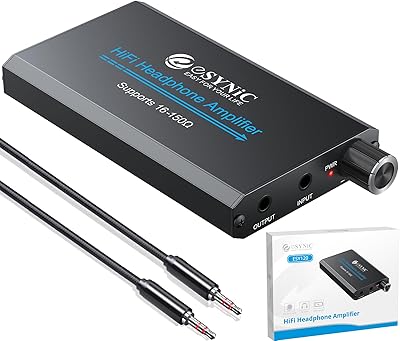
  • Included Cables: The package includes a 12cm short patch cable for close-proximity pairing, a 100cm longer listening cable, and a USB charging cable.
  • Number of Channels: The amplifier outputs a single stereo channel, processing both left and right audio signals through one unified amplification stage.
  • Bass Switch Type: The bass boost is a binary on/off toggle switch with no intermediate adjustment, applying the full boost level when engaged.

Related Reviews
Oneme Portable Headphone Amplifier
85%
88%
Sound Quality
93%
Battery Life
91%
Portability & Weight
85%
Build Quality
87%
Ease of Use
More
eSynic Headphone Amplifier
81%
83%
Sound Clarity
88%
Gain Switch Usefulness
79%
Build Quality
74%
Battery Life
91%
Value for Money
More
LVY A010 Portable Headphone Amplifier
81%
83%
Sound Quality Improvement
91%
Portability & Form Factor
61%
Build Quality & Materials
86%
Gain Switch Effectiveness
88%
Battery Life
More
Neoteck NTK059 Headphone Amplifier
78%
83%
Audio Clarity
88%
Gain Switch Utility
79%
Build Quality
93%
Portability
86%
Battery Life
More
TNP Products AMP_A1343 Headphone Amplifier
77%
88%
Value for Money
71%
Audio Performance
66%
Build Quality
94%
Ease of Setup
83%
Input Flexibility
More
HiBy FC4
HiBy FC4
81%
91%
Sound Quality
93%
Balanced Output Performance
86%
Driving Power
74%
MQA Decoding
89%
Hi-Res Format Support
More
FiiO KA15
FiiO KA15
84%
93%
Sound Quality
91%
Output Power
82%
Battery Impact & Power Management
74%
EQ & App Experience
78%
Build Quality
More
FiiO Q3 MQA Portable DAC Headphone Amplifier
87%
94%
Sound Quality
91%
Battery Life (AUX)
87%
Build Quality
89%
Portability & Size
88%
Compatibility
More
Questyle M15C
Questyle M15C
82%
91%
Sound Clarity
93%
Noise Floor
86%
Balanced Output Quality
83%
Build Quality
88%
Portability & Form Factor
More
Pyle PHA40 4-Channel Portable Stereo Headphone Amplifier
85%
87%
Performance
92%
Portability
72%
Build Quality
90%
Audio Quality
89%
Ease of Use
More
iFi hip-dac2
iFi hip-dac2
81%
91%
Sound Quality
88%
Build Quality
89%
Balanced Output Performance
74%
MQA Decoding
87%
Driving Power
More

FAQ

For most headphones, yes — particularly if yours are the type that need more power than a phone can comfortably provide. Phones are designed with a lot of compromises, and their headphone output is often one of them. If your headphones sound thin, quiet at max volume, or lacking in dynamics, this pocket amp will typically produce a noticeable improvement. That said, if your headphones are already easy to drive and your phone handles them well, the difference will be subtler.

It depends heavily on what you listen to. For hip-hop, electronic music, and cinematic content, most users find it satisfying and use it regularly. For acoustic music, jazz, or anything where you want a flat, uncolored sound, it is genuinely too heavy-handed and most listeners in those genres leave it switched off. It is a fixed-level toggle with no way to apply a partial effect, so think of it as a feature for specific situations rather than a daily-driver setting for all genres.

You can, but you will need a separate adapter first — either a USB-C to 3.5mm or Lightning to 3.5mm dongle, depending on your phone. Once you have that in the chain, the portable amplifier connects normally. Just be aware that the adapter itself introduces an additional DAC stage, so the overall chain is: phone, adapter, amp, headphones. It works, but it adds a link and a potential point of failure.

This is worth taking seriously. With standard over-ear headphones, the noise floor is acceptably quiet for most listeners. However, with high-sensitivity in-ear monitors — the type that are extremely efficient and pick up even tiny amounts of electrical noise — a background hiss is a recurring complaint from buyers. If IEMs are your primary headphone, this is a known limitation of this unit and you should factor it into your decision.

It is about as simple as audio gear gets. Plug the short cable from your source device into the input jack, connect your headphones to the output jack, press the power button, and use the volume knob to set your listening level. There is no app, no Bluetooth pairing, no software — it just works. Most buyers have it running within a minute of opening the box.

It covers a wide range of headphone impedances, from very sensitive in-ear monitors on the low end to harder-to-drive full-size headphones on the high end. The main caveat is the hiss issue with very sensitive IEMs mentioned elsewhere. For dynamic driver headphones in the mid-impedance range — the kind commonly used for commuting or home listening — compatibility is essentially universal.

Real-world battery life in user reports generally tracks well with the rated figure, typically lasting a full workday of listening. Charging is via a standard USB cable at 5V/1A, and a full charge takes roughly two and a half hours. One thing to note: you cannot comfortably listen while it charges, as some users report a slight increase in electrical noise through the headphones when it is plugged in.

It is solid for the price tier — the chassis does not flex, creak, or feel hollow, and it has survived accidental drops for most buyers without visible damage. However, it is still a budget-range product, and some longer-term owners have reported that the headphone jacks develop slight looseness and the volume knob can show minor channel imbalance after months of heavy daily use. Manage your expectations relative to the price, and it will likely exceed them.

Yes, any device with a standard 3.5mm headphone output works as a source — laptops, desktop sound cards, portable CD players, dedicated DAPs, and MP3 players all connect without any issues. The amp simply sits between your source and your headphones and amplifies whatever signal it receives. It does not act as a USB audio device or DAC, so the audio conversion still happens in your source device.

The box includes the amplifier itself, a short 12cm patch cable for connecting your source device, a longer 100cm cable for more comfortable listening distance, and a USB charging cable. For most users with a phone that has a headphone jack, that is everything you need to start immediately. The only addition you might want to consider is a higher-quality aftermarket cable, as the included ones are functional but on the basic side.