
Overview

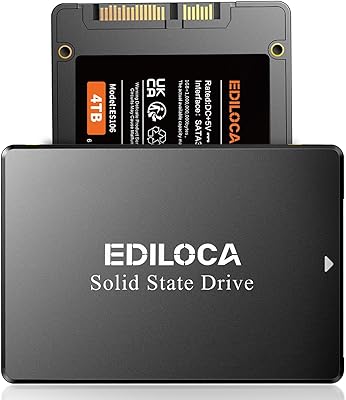
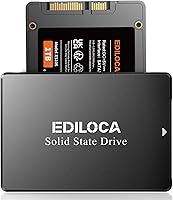
The Ediloca ES106 1TB Internal SSD entered the market in mid-2024, quietly earning its place among entry-level 2.5-inch SATA drives for people fed up with slow spinning hard disks. It targets a simple, common need: give an aging laptop or desktop a meaningful speed boost without a painful price tag. At 1TB, the capacity hits a practical sweet spot for most everyday users — enough room for an operating system, applications, and a solid media library. One thing worth setting straight upfront: this is a SATA drive. If you are expecting NVMe-level throughput, look elsewhere. Judged as an HDD replacement, though, it holds its own comfortably.

Features & Benefits

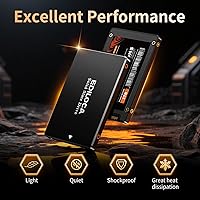
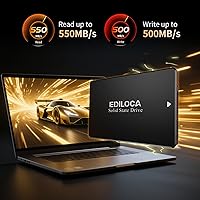
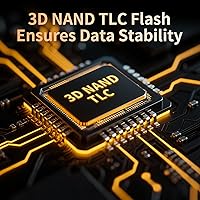
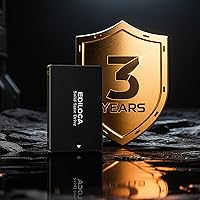
The ES106 moves data at up to 550MB/s sequential read and 500MB/s write over a SATA III connection — not groundbreaking by 2024 standards, but roughly three times faster than a typical spinning drive in real tasks like booting Windows or transferring large files. The 3D TLC NAND flash is a sensible choice at this price tier, offering a reasonable balance of storage density and day-to-day durability. The compact 2.5-inch chassis is rated shock- and drop-resistant, which matters for a drive living inside a laptop tossed around daily. OS compatibility is broad, covering Windows, macOS, Linux, and NAS enclosures. Ediloca also backs each unit with a 3-year limited warranty, a reassuring commitment from a brand still building its reputation.

Best For

This 1TB drive makes the most sense for people pulling out a creaky old hard disk from a laptop or mid-range desktop that lacks an M.2 slot — a classic HDD swap where SATA speeds are more than adequate for the job. Casual gamers will notice shorter load times in less demanding titles, though this is not the drive to pair with a high-end rig if raw performance is the goal. Students, home-office workers, and light content consumers will feel the difference immediately. It also fits cleanly into NAS enclosures needing affordable bulk storage. If your priority is value per gigabyte and solid everyday reliability over cutting-edge throughput, the ES106 makes a convincing argument.

User Feedback

With nearly 2,000 ratings and a 4.5-star average, the buyer response to this SATA SSD is genuinely encouraging for a brand that has only been shipping for about a year. Buyers consistently mention how straightforward installation is and how noticeably snappier their machines felt afterward — particularly those coming from mechanical drives. Quiet operation gets frequent praise as well. On the critical side, some users raise the fair point that Ediloca does not publish a TBW endurance rating or confirm DRAM cache presence, which matters if you plan heavy daily writes. Long-term reliability remains an open question for any newer brand, and a handful of reviews flag minor compatibility quirks in older systems. Overall, the sheer volume of satisfied upgraders lends real credibility.

Pros

  • Dramatically faster boot and load times compared to any mechanical hard drive in the same system.
  • 1TB capacity covers operating systems, applications, and media libraries without compromise.
  • Broad compatibility with Windows, macOS, Linux, and NAS enclosures makes it genuinely versatile.
  • The 2.5-inch shock-resistant build holds up well in laptops that get moved around daily.
  • A 3-year limited warranty is a meaningful commitment from a brand still establishing itself.
  • Each unit reportedly undergoes 72-hour stress testing before shipping, adding a layer of quality assurance.
  • Nearly 2,000 Amazon ratings averaging 4.5 stars signals real buyer satisfaction, not just marketing.
  • Installation is straightforward enough that non-technical users complete it without professional help.
  • SATA III backward compatibility means it works in older systems with SATA II ports, no adapter needed.
  • Ranked in the top 250 in its Amazon category, suggesting genuine, sustained sales volume.

Cons

  • Ediloca does not publicly disclose a TBW endurance rating, making it hard to assess long-term write durability.
  • DRAM cache presence has not been confirmed, which can affect sustained write consistency under heavier workloads.
  • As a brand launched in 2024, there is limited multi-year reliability data available from independent sources.
  • SATA III tops out well below NVMe speeds, so the performance ceiling is firmly capped by interface limitations.
  • A small but recurring pattern of compatibility issues in certain older machines appears in critical reviews.
  • No publicly available independent benchmark data from trusted third-party reviewers to verify rated speeds.
  • Buyers who prioritize brand heritage and established track records will find Ediloca’s short history a drawback.
  • The product listing contains a minor spec inconsistency listing a 2280 form factor, which is an M.2 designation, not 2.5-inch.

Ratings

The Ediloca ES106 1TB Internal SSD earns its scores from an AI-driven analysis of verified global buyer reviews, with spam, bot-generated, and incentivized feedback actively filtered out before any scoring takes place. Ratings across categories reflect the honest distribution of user sentiment — strengths are credited where earned, and recurring frustrations are weighted just as seriously. The result is a balanced scorecard that helps real buyers understand exactly what they are getting into before committing.

Value for Money
88%
For buyers upgrading from a mechanical hard drive, the price-to-capacity ratio is genuinely hard to argue with. Getting 1TB of SSD storage at this tier means students, home users, and small offices can modernize a slow machine without spending significantly. Most buyers felt the performance gain justified the cost immediately.
The value equation weakens if you compare it against budget NVMe drives in the same price range that offer substantially faster speeds. Without a published TBW rating, it is also harder to calculate true long-term cost-per-GB if the drive has a shorter-than-expected lifespan.
Read & Write Performance
79%
21%
Coming from an HDD baseline, the jump to 550MB/s reads is dramatic and immediately felt in boot times, application launches, and file transfers. Users consistently described their older machines feeling like new hardware after the swap, which is the most relevant benchmark for the target audience.
Against the broader SSD market, SATA III is a mature and capped interface. Users who later discovered NVMe options at similar prices occasionally expressed mild regret, and sustained write speeds can taper off on 3D TLC drives without confirmed DRAM cache under heavy loads.
Installation Ease
91%
The physical installation process drew near-universal praise — the standard 2.5-inch form factor drops into any compatible bay without adapters or special tools in most cases. Even buyers with no prior hardware experience reported completing the swap in under 20 minutes by following a basic online guide.
The drive ships blank, which catches some buyers off guard. Navigating Windows Disk Management to initialize and partition a new drive is straightforward for tech-savvy users but can be confusing for complete beginners who expect the drive to appear automatically after installation.
Build Quality
74%
26%
The enclosure feels solid for its price tier, and the shock-resistant, drop-proof design gives it a practical edge for laptop use where the machine may get moved around or knocked occasionally. The slim 0.67-inch profile fits cleanly without clearance issues in standard laptop bays.
The housing is not exceptional — it is a functional plastic and metal composite rather than a premium machined chassis. Long-term physical durability beyond the 3-year warranty window is an open question, and the enclosure does not inspire the same confidence as drives from more established manufacturers.
Reliability & Endurance
62%
38%
The 72-hour factory stress test and 99.9% data integrity claim provide some reassurance, and the vast majority of buyers in the short term reported no failures or data issues. For light daily workloads — browsing, document editing, casual gaming — the drive appears to perform stably.
The absence of a published TBW endurance rating is a real gap. Buyers running write-heavy workloads like video editing, large database operations, or continuous backups have no reliable way to predict drive longevity. A handful of critical reviews flag early failures, which carry more weight when the brand has limited multi-year track record.
Compatibility
83%
The broad OS support list — covering Windows 10 and 11, macOS, Linux, and NAS systems — means this SATA SSD slots into a wide variety of machines without driver headaches. SATA II backward compatibility extends its usefulness to genuinely old hardware that many competitors overlook.
A small but recurring pattern of compatibility edge cases appears in critical reviews, particularly with certain older BIOS configurations and a few specific laptop models. The product listing also contains a form factor inconsistency (listing a 2280 designation alongside 2.5-inch specs) that has confused some buyers pre-purchase.
Brand Trust
58%
42%
The ES106 has accumulated nearly 2,000 ratings in under a year, which is a meaningful signal that real buyers are purchasing and reviewing it at scale. A 4.5-star average across that volume is harder to dismiss than a handful of reviews, and the 3-year warranty demonstrates some commitment to standing behind the product.
Ediloca is a brand with no meaningful history before mid-2024, no prominent independent reviewer coverage, and no publicly verifiable endurance data. For buyers who rely on established brand reputation as a proxy for long-term reliability — especially when trusting a drive with irreplaceable data — that history gap is a legitimate concern.
Noise & Heat
93%
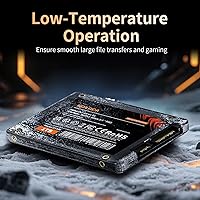
Solid-state drives produce no moving parts and therefore no audible noise, and the ES106 is no exception — users coming from loud, clicking hard drives frequently mentioned how refreshing the silent operation was. Thermal output under typical workloads remains low and well within normal operating ranges.
Under sustained heavy workloads, any SSD will generate some heat, and without confirmed DRAM cache or publicly available thermal throttling data, it is difficult to predict how the ES106 handles prolonged high-temperature operation inside a compact laptop chassis with limited airflow.
Capacity Usefulness
86%
One terabyte hits the practical sweet spot for most everyday users — generous enough to hold a full Windows installation, a suite of productivity apps, a game library, and a solid photo or music collection without immediately running low. It removes the constant storage management anxiety that plagues smaller drives.
Power users who store large video project files, extensive RAW photo libraries, or multiple AAA game installations simultaneously may find 1TB fills up faster than expected. There is currently no larger capacity variant widely available in the ES106 lineup to upgrade into.
Gaming Performance
71%
29%
Casual gamers dropping this into an older machine that previously ran from a spinning disk will notice real improvements in game load times and level streaming. The upgrade is a cost-effective way to reduce waiting in titles that are heavily storage-bottlenecked on HDD hardware.
This is not a drive for performance-focused gaming setups. Modern open-world titles and games optimized for DirectStorage benefit significantly from NVMe speeds that SATA simply cannot match. Gamers with a current-gen system and an M.2 slot available should look at NVMe options before settling on a SATA drive.
NAS Suitability
67%
33%
For a home NAS handling light file serving, media streaming, and periodic backups, the ES106 is a functional and affordable option that gets the job done without the cost of NAS-rated hard drives. Its quiet operation is also a genuine advantage in a home environment.
Without a disclosed DWPD or TBW rating, it is difficult to confidently recommend this drive for NAS deployments that see continuous read-write cycles around the clock. NAS-specific drives from established brands carry verified endurance specs that matter for always-on storage applications.
Packaging & Accessories
64%
36%
The drive arrives adequately protected and in a no-nonsense package that gets the hardware to the buyer safely. For a product in this price tier, buyers generally reported the unboxing experience as acceptable and fit-for-purpose.
No mounting screws, installation guide, or cloning software are included in the box — items that competing brands sometimes bundle even at similar price points. First-time upgraders may need to source a screwdriver set and research a cloning tool separately, which adds minor friction to the process.
Warranty & Support
72%
28%
A 3-year limited warranty is a respectable commitment for a newer entrant in the SSD market, and the claim of 24/7 technical support gives buyers a channel to reach out if something goes wrong during that window. Most warranty-related interactions reported in reviews were resolved without major friction.
Real-world warranty claim experiences are limited by the brand’s short history and relatively small support infrastructure compared to established players. There is not yet enough community data to confidently assess how smooth the replacement or refund process is when things go wrong after the first year.

Suitable for:

The Ediloca ES106 1TB Internal SSD is a strong fit for anyone whose primary goal is breathing new life into an older machine that still runs on a mechanical hard drive. If your laptop takes two minutes to boot or your desktop groans every time you open a browser, swapping in this SATA SSD will produce an immediately noticeable difference in everyday responsiveness. Students who need a dependable daily driver for coursework, light content creation, and media storage will find the 1TB capacity more than generous. Home and small-office users running NAS enclosures for local backups or file sharing will also find it a cost-effective option. Casual gamers with mid-range or older systems — ones that lack an M.2 slot entirely — will appreciate shorter load times without the premium price of a flagship NVMe drive. Essentially, if your bottleneck is a spinning disk and you want a practical, no-fuss fix, the ES106 targets that scenario precisely.

Not suitable for:

The Ediloca ES106 1TB Internal SSD is the wrong tool for buyers who need peak storage performance. If your motherboard has an available M.2 slot and your workload involves heavy video editing, large database operations, or continuous high-speed transfers, a modern NVMe drive will leave this SATA SSD far behind in benchmarks and real-world throughput. Enthusiast PC builders and competitive gamers running high-end rigs should look at drives with published TBW endurance ratings and confirmed DRAM cache — specs that Ediloca has not publicly disclosed for this model, which is a legitimate gap for write-intensive use. Power users who lean on brand heritage and long-term reliability data when making storage decisions may also feel uncomfortable with a manufacturer that only entered the market in mid-2024. If longevity guarantees and transparent endurance specifications are non-negotiable for your workflow, a more established brand with verifiable endurance data is the safer bet.

Specifications

  • Capacity: The drive offers 1TB of usable storage, suitable for operating systems, applications, and large media libraries.
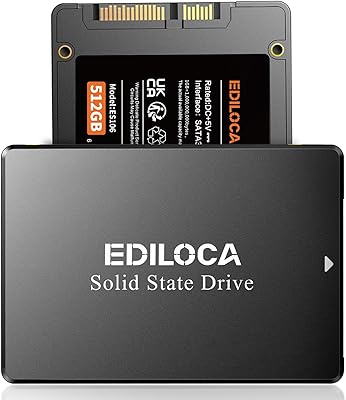
  • Form Factor: Built in the standard 2.5-inch format, it fits directly into laptops and desktops that accept 2.5-inch SATA drives.
  • Interface: Uses SATA III running at 6Gb/s, and is backward compatible with older SATA II ports at reduced speeds.
  • Read Speed: Sequential read performance reaches up to 550MB/s under ideal conditions.
  • Write Speed: Sequential write performance is rated at up to 500MB/s under ideal conditions.
  • NAND Type: Equipped with 3D TLC (Triple-Level Cell) NAND flash memory, balancing storage density with acceptable endurance for everyday workloads.
  • Dimensions: The drive measures 5.79 x 3.43 x 0.67 inches, consistent with the standard 2.5-inch SSD footprint.
  • Weight: At 2.08 ounces, it is lightweight enough to have negligible impact on laptop portability.
  • OS Support: Compatible with Windows 10 and 11, macOS 10.4 and later, Linux kernel 2.6.33 and later, and most NAS operating systems.
  • Warranty: Covered by a 3-year limited warranty with 24/7 customer support access included.
  • Stress Testing: Each unit is reported to undergo 72 hours of stress testing before leaving the factory.
  • Shock Resistance: The enclosure is designed to be shock-resistant and drop-proof, offering basic protection against physical impact during use.
  • Color: Available in black with a standard matte plastic and metal composite enclosure.
  • Install Type: Designed for internal installation, requiring physical mounting inside a laptop bay or desktop chassis.
  • TBW Rating: Ediloca has not publicly disclosed a total bytes written endurance figure for this model, which limits direct endurance comparisons.
  • DRAM Cache: Cache configuration has not been officially confirmed by the manufacturer, so DRAM presence cannot be verified from available data.
  • Model Series: Part of the Ediloca ES106 product line, first made available in June 2024.
  • Market Rank: Ranked #243 in the Internal Solid State Drives category on Amazon at time of review, reflecting substantial sales volume.

Related Reviews
Ediloca ES106 4TB 2.5″ SATA SSD
75%
88%
Value for Money
82%
Read Performance
91%
Storage Capacity
71%
Write Performance
84%
Installation Ease
More
Ediloca ES106 512GB 2.5″ SATA SSD
75%
91%
Value for Money
84%
Read & Write Performance
78%
Installation Ease
89%
Compatibility
76%
Build & Durability
More
Patriot P210 1TB 2.5″ Internal SSD
83%
91%
Value for Money
83%
Real-World Performance
94%
Installation Ease
92%
Boot Time Improvement
67%
Long-Term Reliability
More
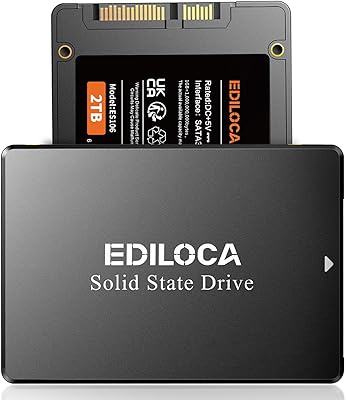
Ediloca ES106 2TB Internal SSD
77%
83%
Read/Write Performance
88%
Value for Money
79%
Installation Experience
76%
Build & Durability
67%
Long-Term Reliability
More
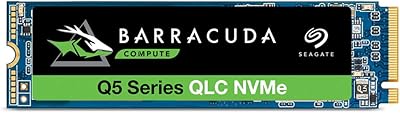
Seagate BarraCuda Q5 1TB NVMe SSD
81%
88%
Sequential Read Speed
74%
Sequential Write Speed
91%
Value for Money
93%
Ease of Installation
87%
Real-World Boot Performance
More
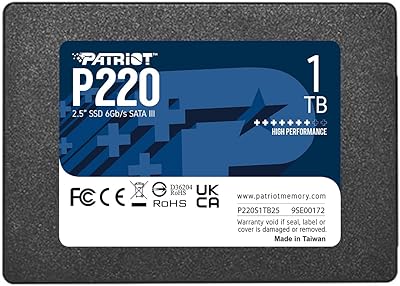
Patriot Memory P220 1TB Internal SSD
86%
89%
Performance
92%
Value for Money
88%
Installation Ease
84%
Build Quality
87%
Warranty & Support
More
RAOYI 1TB 2.5″ SATA III Internal SSD
73%
88%
Value for Money
76%
Read/Write Performance
92%
Installation Ease
89%
Compatibility
61%
Brand Reliability
More
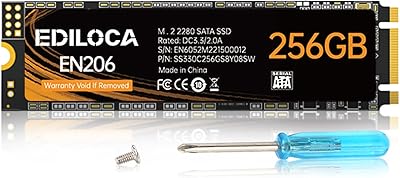
Ediloca EN206 1TB M.2 SATA SSD
84%
87%
Performance
92%
Value for Money
90%
Ease of Installation
88%
Compatibility with Devices
84%
Build Quality
More
SanDisk Ultra 3D 1TB Internal SSD
79%
91%
Real-World Speed Improvement
88%
Installation Ease
84%
Value for Money
79%
Reliability and Longevity
93%
Compatibility
More
Western Digital SN750 1TB NVMe SSD
79%
88%
Read Speed Performance
79%
Write Speed & Sustained Throughput
63%
Thermal Management
91%
Reliability & Longevity
84%
Installation & Compatibility
More

FAQ

Yes, any newly installed SSD ships blank and unformatted. On Windows, open Disk Management, locate the new drive, initialize it, and create a partition before your system will recognize it. The process takes about five minutes and does not require any special software.

It will. The ES106 is backward compatible with SATA II, so it will install and function normally in older machines. You just will not hit the full 550MB/s read speed — SATA II caps out around 300MB/s — but you will still see a major improvement over a mechanical hard drive.

It is a reasonable choice for a home or small-office NAS used for general file storage and backups. Just keep in mind that Ediloca has not published a TBW endurance rating, so if your NAS runs heavy continuous write workloads, you may want a drive with a verified endurance spec from an established brand.

Absolutely, that is one of its most common use cases. Installing Windows 11 on this SATA SSD will result in noticeably faster boot times and snappier application launches compared to running the OS from a spinning hard drive.

Yes, macOS 10.4 and later is listed as compatible. If you are using it as an internal replacement in an older Mac that has a 2.5-inch SATA bay, it should work fine. Just be aware that newer Macs use proprietary M.2 connectors and will not accept a 2.5-inch drive.

Ediloca has not officially confirmed whether this model includes a DRAM cache. This is worth knowing if you plan to write large files frequently, since cacheless drives can slow down during sustained write sessions. For typical daily use — booting, browsing, light files — it is unlikely to make a practical difference.

The difference is significant and immediately noticeable. Tasks like booting Windows, opening large applications, and loading files all happen much faster. A mechanical drive typically reads data at around 80 to 150MB/s; this SATA SSD reads at up to 550MB/s, which translates to a genuinely different feel in day-to-day use.

If your laptop has an available M.2 slot, a budget NVMe drive will typically outperform this SATA SSD by a meaningful margin. The ES106 makes the most sense when your machine only has a 2.5-inch SATA bay, or when you need a secondary storage drive and the M.2 slot is already occupied.

Ediloca offers a 3-year limited warranty and claims 24/7 technical support. As with any warranty from a newer brand, the practical experience will vary, so it is a good idea to keep your purchase confirmation and maintain regular backups regardless of the warranty coverage.

That depends entirely on your laptop manufacturer. Some brands allow user-serviceable upgrades like storage swaps without voiding the warranty, while others do not. Check your laptop’s documentation or support site before opening anything up, especially if your machine is still under its original warranty.