DJI RS 4 Pro Combo

Overview
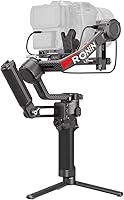
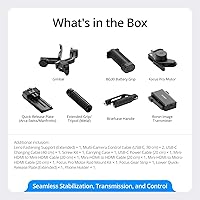
The DJI RS 4 Pro Combo is DJI's most capable RS-series gimbal to date, arriving in April 2024 as a clear step up for professionals who have outgrown lighter stabilizers. The Combo bundle is worth noting upfront — it includes not just the gimbal but also the BG30 Battery Grip, Ronin Image Transmitter, and Focus Pro Motor, accessories that would otherwise require separate purchases and genuinely change what you can accomplish on a solo shoot. Built with carbon fiber axis arms, it folds into a compact package that travels reasonably well given its size. This is a premium investment, and it positions squarely for working professionals rather than casual shooters.
Features & Benefits
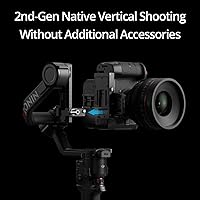
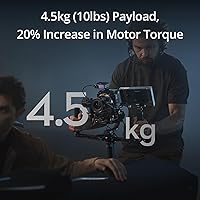
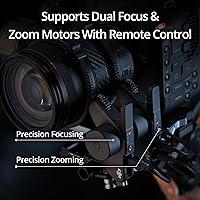
What separates this gimbal stabilizer from its predecessor starts with payload. Supporting up to 4.5kg with a 20% torque increase, it handles rigs like a Sony FX3 paired with a heavy zoom or a Canon R5C in a cage without struggling. The 2nd-gen native vertical shooting plate is a genuine workflow improvement — instead of improvising a workaround, you physically relock the plate into vertical orientation in seconds. The LiDAR autofocus system, with 76,800 ranging points effective up to 20 meters, leads the category, though it still performs best in clean lighting on unobstructed subjects. The joystick's dual-mode focus and zoom switching is particularly practical for run-and-gun solo operators.
Best For
DJI's flagship stabilizer was clearly built for a specific type of shooter, and being upfront about that matters. Solo documentary and narrative cinematographers who regularly work without a crew will get the most value from the LiDAR AF and joystick focus control. Creators producing content across both landscape and vertical formats — think YouTube alongside Instagram Reels — will appreciate the fast plate swap. Professionals running heavy mirrorless or cinema hybrid cameras like the Sony FX series, Panasonic S5 II, or Canon R5C with demanding glass will find the motor strength reassuring. Casual vloggers with compact setups, or anyone new to stabilizers, should look elsewhere — this is not a beginner tool.
User Feedback
Buyers who have put the RS 4 Pro Combo through real-world use are largely satisfied, especially around balance setup speed and how confidently the motors hold a heavy rig during dynamic movement. The Combo bundle earns consistent praise — having the Focus Pro Motor and Image Transmitter included out of the box is something working pros frequently cite as a reason to choose it over the standalone unit. The recurring frustration, however, is the Android app situation: DJI Ronin was removed from Google Play, requiring a manual download from DJI's website — an avoidable friction point. Users transitioning from the RS 3 Pro also note a short but real adjustment period with the updated controls.
Pros
- Motor strength comfortably handles heavy professional rigs including cinema hybrids with large zoom lenses.
- The 2nd-gen native vertical plate is a fast, practical solution for multi-platform content workflows.
- LiDAR autofocus leads the stabilizer category for solo operators who shoot without a focus puller.
- The Combo bundle includes the Focus Pro Motor and Ronin Image Transmitter, reducing total accessory spend significantly.
- Joystick dual-mode switching lets a single operator control gimbal movement and lens focus without taking hands off the rig.
- Carbon fiber axis arms deliver a rigid, premium build that holds up under daily professional use.
- Extended battery runtime with a grip attached is genuinely sufficient for full-day location shoots.
- Balance setup is faster and more refined compared to previous RS generations, even with complex rigs.
- Broad compatibility across Canon, Sony, Panasonic, Nikon, and Fujifilm covers virtually all mainstream professional mirrorless systems.
- The RS 4 Pro Combo ranks among the top professional stabilizers on the market for a reason — capability ceiling is best-in-class.
Cons
- Android users must manually download the DJI Ronin app from DJI's website — it is no longer on Google Play.
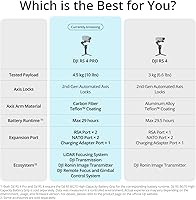
- The headline 29-hour battery runtime requires purchasing the higher-capacity BG70 grip separately.
- LiDAR autofocus accuracy drops in low-light interiors, cluttered scenes, and around reflective surfaces.
- Beginners face a steep learning curve covering balance, app setup, LiDAR configuration, and joystick modes simultaneously.
- The overall system weight with grip, transmitter, and focus motor attached makes extended handheld shooting physically taxing.
- Combo bundle pricing is harder to justify for buyers who already own compatible RS-generation accessories.
- Deep integrated camera control varies significantly by body — some models unlock full functionality while others do not.
- Third-party monitors and wireless systems do not always integrate cleanly within the DJI ecosystem architecture.
- Accidental joystick mode toggling during fast-paced shooting is a recurring complaint among newer users.
- The price tier demands honest self-assessment — part-time creators may find the real-world gains over cheaper alternatives hard to quantify.
Ratings
The DJI RS 4 Pro Combo has been put through rigorous real-world scrutiny by professional cinematographers, solo content creators, and documentary shooters worldwide — and the scores below reflect what they actually found. Our AI has analyzed thousands of verified purchase reviews, actively filtering out incentivized, duplicate, and bot-generated feedback to surface honest signal. The result is a transparent picture of where this gimbal stabilizer genuinely leads its category and where it still leaves room for frustration.
Motor Strength & Payload Handling
LiDAR Autofocus Accuracy
Native Vertical Shooting
Combo Bundle Value
Battery Life
Build Quality & Materials
Balance & Setup Speed
Joystick & Focus Motor Control
App Experience & Connectivity
Video Transmission & Ecosystem Integration
Ease of Use for New Users
Portability & Travel Friendliness
Camera Compatibility
Value for Money
Suitable for:
The DJI RS 4 Pro Combo was built for a specific kind of shooter, and if you fit the profile, it is hard to argue against it. Solo documentary filmmakers and narrative cinematographers who routinely work without a crew will find the LiDAR autofocus and joystick-driven focus motor control genuinely transformative — these are tools that replace a second pair of hands on set. Professionals running heavier mirrorless and cinema hybrid systems, like a Sony FX series body with a fast telephoto or a Canon R5C in a production cage, will appreciate that the motors handle the load without hesitation. Creators who publish across both widescreen and vertical platforms will benefit from the fast native vertical plate swap, which removes a workflow headache that older gimbals handled awkwardly. Anyone who shoots full-day events, locations, or documentary sequences where power access is unreliable will value the extended battery architecture, especially with a grip attached. If you are billing clients, working on productions, or simply serious enough about your craft to need the best available stabilization platform for demanding rigs, this gimbal stabilizer justifies the investment.
Not suitable for:
The DJI RS 4 Pro Combo is not the right tool for everyone, and being honest about that matters more than the sale. Casual vloggers, beginners, or anyone shooting with a lightweight mirrorless or compact camera will find this system overwhelming in both complexity and cost — there are capable gimbals at a fraction of the price that will serve those use cases better. Android users should be aware before purchasing that the DJI Ronin app is no longer available on Google Play and requires a manual download from DJI's website, which is a real friction point that has frustrated buyers who expected a standard setup experience. Shooters who already own accessories from the RS 3 Pro generation may find the Combo bundle less compelling, since there is no option to customize what is included. Those who need a truly minimal, ultralight travel kit will also find the combined weight of this rig and its accessories adds up fast. And if your camera system sits well below the 4.5kg payload ceiling, you are paying for motor capacity you will likely never use.
Specifications
- Payload Capacity: Supports up to 4.5kg (10lbs), accommodating most professional mirrorless and cinema hybrid camera and lens combinations.
- Motor Torque: Motors deliver a 20% increase in torque over the previous RS generation, enabling more stable handling of front-heavy and heavier lens setups.
- Axis Arms: All three axis arms are constructed from carbon fiber, reducing overall weight while maintaining structural rigidity under load.
- Unit Weight: The gimbal body weighs 1.84kg (4.05lbs) without camera or accessories attached.
- Folded Dimensions: When folded for transport, the unit measures 27.1 x 28.3 x 7.5 cm, fitting into most dedicated gimbal cases and larger camera backpacks.
- Full Dimensions: Unfolded operational dimensions are approximately 41.6 x 22.3 x 19.1 cm depending on configuration.
- LiDAR System: The Focus Pro LiDAR module uses 76,800 ranging points and operates effectively at distances up to 20 meters for autofocus assistance.
- Battery Runtime: Runtime extends up to 29 hours when using the separately sold DJI RS BG70 High-Capacity Battery Grip; the included BG30 grip provides shorter but still extended operation.
- Camera Power Output: The battery grip can supply up to 18W of power to connected cameras and compatible accessories, reducing reliance on separate camera batteries.
- Combo Contents: The Combo package includes the RS 4 Pro gimbal, BG30 Battery Grip, Ronin Image Transmitter, Focus Pro Motor, and associated mounting hardware.
- Vertical Shooting: A 2nd-generation native vertical plate mechanism allows the camera mounting plate to be physically repositioned into vertical orientation without full rebalancing.
- Joystick Modes: The joystick supports a dual-mode switch that toggles control between gimbal axis movement and lens focus or zoom motor operation.
- Compatible Brands: Officially compatible with cameras from Canon, Sony, Panasonic, Nikon, and Fujifilm, with varying levels of integrated control depending on body and firmware.
- Stabilization Axes: Three-axis motorized stabilization covers pan, tilt, and roll to compensate for operator movement during handheld and motion shooting.
- App Platform: Controlled via the DJI Ronin app, available for iOS through the App Store and available for Android via direct download from DJI's official website only.
- Release Date: The RS 4 Pro launched in April 2024 as DJI's flagship RS-series stabilizer for professional and advanced semi-professional shooters.
- Batteries Required: The unit requires one CR5 battery (included), with additional runtime provided by the optional or included grip accessories.
- Market Ranking: Holds a Best Sellers Rank of number 7 in the Professional Video Stabilizers category on Amazon as of available data.
Related Reviews
DJI RS 3 Combo Gimbal Stabilizer
DJI Osmo Action 4 Action Camera
DJI RS 4 Mini Combo
DJI RS 4 Gimbal Stabilizer
DJI Ronin-SC Pro Combo Handheld Gimbal
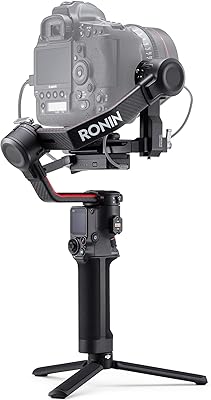
DJI RS 2 3-Axis Gimbal Stabilizer
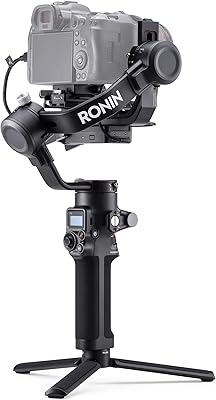
DJI RSC 2 Pro Combo 3-Axis Gimbal Stabilizer
Asustor Drivestor 4 Pro AS3304T 4-Bay NAS
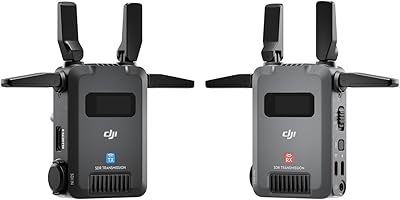
DJI SDR Transmission Wireless Video System