Overview

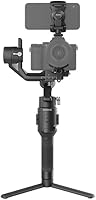
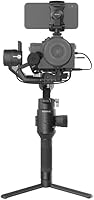
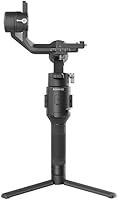
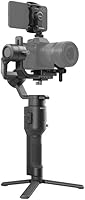
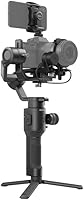
The DJI Ronin-SC Pro Combo Handheld Gimbal is DJI's purpose-built answer for mirrorless shooters who want stabilization without the bulk of the Ronin-S line. That distinction matters in practice: the lighter chassis and folding form factor make it easy to pack into a shoulder bag, which the Ronin-S simply cannot claim. The 4.4 lb payload ceiling is generous enough to handle a Sony A7 III with a standard prime or a Panasonic GH5 with a moderate zoom, though heavy telephoto glass will push it to its limit. The Pro Combo adds a focus wheel and an expanded accessory bundle over the base kit. Expect to invest real setup time upfront — balancing is not instant, and first-timers will feel it.

Features & Benefits

The 3-axis stabilization does what you would hope — pans, tilts, and rolls stay smooth whether you are walking a city block or tracking a moving subject. Individual axis locks let you fold the rig down quickly and tune each axis in isolation, cutting setup time considerably once you understand the system. ActiveTrack 3.0 is a real tracking tool, though it performs best in good light with clear subject contrast; low-contrast scenes or quick lateral movements can cause it to lose the lock. The Quick-Release Plate with its positioning block is quietly one of the best features here — once your camera is dialed in, you can remount to the same position without starting over. The Ronin app ties everything together with balancing prompts and shooting presets.

Best For

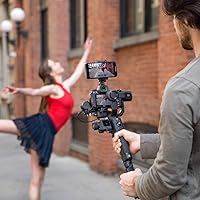
This handheld gimbal is a natural fit for solo run-and-gun operators — the kind of shooter who handles camera, sound, and movement without a crew. If you are running a Sony A7 III, A7R IV, Nikon Z6, or Panasonic GH5, the compatibility is well-tested and reliable. It also suits travel vloggers and interview-style creators who swap cameras between setups frequently; the quick-release plate makes that workflow much less painful. The bundled focus wheel makes the Ronin-SC Pro Combo particularly compelling for anyone pulling focus without an assistant — a real advantage on single-operator documentary or narrative work. If you are stepping up from a basic consumer gimbal and want intelligent tracking without full cinema-rig complexity, DJI's mirrorless stabilizer fills that gap well.

User Feedback

The Ronin-SC Pro Combo earns consistent praise for its build quality and balance — users who invest the time to dial in their rig report smooth, reliable footage across long shooting days. Battery life is a genuine highlight, with real-world endurance holding up well on full-day productions. That said, complaints do surface. Bluetooth connectivity can be inconsistent, particularly on older Android devices where the Ronin app has shown reliability issues. With heavier lens setups near the payload limit, some users report audible motor noise. Setup time divides opinion sharply — experienced operators appreciate the granular control, while newcomers often find the initial balancing process frustrating. Most buyers, though, consider the Pro Combo bundle strong value given the cost of sourcing those accessories separately.

Pros

  • Excellent stabilization on well-matched mirrorless setups — footage stays smooth even during brisk walking shots.
  • The Quick-Release Plate with its positioning block is a genuine time-saver for shooters who remount frequently.
  • Battery endurance is impressive; a full shooting day rarely requires a recharge.
  • Folded size is compact enough to fit in a standard shoulder bag without dedicated hard-case transport.
  • The bundled focus wheel gives solo operators real-time manual focus control that would otherwise require a second person.
  • ActiveTrack 3.0 subject tracking works reliably in well-lit environments with clear contrast.
  • Individual axis locks allow faster folding and make isolated per-axis balancing much more manageable.
  • The Ronin app reduces the amount of physical hardware tuning needed, which is a real help during fast-turnaround shoots.
  • Camera compatibility with Sony, Nikon Z, Panasonic, and Fujifilm bodies is broad and well-documented.
  • The Pro Combo accessory bundle avoids several separate accessory purchases that would add up quickly.

Cons

  • Bluetooth connectivity with the Ronin app is unreliable on older Android phones, causing mid-shoot disruptions.
  • Motor noise becomes audible when heavier lens and body combos push close to the payload ceiling.
  • Initial balancing is time-consuming and can be genuinely frustrating for first-time gimbal users.
  • ActiveTrack 3.0 loses subject lock in low-contrast scenes or during fast lateral movements — it is not foolproof.
  • The Ronin app has received mixed reviews for stability, with some users reporting crashes during firmware updates.
  • Handheld use over extended periods causes fatigue; the grip ergonomics favor shorter shooting sessions.
  • Some cameras on the official compatibility list behave as edge cases and may require additional fine-tuning beyond standard setup.
  • No built-in follow-focus motor control for lenses without a compatible electronic interface, limiting focus wheel utility on some rigs.

Ratings

Our AI-driven scores for the DJI Ronin-SC Pro Combo Handheld Gimbal were built by analyzing thousands of verified owner reviews from global markets, with bot-generated, incentivized, and unverified submissions actively filtered out before any score was calculated. The ratings below reflect where this rig genuinely earns its reputation — and where real buyers consistently run into friction — giving you an honest picture that goes well beyond the spec sheet. Both standout strengths and recurring pain points drawn from worldwide user communities are factored transparently into every score.

Stabilization Performance
91%
Shooters consistently report smooth, controlled footage on walking shots and slow tracking moves with well-matched camera bodies. Sony A7-series and Panasonic GH users in particular highlight how confidently the three-axis system handles varied movement patterns, even during longer handheld production runs.
At the upper payload limit, stabilization can occasionally fight against heavier zoom lenses rather than complement them, resulting in subtle micro-jitters under sustained load. A few users also note the horizon lock drifts slightly during very rapid directional changes.
Build Quality
88%
The chassis feels genuinely solid — not the plasticky wobble common on budget gimbals. Most users who have run it across multiple productions over a year or more report no mechanical degradation in the arm locks, axis joints, or motor housings.
A number of users report the tilt axis arm feels slightly less robust than the pan axis after repeated folding cycles over months of heavy field use. The included carrying case, while functional, offers insufficient padding for shooters who check their gear on flights.
Battery Life
86%
The rated 11-hour figure holds up reasonably well in practice — most users running Sony or Panasonic bodies at moderate motor torque confirm they can get through a full production day on a single charge without range anxiety affecting their shooting decisions.
Users pushing heavier lens combos or running ActiveTrack for extended periods report actual runtime dropping closer to 7 to 8 hours. The non-swappable battery design means a mid-shoot USB-C top-up is the only field recovery option, which limits flexibility on back-to-back shoot days.
Value for Money
83%
When you price out the Focus Motor, Focus Wheel, and Lens Support individually, the Pro Combo bundle represents a meaningful saving over assembling the same kit piecemeal. For solo filmmakers who depend on focus control, the bundled approach removes a real purchasing barrier.
Buyers whose cameras handle autofocus reliably may feel they are subsidizing accessories they will rarely touch, making the base Ronin-SC a sharper financial fit for that audience. The price gap between the two versions is significant enough that the choice deserves deliberate consideration.
Setup & Balancing
62%
38%
Experienced gimbal operators find the per-axis isolation approach logical and appreciate the Ronin app's guided balancing sequence, which meaningfully reduces trial-and-error. The Quick-Release Plate's positioning memory genuinely cuts repeat-session prep time once the initial calibration is dialed in.
For first-time gimbal users, the initial balancing process is the most common frustration point — forum threads and reviews from beginners consistently describe 30 to 60-minute sessions before achieving a stable mount. The app guidance helps but does not eliminate the physical learning curve entirely.
App & Connectivity
57%
43%
On current iOS devices and newer Android flagships, the Ronin app connects reliably and presents a well-organized interface for adjusting follow speed, setting presets, and accessing creative modes. When it works as intended, it noticeably reduces the need for physical motor tuning between setups.
Bluetooth connectivity drops are the most frequently cited complaint across user reviews, with older Android devices being the most vulnerable segment. The app has also shown instability during firmware updates on some hardware, occasionally requiring a full reinstall before normal operation is restored.
ActiveTrack Accuracy
71%
29%
In well-lit environments with clear subject contrast, ActiveTrack 3.0 holds a lock on walking subjects or moving products with solid consistency. It is a genuine workflow asset for solo operators managing both camera operation and subject direction at the same time.
Backlit scenes, flat overcast light, and busy backgrounds expose the system's limitations quickly, with subject lock dropping at inconvenient moments during a take. Fast lateral movement is a reliable trigger for losing the track, making it unsuitable as a replacement for manual operation in dynamic production scenarios.
Focus Wheel Usability
82%
18%
For solo shooters executing focus pulls on narrative or documentary work, the tactile control the focus wheel provides is a meaningful step up from relying entirely on autofocus. Users pairing it with Sony A7-series or Panasonic GH5 bodies report smooth, responsive focus transitions with minimal lag.
The focus wheel's electronic control is camera-dependent, and not every body on the compatibility list supports it equally well — some require specific cable adapters, and a few listed models are effectively manual-only with current firmware. Setting up the focus motor also adds a calibration step to an already involved rig prep routine.
Payload Versatility
74%
26%
The 4.4 lb ceiling comfortably accommodates the most popular mirrorless bodies paired with standard zoom or prime lenses, which covers the practical needs of the vast majority of travel, documentary, and vlog shooters this rig is designed to serve.
Shooters who regularly alternate between a lightweight prime and a heavier telephoto zoom need to re-balance between setups, eating into production time. Those running larger mirrorless bodies like a Canon R5 with a fast zoom may find themselves uncomfortably close to the ceiling under normal use.
Quick-Release System
89%
The positioning memory block is one of the most practically useful features on this rig — once a camera is dialed in, pulling it off for a handheld B-camera moment and remounting for a stabilized shot takes seconds with no re-balancing required. Production crews who do this repeatedly across a shoot day feel the time savings immediately.
The plate is proprietary, so users with Arca-Swiss or Manfrotto plates already mounted on their cameras need an adapter, which can introduce a small amount of play if tolerances are not tight. A minority of users also report the release lever developing slight loosening after extended months of heavy use.
Motor Noise
67%
33%
Under normal operating conditions with a properly balanced, appropriately weighted camera, the motors run quietly enough to be inaudible during outdoor shoots or any environment with natural ambient sound. Most documentary and travel shooters using recommended pairings never encounter noise as a practical production issue.
Pushing close to the payload ceiling causes the motors to work noticeably harder, and in quiet indoor interviews this strain becomes audible — often described as a low mechanical hum that bleeds into on-camera audio. Users mounting larger lenses specifically flag this as a dealbreaker for production environments where live audio is being recorded.
Camera Compatibility
78%
22%
The official compatibility list covers most of the mainstream mirrorless ecosystem — Sony A-series, Nikon Z, Panasonic GH, select Canon R bodies, Fujifilm X-series, and Sigma FP — giving it genuine cross-brand appeal for multi-camera productions and shooters who switch systems.
Some bodies on the list behave as edge cases requiring specific firmware versions or cable adapters that are not immediately obvious from the product listing. A handful of Canon and Fujifilm models in particular have shown inconsistent electronic control performance across user reports.
Accessory Bundle
85%
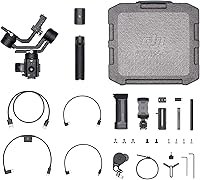
The Pro Combo ships with a notably complete accessory set — carrying case, phone holder, lens support, extended grip/tripod, and the full focus control kit — which eliminates most of the follow-up purchases new users would otherwise need to make immediately after unboxing.
The extended grip/tripod is plastic and feels noticeably cheaper than the rest of the kit, undermining the otherwise premium build impression. Several users also note the phone holder lacks the clamping stability needed for larger current-generation smartphones, limiting its practical reliability during active shooting.

Suitable for:

The DJI Ronin-SC Pro Combo Handheld Gimbal is an excellent match for solo mirrorless video shooters who need professional-grade stabilization without committing to a full cinema rig. It was clearly designed with operators like documentary filmmakers, travel vloggers, and independent content creators in mind — people who carry their own gear, swap cameras often, and need to move fast. Shooters pairing it with well-tested bodies like the Sony A7 III, Panasonic GH5, or Nikon Z6 will find the compatibility reliable and the balance achievable without frustration. The bundled focus wheel is a genuine advantage for anyone who needs to pull focus on the fly without hiring a dedicated assistant, making it a strong tool for interview work and narrative short films. If you are upgrading from a basic entry-level gimbal and want access to intelligent tracking modes and creative automation without spending significantly more, this kit represents a logical and well-rounded step up.

Not suitable for:

Shooters expecting to mount heavier mirrorless rigs — think a Sony A7R IV with a large zoom or a Canon R5 paired with a fast telephoto — should approach the DJI Ronin-SC Pro Combo Handheld Gimbal with caution, as setups close to the 4.4 lb limit are where the motors start to strain and noise becomes noticeable. Complete beginners who have never balanced a gimbal before may find the initial setup process genuinely discouraging; this is not a point-and-shoot device, and the learning curve is real. Users relying heavily on Android devices, particularly older models, may run into recurring Bluetooth drops and app instability that disrupt workflow at inconvenient moments. It is also a poor fit for DSLR shooters, since the system is optimized specifically for the lighter mirrorless form factor and will not cover heavier traditional bodies. Finally, anyone who needs a true cinema-grade rig for high-end commercial productions will likely outgrow its feature set and payload capacity quickly.

Specifications

  • Payload Capacity: Supports mirrorless camera and lens combinations weighing up to 4.4 lbs (2.0 kg).
  • Stabilization: 3-axis motorized stabilization covering pan, tilt, and roll for smooth handheld footage.
  • Battery Capacity: Built-in 2,450 mAh lithium battery is housed inside the BG18 Grip handle.
  • Battery Life: Rated for up to 11 hours of continuous operation on a single full charge.
  • Item Weight: The gimbal body with grip weighs 2.42 lbs (approximately 1.1 kg) without a mounted camera.
  • Folded Size: Folds down to 8.66″ x 7.87″ x 2.95″ for compact storage and bag-friendly transport.
  • Connectivity: Connects to the Ronin app via Bluetooth, with an 8-pin accessory port and USB-C port for peripherals and charging.
  • Intelligent Modes: Supports ActiveTrack 3.0, Panorama, Timelapse, Motionlapse, and Motion Control creative shooting modes.
  • Quick-Release Plate: Includes a Quick-Release Plate with a positioning memory block that locks the camera into a repeatable, pre-balanced position.
  • Axis Locks: Each of the three axes has an individual lock for isolated balancing and faster folding between shots.
  • App Compatibility: The Ronin app requires iOS 9.0 or Android 5.0 or above for full feature access and balancing guidance.
  • Camera Brands: Officially compatible with mirrorless bodies from Sony, Canon, Nikon, Panasonic, Fujifilm, and Sigma.
  • Included Accessories: Ships with a Focus Motor, Focus Wheel, Focus Gear Strip, Lens Support, Extended Grip/Tripod, Phone Holder, Carrying Case, and multiple cables and mounting screws.
  • Model Number: Manufacturer model number is CP.RN.00000043.01, listed under ASIN B07R484T99.

Related Reviews
DJI RS 4 Pro Combo
DJI RS 4 Pro Combo
79%
93%
Motor Strength & Payload Handling
81%
LiDAR Autofocus Accuracy
88%
Native Vertical Shooting
86%
Combo Bundle Value
78%
Battery Life
More
DJI RSC 2 Pro Combo 3-Axis Gimbal Stabilizer
86%
95%
Stabilization Performance
89%
Portability & Design
90%
Ease of Use
85%
Battery Life
88%
Build Quality
More
DJI Ronin-S Camera Gimbal Stabilizer
79%
93%
Stabilization Performance
91%
Motor Strength
88%
Build Quality
87%
Cable Integration
86%
Camera Compatibility
More
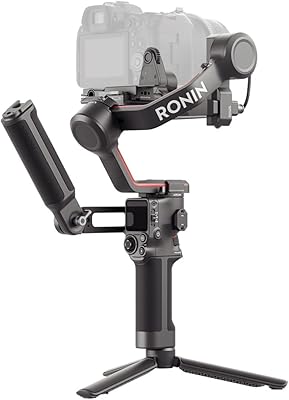
DJI RS 2 3-Axis Gimbal Stabilizer
81%
93%
Build Quality
91%
Stabilization Performance
89%
Payload Capacity
84%
Touchscreen Usability
81%
Balancing & Setup
More
DJI RS 3 Combo Gimbal Stabilizer
83%
93%
Stabilization Performance
88%
Ease of Balancing
91%
Automated Axis Locks
86%
OLED Touchscreen Usability
89%
Battery Life & Charging
More
Garmin PRO 550 Handheld
85%
94%
Battery Life
91%
Range
89%
Ease of Use
86%
Build Quality
83%
Control Options
More
DJI SDR Transmission Wireless Video System
79%
83%
Transmission Range
91%
Signal Stability & Anti-Interference
88%
Video Quality & Latency
86%
Connectivity & Output Options
84%
Broadcast Mode Performance
More
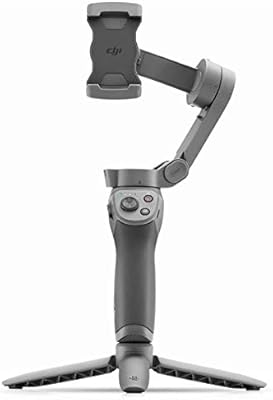
DJI Osmo Mobile 3 Smartphone Gimbal Stabilizer
79%
91%
Stabilization Performance
93%
Portability & Form Factor
78%
Subject Tracking (ActiveTrack 3.0)
62%
App Dependency & Software Experience
84%
Ease of Setup & Learning Curve
More
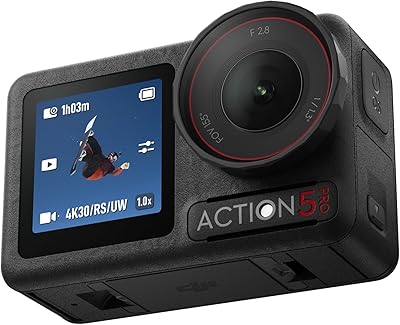
DJI Osmo Action 5 Pro Action Camera
80%
93%
Low-Light Image Quality
89%
Video Quality & Resolution
88%
Stabilization Performance
91%
Battery Life
94%
Waterproofing & Durability
More
DJI Osmo Action 4 Action Camera
81%
88%
Low-Light Performance
91%
Video Quality
89%
Stabilization
86%
Battery Life
87%
Cold-Weather Reliability
More

FAQ

Yes, that combination typically lands around 3.5 to 3.8 lbs depending on the specific lens variant, which sits comfortably within the 4.4 lb payload range. That said, leaving a little headroom is wise — setups pushed right to the limit make the motors work harder and can introduce audible noise during quieter scenes. A 24-70mm f/4 or a prime lens makes for a more relaxed pairing overall.

For someone new to gimbals, budget 20 to 40 minutes the first time through. Once your camera position is memorized by the Quick-Release Plate and you understand how the three axes interact, repeat setups drop to just a few minutes. The Ronin app includes a guided balancing walkthrough that makes the process significantly less daunting for beginners.

The DJI Ronin-SC Pro Combo Handheld Gimbal includes a Focus Motor, Focus Wheel, and Focus Gear Strip that are sold separately with the standard version. These let you control camera focus manually during a live shot, which is a real advantage for solo operators who cannot rely on a dedicated focus puller. The bundle also adds a Lens Support bracket and additional mounting hardware. If you were planning to buy any of these accessories individually, the combo represents solid savings.

Not universally. The focus wheel communicates electronically with the camera via a multi-camera control cable, so it works reliably with Sony A7-series, Panasonic GH bodies, and select Canon and Nikon mirrorless models. Some listed cameras require specific cable adapters included in the kit, while a handful may only support manual lens adjustments rather than electronic focus control. It is worth checking DJI's support page for the exact camera-to-cable pairing before assuming full focus wheel functionality.

You can absolutely shoot without the app — the joystick and trigger on the grip handle all the core stabilization and movement functions. The app becomes necessary when you want intelligent modes like ActiveTrack or Timelapse, need to fine-tune motor response, or are following the guided balancing process for a new camera. For straightforward handheld video work, the physical controls are entirely sufficient.

It performs reliably when the subject is clearly defined against the background and lighting conditions are good. In flat or low-contrast scenes, or when a subject moves quickly across the frame, it can drop the lock without much warning. Think of it as a capable tool for controlled environments — walking interviews, slow product reveals, or casual subject tracking — rather than a fully autonomous system for fast or unpredictable movement.

The battery is not user-swappable in the field, which is the main trade-off of the integrated design. For shoots that push past 11 hours, plan around a mid-day USB-C top-up rather than a battery swap. The charging port is accessible without disassembling the unit, so a short break with a power bank can extend your day without much disruption.

Yes, without much trouble. Folded down to its compact dimensions, this handheld gimbal slides into most dedicated camera bags or a medium-sized backpack without dominating the space. The included carrying case keeps accessories organized and provides motor protection during transit, making it a practical travel companion for location shoots.

Older Android devices are where Bluetooth reliability issues appear most frequently in real-world use. If your phone meets the Android 5.0 minimum and is on the official compatible device list, it should function, but connectivity drops are a noted complaint from that segment of users. Keeping the app updated, re-pairing Bluetooth fresh before each session, and clearing the app cache usually resolves most intermittent issues rather than pointing to a hardware-level problem.

It depends entirely on how you shoot. If you work solo and need to pull focus without autofocus handling it for you, the Focus Wheel and Motor genuinely expand what you can do on a one-person production. If your camera's autofocus is reliable and you rarely need manual control, the base kit likely covers your needs without the extra hardware. The honest test is whether your current shoots are limited by the absence of focus control — if the answer is yes, the upgrade pays for itself quickly.