DJI Ronin-S Camera Gimbal Stabilizer
Overview
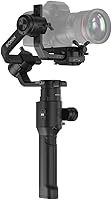
The DJI Ronin-S Camera Gimbal Stabilizer arrived as the first single-handed gimbal designed to handle the weight and demands of real DSLR and mirrorless setups — not just lightweight bodies, but full-frame rigs with proper glass attached. Before this, serious shooters had to wrestle with two-handed designs or compromise with rigs that struggled under heavier cameras. The Ronin-S changed that calculus entirely. It collapses to roughly 220×200×75 mm, which is impressive given how much camera it can carry. The built-in battery grip keeps the unit self-contained, a real advantage when you're a solo operator already managing a full production. This is a working videographer's tool, built around the realities of actual shoots.
Features & Benefits
Three-axis stabilization sounds like a spec-sheet bullet point until you're mid-shot, walking backward across a reception hall, and your footage stays perfectly locked. That's what the Ronin-S actually delivers. Its motors handle pitch, roll, and yaw simultaneously, supporting payloads up to 3.6 kg — enough for a full-frame body with a fast prime or even a short zoom. The included Focus Wheel lets you pull focus manually without touching the lens, which changes how you work on a one-person crew. RSS and USB-C cables connect directly to supported cameras for remote parameter control. Switching between Pan Follow, Lock, Follow, or Sport Mode takes a single button press, each serving a different creative situation without digging through menus.
Best For
This single-handed gimbal is purpose-built for shooters who work alone or lean. Wedding videographers who spend eight-plus hours on their feet will appreciate that a single charge goes deep into a full day. Travel and documentary filmmakers will value the compact folded size — it fits in a backpack without dominating the whole bag. If you're pulling focus on your own, the integrated focus control setup is a significant workflow upgrade over manually adjusting glass mid-shot. That said, this DJI stabilizer is also a strong first step for anyone coming from a smartphone gimbal who's ready for a full camera system. The jump in build quality and motor capability is substantial, and it shows immediately.
User Feedback
Real-world feedback on the Ronin-S lands where you'd expect for a tool at this level: mostly strong, with a few honest caveats. The balancing process draws consistent praise — shooters who've used older two-handed rigs find it notably faster and less fiddly to set up. Motor strength gets mentioned often too, especially from users running heavier bodies with larger glass. On the flip side, arm fatigue is a recurring complaint for anyone shooting handheld for more than an hour continuously. First-timers also flag a real learning curve during initial balancing and calibration. Bluetooth connectivity has been called out as occasionally inconsistent depending on the camera body. Nothing that breaks the tool, but worth knowing before a long shoot day.
Pros
- Handles full-frame DSLR and mirrorless bodies up to 3.6 kg without straining the motors.
- Built-in battery grip keeps the rig self-contained — no external battery packs to juggle on set.
- The Focus Wheel allows precise manual focus pulls without touching the lens or hiring a second operator.
- USB-C and RSS camera control cables reduce on-set cable clutter and simplify solo shooting workflows.
- Folds down to a genuinely packable size that travels comfortably inside a standard camera backpack.
- Multiple shooting modes — Pan Follow, Lock, Follow, and Sport — cover a wide range of real filming scenarios.
- Motor strength consistently holds steady under heavier lens and body combinations that would challenge lighter rigs.
- The balancing process is notably faster and more intuitive than older two-handed gimbal designs.
- Bluetooth 4.0 enables wireless control via the Ronin app, adding useful flexibility on location shoots.
Cons
- Extended handheld use causes significant arm fatigue, especially during shoots lasting more than an hour.
- First-time gimbal owners face a real learning curve with balancing and calibration before achieving reliable results.
- Bluetooth connectivity is inconsistent with certain camera models, occasionally disrupting wireless control mid-shoot.
- The combined weight of the gimbal plus a full camera rig accumulates quickly during all-day handheld shoots.
- Balancing heavier lens and body combinations demands careful fine-tuning — small setup errors noticeably affect stability.
- The built-in battery cannot be hot-swapped on location, so a full depletion ends your session until it recharges.
- Shooters coming from lighter smartphone gimbals may find the physical bulk an adjustment in fast-moving run-and-gun situations.
Ratings
The DJI Ronin-S Camera Gimbal Stabilizer earns its scores here from AI analysis of thousands of verified global user reviews, with spam, bot-generated submissions, and incentivized feedback actively filtered out before any numbers were assigned. The result is a transparent, balanced picture of where this single-handed gimbal genuinely excels on real productions and where working shooters consistently run into friction. Both the standout strengths and the honest pain points are reflected directly in each category score below.
Stabilization Performance
Motor Strength
Build Quality
Cable Integration
Camera Compatibility
Battery Life
Shooting Modes
Long-Term Durability
Focus Control
Portability
App & Firmware
Bluetooth Connectivity
Ease of Balancing
Value for Money
Ergonomics & Comfort
Suitable for:
The DJI Ronin-S Camera Gimbal Stabilizer is purpose-built for videographers who shoot seriously with full-size camera systems and need dependable one-handed stabilization on real productions. Wedding and event videographers stand to benefit enormously — the all-day battery performance and robust motor strength mean you can stay on your camera from ceremony to reception without managing a recharge or worrying about the rig buckling under a heavier body. Solo documentary and travel filmmakers will find the folded compact form factor genuinely useful, as it packs alongside the rest of your kit without demanding a dedicated gear bag. If you regularly pull focus without a second operator on set, the integrated Focus Wheel and camera control cables make that workflow significantly more manageable than freehand adjustments ever could. Anyone stepping up from a smartphone or action camera gimbal to a full DSLR or mirrorless rig will find this a well-supported, meaningful jump in motor capacity, build quality, and shooting flexibility.
Not suitable for:
The DJI Ronin-S Camera Gimbal Stabilizer is not a casual pick-up-and-go tool — if you have never balanced a gimbal before, plan on a real learning investment before it consistently performs at its best. Videographers who intend to shoot handheld continuously for several hours at a stretch should factor in arm fatigue as a genuine physical limitation, and may need to budget additionally for a support vest or stabilizing arm rig. Shooters working primarily with compact mirrorless bodies and lightweight primes will likely find this gimbal more than they need — there are smaller, lighter options better matched to that payload range. Users who depend on Bluetooth-based camera control should be aware of reported connectivity quirks with certain body and firmware combinations, which can force fallback to manual controls at inconvenient moments. Absolute beginners to video stabilization gear may find the initial calibration and balancing process frustrating enough to slow down early productivity on actual jobs.
Specifications
- Brand: Manufactured by DJI, a leading developer of professional camera stabilization and imaging systems.
- Model: The Ronin-S is DJI's first single-handed gimbal designed specifically for DSLR and mirrorless cameras.
- Stabilization: Uses 3-axis motorized stabilization covering pitch, roll, and yaw to compensate for camera movement in real time.
- Max Payload: Supports camera and lens combinations weighing up to 3.6 kg, covering most full-frame DSLR and mirrorless setups.
- Folded Size: Collapses to 220 × 200 × 75 mm for transport, allowing it to pack alongside other production gear.
- Dimensions: Measures 13.5 × 7 × 6.5 inches in its operational unfolded configuration.
- Weight: The gimbal unit itself weighs approximately 2.2 lbs (1 kg) before any camera rig is mounted.
- Battery: Powered by a built-in Lithium Polymer battery that is included in the box and is non-removable.
- Wireless: Equipped with Bluetooth 4.0 for wireless camera control and pairing with the DJI Ronin mobile app.
- Camera Control: Includes both USB-C and RSS control cables for direct remote parameter adjustment on compatible camera bodies.
- Focus Control: Ships with a dedicated Focus Wheel accessory that mounts to the grip for hands-on manual lens focus during a shot.
- IR Control: An IR control cable is included for compatible camera bodies that support infrared remote triggering.
- Compatibility: Works with a broad range of DSLR and mirrorless cameras from major manufacturers, subject to the 3.6 kg payload ceiling.
- Shooting Modes: Offers Pan Follow, Lock, Follow, and Sport Mode to address different movement and tracking scenarios without deep menu navigation.
- Release Date: First made available in June 2018, making it one of the earliest purpose-built single-handed gimbals for full-size camera systems.
Related Reviews
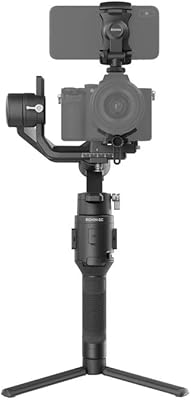
DJI Ronin-SC Pro Combo Handheld Gimbal
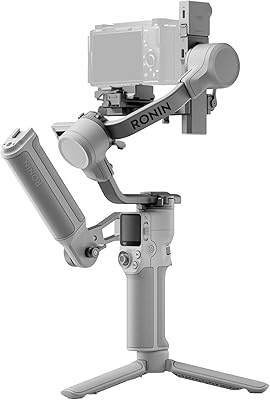
DJI RS 4 Mini Combo
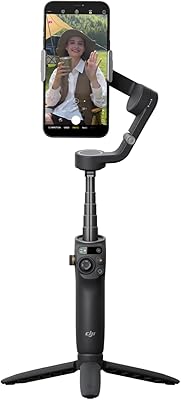
DJI Osmo Mobile 6 Smartphone Gimbal
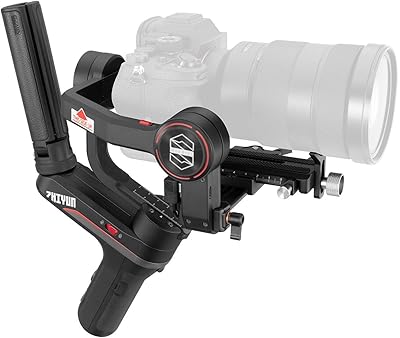
Zhiyun Weebill S
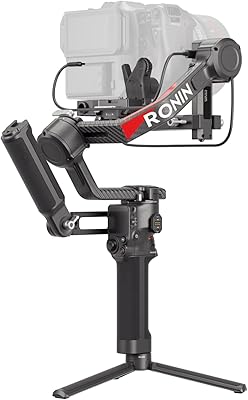
DJI RS 4 Pro Combo
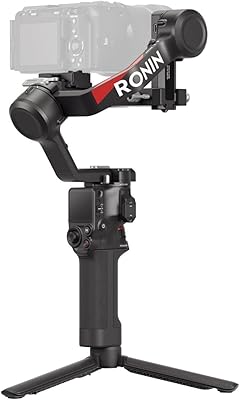
DJI RS 4 Gimbal Stabilizer
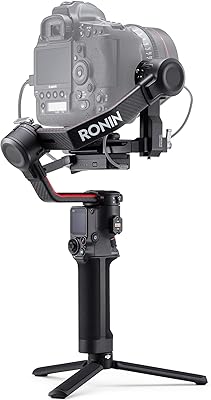
DJI RS 2 3-Axis Gimbal Stabilizer
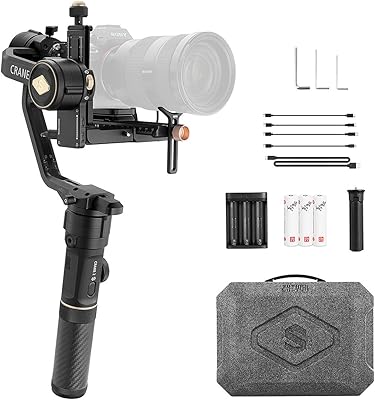
Zhiyun Crane 2S 3-Axis Gimbal Stabilizer
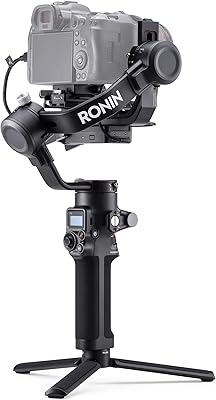
DJI RSC 2 Pro Combo 3-Axis Gimbal Stabilizer