Overview

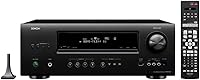
The Denon AVR-1612 arrived in 2011 as a capable mid-range 5.1-channel home theater receiver, landing at a time when HDMI 1.4a and 3D-ready video were just becoming standard expectations for living room setups. Denon has long been respected for building receivers that prioritize audio quality over flashy marketing, and this unit reflects that philosophy. The front panel is clean and functional — mechanical knobs and clearly labeled inputs give it a no-nonsense feel that experienced buyers will appreciate. Under the hood, discrete 75-watt amplifiers power each channel independently. That said, this surround receiver is a 14-year-old design, so walk in with clear eyes about its limitations.

Features & Benefits

Four HDMI inputs with Audio Return Channel support means you can run TV audio back through the receiver without an extra cable — a small convenience that adds up quickly in a real living room setup. The discrete amplification delivers consistent, clean output across all five channels, so action scenes and quiet dialogue both land well rather than one drowning out the other. A Compressed Audio Restorer subtly fills in what lossy formats strip away, which matters when most of us stream rather than spin discs. USB playback and an adjustable mute level round out a feature set that stays practical without overcomplicating daily use.

Best For

This Denon receiver hits its stride for anyone putting together a first proper 5.1 surround setup without going overboard on budget. It works especially well paired with a mid-range TV — HDMI switching handles a couple of game consoles and a streaming box with ease, keeping your entertainment center tidy. A secondary room where you want real surround sound without investing in a flagship unit is another natural fit. Buyers who lean on brand reliability and prefer a straightforward, no-frills interface over app-driven configuration will feel right at home. If your needs are basic but your audio standards are not, this surround receiver checks the right boxes.

User Feedback

With a 3.8-star average across 92 ratings, the reception is broadly positive but not without caveats. Long-term owners frequently call out audio clarity and build quality as standout strengths — several note it still performs reliably years after purchase, which says something. On the other side, first-time AV receiver buyers flag the setup process as more involved than expected, and the remote and on-screen display draw occasional criticism for feeling dated. A handful of reviewers have run into HDMI compatibility friction with newer devices, and the absence of any network streaming features is a real gap by today's expectations. Overall, buyers who know what they are getting tend to be satisfied.

Pros

  • Discrete 75-watt amplifiers per channel deliver clean, balanced surround sound across all five speakers.
  • Long-term owners consistently report reliable daily performance years after purchase.
  • Four HDMI inputs plus Audio Return Channel keep most living room setups neatly organized.
  • The Compressed Audio Restorer adds noticeable body to streaming and MP3 audio sources.
  • Mechanical knobs and a clearly labeled front panel make routine use quick and intuitive.
  • USB playback lets you listen to stored music without powering up a separate device.
  • Denon AVR-1612 benefits from the brand's well-regarded audio tuning, which is evident in real listening sessions.
  • Solid build quality gives the unit a substantial, dependable feel that cheaper receivers lack.
  • Adjustable mute level allows volume reduction without cutting audio completely — useful for quick interruptions.
  • Excellent value proposition when sourced as a used or old-stock unit for a secondary room.

Cons

  • No 4K, HDR, or Dolby Vision pass-through makes it incompatible with modern display pipelines.
  • Completely absent network features mean zero wireless streaming, Bluetooth, or app control.
  • No support for Dolby Atmos or DTS:X limits ceiling and height-channel speaker configurations.
  • The on-screen display is visually outdated and genuinely difficult to navigate on a modern flat-panel TV.
  • Remote control layout is cramped and unintuitive, pushing many owners toward a universal remote replacement.
  • HDMI compatibility issues with newer devices have been reported and can require workaround configurations.
  • No active manufacturer support for a unit this age means repairs depend entirely on third-party servicing.
  • Runs noticeably warm under sustained use — inadequate shelf ventilation can shorten the unit's lifespan.
  • Setup complexity regularly catches first-time AV receiver buyers off guard during initial configuration.
  • No phono input, no optical network input, and no analog workarounds for modern source-switching needs.

Ratings

The Denon AVR-1612 has been scored by our AI engine after processing verified buyer reviews from multiple global markets, with spam, incentivized posts, and bot activity actively filtered out before any score was calculated. The result is an honest, balanced picture of where this surround receiver genuinely performs well and where real owners have run into frustration. Both the strengths and the sticking points are reflected transparently in every category below.

Audio Quality
84%
Owners consistently praise the clarity and warmth this receiver delivers across movies, music, and gaming sessions. The discrete amplification means each channel gets dedicated power, so surround effects feel distinct and well-placed rather than muddy. For a unit in this class, the sonic performance regularly exceeds buyer expectations.
At higher volumes in larger rooms, some users notice the 75 watts per channel starts to feel limiting, particularly with demanding speaker loads. A handful of reviewers mention that the low-frequency handling, while decent, lacks the punch that a separate subwoofer amplifier would provide.
Build Quality
81%
19%
The chassis feels solid and reassuringly heavy for a mid-range unit — at over 20 pounds, it does not shift around on a shelf. Long-term owners frequently comment that the unit keeps running reliably years after purchase, which reflects well on Denon's component choices at this price tier.
The front panel plastics, while functional, have a slightly budget feel on close inspection compared to Denon's higher-end lines. A few buyers note that the display panel can develop uneven brightness over years of use, which is common for units of this vintage.
HDMI Connectivity
67%
33%
Four HDMI inputs cover most living room setups comfortably — a TV, a gaming console, and a streaming device can all stay connected simultaneously. Audio Return Channel support is a genuine convenience, eliminating the need for a separate optical cable running back from the television.
HDMI 1.4a is the ceiling here, and that creates friction with newer 4K or HDR-capable devices since the receiver cannot pass those signals through. Several reviewers specifically flag compatibility issues when introducing more recent TVs or consoles into the chain, requiring workaround configurations.
Ease of Setup
58%
42%
For buyers who have set up an AV receiver before, the process is logical and the labeled rear panel makes physical connections straightforward. The mechanical knobs and clear front-panel layout reduce the learning curve during initial configuration compared to more menu-heavy competitors.
First-time AV receiver owners frequently describe the initial setup as more involved than anticipated, particularly around speaker calibration and HDMI source assignment. The on-screen display, while functional, is dated and low-resolution, making menu navigation feel tedious in a modern TV environment.
Remote Control
53%
47%
The included remote covers the core functions adequately, and having batteries included out of the box is a small but appreciated touch. Basic volume, input switching, and mute functions work reliably from a reasonable distance across most living room configurations.
The remote's layout and button labeling draw repeated criticism for feeling cramped and unintuitive, especially in low-light conditions. A notable number of reviewers eventually replaced it with a universal remote, citing response inconsistency and awkward ergonomics as the main drivers.
Value for Money
76%
24%
Given that this unit is typically found used or as old stock, the price-to-performance ratio for surround sound capability is genuinely strong. Buyers entering the 5.1 home theater world on a tight budget get real Denon audio engineering and solid build quality for a fraction of a new flagship's cost.
At its original retail price, the value proposition was more debatable given the competitive landscape in 2011. Buyers who encounter units priced as if new should weigh the age-related limitations carefully, particularly around HDMI compatibility and the complete absence of network streaming.
Network & Streaming Features
22%
78%
There is nothing to configure on a network, which means no firmware update headaches or app dependency — the unit simply does its job via physical connections without any software layer to manage or troubleshoot.
There is no Wi-Fi, no Bluetooth, no AirPlay, no Spotify Connect — nothing. In a world where every current receiver at this tier streams natively, the total absence of network features is a hard limitation that forces buyers to route all streaming audio through an external device first.
Surround Sound Performance
82%
18%
The 5.1 decoding handles standard Dolby Digital and DTS sources confidently, and action-heavy movie watching in a properly set-up room delivers a genuinely immersive experience. Gaming sessions benefit noticeably from directional surround cues that a soundbar simply cannot replicate.
The unit lacks support for newer object-based formats like Dolby Atmos or DTS:X, which are now standard on mid-range receivers. For buyers investing in a home theater with ceiling or upward-firing speakers, this surround receiver will not unlock that content.
Input & Source Flexibility
71%
29%
Beyond HDMI, the USB input for direct audio playback from a flash drive is a practical bonus that owners use more than expected — particularly for music listening without powering up a separate device. The range of physical inputs covers most non-streaming use cases well.
The input selection feels dated against current standards; there is no optical network input, no phono stage for vinyl, and no Bluetooth pairing for casual phone audio. Buyers building a modern, mixed-source setup will likely need an external switcher or adapter to bridge the gaps.
Channel Power Consistency
86%
Discrete amplifiers for all five channels mean you are not sharing a power budget across the room — each speaker receives a dedicated, stable signal. Owners with moderately efficient speakers notice this in how balanced the soundstage feels even during complex, loud passages.
The total power envelope of the unit is fixed, and running all five channels at high demand simultaneously can cause the receiver to run quite warm. Adequate ventilation around the unit is not optional; restricted airflow has contributed to reliability issues for some long-term users.
On-Screen Display
44%
56%
The OSD does the basic job of confirming input selection and volume levels, which is all most buyers need once initial setup is complete. It functions reliably as a status indicator without adding configuration complexity.
The display resolution and graphical quality are noticeably poor by any modern standard — text is blocky and menus look visually out of place on a current flat-panel TV. Several reviewers describe navigating settings as a chore specifically because of how difficult the OSD is to read clearly.
Longevity & Reliability
78%
22%
For a unit now well over a decade old, the reliability track record in user reviews is genuinely encouraging. Multiple owners report years of daily use without hardware failure, which reflects positively on Denon's engineering standards and component selection for this model.
Age-related wear is a real factor to consider when buying a used unit — capacitors, HDMI boards, and display components all have finite lifespans. Without any manufacturer support still active for a 2011 unit, repair options in case of failure are limited to third-party servicing.
Compressed Audio Handling
73%
27%
The Compressed Audio Restorer feature meaningfully improves the listening experience for streaming audio and MP3 playback, which is how most people actually consume music day-to-day. It adds body and presence to thin-sounding compressed tracks without introducing obvious coloration.
The effect is subtle enough that critical listeners may find it underwhelming, and it cannot be independently adjusted with any granularity. It also does nothing for video streaming audio quality, where codec limitations remain fully audible regardless of the setting.
Physical Footprint & Installation
69%
31%
The unit's dimensions are standard for a full-width AV receiver, making it a natural fit for most media console shelves and AV furniture without custom accommodation. The labeled rear panel layout reduces installation errors for those doing their own wiring.
At over 20 pounds, moving or repositioning the unit once installed is not casual work, and the depth of 17 inches means it needs a genuinely deep shelf. Buyers with shallow or enclosed media cabinets have flagged heat buildup as a concern with restricted rear clearance.

Suitable for:

The Denon AVR-1612 is a strong pick for anyone stepping into their first real 5.1 surround sound setup and wanting proven audio performance without paying flagship prices. If your current system is a soundbar or a basic stereo setup and you want a genuine upgrade for movie nights and gaming, this surround receiver delivers a noticeable and satisfying step forward. It pairs well with a mid-range television and a modest set of passive speakers, making it a natural anchor for a budget-conscious home theater build. Buyers setting up a secondary room — a basement, a guest room, or a den — will find it offers far more capability than the space strictly demands, which is a good problem to have. Those who already own or prefer wired, physical setups over app-driven ecosystems will appreciate how straightforward daily operation is once the initial configuration is done. If you value Denon's reputation for audio fidelity and want a unit that has demonstrated long-term reliability in real homes, this receiver rewards that trust.

Not suitable for:

Buyers who have invested in a 4K HDR television or plan to should look elsewhere — the Denon AVR-1612 tops out at HDMI 1.4a and cannot pass 4K, HDR10, or Dolby Vision signals through to a display, which creates a real bottleneck in a modern home theater chain. Anyone expecting wireless audio streaming, Bluetooth pairing for a phone, or app-based control will find this surround receiver completely unequipped for those expectations; there is no network functionality of any kind. Listeners who want to explore Dolby Atmos, DTS:X, or any height-channel surround formats will hit a hard ceiling here, as the unit predates those standards by several years. Tech-savvy buyers who enjoy keeping their gear updated through firmware or who want long-term manufacturer support should be aware that a 2011 unit has no active support pipeline. First-time AV buyers who want a plug-and-play experience may find the setup curve steeper than expected, particularly if pairing with newer devices that have their own HDMI compatibility quirks.

Specifications

  • Channels: The receiver supports a 5.1-channel surround sound configuration with discrete amplification for each of the five main channels.
  • Power Output: Each channel delivers 75 watts of continuous power via dedicated discrete amplifiers, ensuring consistent output without shared power budgeting.
  • HDMI Inputs: Four HDMI 1.4a inputs and one HDMI output are provided, supporting 3D pass-through and Audio Return Channel functionality.
  • Video Pass-Through: The unit supports 3D video pass-through and is compatible with H.264 and H.265/HEVC encoded video signals via HDMI.
  • Audio Return Channel: ARC support on the HDMI output allows a compatible television to send audio back to the receiver without a separate optical cable.
  • USB Connectivity: A USB input enables direct digital audio playback from compatible flash drives and storage devices without requiring an external source component.
  • Audio Restoration: The Compressed Audio Restorer feature processes lossy audio formats such as MP3 and streaming sources to recover perceived dynamic range and fullness.
  • Muting Control: An adjustable muting level allows the user to set a partial volume reduction rather than a complete audio cutoff when muting.
  • Controls: Front-panel operation is handled via mechanical knobs and physical buttons, with no touchscreen or gesture-based interface.
  • Connectivity Type: All audio and video connections are wired; the unit has no Wi-Fi, Bluetooth, Ethernet, or any other network interface.
  • Compatible Devices: The receiver is designed for use with game consoles, televisions, and standard passive speaker systems in a home theater configuration.
  • Dimensions: The unit measures 15 x 17.1 x 6.4 inches (W x D x H), which is standard full-width AV receiver sizing.
  • Weight: The receiver weighs 20.2 pounds, reflecting a solid internal chassis and transformer construction typical of discrete amplifier designs.
  • Remote Control: A remote control is included and requires two AAA batteries, which are supplied in the box at purchase.
  • Manufacturer: The AVR-1612 is manufactured by Denon Electronics USA LLC under the parent Denon brand, a Japanese audio company with decades of AV receiver heritage.
  • Model Number: The official item model number is AVR1612, released to market in March 2011 under ASIN B004U403WM.
  • Surround Decoding: The unit decodes standard multi-channel formats including Dolby Digital and DTS, but does not support object-based formats such as Dolby Atmos or DTS:X.
  • Power Source: The receiver operates on standard AC mains power via a hardwired power cord; no external power brick or adapter is required.

Related Reviews
Denon AVR-S760H
Denon AVR-S760H
79%
88%
Audio Performance
84%
Setup & Installation
79%
HDMI & Video Handling
86%
Gaming Features
81%
Wireless Connectivity
More
Denon AVR-X1800H
Denon AVR-X1800H
81%
88%
Audio Performance
91%
Video Passthrough Quality
86%
Setup & Installation
74%
HEOS Multi-Room Streaming
83%
Build Quality & Design
More
Denon AVR-X6800H
Denon AVR-X6800H
80%
94%
Audio Performance
92%
Surround Sound & 3D Audio
89%
Room Calibration (Audyssey)
83%
HDMI & Video Handling
86%
Gaming Performance
More
Denon AVR-X2800H
Denon AVR-X2800H
78%
91%
Audio Performance
83%
Dolby Atmos & Spatial Audio
88%
Build Quality
92%
HDMI Connectivity
58%
Setup & Initial Configuration
More
Denon AVR-S670H 5.2 Ch Home Theater Receiver
84%
88%
Value for Money
90%
Video Quality
87%
Ease of Setup
85%
Audio Quality
89%
Connectivity
More
Denon AVR-A10H
Denon AVR-A10H
81%
94%
Audio Performance
92%
Build Quality
96%
Channel Flexibility
58%
Setup & Ease of Use
89%
Gaming Performance
More
Denon AVR-X3800H 9.4-Ch 8K UHD AV Receiver
85%
95%
Audio Quality
93%
Video Quality
72%
Setup & Installation
89%
Connectivity Options
77%
User Interface & Controls
More
Denon AVR-X2700H
Denon AVR-X2700H
79%
91%
Audio Performance
88%
Gaming Performance
86%
Video Passthrough Quality
84%
Build Quality & Design
76%
Setup & Calibration
More
Denon AVR-S970H
Denon AVR-S970H
79%
91%
Audio Performance
93%
Gaming Performance
88%
Setup & Calibration
79%
Build Quality
52%
Remote Control
More
Denon DCD-900NE CD Player
86%
94%
Sound Quality
90%
Build Quality
85%
Connectivity Options
78%
Ease of Use
88%
Vibration Resistance
More

FAQ

It will connect to a 4K TV via HDMI, but it cannot pass a 4K or HDR signal through to the display — the HDMI 1.4a standard caps out well below those specs. If your TV is 4K, you would need to connect your source devices directly to the TV and use Audio Return Channel to send sound back to the receiver. It works, but it is a workaround rather than a clean setup.

No, there is no wireless connectivity of any kind on this unit. No Bluetooth, no Wi-Fi, no AirPlay, no streaming apps. All sources need to be connected physically via HDMI, optical, coaxial, or analog inputs.

It is manageable, but plan for a learning curve. The rear panel is labeled clearly, so the physical wiring is straightforward once you understand which cables go where. The trickier part is speaker calibration and source assignment through the on-screen menus, which are functional but visually dated. Watching a setup walkthrough video online before you start will save you a lot of back-and-forth.

Yes, it works well with both. You connect your console to one of the four HDMI inputs, and the receiver handles audio decoding and switching in a single box. Just keep in mind that if your console outputs 4K video, the signal will not pass through to your TV at full quality — you may want to run video directly to the TV and use ARC for audio instead.

No, this is a 2011 model that has been out of production for many years. Denon no longer provides firmware updates or active customer support for it. Units available today are either used or old stock, so checking the condition carefully before buying is worth the extra attention.

It handles the standard formats well — Dolby Digital, Dolby Digital EX, DTS, and DTS-ES are all supported. What it does not do is Dolby Atmos, DTS:X, or any height-channel formats, since those came along after this unit was designed. For most movies and all standard broadcast content, it covers what you need.

For a typical living room with moderately efficient speakers, 75 watts per channel is more than adequate at normal listening levels. Where you might feel it reaching its limit is in a larger room with inefficient speakers pushed to high volume. Most buyers in average-sized spaces report the power headroom feels comfortable without ever approaching the ceiling.

Absolutely, and many owners do exactly that. This surround receiver responds well to most universal remotes programmed with standard Denon codes, including Logitech Harmony devices. It is one of the more common upgrades owners make after a few weeks of living with the stock remote.

It runs warm, which is normal for a receiver with discrete amplifiers doing real work. As long as you give it a few inches of clearance on the sides and top, and avoid placing it in a sealed cabinet without ventilation, heat should not be a problem. Owners who have reported reliability issues over time often note restricted airflow as a contributing factor.

Any standard passive 8-ohm speakers in the 85 dB or higher sensitivity range will pair comfortably with this receiver. Bookshelf speakers for surrounds and a center channel, combined with floor-standing fronts if your budget allows, is a common and effective configuration. You do not need expensive speakers to hear what this receiver is capable of — mid-range speakers from established brands will let it perform well.