Overview

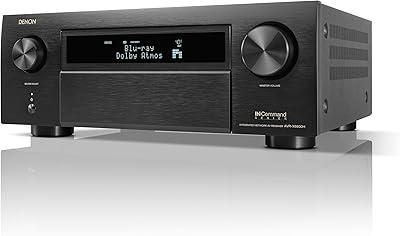
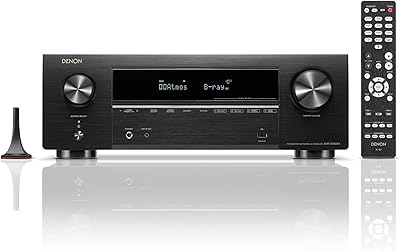
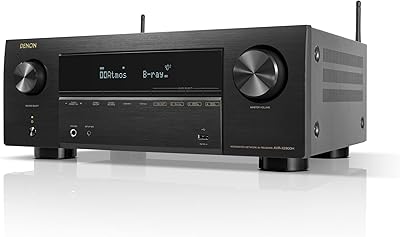
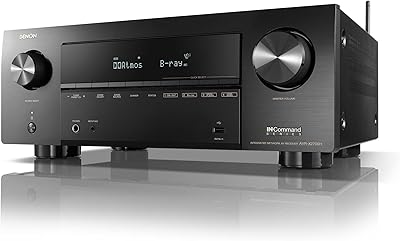
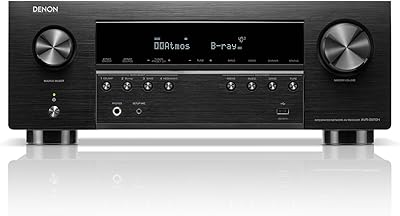
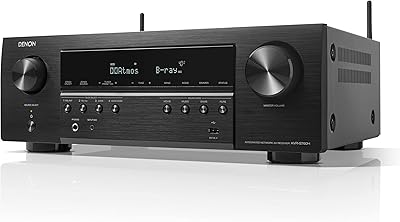
The Denon AVR-X3800H 9.4-Channel AV Receiver represents Denon's serious push into the upper tier of home theater amplification — a space the company has occupied credibly for decades. With nine amplified channels and a 9.4 configuration, this Denon receiver can drive a full Atmos layout with room to spare for subwoofers. It's 8K-ready, which matters less today than it will in a few years — think of it as future-proofing your investment while still getting full 4K/120Hz performance right now. That said, this is not a plug-and-play device. The AVR-X3800H rewards patient, methodical setup, and buyers who rush the installation often undersell what it can actually do.
Features & Benefits

At 105W per channel across all nine channels, power output here is consistent rather than cherry-picked — no manufacturer-favorable measurement conditions, just solid headroom for mid-to-large rooms. The six HDMI 2.1 inputs handle 8K/60Hz and 4K/120Hz with eARC support, making this 9.4-channel unit a natural fit alongside the latest gaming consoles and next-gen displays. Dolby Atmos, DTS:X Pro, IMAX Enhanced, and Auro-3D each serve different content types, with Audyssey MultEQ XT32 handling room correction to account for your actual space. For vinyl fans, the built-in phono input is a genuine bonus, and the XLR subwoofer outputs offer integration flexibility that most competitors at this tier quietly skip.

Best For

This Denon receiver makes the most sense in a dedicated home theater room where a full 9.4-channel speaker array can actually breathe. Gamers running a 4K/120Hz display will appreciate the low-latency HDMI 2.1 switching — no need for a separate switcher box. If you still spin records, the phono input means one receiver handles both your turntable and streaming sources without a separate preamp. HEOS multiroom support appeals to households wanting synchronized audio across multiple rooms via Spotify, TIDAL, or Pandora. And if you are not yet on 8K, buying ahead of the format is a reasonable move here, given the unit's depth of features and three-year manufacturer warranty.

User Feedback

Owners consistently point to sound staging accuracy as a standout strength, with many noting that Audyssey room correction made a real difference even in acoustically difficult spaces. The app-guided setup assistant draws mixed marks — it simplifies the process but can misfire on speaker distance calibration, and several users recommend running it more than once. Heat during extended high-volume sessions comes up occasionally, so adequate rack ventilation is worth planning for. The remote control divides opinion: fully functional but feeling dated next to the unit's otherwise capable feature set. Long-term owners past the one-year mark largely report solid reliability, which is reassuring for a device this feature-dense.

Pros

  • Consistent 105W per channel across all nine channels — no inflated single-channel specs here.
  • Audyssey MultEQ XT32 room correction produces noticeably accurate soundstage imaging in real-world rooms.
  • Six HDMI 2.1 inputs with 4K/120Hz support make this 9.4-channel unit a strong long-term gaming hub.
  • Supports Dolby Atmos, DTS:X Pro, IMAX Enhanced, and Auro-3D — rare to have all four under one roof.
  • Height virtualization lets you experience overhead audio without physically installing ceiling speakers.
  • Built-in phono input and XLR subwoofer outputs offer flexibility rarely found at this channel count.
  • HEOS multiroom streaming works reliably with Spotify, TIDAL, and Pandora across multiple rooms.
  • 8K/60Hz passthrough and HDCP 2.3 support prepare the system for next-generation display upgrades.
  • Three-year manufacturer warranty provides meaningful long-term coverage for a complex electronics purchase.
  • Long-term owners consistently report solid reliability well past the first year of use.

Cons

  • Initial setup is genuinely complex and can overwhelm buyers without prior AVR experience.
  • The app-based setup assistant, while helpful, sometimes misreads speaker distances and benefits from multiple calibration runs.
  • The included remote control feels dated relative to the unit's overall capability and price tier.
  • Heat buildup during extended high-volume listening sessions requires planning for adequate rack ventilation.
  • The physical size and weight demand dedicated furniture — this is not a casual shelf component.
  • Nine channels and premium format support are largely wasted in small rooms or basic 5.1 setups.
  • No built-in screen for on-unit menu navigation — everything routes through your TV display, which can be inconvenient during calibration.
  • HEOS app experience has historically drawn criticism for occasional connectivity hiccups on initial network pairing.

Ratings

The scores below reflect AI-synthesized analysis of verified global user reviews for the Denon AVR-X3800H 9.4-Channel AV Receiver, with spam, bot-generated, and incentivized submissions actively filtered out before scoring. Each category captures both what buyers genuinely praised and where frustrations surfaced — nothing is glossed over. The result is an honest, data-grounded snapshot of real ownership experience across a wide range of home theater setups and skill levels.

Audio Performance
93%
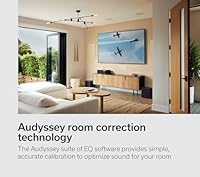
Owners consistently describe a wide, precisely layered soundstage that holds up across movie nights, concert Blu-rays, and late-night stereo listening. The Audyssey MultEQ XT32 room correction draws particular praise for pulling coherent imaging out of acoustically challenging rooms that previously frustrated users with lesser receivers.
A small number of critical listeners feel the default Audyssey curve slightly rolls off the upper frequencies, requiring manual adjustment in the app to restore full air and treble extension. Users with untreated rooms report that multiple calibration passes are sometimes needed to achieve the precision others describe.
Setup Experience
58%
42%
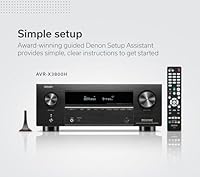
The guided setup wizard in the Denon AVR Remote app is a genuine step forward from earlier generations, walking first-timers through speaker assignment and microphone placement in a structured sequence. Experienced AVR owners note that once past initial configuration, fine-tuning options are deep and logically organized.
First-time AV receiver buyers frequently describe the initial setup as confusing and time-consuming, with speaker distance calibration being a recurring sticking point. The Audyssey microphone process in particular draws complaints about ambiguous on-screen prompts, and several owners recommend running it two or three times before trusting the results.
Build Quality
86%
The chassis feels dense and purposeful — at nearly 28 pounds, it projects the kind of solidity that reassures buyers spending at this tier. Front-panel controls and binding posts are reported to operate with consistent tactile feedback even after years of regular use.
A few users note that the front display lacks the sharpness and contrast of competing units at a similar price, making it harder to read from across the room in bright environments. The overall industrial aesthetic is functional but not particularly refined compared to some European competitors.
HDMI & Video Passthrough
91%
Six HDMI 2.1 inputs with 4K/120Hz support make this 9.4-channel unit a natural hub for living rooms running multiple consoles alongside a streaming box and Blu-ray player without needing a separate switcher. Gamers in particular appreciate the consistent low-latency passthrough during fast-paced titles on PS5 and Xbox Series X.
A small but vocal group of users has reported occasional HDMI handshake delays when switching between inputs, particularly with certain 4K projector combinations. These issues are typically resolved through firmware updates, but the update process itself is not always communicated clearly to less technical owners.
Streaming & Multiroom
79%
21%
HEOS integration works reliably once the network connection is established, and the ability to push Spotify, TIDAL, or Pandora to multiple rooms simultaneously is a practical everyday convenience for households with multiple HEOS devices. Voice control via Alexa or Google Assistant adds another layer of hands-free convenience for daily listening.
Initial HEOS network pairing has drawn consistent complaints about dropped connections and app authentication errors, especially on first setup. The HEOS app itself is functional but feels less polished than competing ecosystems like Sonos, with occasional lag when switching between rooms or sources.
Value for Money
74%
26%
Buyers who fully utilize the nine channels, HDMI 2.1 switching, and multiformat audio decoding generally consider the price justified when benchmarked against competitors offering equivalent specifications. The three-year manufacturer warranty adds meaningful peace of mind at this investment level.
Buyers who end up using only five or seven channels, or who never explore multiroom audio, frequently feel they have overpaid for unused headroom. At this price point, the dated remote control and occasionally inconsistent app experience feel like areas where more polish was warranted.
Remote Control
52%
48%
The physical remote covers every function the receiver offers and responds reliably without needing precise aiming at the IR window. For buyers who primarily use voice control or the app, the remote serves adequately as a backup input device.
The remote design draws frequent criticism for feeling like a carryover from a much older product generation — cluttered button layout, small labeling, and no backlight make it frustrating to use in a darkened theater room. Many owners simply retire it in favor of universal remote solutions or the mobile app.
Power & Headroom
89%
The consistent 105W per channel across all nine outputs — rather than a cherry-picked two-channel figure — means the AVR-X3800H does not compress dynamically when a full speaker array is active. Owners with larger listening rooms report clean, unstrained output even at reference listening levels during demanding multichannel content.
Some audiophiles note that while the power output is honest and ample, it lacks the sonic character of separate amplifier configurations at a comparable combined cost. For very large or acoustically demanding rooms beyond roughly 4,000 cubic feet, a few users added external amplification on the front channels for additional dynamic range.
Heat Management
67%
33%
Under normal two-hour movie watching at moderate volumes, thermal output is manageable and the unit operates quietly without audible fan noise. The chassis design channels heat toward the rear and top vents effectively in open rack installations.
Extended high-volume sessions — particularly multichannel gaming marathons or back-to-back movie nights — generate noticeable heat that demands at least two to three inches of top clearance. Owners who housed the unit in enclosed AV cabinets without ventilation reported thermal shutdowns, a predictable but frustrating outcome for those who did not plan ahead.
App Experience
63%
37%
The Denon AVR Remote app handles input switching, volume adjustment, and basic EQ changes smoothly on both iOS and Android, and the graphic equalizer interface is more intuitive than navigating the on-screen display. Updates have gradually addressed earlier reliability complaints.
Several users report that the app occasionally loses connection to the receiver after network changes or router restarts, requiring a full re-pairing process. The setup wizard within the app, while helpful in concept, sometimes provides insufficient guidance during Audyssey microphone placement, leading to suboptimal calibration results on the first attempt.
Format Compatibility
94%
The breadth of supported audio formats — Dolby Atmos, DTS:X Pro, IMAX Enhanced, and Auro-3D alongside every major HDR video standard — means this unit is unlikely to encounter source material it cannot handle for the foreseeable future. Buyers appreciate not needing to cross-check compatibility lists when purchasing new media or a streaming subscription.
Auro-3D content remains niche and hard to find outside dedicated disc releases, so that particular capability goes largely unused by most owners. A handful of users also note that distinguishing between the various immersive audio modes in practice is less dramatic than marketing materials imply, particularly in smaller rooms.
Long-Term Reliability
83%
Owners who have crossed the one-year mark consistently report stable, trouble-free operation, with no common hardware failure patterns emerging in verified feedback. Denon's firmware support track record for this model has been reasonably active, addressing compatibility and feature issues post-launch.
A small percentage of units have exhibited HDMI board issues within the first year, though these appear to be covered under warranty without significant friction. A few owners noted that firmware updates occasionally introduced temporary regressions in HEOS connectivity before subsequent patches resolved them.
Speaker Configuration Flexibility
88%
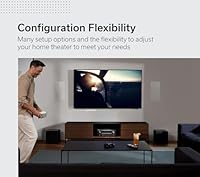
The 9.4-channel architecture supports a wide variety of layout permutations — from a straightforward 5.1 setup all the way to a 7.2.4 Atmos array — giving buyers genuine room to grow without replacing the receiver. The four subwoofer outputs with both RCA and XLR connections are a standout detail for dual-sub users pursuing bass management precision.
Realizing the full 9.4-channel potential requires a significant speaker investment that many buyers underestimate at purchase time. Users who configure fewer than seven channels sometimes feel the receiver's complexity is mismatched to their actual setup needs.
Gaming Performance
87%
Low input lag during 4K/120Hz gaming sessions is consistently praised by console owners using PS5 and Xbox Series X, with the HDMI 2.1 switching handling simultaneous multi-console setups cleanly. The automatic game mode detection is reliable and does not require manual toggling when switching between consoles.
Variable Refresh Rate passthrough behavior has been inconsistent on certain TV pairings, occasionally requiring manual VRR toggling through the menu. Competitive gamers who prioritize sub-10ms latency may still prefer a direct TV connection for their primary gaming display, using the receiver primarily for audio routing.
Phono & Analog Input Quality
81%
19%
The built-in phono stage handles moving-magnet cartridges with clean, low-noise amplification that satisfied the majority of vinyl users who tested it against budget standalone preamps. Having turntable, streaming, and multichannel processing integrated in a single unit simplifies cabling considerably for mixed-source households.
Serious analog enthusiasts with higher-grade cartridges or moving-coil setups will find the built-in phono stage limiting compared to a dedicated external preamp. A few audiophile-oriented users noted a slight digital coloration in the phono path compared to fully analog signal chains, though this was rarely a concern for casual vinyl listeners.

Suitable for:

The Denon AVR-X3800H 9.4-Channel AV Receiver is built for buyers who are serious about their home theater and willing to invest the time to configure it properly. If you have a dedicated room with space for a full speaker array — ceiling speakers, surround backs, dual subwoofers — this unit is sized and powered to match that ambition. Gamers running a 4K/120Hz display will find the HDMI 2.1 inputs genuinely useful, particularly for console gaming where low latency and high frame rates matter. Vinyl fans who also want access to modern streaming services will appreciate having a phono input and HEOS multiroom support living in the same chassis. Households already building around the HEOS ecosystem, or those looking to expand music playback beyond a single room, get real practical value from the built-in multiroom architecture. And if you are not yet on an 8K display but plan to upgrade in the next few years, buying into this tier now makes reasonable long-term sense.
Not suitable for:

The Denon AVR-X3800H 9.4-Channel AV Receiver is genuinely not the right tool for everyone, and it is worth being honest about that. If you are setting up your first AV receiver and have no prior experience with speaker calibration, room correction software, or HDMI signal chains, the initial configuration process can be a real obstacle — this is not a unit you unbox and have running well in under an hour. Apartment dwellers or anyone working with a small living room will never fully utilize nine channels, and the physical footprint alone — over 21 inches wide and nearly 28 pounds — demands a proper rack or dedicated shelf. Budget-conscious buyers looking for solid 5.1 performance at a lower price point will find better value elsewhere; the premium here is tied directly to channel count, format support, and connectivity depth that only pays off in specific setups. If multiroom audio or Dolby Atmos height channels are not part of your plan, you would be paying for capabilities you may never use.
Specifications

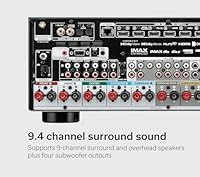
  • Channels: The receiver supports a 9.4-channel configuration, meaning nine amplified speaker channels and four subwoofer outputs can be driven simultaneously.
  • Power Output: Each of the nine channels delivers 105W, measured consistently rather than under favorable single-channel test conditions.
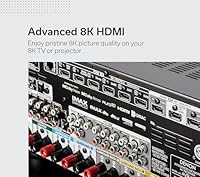
  • HDMI Inputs: Six HDMI 2.1 inputs support 8K/60Hz and 4K/120Hz passthrough, covering the full range of current and near-future source devices.
  • HDMI Outputs: Three HDMI outputs allow connection to multiple displays simultaneously, with eARC support on the primary output for simplified audio return from compatible TVs.
  • HDCP Version: HDCP 2.3 compliance ensures compatibility with the latest copy-protected 4K and 8K content from streaming services and physical media.
  • Audio Formats: Supported decoding formats include Dolby Atmos, DTS:X Pro, IMAX Enhanced, and Auro-3D, covering the full spectrum of current immersive audio standards.
  • Room Correction: Audyssey MultEQ XT32 analyzes your room acoustically and applies per-channel equalization to compensate for speaker placement and room reflections.
  • Surround Virtual: Dolby Height Virtualization and DTS Virtual:X simulate overhead audio channels without requiring physical height or ceiling speakers.
  • HDR Support: The unit passes through HDR10+, HLG, Dolby Vision, and Dynamic HDR signals without degradation to compatible displays.
  • Wireless: Built-in dual-band Wi-Fi and Bluetooth allow wireless streaming and network connectivity without requiring a separate adapter or wired Ethernet run.
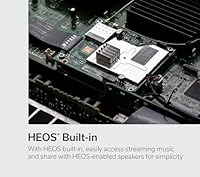
  • Multiroom: The HEOS platform enables synchronized or independent audio playback across multiple rooms using compatible HEOS-enabled devices on the same network.
  • Voice Control: Alexa, Google Assistant, and Siri are all supported, allowing hands-free control of volume, input switching, and playback functions.
  • Subwoofer Outputs: Four dedicated subwoofer outputs are provided, including both RCA and balanced XLR connections for flexible integration with a wide range of subwoofer models.
  • Phono Input: A dedicated phono input with built-in preamplification supports direct connection of a moving-magnet turntable without requiring an external phono preamp.
  • Dimensions: The unit measures 21.1 x 19 x 10.1 inches (W x D x H), requiring a substantial rack shelf or dedicated AV furniture for proper installation.
  • Weight: At 27.6 pounds, the receiver requires two people or careful handling during installation, particularly when mounting in a rack enclosure.
  • Warranty: Denon includes a three-year manufacturer warranty covering defects in materials and workmanship from the original purchase date.
  • Batteries: Two AAA batteries are included in the box for use with the supplied remote control.
  • Availability Date: This model was first made available in September 2022 and remains an active, non-discontinued product in Denon's current lineup.
  • Voice Remote: The unit ships with the Denon 2016 AVR Remote and also supports full control via the Denon AVR Remote app on iOS and Android devices.

Related Reviews

Denon AVR-X6800H
Denon AVR-X6800H
80%
94%
Audio Performance
92%
Surround Sound & 3D Audio
89%
Room Calibration (Audyssey)
83%
HDMI & Video Handling
86%
Gaming Performance
More
Denon AVR-X1800H
Denon AVR-X1800H
81%
88%
Audio Performance
91%
Video Passthrough Quality
86%
Setup & Installation
74%
HEOS Multi-Room Streaming
83%
Build Quality & Design
More
Denon AVR-X2800H
Denon AVR-X2800H
78%
91%
Audio Performance
83%
Dolby Atmos & Spatial Audio
88%
Build Quality
92%
HDMI Connectivity
58%
Setup & Initial Configuration
More
Denon AVR-X2700H
Denon AVR-X2700H
79%
91%
Audio Performance
88%
Gaming Performance
86%
Video Passthrough Quality
84%
Build Quality & Design
76%
Setup & Calibration
More
Denon AVR-S970H
Denon AVR-S970H
79%
91%
Audio Performance
93%
Gaming Performance
88%
Setup & Calibration
79%
Build Quality
52%
Remote Control
More
Denon AVR-S760H
Denon AVR-S760H
79%
88%
Audio Performance
84%
Setup & Installation
79%
HDMI & Video Handling
86%
Gaming Features
81%
Wireless Connectivity
More
Onkyo TX-NR7100
Onkyo TX-NR7100
78%
93%
Room Correction (Dirac Live)
91%
Gaming Performance
88%
Audio Quality
89%
Connectivity & HDMI Flexibility
79%
Sonos Integration
More
Onkyo TX-RZ30
Onkyo TX-RZ30
77%
91%
Audio Performance
89%
Room Correction (Dirac Live)
86%
Build Quality
74%
Connectivity & HDMI
83%
Sonos Integration
More
Onkyo TX-RZ50
Onkyo TX-RZ50
78%
91%
Room Correction (Dirac Live)
88%
Audio Performance
87%
HDMI & Video Handling
63%
Setup & Usability
86%
Sonos Integration
More
Yamaha RX-A6A 9.2-Channel AV Receiver
81%
93%
Audio Performance
96%
Immersive Audio Format Support
88%
Room Calibration (YPAO R.S.C.)
79%
HDMI & Video Passthrough
91%
Build Quality & Design
More

FAQ

Honestly, yes — it takes patience. The AVR-X3800H includes a guided setup assistant through the Denon AVR Remote app, which walks you through speaker configuration and Audyssey room correction. That said, users without prior experience often find the first calibration session confusing, particularly around speaker distance settings. Running the Audyssey calibration more than once and watching a few setup walkthrough videos beforehand makes a meaningful difference.

You can absolutely use it with what you already have. The AVR-X3800H works with any speakers connected via standard binding posts, and it passes 4K HDR video to any HDMI-compatible display. If your TV supports eARC, you will get the cleanest audio return path, but standard ARC works too. The 8K and Dolby Atmos features simply sit unused until you upgrade the surrounding hardware.

Yes. Dolby Height Virtualization and DTS Virtual:X can synthesize the impression of overhead sound from your existing floor-level speakers. It is not quite the same experience as dedicated Atmos height drivers or ceiling speakers, but it is a genuine improvement over standard surround in a 7.1 or 5.1 setup, and many users find it convincing for movies and streaming content.

The Denon AVR-X3800H 9.4-Channel AV Receiver has six HDMI inputs, so you can connect up to six sources simultaneously — game consoles, a Blu-ray player, a streaming box, a cable box, and more — all switchable from a single remote or the app. You get three HDMI outputs for routing to multiple displays if needed.
It runs warm, which is normal for a nine-channel amplifier under load. During extended high-volume listening sessions, some owners have noted noticeable heat. The main practical advice is to leave at least two to three inches of clearance above the unit and avoid enclosed cabinets without ventilation — treating it like any high-draw electronics component.

Yes, this Denon receiver includes a built-in phono input designed for moving-magnet cartridges, so you can plug a standard turntable straight in without buying an external preamp. If your turntable already has a built-in preamp, just run it through any standard line-level input instead.

HEOS connects this 9.4-channel unit and other HEOS-enabled speakers or receivers on your home Wi-Fi network, letting you play the same audio in multiple rooms or different audio in each room simultaneously. You control everything through the HEOS app. It supports Spotify, TIDAL, Pandora, and several other streaming services natively, so no external casting device is needed.

Yes, the six HDMI 2.1 inputs support 8K/60Hz passthrough, so if you already have an 8K display, the receiver will not be the bottleneck. For everyone else, that capability simply sits in reserve while you use 4K/120Hz sources today.

The physical remote is functional and covers everything you need for daily operation, but it feels like it belongs to a slightly older generation of products. Most owners who engage with the feature set regularly end up preferring the Denon AVR Remote app for menu navigation, particularly during setup and input configuration. Both options work reliably; it just comes down to personal preference.

The three-year warranty covers manufacturing defects in materials and workmanship — it does not cover accidental damage, water damage, or damage from improper installation. For extended protection including accidents, you would need to purchase a separate third-party protection plan at the time of sale.

Where to Buy