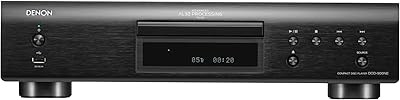
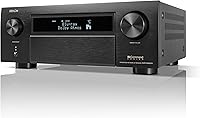
Denon AVR-X6800H



Overview
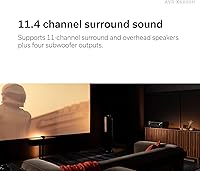
The Denon AVR-X6800H arrived in late 2023 as a clear statement of intent from a brand that rarely hedges at the flagship level. This is not a receiver for someone building a casual living room setup — it is built for dedicated home theater rooms where 11.4-channel audio and long-term investment in speaker infrastructure actually make sense. The jump from mid-range AVRs is real: more amplification headroom, broader format coverage, and genuine future-proofing. Fair warning, though — the setup process demands patience and some technical confidence. Those willing to commit the time will find the payoff well worth it.
Features & Benefits
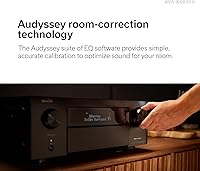
At 140 watts per channel, this Denon flagship receiver pushes well beyond what most speakers will ever demand — and that headroom matters when running a large, complex layout. The Audyssey MultEQ XT32 calibration system, paired with SubEQ HT, is one of the most thorough auto-setup tools available; it takes room acoustics seriously in ways many competing systems skip. Gaming gets real attention too, with HDMI 2.1 across all seven inputs supporting VRR, ALLM, and QFT for low-latency 4K and 8K play. Add Dolby Atmos, DTS:X, IMAX Enhanced, and Auro-3D support, and essentially every major 3D audio format is covered.
Best For
The AVR-X6800H is the right call for anyone building or upgrading a dedicated home theater room with a 7.1.4 or larger speaker configuration — the kind of setup where height channels and multiple subwoofers are part of the plan, not an afterthought. Audiophiles who want Auro-3D alongside Dolby Atmos will find that pairing rare at any price point. Gamers with 8K or 4K/120Hz displays will appreciate full HDMI 2.1 on every input, not just one or two ports. And if you already own Denon HEOS speakers, this high-end AV receiver slots in as a natural multi-room hub.
User Feedback
Owners consistently highlight the build quality — the chassis feels dense and purposeful, and the front panel is clean without being stripped down. Audyssey calibration draws real appreciation; most users report accurate room correction on the first pass. That said, the setup process is a genuine learning curve for those new to multi-channel configuration, and some buyers have flagged occasional HDMI handshake quirks, though recent firmware appears to have resolved most cases. Fan noise at high listening volumes is worth knowing about for very quiet rooms. On balance, Denon's firmware support history gives long-term buyers reasonable confidence in ongoing improvements.
Pros
- Full HDMI 2.1 across all seven inputs — not rationed to one or two ports like many competitors.
- Audyssey MultEQ XT32 with SubEQ HT delivers accurate, room-corrected sound with minimal manual adjustment needed.
- 140 watts per channel means even power-hungry, inefficient speakers are driven with headroom to spare.
- Auro-3D, Dolby Atmos, DTS:X, and IMAX Enhanced are all supported simultaneously — a rare combination at any price.
- 8K upscaling on every input future-proofs the setup without requiring additional video processing hardware.
- Denon has a strong post-launch firmware track record, with meaningful updates already issued since the December 2023 release.
- The chassis is dense, well-built, and runs cool under typical listening conditions.
- HEOS, AirPlay 2, WiFi, and Bluetooth make streaming and multi-room integration genuinely flexible.
- VRR, ALLM, and QFT support works reliably with PS5 and Xbox Series X without manual mode switching.
- Pre-outs for external amplification allow the system to grow beyond 11.4 channels without replacing the receiver.
Cons
- Initial setup is genuinely complex and can stretch across multiple sessions for first-time AV receiver owners.
- HDMI handshake issues on wake from standby have been reported, though recent firmware has addressed most cases.
- The included remote feels cheap relative to the receiver's premium positioning — most owners replace it quickly.
- The HEOS app interface feels dated and sluggish compared to competing smart home audio platforms.
- Cooling fan becomes audible during sustained high-volume playback, which is a real issue in treated listening rooms.
- WiFi setup can be finicky on mesh networks or routers with stricter security configurations.
- At 34.4 pounds, installation requires two people and a rack with serious ventilation clearance above and behind.
- Auro-3D content remains limited in mainstream streaming, reducing the practical impact of that format for many users.
- Firmware update notifications through the HEOS app are unreliable, leaving some units running outdated software.
- Buyers who do not need more than 5.1 channels will find the price hard to justify against capable mid-range alternatives.
Ratings
The Denon AVR-X6800H earns its place among the most capable home theater receivers on the market, and the scores below reflect what real buyers actually experience — not marketing promises. Our AI has analyzed verified global user reviews, filtering out incentivized submissions and bot activity, to surface honest patterns across audio performance, usability, and long-term ownership. Both the standout strengths and the friction points are represented here without softening either side.
Audio Performance
Surround Sound & 3D Audio
Room Calibration (Audyssey)
HDMI & Video Handling
Gaming Performance
Build Quality
Setup & Initial Configuration
App & Smart Home Integration
Network Connectivity
Value for Money
Fan & Thermal Noise
Remote Control
Firmware & Long-Term Support
Channel Expandability
Suitable for:
The Denon AVR-X6800H is built for a specific kind of buyer: someone who has already committed to a serious, dedicated home theater space and wants a single unit that will not become a limiting factor as their setup grows. If you are running a 7.1.4 or larger speaker configuration — or planning to — the 11.4-channel processing and expandability to 13.4 decoding give you genuine room to build. Videophiles who want every major HDR format handled without compromise will appreciate that 8K passthrough, Dolby Vision, HDR10+, and Dynamic HDR are all covered across every input, not just a select few. Audiophiles who care specifically about Auro-3D alongside Dolby Atmos will find this high-end AV receiver one of the very few options at any price that does not force a choice between formats. Gamers with 8K or 4K/120Hz displays will also find the full HDMI 2.1 implementation — with VRR, ALLM, and QFT — a practical advantage over receivers that limit gaming features to one or two ports. If you are already invested in the HEOS multi-room ecosystem, this receiver slots in as a natural central hub without requiring workarounds.
Not suitable for:
The Denon AVR-X6800H is genuinely not the right purchase for a large portion of buyers who might be tempted by its spec sheet. If your room is a standard living room with a 5.1 speaker setup, you will be paying for channel capacity, format support, and raw power that your system will never actually use — a mid-range receiver would deliver nearly identical real-world results for substantially less money. First-time AV receiver owners without technical confidence should think carefully before committing: the setup process is multi-layered, the manual is dense, and getting the most out of Audyssey MultEQ XT32 requires patience and some willingness to troubleshoot. Buyers who prioritize a quiet listening environment at high volumes should know that the cooling fan becomes audible under sustained dynamic loads, which can break immersion in acoustically treated rooms. At 34.4 pounds with demanding ventilation requirements, it also needs a proper equipment rack and sufficient clearance — it is not something you slide onto a standard media console shelf. And if your primary use case is background music or casual TV watching, this is simply more receiver than the job calls for.
Specifications
- Channels: The receiver supports 11.4-channel amplification with decoding capability up to 13.4 channels for expanded speaker configurations.
- Power Output: Each channel delivers 140 watts, measured at 8 ohms with two channels driven, providing substantial headroom for demanding speaker loads.
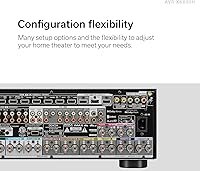
- HDMI Inputs: Seven HDMI 2.1 inputs are included, all supporting 8K/60Hz and 4K/120Hz passthrough without restricting bandwidth on select ports.
- HDMI Outputs: The unit provides two main HDMI outputs and one additional HDMI output, totalling three outputs across the rear panel.
- Video Resolution: 8K upscaling is applied across all inputs, and the receiver passes through native 8K signals without signal degradation.
- HDR Formats: Supported HDR formats include Dolby Vision, HDR10+, HLG, and Dynamic HDR, covering every major standard currently in use.
- Audio Formats: Supported immersive audio formats include Dolby Atmos, DTS:X, IMAX Enhanced, and Auro-3D, along with Dolby Surround and DTS Neural:X upmixers.
- Calibration System: Audyssey MultEQ XT32 with SubEQ HT handles automated speaker calibration, using multiple measurement points to correct for room acoustics and subwoofer integration.
- Gaming Features: Variable Refresh Rate (VRR), Auto Low Latency Mode (ALLM), and Quick Frame Transport (QFT) are supported across HDMI 2.1 inputs for low-latency gaming.
- Wireless: Built-in WiFi and Bluetooth provide wireless audio streaming and network connectivity without requiring a separate adapter.
- Streaming Platform: The integrated HEOS platform supports AirPlay 2, Spotify Connect, Tidal, Amazon Music, and other major streaming services natively.
- Dimensions: The unit measures 14.9 inches wide, 17.1 inches deep, and 6.6 inches tall, requiring significant rack space and ventilation clearance.
- Weight: The receiver weighs 34.4 pounds, necessitating a sturdy equipment rack or shelf rated for heavy AV components.
- Remote Control: A push-button remote control is included, powered by two AAA batteries which are supplied in the box.
- Manufacturer: The AVR-X6800H is designed and manufactured by Denon, a brand with over a century of experience in audio and AV equipment.
- Release Date: The unit was first made available in December 2023, making it a current-generation model with active firmware support.
- Pre-Outs: Multiple pre-amp outputs are provided, allowing connection of external power amplifiers to drive additional channels beyond the internal 11.4 configuration.
- Zone Support: The receiver supports multi-zone audio distribution, enabling independent audio sources to be sent to separate rooms via the HEOS ecosystem.
Related Reviews
Denon AVR-S760H
Denon AVR-X1800H
Denon AVR-X2800H
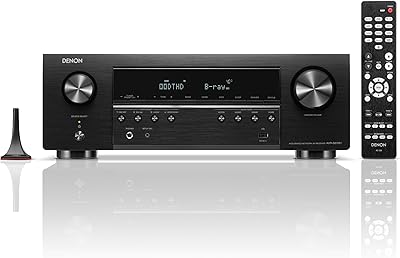
Denon AVR-S670H 5.2-Channel AV Receiver
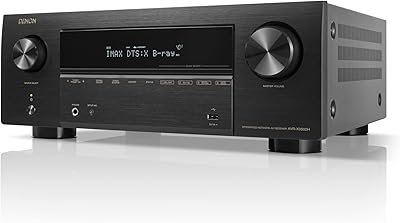
Denon AVR-X3800H 9.4-Channel AV Receiver
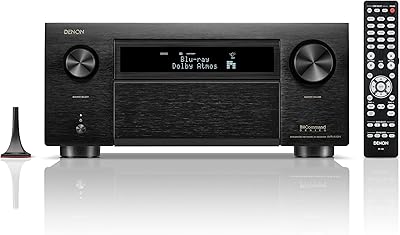
Denon AVR-A10H
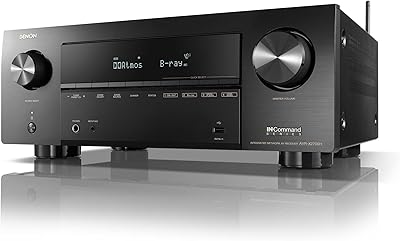
Denon AVR-X2700H
Denon AVR-S970H
CyberPower AVRG750U AVR UPS System