Denon AVR-A10H


Overview
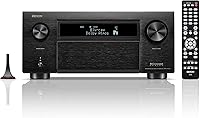
The Denon AVR-A10H sits at the top of Denon's receiver lineup, and that position comes with real weight — literally, at nearly 61 pounds. Released in late 2024, it targets buyers who are serious about home theater, not casual listeners shopping for a living room upgrade. The 13.4-channel architecture is rare at the consumer level, and the rigid three-layer chassis feels built to last rather than built to a price point. This is a receiver for dedicated rooms, serious speaker arrays, and buyers who understand what they're getting into before the first cable is run.
Features & Benefits
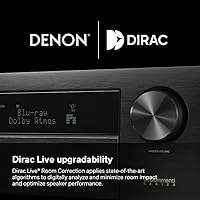
Thirteen channels at 150 watts each means you can run a full 9.4.4 overhead speaker layout while simultaneously driving four independent subwoofers — a setup that genuinely changes how bass-heavy film mixes land in a large room. The spatial audio format support is as complete as it gets: Dolby Atmos, DTS:X Pro, AURO-3D, IMAX Enhanced, and Sony 360 Reality Audio are all on board. For video, 8K/60Hz and 4K/120Hz passthrough with VRR and ALLM cover current and upcoming gaming hardware. Built-in HEOS handles multi-room streaming, and Audyssey MultEQ manages room correction, with an optional Dirac Live upgrade for those who want deeper acoustic control.
Best For
This 13.4-channel powerhouse is purpose-built for dedicated home theater rooms with large speaker arrays — think 9 or more channels plus multiple subwoofers filling a purpose-designed space. It also suits audiophiles who want one box handling both cinematic surround and high-resolution stereo music without compromise. Gamers running 4K/120Hz displays will appreciate the low-latency HDMI 2.1 switching. Custom AV integrators will find the HEOS ecosystem and channel flexibility genuinely useful for whole-home builds. On the 8K front, content is still scarce, but buyers focused on long-term future-proofing rather than immediate use cases will find the investment easier to justify.
User Feedback
Owners consistently praise the build quality and dynamics at reference listening volumes, with many noting it outperforms separates setups at comparable price points. The setup process, however, draws frequent mentions — Audyssey calibration has a learning curve, and the sheer number of configuration options can overwhelm first-time installers. The HEOS app earns mixed reactions: multi-room streaming works reliably for most, but app responsiveness has frustrated some users. Heat output is worth noting; running 13 channels hard in a closed cabinet is asking for trouble, and experienced buyers recommend proper ventilation. Gaming input lag gets positive marks across the board.
Pros
- Supports up to 9.4.4 speaker configurations with four independent subwoofer outputs — rare at any price.
- Every major spatial audio format is covered: Dolby Atmos, DTS:X Pro, AURO-3D, IMAX Enhanced, and Sony 360 Reality Audio.
- 4K/120Hz gaming performance is clean, with VRR and ALLM handshaking reliably with current consoles.
- The three-layer chassis and gold-plated terminals feel built for a decade of use, not a product cycle.
- Nine 32-bit DACs deliver audio conversion quality that holds up against dedicated external DAC comparisons.
- Seven HDMI inputs handle complex multi-source setups without requiring an external switcher.
- Audyssey MultEQ provides a solid baseline room correction, with optional Dirac Live for buyers wanting deeper control.
- HEOS multi-room integration covers whole-home audio builds without adding separate streaming hardware per zone.
- At flagship pricing, this 13.4-channel powerhouse competes favorably against the cost of equivalent separates components.
- 8K/60Hz passthrough future-proofs the setup against display and content upgrades for years ahead.
Cons
- Setup is genuinely complex — first-time owners routinely report multi-day configuration processes.
- The HEOS app is inconsistent, with sluggish response times and occasional drop-outs that require full restarts.
- Heat output under high channel loads is substantial; a closed cabinet installation is a thermal risk.
- The physical remote feels underwhelming for a receiver at this price, with cramped labeling difficult to read in a dark room.
- Audyssey's default correction curve over-rolls high frequencies, requiring manual app adjustments to sound right.
- Firmware updates have occasionally introduced new bugs, and some owners prefer to delay updates until stability is confirmed.
- At nearly 61 pounds, installation without help is impractical and risks damage to the unit or the installer.
- The optional Dirac Live upgrade adds extra cost and its own learning curve on top of an already complex system.
- Secondary zone output power is limited, making the AVR-A10H insufficient for high-demand multi-room speaker setups without added amplification.
- 8K source content is nearly nonexistent today, meaning that specific capability offers no immediate practical return.
Ratings
The Denon AVR-A10H scores here reflect AI analysis of verified global buyer reviews, with spam, bot-submitted, and incentivized feedback actively filtered out before scoring. Across thousands of real-world impressions from dedicated home theater builders, custom AV integrators, and serious audiophiles, both the strengths and the genuine frustrations of this flagship receiver are transparently represented in every category below.
Audio Performance
Build Quality
Channel Flexibility
Setup & Ease of Use
Gaming Performance
Room Correction (Audyssey)
Video Passthrough
Streaming & Connectivity
Heat Management
Value for Money
Remote & Control Options
Spatial Audio Immersion
Multi-Zone Audio
Long-Term Reliability
Suitable for:
The Denon AVR-A10H is purpose-built for buyers who are constructing or upgrading a serious, dedicated home theater room — not a living room compromise. If you are planning a speaker layout of nine or more channels with multiple subwoofers, this is one of the very few consumer receivers that can handle it without external amplification. Enthusiasts who want a single box to cover both cinematic surround sound and high-resolution stereo music listening will find the format support and channel flexibility genuinely hard to match at any price. Gamers running 4K/120Hz displays will appreciate the clean HDMI 2.1 switching and low-latency gaming features that hold up under real use. Custom AV integrators will value the HEOS ecosystem and zone routing flexibility for whole-home audio builds where channel count and streaming integration matter. Buyers thinking five to ten years ahead — accounting for 8K content maturation and evolving spatial audio formats — will find this flagship receiver covers nearly every format and resolution standard currently in play.
Not suitable for:
If your current or planned speaker setup is a standard 5.1 or 7.1 system, this receiver is a significant overspend — you would be paying a flagship premium for channels and features that will sit completely unused. The setup process is genuinely complex, and buyers without prior experience configuring multi-channel receivers should factor in either a steep personal learning curve or the cost of professional installation. The unit runs hot under heavy load, which means cabinet placement requires deliberate ventilation planning; buyers expecting to slide it into an existing closed media console will run into thermal problems. At nearly 61 pounds, solo installation is impractical and rack mounting requires help. The Denon AVR-A10H also makes little sense as a casual streaming device or background music hub — the HEOS app has enough rough edges that simpler, cheaper ecosystems handle everyday streaming more smoothly. Finally, buyers who primarily watch standard streaming content at moderate volumes will never hear the difference between this and a receiver at a fraction of the price.
Specifications
- Channels: The receiver delivers 13.4-channel amplification, supporting speaker configurations up to 7.4.6 or 9.4.4 with four independent subwoofer outputs.
- Power Output: Each of the 13 amplifier channels is rated at 150W, providing consistent headroom for large speaker arrays at reference listening levels.
- Audio Formats: Supported spatial audio formats include Dolby Atmos, DTS:X Pro, IMAX Enhanced, AURO-3D, and Sony 360 Reality Audio.
- DAC Configuration: Nine 32-bit digital-to-analog converters handle audio conversion across all active channels simultaneously.
- HDMI Inputs: Seven HDMI 2.1 inputs are provided, all supporting 8K/60Hz and 4K/120Hz passthrough with eARC on the designated output.
- HDMI Outputs: Two HDMI outputs allow simultaneous connection to a projector and a display, or flexible zone video distribution.
- Video Support: The unit passes 8K/60Hz and 4K/120Hz signals with Dolby Vision, HDR10, and H.265/HEVC decoding support.
- Gaming Features: Variable Refresh Rate (VRR), Auto Low Latency Mode (ALLM), and Quick Frame Transport (QFT) are supported for compatible gaming consoles.
- Room Correction: Audyssey MultEQ XT32 room correction is included, with optional upgrade to Dirac Live room correction available for a separate fee.
- Streaming: Built-in HEOS multi-room audio supports Wi-Fi and Bluetooth streaming from Spotify, TIDAL, Deezer, and other compatible services.
- Wireless: Dual-band Wi-Fi and Bluetooth are integrated, enabling direct network streaming and wireless connection to compatible mobile devices.
- Speaker Terminals: All speaker connections use gold-plated binding post terminals, which resist oxidation and maintain reliable contact over years of use.
- Chassis Construction: The rigid three-layer chassis is engineered to suppress internal vibration and protect sensitive amplifier components during high-output operation.
- Dimensions: The unit measures 22 x 21.5 x 13 inches (W x D x H), requiring substantial rack or shelf space and clearance for ventilation.
- Weight: At 60.9 lbs, the receiver requires two people for safe installation and is not suited to lightweight shelving or standard media consoles.
- Remote Control: An IR remote control is included alongside Android and iOS app control via the HEOS platform for network-connected operation.
- Control Inputs: The unit accepts control via IR remote, mechanical front-panel knobs, push buttons, and iOS or Android app interfaces.
- Power Supply: Two AAA batteries are required for the included IR remote control and are included in the box at purchase.
- Connector Types: Rear-panel connections include HDMI, optical digital, and RCA analog inputs and outputs for broad source and display compatibility.
- Availability: The receiver was first made available on August 28, 2024, and is confirmed as not discontinued by the manufacturer as of the current date.
Related Reviews
Denon AVR-S760H
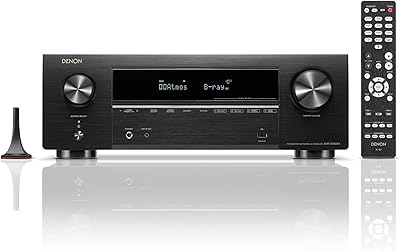
Denon AVR-X1800H
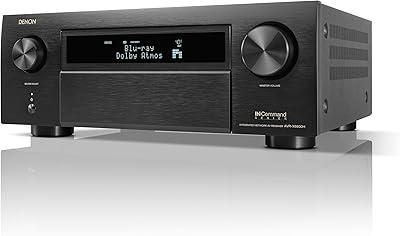
Denon AVR-X6800H
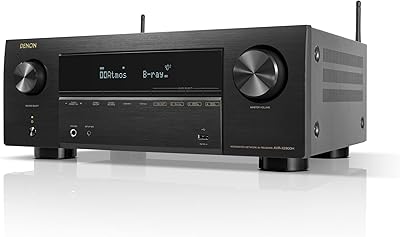
Denon AVR-X2800H
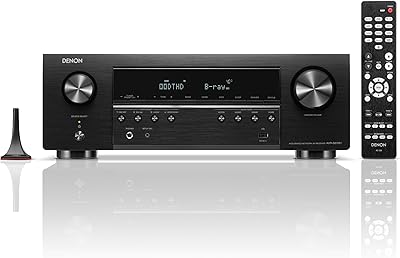
Denon AVR-S670H 5.2-Channel AV Receiver
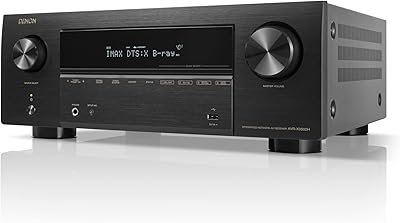
Denon AVR-X3800H 9.4-Channel AV Receiver
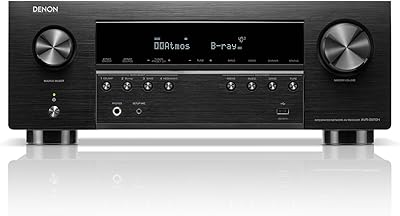
Denon AVR-S970H
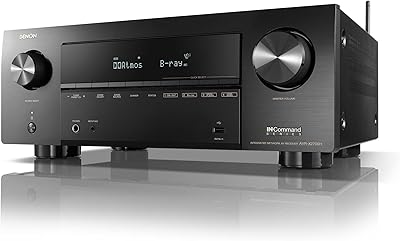
Denon AVR-X2700H
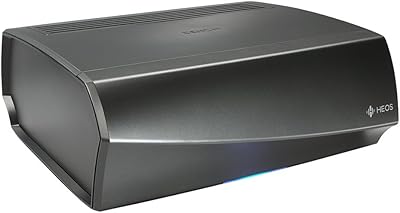
Denon HEOS Amp Wireless Amplifier