Onkyo TX-RZ30





Overview
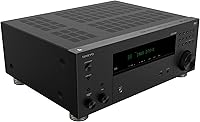
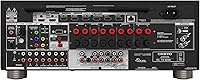
The Onkyo TX-RZ30 enters a crowded premium receiver market with one genuinely compelling differentiator: it ships with a full Dirac Live Room Correction license already included. That matters because most competitors at this price tier either omit room correction entirely or charge extra for full-bandwidth coverage. Onkyo has been building receivers for decades, and this 9.2-channel unit sits near the top of their current lineup. Denon, Marantz, and Yamaha all offer strong alternatives, so this isn't a default purchase. But if you're willing to invest time in proper setup, this Onkyo receiver rewards that patience with a level of calibration most competitors simply can't match out of the box.
Features & Benefits
What separates this 9.2-channel unit from the competition starts with Dirac Live. Rather than the trimmed-down version bundled with cheaper receivers, the full-bandwidth license here corrects your room's acoustic problems across the entire frequency range — bass included. The amplifier spans 5 Hz to 100 kHz, giving it unusual headroom for sub-bass impact and fine high-frequency detail. With 100 watts per channel, speaker configurations like 5.2.4 or 7.2.2 Atmos layouts are well within reach. Sonos certification means straightforward integration if you already run a Sonos network. And for owners of Klipsch Reference Premiere speakers, the Klipsch Optimize Mode handles crossover values automatically — a small but practical convenience that saves real setup time.
Best For
This Onkyo receiver is built for buyers who are serious about their listening environment — not just people who want lots of inputs and a big chassis. A dedicated home theater with seven or more speakers is where it genuinely performs best, especially once Dirac Live has mapped and corrected the room acoustics. Households already running Sonos will find the integration natural and easy to manage. Klipsch Reference Premiere owners get automated crossover optimization without digging through manual settings. And if you've been running an entry-level receiver for years and want a unit with measurable fidelity improvements, this is a well-rounded step up — provided you're prepared for a thorough initial setup process.
User Feedback
Across more than 600 ratings, this 9.2-channel unit holds a 4.3-star average — strong overall, though not without real caveats. Most owners praise the noticeable improvement in soundstage imaging after running Dirac Live calibration, and the build quality gets consistent compliments. On the critical side, the companion app draws recurring complaints about inconsistency, with some users resorting to workarounds for basic adjustments. A number of buyers also note the unit runs warm under extended heavy use. HDMI passthrough issues show up in reviews and tend to cluster around multi-zone configurations specifically. The overall picture is of a capable, well-regarded receiver that has a few rough edges worth knowing about before you commit.
Pros
- Full-bandwidth Dirac Live license is included out of the box — no extra purchase required.
- Soundstage imaging improves noticeably after proper room correction calibration.
- Nine-point-two channels with 100 watts per channel handles ambitious speaker layouts confidently.
- Sonos certification makes ecosystem integration genuinely straightforward for existing Sonos households.
- THX and IMAX Enhanced certification adds real credibility for dedicated home theater use cases.
- Eight HDMI ports eliminate the need for an external switch in complex multi-source setups.
- Klipsch Reference Premiere owners get automated crossover optimization that actually improves bass integration.
- Build quality is solid and substantial — the chassis feels appropriately premium for its class.
- Dolby Atmos decoding delivers convincing height effects when speakers are properly positioned and calibrated.
- The TX-RZ30 bundles features that competing receivers at the same price tier typically charge extra for.
Cons
- The companion app has recurring reliability issues — disconnections and post-update breakages are well-documented.
- Multi-zone HDMI use produces inconsistent passthrough behavior that some users cannot fully resolve.
- The physical remote feels noticeably cheap relative to the receiver it controls.
- Initial setup is genuinely time-consuming and can overwhelm buyers without prior AV configuration experience.
- The unit runs warm under extended high-volume use, which is a real concern in enclosed cabinet installations.
- Streaming app selection within the built-in interface feels dated and hasn't kept pace with modern options.
- Performance potential is heavily dependent on room setup — poor speaker placement blunts the hardware's strengths significantly.
- Some users report the amplifier section feels strained when driving low-sensitivity speakers in larger rooms.
Ratings
The Onkyo TX-RZ30 earns a strong overall position in the premium AV receiver segment, and the scores below reflect that — but they also surface the friction points that real buyers encounter. Our AI has analyzed verified global user reviews, actively filtering out incentivized, bot-generated, and outlier feedback, to produce category scores that reflect genuine ownership experiences. Both the highlights and the frustrations are represented honestly here.
Audio Performance
Room Correction (Dirac Live)
Build Quality
Connectivity & HDMI
Sonos Integration
App & Control Experience
Dolby Atmos & Object Audio
Power & Amplification
Klipsch Optimize Mode
Setup & Initial Configuration
Value for Money
Streaming & Multi-Source Playback
Remote Control
Heat Management
Suitable for:
The Onkyo TX-RZ30 is a strong match for dedicated home theater enthusiasts who have already committed to a serious speaker setup — think seven or more channels, a proper listening room, and the willingness to spend an evening with a measurement microphone getting Dirac Live calibrated correctly. If you're running Klipsch Reference Premiere speakers, the automated crossover optimization alone saves meaningful setup time and genuinely improves bass integration without manual guesswork. Existing Sonos households will find the certified integration practical and unobtrusive — it simplifies what would otherwise require additional hardware or compromises. Buyers upgrading from an entry-level receiver who want full-bandwidth room correction without paying a separate license fee will find the value proposition here more compelling than comparably priced Denon or Marantz alternatives. This unit is also a natural fit for buyers who treat audio fidelity benchmarks — THX certification, wide frequency response, IMAX Enhanced decoding — as meaningful selection criteria rather than marketing noise.
Not suitable for:
The Onkyo TX-RZ30 is a poor fit for anyone expecting a quick, plug-and-play setup experience — this unit demands patience, and buyers who skip the calibration process will leave most of its value on the table. Casual listeners who primarily want background music streaming or basic 5.1 surround for TV watching will find the feature depth unnecessary and the price hard to justify against simpler alternatives. Anyone planning to install this in a tightly enclosed AV cabinet should think carefully — the unit runs warm under sustained load, and inadequate ventilation is a real concern. If your speaker collection is modest or mid-fi, the receiver will technically function fine, but the performance ceiling it offers won't be meaningfully reached. Buyers who rely heavily on a companion app for daily control should also be cautious, as app reliability has been a documented friction point — inconsistencies and post-update breakages have frustrated enough users that it's worth factoring into your decision if seamless app control is a priority.
Specifications
- Channels: The receiver supports a 9.2-channel surround configuration, accommodating layouts such as 5.2.4 or 7.2.2 for full Dolby Atmos overhead audio.
- Power Output: Each channel delivers 100 watts of continuous power, providing sufficient headroom for most home theater speaker configurations in medium to large rooms.
- Frequency Response: The amplifier section covers an exceptionally wide range from 5 Hz to 100 kHz, enabling accurate reproduction of deep sub-bass and fine high-frequency transients.
- Room Correction: A full-bandwidth Dirac Live Room Correction license is included out of the box, covering the complete frequency spectrum without requiring an additional paid upgrade.
- Certifications: The unit carries THX, IMAX Enhanced, and Dolby Atmos certifications, meeting the technical standards required for premium home theater audio and video reproduction.
- HDMI Ports: Eight HDMI ports are available in total, supporting 4K HDR passthrough, Dolby Vision, and H.264 and H.265/HEVC video decoding across connected sources.
- Wireless: Bluetooth connectivity and Sonos certification are built in, allowing wireless audio streaming and integration with existing Sonos speaker networks without additional hardware.
- Streaming: Popular streaming services are accessible directly through the receiver's onboard platform, enabling playback through all active channels without a separate streaming device.
- Klipsch Mode: A dedicated Klipsch Optimize Mode automatically loads precise crossover values for compatible Klipsch Reference Premiere speakers, simplifying bass management configuration.
- Video Decoding: The receiver supports H.264 and H.265/HEVC video decoding, ensuring compatibility with modern compressed video formats from Blu-ray players and streaming sources.
- Dimensions: The unit measures 17.1″ wide, 7″ tall, and 15.1″ deep, requiring adequate rack or shelf space and several inches of clearance above for ventilation.
- Weight: At 29.2 pounds, the receiver is a substantial unit that typically requires two people for safe rack installation or repositioning.
- HDMI Standard: HDMI connectivity supports current 4K and HDR standards including Dolby Vision passthrough, ensuring compatibility with modern display panels and source devices.
- Audio Formats: Supported audio formats include Dolby Atmos, Dolby Vision, and IMAX Enhanced object-based audio, covering the major premium home theater audio standards available today.
- Control: A physical remote control is included in the box, and a companion smartphone app provides an alternative interface for input switching and parameter adjustments.
- Subwoofer Outputs: Two dedicated subwoofer pre-outputs are included, enabling a dual-subwoofer configuration for improved low-frequency distribution across larger or acoustically asymmetric listening rooms.
- Connectivity Type: Primary connectivity is via HDMI, with Bluetooth for wireless audio and network connectivity for streaming apps and Sonos integration.
- Manufacturer: The TX-RZ30 is manufactured by Onkyo, a Japanese audio brand with decades of experience producing AV receivers across consumer and enthusiast market segments.
Related Reviews
Onkyo TX-NR6100
Onkyo TX-SR494 AV Receiver
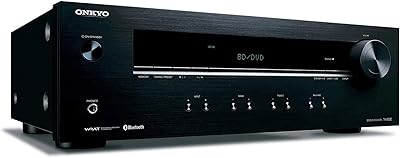
Onkyo TX-8220 Stereo Receiver
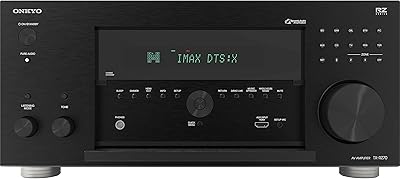
Onkyo TX-RZ70 11.2-Channel AV Receiver
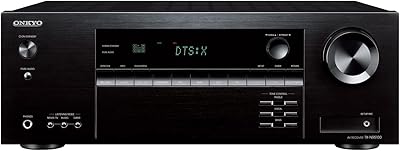
Onkyo TX-NR5100
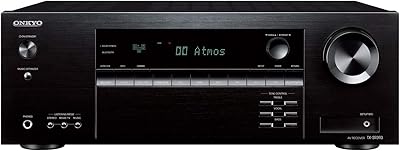
Onkyo TX-SR393
Onkyo TX-SR3100
Onkyo TX-NR7100
Onkyo TX-RZ50