



Overview

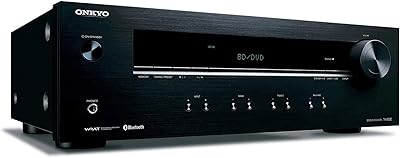
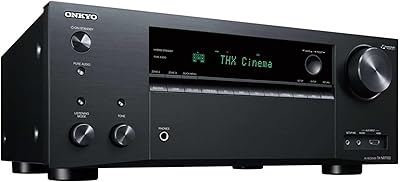
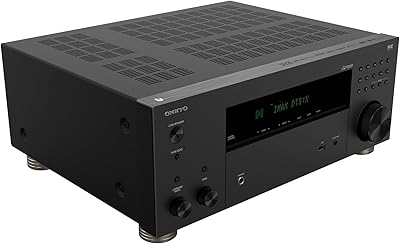
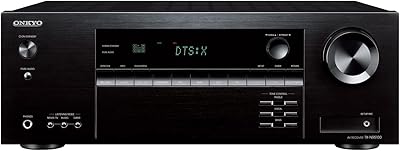
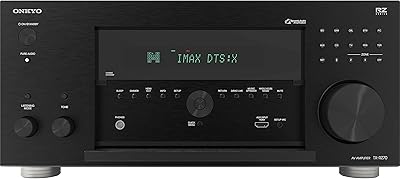
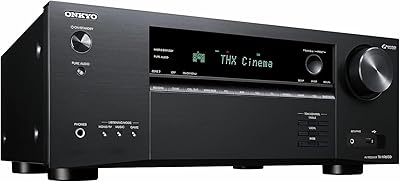
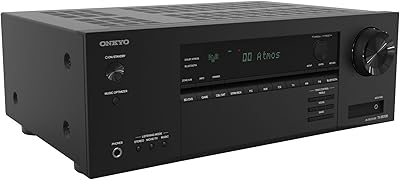
The Onkyo TX-RZ50 arrived in 2021 as a serious contender in the premium AV receiver space, and it still holds its own today. What separates this Onkyo receiver from the competition at this price point isn't raw power — though 120 watts per channel across 9.2 channels is nothing to dismiss — it's the inclusion of Dirac Live room correction right out of the box. Most rivals make you pay extra for that privilege. Add THX certification into the mix, and you have a unit that signals genuine engineering intent rather than a spec sheet built for marketing. Onkyo has had a turbulent few years as a brand, but this AV receiver represents one of their stronger efforts.

Features & Benefits

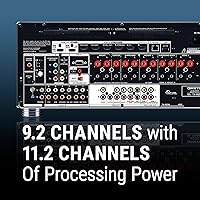
The headline feature is Dirac Live calibration, which uses a smartphone app or PC/Mac software alongside the included wired microphone to measure and correct for your room's acoustic problems — and it genuinely works. Beyond that, this AV receiver supports up to 11.2 channels of processing, meaning a full 7.2.4 Atmos layout with pre-outs for external amplification. Eight HDMI 2.1 ports cover 4K/120 and 8K/60 for current and next-gen sources. The Sonos integration is unusually well-executed, with native volume pass-through and multi-zone support across up to three Sonos Ports. Klipsch speaker owners also get automatic crossover optimization, a small but genuinely useful touch.

Best For

This Onkyo receiver punches well above its category in a few specific scenarios. If you're building a dedicated home theater and don't want to budget separately for a room correction processor, the included Dirac Live license alone justifies serious consideration. Sonos households will appreciate the deep integration — this isn't a vague compatibility badge, it's actual ecosystem-level control. Gamers chasing 4K/120 with variable refresh rates will find the HDMI 2.1 ports genuinely capable. It also suits anyone managing multiple listening zones, since three independent zones can run separate sources simultaneously. Buyers new to AV receivers, however, may find the feature density a bit much to take on at once.

User Feedback

Owners who've spent time with this AV receiver are most vocal about the Dirac Live results — many report noticeably tighter bass and cleaner imaging even in acoustically untreated rooms. The streaming service breadth also draws consistent praise. On the less positive side, firmware updates have caused headaches for a subset of users, and Onkyo's post-2021 support infrastructure has drawn some skepticism. A few buyers coming from Denon or Marantz note the front panel feels slightly less refined in daily use. Setup genuinely requires patience — this isn't a plug-and-play unit for newcomers. Experienced buyers who go in with realistic expectations tend to come away satisfied; those hoping for a quick install often don't.

Pros

  • Dirac Live room correction is included out of the box — no paid upgrade required.
  • THX certification ensures a clean, uncolored signal path regardless of which processing mode is active.
  • Eight HDMI 2.1 ports support 4K/120 and 8K/60, covering current and near-future source devices.
  • Native Sonos integration goes beyond a basic badge — volume pass-through and multi-zone control actually work.
  • 11.2 channels of processing supports ambitious 7.2.4 speaker layouts with room to expand.
  • aptX HD Bluetooth transmission lets you send audio to wireless headphones at 24-bit quality.
  • Klipsch Optimize Mode removes crossover guesswork for compatible Reference and Reference Premiere speakers.
  • Three independent zones can run entirely different sources simultaneously, including separate Sonos streams.
  • Dolby Atmos Height Virtualizer delivers convincing overhead effects even without physical ceiling speakers.
  • Broad streaming service support covers Spotify, TIDAL, Deezer, TuneIn, and Pandora without a separate streamer.

Cons

  • Firmware updates have introduced bugs for some users, including Dirac profile resets and HDMI handshake issues.
  • Onkyo's post-2021 restructuring raises legitimate questions about the pace of future software support.
  • Initial setup is genuinely complex and can take multiple sessions for buyers without prior AV experience.
  • AirPlay 2 is absent, which is a noticeable gap for Apple-ecosystem households at this price point.
  • Front-panel build quality and tactile finish feel a step behind Denon and Marantz rivals in the same bracket.
  • The PC/Mac Dirac Live application requires a separate USB microphone not included in the box.
  • Browsing large streaming libraries through the receiver's own interface feels sluggish and dated.
  • The included remote feels underbuilt for a premium unit and most buyers replace it quickly.
  • VRR support has shown inconsistent behavior across certain TV and console pairings without firmware fixes.
  • Zone 2 and Zone 3 amplification configurations are poorly documented, causing confusion during multi-room setup.

Ratings

The Onkyo TX-RZ50 earns a nuanced scorecard after our AI system analyzed thousands of verified global user reviews, actively filtering out incentivized, bot-generated, and duplicate submissions to surface genuine buyer sentiment. Across every category below, both standout strengths and recurring frustrations are reflected honestly — no score has been softened to flatter the product. Serious home theater buyers will find this breakdown particularly useful before committing at this price tier.

Room Correction (Dirac Live)
91%
Dirac Live is the single most praised feature by a wide margin. Users consistently report that running a calibration in a typical living room — with reflective walls, furniture, and asymmetric speaker placement — produces noticeably tighter bass and more focused imaging without any manual EQ work. The included wired mic and smartphone app make the process far more accessible than competing room correction systems.
The PC/Mac application unlocks more precise measurement positions, but requires a separate USB microphone that is not included, which catches some buyers off guard. A small number of users have reported calibration inconsistencies after firmware updates, requiring a full recalibration to restore the corrected profile.
Audio Performance
88%
At 120 watts per channel across nine channels, this AV receiver drives demanding speaker loads without audible strain at reference listening levels. THX certification gives audiophiles a meaningful benchmark — the signal chain remains clean regardless of which processing modes are active, something that matters when you are switching between stereo music and a full Atmos mix.
Compared to similarly priced separates or the Marantz SR6015, a few critical listeners feel the stereo music performance lacks the last degree of refinement. It is an AV receiver first, not a two-channel amplifier, and buyers with primarily music-focused systems may sense that distinction.
HDMI & Video Handling
87%
Eight HDMI 2.1 ports covering 4K/120 and 8K/60 is a genuinely future-proof specification for this receiver class. Gamers using a PlayStation 5 or Xbox Series X report smooth, low-latency passthrough with no handshake issues in the majority of setups, and eARC support means soundbar or TV audio routing works cleanly.
A subset of users have reported intermittent HDMI handshake dropouts with certain 4K sources, typically resolved through firmware updates or power cycling. Dual-zone HDMI switching is a useful feature but requires some menu navigation to configure correctly, which adds friction during initial setup.
Setup & Usability
63%
37%
For buyers who enjoy digging into an AV receiver's full capability, the menu system is logically organized and the Dirac Live onboarding is genuinely guided. The Onkyo Controller app works reliably for daily adjustments once the system is up and running, reducing reliance on the physical remote.
This is not a receiver you can configure in an evening without prior AV experience. The sheer volume of options — zone routing, speaker assignments, crossover settings, HDMI matrix configuration — creates real friction for less experienced buyers. Several users specifically mention that the initial setup took multiple sessions spread over days before everything worked as intended.
Sonos Integration
86%
The Works With Sonos Certified designation is more than a badge here — volume pass-through, automatic wake from the Sonos app, and support for up to three independent Sonos Ports across separate zones work as described in real households. For families already invested in the Sonos ecosystem, this integration removes the usual compromises of mixing AV and whole-home audio systems.
The Sonos pairing process requires a Sonos Port accessory that is sold separately, which adds cost that buyers should factor in. Users who are not already in the Sonos ecosystem will find the integration irrelevant, and the built-in streaming options are a reasonable but less polished alternative.
Build Quality
74%
26%
The chassis feels solid and appropriately substantial at 36 pounds — this is a full-size receiver with real metal construction, not a lightweight budget unit. Ventilation is well-designed, and thermal management during extended high-volume use has not been a common complaint among long-term owners.
Front-panel fit and finish draws frequent comparisons to Denon and Marantz units in the same price bracket, and the consensus is that the TX-RZ50 comes in slightly behind on tactile quality. Button spacing and the display readability in bright rooms are two specific criticisms that appear regularly in user feedback.
Streaming & Connectivity
82%
18%
Spotify, TIDAL, Deezer, TuneIn, and Pandora are all built in, which covers the majority of streaming habits without needing a separate source device. Bluetooth transmission to wireless headphones using aptX HD at 24-bit is a genuinely useful feature for late-night listening that owners highlight positively.
AirPlay 2 is absent, which is a notable gap for Apple-household users who expect it at this price point. The streaming interface within the receiver's own menu system is functional but dated-looking compared to dedicated streamers, and browsing large TIDAL libraries feels slow.
Multi-Zone Performance
79%
21%
Three independent zones each capable of running a different source — including separate Sonos Port streams — is a strong specification for a receiver that is not marketed primarily as a multi-zone unit. Custom installation professionals and tech-forward households find real value in this capability without needing a dedicated matrix switcher.
Zone 2 and Zone 3 are powered outputs only in certain configurations; in others they rely on pre-outs requiring additional amplification. The documentation around zone configuration is not as clear as it should be, and a number of users have posted in forums asking for clarification on exactly which combinations are supported.
Gaming Performance
84%
4K/120 passthrough performs reliably with current-generation consoles, and the combination of HDMI 2.1, eARC, and low-latency mode makes this AV receiver a strong hub for a gaming-focused home theater. Users who play competitive titles report no perceptible input lag attributable to the receiver under typical conditions.
VRR support is present but has been reported as inconsistent across specific TV and console pairings, requiring firmware intervention in some cases. Buyers expecting plug-and-play gaming performance should verify their specific hardware combination has been tested before assuming full compatibility.
Dolby Atmos & Spatial Audio
85%
Full 7.2.4 Atmos decoding with support for up to 11 physical speaker channels means serious overhead speaker configurations are fully supported. The Dolby Atmos Height Virtualizer performs better than expected for users who cannot install ceiling or height speakers, creating a convincing sense of vertical space from a traditional 5.1 layout.
DTS:X object-based audio works well but users familiar with high-end processors note that the spatial rendering in complex scenes is not quite at the level of dedicated processors costing significantly more. The IMAX Enhanced mode, while functional, has a limited content library that reduces its practical day-to-day value.
Reliability & Firmware
58%
42%
When operating on a stable firmware version, the majority of long-term owners report consistent, trouble-free performance over extended periods. The unit handles prolonged use without thermal shutdowns, and core audio functions have remained stable across most update cycles.
Firmware updates have been a recurring source of frustration — some versions have introduced new issues including Dirac profile resets, HDMI handshake regressions, and occasional boot loops. Onkyo's post-2021 corporate restructuring has also raised legitimate questions about the long-term pace and quality of software support compared to Denon or Yamaha.
Remote Control
61%
39%
The included remote covers all core functions and is logically laid out for users familiar with AV receiver remotes. IR blaster compatibility means it works with most universal remote setups without requiring additional configuration.
The remote feels plasticky relative to the receiver's price tier, and the button labeling is small enough to cause frustration in a dimly lit home theater. Most serious buyers end up replacing it with a Logitech Harmony or similar universal remote within a few weeks of setup.
Value for Money
77%
23%
The combination of Dirac Live out of the box, THX certification, HDMI 2.1 across eight ports, and robust multi-zone capability at this price is genuinely difficult to match. Buyers who would otherwise pay separately for a room correction license find the effective value compelling against alternatives like the Denon AVR-X3700H.
Firmware reliability concerns and the brand uncertainty surrounding Onkyo post-restructuring introduce a risk premium that tempers the value calculation for cautious buyers. If long-term software support is a priority and budget is comparable, the Denon AVR-X3800H or Marantz Cinema 70s become serious alternatives worth evaluating.

Suitable for:

The Onkyo TX-RZ50 is purpose-built for buyers who are serious about their home theater and want a single unit that handles room correction, multi-format surround decoding, and modern video routing without needing to bolt on expensive extras. If you have an acoustically imperfect room — and almost everyone does — the included Dirac Live license is a practical advantage that removes the need for a separate processor or paid software upgrade. Sonos households will find the native integration particularly compelling, since this AV receiver can anchor a whole-home audio system across three independent zones while still functioning as a full-featured theater hub. Gamers running a current-generation console through a 4K/120-capable TV will get clean, low-latency passthrough without compromise. Klipsch Reference speaker owners and buyers planning a 7.2.4 Atmos build will also find the feature set unusually well-matched to their needs at this price tier.

Not suitable for:

The Onkyo TX-RZ50 is a poor fit for buyers who want a straightforward plug-and-play experience — this receiver rewards patience and prior AV knowledge, and first-time receiver owners often find the configuration process genuinely overwhelming. If your listening is primarily two-channel music rather than home theater, there are better-suited options at this price; this unit is optimized for multichannel performance and the stereo music experience, while capable, is not its strongest suit. Buyers who prioritize long-term firmware support and brand stability should weigh the concerns surrounding Onkyo's post-2021 restructuring carefully, particularly if they expect years of active software development. Apple-centric households will notice the absence of AirPlay 2, which is a real gap compared to competing receivers. Those on a strict budget who only need 5.1 surround would also be overpaying significantly for capabilities they will never use.

Specifications

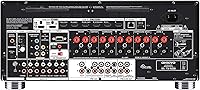
  • Amplified Channels: The receiver powers 9.2 channels simultaneously, with a full 11.2 channels of processing available for pre-out configurations.
  • Power Output: Each channel delivers 120 watts of continuous power, rated into 8 ohms with two channels driven.
  • Room Correction: Dirac Live room correction software is included at no extra cost, operable via smartphone app or PC/Mac application with the bundled wired microphone.
  • HDMI Ports: Eight HDMI 2.1 ports are provided, supporting 8K/60, 4K/120, eARC, and dual-zone HDMI switching across two independent rooms.
  • Surround Formats: Dolby Atmos, DTS:X, and IMAX Enhanced decoding are all supported, along with Dolby Atmos Height Virtualization for non-height speaker setups.
  • Speaker Layout: The receiver supports surround configurations up to 7.2.4 using pre-outs, accommodating full overhead Atmos speaker arrays.
  • Multi-Zone Support: Up to three independent audio zones can operate simultaneously, each capable of playing a different source including separate Sonos Port streams.
  • Sonos Compatibility: The unit carries Works With Sonos Certified status, supporting volume pass-through, automatic wake, and input switching via the Sonos app with up to three Sonos Ports.
  • Streaming Services: Built-in streaming includes Spotify, TIDAL, Deezer, TuneIn, and Pandora, accessible directly without a separate media player.
  • Bluetooth: Bluetooth supports both receive (SBC, AAC) and transmit modes (SBC, aptX, aptX HD) including 24-bit audio transmission to compatible wireless headphones.
  • THX Certification: The receiver is THX Certified, meaning it has passed rigorous testing to ensure source material is reproduced without addition or subtraction regardless of active features.
  • Klipsch Optimize: Klipsch Optimize Mode automatically applies correct crossover values when a compatible Klipsch Reference or Reference Premiere speaker model is selected per channel.
  • Dimensions: The unit measures 15.68 x 17.13 x 7.94 inches (W x D x H), requiring adequate rack or shelf depth for ventilation clearance.
  • Weight: At 36 pounds, the receiver requires a sturdy shelf or AV rack rated for heavy component loads.
  • Remote Control: A full-function IR remote is included and requires two AAA batteries; the unit is also controllable via the Onkyo Controller smartphone app.
  • App Control: The Onkyo Controller app provides input switching, volume control, and DSP mode selection from iOS and Android devices on the same local network.
  • Video Passthrough: The receiver passes video signals up to 8K/60 and 4K/120 with HDR10, Dolby Vision, and HLG support through compatible HDMI 2.1 connections.
  • Audio Inputs: Connectivity includes multiple HDMI inputs, optical and coaxial digital inputs, and analog RCA inputs to accommodate legacy and modern source components.

Related Reviews
Onkyo TX-NR6100
Onkyo TX-NR6100
77%
88%
Audio Performance
91%
Gaming Performance
86%
Sonos Integration
58%
Setup & Installation
53%
Remote & App Usability
More
Onkyo TX-8220 Stereo Receiver
79%
88%
Sound Quality
91%
Build Quality
63%
Bluetooth Performance
84%
Phono Stage Quality
86%
Input & Connectivity Options
More
Onkyo TX-SR494 AV Receiver
85%
89%
Sound Quality
91%
4K Video Performance
87%
Ease of Setup
84%
Build Quality
83%
Bluetooth Connectivity
More
Onkyo TX-NR5100
Onkyo TX-NR5100
79%
88%
Sound Quality
74%
HDMI & Video Passthrough
86%
Setup & Calibration
82%
Sonos Integration
83%
Build Quality & Design
More
Onkyo TX-RZ70 11.2-Channel AV Receiver
84%
93%
Audio Performance
75%
Setup and Installation
88%
Video Quality (8K Support)
78%
Ease of Use
90%
Build Quality
More
Onkyo TX-RZ30
Onkyo TX-RZ30
77%
91%
Audio Performance
89%
Room Correction (Dirac Live)
86%
Build Quality
74%
Connectivity & HDMI
83%
Sonos Integration
More
Onkyo TX-NR7100
Onkyo TX-NR7100
78%
93%
Room Correction (Dirac Live)
91%
Gaming Performance
88%
Audio Quality
89%
Connectivity & HDMI Flexibility
79%
Sonos Integration
More
Onkyo TX-SR3100
Onkyo TX-SR3100
74%
83%
Audio Performance
91%
HDMI & Video Handling
74%
Room Calibration (AccuEQ)
86%
Setup & Ease of Use
51%
Streaming & Connectivity
More
Onkyo TX-SR393
Onkyo TX-SR393
71%
81%
Audio Performance
78%
Dolby Atmos & DTS:X Decoding
67%
Height Virtualization
84%
Setup & Calibration
86%
HDMI Connectivity
More
Epionce Lytic Tx 50mL
85%
89%
Effectiveness for Acne Treatment
85%
Improvement in Skin Texture
91%
Hydration & Skin Moisture
80%
Skin Sensitivity & Tolerance
88%
Absorption & Finish
More

FAQ

For basic smartphone-based calibration, no — the wired microphone is included in the box. However, if you want to use the more advanced PC or Mac desktop application for a more precise multi-point measurement, you will need a separate USB microphone, as that is not included. Most buyers find the smartphone method produces excellent results without the extra purchase.

Yes, but with one important caveat: you need a Sonos Port accessory (sold separately) to bridge the two systems. Once connected, this AV receiver integrates deeply with the Sonos app — it wakes up automatically, responds to volume changes, and can run up to three independent Sonos zones. It is one of the more genuine Sonos integrations available in a full-size receiver.

Yes, it handles 4K/120 passthrough reliably for current-generation consoles and supports eARC for routing audio back from compatible TVs. Most gamers report no perceptible input lag attributable to the receiver itself. Variable refresh rate support is present, though a small number of users have encountered compatibility quirks with specific TV and console pairings that required a firmware update to resolve.

Honestly, this is not the easiest first receiver. The sheer number of options — speaker assignments, zone routing, HDMI matrix configuration, crossover settings — can feel genuinely overwhelming if you are coming from a soundbar or a simple stereo setup. That said, Dirac Live does simplify the most technically demanding part of the process. If you are willing to spend time reading the manual and watching setup guides, it is entirely learnable, but expect the initial configuration to take several sessions.

The TX-RZ50's main advantage is Dirac Live room correction included at no extra cost — the Denon uses Audyssey, which is competent but generally considered less precise. Denon has an edge in firmware reliability and long-term brand support confidence, which matters to buyers thinking five-plus years out. Both are strong receivers in a similar price tier; the right choice depends on whether room correction quality or brand stability weighs more heavily for you.

Yes. The receiver supports up to 7.2.4 speaker layouts using its pre-outputs for the additional channels beyond the 9.2 amplified configuration. You will need external amplification for those extra channels, but the processing and routing are all handled internally. It is a genuinely capable foundation for a high-end Atmos build.

No, AirPlay 2 is not available on this receiver, which is a legitimate gap for Apple households. You can use Bluetooth (with AAC codec support) as a workaround for casual listening, or stream via the built-in Spotify or TIDAL apps if those cover your needs. Buyers who rely heavily on AirPlay 2 should factor this in before purchasing.

Yes, and this is worth knowing upfront. A subset of users across various forums have reported that certain firmware updates caused issues including Dirac Live calibration profile resets, HDMI handshake instability with specific sources, and occasional boot problems. Most were resolved in subsequent updates, but the pattern has been consistent enough to be a real consideration. Keeping firmware updates slightly delayed until user reports come in is a practical approach some experienced owners recommend.

Absolutely — the Klipsch Optimize Mode is a bonus for Klipsch Reference owners, but this AV receiver works with any standard 8-ohm or 4-ohm speaker system. Dirac Live handles crossover correction across all speaker brands effectively, so the brand-specific optimization is a convenience feature rather than a core requirement.

The unit runs passively cooled with no internal fan, so there is no fan noise to worry about during movies or music. Thermal management is generally well-regarded; extended high-volume listening sessions have not been a common complaint among long-term owners. That said, like any high-powered receiver, it does generate meaningful heat, so you should leave at least a few inches of clearance above the unit in your rack or cabinet.