Overview

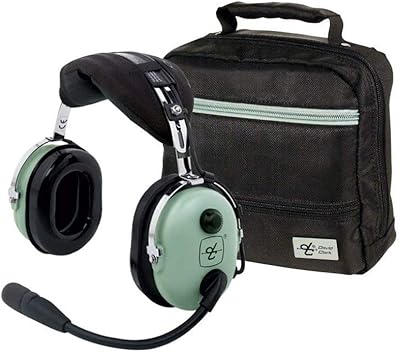
The David Clark H10-30 Aviation Headset has been sitting on the heads of student pilots and weekend flyers for decades — and for good reason. This isn't a flashy, feature-packed headset with active noise reduction or wireless connectivity. What it is, is reliable. David Clark built a reputation on gear that works flight after flight without fuss, and this passive aviation headset fits squarely in that tradition. It occupies a sensible middle ground: more capable than a bargain-bin starter headset, but not trying to compete with ANR units. If you want dependable, no-battery performance in a light GA cockpit, this is where many pilots start — and stay.

Features & Benefits

The H10-30 runs on zero batteries — that alone is worth noting for pilots who don't want another thing to charge or check before a flight. The passive noise attenuation works through a tight over-ear seal combined with the M-7A electret microphone, keeping radio and intercom communications clear in typical light aircraft environments. Dual 6.35mm GA jacks mean you can plug into virtually any general aviation panel without adapters. The retractable cord keeps things tidy in a busy cockpit, and the built-in volume knob and push-to-talk button put controls exactly where you need them. Solid, practical, and uncomplicated.

Best For

This passive aviation headset is particularly well-suited for pilots in training. During pattern work or a dual cross-country, you need clear comms and something that won't distract you — not ANR bells and whistles. Flight schools love it for exactly that reason: it holds up under constant use by rotating students, and when something does wear out, parts are available and repairs are straightforward. Private pilots flying quieter airframes like a Piper Cherokee or Cessna 172 will find the passive attenuation more than adequate. If you're not flying turboprops or open-cockpit aircraft, there's rarely a reason to spend more.

User Feedback

Pilots who've owned the H10-30 for years consistently point to its build quality as the standout strength — these headsets don't fall apart, and David Clark's parts availability means you can replace ear seals or headband components without buying a whole new unit. Audio clarity on comms gets strong marks across the board. The most common complaint, though, is clamping pressure: on flights lasting two hours or more, that steel headband starts to make itself known. Some pilots on noisier airframes also note that passive attenuation has real limits compared to ANR options. For routine training flights, however, the feedback is overwhelmingly positive.

Pros

  • Completely battery-free operation means one less thing to worry about before every flight.
  • Dual 6.35mm GA plugs fit virtually any general aviation avionics panel without adapters.
  • The M-7A boom microphone delivers clear, intelligible transmissions in typical light aircraft environments.
  • Steel headband and vinyl ear seals are built to last through years of regular cockpit use.
  • Retractable cord keeps the cockpit tidy and reduces cable tangling mid-flight.
  • David Clark's parts availability means worn ear seals or damaged components can be replaced, not just discarded.
  • Straightforward push-button PTT and volume knob are intuitive even for first-time headset users.
  • Competitive pricing relative to active noise reduction alternatives makes it accessible for student pilots.
  • Trusted by flight instructors and training programs, which speaks to its real-world dependability.
  • Passive design adds zero electronic complexity — nothing to malfunction, update, or pair.

Cons

  • Clamping pressure from the steel headband causes noticeable discomfort on flights lasting more than two hours.
  • Passive attenuation has real limits in louder cockpits — engine noise bleeds through on older or higher-powered airframes.
  • No Bluetooth or auxiliary audio input, so pairing with modern audio panels or streaming music is not possible.
  • At nearly two pounds, it is on the heavier side compared to some newer passive competitors.
  • The vinyl ear seals can feel warm and sweaty during summer flying in non-air-conditioned cockpits.
  • No ANR capability means it is a meaningful step down in noise protection compared to premium headsets.
  • The headset's aesthetic — green vinyl, utilitarian styling — may feel dated next to sleeker modern designs.
  • Some users report the boom mic arm feels stiff and requires firm adjustment to hold its position reliably.

Ratings

Our AI rating engine analyzed verified global user reviews for the David Clark H10-30 Aviation Headset, actively filtering out incentivized, bot-generated, and outlier feedback to surface what real pilots consistently report. The scores below reflect an honest cross-section of both the strengths that keep this headset in cockpits decade after decade and the genuine pain points that matter to buyers. Nothing has been smoothed over — the highs and the frustrations are both represented.

Build Quality
93%
Pilots who've owned the H10-30 for five, ten, even fifteen years regularly report that it still holds its shape and functions reliably. The steel headband resists bending out of spec, and the vinyl ear seals, while replaceable, take a long time to show meaningful wear under normal use. Flight schools that cycle these headsets through dozens of students describe them as nearly indestructible.
A small number of users note that the green vinyl ear seals can begin to crack prematurely in very hot or humid storage conditions. The cord assembly, while robust overall, occasionally shows wear at the strain relief point near the plugs after years of heavy daily use.
Noise Attenuation
71%
29%
In typical light GA aircraft — Piper Cherokees, quieter Cessna variants, newer trainers — the passive seal does a solid job of taking the edge off engine and propeller noise. Most pilots flying these aircraft report that communication fatigue is manageable, and the over-ear fit provides a consistently effective acoustic block when seated properly.
Pilots flying louder airframes, particularly older high-wing Cessnas or aircraft with worn engine mounts, frequently note that engine noise bleeds through at a level that becomes fatiguing on longer flights. Compared to any active noise reduction headset in a similar price range, the passive attenuation ceiling is noticeably lower, and this is the most common reason pilots eventually upgrade.
Audio Clarity
84%
Radio and intercom communication clarity is consistently praised across reviews. The 150-ohm dynamic driver is well-tuned for the frequency range that matters in ATC and pilot-to-pilot communication, and most users say transmissions come through cleanly and intelligibly even in busy airspace or during pattern work at towered fields.
Some users with older intercom systems report a faint background hiss, though this is often traced to the aircraft's avionics rather than the headset itself. The audio is optimized for voice, not music — anyone hoping to pipe in audio from an entertainment system will find the sound reproduction unremarkable.
Microphone Performance
82%
18%
The M-7A electret boom mic receives consistent praise from controllers and flight instructors who report that transmissions are clear and easy to understand, even in noisier cockpit environments. The noise-canceling design does a reasonable job of rejecting ambient cabin noise before it reaches the mic element.
The boom arm can feel stiff when repositioning, and a handful of pilots mention that it does not hold its exact angle as firmly after extended use. In very loud cockpits, some mic bleed-through from background noise is noticeable to the receiving party, which can occasionally prompt a repeat request.
Comfort
58%
42%
For short flights and training sessions under 90 minutes, most pilots find the H10-30 perfectly acceptable to wear. The over-ear fit distributes contact across the ear cups rather than pressing directly on the ears, and the headband padding is adequate for typical touch-and-go sessions or short cross-country legs.
The steel headband's clamping force is the single most criticized aspect of this headset across the entire review pool. On flights approaching two hours or more, a significant portion of users report real discomfort — tightness at the temples, pressure above the ears, and general fatigue. Pilots with larger heads feel this more acutely, and it is the primary reason many move to a different headset over time.
Ease of Use
91%
There is essentially no learning curve with the H10-30. Plug in the two GA jacks, adjust the boom mic, and you're ready to go — no pairing, no charging, no app. Student pilots on their very first flight lesson can operate it without instruction, which is genuinely valuable in a training environment where there are already plenty of other things to manage.
The push-to-talk button placement works well for most setups but can feel awkward depending on how the cord is routed in a specific cockpit configuration. A small number of left-handed pilots mention the cord orientation feels counterintuitive in certain seating positions.
Compatibility
94%
Dual 6.35mm GA plugs cover the overwhelming majority of general aviation aircraft panel configurations. Whether the aircraft is a 1970s Cessna 150 or a modern Piper Archer with a glass panel, the H10-30 plugs in and works without any adapter. This universality is a genuine practical advantage for pilots who fly multiple aircraft.
Compatibility ends at the GA plug standard — there is no provision for helicopter U-174 connections, LEMO connectors, or Bluetooth audio panels without third-party adapters. Pilots transitioning between GA fixed-wing and rotary-wing operations will need a separate headset or adapter cable.
Durability Over Time
89%
Long-term ownership reviews are disproportionately positive, with many pilots reporting five or more years of regular use without any structural failure. The headset's straightforward mechanical design means there are no circuit boards, battery contacts, or electronic assemblies to degrade over time, which keeps failure points to a minimum.
Vinyl ear seals do eventually crack and harden, particularly in climates with extreme temperature swings between hangar storage and hot-ramp use. The cord's outer jacket can stiffen and develop microcracks near the plug ends after many years, though this is a slow process and not a short-term concern for most buyers.
Repairability
88%
David Clark's parts ecosystem is one of the clearest differentiators in this category. Replacement ear seals, headband foam, and cord assemblies are readily available and affordable, meaning a worn headset can be brought back to near-new condition for a fraction of the cost of a replacement. Flight schools cite this as a key reason they standardize on this brand.
Some parts, particularly the microphone element itself, require a bit of technical confidence to replace correctly — it is not quite as simple as swapping ear pads on consumer headphones. International buyers outside the U.S. occasionally report slower parts availability and higher shipping costs for replacement components.
Value for Money
79%
21%
Measured against what it delivers — proven passive attenuation, universal GA compatibility, and a build that routinely outlasts cheaper competitors — most pilots feel the H10-30 represents solid value. The long service life and low parts cost mean the total cost of ownership over five-plus years compares favorably to less expensive alternatives that wear out quickly.
Against the backdrop of the broader aviation headset market, some pilots feel the price sits close enough to entry-level ANR options that the comparison becomes uncomfortable. Buyers who later upgrade to ANR occasionally reflect that they would have preferred to spend the extra amount upfront rather than in two separate purchases.
Cable & Cord Design
76%
24%
The retractable cord is a practical feature that most pilots appreciate once they've dealt with tangled fixed-length cables in a cramped cockpit. It keeps the workspace tidy during checklist runs and reduces the risk of snagging on controls or seat hardware during entry and exit.
The retraction mechanism, while useful, adds a minor failure point that is absent in fixed-cord designs. A small number of long-term users report that the retraction spring weakens over years of use, causing the cord to pool loosely rather than retract cleanly.
Weight & Portability
67%
33%
The headset packs into its included bag compactly enough to fit in a standard flight bag or pilot kneeboard pocket without taking up excessive space. For pilots who travel between airports or fly rental aircraft, the packaged size is manageable and not a meaningful inconvenience.
At close to two pounds, the H10-30 is on the heavier end among passive aviation headsets in this category. During long flights this weight, combined with the clamping pressure, compounds the comfort issue — the headset does not feel light on the head the way some newer composite-frame competitors do.
Brand Reputation & Trust
92%
David Clark's standing in the aviation community is genuinely earned over decades. Pilots who flew in the 1980s and 1990s recognize the brand immediately, and that trust transfers across generations of buyers. Flight instructors actively recommending this headset to students is a reliable, unsponsored endorsement that carries real weight.
The brand's reputation occasionally sets expectations that the hardware alone cannot fully meet for buyers coming from consumer audio backgrounds. Some newer pilots, conditioned by premium consumer headphone comfort standards, find the utilitarian design and ergonomics jarring despite the strong brand name.

Suitable for:

The David Clark H10-30 Aviation Headset is the kind of purchase that makes the most sense for pilots who value proven reliability over cutting-edge features. Student pilots going through flight training will find it particularly well-matched to their needs — it handles pattern work and dual cross-countries without any setup fuss, and it won't leave you troubleshooting a dead battery on the ramp. Private pilots flying quieter light GA aircraft like a Piper Cherokee or a Cessna 172 will get solid passive noise attenuation without paying a premium for active noise reduction they may not strictly need. Flight schools and rental operations are a natural fit too, since this headset is built to survive constant handoffs between students, and replacement parts are genuinely available when things wear out. If you want a wired, no-nonsense headset from a brand with decades of aviation trust behind it, this is a smart, durable choice.

Not suitable for:

Pilots who fly regularly in high-noise environments — think older Cessna 172s with loud engines, or any turboprop operation — will likely find that the David Clark H10-30 Aviation Headset's passive attenuation reaches its limits fairly quickly. This is not an ANR headset, and it doesn't pretend to be; if cockpit noise is a serious fatigue factor on your flights, you'll want to budget for active noise reduction instead. Long-haul cross-country pilots should also be aware that the steel headband exerts noticeable clamping pressure, which becomes uncomfortable after two or more hours in the seat. Anyone looking for wireless Bluetooth connectivity, built-in audio input for music or audio panels, or a lightweight design will need to look elsewhere. This headset is built for function, not comfort features or modern conveniences.

Specifications

  • Model Number: The headset is officially designated as model H10-30 by David Clark.
  • Noise Control: Passive noise cancellation is achieved through a tight over-ear seal rather than any electronic or battery-powered system.
  • Driver Type: A dynamic audio driver handles speaker output, optimized for the frequency range used in aircraft intercom and radio communications.
  • Impedance: The headset operates at 150 ohms, which is matched to standard general aviation intercom and radio systems.
  • Microphone: The M-7A electret boom microphone provides noise-canceling voice pickup and is adjustable via a flexible boom arm.
  • Connectivity: Wired dual 6.35mm (1/4-inch) GA plugs connect to the audio and mic jacks found on most general aviation avionics panels.
  • Ear Form Factor: Over-ear (circumaural) ear cups fully enclose the ear to improve passive noise isolation during flight.
  • Controls: An integrated volume control knob and a push-button push-to-talk switch are mounted directly on the headset cord assembly.
  • Cable Design: The cord is retractable, which helps reduce tangling and keeps excess cable out of the way in a confined cockpit.
  • Headband: A steel headband with vinyl padding provides structural rigidity and long-term shape retention across extended use.
  • Ear Seal Material: Ear cups are fitted with green vinyl ear seals designed to maintain a consistent acoustic seal against the head.
  • Item Weight: The headset weighs approximately 1.85 pounds, which is typical for a passive over-ear aviation headset in this category.
  • Package Dimensions: The retail packaging measures 9.61 x 9.02 x 4.96 inches, accommodating the headset and storage bag.
  • Compatible Devices: Designed specifically for use with general aviation avionics and aircraft intercom communication systems.
  • Parts Availability: David Clark guarantees EU spare part availability for a minimum of 5 years from the date of purchase.
  • Manufacturer: Designed and manufactured by David Clark Company, a U.S.-based brand with decades of specialization in aviation headsets.
  • UPC: The product UPC is 033171319176, used for retail identification and inventory tracking.
  • Discontinued Status: As of the available product data, this headset has not been discontinued by the manufacturer.

Related Reviews
David Clark H10-13S Aviation Headset
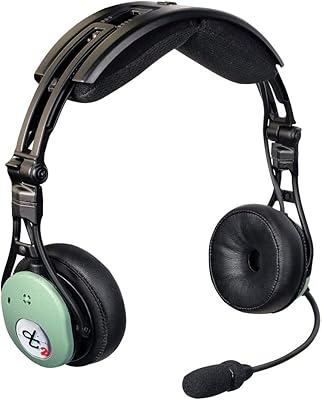
84%
91%
Wearing Comfort
74%
Passive Noise Attenuation
83%
Microphone Clarity
88%
Build Durability
76%
Value for Money
More
David Clark DC PRO-X2 Aviation Headset
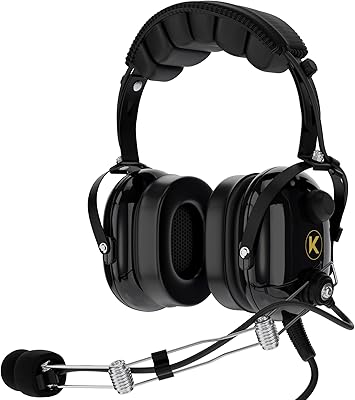
81%
88%
ANR Performance
91%
Build Quality
76%
Comfort & Fit
74%
Bluetooth Reliability
86%
Radio & Intercom Clarity
More
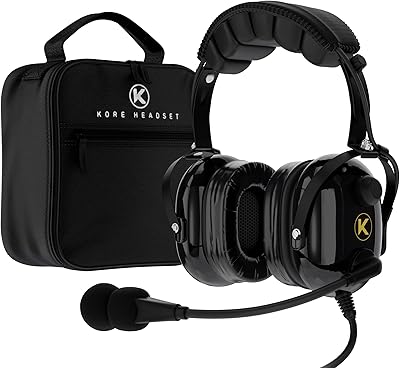
Kore Aviation P1 Aviation Pilot Headset
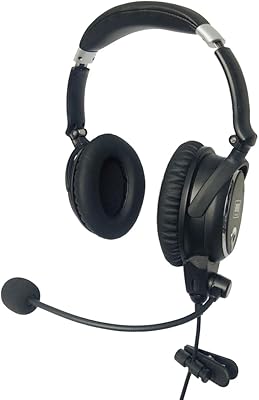
76%
93%
Value for Money
71%
Noise Reduction
88%
Microphone Clarity
67%
Comfort & Fit
84%
AUX Connectivity
More
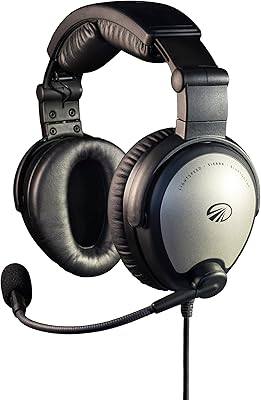
Lightspeed Aviation Sierra ANR Aviation Headset
77%
84%
ANR Performance
76%
Comfort & Fit
71%
Bluetooth Reliability
83%
Build Quality
81%
Microphone Quality
More
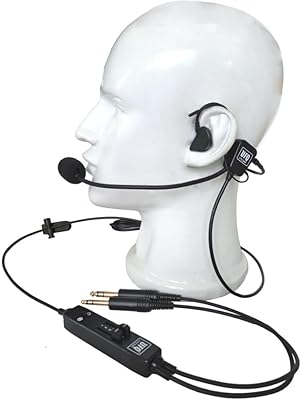
UFQ L1 In-Ear Aviation Headset
80%
92%
Wearing Comfort
67%
Passive Noise Reduction
74%
Microphone Clarity
61%
In-Ear Fit Consistency
83%
Audio Fidelity
More
Kore Aviation KA-1 Aviation Headset
79%
86%
Comfort & Fit
74%
Noise Reduction
83%
Microphone Quality
81%
Audio Clarity
71%
Build Quality
More
Lightspeed Zulu 3 Aviation Headset
83%
93%
Active Noise Reduction
89%
Comfort & Fit
91%
Build Quality
78%
Bluetooth Performance
88%
ComPriority System
More
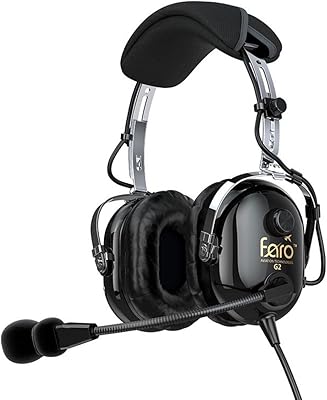
Faro G2 ANR Pilot Aviation Headset
78%
83%
Active Noise Reduction
78%
Microphone Clarity
91%
Battery Life
74%
Comfort & Fit
67%
Build Quality
More
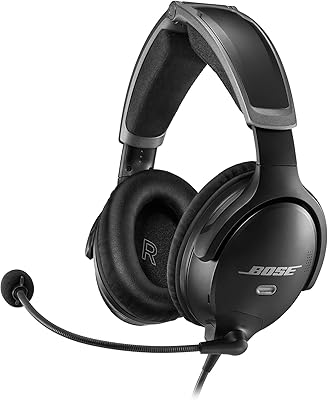
Bose A30 Aviation Headset (Dual Plug)
85%
94%
Long-Term Comfort
91%
Active Noise Reduction
89%
Audio Clarity & Intelligibility
84%
Build Quality & Durability
87%
Bluetooth Connectivity
More
UFQ A7 ANR Aviation Headset
79%
91%
Wearing Comfort
74%
ANR Performance
83%
Microphone Quality
77%
Build Quality
89%
Battery Life
More

FAQ

Yes, the H10-30 uses dual 6.35mm GA plugs, which are the standard connection type for virtually all Cessna, Piper, and other light GA aircraft avionics panels. No adapters are needed for the vast majority of general aviation aircraft.

No batteries required at all. The noise reduction on this passive aviation headset is entirely mechanical — it comes from the over-ear seal pressing against your head. That's actually one of its practical advantages: nothing to charge, nothing to check before a flight.

It's one of the most commonly recommended first headsets in flight training circles, and for good reason. It's straightforward to use, compatible with nearly every training aircraft you'll encounter, and built to survive years of regular use. Many pilots who started on this headset are still using it years after getting their certificate.

Passive noise reduction works, but it has real limits. In a quiet-running aircraft you'll be comfortable, but in a louder cockpit — especially older airframes or high-power runups — you'll notice more bleed-through than you would with an active noise reduction headset. It's not a replacement for ANR if cockpit noise is a serious fatigue factor for you.

That depends on your head shape, but clamping pressure is the most consistent complaint from long-haul users. The steel headband is firm, and after about two hours many pilots start to feel it. Some people bend the headband slightly outward to reduce pressure, which can help. For shorter flights or training sessions, most users have no issues at all.

Yes, and this is one of the genuine strengths of buying from David Clark. Replacement ear seals are widely available and relatively affordable. The headset is designed to be maintained and repaired rather than thrown away, which matters a lot if you're planning to use it for years.

The H10-30 connects to your aircraft's audio and mic jacks using standard GA plugs, so it will work with audio panels that use those connections. However, it does not have a separate stereo input jack for music streaming or Bluetooth, so audio-panel music capabilities depend entirely on your specific panel setup.

Flight instructors tend to respond well to the H10-30 precisely because it's uncomplicated and robust. There's nothing to malfunction mid-lesson, the audio is clear enough for instruction, and it handles the wear of daily professional use well. Many CFIs use it for years before considering an upgrade.

The vinyl ear seals can be wiped down with a damp cloth and mild soap — avoid harsh solvents, which can degrade the vinyl over time. Letting them air out after flights helps too, especially in hot or humid conditions. When the seals start to crack or lose their shape, replacing them is straightforward and inexpensive.

The H10-30 uses a retractable cord, which adjusts to fit different cockpit configurations without adding excess slack. If you need a longer run — for example, in a larger cockpit or a specific seating position — standard aviation headset extension cables are available from most avionics retailers and are fully compatible.

Where to Buy