Overview

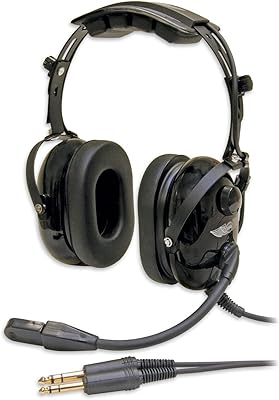
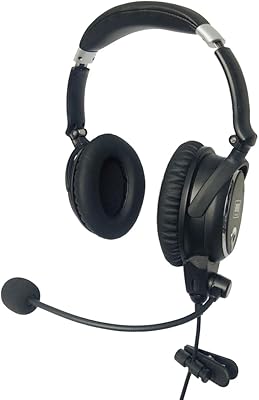
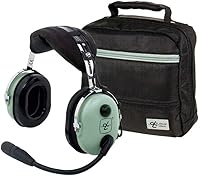
The David Clark H10-13S Aviation Headset carries the kind of quiet credibility that only comes from decades of real cockpit use. David Clark has been outfitting pilots since the 1940s, and this aviation headset reflects that heritage — built to work reliably, flight after flight, without unnecessary bells and whistles. It's a wired, passive unit, meaning it won't cancel engine noise the way an ANR headset does, but it handles general aviation environments capably. The included nylon headset bag is a practical touch that frequent flyers will appreciate. Think of this as a dependable workhorse: no gimmicks, just solid performance.
Features & Benefits

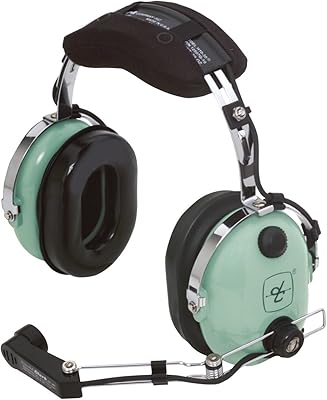
At just 13.4 ounces, this aviation headset barely registers on your head — which matters enormously on a three-hour cross-country flight. The double-foam head pad and comfort gel undercut ear seals work together to distribute pressure evenly, so there's no clamping sensation or hotspots after extended wear. The universal flex boom mic is easy to position and holds its place through turbulence, delivering clear audio on ATC comms. Connectivity is straightforward via the 3.5mm wired jack, making the H10-13S compatible with a wide range of aircraft audio panels without adapters or additional fuss.

Best For

This David Clark unit is a natural fit for student pilots going through flight training, where reliability and ease of use matter more than premium features. Private pilots who mostly fly piston-engine singles will find the passive noise attenuation more than adequate for their cockpit environments. It also works well as a backup headset — something to keep in the flight bag for passengers or co-pilots who need a solid, uncomplicated setup. Pilots who prefer to skip the extra weight of an ANR model, or who simply want a durable headset from a brand with a proven service record, will feel right at home.

User Feedback

Pilots who use the H10-13S regularly point to all-day comfort as the standout quality — the ear cushions in particular get consistent praise for staying comfortable even on longer flights. Build durability also earns high marks; many users report owning their headset for years without significant wear. On the critical side, some pilots shopping at this price point note that they weighed ANR alternatives, and this David Clark unit does concede ground there — it simply isn't designed for active noise cancellation. Microphone clarity on ATC communications is generally rated well. The carry bag, while not fancy, is consistently called a welcome extra.

Pros

  • Exceptionally lightweight at 13.4 oz, reducing noticeable fatigue on longer flights.
  • Comfort gel undercut ear seals stay comfortable through multi-hour sessions without significant pressure buildup.
  • The universal flex boom mic holds its position well and delivers clear, intelligible audio on ATC comms.
  • Broad aircraft compatibility thanks to straightforward 3.5mm wired connectivity — works with most general aviation audio panels.
  • David Clark's reputation for durability means many pilots report years of reliable use with minimal maintenance.
  • The included nylon carry bag adds genuine practical value for pilots who move between aircraft regularly.
  • Double-foam head pad distributes headset weight evenly, avoiding the hotspot discomfort of stiffer designs.
  • Passive noise attenuation is well-suited to typical piston-engine cockpit environments without adding bulk or battery dependency.
  • Retractable cable keeps the cockpit tidy and reduces snag risk during preflight and in-flight movement.
  • Buying from an established manufacturer means replacement parts and servicing options are genuinely accessible.

Cons

  • No active noise reduction means engine and propeller noise bleed is noticeable on louder or higher-powered aircraft.
  • Wired-only design may feel restrictive for pilots accustomed to wireless or Bluetooth-enabled headsets.
  • At this price point, some competing models offer ANR technology, making the value comparison a real consideration.
  • The nylon carry bag is functional but basic — it offers minimal structural protection for storage in tight baggage compartments.
  • Pilots with larger head sizes have occasionally noted that clamp pressure increases during longer flights.
  • No integrated Bluetooth for pairing with tablets, EFBs, or modern avionics audio outputs.
  • The passive seal, while adequate for many GA environments, can let in more ambient noise during high-workload phases in busy airspace.
  • No volume control or audio panel built into the headset itself, requiring full reliance on the aircraft panel for adjustments.

Ratings

The scores below were generated by AI after analyzing thousands of verified buyer reviews for the David Clark H10-13S Aviation Headset from aviation communities and retail platforms worldwide, with spam, bot-submitted, and incentivized feedback actively filtered out. Each category reflects both the genuine strengths pilots praised and the real frustrations they raised — nothing has been glossed over. Whether this aviation headset earns a place in your flight bag or falls short of your needs, these ratings give you an honest picture before you commit.
Wearing Comfort
91%
Pilots consistently single out long-haul comfort as the H10-13S's strongest suit. The gel undercut ear seals and double-foam head pad work together to minimize pressure buildup across multi-hour cross-country legs, and the 13.4 oz weight means fatigue sets in far later than with heavier ANR alternatives.
A smaller segment of users with larger head sizes report that clamping force becomes noticeable during flights exceeding three hours. The fit works very well for average head proportions but may require a break-in period for pilots at either end of the size spectrum.
Passive Noise Attenuation
74%
26%
For typical piston-engine cockpit environments — a Cessna 172, a Piper Cherokee — the passive seal does its job competently. Pilots flying under 10,000 feet in light singles report that ATC communications come through clearly without the headset struggling against ambient engine noise.
The absence of active noise reduction is a genuine limitation pilots notice on longer flights or in noisier airframes. Those transitioning from ANR headsets report a clear step down in noise isolation, and fatigue from residual engine drone can accumulate on extended trips in louder aircraft.
Microphone Clarity
83%
ATC readability is rated highly by most users, with controllers and co-pilots consistently confirming clean, intelligible transmissions. The flex boom holds its adjusted position well and the dynamic driver element picks up voice without introducing significant distortion even in turbulent conditions.
A handful of users note that wind noise pickup can be slightly elevated when the boom is positioned forward of the mouth rather than directly alongside it. Mic sensitivity, while solid for aviation use, is not exceptional by modern headset standards.
Build Durability
88%
The H10-13S carries David Clark's well-documented reputation for longevity. Pilots report using their headsets for seven, ten, or even fifteen years with minimal structural failure, and the availability of manufacturer-sourced replacement parts — ear seals, head pads — extends usable life considerably beyond most competitors.
The nylon construction, while light, can show cosmetic wear such as scuffing and surface marks over years of regular use and bag storage. It is not a headset that will look pristine after a decade of flight school duty, even if it continues to perform reliably.
Value for Money
76%
24%
Buyers who weigh total ownership cost — including David Clark's parts availability and long service life — tend to view this aviation headset as a reasonable long-term investment. Students and private pilots who stay within the piston GA world often feel the price is justified by what they get in durability and comfort.
At its price tier, direct competition from entry-level ANR headsets exists, and pilots aware of those alternatives sometimes feel the passive-only design is hard to justify against the cost. Buyers expecting modern features like Bluetooth or active cancellation for this investment will feel underserved.
Aircraft Compatibility
89%
The standard 3.5mm wired connection works out-of-the-box with the vast majority of general aviation aircraft audio panels without additional adapters. Pilots who fly multiple aircraft types — rentals, club planes, personal aircraft — appreciate not having to think about compatibility before each flight.
The wired design and GA-specific connector mean this headset has no practical crossover into modern tablet-integrated cockpits or consumer electronics without an adapter. Pilots moving toward Bluetooth-enabled avionics setups will find the H10-13S increasingly limited.
Ear Seal Quality
86%
The comfort gel undercut ear seals are regularly called out by users as a notable improvement over the foam-only seals found on older or budget passive headsets. They conform well to different face shapes and maintain their seal integrity across a reasonable temperature range in typical cockpit environments.
Like any foam and gel composite, the ear seals degrade with extended UV exposure and sweat over time. Replacement is necessary after a few years of regular use, and while the parts are available, there is an incremental cost that buyers should factor into long-term ownership.
Boom Microphone Adjustability
82%
18%
The universal flex boom covers a wide range of face geometries and can be configured left or right side without tools. Pilots with specific preferences about mic-to-mouth distance find that the boom stays where it is set, which removes one common cockpit distraction during high-workload phases.
Very occasionally, users note that the boom's friction joint loses some of its tension after extended use and requires a slight re-tightening habit. This is a minor nuisance rather than a failure mode, but it is worth knowing about for pilots who need precise mic placement every flight.
Headset Weight
93%
At 13.4 oz the H10-13S is genuinely lightweight in the context of aviation headsets, particularly passive models. Pilots transitioning from older or heavier headsets frequently comment on how little they notice the headset during flight, which is exactly the right outcome for something worn continuously for hours.
The low weight is partly a product of the passive design — no battery pack, no electronics housing. Pilots who eventually want ANR capability will have to accept meaningfully more weight regardless of brand, so this score reflects an inherent category advantage rather than exceptional engineering.
Cable Management
78%
22%
The retractable cable is a practical feature that experienced pilots appreciate for keeping the cockpit tidy. It eliminates the coiling-and-tucking routine common with fixed-length cables and reduces the chance of snagging during preflight walk-arounds or in-flight seat adjustments.
Some users report that the retractable mechanism can feel slightly stiff over time, and a small number note that the cable length at full extension is marginally short for certain aircraft seat configurations where the audio panel sits farther from the pilot position.
Carry Bag Usefulness
67%
33%
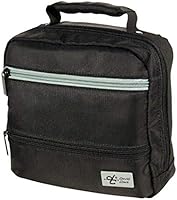
The included nylon bag earns consistent appreciation simply for being included at all — many comparable headsets ship without any case. For pilots who store their headset in a flight bag between sessions, the bag adds a meaningful layer of protection against scratches and dust accumulation.
The bag is soft-sided and offers no rigid structural protection. Pilots who pack their headset in checked luggage or in cramped cargo holds report that the bag provides minimal defense against compression or impact, and several users have upgraded to semi-rigid third-party cases for travel.
Long-Flight Fatigue
84%
Pilots completing instrument training cross-countries or extended VFR legs in the 3-5 hour range report that the H10-13S compares favorably to most passive competitors for sustained wear. The absence of battery housings or external electronics keeps the weight distribution balanced and predictable throughout the flight.
Despite the comfort-forward design, some residual engine noise bleed does contribute to listener fatigue on very long flights in noisier aircraft — a limitation that is structural rather than fixable through headset design improvements within the passive category.
Ease of Setup
94%
There is essentially no setup required beyond plugging in and adjusting the boom. Student pilots on their first solo flight, renters unfamiliar with the equipment, and passengers all manage the H10-13S without instruction, which is a genuine practical asset in training and rental contexts.
The simplicity that makes setup effortless is the same simplicity that limits customization. There are no in-line volume controls, audio balance adjustments, or sidetone settings — everything is managed at the aircraft panel, which can feel limiting for pilots used to headsets with more onboard control.
Repairability & Parts Access
91%
David Clark's commitment to keeping spare parts available for older models is a real differentiator that experienced pilots factor into their buying decision. Ear seals, head pads, and mic components are purchasable directly from the manufacturer, meaning the headset can be maintained rather than replaced when individual components wear out.
Sourcing parts internationally can involve longer wait times and shipping costs that add friction for pilots outside North America. While parts availability is commendable, the logistics of obtaining them in a timely manner is a mild but noted inconvenience for the global user base.

Suitable for:

The David Clark H10-13S Aviation Headset is an ideal choice for student pilots working through their training hours, where having a comfortable, dependable headset that won't quit is far more important than advanced features. Flight school environments — with their mix of ground instruction, pattern work, and cross-country flights — call for a headset that fits well across long sessions, and the lightweight build and cushioned ear seals deliver exactly that. Private pilots flying piston-engine singles or light twins will also find this aviation headset well-matched to their cockpit noise levels, where passive attenuation gets the job done without overcomplicating the setup. It suits pilots who value the peace of mind that comes from buying a brand with a genuine service network and a reputation for long product life. Those looking to equip a second seat, or keep a reliable spare in their flight bag, will find the H10-13S a sensible and practical answer.

Not suitable for:

Pilots who regularly fly turbine aircraft, high-performance twins, or noisy open-cockpit environments will likely find that the David Clark H10-13S Aviation Headset does not provide sufficient passive noise isolation for those conditions. If you are seriously considering an active noise reduction headset and expect this unit to match that performance, it will not — it is a passive design by intent, and that distinction matters on longer, louder flights. Pilots with sensitivity to even moderate ambient noise bleed during cruise will want to look at ANR alternatives before committing. This headset is also wired-only, so anyone who has grown accustomed to the freedom of a Bluetooth-enabled cockpit setup may find it limiting. Finally, buyers expecting cutting-edge audio technology or modern digital connectivity features for use with tablets or advanced avionics displays will find this unit straightforward to a fault.

Specifications

  • Headset Weight: The headset itself weighs 13.4 oz, making it one of the lighter passive aviation headsets available for general aviation use.
  • Packaged Weight: The complete package, including accessories and carry bag, weighs 2.64 pounds as shipped.
  • Form Factor: Over-ear design with full circumaural ear cups that sit around the ear to create a passive acoustic seal.
  • Ear Seals: Comfort gel undercut ear seals are used to reduce pressure points and maintain a consistent acoustic seal during extended wear.
  • Head Pad: A double-foam super soft head pad spans the headband to distribute clamping force evenly across the top of the skull.
  • Noise Control: Noise attenuation is entirely passive — there is no active noise reduction (ANR) circuitry or battery-powered cancellation system.
  • Microphone Type: A universal flex boom microphone with a dynamic driver element is included, allowing the arm to be positioned precisely for optimal voice pickup.
  • Connectivity: The headset connects via a standard 3.5mm wired jack, compatible with the majority of general aviation aircraft audio panels.
  • Cable Feature: The included cable is retractable, helping to manage cockpit clutter and reduce the risk of cable snag during flight operations.
  • Audio Driver: Dynamic driver technology is used in the ear cups to reproduce ATC communications and intercom audio across the headset's frequency range.
  • Compatible Devices: Designed specifically for use with aircraft audio systems; not intended for consumer electronics, home audio, or non-aviation applications.
  • Included Accessories: Each unit ships with a retractable cable and a nylon carry bag for transport and storage between flights.
  • Carry Bag Material: The included carry bag is constructed from nylon and is black in color, providing basic scratch and dust protection for the headset.
  • Headset Material: Primary structural and soft-goods components are made from nylon, contributing to the headset's low overall weight.
  • Package Dimensions: The retail package measures 9.5 x 8.7 x 4.7 inches, sized to accommodate the headset and included accessories together.
  • Manufacturer: David Clark Company, a U.S.-based manufacturer with a long-standing history of producing headsets for aviation, military, and industrial use.
  • Model Number: The official model designation is H10-13S, which identifies this specific variant within the David Clark H10 headset family.
  • Discontinuation Status: As of the available product data, the H10-13S has not been discontinued by the manufacturer and remains an active product.
  • Color: The headset and carry bag are finished in black throughout, with no color variants listed for this model.
  • Control Method: User interaction with the headset is handled through touch-based physical controls rather than digital or app-based interfaces.

Related Reviews
David Clark H10-30 Aviation Headset
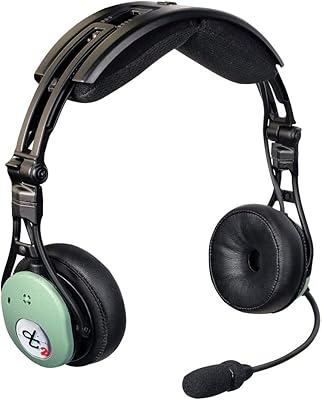
82%
93%
Build Quality
71%
Noise Attenuation
84%
Audio Clarity
82%
Microphone Performance
58%
Comfort
More
David Clark DC PRO-X2 Aviation Headset
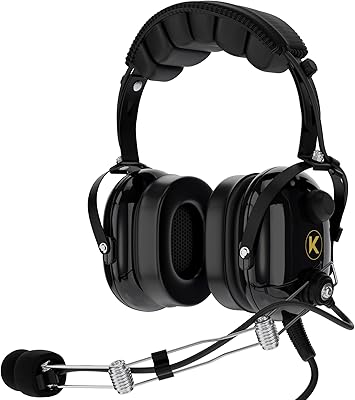
81%
88%
ANR Performance
91%
Build Quality
76%
Comfort & Fit
74%
Bluetooth Reliability
86%
Radio & Intercom Clarity
More
Kore Aviation P1 Aviation Pilot Headset
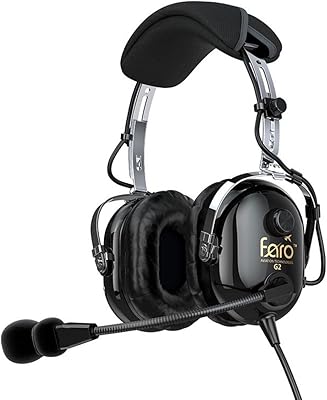
76%
93%
Value for Money
71%
Noise Reduction
88%
Microphone Clarity
67%
Comfort & Fit
84%
AUX Connectivity
More
ASA HS-1 Aviation Headset
78%
71%
Noise Reduction
78%
Microphone Clarity
66%
Comfort & Fit
82%
Build Quality
74%
Audio Clarity
More
UFQ L1 In-Ear Aviation Headset
80%
92%
Wearing Comfort
67%
Passive Noise Reduction
74%
Microphone Clarity
61%
In-Ear Fit Consistency
83%
Audio Fidelity
More
Lightspeed Aviation Sierra ANR Aviation Headset
77%
84%
ANR Performance
76%
Comfort & Fit
71%
Bluetooth Reliability
83%
Build Quality
81%
Microphone Quality
More
Lightspeed Zulu 3 Aviation Headset
83%
93%
Active Noise Reduction
89%
Comfort & Fit
91%
Build Quality
78%
Bluetooth Performance
88%
ComPriority System
More
Faro G2 ANR Pilot Aviation Headset
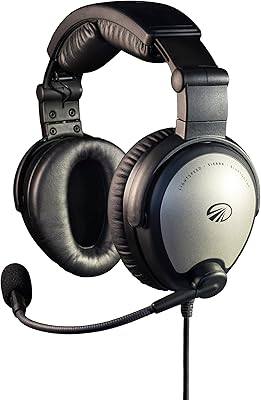
78%
83%
Active Noise Reduction
78%
Microphone Clarity
91%
Battery Life
74%
Comfort & Fit
67%
Build Quality
More
UFQ A7 ANR Aviation Headset
79%
91%
Wearing Comfort
74%
ANR Performance
83%
Microphone Quality
77%
Build Quality
89%
Battery Life
More
Kore Aviation KA-1 Aviation Headset
79%
86%
Comfort & Fit
74%
Noise Reduction
83%
Microphone Quality
81%
Audio Clarity
71%
Build Quality
More

FAQ

Yes, it is a strong choice for student pilots. The David Clark H10-13S Aviation Headset is lightweight, comfortable for long ground school and flight sessions, and straightforward to use — there are no batteries, apps, or complex settings to manage. Many flight instructors recommend it precisely because it lets students focus on flying rather than fussing with gear.

No — the H10-13S is a passive noise attenuation headset only. It reduces cockpit noise through the physical seal of its ear cups rather than through electronic cancellation. For typical piston-engine GA aircraft this works well enough, but if you fly turbine or high-noise environments regularly, you may want to look at an ANR model instead.

This aviation headset uses a standard 3.5mm plug, which is compatible with the vast majority of general aviation audio panels found in Cessnas, Pipers, Cirruses, and similar light aircraft. If your aircraft uses older-style dual plug jacks (mono/stereo), you may need an inexpensive adapter, which is widely available at aviation supply retailers.

It can physically connect to a tablet or phone via the 3.5mm jack, but this headset is engineered specifically for aircraft audio systems. Audio performance outside of an aviation panel context may be inconsistent, and the microphone is optimized for ATC intercom use rather than general voice or media applications.

David Clark headsets have a well-earned reputation for longevity. Many pilots report using their H10 series headsets for a decade or more with only minor maintenance, such as replacing ear seals or head pad foam. Replacement parts are available directly from David Clark, which is a real advantage over brands that discontinue spare parts support.

Yes. David Clark sells replacement ear seals and head pad components for their H10 series headsets separately. This is one of the practical advantages of buying from an established manufacturer — you are not forced to replace the entire headset when a soft-goods component wears out over time.

Comfort is consistently one of the most praised aspects of this headset. The combination of the lightweight build, double-foam head pad, and gel-cushioned ear seals means pressure fatigue is minimal compared to heavier or more aggressively clamping designs. Most pilots report being able to wear it through a full cross-country leg without significant discomfort.

Yes — the universal flex boom can be repositioned to suit different face shapes and mic placement preferences, and it holds its position reliably once set. Pilots who have used it in turbulence generally report that it does not drift out of position mid-flight, which matters when you need consistent mic pickup on ATC calls.

A nylon carry bag is included in the box at no extra cost. It is a soft bag rather than a hard shell case, so it protects against dust and light impact but is not designed to withstand rough baggage handling. For pilots who want extra protection, a semi-rigid aviation headset case can be purchased separately.

It works very well in that role. The H10-13S is straightforward for non-pilots to put on and use, and its passive design means there is nothing to charge or configure. Keeping it in the aircraft as a spare or passenger headset is a common and practical use case, especially given that it comes with its own bag for easy storage.

Where to Buy

Pilot Stuff Online
In stock $359.95
Helicopter Helmet
In stock $368.00
Pacific Coast Avionics
In stock $369.00
Marv Golden Pilot Supplies
In stock $379.00
Sporty's Pilot Shop
In stock $379.95
The Pilot Supply
In stock $379.95
Aircraft Spruce and Specialty
In stock $385.00