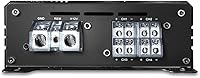
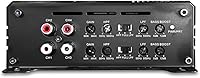
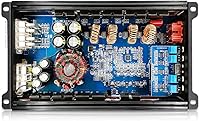
Overview

The CT Sounds CT-150.4D 4-Channel Car Amplifier occupies a spot that many car audio shoppers are genuinely hunting for — solid output in a compact chassis, without crossing into premium pricing territory. CT Sounds has earned a respectable following among enthusiasts who care about performance relative to cost, and this model sits comfortably in the middle of their lineup. Spread across four channels, the total 1000 watts RMS means a real, audible upgrade over stock head unit power — fuller mids, tighter bass response, and better detail at highway speeds. It is a capable daily driver amp, just not a high-end boutique build.
Features & Benefits

Class D topology is why this 4-channel amp runs cool — it converts power far more efficiently than older Class AB designs, meaning less energy wasted as heat during long drives. The MOSFET power supply backs that up with stable output, and the proprietary heat dissipation design keeps temps in check even when pushed hard. The 4-way protection circuit guards against high and low voltage swings, overcurrent, and thermal spikes — a genuinely practical feature given how unpredictable car electrical systems can be. Wiring flexibility is real: 150 watts per channel at 4-ohm, 250 watts at 2-ohm, or 475 watts bridged per pair for a subwoofer. The compact footprint fits under seats and into tight trunk corners without much hassle.

Best For

This compact car amplifier is a natural fit for anyone replacing a stock head unit setup with a proper 4-channel configuration — think front and rear door speakers all running off one amp, clean and straightforward. If you are working with limited install space, the small chassis is a genuine advantage, not just a spec sheet talking point. Entry-level builders doing their first real amp install will find the wiring options approachable, and daily commuters who just want noticeably better sound without overthinking the build will be satisfied. Where it falls short is in high-demand competition or audiophile builds — those applications call for more output headroom and tighter specs.

User Feedback

Buyers who have installed the CT-150.4D generally come away impressed by how much cleaner everything sounds over stock head unit power — that is the most consistent takeaway across reviews. Installation gets praised as relatively painless, even for first-timers. On the flip side, some users report sensitivity around gain settings, where a poorly calibrated setup can introduce audible noise. Build quality feedback is mixed — functional, but consistent with the price tier, not heavy-duty. Long-term reliability is generally positive, though a minority of buyers note early channel failures. Most agree that the value perception holds up well — the output feels close enough to spec that few buyers feel misled.

Pros

  • Noticeably cleaner and louder sound compared to factory head unit power, even at highway volumes.
  • Class D design runs cool and draws power efficiently, which is easy on your vehicle's electrical system.
  • Four-way protection circuit adds real peace of mind in unpredictable car electrical environments.
  • Compact chassis fits under seats or in small trunk corners where full-size amps simply will not go.
  • Flexible wiring options let you run four speakers or bridge two channels for a subwoofer without buying extra gear.
  • Straightforward install process that first-timers report completing without major headaches.
  • MOSFET power supply contributes to stable output even when voltage conditions vary.
  • Solid value for the output delivered — most buyers feel the performance matches the rated specs closely enough.
  • FCC certified, which confirms it meets baseline electromagnetic compliance standards.
  • At just over five pounds, it is light enough to mount in places heavier amps would be impractical.

Cons

  • Gain sensitivity can be tricky — a poorly set gain introduces audible noise that takes patience to dial out.
  • Build quality feels functional rather than premium; the chassis does not inspire confidence on first inspection.
  • A small number of buyers have reported early channel failures, suggesting some unit-to-unit consistency issues.
  • No onboard crossover controls mentioned, which limits flexibility when integrating with mixed speaker setups.
  • Not a strong candidate for 2-ohm loads on all four channels simultaneously without careful thermal monitoring.
  • Bridged power output at 475 watts per pair is useful but modest if you are running a hungry subwoofer.
  • Long-term reliability data is still relatively thin given the product launch date, so durability is not fully proven.
  • Customer support experience with CT Sounds has been inconsistent based on available buyer feedback.

Ratings

The scores below reflect an AI-driven analysis of verified global user reviews for the CT Sounds CT-150.4D 4-Channel Car Amplifier, with spam, bot-generated, and incentivized submissions actively filtered out before scoring. Each category captures what real buyers consistently praised and what genuinely frustrated them — nothing is glossed over. Strengths and pain points are weighted equally so you get an honest picture before making a decision.

Value for Money
83%
Most buyers feel they got more amplifier than the price would suggest, especially those coming straight from factory head unit power. The jump in clarity and volume is hard to argue with at this price tier, and many users describe it as one of the better budget investments in their car audio setup.
A minority of buyers who experienced early channel failures felt the value proposition collapsed quickly, since repair or replacement costs can erode the savings. If you hit a bad unit, the price advantage disappears fast.
Sound Quality
78%
22%
Across daily commuter builds and weekend installs alike, users consistently report cleaner, more detailed output compared to what a standard head unit delivers. At moderate to high volumes, the amp holds its composure well, handling mids and highs without obvious distortion in typical road noise conditions.
At very high volumes or in demanding listening environments, a small number of users notice a subtle softness in the high frequencies. It is not a boutique amp, and those with trained ears running quality component speakers will likely hear the ceiling.
Build Quality
61%
39%
The chassis is compact and functional, and for an under-seat install where it stays out of sight, the physical construction does the job. Connections feel reasonably secure, and the layout is tidy enough for clean wiring on a first build.
In hand, the CT-150.4D feels light in a way that raises eyebrows — the enclosure has a plasticky quality that does not inspire long-term confidence. Several buyers specifically noted that it does not feel as solid as amplifiers from competing brands at a similar price point.
Ease of Installation
86%
First-time installers frequently highlight this amp as one of the easier units to get up and running, with a clear terminal layout and manageable wire routing. The compact size means it fits in spaces where bulkier amps simply would not, which saves time during the install process.
Gain calibration is where things get tricky — set it too high and you introduce a persistent hiss that is difficult to trace for beginners. A handful of users spent hours chasing noise issues that turned out to trace back to an improperly set gain knob.
Thermal Management
77%
23%
Class D efficiency keeps this amp running noticeably cooler than older Class AB units in equivalent daily driving scenarios. The proprietary heat dissipation design holds up well in moderate-use situations, and most users report the chassis staying warm but not alarmingly hot during long listening sessions.
In enclosed mounting spots with limited airflow — like sealed under-seat cavities — a few users reported thermal protection triggering during extended high-volume use. Adequate ventilation around the chassis is not optional; it is a real installation requirement.
Power Output Accuracy
72%
28%
The majority of buyers feel the real-world output tracks closely enough with the rated specs to satisfy expectations. When wired at 2-ohm, users running aftermarket speakers notice a meaningful bump in headroom that matches what the spec sheet suggests.
A segment of more experienced buyers, who tested output with meters, reported figures slightly below the stated RMS ratings. It is not a dramatic gap, but it is enough to matter if you are planning a build around hitting specific power targets.
Long-Term Reliability
63%
37%
Many buyers who have run this compact car amplifier daily for over a year report no significant issues, which suggests the protection circuitry and thermal management are doing their job in typical use. The 4-way protection system clearly prevents some of the failures that plague cheaper amps with no safeguards.
There is a consistent thread of reports about single-channel failures appearing within the first six to twelve months of ownership. The failure rate is not catastrophic, but it is frequent enough to make reliability a legitimate concern for buyers who cannot afford downtime.
Noise Floor
69%
31%
When gains are properly calibrated and grounding is clean, the amp performs quietly enough for everyday listening without obvious background hiss. Users who took time to set up their ground connections carefully report a noticeably clean signal.
Grounding problems amplify any noise sensitivity this unit has, and several buyers in online installer communities noted that it is more grounding-sensitive than average. Poor grounding hygiene during install produces an audible hum that can be stubborn to eliminate.
Wiring Flexibility
81%
19%
The three available power configurations — 4-channel full-range, 2-ohm per channel, or bridged two-channel — make this amp adaptable to a range of build types without needing additional equipment. Buyers running a mix of door speakers and a single sub have used the bridged option effectively without adding a second amp.
The bridged output at 475 watts per pair is useful but limiting for buyers who want to push a hungry subwoofer. If your sub demands more headroom, you will need a dedicated mono amp rather than relying on bridging this unit.
Compact Footprint
88%
The physical dimensions make this one of the more install-friendly options in the 4-channel segment — it genuinely fits under front seats in most mid-size sedans and compact SUVs without modification. Buyers with tight cabins specifically mention the size as a deciding factor in choosing it over larger competitors.
The compact size comes with a trade-off in heatsink surface area, which is directly linked to the thermal sensitivity noted in enclosed mounting scenarios. A larger chassis would dissipate heat more passively, so the size advantage is not entirely free.
Channel Balance
71%
29%
Under normal operating conditions and with properly matched speakers, channel balance is consistent and even across all four outputs. Most users running standard door speaker configurations do not encounter any noticeable imbalance in day-to-day listening.
A recurring complaint in user feedback involves one channel running noticeably softer than the others, either from the factory or developing over time. It is not universal, but it shows up with enough frequency to suggest some quality control inconsistency across production runs.
Protection Circuit Effectiveness
82%
18%
The 4-way protection system has demonstrably saved units from electrical spikes and overheating events that would have permanently damaged simpler amps. Buyers in regions with older vehicle wiring — prone to voltage irregularities — specifically credit the protection circuit for keeping the amp alive.
The low-voltage protection can occasionally trigger unnecessarily in vehicles with aging alternators or during engine start cycles, causing momentary audio dropouts. It is technically doing its job, but the threshold sensitivity can become annoying in less-than-perfect electrical environments.
Brand Reputation
74%
26%
CT Sounds has built a loyal following among entry-level and mid-tier car audio enthusiasts who value output per dollar over brand prestige. In DIY forums and car audio communities, the brand is treated as a credible option for builders who are not ready to spend on Rockford Fosgate or JL Audio.
Outside of enthusiast circles, CT Sounds does not carry the kind of brand recognition that signals quality to casual buyers. Customer support responsiveness has been inconsistent based on reported experiences, which makes post-purchase confidence lower than it should be.
Packaging & Accessories
58%
42%
The unit arrives well-protected in its box packaging, and the physical product is typically undamaged upon arrival based on buyer feedback. For straightforward installs, the amp itself is all you really need to source.
The accessory package is sparse — buyers should expect to source their own wiring kit, RCA cables, and mounting hardware separately. At this price tier some competitors include at least a basic wiring kit, and the absence of one here adds friction for first-time buyers who did not anticipate the additional cost.

Suitable for:

The CT Sounds CT-150.4D 4-Channel Car Amplifier is a strong match for everyday drivers who are tired of flat, lifeless factory sound and want a meaningful upgrade without building a complex multi-amp system. If you are powering a set of aftermarket door speakers — front and rear — off a single amp, this 4-channel setup handles that job cleanly and efficiently. It works especially well in vehicles where installation space is tight, like compact sedans or smaller SUVs, since the chassis is genuinely small enough to tuck under a seat. First-time amp installers will appreciate the straightforward wiring configurations and flexible impedance options, which make the learning curve manageable. Budget-conscious builders who want real output — not just a spec number on a box — will find that this compact car amplifier delivers a noticeable, tangible improvement in volume and clarity over head unit power alone.
Not suitable for:

The CT Sounds CT-150.4D 4-Channel Car Amplifier is not the right tool for builders chasing high-output competition setups or audiophile-grade sound staging. If your build demands fine-tuned crossover control, ultra-low noise floors, or the kind of output headroom that competition SPL events require, this amp will hit its ceiling before you hit yours. Enthusiasts running demanding low-impedance speaker loads across all four channels simultaneously may find the amp running warmer than expected, even with the built-in thermal protection doing its job. The build quality, while functional, reflects the price tier — it does not feel like a premium unit in hand, and buyers expecting the solidity of higher-end brands may be disappointed. If you already own a capable head unit with decent preamp outputs and are looking to pair it with separates and a dedicated DSP, you will likely outgrow this amp faster than you expect.
Specifications

  • Brand: Manufactured by CT Sounds, a brand focused on value-oriented car audio equipment for enthusiast and entry-level builds.
  • Model Number: The exact model designation is CT-150-4D, which identifies this unit within the CT Sounds amplifier lineup.
  • Amplifier Class: Uses Class D topology, which is significantly more power-efficient than Class AB designs and generates less heat during operation.
  • Channels: Full-range 4-channel configuration, capable of driving up to four speakers simultaneously across the front and rear stages.
  • RMS Power (4-ohm): Delivers 150 watts RMS per channel at a 4-ohm load with a 14.4V supply, totaling 600 watts across all four channels.
  • RMS Power (2-ohm): Output increases to 250 watts RMS per channel at a 2-ohm load under the same 14.4V supply conditions.
  • Bridged Power: When bridged to two channels, each pair delivers 475 watts RMS at a 4-ohm load, useful for driving a subwoofer or high-power component speakers.
  • Total RMS Output: Aggregate rated RMS output across all operating configurations reaches 1000 watts at 14.4V.
  • Power Supply: Equipped with a MOSFET pulse-width modulated power supply designed to maintain stable output under varying electrical load conditions.
  • Protection Circuit: Features 4-way protection covering high voltage, low voltage, over-current, and high-temperature conditions to safeguard the amplifier and connected speakers.
  • Operating Voltage: Designed to operate at a nominal 14.4V, with a functional range spanning from a minimum of 8.8V up to a maximum of 15.3V.
  • Dimensions: The amplifier chassis measures 12.05 x 7.99 x 4.69 inches, making it compact enough for under-seat or small trunk installations.
  • Weight: Unit weighs 5.35 pounds, which is notably light for a 4-channel amplifier in this output class.
  • Mounting Type: Designed for surface mounting, allowing flexible placement on flat surfaces inside the vehicle cabin or cargo area.
  • Certification: FCC certified, confirming the unit meets applicable electromagnetic interference and compliance standards for the US market.
  • Heat Management: Incorporates a proprietary heat dissipation design intended to keep operating temperatures stable even during extended high-volume listening sessions.
  • UPC: The product UPC is 850021258825, which corresponds to the standard retail packaging configuration.
  • Package Type: Ships in standard box packaging that includes the amplifier unit; any included wiring kit or mounting hardware should be verified at point of purchase.

Related Reviews
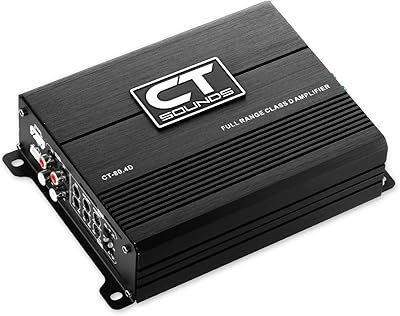
CT Sounds CT-80.4D 4-Channel Car Amplifier
74%
91%
Value for Money
78%
Power Output Accuracy
84%
Installation Ease
61%
Heat Management
67%
Build Quality
More
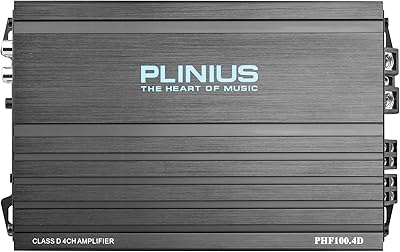
Plinius PHF100.4D 4-Channel Car Amplifier
74%
88%
Value for Money
76%
Sound Quality
63%
Power Output
54%
Thermal Management
84%
Ease of Installation
More
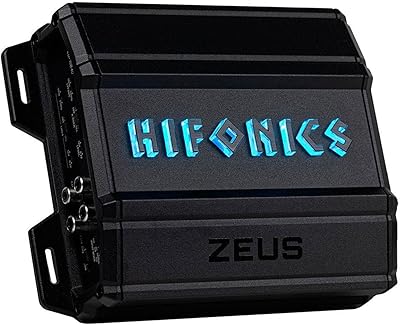
Hifonics Zeus Delta ZD-750.4D 750 Watt 4-Channel Car Audio Amplifier
86%
92%
Power Output
90%
Sound Quality
88%
Heat Dissipation
89%
Ease of Installation
86%
Build Quality
More
Recoil DI550.4 4-Channel Car Audio Amplifier
74%
91%
Value for Money
78%
Power Output
86%
Ease of Installation
74%
Sound Quality
67%
Build Quality
More
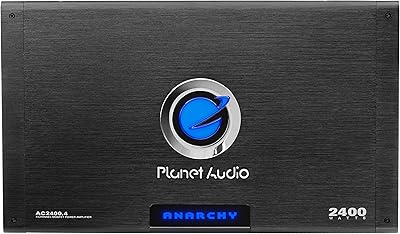
Planet Audio AC2400.4 4-Channel Car Amplifier
84%
95%
Power Output
89%
Sound Clarity
87%
Bass Performance
82%
Ease of Installation
65%
Thermals/Heat Management
More
Recoil REA600.4 4-Channel Car Audio Amplifier
84%
89%
Audio Performance
91%
Ease of Installation
85%
Sound Quality at High Volumes
62%
Heat Management
90%
Power Output
More
Planet Audio PL1600.4 4-Channel Car Amplifier
72%
88%
Value for Money
84%
Ease of Installation
74%
Sound Quality
58%
Power Output (Real-World)
61%
Build Quality
More
Recoil DI800.4 4-Channel Car Audio Amplifier
83%
88%
Sound Quality
92%
Power Output
65%
Thermal Management
84%
Build Quality
91%
Ease of Installation
More
Planet Audio AC1200.4 4-Channel Car Amplifier
73%
88%
Value for Money
67%
Power Output
83%
Installation Ease
74%
Sound Quality
61%
Build Quality
More
Soundfy SA 400.4 4-Channel Car Amplifier
71%
78%
Value for Money
72%
Sound Quality
63%
Power Output
58%
Build Quality
81%
Thermal Management
More

FAQ

Yes, that is exactly what it is built for. Each of the four channels handles one speaker, so you can run both front and rear door speakers off a single unit without any extra equipment.

Most first-timers find the install manageable with some preparation. You will need to run power and ground cables, connect your RCA inputs from the head unit, and carefully set the gain. Taking your time with the gain adjustment is the step where most beginners trip up, so go slow there.

Quite possibly, yes. The chassis is genuinely compact at roughly 12 by 8 inches, so it slides under many passenger or rear seats without modification. That said, measure your available clearance first, since seat heights vary quite a bit between vehicle models.

You can. Bridging a pair of channels produces 475 watts RMS at 4-ohm, which is a reasonable amount of power for a mid-sized sub. Just make sure your subwoofer's impedance in bridged mode stays at 4-ohm or higher — bridging down to 2-ohm is not supported and risks damaging the amp.

The built-in low-voltage protection will shut the amp down before any damage occurs. It kicks in when the supply voltage drops below the safe operating threshold, protecting both the amplifier and your speakers from running on unstable power.

For the price tier, it holds up well. The output is clean at moderate to high volumes, and most users find it a significant step up from head unit power. If you are pairing it with high-end component speakers expecting audiophile precision, you may eventually want to upgrade to a higher-quality amp, but for typical aftermarket speakers it is a solid match.

It depends on whether the head unit has speaker-level outputs you can tap, and whether this amp includes a high-level input adapter. Check the product documentation carefully — not all amps at this price point include that adapter, and you may need a separate line output converter if your head unit lacks preamp outputs.

Class D amps in general run cooler than older designs, and the proprietary heat dissipation system helps keep temperatures in check. Under normal daily driving conditions it should stay warm to the touch but not uncomfortably hot. If it is getting very hot, check your gain settings and make sure the mounting location has adequate airflow around it.

Running at 2-ohm squeezes more power out of each channel — 250 watts versus 150 watts — but also generates more heat and puts more stress on the amplifier. For most casual builds with standard 4-ohm speakers, sticking with 4-ohm operation is the safer and more stable choice.

CT Sounds typically offers a warranty on their amplifiers, but the specific terms should be confirmed directly with the seller or manufacturer at the time of purchase, as warranty coverage can vary by retailer. Buyer feedback on support responsiveness has been mixed, so it is worth keeping your purchase receipt and documenting your install in case you need to make a claim.

Where to Buy