Overview

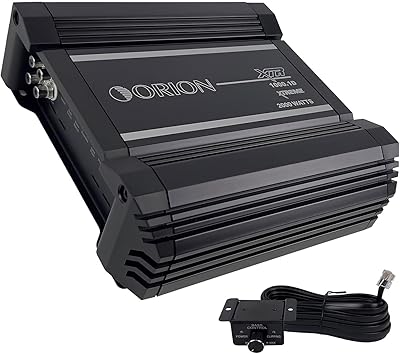
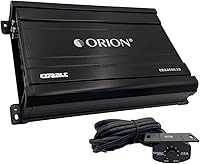
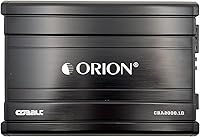
The Orion CBA2000.1D Monoblock Car Amplifier is a Class D monoblock built for bass enthusiasts who want real subwoofer punch without overspending. Before anything else, let's be honest about wattage: the 2000W MAX figure is a peak rating, not a continuous one — the real numbers are 500W RMS at 1 ohm, 260W at 2 ohms, and 160W at 4 ohms. That distinction matters enormously when shopping. Built around a compact aluminum chassis at 14 x 8 x 3 inches and just under 5 pounds, it fits comfortably in most trunk installations. Since mid-2020, it has gathered over 1,060 ratings with a 4.0 average, giving it a genuine real-world track record among budget mono amps.
Features & Benefits

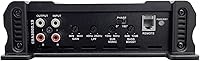
Class D topology is worth understanding before you buy: it runs far cooler and draws less current than Class A/B amps, which matters a lot in a hot trunk or under-seat install. What really stands out is the 1-ohm stable operation — not just a spec checkbox, but a practical benefit that lets you wire a dual voice coil sub in parallel without the amp shutting down from thermal stress. The MOSFET power supply keeps the signal cleaner under load than cheaper transformer-based designs. Tuning options are genuinely useful: an adjustable low-pass filter from 10 to 250 Hz, a bass boost, a subsonic control, and a remote bass knob you can mount within reach of the driver. High-level inputs round things out for factory radio users.

Best For

This Orion mono amp makes the most sense for daily drivers who want a meaningful bass upgrade from a stock system without spending a lot. The high-level input is a genuine asset for anyone who hasn't replaced their factory head unit yet — you can tap into speaker wires directly rather than needing an RCA output from a new stereo. It's also a reasonable pick for a first-time installer thanks to the included accessories and straightforward control layout. That said, if you're building a serious competition setup or need certified RMS figures to match a high-output subwoofer, this Cobalt monoblock will likely leave you wanting more. Think daily use, not SPL events.

User Feedback

Across 1,060+ reviews, the pattern is clear: most buyers are satisfied with the bass output relative to what they paid, and many specifically call out the remote knob as a nice included touch. Installation gets positive marks too, particularly from users keeping their factory radios. Where the tone shifts is durability — a notable subset of owners report units failing somewhere in the 6-to-18-month window, which is worth factoring into your expectations. There are also consistent mentions of the amp running noticeably warm under load, though no widespread reports of thermal shutdown during normal use. Balanced overall: strong out-of-box value, but long-term reliability is a real question mark.

Pros

  • 1-ohm stable operation lets you wire dual voice coil subs in parallel without risking thermal shutdown.
  • Class D design runs cooler and draws less current than traditional Class A/B amps in tight installs.
  • The remote bass knob is included out of the box, saving you an extra purchase and adding real daily convenience.
  • High-level inputs make this Orion mono amp compatible with factory head units straight out of the box.
  • The low-pass filter covers a wide 10 to 250 Hz range, giving you genuine flexibility when dialing in your sub.
  • Bass boost and subsonic control add useful tuning options that cheaper amps in this range often skip.
  • Compact footprint at 14 x 8 x 3 inches fits easily under seats or in smaller trunk builds.
  • Over 1,060 real-world reviews and a 4.0 average rating reflect broad satisfaction among casual daily-driver users.
  • MOSFET power supply helps maintain cleaner signal delivery compared to basic transformer designs at this price tier.
  • Thermal protection circuitry provides a safety net if the amp does get pushed harder than intended.

Cons

  • The 2000W MAX label is heavily misleading — actual continuous RMS output is a fraction of that figure.
  • A notable share of owners report unit failure within 6 to 18 months of regular use.
  • The amp runs noticeably warm during extended high-volume sessions, which can be a concern in poorly ventilated installs.
  • No published distortion or signal-to-noise specs make it hard to verify actual audio quality on paper.
  • Real sustained power at 2 and 4 ohms is quite modest, limiting compatibility with more demanding subwoofers.
  • Long-term reliability is inconsistent enough across reviews to warrant caution for buyers planning multi-year use.
  • The aluminum chassis feels adequate but not particularly robust compared to similarly priced competitors with thicker builds.
  • No onboard LED signal or clip indicator makes it harder to confirm proper gain setting without external tools.

Ratings

The scores below for the Orion CBA2000.1D Monoblock Car Amplifier were generated by our AI review engine after analyzing verified global buyer feedback, with spam, bot activity, and incentivized reviews actively filtered out. Each category reflects the honest distribution of real user experiences — strengths and frustrations alike — so you get a transparent picture before you buy. Where buyers broadly agreed, scores trend higher; where opinions split or recurring complaints surfaced, the numbers reflect that too.
Value for Money
83%
For buyers on a tight budget who want a functional subwoofer amp without a major financial commitment, this Orion mono amp consistently over-delivers on expectations. Most users who went in with realistic expectations about RMS output came away feeling the price-to-performance ratio was fair, particularly given the included remote knob and input flexibility.
The value equation shifts if you factor in the reliability concerns some owners have experienced within the first 18 months, since replacing the unit erodes the initial savings quickly. Buyers who assumed the MAX wattage reflected real output often felt misled, which colored their perceived value negatively.
Bass Output
78%
22%
For a daily-driver setup running a single sub in a ported box at 1 or 2 ohms, the Cobalt monoblock delivers noticeably punchy bass that genuinely transforms a stock listening experience. Users on commutes and weekend drives frequently describe the low-end as satisfying and well-rounded for casual listening.
Enthusiasts pushing the amp hard against a high-rated subwoofer often find the actual output underwhelming once the honest RMS figures are understood. At 4 ohms especially, 160W RMS limits how loud and deep the bass can realistically go without distortion creeping in at higher volume levels.
Power Accuracy
41%
59%
The amp does produce real, usable power at its rated RMS levels, and for users who researched those figures beforehand, performance matched what was promised at 1 and 2 ohm loads.
The 2000W MAX label is the single most criticized aspect across reviews, with buyers feeling genuinely misled by marketing that implies far more continuous power than the unit actually delivers. The gap between advertised peak wattage and real-world RMS figures is wide enough that it has become a recurring complaint, damaging trust even among otherwise satisfied owners.
Thermal Management
62%
38%
The Class D design does run cooler than older Class A/B amps in comparable power ranges, and in well-ventilated installs most users report the amp staying at manageable temperatures during normal daily use. The built-in thermal protection circuit adds a safety layer that prevents catastrophic failure from a single heat spike.
Extended high-volume sessions — particularly in poorly ventilated trunks during summer months — push this amp to run noticeably warm, which several users flagged as a concern. A subset of reviewers connect early unit failures to heat accumulation over time, suggesting the thermal headroom is tighter than ideal for aggressive use cases.
Build Quality
59%
41%
The aluminum chassis keeps weight low and provides basic passive heat dissipation, and the overall form factor feels solid enough for surface-mount trunk installs in typical daily-driver scenarios.
Long-term durability is where this Class D sub amp shows its budget DNA most clearly, with a meaningful share of reviews citing component failure within the first one to two years. The chassis feels adequate rather than robust, and the internal construction does not inspire the same confidence as pricier competitors at twice the cost.
Ease of Installation
88%
The combination of clearly labeled controls, high-level speaker inputs, and an included remote knob makes this one of the more approachable amps for first-time installers. Users frequently mention getting the system up and running in a single afternoon without needing professional help or additional adapters.
Gain setting without an oscilloscope or multimeter can lead to clipping issues that some users did not notice until they heard distortion at higher volumes. The manual could be more detailed for absolute beginners who are unfamiliar with crossover tuning and subsonic filter setup.
Tuning Flexibility
76%
24%
Having an adjustable low-pass filter that sweeps from 10 to 250 Hz, alongside a bass boost and subsonic control, gives users a genuinely useful toolkit for dialing in different subwoofer and enclosure combinations. The phase shift adjustment is a bonus that most amps in this price range do not bother including.
None of the controls are accompanied by precise markings or detents, making repeatable tuning adjustments more of an approximation than a precision exercise. Users who want to set exact crossover points by ear rather than by measurement will find the control feel imprecise compared to higher-end units.
Compatibility
86%
The dual-input design — supporting both RCA low-level and high-level speaker connections — means this Orion mono amp works with practically any source unit on the road today, from premium aftermarket decks down to untouched factory stereos. This breadth of compatibility is consistently praised by users who wanted a simple upgrade path without changing multiple components at once.
While connectivity is broad, users with very low-output factory head units may find the high-level input sensitivity requires careful gain matching to avoid noise floor issues. A few reviewers noted a faint background hiss in quieter listening environments, though this appears to be setup-dependent rather than universal.
Remote Bass Knob
91%
The fact that a remote knob is bundled in the box — rather than sold as an accessory — is one of the most consistently praised details in user reviews. Being able to dial bass up or down from the driver seat without reaching into the trunk genuinely changes the daily usability of the system, especially in cars where bass needs vary between passengers and driving environments.
The knob itself is basic in construction and a small number of users have reported it becoming intermittent or losing contact over time. It does its job well initially, but it is not a premium-feeling component and may require replacement in a high-vibration vehicle environment.
1-Ohm Stability
81%
19%
Running continuously at 1 ohm without thermal shutdown is a real-world differentiator for buyers who want to wire a dual voice coil subwoofer in parallel for maximum output. Many users specifically chose this amp because of this capability and report it handling the load reliably during normal daily listening sessions.
Under prolonged high-volume use at 1 ohm, the amp runs closer to its thermal limits, and a portion of owners who pushed it hard in this configuration are among those reporting earlier-than-expected failures. It is stable at 1 ohm for typical use, but it is not as resilient in that configuration as more expensive purpose-built 1-ohm amps.
Signal Clarity
67%
33%
The MOSFET power supply contributes to a cleaner signal path than basic transformer-based designs at this price point, and for typical subwoofer frequencies most users find the output free of obvious distortion at moderate listening levels.
No published signal-to-noise ratio or total harmonic distortion figures are available, which makes objective comparison difficult and reflects a gap in transparency. A subset of users report a detectable noise floor or slight muddiness at the frequency crossover boundary, particularly when the bass boost is engaged at higher settings.
Long-Term Reliability
47%
53%
Many buyers do use this amp without incident for a year or more in moderate daily-driving conditions, and units installed in well-ventilated locations with properly set gains seem to fare better than average.
The long-term reliability picture is the most concerning aspect of buyer feedback for this amp, with a statistically notable share of reviews describing failures between six and eighteen months of use. For buyers who plan to keep their system for several years, this pattern is significant enough to factor into the purchasing decision honestly.
Packaging & Accessories
73%
27%
The box typically arrives well-protected, and the inclusion of the remote knob — plus wiring kit accessories in bundle configurations — makes the out-of-box experience feel reasonably complete for a budget-tier amp purchase.
The wiring accessories included in kits are functional but not high quality, and some users recommend replacing the power and ground cables with heavier-gauge aftermarket options for optimal performance. Documentation in the box is thin and does not walk new installers through gain calibration or filter setup in any meaningful depth.

Suitable for:

The Orion CBA2000.1D Monoblock Car Amplifier is a strong fit for everyday drivers who want a noticeable bass upgrade without committing to a high-end audio budget. If you are running a single subwoofer in a ported or sealed enclosure and plan to wire it at 1 or 2 ohms, this amp is built to handle that load continuously without thermal issues. The high-level speaker input is particularly valuable for anyone keeping their factory head unit, since it eliminates the need for a line output converter or a full stereo swap just to add a sub. First-time installers will also appreciate that the learning curve is low — the controls are clearly laid out, and the included remote knob means you can adjust bass from the driver seat without fumbling with the amp itself. For a casual daily-driver setup where the goal is more felt bass on commutes and weekend drives, this Orion mono amp delivers solid value.
Not suitable for:

Buyers building serious or competition-oriented car audio systems should look elsewhere before considering the Orion CBA2000.1D Monoblock Car Amplifier. The 2000W MAX rating is a peak figure under ideal conditions — the continuous RMS output at real-world impedances is significantly lower, and if you are trying to match a high-output subwoofer that genuinely needs 500W or more of clean, sustained power, this amp may fall short under pressure. Users who push the volume hard for extended periods have reported the unit running quite warm, and a meaningful share of long-term owners have noted reliability concerns emerging within the first one to two years. If you are investing in a premium subwoofer or building a system meant to last several years at high demand, the Cobalt monoblock is not the most dependable foundation. Audiophiles who prioritize precise, measured specs and low distortion figures will also find the lack of published THD and SNR data frustrating.

Specifications

  • Amplifier Class: This is a Class D monoblock amplifier, a topology chosen for its high power efficiency and lower heat output compared to Class A/B designs.
  • MAX Output: The amplifier is rated at 2000W MAX, which represents a peak figure under ideal conditions rather than a continuous power rating.
  • RMS at 1 Ohm: Continuous RMS output at 1 ohm is 500W, which is the most relevant power figure for real-world subwoofer performance.
  • RMS at 2 Ohms: At a 2-ohm load, the amplifier delivers 260W RMS on a continuous basis.
  • RMS at 4 Ohms: Running a 4-ohm subwoofer, the amp produces 160W RMS, which is its most modest but also its most stable operating point.
  • Impedance: The amplifier is rated stable at 1, 2, and 4 ohms, with 1-ohm continuous operation confirmed as a supported configuration.
  • Frequency Response: The usable frequency range spans 10 Hz to 250 Hz, covering the full subwoofer and upper bass spectrum.
  • Power Supply: A MOSFET-based power supply is used internally, which supports cleaner signal handling and more consistent output under sustained load.
  • Inputs: Both low-level RCA inputs and high-level speaker-wire inputs are provided, allowing connection to aftermarket or factory head units without additional adapters.
  • Controls: Onboard controls include an adjustable low-pass filter, a bass boost, a subsonic filter, and a phase shift adjustment.
  • Remote Knob: A remote bass control knob is included in the box, allowing the driver to adjust bass level from the front seat.
  • Protection: Built-in thermal protection circuitry is present to guard against damage from overheating during high-demand operation.
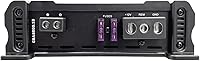
  • Operating Voltage: The amplifier is designed to run at 14.4V DC, with a maximum supply voltage of 16V DC.
  • Dimensions: The unit measures 14 x 8 x 3 inches (L x W x H), making it compatible with most trunk or under-seat surface-mount installations.
  • Weight: The amplifier weighs 4.62 lbs, keeping the overall installation footprint light for a monoblock in this power class.
  • Chassis Material: The enclosure is constructed from aluminum, which aids passive heat dissipation during operation.
  • Mounting Type: Designed for surface mounting, the amplifier can be secured flat in a trunk, enclosure panel, or under a seat.
  • Compliance: The product meets RoHS and WEEE environmental compliance standards.
  • Channels: This is a single-channel (monoblock) amplifier, purpose-built exclusively for driving one subwoofer or a bridged sub configuration.
  • Availability: The model has been available since July 2020, giving it a multi-year real-world track record among budget car audio buyers.

Related Reviews

Orion XTR1000.1D Monoblock Class D Car Amplifier
79%
83%
Power Output Accuracy
88%
Bass Performance
61%
Thermal Management
79%
Build Quality
86%
Ease of Installation
More
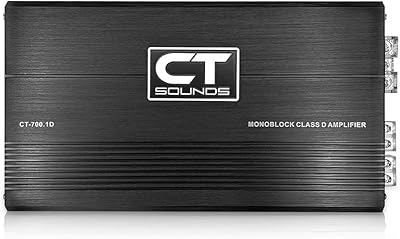
CT Sounds CT-700.1D Monoblock Amplifier
80%
91%
Value for Money
88%
Bass Output
86%
Thermal Performance
87%
Ease of Installation
74%
Build Quality
More
CT Sounds CT-1000.1D Monoblock Car Amplifier
77%
88%
Value for Money
79%
Power Output
84%
Thermal Management
72%
Build Quality
71%
Installation Ease
More
CT Sounds CT-2000.1D Monoblock Amplifier
77%
88%
Value for Money
74%
Power Output
71%
Build Quality
69%
Thermal Management
86%
Ease of Installation
More
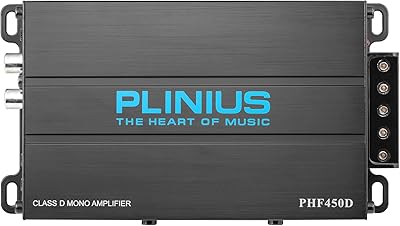
LKC PHF450D Car Audio Monoblock Amplifier
88%
91%
Power Output (2 Ohms)
87%
Power Output (4 Ohms)
93%
Heat Dissipation
88%
Build Quality
85%
Ease of Integration
More
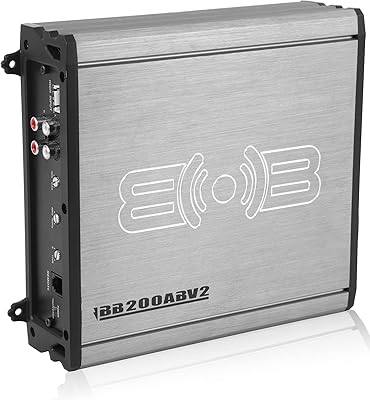
Belva BB200ABv2 500W Monoblock Car Amplifier
85%
88%
Bass Performance
91%
Installation Ease
85%
Sound Clarity
89%
2-Ohm Stability
82%
Build Quality
More
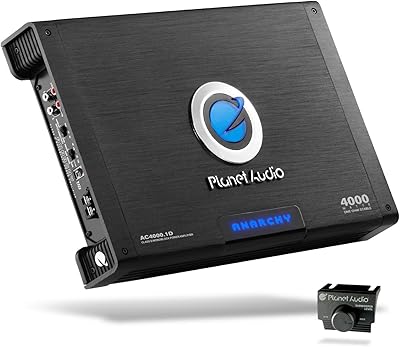
Planet Audio AC4000.1D Monoblock Car Amplifier
77%
88%
Value for Money
79%
Power Output
82%
Thermal Management
67%
Build Quality
63%
Installation Experience
More
Planet Audio TR1500.1M Monoblock Car Amplifier
70%
88%
Value for Money
79%
Bass Output & Performance
83%
Ease of Installation
63%
Build Quality
57%
Thermal Management
More
Blaupunkt AMP1500M Monoblock Car Amplifier
73%
81%
Value for Money
63%
Real-World Power Output
88%
Ease of Installation
77%
Audio Clarity
58%
Build Quality
More
Planet Audio AC2500.1M Monoblock Car Amplifier
85%
92%
Performance
95%
Bass Output
85%
Ease of Installation
65%
Thermal Performance
88%
Build Quality
More

FAQ

You are right to be skeptical. The 2000W figure is a MAX or peak rating, not what the amp sustains in normal use. The real continuous numbers are 500W RMS at 1 ohm, 260W RMS at 2 ohms, and 160W RMS at 4 ohms. Those RMS figures are what actually matter when matching the amp to a subwoofer, so factor those into your buying decision rather than the MAX number on the box.

You can absolutely use it with a factory stereo. The Orion CBA2000.1D Monoblock Car Amplifier includes high-level inputs that accept signal directly from your existing speaker wires, so there is no need for a line output converter or a head unit upgrade just to get the amp running. This is one of its more practical advantages for first-time installers.
When you wire a dual voice coil subwoofer with both coils in parallel, the total impedance drops to 1 ohm. Many budget amps cannot handle that load continuously and will overheat or shut down. This Orion mono amp is rated to run at 1 ohm on a sustained basis, which gives you more wiring flexibility and lets you squeeze more output from a DVC sub without stressing the amp.

Some buyers have reported the unit running noticeably warm during extended high-volume sessions. The amp does include thermal protection that will trigger before any serious damage occurs, but it is worth making sure your installation spot has reasonable airflow. Mounting it in a sealed compartment with no ventilation will make the heat issue worse. For casual daily listening the thermal management is generally adequate.

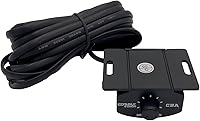
It is included in the box at no extra cost. You can mount the knob within reach of the driver seat and adjust bass output on the fly without touching the amp itself, which is genuinely useful for daily driving.

This Class D sub amp works well with a single subwoofer in a ported or sealed enclosure, especially when wired at 1 or 2 ohms to take advantage of the higher RMS output at those impedances. A sub rated between 300W and 500W RMS is a reasonable match. Pairing it with a subwoofer rated far above 500W RMS will likely leave you underwhelmed, since the amp cannot sustain that level of power continuously.

It is one of the more beginner-friendly amps in this category. The controls are clearly labeled, the high-level input removes one of the trickier steps (sourcing RCA outputs), and the remote knob wiring is straightforward. If you follow a basic amp wiring guide and take your time setting the gain correctly, most first-timers can handle this installation over a weekend.

This is the honest weak spot of the Cobalt monoblock. While many buyers are happy with it in the short term, a notable portion of reviews mention reliability issues appearing somewhere in the 6 to 18 month window. If you are looking for something to anchor a system you plan to keep for several years at high demand, it is worth considering whether a slightly higher investment in a more proven brand makes more sense for your situation.

A 4-gauge power and ground cable is the standard recommendation for an amp in this power range, and some bundle kits include 4-gauge wiring for this reason. Using undersized wire can create voltage drop issues that affect performance and potentially create a safety hazard, so do not cut corners on the power wiring even if the amp itself is budget-friendly.

This is a single-channel monoblock, so there is no bridging option in the traditional sense — it is already a single output. You can run one or two subwoofers off it if the combined impedance stays at 1 ohm or above. Running multiple subs that push the total impedance below 1 ohm is not supported and will likely damage the unit over time.

Where to Buy