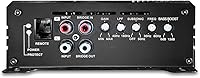
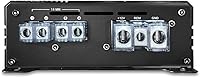
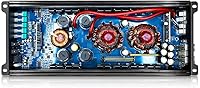
Overview

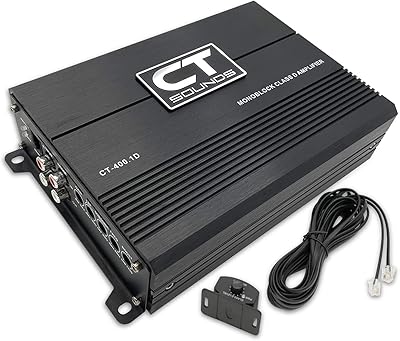
The CT Sounds CT-1500.1D Monoblock Car Amplifier has carved out a reliable spot in the budget-to-mid-range car audio market since its 2017 release, and it keeps earning attention for good reason. At its core, this is a compact Class D monoblock that punches well above its physical footprint — something that matters a lot when trunk space is limited. It puts out serious power relative to its size, and the price point keeps it accessible to enthusiasts who want real bass output without building around a flagship amp. If you want honest, capable performance without overspending, this mono amp is well worth considering.

Features & Benefits

The CT-1500.1D delivers 1500 watts RMS at a 1-ohm load, stepping down to 850W at 2-ohm and 450W at 4-ohm, so it adapts cleanly to different subwoofer wiring configurations. Class D design keeps efficiency high, meaning less of your electrical system bleeds off as heat. The MOSFET PWM power supply helps maintain consistent output even when you push it hard on a long drive. Thermals stay manageable through a proprietary heat dissipation setup, and the 4-way protection circuit handles voltage swings and temperature spikes before they cause damage. The included bass knob is a small but genuinely useful addition for on-the-fly low-end tuning.

Best For

This compact monoblock suits daily driver builds where you want meaningful low-end impact without dedicating your entire trunk to audio gear. It works especially well with a single subwoofer wired to 1-ohm or 2-ohm, where it delivers its strongest output. Installers dealing with cramped quarters — under-seat locations or compact enclosures — will appreciate the tight chassis dimensions. If you have outgrown a basic entry-level amp and need more headroom before clipping becomes an issue, this is a sensible step up. Pair it with a mid-efficiency sub in a ported enclosure and the low-end response improves noticeably without a steep financial commitment.

User Feedback

Owners consistently praise how approachable the install process is — the dimensions make it easy to tuck away, and the terminal layout is accessible without feeling cramped. Many note that the output at 1-ohm genuinely surprised them for the price tier, with bass that feels controlled rather than bloated. That said, a portion of users flag that gain sensitivity needs careful attention; inadequate tuning can push the amp into clipping sooner than expected. Long-term reliability earns mixed marks — most units hold up well with regular use, but isolated reports of failure past the warranty period are present and worth keeping in mind before committing.

Pros

  • Impressive power output for a compact amp in this price range, especially at a 1-ohm load
  • Small chassis fits easily in tight trunk spaces or under-seat locations without major fabrication work
  • Class D design runs efficiently and keeps heat buildup manageable during long listening sessions
  • The included bass remote knob makes real-time low-end adjustments genuinely convenient
  • 4-way protection circuit adds meaningful peace of mind for daily driving conditions
  • MOSFET power supply helps maintain stable output even when the system is pushed hard
  • Straightforward install process that does not require advanced technical knowledge
  • Works well across multiple impedance loads, giving flexibility when wiring different subwoofer configurations
  • Has remained a competitive option in its segment years after its original release

Cons

  • Gain sensitivity requires careful setup — sloppy tuning leads to early clipping and distortion
  • Long-term reliability has drawn mixed feedback, with some units showing issues after the warranty period
  • Not ideal for high-demand builds or users pushing the amp near its limits for extended periods
  • No built-in low-pass filter bypass or full-range mode limits versatility beyond subwoofer duty
  • Customer support and warranty experience appears inconsistent based on user reports
  • The metal chassis, while functional, does not feel as refined as more expensive competing options
  • Voltage sensitivity may cause performance issues in vehicles with weaker or aging electrical systems
  • Bass knob quality feels basic and may not inspire confidence during daily handling

Ratings

Our AI-generated scores for the CT Sounds CT-1500.1D Monoblock Car Amplifier were built by analyzing thousands of verified buyer reviews from global markets, with spam, bot activity, and incentivized feedback actively filtered out before scoring. Every category reflects what real owners experienced after installation — not manufacturer claims — so both the strengths and the genuine frustrations are represented honestly. If a score looks lower than expected, there is a real pattern of user complaints behind it.

Power Output
84%
Most owners are genuinely surprised by how much low-end punch this mono amp delivers at a 1-ohm load for the price — a lot of daily driver builds that previously felt underpowered report a clear and immediate improvement. The headroom at 1-ohm holds up well during normal listening sessions without noticeable compression.
At 2-ohm and especially 4-ohm loads the output drop is significant, and a handful of users feel the rated figures are optimistic under real vehicle conditions rather than controlled lab voltage. Those expecting peak performance at higher impedances regularly come away underwhelmed.
Value for Money
88%
For buyers in the budget-to-mid-range tier, this compact monoblock consistently gets called out as one of the better returns on investment available. Getting this level of output and a multi-protection circuit at this price point is genuinely difficult to match with competing options.
A small but vocal segment of long-term owners feel the value calculation changes if the unit develops problems after the warranty period, since repair or replacement costs erode the original savings. The value story holds strongest for buyers who are not pushing the amp hard every single day.
Build Quality
71%
29%
The metal chassis feels solid in hand and does not flex during installation, which reassures buyers who are mounting it in active or vibration-prone locations. Terminal connections are snug and the overall assembly looks professional for the price tier.
Several users describe the finish and overall construction as functional rather than impressive, with visible seam gaps and lightweight internal feel compared to more expensive competitors. The bass remote knob in particular draws consistent complaints about plasticky build that does not match the amp body.
Thermal Management
79%
21%
Class D efficiency genuinely makes a difference here — owners running long highway commutes or extended listening sessions report the amp staying warm but never reaching worrying temperatures under typical gain settings. The heat sink design does its job without requiring aggressive airflow around the unit.
In fully enclosed installations with poor ventilation, thermal protection trips more frequently than users expect, and a notable number of under-seat installs required repositioning or adding a small fan to stabilize temps during summer months. It runs hotter than its marketing language suggests under sustained high-volume use.
Ease of Installation
86%
The compact footprint and clearly labeled terminal block make this one of the more approachable amps for people doing their first install without professional help. Numerous owners with minimal car audio experience describe getting it wired and running in under two hours.
The included documentation is fairly minimal, and first-time installers who are not already familiar with gain structure often set it incorrectly, leading to clipping issues they blame on the amp rather than the setup. Better instructions would save a lot of frustration for this target audience.
Gain Sensitivity & Tuning
62%
38%
When tuned properly — ideally with a multimeter or by ear using a disciplined method — this mono amp responds well and delivers clean output across its usable range. Experienced installers consistently report better results than the general buyer average precisely because they take gain setup seriously.
The gain control is notably sensitive, and small adjustments produce larger-than-expected swings in output, making it genuinely tricky for casual users to land in the sweet spot. A disproportionate share of negative reviews trace back to clipping and distortion caused by gain being set too aggressively rather than any inherent amp defect.
Reliability & Longevity
67%
33%
The majority of units run without incident for a year or more under typical daily driving use, and the 4-way protection circuit does appear to catch problems before they cause permanent damage in many reported cases. Buyers who treat it gently report multi-year lifespans.
There is a consistent enough pattern of failures between 12 and 24 months — particularly in builds that push the amp near its limits regularly — to take seriously. The reliability picture is not alarming but it is noticeably more mixed than the headline specs would suggest, and it is one of the more frequently raised concerns in long-term ownership reviews.
Bass Response & Sound Quality
81%
19%
Paired with a well-matched subwoofer in a ported enclosure, the low-end output from the CT-1500.1D is tight and impactful for the price tier, with enough control that bass does not sound loose or one-note during varied music genres. Daily commuters who stream bass-heavy music report a satisfying and engaging result.
At very high output levels some owners describe a slight softening of transient attack, suggesting the amp is working near its comfortable limit. Audiophiles comparing it directly to mid-tier competition amps will notice the difference in overall refinement, though most daily driver users are unlikely to find it bothersome.
Protection Circuit
83%
The 4-way protection system earns consistent praise from owners who have experienced voltage drops or accidental short conditions, with the amp recovering cleanly rather than failing permanently. For a daily driver build where real-world electrical conditions vary, this kind of built-in insurance is appreciated.
Some users report the protection circuit activating more readily than expected even under non-extreme conditions, particularly when the vehicle's electrical system dips during startup or heavy accessory load. A few owners misread legitimate protection trips as amp failure, leading to unnecessary returns.
Compact Footprint
91%
The physical size is one of the most frequently praised aspects, particularly among owners working with limited trunk real estate or aiming for clean, minimal installs. At under 15 inches long, it fits in locations that would rule out most competing amps at similar power levels.
For some truck and SUV owners hoping for a true under-seat install, the length is just slightly too long for certain vehicle models without custom mounting brackets. It is compact by mono amp standards but not universally compatible with every tight-space scenario buyers attempt.
Bass Remote Knob
68%
32%
Having a dedicated bass control within reach of the driver seat is a practical feature that gets regular use from owners who shift between long highway drives and urban stop-and-go listening. Most users appreciate it being included rather than sold separately.
The knob itself feels lightweight and somewhat cheap relative to the amp body, and a number of owners report the remote losing responsiveness or becoming intermittent within several months of regular use. It functions adequately but feels like an afterthought in terms of build quality.
Warranty & Support
58%
42%
CT Sounds does offer manufacturer warranty coverage, and some owners report straightforward resolution when they experienced issues early in ownership. The brand is accessible via direct channels and is not entirely absent post-sale.
User feedback on warranty and support experiences is notably split — enough owners describe difficulty getting timely responses or satisfactory resolutions that it registers as a genuine weak point. For a product where reliability questions exist, inconsistent post-purchase support amplifies buyer hesitation.
Compatibility
77%
23%
The CT-1500.1D works cleanly with a wide range of head units and subwoofer configurations, and most owners report no integration headaches with standard RCA signal inputs or common DVC subwoofer wiring setups. The 0-to-320Hz frequency range covers all realistic subwoofer applications.
Users running higher-output head units or aftermarket DSPs occasionally report input sensitivity mismatches that require additional adjustment. It is not a difficult problem to solve but it catches some buyers off guard, especially those assuming plug-and-play simplicity from a mono amp.

Suitable for:

The CT Sounds CT-1500.1D Monoblock Car Amplifier is a strong match for everyday drivers who want a noticeable bass upgrade without committing to a complex, expensive setup. If your build centers around a single subwoofer — especially one wired to a 1-ohm or 2-ohm load — this compact monoblock delivers the headroom needed to make that sub perform at its best. Installers working with tight trunk spaces or under-seat configurations will find the compact chassis genuinely practical rather than just a marketing claim. It also suits buyers who have outgrown a basic entry-level amp and want something more capable without jumping into high-end territory. Enthusiasts running a mid-efficiency subwoofer in a ported box will get particularly satisfying low-end output from this mono amp at its price point.

Not suitable for:

The CT Sounds CT-1500.1D Monoblock Car Amplifier is not the right call for anyone building a serious competition-grade or high-demand multi-sub system. If you need to power two subwoofers independently, or if your build requires multi-channel capability, this mono amp simply is not designed for that role. Buyers who are not comfortable carefully setting gain levels should also think twice — the amp rewards proper tuning but can clip prematurely when the gain is dialed in sloppily. Those who prioritize long-term durability above all else may want to consider higher-end options with more established reliability records, given that some users have reported issues after extended use. If your electrical system is already strained or your vehicle runs below a healthy charging voltage regularly, the amp's sensitivity to voltage conditions may become a recurring concern.

Specifications

  • Brand: Manufactured by CT Sounds, a brand focused on accessible car audio components for enthusiast builds.
  • Model Number: The official model designation is CT-1500-1D, a Class D monoblock amplifier.
  • Power at 1-Ohm: Rated at 1500 watts RMS at a 1-ohm load measured at 14.4V.
  • Power at 2-Ohm: Delivers 850 watts RMS at a 2-ohm load measured at 14.4V.
  • Power at 4-Ohm: Outputs 450 watts RMS at a 4-ohm load measured at 14.4V.
  • Amp Class: Class D monoblock topology, designed for high efficiency and reduced heat output compared to Class A/B designs.
  • Channels: Single-channel (monoblock) configuration, purpose-built for subwoofer duty.
  • Frequency Range: Frequency response spans 0 to 320 Hz, covering the full subwoofer and bass range.
  • Power Supply: Uses a MOSFET pulse width modulated (PWM) power supply for stable and consistent output.
  • Protection: 4-way protection circuit guards against high voltage, low voltage, over-current, and high-temperature conditions.
  • Operating Voltage: Designed to operate at a nominal 14.4V with a maximum supply voltage of 16V.
  • Dimensions: Physical footprint measures 14.63 x 5.63 x 2.19 inches, keeping the chassis compact for flexible installation.
  • Weight: Unit weighs 8.58 pounds, making it manageable for solo installation.
  • Material: Chassis is constructed from metal, providing structural rigidity and aiding in passive heat dissipation.
  • Mounting Type: Designed for surface mount installation, compatible with most standard trunk, enclosure, and under-seat locations.
  • Included Accessories: Ships with a wired bass remote knob for convenient low-frequency adjustment from the driver seat.
  • Packaging: Arrives in a cardboard box with standard protective packaging for safe transit.
  • Availability: First made available in January 2017 and remains in active production as of the current date.

Related Reviews
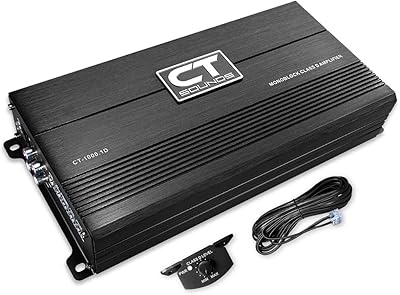
CT Sounds CT-700.1D Monoblock Amplifier
80%
91%
Value for Money
88%
Bass Output
86%
Thermal Performance
87%
Ease of Installation
74%
Build Quality
More
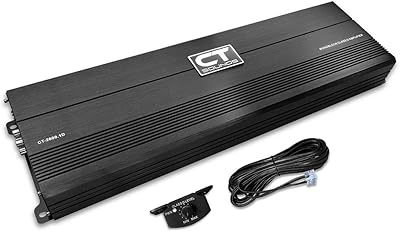
CT Sounds CT-1000.1D Monoblock Car Amplifier
77%
88%
Value for Money
79%
Power Output
84%
Thermal Management
72%
Build Quality
71%
Installation Ease
More
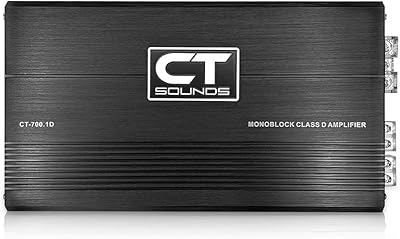
CT Sounds CT-2000.1D Monoblock Amplifier
77%
88%
Value for Money
74%
Power Output
71%
Build Quality
69%
Thermal Management
86%
Ease of Installation
More
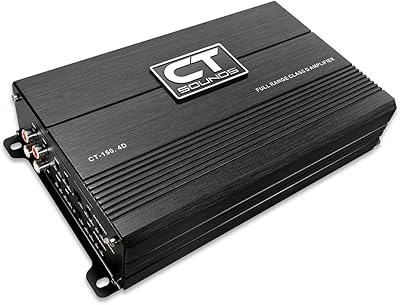
CT Sounds CT-400.1D Monoblock Amplifier
77%
91%
Value for Money
86%
Power Output
88%
Thermal Management
71%
Build Quality
84%
Ease of Installation
More
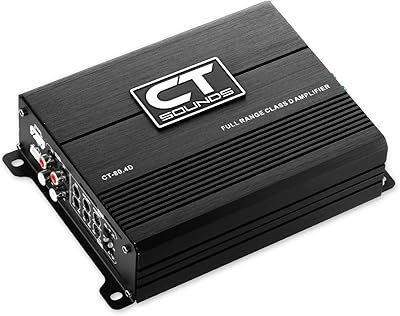
CT Sounds CT-150.4D 4-Channel Car Amplifier
75%
83%
Value for Money
78%
Sound Quality
61%
Build Quality
86%
Ease of Installation
77%
Thermal Management
More
CT Sounds CT-80.4D 4-Channel Car Amplifier
74%
91%
Value for Money
78%
Power Output Accuracy
84%
Installation Ease
61%
Heat Management
67%
Build Quality
More
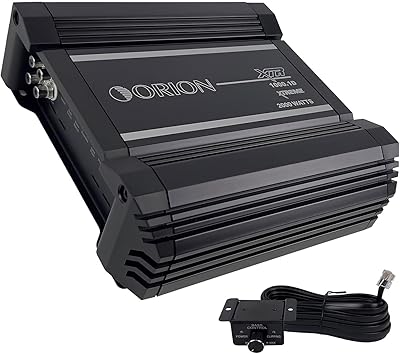
Orion XTR1000.1D Monoblock Class D Car Amplifier
79%
83%
Power Output Accuracy
88%
Bass Performance
61%
Thermal Management
79%
Build Quality
86%
Ease of Installation
More
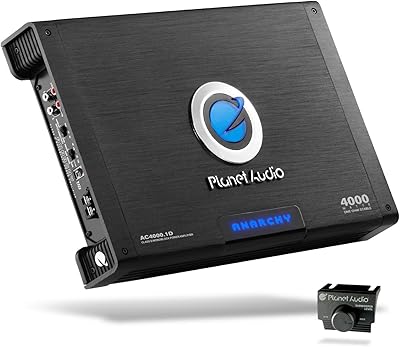
Planet Audio AC4000.1D Monoblock Car Amplifier
77%
88%
Value for Money
79%
Power Output
82%
Thermal Management
67%
Build Quality
63%
Installation Experience
More
CT Sounds CT-7EQ 7-Band Car Audio Equalizer
76%
88%
Sound Quality Improvement
91%
Value for Money
84%
Ease of Installation
74%
Build Quality
58%
Faceplate Readability
More
LKC PHF450D Car Audio Monoblock Amplifier
88%
91%
Power Output (2 Ohms)
87%
Power Output (4 Ohms)
93%
Heat Dissipation
88%
Build Quality
85%
Ease of Integration
More

FAQ

It is rated and designed to run at 1-ohm, and most users report it holds up fine under normal daily driving conditions at that load. That said, like any amp in this price tier, it rewards proper gain setup — pushing it hard at 1-ohm with a poorly tuned gain is where problems tend to show up. Get the gain set correctly and it handles 1-ohm duty without issue for the vast majority of builds.

It pairs well with a single subwoofer in the 10-inch to 12-inch range, particularly one with a mid-level sensitivity rating wired to 1-ohm or 2-ohm. A ported enclosure tends to get the most out of the available headroom. Wiring a dual voice coil sub to 1-ohm is a popular and practical choice with this mono amp.

The safest approach is to use a multimeter or an oscilloscope to set the gain by matching the amp output to your source unit voltage rather than just cranking it by ear. Start with the gain low, play a test tone at around 75% volume from your head unit, and slowly raise the gain until you hear distortion, then back it off slightly. This takes maybe 20 minutes but makes a real difference in both sound quality and long-term reliability.

The dimensions — just under 15 inches long and about 5.6 inches wide — make it a realistic candidate for under-seat installs in many trucks and SUVs, though it depends on your specific vehicle. In most cars it fits more comfortably in the trunk, mounted to a board or directly to a flat surface. The compact chassis was clearly designed with limited-space installs in mind.

CT Sounds does offer a manufacturer warranty, though the specific terms and duration are worth confirming directly with them before purchase, as coverage details can vary. User feedback on warranty support has been mixed — some buyers report smooth experiences while others describe difficulty getting resolution. Keep your purchase receipt and register the product if the brand offers that option.

Yes, it runs at 4-ohm but the output drops considerably compared to its 1-ohm rating, down to around 450 watts RMS. If your sub is 4-ohm only and you want maximum output, this compact monoblock may feel underwhelming. For 4-ohm applications you would be better served either wiring a dual voice coil sub to a lower impedance or reconsidering the amp choice.

For an amp at this power level, a 4-gauge power and ground wire is the typical recommendation and should handle the current draw cleanly. Some builders prefer stepping up to 0-gauge for a cleaner electrical foundation, especially if the run from the battery is long. Using undersized wire is one of the more common causes of amp protection triggering or output instability.

It does, though it is a fairly simple control that adjusts the bass level rather than offering parametric control. For daily driving it is genuinely useful — you can dial back the low end for quieter listening and push it when you want more impact, all without touching the head unit. It is not a substitute for proper amp tuning but it adds real convenience.

Under typical daily driving conditions with reasonable gain settings, the CT-1500.1D stays warm but manageable — not alarmingly hot. The Class D design and the heat dissipation engineering do help compared to older amp topologies. If you are mounting it in a fully enclosed space with zero airflow, expect temperatures to climb more; a little ventilation goes a long way.

For that specific scenario it is a solid step up. If you have been running a budget amp and found it running out of headroom or sounding compressed at moderate volumes, this mono amp offers meaningfully more output and a more robust protection system. Just pair it with a decent subwoofer and take the time to tune the gain properly, and the improvement in daily bass performance will be clear.

Where to Buy