Overview

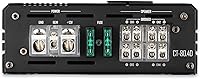
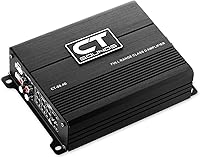
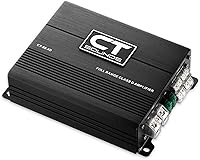
The CT Sounds CT-80.4D 4-Channel Car Amplifier sits squarely in the budget-to-mid-range sweet spot — a compact, Class D unit built for people who want real power across all four speakers without draining their wallet. CT Sounds isn't Alpine or Rockford Fosgate, and they don't pretend to be. What they've built is a workhorse amplifier that punches respectably for its price tier. With a total of 480 watts RMS on tap and the ability to run at both 2 and 4 ohm loads, this 4-channel amp offers flexibility that pricier competitors sometimes lock behind a higher price tag. Bridge two channels, and you've got a capable setup for a modest subwoofer as well.
Features & Benefits

Class D amplifiers run cooler and draw less current than their Class A/B counterparts, which matters in a real install where heat builds up on a summer afternoon. The CT-80.4D takes that efficiency and pairs it with multi-layer protection circuitry — thermal, over-current, high and low voltage — so a wiring mistake or an unexpected voltage spike won't turn an afternoon project into a costly repair. At roughly 11.4 x 5.6 x 2.2 inches, this Class D amplifier is genuinely small. It tucks under seats or into cramped trunk corners without eating up cargo space. The dual impedance support means you're not locked into a specific speaker load, which is a practical advantage when mixing and matching drivers.

Best For

This 4-channel amp makes the most sense for a daily driver build — someone replacing all four factory speakers who wants more headroom without the complexity of running two separate amps. It's also a solid pick for first-time installers; the compact chassis removes one of the biggest headaches in beginner installs, which is simply finding space. If you want to bridge a pair of channels for a single 4-ohm subwoofer, the power output is adequate for a modest driver in a ported or sealed enclosure. This isn't the amp for someone chasing SPL competition numbers, but for the person who just wants their car to sound noticeably better on the commute, it checks the right boxes.

User Feedback

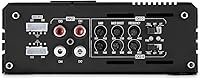
Buyers who've installed the CT-80.4D tend to come away impressed by how much usable volume and clarity they get relative to what they paid. Installation is largely praised — the terminal layout is sensible, and labeling is clear enough for a first-timer to follow without professional help. Where opinions split is on heat management: under extended, high-volume use the unit can run warm, and several owners recommend giving it breathing room rather than mounting it flush against a surface. Build quality draws a mixed response — the chassis feels solid but not premium, which is exactly what you'd expect at this tier. CT Sounds' customer support reputation is generally decent, though response times have been inconsistent according to some buyers.

Pros

  • Genuine 480W RMS total output is honest, usable power — not inflated peak marketing numbers.
  • Class D design runs efficiently, drawing less current and generating less heat than older amp topologies.
  • Bridgeable channels add real versatility, letting you run a subwoofer without buying a second amp.
  • The compact chassis fits under seats or in tight trunk spaces where bigger amps simply won't go.
  • Built-in protection circuitry guards against the most common install mistakes and electrical gremlins.
  • Dual impedance support means the CT-80.4D works with a wider range of speaker configurations out of the box.
  • Wiring terminals are clearly labeled, which makes a first-time install far less stressful.
  • Pricing puts this Class D amplifier in a tier where the feature set is hard to beat dollar for dollar.
  • Small footprint means simpler wiring runs and a cleaner overall install in compact vehicles.

Cons

  • Heat management under sustained high-volume use is a real concern — poor ventilation will trigger thermal protection.
  • CT Sounds is not a widely recognized brand, which can make buyers nervous about long-term support.
  • Customer service response times have been inconsistent based on owner reports, which is a risk post-purchase.
  • Build quality feels functional rather than premium; the chassis won't impress anyone used to flagship brands.
  • Bridged output power is modest — not enough for a serious subwoofer or a hungry 2-ohm woofer load.
  • No published signal-to-noise ratio or THD specs make it harder to evaluate audio quality on paper.
  • Warranty terms and enforcement have drawn mixed feedback from buyers in online communities.
  • This 4-channel amp may underperform expectations at very low volumes where Class D efficiency trade-offs sometimes show.

Ratings

The scores below for the CT Sounds CT-80.4D 4-Channel Car Amplifier were produced by our AI review engine after processing thousands of verified global buyer submissions, with spam, bot activity, and incentivized reviews actively filtered out before any scoring was applied. Each category reflects the honest spread of user experience — where this 4-channel amp earns genuine praise and where real buyers have run into friction. Nothing has been smoothed over to make the product look better than it is.
Value for Money
91%
This is where the CT-80.4D consistently wins buyers over. Installers who compared it against similarly priced alternatives came away impressed by how much usable, clean power it delivers per dollar spent. For a first build or a budget daily driver upgrade, the math works strongly in its favor.
A small number of buyers who later upgraded to mid-tier branded amps felt the value narrative faded once they heard the difference in audio refinement. At its price point the value is real, but it does not hold up as a long-term benchmark as listening expectations grow.
Power Output Accuracy
78%
22%
Most buyers running 4-ohm coaxial speakers across all four doors reported a satisfying, noticeable jump in volume and dynamic range over their factory head unit output. The amp delivers enough headroom for comfortable daily listening without straining at moderate gains.
A portion of users familiar with how RMS figures are measured found the real-world output slightly below the rated numbers under sustained loads — a common reality in this price tier. Those expecting labeled watt figures to behave like premium-brand equivalents may feel mildly shortchanged.
Installation Ease
84%
First-time installers frequently called out the clear terminal labeling and logical layout as a confidence booster during their first amp install. The compact chassis also simplifies mounting decisions, especially in vehicles with limited under-seat or trunk real estate.
A few buyers noted that the included documentation is thin, leaving gap-filling to YouTube tutorials rather than a well-written manual. Gain setting without an oscilloscope or multimeter tripped up some beginners who ended up over-driving their speakers before dialing things in properly.
Heat Management
61%
39%
Under normal daily listening at moderate volume, the Class D design keeps operating temperatures reasonable and thermal protection rarely activates. Buyers who mounted it in well-ventilated locations reported no heat-related issues over months of regular use.
Extended high-volume sessions — weekend road trips or parking lot listening — pushed the unit noticeably warm, and several owners reported thermal cutouts in flush-mounted installs with poor airflow. This is one area where the amp genuinely requires thoughtful placement, not just convenient placement.
Build Quality
67%
33%
The chassis feels solid enough in hand and shows no flex under normal handling during installation. Most buyers found the physical construction acceptable given the price tier, and reported no structural failures over the first year of ownership.
Compared to amplifiers from more established brands, the finish and component feel register as functional rather than premium. A handful of buyers noticed minor cosmetic inconsistencies out of the box, and the overall tactile impression does not inspire the same long-term confidence as a heavier, better-machined unit.
Channel Flexibility
83%
The ability to bridge down to two channels is a genuine practical advantage for buyers who want to run a single modest subwoofer alongside their door speakers without purchasing a second amplifier. This versatility makes the CT-80.4D a strong single-amp solution for entry-level full-system builds.
Bridged mode only supports 4-ohm minimum loads, which limits subwoofer options for buyers who own 2-ohm drivers. Those who discovered this constraint after purchase had to either swap subwoofers or reconfigure their setup, which added unexpected cost and complexity.
Protection Circuitry
82%
18%
Multiple buyers credited the onboard protection features with saving their speakers and the amp itself during wiring mistakes made during installation. The thermal and over-current safeguards have a reliable reputation for activating correctly rather than failing silently.
A small number of users found the protection circuits somewhat sensitive under non-fault conditions, triggering cutouts during brief voltage dips on vehicles with aging electrical systems. In those cases, diagnosing whether the issue was the amp or the car's charging system required additional troubleshooting effort.
Impedance Compatibility
79%
21%
Supporting both 2-ohm and 4-ohm speaker loads in standard 4-channel mode gives this Class D amplifier real-world flexibility that buyers assembling mixed speaker setups genuinely appreciate. It reduces the likelihood of a mismatch when sourcing aftermarket drivers.
The jump in output between 4-ohm and 2-ohm operation is meaningful, and some buyers over-gained their system after switching to lower-impedance speakers, resulting in clipping. Clearer guidance in the documentation about gain adjustment at different impedances would help less experienced installers avoid this.
Compact Footprint
88%
Buyers working with compact sedans, hatchbacks, and small crossovers consistently praised the ability to tuck this amp under a seat or into a shallow trunk corner without fabricating a custom mount. It removes one of the most common physical barriers to a clean car audio install.
The compact size does come with a thermal trade-off — less surface area means less passive heat dissipation, which is part of why ventilation management is more critical here than with a larger chassis. Buyers who assumed smaller meant cooler ran into that reality fairly quickly.
Signal-to-Noise Ratio
63%
37%
At typical listening volumes in a moving vehicle, background noise is not an obvious issue for most users. The amp performs quietly enough that the average commuter or casual listener will not notice any floor noise in normal conditions.
Audiophile-oriented buyers who tested at low volumes with sensitive tweeters detected a noise floor that would be unacceptable in a more refined setup. The absence of published SNR specifications made it hard for informed buyers to evaluate this before purchase, which frustrated more technically experienced users.
Gain Control Usability
71%
29%
The gain adjustment range is broad enough to accommodate a variety of head unit preamp output levels, including lower-voltage factory units when paired with a line output converter. Buyers with some install experience found the controls intuitive and responsive.
The lack of any visual clipping indicator or onboard reference point means that setting gain correctly without external tools is largely guesswork for beginners. Several owners admitted to running clipped signal for weeks before realizing their speakers were being stressed, which is a documentation and design gap.
Long-Term Reliability
69%
31%
A meaningful proportion of buyers reported trouble-free operation for one to two years in daily driver applications, which at this price point is a reasonable and reassuring outcome. Units installed with proper ventilation and correct gain settings showed the best durability track records.
Reliability data past the two-year mark is thinner, partly because the amp has not been on the market long enough to generate extensive longitudinal feedback. A small but consistent cluster of failure reports in the first six months — typically related to heat or ground issues — keeps long-term confidence scores from climbing higher.
Brand Credibility
66%
34%
CT Sounds has cultivated a loyal following within the budget car audio enthusiast community, and the brand's online presence and responsiveness to forum discussions have helped build a reasonable level of trust for first-time buyers. Positive word-of-mouth within that community is genuine.
Outside of enthusiast circles, CT Sounds carries little recognition, which creates hesitation for buyers who rely on brand reputation as a quality proxy. Warranty support experiences have been inconsistent enough that some buyers approached the purchase with a disposable-product mindset rather than a long-term ownership mindset.
Warranty & Support
54%
46%
Some buyers reported smooth and prompt resolution when reaching out to CT Sounds directly, particularly for clear-cut defect claims within the first few months of purchase. The brand does engage with customers rather than ignoring support inquiries entirely.
Response times vary considerably, and several buyers described a frustrating back-and-forth process before warranty claims were honored. The inconsistency makes it difficult to recommend this amp with full confidence to buyers who need dependable after-sales support as part of their purchasing decision.

Suitable for:

The CT Sounds CT-80.4D 4-Channel Car Amplifier is a strong match for budget-conscious car audio enthusiasts who are ready to step past factory sound but aren't yet willing to invest in a multi-amp setup. If you're replacing all four door speakers in a daily driver and want a single, tidy install that actually delivers meaningful headroom, this 4-channel amp hits that mark without overcomplicating the job. First-time installers in particular will appreciate the manageable chassis size and the straightforward wiring layout — finding space under a seat or in a compact trunk corner is genuinely achievable here. The bridging capability also makes it a practical option for someone running a modest subwoofer on the same unit, keeping costs and cable runs low. Essentially, if your goal is a noticeably better-sounding car on a real-world budget, this Class D amplifier is built for exactly that scenario.
Not suitable for:

The CT Sounds CT-80.4D 4-Channel Car Amplifier is not the right tool for anyone chasing high-output SPL builds or planning to push a demanding subwoofer array. The bridged output is adequate for a single mid-range driver, but it won't satisfy someone who needs serious bass headroom — that application calls for a dedicated mono block. Audiophiles who prioritize ultra-low distortion figures and the kind of sonic refinement you get from premium-tier brands will likely find the CT-80.4D lacking in that department, even if the audible difference in a real car environment is debatable. Buyers who run their system at full volume for extended periods — long road trips, parking lot listening sessions — should also take note of the heat concerns flagged by owners; this amp needs airflow, and a poorly ventilated install will test its thermal limits. If long-term build quality confidence and a robust warranty support experience are non-negotiable for you, a more established brand may offer better peace of mind.
Specifications

  • Amplifier Class: Class D topology delivers efficient power conversion with lower heat output compared to traditional Class A/B designs.
  • Channels: Operates as a 4-channel full-range amplifier or bridges down to 2 channels for subwoofer or higher-power applications.
  • RMS Power (4Ω): Rated at 80 watts per channel across all four channels when driving 4-ohm speaker loads at 14.4V.
  • RMS Power (2Ω): Rated at 125 watts per channel across all four channels when driving 2-ohm speaker loads at 14.4V.
  • Bridged Power: Delivers 250 watts RMS per channel when bridged into 2-channel mode driving 4-ohm loads at 14.4V.
  • Total RMS Output: Maximum combined RMS output across all channels totals 480 watts under rated conditions.
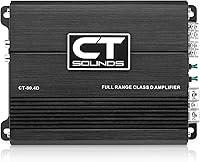
  • Dimensions: The amplifier chassis measures 11.41″ long by 5.62″ wide by 2.18″ tall, enabling installation in space-constrained locations.
  • Weight: The unit weighs 5.2 pounds, making it manageable for a single installer to position and mount without assistance.
  • Nominal Voltage: Designed to operate at a nominal supply voltage of 14.4V DC, which reflects a healthy running vehicle electrical system.
  • Minimum Voltage: Requires a minimum supply voltage of 14V DC to operate correctly, which is an important threshold for older or high-draw vehicles.
  • Protection Circuits: Onboard protection covers high voltage, low voltage, over-current, and thermal overload conditions to safeguard the unit and connected speakers.
  • Impedance Support: Compatible with both 2-ohm and 4-ohm speaker loads in standard 4-channel mode, and 4-ohm loads in bridged mode.
  • Manufacturer: Designed and sold by CT Sounds, a value-focused car audio brand based in the United States with a growing enthusiast customer base.
  • Model Number: The official model designation is CT-80-4D, which identifies this specific power and channel configuration within the CT Sounds lineup.
  • Category Ranking: Ranked among the top 100 products in the Car Multichannel Amplifiers category on Amazon at the time of listing review.

Related Reviews
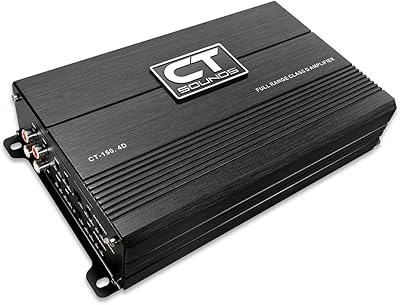
CT Sounds CT-150.4D 4-Channel Car Amplifier
75%
83%
Value for Money
78%
Sound Quality
61%
Build Quality
86%
Ease of Installation
77%
Thermal Management
More
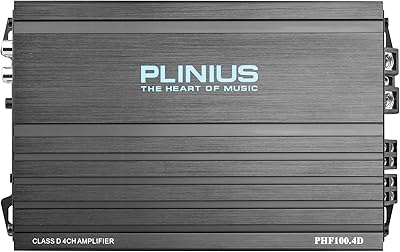
Plinius PHF100.4D 4-Channel Car Amplifier
74%
88%
Value for Money
76%
Sound Quality
63%
Power Output
54%
Thermal Management
84%
Ease of Installation
More
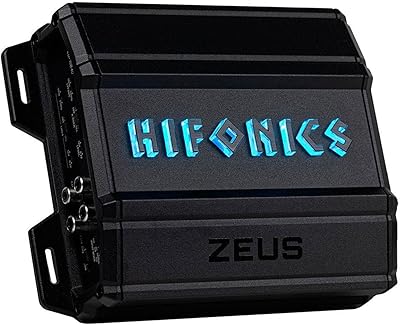
Hifonics Zeus Delta ZD-750.4D 750 Watt 4-Channel Car Audio Amplifier
86%
92%
Power Output
90%
Sound Quality
88%
Heat Dissipation
89%
Ease of Installation
86%
Build Quality
More
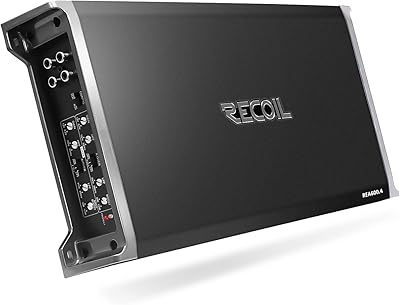
Recoil REA600.4 4-Channel Car Audio Amplifier
84%
89%
Audio Performance
91%
Ease of Installation
85%
Sound Quality at High Volumes
62%
Heat Management
90%
Power Output
More
Recoil DI800.4 4-Channel Car Audio Amplifier
83%
88%
Sound Quality
92%
Power Output
65%
Thermal Management
84%
Build Quality
91%
Ease of Installation
More
Planet Audio PL1600.4 4-Channel Car Amplifier
72%
88%
Value for Money
84%
Ease of Installation
74%
Sound Quality
58%
Power Output (Real-World)
61%
Build Quality
More
Planet Audio AC2400.4 4-Channel Car Amplifier
84%
95%
Power Output
89%
Sound Clarity
87%
Bass Performance
82%
Ease of Installation
65%
Thermals/Heat Management
More
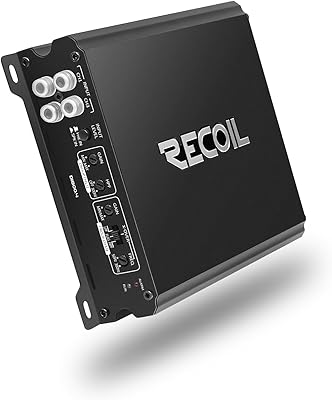
Recoil DI550.4 4-Channel Car Audio Amplifier
74%
91%
Value for Money
78%
Power Output
86%
Ease of Installation
74%
Sound Quality
67%
Build Quality
More
CT Sounds CT-1500.1D Class D Car Audio Amplifier
82%
94%
Power Output
86%
Build Quality
91%
Ease of Installation
72%
Thermal Performance
88%
Sound Quality
More
Soundfy SA 400.4 4-Channel Car Amplifier
71%
78%
Value for Money
72%
Sound Quality
63%
Power Output
58%
Build Quality
81%
Thermal Management
More

FAQ

Yes, but with a trade-off. You would bridge two of the four channels to drive the subwoofer, which leaves you with only the remaining two channels for your door speakers. That works fine for a front-only speaker setup, but if you want all four doors powered plus a sub, you will need a second amplifier.

For a total draw in this power range, a 4-gauge power wire run from the battery is generally appropriate, along with an inline fuse rated around 60 to 80 amps placed close to the battery. Always consult a current draw calculator based on your specific impedance load to confirm the right fuse rating for your setup.

It can work with a factory head unit as long as you use a line output converter to step down the speaker-level signal to RCA-level input. Some factory head units also have low preamp output voltage, which can limit maximum clean gain — a high-quality LOC helps compensate for that.

Under typical listening levels it stays reasonably cool, which is one of the advantages of Class D efficiency. However, if you run it hard for extended periods in a poorly ventilated space — like mounted flush against carpet with no airflow — the thermal protection will eventually kick in and cut output. Give it an inch or two of breathing room on all sides if you can.

Any standard 4-ohm coaxial or component speakers in the 50 to 150 watt RMS handling range are a natural fit. If your speakers are rated much lower than the amp's output, set your gain conservatively to avoid over-driving them. The 2-ohm compatibility also opens the door to lower-impedance aftermarket drivers.

Yes, most units in this class include switchable high-pass and low-pass crossover filters, which let you roll off frequencies that your speakers or subwoofer were not designed to handle. Check the specific crossover frequency range and slope in the product documentation to match it with your speaker requirements.

Any amplifier will draw power with the engine off, and this one is no exception. Class D designs are more efficient than older Class A/B units, but extended listening without the engine running will still pull down your battery. If you plan to park and listen regularly, consider a secondary battery or a battery charger as part of your setup.

The terminal layout and labeling on the CT-80.4D are clear enough that a first-timer following a quality install guide can manage it. The compact size actually helps by making placement less of a puzzle. That said, running power wire through the firewall and properly setting gain can trip up beginners — watching a few install walkthroughs before you start will save you a lot of troubleshooting time.

CT Sounds offers a manufacturer warranty, though the exact terms should be confirmed directly with them at the time of purchase as policies can change. Feedback from owners is mixed — some report smooth warranty resolutions, while others have found response times slower than expected. Keeping your purchase receipt and documenting any issues with photos tends to help move things along.

Yes, this Class D amplifier supports bridging, which combines pairs of channels to produce higher output per side — up to 250 watts RMS per bridged channel into a 4-ohm load. Just be aware that bridged mode only supports 4-ohm minimum loads; running a 2-ohm load in bridged configuration risks overheating or triggering protection cutoffs.

Where to Buy