Overview

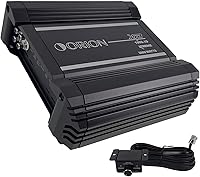
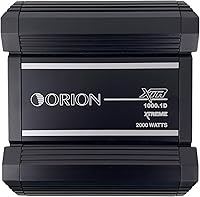
The Orion XTR1000.1D Monoblock Class D Car Amplifier comes from a brand that serious car audio people actually know — Orion has been rattling trunks since the 1980s, and the XTR series carries that legacy without apology. What stands out right away is the compact chassis for an amp pushing this kind of power; it sits at roughly 7 by 9 inches, meaning you are not sacrificing half your trunk to fit it in. Built in Korea rather than the budget-focused factories flooding the entry-level market, build quality shows in the finish and feel. Just be clear going in: this is a dedicated subwoofer amp, not a solution for your door speakers.
Features & Benefits

What makes the XTR1000.1D worth considering is the practical control set it offers alongside raw power. Running 1000W RMS at 1-ohm, it can push a demanding dual-voice-coil subwoofer hard — but real-world output depends on clean power delivery from your electrical system, so do not skip the big three upgrade if you are pushing it near the limit. The 4-way protection circuitry covers thermal, short circuit, overload, and DC offset scenarios, which matters more than most buyers realize until something goes wrong. The adjustable bass boost up to 18dB, combined with phase shift control and a variable low-pass crossover, gives real tuning flexibility. The subsonic filter is underrated — it keeps your driver from working unnecessarily hard on frequencies no one can hear.

Best For

This monoblock amp makes a lot of sense for the daily driver crowd that wants real bass impact without the bulk of a multi-channel setup. If you are running a single subwoofer — especially a DVC woofer wired down to 1-ohm or 2-ohm — this is well-matched hardware. The included remote bass knob is a genuine convenience, not a gimmick; being able to dial bass up or down from the driver seat without pulling over is something you will use constantly. It also suits buyers stepping up from an entry-level amp who want proper protection features built in. Where it is less ideal: multi-sub setups or anyone chasing extreme SPL competition numbers will want more headroom.

User Feedback

Buyers generally report that this Orion bass amp delivers honest power — most agree the bass is clean and hits hard without obvious distortion at moderate listening levels. Installation gets consistent praise too; the terminal layout is clear and the wiring process is straightforward even for first-timers. That said, thermal shutoff does come up in a handful of reviews, typically from users in hot climates or those running the amp near max volume for extended sessions without adequate airflow. Build quality on the heatsink and chassis draws mostly positive comments overall. A minority of buyers have noted mixed experiences with Orion's customer support, so that is worth factoring in. Most feel the price-to-power ratio holds up well at this tier.

Pros

  • Genuine 1000W RMS output at 1-ohm gives single-subwoofer builds serious, clean headroom.
  • Compact chassis fits easily under seats or in tight trunk installs without major fabrication.
  • Four-way protection circuitry guards your subwoofer against the most common amplifier failure scenarios.
  • The adjustable subsonic filter prevents driver damage from infrasonic frequencies most people never intended to reproduce.
  • Remote bass knob is included out of the box, saving a separate purchase and adding real daily-use convenience.
  • 0–18dB bass boost with phase shift control offers tuning flexibility that entry-level amps rarely provide.
  • Korean manufacturing adds a layer of quality assurance over similarly priced, generically sourced alternatives.
  • Variable low-pass crossover gives you precise control over where the amp hands off frequency duties.
  • Installation is straightforward with clearly labeled terminals and a logical layout that even beginners handle well.
  • Signal-to-noise ratio of 90dB keeps bass reproduction clean rather than muddy at higher output levels.

Cons

  • Thermal shutoff has been reported by users running the amp near maximum volume for extended periods without adequate ventilation.
  • Requires a solid electrical foundation — skipping the big three upgrade will noticeably cap real-world performance.
  • No high-pass output means you cannot use this amp to simultaneously drive door speakers alongside a subwoofer.
  • Customer support experience with Orion has been inconsistent according to a subset of buyers, which matters if something goes wrong.
  • At 1-ohm, sustained high-power sessions in warm environments demand careful attention to mounting location and airflow.
  • Buyers chasing extreme output beyond casual listening will find this amp's headroom insufficient for serious competition builds.
  • Only a manual and the amp itself are included in the box — no wiring kit means additional upfront cost for new installers.

Ratings

The scores below for the Orion XTR1000.1D Monoblock Class D Car Amplifier were produced by our AI rating engine after processing verified global buyer reviews, with spam, bot-generated submissions, and incentivized feedback actively filtered out. Each category reflects the full spectrum of real ownership experiences — not just the highlights — so the numbers represent honest consensus rather than curated praise. Where buyers consistently flagged trade-offs or pain points, those are reflected transparently in the scores.
Power Output Accuracy
83%
Most buyers who measured or stress-tested the amp found its output to be honest and close to the rated 1000W RMS at 1-ohm, which is not a given in this price tier. Daily drivers report that the bass hits hard and consistently without obvious signs of underpowering a properly matched subwoofer.
Achieving rated output demands a solid electrical foundation — upgraded wiring, a good ground, and ideally a higher-output alternator. Buyers who skipped those upgrades frequently reported underwhelming performance and wrongly attributed it to the amp itself.
Bass Performance
88%
Buyers across a wide range of subwoofer brands and enclosure types consistently describe the bass as clean, deep, and impactful. The combination of adjustable bass boost and phase control gives real flexibility for tuning, and users on daily commutes find the low-end reproduction satisfying at both moderate and high volume.
At extreme boost settings — particularly above 12dB — some users noted a loss of definition and a thickening of the bass that signals the amp is being pushed past its comfort zone. Proper gain staging matters here more than many first-time buyers expect.
Thermal Management
61%
39%
Under normal listening conditions with adequate ventilation, the amp handles heat competently and the heatsink stays at manageable temperatures. Users who mount it in open locations — under a rear seat or on a flat trunk floor with airflow — rarely report heat-related issues during standard use.
Thermal shutoff under sustained high-volume use in warm climates or confined spaces is a recurring complaint across multiple verified reviews. The amp lacks active cooling, so installation planning for airflow is not optional — it is essential, and the documentation does not emphasize this clearly enough.
Build Quality
79%
21%
The chassis and heatsink finish draw consistently positive comments, with buyers noting it feels more substantial than competing amps at similar prices. Korean manufacturing is frequently cited as a confidence signal, and the overall fit and finish holds up well through installation handling.
A minority of users reported minor cosmetic inconsistencies on the heatsink finish out of the box, and the input/output terminal covers feel less refined than the chassis itself. Nothing that affects function, but premium buyers may notice it.
Ease of Installation
86%
The terminal layout is logical and clearly labeled, which earns repeated praise from both beginners and experienced installers. First-time builders consistently report completing the install without confusion, and the wiring connections are tight and reliable once made.
No wiring kit is included in the box, which adds an extra purchase step that budget-conscious buyers may not anticipate. The manual covers the basics but does not go deep enough on gain-setting guidance for users unfamiliar with the process.
Value for Money
77%
23%
For what it delivers in terms of power output, feature set, and build origin, most buyers feel the price is justified at this mid-range tier. The inclusion of the remote bass knob and the 4-way protection circuitry adds genuine value compared to stripped-down competitors at similar price points.
Premium-brand alternatives in the same power class offer tighter distortion figures and more robust warranty support, which some buyers feel is worth the price gap. Those who have owned higher-end amps tend to rate the value perception lower than first-time buyers.
Protection Circuitry
84%
The 4-way protection system covering thermal, short circuit, DC offset, and overload scenarios gives buyers meaningful peace of mind when pushing a subwoofer hard. Users who have accidentally mismatched impedance or had wiring faults report the protection kicked in correctly and saved both the amp and the driver.
When thermal protection does trigger, the reset process requires the amp to cool down fully before it recovers — there is no manual override, which can be frustrating during outdoor events or back-to-back listening sessions in hot conditions.
Tuning Flexibility
81%
19%
Having a subsonic filter, adjustable low-pass crossover, bass boost, and phase control all onboard gives users a toolkit that rivals amps costing noticeably more. Enthusiasts who want to fine-tune their system without a separate signal processor find the XTR1000.1D covers most of those needs directly.
The controls themselves are small and lack clear detent feedback, which makes precise repeatable settings harder to nail without a multimeter or RTA app. Setting the subsonic filter by ear alone is difficult, and beginners often leave it misconfigured.
Remote Bass Knob
82%
18%
The fact that the remote knob ships in the box — rather than as a paid accessory — is a genuine differentiator at this price point. Buyers universally appreciate being able to adjust bass output from the driver seat, especially when transitioning between highway cruising and stop-and-go city traffic.
The cable connecting the knob to the amp is functional but not particularly long, which can limit mounting options in larger vehicles or unusual dash layouts. A few users also noted the knob itself feels slightly cheap relative to the amp body.
Signal Clarity
76%
24%
At a 90dB signal-to-noise ratio, the amp produces bass that is largely free of background hiss or audible noise floor issues during normal use. Buyers using quality RCA cables report clean, articulate output that does not muddy the overall soundstage.
At high gain and bass boost settings simultaneously, some users detected a slight increase in background noise that was inaudible at lower volumes but noticeable in quieter passages. Running quality shielded RCA cables and keeping input sensitivity properly set largely mitigates this.
Compatibility
80%
20%
The adjustable input sensitivity makes this amp compatible with a wide range of head units, from budget single-DIN decks to higher-end preamp outputs. DVC subwoofers at both 2-ohm and 4-ohm configurations wire down to a stable load without any unusual behavior.
Users with factory head units relying on speaker-level inputs will need an additional line output converter, which is not mentioned prominently in the listing. This is a common car audio consideration but still catches some buyers off guard.
Compact Footprint
88%
The 7.1″ x 9.3″ x 2.5″ dimensions allow installs in tight spots that would rule out most amps in this power class. Buyers in sedans and hatchbacks with limited trunk real estate specifically call out the size as a deciding factor in their purchase.
The compact body does come at a thermal trade-off — less surface area on the heatsink means heat dissipation is more dependent on ambient airflow than on a larger chassis would be. This is physics, not a defect, but it reinforces the need for thoughtful mounting placement.
Warranty & Support
58%
42%
Orion is an established brand with a known presence in the car audio space, and most straightforward warranty claims for manufacturing defects are processed without major friction. The brand's longevity means finding documentation, community support, and third-party installers familiar with their products is relatively easy.
Customer service responsiveness has drawn mixed-to-negative feedback from a meaningful portion of buyers, with some reporting slow response times and unclear guidance on warranty claims. Compared to premium-tier competitors with dedicated support infrastructure, Orion's after-sales experience falls short for buyers who need reliable backup.
Subwoofer Driver Protection
83%
The adjustable subsonic filter is a genuinely useful driver protection feature that many buyers in this price bracket overlook until a woofer gets damaged. Users running ported enclosures report that the filter works as expected in preventing over-excursion during deep bass passages.
The subsonic filter is not explained in depth in the manual, which means a significant share of buyers never configure it correctly or leave it disabled entirely. Without proper setup, the protection benefit is lost, and this is an education gap Orion could easily address.

Suitable for:

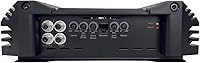
The Orion XTR1000.1D Monoblock Class D Car Amplifier is built for enthusiasts who want serious, chest-thumping bass without dedicating a large portion of their cargo space to amplifier hardware. It is an especially strong fit for anyone running a single subwoofer setup — particularly a dual-voice-coil woofer wired to 1-ohm — where the amp can operate at peak efficiency. Daily drivers who want meaningful bass impact on the commute, not just weekend show builds, will appreciate the included remote bass knob, which lets you adjust output on the fly without any fuss. If you are stepping up from a budget amp and want a unit with real protection circuitry to keep your subwoofer safe, this monoblock delivers that reassurance. Korean manufacturing and CE, FCC, and RoHS certifications also give buyers more confidence than similarly priced amps sourced from less accountable supply chains.
Not suitable for:

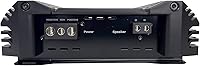
The Orion XTR1000.1D Monoblock Class D Car Amplifier is not the right tool for everyone, and being clear about that upfront saves headaches later. If you are planning a multi-subwoofer setup or chasing competitive SPL numbers on a build stage, one 1000W monoblock is not going to cut it — you will need more channels or a significantly higher-output unit. This amp also requires clean electrical infrastructure to perform as rated; running it without an upgraded alternator or proper gauge wiring will leave power on the table and potentially trigger thermal shutoff. Buyers in extremely hot climates or those who mount amplifiers in poorly ventilated enclosures should know that heat management has come up in user feedback, so airflow planning is non-negotiable. Those who want a single amplifier to power both a subwoofer and full-range speakers should look elsewhere, as this is strictly a bass-dedicated monoblock with no high-pass outputs.
Specifications

  • Output Power: This amp delivers 1000W RMS at 1-ohm, providing sustained, continuous power output rather than inflated peak figures.
  • Impedance: The amplifier is stable down to 1-ohm, allowing dual-voice-coil subwoofers wired in parallel to draw maximum output.
  • Amplifier Class: Class D topology is used, which prioritizes efficiency and runs cooler than Class AB designs at equivalent power levels.
  • Configuration: Single-channel monoblock design dedicates all available power to one subwoofer output with no signal splitting.
  • Frequency Response: Audio output spans 15Hz to 250Hz, covering the full subwoofer range while excluding mid and high frequencies by design.
  • Signal-to-Noise Ratio: A 90dB signal-to-noise ratio keeps background hiss low, contributing to clean, defined bass rather than muddy output.
  • Bass Boost: An onboard bass boost control adjusts between 0 and 18dB, allowing the user to add punch without an external equalizer.
  • Low-Pass Filter: A variable low-pass crossover with a 12dB-per-octave slope lets users set a precise frequency cutoff for their subwoofer.
  • Subsonic Filter: An adjustable subsonic filter blocks frequencies below the usable range of most subwoofers, protecting drivers from damaging over-excursion.
  • Phase Control: A phase shift control allows alignment of the subwoofer's output with the vehicle's main speakers for cohesive bass reproduction.
  • Power Supply: A MOSFET-based power supply provides stable, efficient current delivery and contributes to the amp's overall reliability under load.
  • Protection Circuitry: Four-way protection covers thermal overload, short circuit, DC offset, and general overload conditions to safeguard both the amp and connected drivers.
  • Remote Knob: An external bass control knob is included in the box and mounts within reach of the driver for real-time gain adjustment.
  • Input Sensitivity: Adjustable input sensitivity allows the amp to accept signal from both low-voltage head unit outputs and higher-level preamp sources.
  • Dimensions: The chassis measures 7.1″ x 9.3″ x 2.5″, a compact footprint that fits under seats or in smaller trunk installs.
  • Weight: The amplifier weighs 7.3 pounds, light enough for single-person installation without requiring additional support hardware.
  • Operating Voltage: Designed for standard 12V DC automotive electrical systems, compatible with the vast majority of passenger vehicles.
  • Certifications: The unit carries CE, FCC, and RoHS certifications, confirming compliance with emissions, safety, and hazardous materials standards.
  • Country of Origin: Manufactured in Korea, which generally reflects tighter quality control tolerances compared to budget-tier amplifiers from less regulated facilities.
  • Box Contents: The package includes the amplifier unit, a remote bass knob, and a user manual; no wiring kit is included.

Related Reviews

CT Sounds CT-1000.1D Monoblock Car Amplifier
77%
88%
Value for Money
79%
Power Output
84%
Thermal Management
72%
Build Quality
71%
Installation Ease
More
CT Sounds CT-2000.1D Monoblock Amplifier
77%
88%
Value for Money
74%
Power Output
71%
Build Quality
69%
Thermal Management
86%
Ease of Installation
More
CT Sounds CT-700.1D Monoblock Amplifier
80%
91%
Value for Money
88%
Bass Output
86%
Thermal Performance
87%
Ease of Installation
74%
Build Quality
More
Planet Audio MB2000.1D Class D Car Amplifier
86%
94%
Power Output
88%
Sound Quality
85%
Build Quality
90%
Size and Portability
75%
Efficiency & Heat Management
More
Audiobank P6001 6000W Class D Monoblock Car Amplifier
86%
90%
Audio Performance
87%
Ease of Installation
91%
Thermal Protection
85%
Build Quality
89%
Power Output
More
TORO TECH R3 Monoblock Car Amplifier
77%
88%
Power Accuracy
83%
Bass Output Quality
81%
Installation Ease
62%
Thermal Management
76%
Build Quality
More
CT Sounds CT-1500.1D Class D Car Audio Amplifier
82%
94%
Power Output
86%
Build Quality
91%
Ease of Installation
72%
Thermal Performance
88%
Sound Quality
More
Hifonics Zeus ZXX 1200 Watt Class D Monoblock Car Audio Amplifier
87%
88%
Bass Performance
84%
Power Output
91%
Ease of Installation
87%
Build Quality
85%
Durability
More
BOSS Audio Systems PD5000 Phantom 5000-Watt Class D Monoblock Car Amplifier
87%
94%
Power Output
91%
Sound Quality
88%
Ease of Installation
93%
Bass Performance
63%
Thermals/Heat Dissipation
More
Orion CBA2000.1D Monoblock Car Amplifier
72%
83%
Value for Money
78%
Bass Output
41%
Power Accuracy
62%
Thermal Management
59%
Build Quality
More

FAQ

The 1000W RMS rating is a continuous power figure at 1-ohm, not a peak or burst number. That said, hitting that figure in a real car requires a healthy electrical system — good ground, proper gauge wiring, and ideally an upgraded alternator if you are running it hard. Most users with solid installs report that the amp performs close to spec.

For a 1000W RMS amplifier, 0-gauge power and ground wiring is the standard recommendation. Using undersized wire creates resistance that robs power and can cause voltage drop, which is often the reason people think their amp is underperforming. Do not cut corners on the wiring run.

Yes, the Orion XTR1000.1D Monoblock Class D Car Amplifier is stable at 2-ohm as well, though output will be lower than the 1-ohm rated figure. A dual-voice-coil sub wired in series gives you a 2-ohm load, while wiring in parallel drops it to 1-ohm for maximum power.
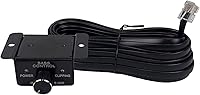
It is included in the box — no separate purchase needed. The knob connects via a small cable and mounts somewhere accessible near the driver seat, so you can adjust bass output without touching the amp itself.

It is a real consideration with any high-power amp in an enclosed space. A handful of users have reported thermal shutoff during extended high-volume listening, especially in hot climates or when the amp is mounted in a tight spot with restricted airflow. Mounting the amp where air can circulate freely around the heatsink goes a long way toward preventing this.

For most ported subwoofer enclosures, enabling the subsonic filter is strongly recommended. Ported boxes have a tuning frequency below which the woofer loses back-pressure and can over-excur — meaning the cone moves dangerously far. Setting the subsonic filter just above your box tuning frequency protects the driver at no cost to audible bass output.

It depends on the wiring configuration and impedance. Two 4-ohm subs wired in parallel present a 2-ohm load, which this monoblock amp handles fine. Two 2-ohm subs in parallel drop to 1-ohm, which is also within spec. However, if you need each sub to get the full rated power, you would want a separate amp per driver.

At lower settings — say 3 to 6dB — it adds welcome punch without much downside. Cranking it toward 18dB while also running high gain is where things get messy; you risk clipping the amp and introducing distortion that can damage a tweeter or woofer over time. Use it as a subtle shaping tool, not as a substitute for proper gain setting.

It works with both. Sealed boxes tend to produce tighter, more accurate bass and are more forgiving of gain settings. Ported boxes are louder and more efficient, which pairs nicely with the amp's output, but they require the subsonic filter to be properly configured. Either way, match the box specs to your specific subwoofer rather than the amp.

Higher-end amps in the same power class often offer lower distortion figures, more refined internal components, and better after-sales support. The XTR1000.1D competes well on raw power delivery and feature set for its price tier, but buyers willing to spend more will generally get quieter operation, tighter tolerances, and a more robust warranty program. For casual daily use, most people find the trade-off reasonable.

Where to Buy