Overview

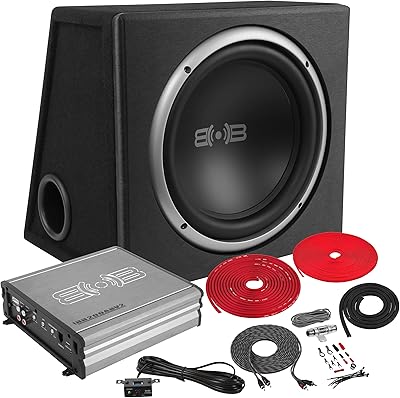
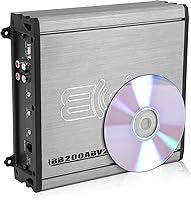
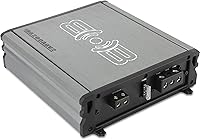
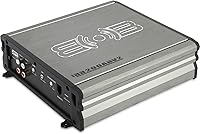
The Belva BB200ABv2 Monoblock Car Amplifier is a no-frills, budget-conscious option for drivers looking to add serious bass to a stock audio setup without a complicated install. Built around a Class A/B topology, it balances efficiency and warmth — a sensible choice for subwoofer duty where clean low-end matters more than raw wattage. The aluminum alloy body is compact enough to mount under a seat or in a tight trunk corner, which makes it far more practical for everyday vehicles than similarly priced amps with bulkier builds. It ships FCC-certified, and the fact that a remote bass knob is included in the box — not sold separately — is a genuine advantage at this price point.
Features & Benefits

On paper, this monoblock amp delivers 200W RMS at 4 ohms and 500W RMS at 2 ohms — enough to push a quality 10- or 12-inch subwoofer without straining the circuit. The low-pass filter, sweepable between 40Hz and 300Hz, is one of the more useful features here; it lets you blend the sub into your existing speakers properly rather than relying on guesswork. A built-in bass boost of up to +12dB adds punch without requiring an outboard equalizer. High-level speaker inputs are a practical touch for anyone still running a factory head unit with no RCA outputs, and the onboard preamp outputs leave the door open for adding a second amp down the road.

Best For

This entry-level subwoofer amplifier makes the most sense for first-time builders who want a single-sub setup in a daily driver without a lot of fuss. It is especially well-suited for cars still running an OEM head unit — the high-level inputs mean you do not need an aftermarket stereo or a line output converter to get things working. The compact chassis, just over 11 inches long, slides under bench seats or into snug trunk corners where larger amps simply will not fit. At either 2-ohm or 4-ohm impedance, it handles common single-voice-coil woofer configurations without issue. The bundled remote knob saves an extra purchase and makes daily adjustments much easier.

User Feedback

Buyers who pair the Belva BB200ABv2 with a modest 10-inch sub in a sedan or compact SUV generally come away satisfied — the bass is described as tight and well-defined at typical daily listening levels. Installation draws consistent praise, particularly from people who have never wired an amp before; the terminal layout is clear, and the factory stereo compatibility removes a common barrier. The main friction point is heat: some users report the amp running noticeably warm during back-to-back bass sessions, so planning for airflow around the unit during mounting is worth the extra thought. The remote knob earns solid marks overall, though buyers in larger trucks wish the cable ran a bit longer. Setting the gain conservatively from the start is the most repeated advice in owner comments.

Pros

  • Works directly with factory head units via high-level inputs — no aftermarket stereo required.
  • Compact chassis fits under seats or in tight trunk spaces where most amps simply will not go.
  • Remote bass knob ships in the box, saving buyers an extra accessory purchase.
  • Low-pass filter range of 40Hz to 300Hz gives real flexibility for crossover tuning.
  • Stable at 2 ohms, covering the most common single-voice-coil subwoofer impedance configurations.
  • Built-in bass boost up to +12dB adds impact without needing an external equalizer.
  • Preamp outputs allow future expansion if you decide to add a second amplifier later.
  • FCC-certified build quality offers basic peace of mind for a budget price point.
  • Straightforward terminal layout makes wiring approachable for first-time installers.
  • Real-world bass output is consistently described as clean and satisfying at everyday listening volumes.

Cons

  • Runs noticeably warm under sustained heavy bass — airflow around the unit during mounting is essential.
  • The wired remote knob cable may not reach the dashboard comfortably in larger trucks or vans.
  • Rated power figures are optimistic; real-world output at 4 ohms is modest for demanding subwoofers.
  • Long-term reliability data is limited, making it a harder recommendation for high-mileage daily drivers.
  • Gain calibration with a factory head unit can be tricky — setting it too high causes audible distortion.
  • No subsonic filter is included, which matters for protecting woofers in ported enclosures.
  • The aluminum chassis feels lightweight, which raises questions about durability over years of vibration.
  • Not suitable for 1-ohm loads, ruling out certain dual-voice-coil wiring configurations entirely.

Ratings

The scores below reflect an AI-driven analysis of verified global buyer reviews for the Belva BB200ABv2 Monoblock Car Amplifier, with spam, bot-generated, and incentivized feedback actively filtered out before scoring. Each category captures what real owners — from weekend installers to daily commuters — actually experienced, not what the spec sheet promises. Both the standout strengths and the recurring frustrations are reflected transparently so you can make an informed call.

Value for Money
88%
Most buyers feel this monoblock amp delivers well beyond what its price tag suggests, especially when paired with a modest 10-inch subwoofer in a daily driver. The inclusion of a remote bass knob — an accessory that typically costs extra elsewhere — strengthens the perceived value considerably for first-time builders.
Buyers who push the amp harder or compare it to mid-range alternatives after a few months sometimes feel the initial excitement fades as the real-world output ceiling becomes apparent. At 4 ohms in particular, the RMS delivery feels conservative against the rated figures, which tempers the value story for more demanding setups.
Bass Output Quality
79%
21%
For casual listening in a sedan or compact SUV, the low-end produced by this entry-level subwoofer amplifier is consistently described as tight and satisfying — not muddy or boomy. Users running a sealed-box 10-inch woofer at 2 ohms report a noticeably punchy response that transforms the feel of stock audio systems.
Audiophile-minded buyers notice a loss of definition at higher gain settings, particularly during extended bass-heavy tracks. Those who upgrade from this amp to a mid-tier unit often describe the difference in low-end control as immediately apparent, which puts the bass quality firmly in the entry-level bracket.
Ease of Installation
91%
The terminal layout is clean and well-labeled, which means buyers installing their first amp can follow a basic guide without getting confused midway through the process. High-level speaker inputs eliminate the need for a line output converter, which alone removes a significant stumbling block for factory stereo users.
A small but consistent group of reviewers found the gain adjustment tricky to calibrate without a multimeter or oscilloscope, leading to early distortion issues until they dialed it back. The remote bass knob cable is also reported as too short for some vehicle layouts, requiring an extension in larger trucks and vans.
Thermal Management
61%
39%
Under normal city driving conditions with moderate bass levels, the aluminum alloy chassis handles heat adequately and the amp runs without triggering any protection mode. Buyers who mount it in a location with reasonable airflow — a vented trunk panel or an open under-seat cavity — report no heat-related problems during typical use.
The amp runs noticeably warm during sustained highway listening sessions with bass-heavy playlists, and a handful of users report it entering thermal protection during summer use in hot climates. Under-seat mounting in poorly ventilated positions accelerates this issue, and the chassis offers no active cooling, so airflow planning during installation is not optional.
Build Quality
67%
33%
The aluminum alloy housing feels purposeful rather than flimsy for the price, and the terminals accept standard wiring gauges without any stripping or fit issues. Most buyers report the unit arrives well-packaged with no cosmetic damage, which suggests the manufacturing process has reasonable quality control.
Holding it next to a mid-range competitor makes the lightweight chassis feel noticeably thin, and some buyers question how well the internal components will hold up beyond the two-year mark given the vibration environment of a car. The board-level build is not inspectable without disassembly, which leaves long-term reliability as a genuine unknown.
Factory Stereo Compatibility
86%
High-level inputs work reliably across a wide range of OEM head units, including common setups found in Toyota, Honda, and Ford vehicles, without requiring signal processors or adapters. This feature is consistently praised as the primary reason first-time buyers chose this amp over alternatives that demand an aftermarket source unit.
Signal noise — a faint hiss or alternator whine — surfaces occasionally when using high-level inputs with certain factory head units, particularly in older vehicles with less shielded wiring. Resolving this typically requires a ground loop isolator, which is an added cost and complexity step not mentioned in the product documentation.
Low-Pass Filter Precision
74%
26%
The sweepable 40Hz–300Hz range covers practically every crossover scenario a single-subwoofer build would encounter, and the physical control knob provides enough resistance to make fine adjustments without accidentally shifting the setting during installation. Buyers appreciate being able to blend the sub smoothly with existing speakers without external processing.
The filter does not have marked frequency positions on the chassis, so setting it to a precise frequency requires guesswork or a tone generator, which most casual installers do not own. A few technically inclined users note the rolloff slope feels gentler than expected, which can leave some upper bass bleed-through when blending with full-range component speakers.
Remote Bass Knob
77%
23%
The included remote knob works smoothly and delivers a genuinely useful range of adjustment from the dashboard — buyers consistently describe it as one of the most appreciated daily-use features, particularly during genre switching between hip-hop and podcasts. The physical feel of the knob is better than expected given it ships as a bundled accessory.
The cable length is a recurring complaint, especially for truck owners or anyone mounting the amp in the far trunk corner of a larger vehicle where the cable simply cannot reach without an extension. A small number of buyers also report the knob developing a slight channel-creep feel over time, though this appears to be an edge case rather than a widespread defect.
2-Ohm Stability
83%
Running a dual-4-ohm woofer wired to a 2-ohm load is where this monoblock amp genuinely delivers, with owners reporting consistent, stable output without unexpected shutdowns during normal use. The 25A fuse protection adds a layer of confidence for buyers worried about electrical faults in a budget build.
While stable at 2 ohms, the amp does not handle the transition gracefully if wiring errors briefly dip the load toward 1 ohm — protection mode engages quickly, which is technically correct behavior but startling for first-time installers who wired a dual-2-ohm coil in parallel by mistake. There is no 1-ohm capability, limiting some dual-voice-coil wiring configurations.
Bass Boost Usability
71%
29%
The onboard bass boost is practical for buyers who want added punch without investing in a separate equalizer, and in sealed-box setups with a flat-tuned woofer, a modest 4–6dB boost adds noticeable impact without sounding forced. Casual listeners running stock music through a streaming service find it a simple way to customize the feel of the system.
Pushing the boost toward the upper range of +12dB with the gain already set aggressively introduces audible distortion, which means users effectively cannot use both controls at their maximums simultaneously. Those with more discerning ears tend to bypass the boost entirely and manage low-end shaping through the head unit instead.
Long-Term Reliability
58%
42%
A solid portion of buyers report running this amp for 12 to 18 months without any functional issues in moderate daily use, which suggests the core components are adequate for non-demanding applications. The 25A fuse provides a basic safety net that has saved a few installs from wiring mishaps based on owner accounts.
The longer-term reliability picture is murkier, with scattered reports of output degradation or intermittent shutdowns emerging beyond the 18-month mark, particularly in hot climates or vehicles where the amp is pushed near its ceiling regularly. The absence of a stated manufacturer warranty in the product listing makes post-failure support a frustrating experience for affected buyers.
Packaging & Accessories
72%
28%
The box arrives well-protected, and the inclusion of the remote bass knob with its wiring harness means most buyers have everything they need for the amp itself right out of the box. Hardware like mounting screws is included, which removes a small but annoying gap that some competing budget amps leave buyers to fill independently.
No RCA cables or power wiring are included, which is standard practice but still catches some first-time buyers off guard — they expect a more complete kit for a ready-to-install experience. The documentation inside the box is minimal, and the printed gain-setting guidance is vague enough that beginners without online research support can easily misconfigure the amp on the first try.
Footprint & Fitment
84%
At just over 11 inches long and under 4.5 inches tall, this monoblock amp slips under rear seats in most mid-size sedans and compact crossovers with room to spare, which is exactly the installation scenario the majority of buyers describe. The mounting points are straightforward and the chassis sits flat without wobble on a carpeted surface.
The amp is compact but not as slim as a few direct competitors at the same price point, which can become a problem in vehicles with unusually low seat clearance like certain Japanese kei cars or older European compacts. Buyers in those vehicles sometimes end up trunk-mounting it anyway, which defeats the space-saving advantage.

Suitable for:

The Belva BB200ABv2 Monoblock Car Amplifier is a strong fit for anyone taking their first real step into car audio — specifically drivers who want to add a single subwoofer to a stock system without tearing apart their dashboard or buying a new head unit. The high-level speaker inputs mean you can wire it directly to your factory stereo, which removes one of the biggest barriers beginners face. It works well with common 8- to 12-inch single-voice-coil subwoofers at both 2-ohm and 4-ohm loads, covering the most popular entry-level woofer configurations. Compact enough to slide under a rear seat or tuck into a small trunk corner, this entry-level subwoofer amplifier suits commuters and daily drivers who want better bass without sacrificing cargo space. The included remote bass knob is a practical bonus that makes it genuinely useful for people who frequently switch between music genres or listen at varying volumes throughout the day.
Not suitable for:

The Belva BB200ABv2 Monoblock Car Amplifier is not the right tool for experienced car audio enthusiasts chasing high-output, competition-grade performance — its RMS figures are honest for the price, but they will not satisfy anyone powering a large dual-voice-coil woofer or a demanding 1-ohm load. Audiophiles who prioritize sonic accuracy over bass punch may find the Class A/B design at this price tier falls short of the clarity they expect during extended listening sessions. If you plan to run the amp for hours in a hot vehicle without dedicated airflow — think a parked food truck or a car in direct sun — thermal management can become a real concern. Builders who already own a full aftermarket head unit with multiple preamp outputs and want fine-grained signal control will likely outgrow this monoblock amp quickly. It is also not well-suited for powering multiple subwoofers or building a multi-amp system from scratch, as the single-channel design is purpose-built for one-sub setups.
Specifications

  • Amplifier Type: Single-channel monoblock design, purpose-built for powering one subwoofer in a car audio system.
  • Amplifier Class: Class A/B operation balances thermal efficiency with audio fidelity, making it a practical choice for bass reproduction.
  • Peak Power: Rated at 500W peak output under optimal, short-duration conditions.
  • RMS at 4Ω: Delivers 200W RMS continuously into a 4-ohm load, suitable for most standard single-voice-coil subwoofers.
  • RMS at 2Ω: Delivers 500W RMS continuously into a 2-ohm load, unlocking higher output for compatible wiring configurations.
  • Minimum Impedance: Stable down to 2 ohms, covering the most common single-voice-coil impedance setups without instability.
  • Low-Pass Filter: Onboard low-pass filter is continuously sweepable from 40Hz to 300Hz, allowing precise crossover blending with existing speakers.
  • Bass Boost: Built-in bass boost is adjustable from 0 to +12dB, letting users add punch without an external equalizer.
  • Signal Inputs: Accepts both preamp RCA inputs and high-level speaker-level inputs for direct compatibility with factory head units.
  • Signal Outputs: Includes preamp RCA outputs to support future system expansion by chaining an additional amplifier.
  • Remote Knob: A wired remote bass level knob is included in the box, mountable on the dashboard for on-the-fly adjustment.
  • Fuse Rating: Protected by a 25A onboard fuse to guard against electrical faults and overcurrent conditions.
  • Supply Voltage: Designed to operate at a maximum supply voltage of 14V, standard for typical 12V automotive electrical systems.
  • Chassis Material: Constructed from aluminum alloy, which aids in passive heat dissipation while keeping overall weight manageable.
  • Dimensions: Package measures 11.46 x 10.79 x 4.41 inches, compact enough for under-seat or small trunk installations.
  • Weight: The unit weighs 5.35 pounds, making it easy to handle during solo installation without additional support.
  • Certification: FCC-certified, confirming it meets U.S. federal standards for electromagnetic interference and basic electrical compliance.
  • Channels: Single-channel (monoblock) configuration — optimized exclusively for subwoofer duty, not full-range speaker use.

Related Reviews

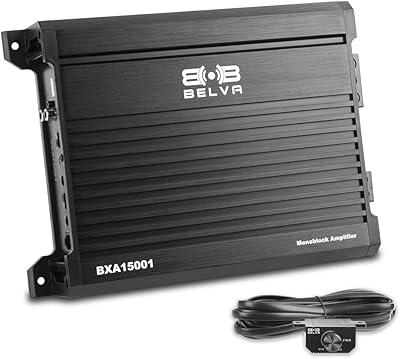
Belva BXA15001 1500W Monoblock Car Amplifier
78%
86%
Value for Money
67%
Power Output
89%
Ease of Installation
91%
Remote Bass Control
71%
Build Quality
More
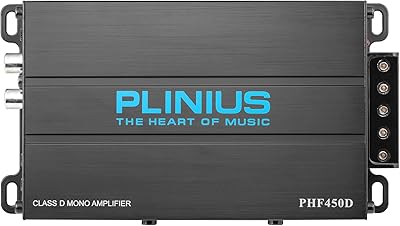
LKC PHF450D Car Audio Monoblock Amplifier
88%
91%
Power Output (2 Ohms)
87%
Power Output (4 Ohms)
93%
Heat Dissipation
88%
Build Quality
85%
Ease of Integration
More
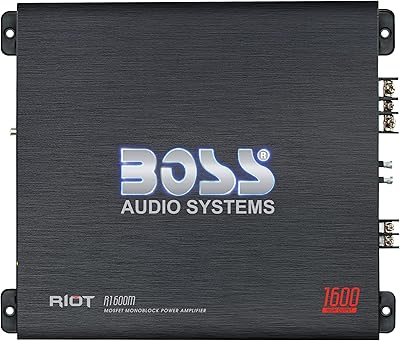
BOSS Audio R1600M Monoblock Car Amplifier
72%
83%
Value for Money
88%
Ease of Installation
79%
Bass Output
61%
Build Quality
86%
Signal Flexibility
More
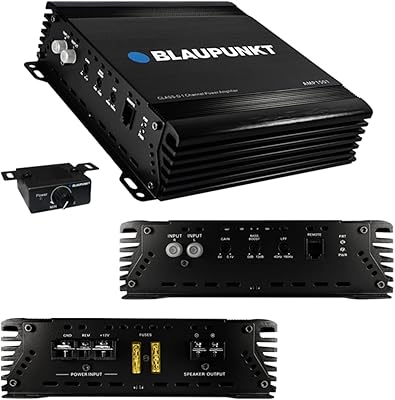
Blaupunkt AMP1500M Monoblock Car Amplifier
73%
81%
Value for Money
63%
Real-World Power Output
88%
Ease of Installation
77%
Audio Clarity
58%
Build Quality
More
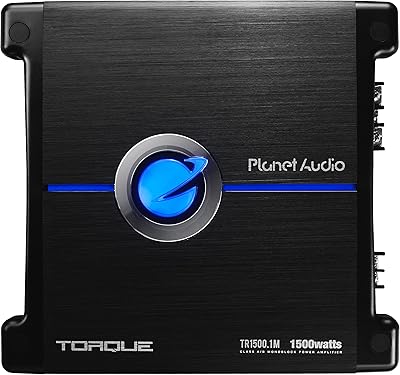
Planet Audio TR1500.1M Monoblock Car Amplifier
70%
88%
Value for Money
79%
Bass Output & Performance
83%
Ease of Installation
63%
Build Quality
57%
Thermal Management
More
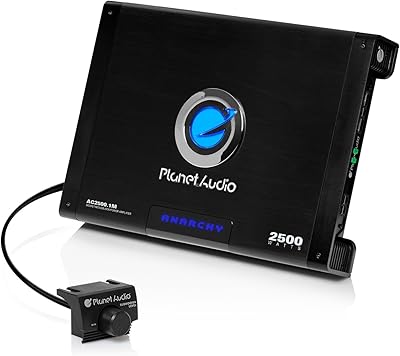
Planet Audio AC2500.1M Monoblock Car Amplifier
85%
92%
Performance
95%
Bass Output
85%
Ease of Installation
65%
Thermal Performance
88%
Build Quality
More
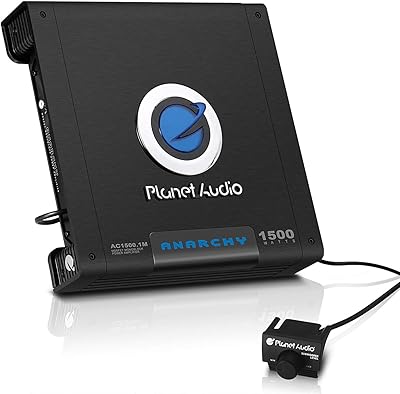
Planet Audio AC1500.1M Monoblock Car Amplifier
75%
91%
Value for Money
78%
Bass Output Quality
86%
Ease of Installation
61%
Thermal Management
67%
Build Quality
More
Audiobank P6001 Monoblock Car Amplifier
61%
74%
Value for Money
38%
Power Accuracy
56%
Build Quality
52%
Thermal Management
78%
Installation Ease
More
Hifonics Zeus ZXX 1800 Watt Monoblock Car Audio Amplifier
86%
88%
Performance
90%
Build Quality
85%
Ease of Installation
89%
Heat Management
84%
Sound Clarity
More
Belva BPKG110v2 500W 10” Car Subwoofer with Ported Enclosure and Amplifier
84%
87%
Sound Quality
92%
Installation Ease
85%
Bass Performance
80%
Build Quality
88%
Remote Bass Knob Effectiveness
More

FAQ

You can absolutely use it with a factory stereo. The Belva BB200ABv2 Monoblock Car Amplifier includes high-level speaker inputs, which means you wire it directly to your existing speaker wires coming from the OEM head unit — no line output converter needed in most cases. This is one of its most practical features for beginners who do not want to replace the entire head unit just to add bass.
An 8-inch, 10-inch, or 12-inch single-voice-coil subwoofer is the sweet spot. At 2 ohms you get more headroom, which pairs well with an efficient 10- or 12-inch driver in a ported box. If you are running a 4-ohm woofer in a sealed enclosure, the 200W RMS output is still enough for clean, satisfying daily bass — just keep your expectations calibrated for a budget-tier build.

It can get warm during extended listening, which is normal for Class A/B designs at this price point. Under-seat mounting is fine, but leave at least an inch or two of clearance on the sides and top for air to circulate. If you plan to crank the bass for long road trips, a slightly more open mounting location will help it run cooler and last longer.

Start with the gain knob turned all the way down, then play a bass-heavy track at about 80% of your head unit volume. Slowly raise the gain until you just start to hear distortion or clipping, then back it off slightly. That is your clean ceiling. Resist the urge to max out the gain — this monoblock amp will deliver tighter, more accurate bass when the gain is set conservatively.

For the power and ground runs, 8-gauge wiring is the typical recommendation for an amplifier in this power class. Make sure your ground wire connects to bare metal on the vehicle chassis — not a painted surface — as a poor ground is the most common cause of noise and weak performance. A matching 8-gauge wiring kit usually covers everything you need.

For what it is, it works well. The knob feels solid enough for daily use, and the range of adjustment is noticeable without being jerky or abrupt. Most buyers report that it does exactly what it promises — simple, accessible bass level control from the dash. The only real complaint is that the cable could be longer, which can be an issue in larger vehicles like trucks or SUVs.

Yes, but pay close attention to the final impedance after wiring. A dual-4-ohm woofer wired in parallel gives you a 2-ohm load, which this amp handles well. A dual-2-ohm woofer wired in parallel would give you 1 ohm, which is below the amp's minimum stable impedance and should be avoided. Wiring dual-2-ohm coils in series gets you 4 ohms, which is a safe and compatible configuration.

No, there is no subsonic filter on this unit. If you are running your woofer in a ported enclosure, a subsonic filter matters — frequencies below the port's tuning point can cause excessive cone excursion and potentially damage the driver. In that case, you may want to address this through your head unit's settings or a separate equalizer if precision matters to you. In a sealed box, the issue is less critical.

In most cases, yes. The unit is just over 11 inches long and around 4.4 inches tall, which clears the floor-to-seat clearance in a typical sedan or compact crossover. That said, measure your specific space before committing, since seat rail designs vary. Many buyers have successfully mounted it under the rear passenger seat of common vehicles like the Toyota Camry, Honda Civic, and similar models.

It is a decent starting point. The preamp outputs let you add a second amplifier later without rewiring the whole system, which gives you a growth path. That said, if you already know you want a multi-amp setup with high-power components, you may outgrow this entry-level subwoofer amplifier sooner than expected. Think of it as a solid foundation for a modest one-sub build, not the centerpiece of a high-output system.