Overview

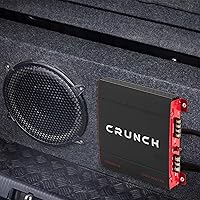
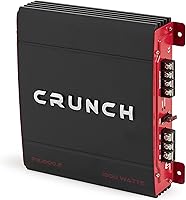
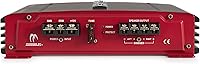
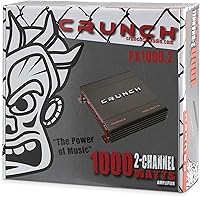
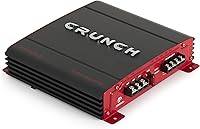
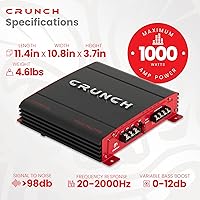
The Crunch PX-1000.2 2-Channel Car Amplifier sits squarely in the budget-to-mid-range territory — not a throwaway unit, but not a boutique build either. What it offers is a genuine step up from the anemic output of a factory head unit, built around a Class AB circuit design that prioritizes clean, efficient operation over raw brute force. Physically, it measures 11.4 x 10.8 x 3.7 inches and weighs just 4.6 pounds, compact enough to tuck into most trunk setups without major surgery. Go in with realistic expectations and this Crunch amplifier can genuinely deliver solid performance at a price that won't leave your wallet hurting.
Features & Benefits

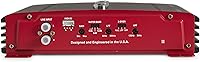
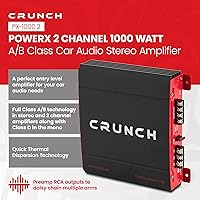
The headline 1000-watt figure is peak power — real-world RMS output will be considerably lower, so don't expect it to rattle windows on the freeway. That said, the Class AB design earns its keep. Unlike Class D amps that can sacrifice some audio fidelity in the name of efficiency, Class AB produces noticeably lower distortion, which translates to cleaner sound at moderate volumes. Crunch's Quick Thermal Dispersion Technology manages heat buildup through an extended aluminum heatsink — a real consideration on a hot afternoon with the music cranked. The variable crossover filters are a practical bonus, letting you configure the unit for a subwoofer, full-range speakers, or both, without buying additional signal processors.

Best For

This 2-channel amp is a natural fit for first-time installers who want a meaningful upgrade over a stock head unit but aren't ready to invest in a high-end system. Running a single subwoofer in a sealed enclosure or powering a pair of component speakers up front? The PX-1000.2 handles both scenarios comfortably. The surface-mount design and onboard filter controls keep the wiring process manageable, making a Saturday afternoon DIY job genuinely feasible. It's less suited for someone building a competition-grade system or pushing sustained high-volume output for hours on end — but for a daily driver upgrade, it punches well above its price bracket.

User Feedback

Buyers consistently highlight how straightforward the install is and how noticeably the audio improves right out of the box, especially compared to factory setups. The bass clarity improvement is the most frequently praised outcome. On the other side, a recurring concern involves long-term reliability at sustained high volumes — a handful of owners report problems after extended heavy use, which isn't shocking at this price point but is worth factoring in. Heat comes up often too; most users report it runs warm under load, not alarmingly hot. A few reviewers flag that a wiring kit is sold separately, so budget for that addition. Overall, the price-to-performance consensus leans clearly positive.

Pros

  • Noticeable audio improvement over factory head unit output right from the first install.
  • Class AB design keeps distortion low, resulting in cleaner sound at everyday listening volumes.
  • Onboard variable high-pass and low-pass filters remove the need for extra signal processing gear.
  • Compact and light enough at 4.6 pounds to fit in most trunk setups without major modifications.
  • The aluminum heatsink manages operating temperatures well under normal daily use conditions.
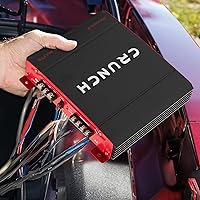
  • Straightforward wiring layout makes this 2-channel amp genuinely approachable for first-time installers.
  • Flexible enough to power either a subwoofer or a pair of full-range speakers depending on your setup.
  • Strong price-to-performance ratio for buyers who are not chasing audiophile-grade specifications.
  • Surface-mount design allows clean, stable installation without complicated bracket fabrication.

Cons

  • The 1000-watt rating is peak power — real continuous RMS output is significantly lower than advertised.
  • Long-term reliability under sustained high-volume use is a recurring concern in buyer feedback.
  • No wiring kit included, meaning additional hardware costs are almost always unavoidable.
  • Runs noticeably warm under load, which may be a concern in vehicles with poor trunk ventilation.
  • Not well-suited for powering more than one subwoofer or a larger, more demanding speaker configuration.
  • Some buyers report confusion around terminal labeling during wiring, suggesting clearer documentation is needed.
  • Build quality feels consistent with the price tier — adequate, but not confidence-inspiring for heavy use.
  • Limited headroom for future system expansion if your audio ambitions grow beyond a basic setup.

Ratings

Our AI rating engine analyzed thousands of verified global buyer reviews for the Crunch PX-1000.2 2-Channel Car Amplifier, actively filtering out incentivized, bot-generated, and duplicate submissions to surface what real owners genuinely experience. The scores below reflect both the strengths that keep buyers satisfied and the recurring pain points that surface after extended use. Nothing is glossed over — this is an honest, data-driven snapshot of how this 2-channel amp performs in the real world.

Value for Money
88%
Buyers consistently cite this as one of the strongest arguments for this Crunch amplifier — the audio improvement over a factory head unit is dramatic enough that most owners feel the price was well justified. For someone building their first modest car audio setup, the return on investment feels immediate and tangible on the very first drive.
The value perception shifts once you factor in the separately purchased wiring kit, which adds to the real upfront cost. A small number of buyers who experienced early unit failures felt the overall investment was less justified in hindsight, pulling the consensus score slightly off its ceiling.
Sound Quality
76%
24%
At casual to moderate listening volumes, the Class AB design delivers noticeably cleaner output than most buyers expected at this price tier — bass feels controlled rather than muddy, and the low distortion characteristic of Class AB is something even non-audiophile owners pick up on during daily commutes.
Push the PX-1000.2 toward its upper limits and the audio quality begins to deteriorate — some buyers report a flatness or harshness creeping in at high volumes that would frustrate anyone with a more trained ear. It is a capable amp within its comfort zone, but it is not built for critical listening.
Ease of Installation
83%
The surface-mount design and clearly laid-out terminal blocks make this one of the more DIY-friendly amps in its class — several first-time installers report completing the job in a few hours with no professional help. The onboard crossover filters are labeled intuitively enough that most buyers get them configured correctly on the first attempt.
A recurring complaint involves the instruction manual, which some buyers describe as vague on wiring specifics — particularly around ground placement and remote turn-on wire identification. A few owners also flagged that the terminal screws feel a little soft and require careful torquing to avoid stripping.
Power Output
67%
33%
For a single subwoofer in a sealed enclosure or a pair of component speakers in a moderate build, the real-world output of this 2-channel amp is more than adequate — buyers running modest setups report satisfying volume levels without pushing the unit hard.
The 1000-watt peak claim causes real frustration once buyers realize the continuous RMS output is a fraction of that number. Anyone who purchased expecting concert-level power will be disappointed, and this misalignment between marketing and reality is by far the most common source of negative reviews for this unit.
Thermal Management
72%
28%
For typical daily driving — commutes, moderate volumes, reasonable ambient temperatures — the aluminum heatsink keeps the amp running within acceptable thermal limits without triggering thermal shutdown. Buyers in temperate climates rarely report heat as a practical problem during normal use.
In summer conditions or trunk installs with limited airflow, the unit runs noticeably hot, and a subset of buyers in warmer climates report thermal shutdown events during extended high-volume use. The heatsink does its job within the amp's intended operating envelope, but that envelope is narrower than some buyers assume.
Build Quality
61%
39%
The chassis feels solid enough for a budget amp — it does not flex noticeably during handling, and the heatsink construction gives the unit a more substantial feel than some competitors at a similar price point. Most buyers who use the amp within its rated conditions report no structural issues over moderate ownership periods.
The internal components and connector quality reflect the price tier honestly — a handful of buyers report failures after several months of regular use, and the overall fit and finish does not inspire the kind of confidence you would get from a mid-range or premium brand. This is not a unit built to last decades.
Long-Term Reliability
58%
42%
A solid proportion of buyers who use this Crunch amplifier conservatively — keeping volumes in the moderate range and ensuring proper ventilation — report months of trouble-free operation. For a secondary vehicle or a casual daily driver setup, the reliability record is acceptable.
Sustained heavy use is where reliability concerns concentrate — buyers who push the amp regularly at high volumes report a failure rate that is difficult to ignore. The overall longevity track record across global reviews is the weakest area for this unit and the main reason experienced car audio enthusiasts often steer toward pricier alternatives.
Crossover Filter Performance
79%
21%
The variable high-pass and low-pass filters give buyers real control over how their system is tuned without requiring additional signal processors — a meaningful convenience that most owners in this budget bracket genuinely appreciate. Getting a subwoofer to blend cleanly with door speakers becomes a more accessible task with these controls onboard.
The filter sweep range is functional but not particularly precise — experienced car audio builders note that the adjustment points feel somewhat coarse compared to dedicated crossover units. Fine-tuning for a specific subwoofer roll-off point can require more trial and error than a more granular control would demand.
Compatibility
81%
19%
The standard RCA input configuration and 14.4V DC operating voltage mean this amp integrates cleanly with most aftermarket head units and typical automotive electrical systems without requiring any special adapters or modifications. It is broadly compatible across a wide range of vehicle makes and modest speaker loads.
Owners with factory head units lacking RCA preamp outputs need a line output converter, which is an additional purchase and installation step that catches some first-time buyers off guard. Compatibility with very low-impedance speaker loads should also be verified before purchase to avoid mismatch issues.
Size & Fitment
84%
At 11.4 x 10.8 x 3.7 inches and 4.6 pounds, this 2-channel amp fits comfortably in most trunk corners, under seats in larger vehicles, or alongside a subwoofer enclosure without dominating the available space. The manageable footprint is frequently praised by buyers working with tight installs.
The width of just over 10 inches can be a limiting factor in genuinely tight installs — buyers mounting under certain bench seats or in compact hatchbacks occasionally find clearance tighter than expected. Measuring twice before committing to a mounting location is genuinely advised.
Packaging & Accessories
53%
47%
The unit arrives well enough protected for shipping, and the basic hardware included is adequate to get the amp physically mounted in a standard surface-mount configuration. Most buyers report the unit itself arriving in good condition.
The accessory package is bare — no wiring kit, no RCA cables, and minimal documentation. For a first-time buyer who does not already own these essentials, the out-of-box experience feels incomplete, and the realization that additional purchases are needed before the amp can even be tested is a consistent source of frustration in reviews.
Noise & Signal Cleanliness
69%
31%
Under normal operating conditions with a properly grounded install, the background noise floor is low enough that most buyers do not notice any hiss or interference during playback — a reasonable result for a Class AB design at this price point.
Grounding quality has a significant impact on this amp's signal cleanliness — buyers who cut corners on the ground connection report audible alternator whine or background hiss that can be difficult to eliminate after the fact. The amp is sensitive to ground loop issues in ways that less experienced installers may not anticipate.
Brand Reputation & Support
62%
38%
Crunch has been a recognizable name in the budget car audio segment for years, and buyers who have used the brand before tend to have calibrated expectations — they know what they are getting and are generally satisfied within those parameters.
Customer support and warranty service experiences are inconsistently reported, with some buyers struggling to get timely responses or replacement units when problems arise. Crunch's after-sale support infrastructure does not match what more established car audio brands offer, which is a tangible risk at this price tier.

Suitable for:

The Crunch PX-1000.2 2-Channel Car Amplifier is a smart pick for anyone making their first real step into aftermarket car audio without committing to a complex or expensive setup. If you're driving a daily commuter with a factory stereo and you want noticeably better bass or fuller sound from a modest speaker setup, this 2-channel amp delivers exactly that kind of practical upgrade. It works well for drivers running a single subwoofer in a sealed box or a pair of component speakers up front — nothing extreme, just a meaningful improvement over what your head unit alone can push. DIY-minded buyers will appreciate the onboard crossover filters, which remove the need for a separate signal processor and keep the install manageable over a weekend. Budget-conscious enthusiasts who understand that the 1000-watt figure reflects peak rather than continuous power will find the real-world output genuinely satisfying for casual to moderate listening levels.
Not suitable for:

The Crunch PX-1000.2 2-Channel Car Amplifier is not the right choice for builders putting together a serious competition or high-output system where sustained power delivery and long-term thermal tolerance under heavy load are non-negotiable. Audiophiles chasing studio-grade sound reproduction will likely find the output ceiling limiting and may notice the gap in fidelity compared to more expensive Class AB options from established performance brands. If you plan to run the amp at or near its limits for extended periods — think long road trips with music cranked — some buyer reports raise legitimate questions about durability over time. This 2-channel amp also won't satisfy anyone needing to drive a multi-speaker configuration or a large subwoofer setup demanding high continuous RMS output. Buyers expecting a wiring kit to be included should also know that one typically needs to be purchased separately, which adds to the real total cost.
Specifications

  • Brand: Manufactured by Crunch, a brand focused on accessible car audio amplification products.
  • Model Number: The unit is designated PX-1000.2 in Crunch's product lineup.
  • Channels: This is a dual-channel (2-channel) amplifier capable of driving two independent speaker outputs.
  • Peak Power: Total peak power output is rated at 1000 watts across both channels combined.
  • Circuit Class: Uses a Class AB circuit design, which balances audio fidelity and thermal efficiency better than pure Class B configurations.
  • Thermal Management: Equipped with Quick Thermal Dispersion Technology using an extended aluminum heatsink to reduce heat buildup during operation.
  • Filter Type: Features variable high-pass and low-pass crossover filters, adjustable to suit subwoofer or full-range speaker configurations.
  • Supply Voltage: Designed to operate at a nominal supply voltage of 14.4V DC, consistent with standard automotive electrical systems.
  • Dimensions: The unit measures 11.4″ long, 10.8″ wide, and 3.7″ tall, making it practical for trunk or enclosure mounting.
  • Weight: Weighs 4.6 pounds, light enough for straightforward single-person installation in most vehicle setups.
  • Mounting Type: Designed for surface mounting, which simplifies installation without requiring custom brackets in most applications.
  • Heatsink Material: The heatsink is constructed from aluminum, chosen for its thermal conductivity and light overall weight.
  • Category: Classified as a car dual-channel amplifier, suitable for powering subwoofers or component speaker pairs.
  • Availability: This product was first made available in December 2015 and remains in active production as of this writing.
  • Discontinuation: Crunch has confirmed this model is not discontinued and remains a current offering in their amplifier catalog.

Related Reviews
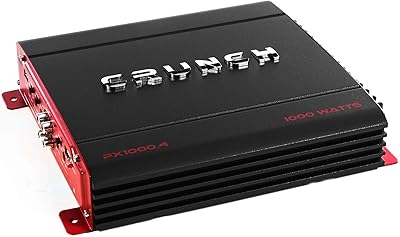
Crunch PX 1000.4 4-Channel 1000W Amplifier
85%
88%
Sound Quality
85%
Ease of Installation
81%
Build Quality
91%
Power Output
93%
Size & Portability
More
Planet Audio AC1200.2 2-Channel Car Amplifier
72%
84%
Value for Money
67%
Power Output
88%
Ease of Installation
71%
Sound Quality
58%
Thermal Performance
More
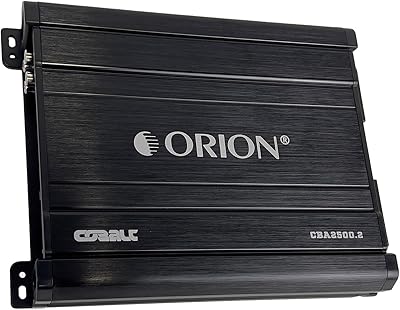
Orion Cobalt Series CBA2500.2 2-Channel Car Amplifier
88%
94%
Power Output
89%
Sound Quality
90%
Heat Management
85%
Ease of Installation
87%
Bass Boost Effectiveness
More
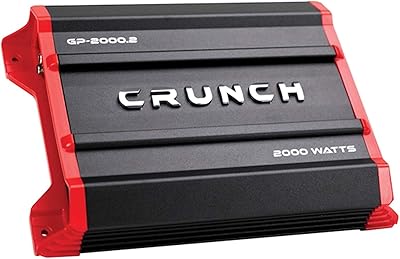
Crunch GP-2000.2 2-Channel Car Amplifier
71%
88%
Value for Money
83%
Ease of Installation
61%
Power Output
58%
Build Quality
54%
Heat Management
More
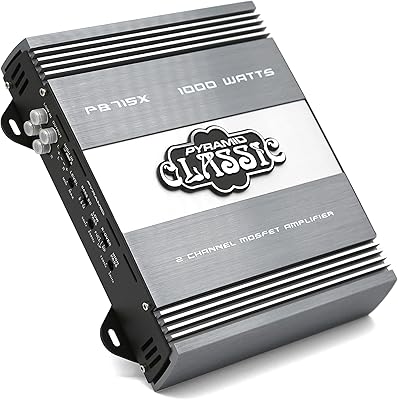
Pyramid PB715X 1000W 2-Channel Car Amplifier
68%
83%
Value for Money
74%
Sound Performance
88%
Ease of Installation
57%
Build Quality
52%
Thermal Management
More
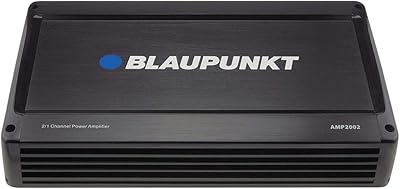
Blaupunkt AMP2002 2-Channel Car Amplifier
65%
71%
Value for Money
83%
Ease of Installation
38%
Power Accuracy
74%
Sound Quality
52%
Thermal Management
More
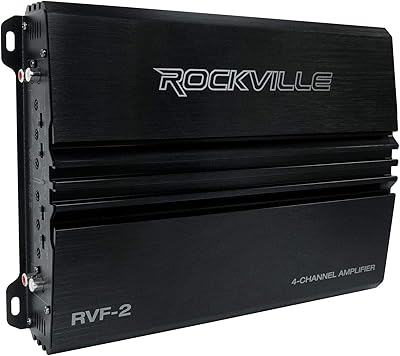
Rockville RVF-2 4-Channel Car Amplifier
84%
88%
Audio Quality
91%
Power Output
85%
Build Quality
72%
Thermals (Heat Management)
80%
Installation Ease
More
Rockville dB25 2800W 2-Channel Car Amplifier
86%
94%
Power Output
89%
Sound Quality
85%
Ease of Installation
91%
Bass Control
82%
Durability
More
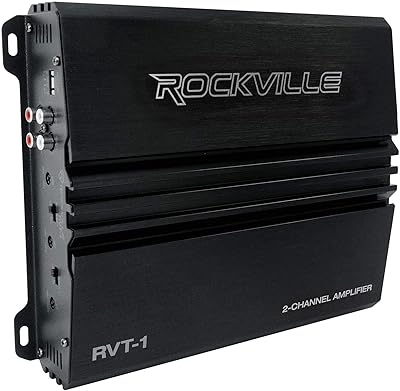
Rockville RVT-1 2-Channel Car Amplifier
68%
83%
Value for Money
67%
Power Output
58%
Build Quality
61%
Thermal Management
72%
Audio Clarity
More
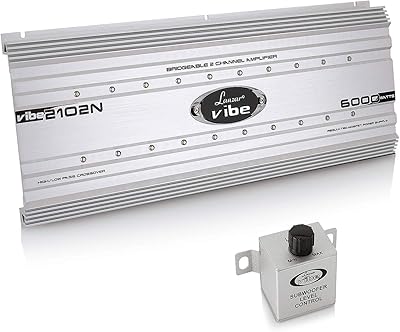
Lanzar VIBE2102N 2-Channel Car Stereo Amplifier
86%
91%
Power Output
88%
Sound Quality
85%
Ease of Installation
87%
Durability
72%
Thermal Performance
More

FAQ

The 1000-watt figure represents peak power, which is the maximum output the amp can briefly achieve under ideal conditions. Continuous RMS power — the number that actually matters for everyday listening — will be considerably lower. If raw wattage is critical to your build, check the RMS spec before committing.

Yes, it can work with a stock head unit, though you may need a line output converter if your head unit does not have dedicated RCA preamp outputs. Many budget installs use exactly this setup and get solid results. Just confirm your head unit's output type before purchasing a converter.

Not simultaneously from a single unit — this is a 2-channel amp, so you would need to dedicate both channels to either your subwoofer or your speakers, not both at once. If you want to run subs and door speakers together, you would need a second amp or a unit with more channels.

Most users report that it runs noticeably warm under load, which is normal for a Class AB design working at moderate to higher volumes. The aluminum heatsink does a reasonable job of managing heat for typical daily use. That said, if your install location has poor airflow — like a fully enclosed box — consider leaving some ventilation space around the unit.

No, a wiring kit is not included. You will need to purchase one separately, which typically covers the power cable, ground wire, remote turn-on wire, and inline fuse holder. This is standard practice across most amplifiers at this price tier, but it is worth budgeting for upfront.

It is genuinely one of the more approachable options at this price point. The wiring layout is straightforward, the onboard crossover filters are clearly labeled, and the physical size makes positioning manageable. That said, if you have never wired an amp before, it is worth reading a basic install guide first — especially around fusing and proper ground connections.

It can power a single subwoofer in the 8-inch to 12-inch range comfortably for casual to moderate listening levels. Pushing a large, power-hungry 12-inch or 15-inch sub at high volumes for extended periods is where the amp may start to show its limitations. For a sealed or ported enclosure with a mid-sized sub, it is a reasonable match.

The high-pass filter blocks low frequencies from reaching your speakers, which protects them and keeps the sound cleaner. The low-pass filter does the opposite — it cuts high frequencies going to your subwoofer so it only reproduces bass. Yes, you should absolutely use them. Running speakers or a sub without proper crossover filtering puts unnecessary strain on your components and degrades sound quality.

This particular model has been in Crunch's lineup since late 2015 and is still in active production — it has not been discontinued. That kind of longevity in the budget amp market usually signals that the product has found a consistent audience, though it also means the design has not seen major updates in recent years.

Many 2-channel amps support bridged mono operation, which combines both channels into one for higher output — typically used to drive a single subwoofer. The product documentation should confirm whether this Crunch amplifier supports bridging and what the bridged power rating and minimum impedance requirements are before attempting it.

Where to Buy