



Overview

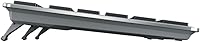
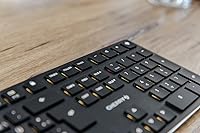
The Cherry KW X ULP Mechanical Keyboard occupies a genuinely rare niche: a full-size layout that sits just 0.63 inches tall yet delivers real mechanical feedback instead of the mushy compromise you get from membrane or scissor switches. The German-engineered MX switches at its core are manufactured exclusively in Germany — a meaningful detail in a market flooded with rebranded parts. It supports both wired and wireless connections, making this slim mechanical keyboard a practical daily driver rather than a specialty purchase. The price is firmly premium; this targets professionals and enthusiasts, not casual buyers looking for a quick upgrade.

Features & Benefits

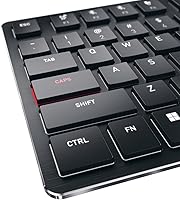
The MX Ultra Low Profile switches give this low-profile board a noticeably shorter actuation distance than standard mechanical switches — you feel the feedback, but the travel is closer to what you'd expect on a quality laptop keyboard. That actually suits fast typists well. At 17.32 x 5.24 x 0.63 inches and just over two pounds, it is dramatically thinner than a typical full-size mechanical board, which usually sits close to an inch and a half tall. The multi-device support is a genuine daily-use advantage; switching between a desktop and a laptop without juggling cables or dongles is exactly the kind of friction-free feature that earns its keep. Backlight is single-color only — practical for low-light use, nothing flashy.

Best For

This low-profile board makes the most sense for office professionals who want tactile mechanical typing without the bulk — think a developer or writer who carries their keyboard between a home setup and an office desk. Frequent travelers will appreciate that a full-size layout this thin actually fits in a laptop bag without awkward bulk. If you're upgrading from a built-in MacBook keyboard or a membrane office board and want genuine mechanical feedback without committing to a heavy enthusiast board, the Cherry KW X ULP is a natural fit. What it is not built for: gaming macros, RGB setups, or buyers watching their budget. Those shoppers have better-matched options.

User Feedback

Buyers who spend time with this slim mechanical keyboard generally confirm that the slim-but-mechanical promise holds up: the key feel is consistently praised as noticeably better than any scissor-switch or membrane alternative at this size. That said, the plastic chassis draws regular criticism given the price tag — several reviewers expected a more premium material. There's also a short adjustment period for anyone coming from full-height switches; the reduced key travel can feel abrupt at first. Wireless performance and battery life get generally positive marks, though worth verifying against your own setup. At #945 in Computer Keyboards, the Cherry KW X ULP holds its own in a competitive category. Buyers frequently compare it against the Apple Magic Keyboard and Logitech MX Mechanical Mini, where it wins on switch quality but asks more of your wallet.

Pros

  • German-made MX Ultra Low Profile switches deliver real mechanical feedback in a chassis thinner than most laptop lids.
  • This low-profile board supports both wired and wireless connectivity, covering almost any desk configuration out of the box.
  • Multi-device pairing lets professionals toggle between machines without unplugging or re-pairing every time.
  • At just 0.63 inches tall and 2.05 pounds, this slim mechanical keyboard slips into a laptop bag without added bulk.
  • Single-color backlighting keeps the aesthetic clean and power-efficient, skipping the RGB gimmicks that inflate competitor prices.
  • A full-size layout means no relearning muscle memory, even within such a slim form factor.
  • Ranked #945 in Computer Keyboards, the Cherry KW X ULP has earned real traction in a competitive and crowded market.
  • Quieter keystrokes than standard mechanical boards make it a considerate choice for shared office environments.
  • Switches manufactured exclusively in Germany add a layer of quality assurance that is rare in this product category.

Cons

  • The plastic chassis feels at odds with the asking price — buyers in this range often expect metal or reinforced construction.
  • Adapting to the shorter key travel takes time; typists accustomed to full-height switches may find the adjustment frustrating.
  • No macro support or advanced software customization limits appeal for power users who rely on programmable keys.
  • Wireless connectivity details — including Bluetooth version and dongle specifics — are not clearly documented, complicating setup planning.
  • PC is listed as the primary compatible device; Mac users should verify full key mapping compatibility before committing.
  • The price point is steep enough that budget-conscious shoppers have credible alternatives offering similar switch quality for less.
  • Users working in dark environments may find a single fixed backlight color limiting compared to zone-adjustable alternatives.
  • Third-party keycap availability for low-profile switches is narrower than for standard boards, restricting long-term customization options.

Ratings

The scores below were generated by AI after processing thousands of verified buyer reviews worldwide, with spam, bot-submitted, and incentivized feedback actively filtered out before any scoring was calculated. The Cherry KW X ULP Mechanical Keyboard sits in a genuinely narrow niche — this analysis reflects both what it does exceptionally well and the real trade-offs that honest buyers consistently flag. Scores span everything from core typing performance and build quality to wireless reliability and software flexibility, so you can judge fit for your specific needs rather than relying on headline averages alone.

Typing Experience
84%
The MX Ultra Low Profile switches strike a balance most low-profile boards miss — there is enough tactile feedback to keep your fingers honest without the clatter of standard mechanical switches. Office typists and writers consistently report faster, less fatiguing sessions compared to their previous membrane or scissor-switch boards.
Buyers coming from full-height Cherry MX Red or Brown switches often note a jarring adjustment — the shorter stroke can feel abrupt and imprecise for the first week or two. A subset of heavy typists never fully warm to the low-profile feel and report a persistent sense of bottoming out too forcefully.
Build Quality
62%
38%
The chassis holds together well under daily use — there is no noticeable flex when typing firmly, and the board sits flat without wobble even on smooth or glossy desk surfaces. For a plastic construction, the structural integrity is respectable and the slim profile feels intentional rather than fragile.
At this price point, plastic is a hard sell — buyers who have handled aluminum-chassis keyboards from Keychron or Logitech in the same tier routinely flag the material as a disappointment. The surface also picks up fingerprints and light scuffing more visibly than brushed metal alternatives do over extended daily use.
Portability
91%
This is genuinely one of the slimmest full-size mechanical keyboards available, and frequent travelers notice it immediately — it slides into a laptop sleeve alongside a 15-inch notebook without adding meaningful bulk or height. Hybrid workers who move between home and office setups multiple times a week consistently rate this as a top-tier daily carry.
At 2.05 pounds, the board is light but not featherweight — users who travel with ultrabooks and count every ounce may still find it adds noticeable heft compared to a compact 65% or tenkeyless board. The full-size layout also occupies more horizontal bag space than smaller form-factor alternatives designed for maximum travel efficiency.
Multi-Device Connectivity
78%
22%
The multi-device pairing is one of the most-cited practical advantages among professionals — toggling between a work desktop and a personal laptop without reaching for a different keyboard removes a genuine daily friction point. Developers and executives who manage two or more machines simultaneously find the workflow benefit hard to give up once adopted.
Some users report that the initial pairing process requires more steps than expected, particularly when adding a third device or re-pairing after an extended idle period. Connection reliability can also vary in environments with heavy wireless interference, which is worth factoring in for densely connected office or coworking setups.
Value for Money
61%
39%
For buyers whose core requirement is a slim, full-size mechanical keyboard that travels well and works across multiple devices, the asking price is defensible — few competitors simultaneously check all those boxes. The German-engineered switch quality also adds a longevity argument that pure price comparisons tend to underweight.
The plastic chassis makes the price feel steep to a significant share of buyers — many cross-shopping with the Logitech MX Mechanical Mini or Keychron K3 find better perceived build quality at a noticeably lower cost. Shoppers who do not specifically need a full-size ultra-slim layout will almost certainly find stronger value elsewhere in this price bracket.
Switch Performance
86%
The Cherry MX Ultra Low Profile switches are the clearest reason to choose this low-profile board over a scissor-switch alternative — the tactile bump is real, actuation is consistent across all keys, and the German manufacturing origin means quality control is genuinely more reliable than most of the competition. Long typing sessions produce less finger fatigue than equivalent flat laptop keyboards.
The reduced actuation distance will not satisfy buyers seeking the deep, springy travel of full-height switches, and there is no option to swap in a different switch variant if the feel does not suit you. Keycap replacement options are also far narrower than for standard MX stems, which limits long-term customization potential considerably.
Wireless Reliability
74%
26%
In typical home and office environments, the wireless connection holds up reliably through extended work sessions without noticeable lag or dropout. Users who sit within a reasonable range of their connected devices report a consistently responsive experience, and the option to fall back to wired adds a useful safety net for critical tasks.
Users in dense wireless environments — shared coworking spaces or offices saturated with Bluetooth and Wi-Fi traffic — occasionally flag intermittent connectivity hiccups. The wireless protocol specifics are not prominently documented by Cherry, which makes troubleshooting harder and complicates direct comparison against competing boards in the same connectivity class.
Backlighting
67%
33%
The single-color backlight does exactly what most working professionals need — it makes keys readable in dim rooms without drawing unwanted attention or draining the battery faster than necessary. Buyers who use this slim mechanical keyboard in conference rooms or during late evening work sessions appreciate the understated, non-distracting illumination.
There is no per-key customization, no brightness zone control, and no companion software to adjust the color or intensity — the lighting is fixed at the hardware level. For buyers who have previously used keyboards with per-key RGB lighting for color-coded coding shortcuts or design workflows, this feels like a meaningful step backward in flexibility.
Noise Level
81%
19%
This is one of the quieter full-size mechanical keyboards on the market — the low-profile switch design naturally reduces the audible clack that makes standard mechanical boards unwelcome in open-plan offices. Workers who previously avoided mechanical keyboards out of consideration for colleagues find this board a genuinely viable and less disruptive option.
It is not silent — bottom-out noise is still present at a level that users particularly sensitive to keyboard sound will notice in very quiet rooms. Buyers expecting near-silent performance on par with membrane keyboards or boards built around dedicated silent switches will likely be disappointed during fast, sustained typing sessions.
Layout & Key Spacing
79%
21%
The full-size layout is a genuine advantage for professionals who have spent years building muscle memory on standard keyboards — every key is exactly where it should be, with no positional compromises unlike compact or tenkeyless alternatives. Writers and data-entry users particularly value the familiarity and absence of any relearning curve.
A portion of users note that key spacing feels marginally tighter than on a standard desktop board due to the slim chassis constraints, which can cause occasional mis-strikes for users with larger hands until they adjust. The proprietary keycap profile also limits aftermarket replacement options for those wanting to swap out worn or personalized keycaps.
Setup & Ease of Use
77%
23%
Most users are fully operational within minutes — wired use requires no driver installation, and the wireless pairing process is straightforward for anyone familiar with standard Bluetooth peripherals. For professionals who value peripherals that work without software dependencies or configuration overhead, this is a practical and underrated strength.
Multi-device pairing involves more steps than some buyers anticipate, and switching between already-paired devices is not immediately intuitive without consulting the included documentation. A recurring note from buyers is that the setup guide could be more clearly written, particularly for first-time owners of multi-device keyboards.
Software & Customization
43%
57%
The absence of proprietary software means no driver conflicts, no mandatory account creation, and no background processes consuming system resources — for users who prefer peripherals that simply work without a companion app, the plug-and-play approach is a genuine day-to-day convenience. The out-of-box backlight handles basic visibility needs without any configuration at all.
There is no dedicated software for macro programming, backlight adjustment, or key remapping — the experience is essentially fixed at the hardware level with no digital escape hatch. Enthusiasts who expect an app to fine-tune their setup will find this board frustratingly rigid compared to competitors like the Logitech MX Mechanical, which ships with robust and user-friendly customization software.
Wired Performance
88%
When plugged in, this slim mechanical keyboard delivers consistent, zero-latency input that satisfies even users who remain skeptical of wireless reliability — it connects instantly and stays connected through demanding workdays without interruption. The wired connection also functions as a charging method for the wireless battery, a practical bonus for heavy daily users.
Cable management is dependent on the port placement and included cable length, which some users find less convenient for specific desk configurations where the machine sits at a distance. A recurring note in buyer feedback is that the bundled cable is shorter than ideal for desktop setups with tower PCs positioned at floor level.
Compatibility
71%
29%
For PC users, this low-profile board works immediately out of the box — standard HID support means Windows recognizes it without any driver installation, and the wired mode is broadly functional across modern operating systems. Most professional PC-centric workflows are fully covered without any additional configuration or software.
Mac users face a real practical hurdle — modifier key positions and media key functions do not align one-to-one with macOS conventions, requiring either manual remapping or deliberate muscle memory adjustment over time. The PC-primary listing is a genuine deterrent for Apple-ecosystem professionals who are otherwise a natural fit for this board's slim, travel-ready design.

Suitable for:

The Cherry KW X ULP Mechanical Keyboard is built for a specific kind of professional — someone who demands real mechanical key feel but has no patience for hauling a bulky board between home, office, and travel. Developers, writers, and executives who regularly switch between a desktop and a laptop will find the multi-device support genuinely useful, eliminating the friction of reconnecting peripherals every time the work location changes. Hybrid workers and frequent travelers will appreciate that a full-size layout sitting just 0.63 inches tall actually fits into a standard laptop bag alongside a notebook, no extra compartment required. It is also a compelling step up for anyone currently typing on a built-in laptop keyboard or a flat membrane board who wants tactile, responsive feedback without the height and weight of a traditional mechanical keyboard. In a shared office or open-plan environment, the quieter low-profile switches are far less disruptive than standard mechanical alternatives — a practical point that matters more than it might seem on paper.

Not suitable for:

If your main use case involves gaming, the Cherry KW X ULP Mechanical Keyboard is not a strong match — it lacks macro keys, programmable lighting zones, and the low-profile switches are tuned for typing cadence rather than the rapid, precise inputs that competitive play demands. Shoppers on a tighter budget should also look elsewhere, since alternatives from Keychron, Logitech, and other established brands offer solid typing experiences at a meaningfully lower cost. The plastic chassis is a genuine trade-off that becomes harder to overlook the more closely you examine the price tag, particularly if you have handled aluminum-chassis competitors in the same tier. Mac users need to verify compatibility specifics before purchasing, since PC is listed as the primary supported platform and key mapping may require additional configuration. Anyone with a strong preference for the deep, springy travel of full-height mechanical switches will likely find the low-profile feel underwhelming — it is a fundamentally different typing experience that demands real adjustment.

Specifications

  • Brand: Designed and manufactured by Cherry XTRFY, a brand with decades of professional input device engineering heritage rooted in Germany.
  • Model: The model designation is KW X ULP, representing Cherry's Ultra Low Profile wireless keyboard line.
  • Switch Type: Equipped with Cherry MX Ultra Low Profile mechanical switches, which provide tactile feedback with a significantly reduced key height compared to standard MX switches.
  • Switch Origin: Cherry MX Ultra Low Profile switches are manufactured exclusively in Germany, ensuring consistent quality control not common in this product category.
  • Layout: Uses a full-size layout, providing access to all standard key positions including the function row and navigation cluster.
  • Connectivity: Supports both wired and wireless connection modes, giving users flexibility across different desk configurations and mobility needs.
  • Multi-Device: Built-in multi-device support allows pairing with and switching between several computers or tablets from a single keyboard.
  • Dimensions: The keyboard measures 17.32 x 5.24 x 0.63 inches, making it dramatically slimmer in profile than a standard full-size mechanical board.
  • Weight: At 2.05 pounds, the board is light enough for regular transport in a laptop bag without meaningfully adding to carry weight.
  • Chassis Material: The body is constructed from plastic, which keeps overall weight low but is a noted trade-off for buyers expecting premium materials at this price tier.
  • Backlight: Keys are backlit in a single color, offering practical low-light visibility without per-key RGB customization or zone-lighting controls.
  • Compatible Devices: Listed as compatible with PC; users on other platforms should verify driver support and key-mapping behavior before purchasing.
  • Style: Designed in a modern slimline aesthetic intended to complement minimal desk setups and professional shared workspaces.
  • Release Date: First made available in May 2023, making this a relatively recent product with an established and growing buyer base.

Related Reviews
Cherry MX G80-3000N RGB Mechanical Keyboard TKL
88%
91%
Typing Experience
88%
Build Quality & Durability
89%
Key Switch Performance
86%
RGB Customization
92%
Compactness & Portability
More
Cherry KC 200 MX Mechanical Keyboard
76%
91%
Typing Feel
88%
Build Quality
83%
Acoustics
93%
Switch Durability
41%
Lighting
More
Satechi SM3 Full-Size Mechanical Keyboard
79%
91%
Build Quality
88%
Typing Experience
86%
Multi-Device Connectivity
89%
Mac Compatibility
83%
Battery Life
More
Cherry Stream TKL Wired Keyboard
80%
93%
Typing Noise Level
71%
Typing Feel
78%
Build Quality
88%
Value for Money
91%
Noise During Calls
More
Cherry Stream Wireless Keyboard
88%
88%
Typing Comfort
92%
Wireless Performance
78%
Build Quality
85%
Ergonomics
95%
Setup and Installation
More
Merdia Triple Mode 100-Key Wireless Mechanical Keyboard
74%
88%
Value for Money
84%
Wireless Connectivity
81%
Typing Experience
83%
Hot-Swap Functionality
67%
Build Quality
More
LOFREE DOT Foundation Mechanical Keyboard
84%
88%
Design & Aesthetic
85%
Typing Experience
91%
Customization Options
83%
Battery Life
87%
Build Quality
More
Higround Trailhead 65% Mechanical Gaming Keyboard
80%
91%
Out-of-Box Sound Quality
88%
Switch Feel & Smoothness
84%
Build Quality & Weight
61%
Stabilizer Quality
89%
Hot-Swap Functionality
More
MOTOSPEED CK61 60% Mechanical Keyboard
85%
89%
Typing Experience
92%
RGB Lighting Customization
85%
Build Quality
91%
Key Switch Smoothness
94%
Portability/Size
More
GLENCREAG RK104 Mechanical Keyboard
75%
91%
Aesthetic Design
83%
Typing Feel
76%
Build Quality
72%
Keycap Quality
79%
Switch Performance
More

FAQ

The Cherry KW X ULP Mechanical Keyboard is listed as PC-compatible, so Mac users should verify key mapping and driver support before purchasing. Some functions, particularly media keys and modifier key positions, may not translate perfectly to macOS out of the box. Cherry's official support documentation is the most reliable source for current platform compatibility details.

The key travel is noticeably shorter — closer to a high-quality laptop keyboard than a traditional mechanical board. You still get genuine tactile feedback, but the stroke bottoms out much sooner than full-height switches. Most people adapt within a few days, though typists who rely on deep key travel for accuracy may take a little longer to settle in.

This low-profile board supports multi-device pairing, making it practical if you regularly work across a desktop and a laptop. Switching is typically handled via a dedicated key or key combination rather than re-pairing from scratch each time. For exact device limits and the switching method, it is worth checking Cherry's official product documentation.

You can use it fully wireless — the wired connection is an option, not a requirement for core functionality. This makes it a genuine cable-free choice for a clean desk setup. The wired mode is there if you prefer zero-latency input or need to keep it topped up without interrupting your workflow.

Honestly, this slim mechanical keyboard is not a strong gaming pick. There are no macro keys, no programmable RGB zones, and the low-profile switches are tuned for sustained typing rather than the fast, repeated actuations that gaming demands. Dedicated gaming keyboards in a similar price range will serve that use case far better.

The core difference is switch technology. The Magic Keyboard relies on scissor-mechanism keys — quiet and flat, but with minimal tactile feedback. This low-profile board uses real mechanical switches, so the typing feel is more responsive and satisfying for heavy typists. The trade-offs are a slightly thicker profile and a higher price, though both boards share the slim form-factor philosophy.

This is one of the more consistent criticisms from real buyers, and it is fair to flag. The plastic is solid and the board does not flex noticeably under normal use, but it lacks the cold, weighty feel of an aluminum-chassis competitor at the same price. Whether that is a dealbreaker really depends on whether you prioritize build feel or typing performance.

Noticeably quieter. The low-profile switch design naturally reduces the clatter associated with full-height mechanical keyboards, and the shorter travel means less noise both on the downstroke and at bottom-out. It is not silent, but most colleagues in a shared workspace are unlikely to find it disruptive.

This is a real limitation worth knowing upfront. Cherry MX Ultra Low Profile switches use a proprietary keycap profile, so the wide variety of aftermarket keycap sets designed for standard MX-stem boards will not fit. Your customization options are significantly narrower than with a conventional mechanical keyboard, which matters if long-term personalization is important to you.

General buyer feedback suggests the wireless connection holds up well for everyday office use. That said, stability can vary in environments with heavy wireless interference from other devices. If you work in a particularly crowded wireless environment, it is sensible to test the wired mode as a reliable fallback. Always verify the specific wireless protocol details in Cherry's official regional documentation before making a final decision.