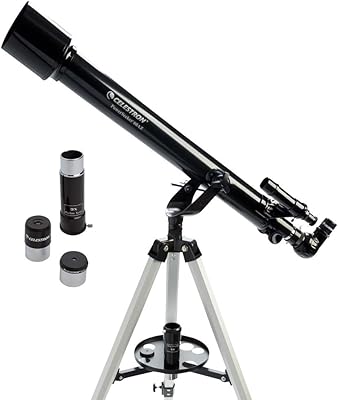
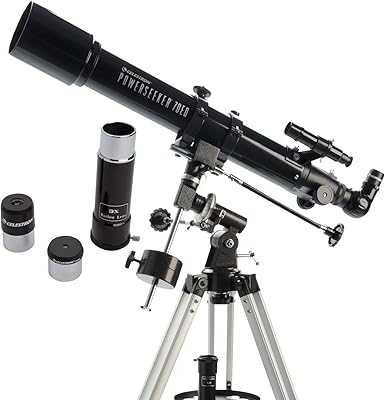
Overview

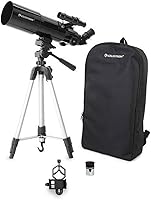
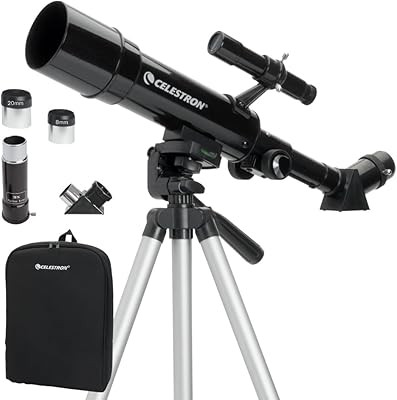
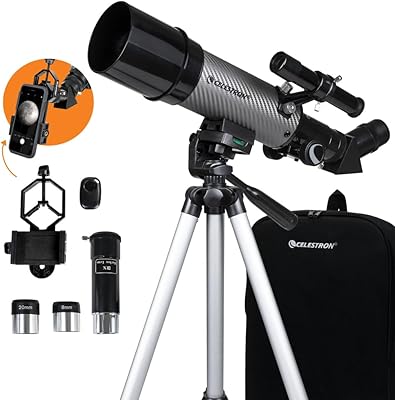
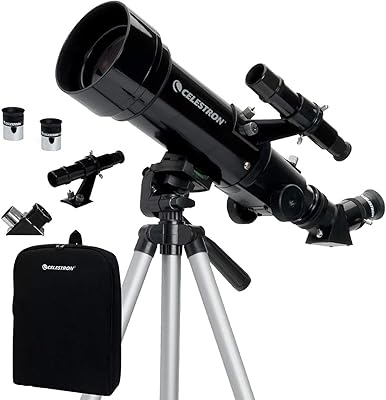
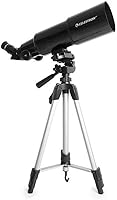
The Celestron Travel Scope 80 Refractor Telescope is one of those rare beginner scopes that actually earns its reputation. Celestron has been building optics in California since 1960, and that experience shows even at the entry level. Unlike flimsy, plastic-lens scopes cluttering the budget market, this travel refractor pairs an 80mm aperture with fully-coated glass lenses — a meaningful upgrade that translates to noticeably crisper views. Everything you need arrives in the box: tripod, two eyepieces, finderscope, smartphone adapter, and a padded backpack. It handles both nighttime stargazing and daytime terrestrial viewing equally well, which makes it genuinely versatile rather than a one-trick instrument.
Features & Benefits

The 80mm objective paired with a 400mm focal length gives this portable telescope a relatively wide field at f/5, which matters when you are hunting for objects across a dark sky. The two included eyepieces deliver 20x and 40x magnification — modest by serious astronomy standards, but genuinely practical for Moon craters, Saturn's rings, and Jupiter's cloud bands. A 5x24 finderscope makes target acquisition far less frustrating, especially for newcomers who haven't developed a feel for sweeping across the sky. Setup requires no tools and takes under five minutes, and the included smartphone adapter means you can capture basic shots of the Moon without buying anything extra. Starry Night software rounds out the package as a real planning and learning tool.

Best For

This portable telescope makes most sense for people just stepping into astronomy — kids, curious adults, or families looking for a shared outdoor activity that doesn't require weeks of research to get started. Campers and travelers will appreciate that the entire kit weighs just over four pounds and fits neatly into the included backpack. If your primary interest is the Moon and nearby planets rather than faint deep-sky objects, this travel refractor delivers satisfying results without demanding much in return. It also works surprisingly well for daytime use — birding, wildlife watching, landscapes — so it earns its keep beyond a single use case. Don't expect performance beyond its limits, but within them, it punches above its tier.

User Feedback

Across thousands of verified ratings, the Celestron Travel Scope 80 holds a 4.2-star average, which reflects a genuinely happy but occasionally frustrated buyer base. The most consistent praise centers on lunar image quality — first-time users are often surprised by how detailed the Moon looks through a scope at this price. The backpack gets mentioned constantly as a thoughtful inclusion. On the critical side, the plastic tripod attracts fair complaints: it wobbles noticeably when you nudge the tube, particularly at 40x. Fine-focusing at higher magnification also requires a steady hand and some patience. A handful of buyers struggled with finderscope alignment out of the box, though this is adjustable. Nothing here is a dealbreaker, but buyers should go in with realistic expectations.

Pros

  • Fully-coated 80mm glass optics deliver noticeably sharper, brighter views than typical plastic-lens budget scopes.
  • The entire kit — tripod, eyepieces, finderscope, adapter, and backpack — arrives ready to use with nothing extra to buy.
  • Setup takes under five minutes with no tools, which matters enormously for keeping beginners and kids engaged.
  • At just over four pounds total, this travel refractor is genuinely portable enough for camping trips and travel.
  • Moon views through this scope are frequently described by new users as a genuine wow moment.
  • The included smartphone adapter makes casual lunar photography possible right out of the box.
  • Starry Night software is a real learning resource, helping beginners identify objects and plan observing sessions.
  • Dual-use capability for both nighttime astronomy and daytime terrestrial viewing adds practical everyday value.
  • Celestron backs the scope with a two-year US warranty and access to domestic customer support.
  • A 4.2-star average across thousands of reviews reflects consistently positive experiences among first-time buyers.

Cons

  • The plastic tripod wobbles noticeably when the tube is nudged, particularly at 40x magnification.
  • Achieving sharp focus at higher magnification requires patience and a steady touch that frustrates some beginners.
  • The finderscope sometimes arrives misaligned from the factory and needs manual calibration before use.
  • At 40x, the magnification ceiling is modest — anyone expecting to observe fine detail on planets will feel limited.
  • The included eyepieces are functional but basic; upgrading them later is a near-certainty for anyone who sticks with the hobby.
  • The alt-azimuth tripod mount lacks slow-motion controls, making precise object tracking more difficult than it needs to be.
  • Accessories like the finderscope bracket and diagonal feel lightweight and can loosen over repeated use.

Ratings

The scores below for the Celestron Travel Scope 80 Refractor Telescope were generated by our AI review engine after analyzing thousands of verified global purchases, with spam, bot activity, and incentivized reviews actively filtered out. Each category reflects a genuine synthesis of what real buyers praised and criticized — nothing is softened to protect the product's image. From optical performance to build quality, both the clear strengths and the honest weak points are represented in every score.
Optical Clarity
83%
First-time users consistently report being caught off guard by how sharp and bright Moon views are through this scope. The fully-coated 80mm glass lens gathers enough light to reveal lunar craters, mountain ridges, and shadow lines with real definition — a meaningful step above cheap uncoated alternatives.
At 40x, chromatic aberration becomes noticeable around bright objects like the Moon's limb, producing faint color fringing. This is an inherent limitation of short f/5 refractors and becomes more apparent as users experiment with higher-power eyepieces.
Build Quality
61%
39%
The optical tube itself feels solid and well-finished for the price tier, and the focuser rack-and-pinion mechanism operates smoothly without any grinding or slop. Celestron's long manufacturing history shows in the optical components, even if the supporting hardware tells a different story.
The plastic tripod legs and head are the clearest weak point in the entire kit — multiple buyers describe noticeable flex and wobble when nudging the tube, particularly at higher magnification. The finderscope bracket and accessories also feel lightweight and can loosen with repeated field use.
Ease of Setup
91%
Out of the box, the setup experience is genuinely fast and frustration-free — no tools, no confusing diagrams, and no parts to lose. Parents and first-timers consistently note that having the scope aimed and focused within five minutes kept enthusiasm alive instead of killing it before the first look.
A small portion of buyers find the alt-azimuth head slightly stiff at first and need a few sessions to get comfortable with smooth, controlled movements. The finderscope occasionally needs alignment calibration before first use, which isn't difficult but does require a brief tutorial.
Portability
88%
The padded backpack is a frequently praised inclusion that transforms this from a shelf telescope into a genuinely go-anywhere instrument. Campers, hikers, and frequent travelers appreciate that the full kit lands under five pounds — light enough to carry alongside other gear without real sacrifice.
The backpack's interior organization is functional but not especially refined; some accessories like the diagonal and eyepieces need careful packing to avoid rattling around. A few buyers noted the backpack's shoulder straps are basic and less comfortable on longer carries.
Value for Money
86%
Few competing scopes at this price point include a backpack, smartphone adapter, two eyepieces, finderscope, diagonal, and software download as a complete, ready-to-use kit. For a household making its first astronomy purchase, the all-in-one nature removes a lot of the hidden follow-up cost that often catches beginners off guard.
Buyers who outgrow the included eyepieces quickly may feel the effective lifespan of the starter kit is shorter than the price implies. Upgrading to a sturdier tripod — almost a necessity for serious higher-magnification use — adds meaningful cost on top of the initial purchase.
Magnification Range
67%
33%
The 20x and 40x range provided by the two included eyepieces covers the most rewarding targets for beginners: the full lunar surface at 20x and detailed crater studies at 40x, along with basic planetary shapes and bright star clusters. For someone brand-new to the night sky, this range keeps things achievable.
Forty times is modest by any astronomy standard, and buyers who quickly develop an appetite for planetary detail or tighter views of double stars will hit the ceiling fast. Achieving usable results above 40x requires purchasing higher-quality eyepieces, and the plastic tripod makes pushing magnification further even more challenging.
Daytime Performance
79%
21%
The erect-image diagonal ensures that terrestrial targets appear correctly oriented, making this travel refractor a usable substitute for a spotting scope on wildlife walks, hikes, or sporting events. At 20x the wide field works well for scanning treelines and open terrain for birds or distant subjects.
The focal length of 400mm limits reach for birdwatchers accustomed to higher-magnification spotting scopes, and heat shimmer on warm days can degrade daytime views noticeably. It is a capable secondary option for terrestrial use, but dedicated birders will find its limits relatively quickly.
Finderscope Usability
63%
37%
Having any finderscope at this price is a genuine aid for beginners who would otherwise spend ten frustrating minutes sweeping blind for the Moon or a bright planet. Once properly aligned, the 5x24 unit does its job and helps new users build the habit of star-hopping to locate targets.
A recurring buyer complaint is that the finderscope arrives misaligned from the factory and requires calibration before it is actually useful. The 5x24 aperture is also quite small, making faint alignment stars hard to see under light-polluted suburban skies.
Smartphone Astrophotography
58%
42%
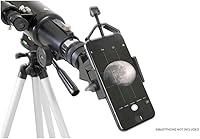
The included adapter allows users to capture surprisingly pleasing afocal Moon shots with a modern smartphone, which is a rewarding early experience for new astronomers and a useful feature for social sharing. No additional accessories are needed to get a basic result.
Achieving a sharp, well-framed smartphone image requires patience, steady hands, and some trial and error with phone positioning — and the wobbly tripod compounds this significantly. Results on planets are generally underwhelming, and serious astrophotographers will find this adapter a starting point at best rather than a practical tool.
Focuser Quality
72%
28%
The rack-and-pinion focuser turns smoothly and provides enough travel to achieve sharp focus across both eyepieces without excessive adjustment. Most users find it intuitive after a few sessions, and the action stays consistent without developing play over normal use.
Fine-focusing at 40x requires a very light touch, and any vibration transmitted through the tripod during adjustment forces a wait before the image settles. Some users with larger hands find the focuser knob a bit small for precise control during cold-weather observing sessions.
Included Accessories
76%
24%
The scope ships with a thoughtfully complete accessory set for a beginner kit: two eyepieces, a diagonal, finderscope, smartphone adapter, and backpack means the first night out doesn't require a shopping list. The Starry Night software download is a standout inclusion that meaningfully helps beginners plan and identify what they are looking at.
The quality of individual accessories is mixed — the eyepieces and diagonal are functional but basic, and most engaged users will want to replace them within the first year. The smartphone adapter, while included, requires patience to use effectively and doesn't secure all phone sizes equally well.
Tripod Stability
43%
57%
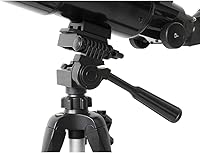
The tripod extends to a full standing height, which is more comfortable than the shorter, crouching-height tripods included with some competing beginner kits. For low-magnification daytime viewing on a calm day, it provides adequate support and adjusts quickly.
At 40x or beyond, the plastic alt-azimuth head and legs introduce enough vibration that any accidental nudge to the tube results in seconds of image shake. This is the single most consistent criticism across buyer feedback and is a real limitation for anyone hoping to use the scope seriously at its upper magnification range.
Warranty & Support
84%
Celestron's 2-year US warranty is longer than what most competitors offer at this price tier, and the company's US-based support team has a solid reputation for responsiveness. Buyers with finderscope alignment questions or accessory issues report getting practical help without being passed around.
The warranty covers manufacturing defects but does not extend to accessories like the backpack or eyepieces, which are the components most likely to show wear. International buyers outside the US have a more limited support path and may face complications with warranty claims.

Suitable for:

The Celestron Travel Scope 80 Refractor Telescope is a strong match for anyone stepping into astronomy without wanting to spend heavily or wrestle with complicated equipment. Families with curious kids are a natural fit — the quick, no-tool setup means a child's interest doesn't die waiting for assembly, and the views of the Moon are genuinely impressive enough to hold attention. Travelers and campers will appreciate that the entire kit packs into a single padded backpack under five pounds, making it practical to bring along rather than leaving it at home. Casual stargazers focused on the Moon, Saturn, and Jupiter will find the magnification range honest and rewarding. It also doubles convincingly as a daytime spotting scope, so birders or hikers looking for one versatile optics tool get real utility beyond clear nights.
Not suitable for:

The Celestron Travel Scope 80 Refractor Telescope is not the right choice for anyone who has already spent time with a basic scope and is ready to push further. At 40x with the included eyepieces, the magnification ceiling is modest — experienced hobbyists hunting faint nebulae, galaxies, or fine planetary detail will hit its limits quickly and feel frustrated. The plastic tripod is a genuine weak point; anyone who values a stable, shake-free viewing platform at higher power should expect some compromise or budget for an upgrade. Deep-sky observers working from dark rural sites will also find the 80mm aperture insufficient for gathering the light needed to reveal dimmer objects. If you already own a scope or have graduated beyond lunar and planetary basics, this portable telescope is likely a step backward rather than forward.
Specifications

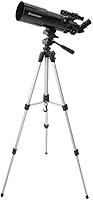
  • Optical Design: This telescope uses a refractor design, meaning it gathers light through a glass objective lens rather than mirrors.
  • Aperture: The objective lens measures 80mm (3.1 inches) in diameter, determining how much light the scope can collect.
  • Focal Length: The optical tube has a focal length of 400mm, which governs the field of view and base magnification calculations.
  • Focal Ratio: At f/5, this is a fast refractor that produces a wide field of view, well-suited to locating targets and scanning the Moon.
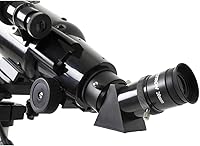
  • Magnification: The two included eyepieces (20mm and 10mm) deliver 20x and 40x magnification respectively for celestial and terrestrial use.
  • Max Magnification: The highest useful magnification this optical system can support is 189x, though this requires separately purchased eyepieces.
  • Finderscope: A 5x24 reflex finderscope is included to help users locate and center targets before switching to the main eyepiece.
  • Mount Type: The telescope sits on an alt-azimuth tripod mount, allowing straightforward up-down and left-right movement for tracking objects.
  • Tube Length: The optical tube measures 457mm in length, keeping the overall assembled footprint compact for travel use.
  • Kit Weight: The complete kit, including tripod and backpack, weighs approximately 4.2 lbs (1.9 kg) for easy transport.
  • Lens Coating: All optical glass elements are fully coated to improve light transmission, contrast, and image sharpness compared to uncoated lenses.
  • Included Eyepieces: The kit ships with one 20mm and one 10mm eyepiece, providing a practical low-to-mid magnification range without additional purchases.
  • Smartphone Adapter: A dedicated smartphone adapter is included in the kit, enabling basic afocal photography through the eyepiece.
  • Carrying Case: A padded backpack is included and sized to hold the telescope tube, tripod legs, eyepieces, and accessories together.
  • Software: A free download code for Starry Night astronomy software is bundled, offering sky charts, object identification, and session planning tools.
  • Assembly: The tripod and tube assembly requires no tools and can be completed in under five minutes straight from the backpack.
  • Warranty: Celestron provides a 2-year US warranty on this telescope, backed by US-based customer support.
  • Dimensions (Packed): The telescope measures approximately 22.5″ x 12.7″ x 5.6″ when packed, fitting neatly inside the included backpack.
  • Stellar Limit: Under good conditions, this scope can resolve stars down to a limiting stellar magnitude of approximately 12.
  • Brand Origin: Celestron has been designing and manufacturing optical instruments in California since 1960, giving it one of the longer track records in consumer telescopes.

Related Reviews

Celestron Travel Scope 70
79%
83%
Optical Clarity
91%
Portability & Weight
67%
Build Quality
93%
Ease of Setup
54%
Tripod Stability
More
Celestron Travel Scope 60DX Portable Refractor Telescope
76%
76%
Optical Performance
63%
Build Quality
91%
Portability
89%
Ease of Setup
54%
Tripod Stability
More
Celestron Travel Scope 50 Refractor Telescope
75%
74%
Optical Clarity
91%
Portability & Weight
88%
Ease of Setup
58%
Build Quality & Materials
53%
Tripod Stability
More
Celestron PowerSeeker 70EQ Refractor Telescope
71%
78%
Optical Clarity
83%
Mount Quality & Stability
61%
Ease of Assembly
74%
Accessory Bundle Value
86%
Portability
More
Celestron AstroMaster 114EQ Reflector Telescope
70%
83%
Optical Performance
78%
Mirror & Coating Quality
81%
Equatorial Mount
51%
Collimation Consistency
58%
Included Eyepieces
More
Celestron PowerSeeker 114EQ Reflector Telescope
73%
83%
Optical Performance
61%
Mount Quality
57%
Ease of Setup
74%
Included Accessories
81%
Value for Money
More
Celestron AstroMaster 102AZ Refractor Telescope
77%
78%
Optical Clarity
91%
Ease of Setup
74%
Mount Usability
71%
Tripod Stability
83%
Value for Money
More
Celestron PowerSeeker 60AZ Refractor Telescope
71%
78%
Optical Clarity
62%
Mount & Tracking
54%
Tripod Stability
67%
Eyepiece Quality
83%
Value for Money
More
Celestron AstroMaster 90AZ Refractor Telescope
75%
83%
Optical Clarity
91%
Ease of Setup
78%
Mount Usability
62%
Tripod Stability
76%
Value for Money
More
Celestron PowerSeeker 80EQ Refractor Telescope
75%
83%
Optical Clarity
67%
Mount Usability
88%
Portability
84%
Value for Money
72%
Build Quality
More

FAQ

Yes, within realistic expectations. At 40x you can make out Saturn's rings as a distinct shape and spot the brighter moons of Jupiter as small points of light. The views won't rival what you'd see through a much larger instrument, but for a first look at the solar system they are genuinely rewarding.

Most people have it assembled and pointed at the sky in under five minutes. The tripod legs extend and lock quickly, the tube slots into place, and there are no tools involved at any step. It's one of the more painless setups in this category.

A small number of units ship with the finderscope slightly out of alignment with the main tube, and this is a known, fixable issue. During daylight, point the main scope at a distant landmark, center it in the eyepiece, and then adjust the finderscope's alignment screws until that same object appears in its crosshairs. It takes about five minutes once you know the process.

Older children, around ten and up, can generally use the Celestron Travel Scope 80 Refractor Telescope with minimal help after an initial guided session. The alt-azimuth mount is intuitive to move, and focusing is a simple knob turn. Younger kids will likely need an adult nearby, mostly to help aim at targets and manage the tripod height.
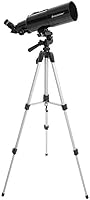
Almost certainly not — this is a known characteristic of the plastic tripod that comes with the kit. At 20x it is manageable, but at 40x any vibration is more obvious and takes a moment to settle. If stability is a priority, a heavier aftermarket alt-azimuth tripod can be used as a substitute, since the attachment is a standard fitting.

Yes. The focuser accepts standard 1.25-inch eyepieces, so you can add higher-power options from any reputable eyepiece brand. Just keep in mind that the optical system has a practical upper limit of around 189x, and going beyond that will produce dim, blurry images regardless of the eyepiece quality.

It works quite well in daylight for terrestrial use. The erect-image diagonal ensures the view is right-side-up and correctly oriented, which matters when tracking moving animals or scanning a landscape. At 20x it covers a reasonably wide field, making it a usable substitute for a spotting scope on a hike or nature walk.

It is more useful than most bundled software tends to be. You can enter your location and the current date, and it shows you exactly which objects are visible in your sky that night, where to point the scope to find them, and background information about what you are looking at. For someone who has no idea how to navigate the night sky, it removes a lot of the frustration from early sessions.

The Moon, without question. It is bright, easy to locate, and the level of visible detail — craters, mountain ranges, shadow lines — is immediately impressive through this portable telescope even at modest magnification. Starting there gives new users a quick confidence boost before moving on to planets or star clusters.

For a beginner, the kit is genuinely complete out of the box — you get two eyepieces, a finderscope, a diagonal, a smartphone adapter, a tripod, a carrying backpack, and software. There is nothing you must buy immediately. Down the line, many users add a better eyepiece or a moon filter, but those are upgrades, not necessities for getting started.

Where to Buy