Overview

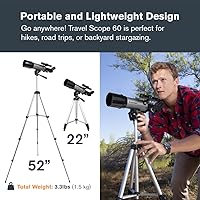
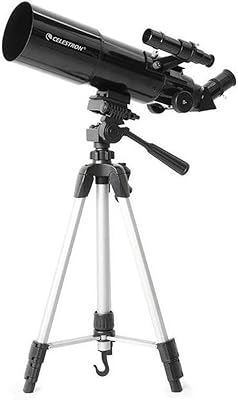
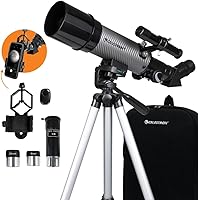
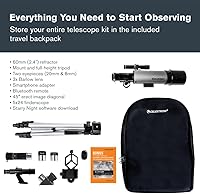
The Celestron Travel Scope 60DX Portable Refractor Telescope is one of those rare beginner scopes that actually delivers on its promise of portability without gutting optical quality. Built by Celestron, a California optics company with over six decades in the business, this travel telescope packs a 60mm aperture with fully-coated glass lenses into a package weighing just 3.3 lbs for the tube. Everything you need arrives in one box — eyepieces, a Barlow lens, finderscope, smartphone adapter, Bluetooth remote, and a padded backpack. The altazimuth mount requires no tools and no prior experience, making it genuinely approachable for first-time users of any age.
Features & Benefits

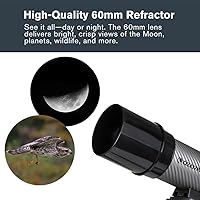
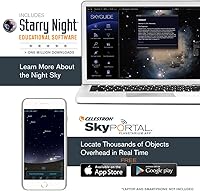
The optics are where this travel telescope separates itself from cheaper alternatives. Fully-coated glass improves light transmission and contrast noticeably — on the Moon, crater detail comes through with real clarity. The kit includes 20mm and 8mm eyepieces, and the 3x Barlow lens stretches usable magnification up to 142x. That ceiling is achievable on steady nights, though the tripod works best at moderate power. Total kit weight is around 5.5 lbs with the backpack. The smartphone adapter and Bluetooth shutter release are functional additions that make basic lunar photography accessible right away. The bundled Starry Night software is a helpful starter tool, though it's a limited download version rather than the full application.

Best For

This beginner refractor is best suited to curious newcomers who want to get outside and actually use a telescope without spending an evening reading instruction manuals. Parents buying a scope for the family will appreciate how quickly kids can get involved — the altazimuth mount is intuitive enough for children to operate with light guidance. Campers and hikers will value how easily it packs into a bag. Moon and planet viewing are the real strengths here; the 60mm aperture delivers genuinely rewarding views of lunar craters and Saturn's rings. Just keep deep-sky expectations in check — faint nebulae and galaxies demand more aperture than this scope provides.

User Feedback

Across thousands of verified reviews, the most consistent praise goes to ease of setup and the quality of lunar views right out of the box. The bundled accessories — particularly the smartphone adapter and Bluetooth remote — earn genuine appreciation as practical additions that buyers didn't expect to work so well. The criticisms, though, are worth hearing. The focuser mechanism has a noticeably plastic, budget feel, and at higher magnifications the tripod introduces enough vibration to interrupt a view. Some users also needed minor collimation adjustments on first use — not a dealbreaker, but something to be aware of. Seasoned observers will find the 60mm aperture limiting beyond the Moon and planets; for beginners, the overall experience lands well.

Pros

  • Fully-coated glass optics deliver noticeably sharper, higher-contrast views than typical uncoated entry-level scopes.
  • The entire kit packs into a single padded backpack, making it one of the most genuinely portable beginner setups available.
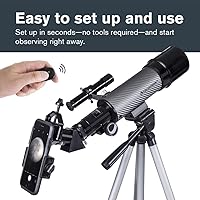
  • Tool-free setup takes minutes, which matters enormously when observing with impatient kids or in cold weather.
  • The 3x Barlow lens effectively triples your magnification options without buying additional eyepieces.
  • Smartphone adapter and Bluetooth remote work well straight out of the box for basic lunar photography.
  • Celestron backs this beginner refractor with a 2-year US warranty and accessible domestic customer support.
  • The altazimuth mount is intuitive enough for children and complete beginners to use without instruction.
  • Solid Moon and planetary views — lunar craters and Saturn's rings are well within reach on clear nights.
  • The accessory bundle represents strong value compared to buying a bare-tube scope and sourcing extras separately.
  • Thousands of verified reviews confirm the setup experience is consistently smooth and frustration-free.

Cons

  • The tripod wobbles noticeably at higher magnifications, making it hard to hold a steady view above moderate power.
  • The focuser mechanism has a cheap plastic feel that undermines confidence during fine-tuning adjustments.
  • A 60mm aperture puts firm limits on deep-sky performance — faint objects simply do not show meaningful detail.
  • Some units require minor collimation or focus adjustment straight out of the box before delivering clean views.
  • The included Starry Night software is a limited starter version, not the full-featured application the name implies.
  • At maximum magnification, atmospheric turbulence and tripod vibration combine to degrade image quality significantly.
  • The finderscope, while functional, takes practice to align and use effectively for newer observers.
  • Not a scope that grows with you — enthusiasts will likely outgrow the 60mm aperture within a year or two.

Ratings

The scores below were generated by AI after analyzing thousands of verified global user reviews for the Celestron Travel Scope 60DX Portable Refractor Telescope, with spam, bot-submitted, and incentivized feedback actively filtered out. Ratings reflect the honest consensus of real buyers across beginner, family, and travel use cases, including both the highlights and the recurring frustrations that often go unmentioned in promotional materials.

Optical Performance
76%
24%
For a 60mm refractor, the fully-coated glass optics consistently impress first-time users — lunar views in particular draw genuine praise, with crater detail and the terminator line visible even at moderate magnification. Beginners observing Saturn's rings or Jupiter's moons for the first time tend to find the image quality rewarding and well above what they expected at this price tier.
The 60mm aperture creates a hard ceiling on what this scope can do, and experienced observers feel it quickly. Deep-sky targets like nebulae and galaxies appear faint and featureless, and chromatic aberration — a color fringe around bright objects — shows up at higher magnifications in a way that more polished optics would reduce.
Build Quality
63%
37%
The optical tube itself feels reasonably solid, and the coated glass elements are properly seated and well-protected within the tube housing. Most users report no issues with the tube or lens assembly over extended use, which speaks to Celestron's manufacturing consistency at this tier.
The focuser is the most frequently criticized component — it has a lightweight plastic feel that undermines confidence when making fine adjustments, especially in cold weather. The tripod leg locks and accessory tray also feel less substantial than the optics suggest, and a few users report looseness developing in the mount head after regular use.
Portability
91%
This is where the travel telescope genuinely earns its name. At 3.3 lbs for the tube and 5.5 lbs total with accessories, the complete kit fits into the included padded backpack and carries comfortably on a hiking trail or into a car trunk. Campers and travelers consistently cite portability as the single strongest reason they chose this scope over a larger alternative.
The backpack, while functional, is not the most ergonomic design for longer carries — the straps are basic and the padding is minimal compared to dedicated camera bags. Users who hike significant distances with it report that the total weight distribution feels slightly awkward over an hour or more.
Ease of Setup
89%
Tool-free assembly is a real differentiator here, and buyers consistently mention being surprised by how quickly the scope is ready to use right out of the box. Parents setting it up with children report having a functional telescope pointed at the Moon within ten minutes of opening the package, which matters enormously for keeping young observers engaged.
The finderscope alignment can trip up complete beginners on the first session — getting the main scope and finderscope pointing at the same target takes a few frustrating minutes if no guidance is followed. The instruction manual is adequate but not particularly detailed, and a few users wished for a clearer quick-start guide.
Tripod Stability
54%
46%
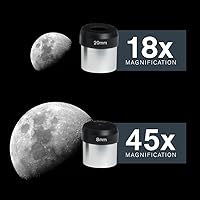
At low magnifications — using the 20mm eyepiece for wide sky or daytime viewing — the tripod performs adequately and holds a target reasonably well. For casual Moon-watching at 18x to 45x, most users find the stability acceptable and the viewing experience uninterrupted under calm conditions.
Push the magnification higher with the Barlow lens and the tripod becomes a genuine obstacle. Vibrations from focusing, a passing vehicle, or even a moderate breeze take several seconds to dampen, which breaks the observing experience at the worst moments. This is the single most repeated criticism across the user review base and reflects a real compromise in the kit design.
Accessory Value
86%
The bundled kit is genuinely well-stocked for a beginner package — two eyepieces, a 3x Barlow lens, smartphone adapter, Bluetooth remote, finderscope, and a padded carry backpack represent a meaningful head start without needing to buy anything extra. Buyers frequently note that the smartphone adapter works better than expected and enables usable lunar shots on a first outing.
The Starry Night software included is a download-only basic version, not the full commercial application, which disappoints buyers who expect a premium software experience based on the brand name. A few accessories, particularly the erect image diagonal, feel lightweight in the hand relative to aftermarket alternatives.
Smartphone Photography
73%
27%
The combination of the universal phone clamp adapter and Bluetooth shutter remote makes casual lunar photography accessible without any additional purchases, which is a genuinely useful inclusion that similar kits often omit. Users consistently capture sharp Moon images on their first attempt once the phone is aligned properly with the eyepiece.
Achieving consistent alignment between the phone camera and eyepiece takes patience and some trial and error, particularly on the first few sessions. Video and planetary photography is limited by tripod vibration and the narrow field of view at higher magnifications, making it better suited for the Moon than for anything requiring tracking.
Magnification Range
71%
29%
The practical magnification range from 18x to around 80x covers the most useful territory for a beginner — wide views of star fields and tight views of the Moon are both well within reach. The 3x Barlow effectively gives users six magnification steps from just two eyepieces, which is good value for the included optics.
The theoretical maximum of 142x is achievable only under near-perfect atmospheric conditions and is undermined severely by the tripod instability at that power level. In practice, most users settle below 90x for any satisfying observing experience, which narrows the effective range compared to what the specifications suggest.
Value for Money
82%
18%
Compared to bare-tube beginner scopes at lower prices, the Celestron 60DX delivers meaningfully better optics and a far more complete accessory kit, making the price feel justified when evaluated as a complete ready-to-use system. The 2-year US warranty and domestic support team add genuine purchase confidence that cheaper alternatives rarely provide.
Buyers who later discover the 60mm aperture limits of this beginner refractor — particularly those drawn to deep-sky observing — occasionally feel the money would have been better invested in a wider-aperture reflector, even if a less portable one. The price sits at a tier where the tripod quality feels like it should be better.
Daytime Terrestrial Use
78%
22%
The erect image diagonal corrects the orientation for right-side-up daytime viewing, and the 20mm eyepiece provides a comfortable wide-field view well suited for birdwatching, landscape spotting, or watching wildlife at distance. Several buyers mention this as a genuinely useful bonus function that extends the scope beyond nighttime-only use.
The narrow field of view compared to dedicated binoculars or spotting scopes makes tracking moving subjects like birds in flight a real challenge. The altazimuth mount, while intuitive, moves in incremental nudges rather than smooth sweeps, which makes following a fast-moving target more work than users initially expect.
Beginner Friendliness
84%
From unboxing to first light, the experience is designed around first-time users, and it largely delivers — the mount is intuitive, the eyepieces are clearly labeled, and the bundled software helps beginners understand what they are looking at. Parents and gift buyers consistently rate this aspect highly, noting that the scope builds genuine enthusiasm quickly.
The lack of a detailed printed guide means true beginners sometimes struggle with the finderscope alignment and Barlow lens insertion without resorting to online tutorials. Users who expect automatic go-to target finding are occasionally confused that the altazimuth mount is fully manual with no motorized assistance.
Warranty & Support
81%
19%
A 2-year limited warranty backed by a US-based support team provides real reassurance for a product in this category, where imported alternatives often offer little or no after-sales help. Buyers who have contacted Celestron support generally report responsive and knowledgeable assistance.
The warranty covers manufacturing defects but does not extend to accessories like eyepieces or the Bluetooth remote, which are the components most likely to show wear first. International buyers outside the US receive less comprehensive support coverage, which is worth noting for non-domestic purchasers.
Software Inclusion
58%
42%
The Starry Night download is a legitimate and functional tool for learning constellation patterns, tracking planetary positions, and planning observation sessions — it adds real educational value for a first-time astronomer who has never used planetarium software before.
The version included is clearly a stripped-down starter edition, and users who look up Starry Night expecting the full-featured professional suite are noticeably disappointed. Several reviewers flag that the download process is less intuitive than it should be, with occasional activation issues reported on newer operating systems.

Suitable for:

The Celestron Travel Scope 60DX Portable Refractor Telescope is genuinely well-matched for anyone taking their first serious step into amateur astronomy without wanting to wrestle with complicated equipment. Families with curious kids will find the tool-free setup and intuitive altazimuth mount approachable enough for children to operate independently after a single session. Campers, hikers, and weekend travelers benefit most from the padded backpack and 5.5-lb total kit weight — this is a scope you will actually bring along rather than leave on a shelf. Casual observers focused on the Moon and planets, particularly Saturn's rings and Jupiter's moons, will get genuinely rewarding views that justify the investment. The included smartphone adapter and Bluetooth remote also make it a practical entry point for anyone who wants to try basic lunar photography without sourcing additional gear separately.
Not suitable for:

The Celestron Travel Scope 60DX Portable Refractor Telescope is not the right choice for anyone who has already spent time behind a larger aperture scope and expects comparable performance. The 60mm aperture is simply too small for meaningful deep-sky observing — faint nebulae, distant galaxies, and star clusters will disappoint anyone hoping for the kind of detail seen in astrophotography images online. The tripod, while serviceable at low and moderate magnifications, becomes a real frustration at higher power settings, where even minor vibrations disrupt the view noticeably. Observers who prioritize build quality and tactile feedback will notice the plastic focuser immediately, and it may feel underwhelming relative to the price. Buyers expecting professional-grade Starry Night software should also know that the included version is a basic download, not the full application. If your goal is serious planetary or deep-sky work, the budget is better spent on a larger aperture reflector or a more robust mount.
Specifications

  • Optical Design: This telescope uses a refractor design, meaning it gathers light through a glass objective lens rather than mirrors.
  • Aperture: The objective lens measures 60mm (2.4″) in diameter, which determines how much light the scope can collect.
  • Focal Length: The optical tube has a focal length of 360mm, giving it a compact f/6 focal ratio suited for wide, bright views.
  • Magnification Range: The included eyepieces and 3x Barlow lens produce usable magnifications from 18x up to a practical ceiling of 142x.
  • Eyepieces: Two eyepieces are included — a 20mm for wider, lower-power views and an 8mm for closer, higher-magnification observation.
  • Barlow Lens: A 3x Barlow lens is included, which triples the effective magnification of each eyepiece when inserted between the eyepiece and focuser.
  • Finderscope: A 5x24 finderscope is mounted on the tube to help locate and center objects before switching to the main eyepiece.
  • Mount Type: The telescope uses an altazimuth mount, which moves freely up-down and left-right without requiring polar alignment.
  • Tripod Height: The full-height aluminum tripod extends to approximately 52 inches, suitable for standing adult use during observation.
  • Tube Weight: The optical tube alone weighs 3.3 lbs, making it one of the lighter refractor tubes available at this aperture class.
  • Total Kit Weight: With all accessories and the backpack included, the complete kit weighs approximately 5.5 lbs (2.49 kg).
  • Smartphone Adapter: A universal smartphone adapter is included, allowing most modern phones to be mounted at the eyepiece for photography.
  • Bluetooth Remote: A Bluetooth shutter release button is included for hands-free phone camera triggering to reduce vibration during image capture.
  • Carry Case: A padded backpack with dedicated compartments for the tube, tripod, and accessories is included in the kit.
  • Software: A download code for a basic version of Starry Night astronomy software is included, compatible with Windows and macOS.
  • Warranty: Celestron provides a 2-year limited warranty on this product, supported by a US-based customer service team.
  • Power Source: The Bluetooth shutter remote requires one lithium metal battery, which is included in the box.
  • Brand Origin: Celestron is a California-based optics company that has been manufacturing telescopes since 1960.

Related Reviews
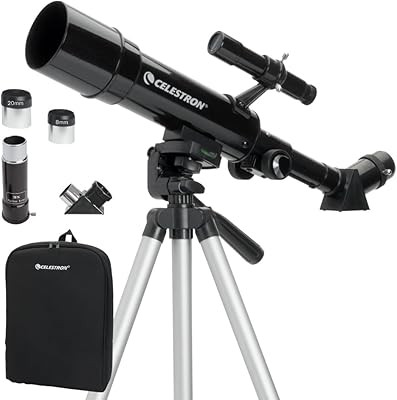
Celestron Travel Scope 50 Refractor Telescope
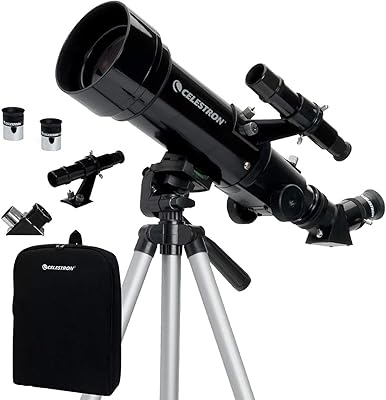
75%
74%
Optical Clarity
91%
Portability & Weight
88%
Ease of Setup
58%
Build Quality & Materials
53%
Tripod Stability
More
Celestron Travel Scope 70
79%
83%
Optical Clarity
91%
Portability & Weight
67%
Build Quality
93%
Ease of Setup
54%
Tripod Stability
More
Celestron Travel Scope 80 Refractor Telescope
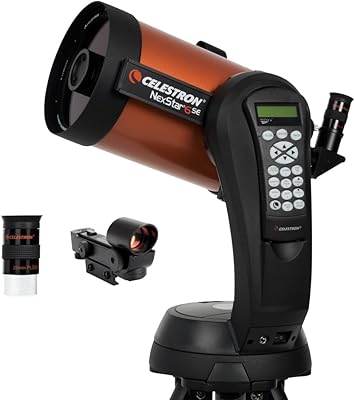
73%
83%
Optical Clarity
61%
Build Quality
91%
Ease of Setup
88%
Portability
86%
Value for Money
More
Celestron NexStar 6SE Computerized Telescope
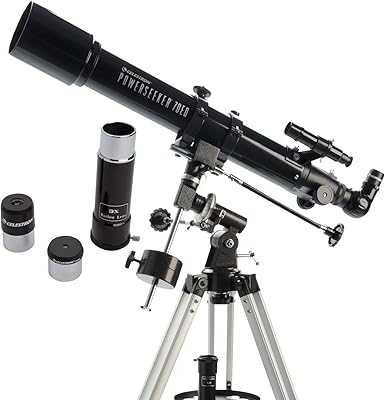
72%
88%
Optical Performance
83%
GoTo Mount Accuracy
86%
SkyAlign Ease of Use
61%
Mount Stability
81%
Portability & Setup Time
More
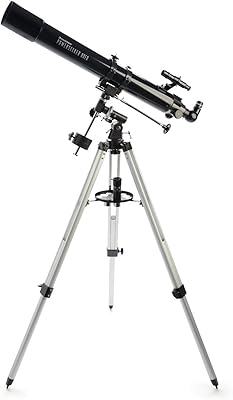
Celestron PowerSeeker 80EQ Refractor Telescope
75%
83%
Optical Clarity
67%
Mount Usability
88%
Portability
84%
Value for Money
72%
Build Quality
More
Celestron PowerSeeker 70AZ Refractor Telescope
75%
78%
Optical Clarity
88%
Ease of Setup
82%
Mount Usability
61%
Tripod Stability
83%
Value for Money
More
Celestron PowerSeeker 60AZ Refractor Telescope
71%
78%
Optical Clarity
62%
Mount & Tracking
54%
Tripod Stability
67%
Eyepiece Quality
83%
Value for Money
More
Celestron AstroMaster 90AZ Refractor Telescope
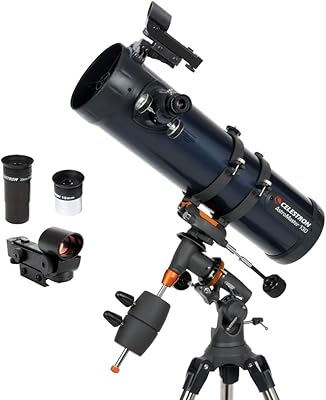
75%
83%
Optical Clarity
91%
Ease of Setup
78%
Mount Usability
62%
Tripod Stability
76%
Value for Money
More
Celestron NexStar 90SLT Computerized Telescope
73%
78%
Optical Performance
83%
GoTo Accuracy
81%
Ease of Setup
86%
Portability
67%
Build Quality
More
Celestron AstroMaster 114EQ Reflector Telescope
70%
83%
Optical Performance
78%
Mirror & Coating Quality
81%
Equatorial Mount
51%
Collimation Consistency
58%
Included Eyepieces
More

FAQ

Most people have it ready to observe in under ten minutes on the first attempt. The tripod legs spread and lock without tools, the tube mounts on a simple bracket, and the finderscope just needs a quick alignment. By the second or third use, setup feels closer to three or four minutes.

With a brief introduction, most kids around 8 to 10 can operate the altazimuth mount independently — it moves in two intuitive directions and has no complicated controls. The trickiest part for younger children is usually fine-focusing, which requires a little patience. Having an adult help with initial alignment and target-finding makes the experience much smoother at that age.

The Moon is genuinely impressive — crater rims, mountain ranges, and the terminator line all show real detail. Saturn's rings and Jupiter's cloud bands with its four Galilean moons are visible on steady nights. Mars shows a disc but limited surface detail, and you can pick up brighter star clusters. For deep-sky objects like nebulae or distant galaxies, the 60mm aperture is too small to show meaningful detail, so keep expectations modest there.

At lower magnifications it holds reasonably steady, but at higher power — especially pushing the 3x Barlow — even a light touch or a passing breeze will cause noticeable vibration that takes a few seconds to settle. It is manageable, not a dealbreaker, but it is the most common frustration mentioned by users who try to use the scope at its maximum magnification.

The included adapter is a spring-loaded universal clamp design that accommodates most standard smartphones, including larger models. It does not work well with very bulky cases, so you may need to remove a thick case before attaching. Once aligned with the eyepiece, it holds securely for basic lunar photography.

It is a basic entry-level version of Starry Night, distributed as a download code. It is genuinely useful for identifying stars, planets, and constellations, and for planning observation sessions, but it is not the full commercial Starry Night Pro package. Think of it as a solid starter planetarium app rather than a professional tool.

The main practical difference is the fully-coated glass optics. Many scopes at lower price points use plastic lenses or uncoated glass, which produces softer, lower-contrast images. The coating on this scope improves light transmission noticeably, especially on the Moon. The accessory bundle — Barlow lens, smartphone adapter, and Bluetooth remote — also adds real value that cheaper kits rarely include.

Yes, and it works well for terrestrial use. The erect image diagonal corrects the orientation so objects appear right-side up, which is important for daytime viewing. The 20mm eyepiece at 18x is a comfortable starting point for scanning landscapes or watching wildlife at moderate distances.

Most units arrive ready to use, but a small number of buyers report needing minor focus or alignment tweaks out of the box. Refractors generally hold collimation better than reflectors and rarely need adjustment, but if images look soft or off-center, checking the finderscope alignment and re-seating the eyepiece is usually the first thing to try.

It is one of the more sensible choices in this category for that exact purpose. The included backpack means it looks complete and ready to go as a gift, the setup is genuinely beginner-friendly, and the views of the Moon on the first night out tend to make a strong impression. Just pair it with a clear-sky reminder app and a note about managing expectations for deep-sky objects.

Where to Buy