Overview

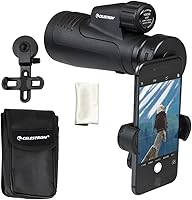
The Celestron Outland X 10x50 Monocular comes from a brand with decades of genuine credibility in optics — not a marketing newcomer, but a company with a real track record in telescopes and binoculars. This monocular targets outdoor enthusiasts who want convenient one-handed viewing without carrying a full pair of binoculars. It sits at a mid-range price point, clearly above the flood of cheap imports while stopping short of professional-grade territory. It ships with a smartphone adapter, belt case, and tripod compatibility — solid out-of-box value. That said, a 3.7-star average across over 120 reviews signals some real-world friction worth addressing with honest scrutiny rather than a pass.

Features & Benefits

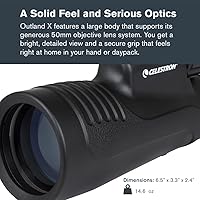
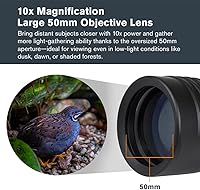
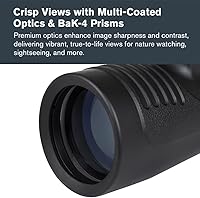
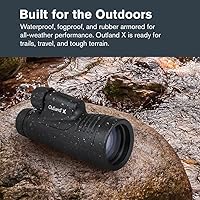
The 50mm objective lens is the real workhorse here — it pulls in noticeably more light than the smaller lenses common on compact monoculars, making a tangible difference when scanning a treeline at dusk or watching birds in deep shade. The BaK-4 prism glass, paired with multi-coated optics, produces contrast and edge clarity that outperforms cheaper BK-7 alternatives in the same price range. Glasses wearers will appreciate the twist-up eyecup — 16.8mm of eye relief means you don't lose the image edges. The rubber-armored body handles rain confidently, and nitrogen purging prevents interior fogging when temperatures shift. A tripod thread rounds things out for steady long-distance sessions.

Best For

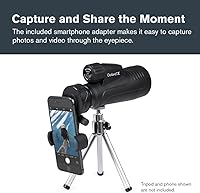
Celestron's mid-range monocular is a natural fit for hikers and birders who want to shed pack weight without sacrificing real optical performance. It's compact enough to clip on a belt and TSA-friendly for travel, making it practical for wildlife safaris, nature walks, or stadium events. Birdwatchers in particular benefit from the large objective lens in early-morning light. The included smartphone adapter opens up basic digiscoping — handy for casual wildlife photographers, though it works best with a patient, steady hand. Buyers after brand-name reliability at a sensible price will find it a reasonable step above generic alternatives.

User Feedback

Owners consistently highlight image brightness and color fidelity as genuine strengths — particularly in daylight, where the Outland X 10x50 holds its own against pricier competition. Build quality and rubber grip draw frequent praise, especially from buyers who have dealt with flimsier budget options. On the downside, the focus wheel has been described by multiple users as stiff and sluggish, which can cost you a shot when a bird moves quickly. The smartphone adapter earns mixed marks — alignment varies by phone size and takes real patience. Worth noting: a fair portion of the lower ratings trace back to shipping damage rather than any issue with the optics themselves.

Pros

  • The 50mm objective lens delivers noticeably brighter images at dawn and dusk compared to compact alternatives.
  • BaK-4 prism glass produces sharper contrast and cleaner edges than the BK-7 glass common at lower price points.
  • Rubber-armored body handles rain and rough handling without feeling fragile in the field.
  • Nitrogen purging prevents fogging when moving between cold and warm environments — a genuinely useful feature outdoors.
  • Twist-up eyecup makes this monocular fully usable for glasses wearers without sacrificing field of view.
  • Tripod-adaptable threading adds a versatility that most single-tube monoculars in this range do not offer.
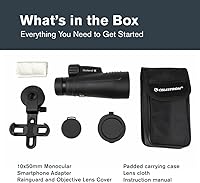
  • Belt case inclusion means it is genuinely carry-ready out of the box with no extra purchases needed.
  • Celestron brand backing provides better long-term support and warranty confidence than no-name imports.
  • At 14.6 oz, the Outland X 10x50 is light enough for all-day carry on extended hikes or travel days.
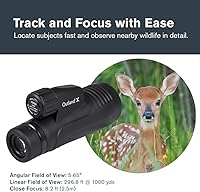
  • Close focus distance of 8.2 ft allows use in surprisingly tight spaces like forest understory or garden birdwatching.

Cons

  • The focus wheel has been described as stiff and slow, making quick adjustments on moving subjects genuinely difficult.
  • Smartphone adapter alignment is inconsistent across phone models, requiring trial and error to get usable shots.
  • A 3.7-star average rating reflects real-world frustrations that buyers should weigh before purchasing.
  • At just over 14 oz, this monocular is heavier than truly ultralight options aimed at serious backpackers.
  • Manual focus only means there is no quick-adjust mechanism for buyers accustomed to auto-focus optical tools.
  • The field of view at 5.65 degrees is relatively narrow, which can make locating fast-moving subjects initially harder.
  • Packaging quality has been flagged by multiple reviewers, raising the chance of damage during shipping.
  • Eye relief of 16.8mm, while workable, is on the shorter end for comfortable extended viewing sessions.

Ratings

Our AI rating engine analyzed verified global buyer reviews for the Celestron Outland X 10x50 Monocular, actively filtering out incentivized, bot-generated, and low-signal feedback to surface what real outdoor enthusiasts actually experienced. The scores below reflect both the genuine strengths that earned this monocular its loyal following and the friction points that tempered overall satisfaction. Nothing has been smoothed over — if buyers ran into consistent trouble with a feature, that shows up in the numbers.

Optical Clarity
83%
Buyers consistently praised the sharpness and color fidelity in daylight conditions, with many noting that the center of the image holds up well even against pricier competitors. The BaK-4 prism and multi-coated lenses deliver a noticeably cleaner, higher-contrast image than most monoculars at this price point.
Edge sharpness falls off more than some users expected, particularly at the outer 20% of the field of view. A handful of reviewers noted minor chromatic aberration on high-contrast subjects like bright sky against dark branches — not a dealbreaker, but worth knowing.
Low-Light Performance
78%
22%
The 50mm objective lens is the standout feature here — users birdwatching at dawn or scanning shaded woodland reported noticeably brighter images than they had seen from smaller 25mm or 32mm monoculars they had previously owned. For a mid-range optic, its performance in soft morning light impressed a clear majority of outdoor users.
True low-light performance — deep dusk or heavy overcast — hits the limits of what the multi-coated but non-phase-corrected optics can deliver. Buyers expecting binocular-level twilight performance may find the image dims and loses crispness faster than anticipated.
Build Quality
81%
19%
The rubber-armored polycarbonate housing earned genuine praise from buyers who compared it directly against cheaper no-name imports — the grip feels secure and the body absorbed knocks and drops during hikes without visible damage. Multiple reviewers specifically mentioned the solidity of the chassis as a reason they trusted it in rough terrain.
A few users noted that the rubber armoring around the focus wheel area showed early wear after several months of regular field use. The construction feels durable enough for casual outdoor use but does not inspire the same confidence as metal-bodied professional instruments.
Focus Mechanism
54%
46%
The manual focus wheel gives users precise control over the focal plane once the target is acquired, and some birders appreciated the deliberate resistance as a way to lock onto a subject without accidental drift during extended observation.
This is the most consistently flagged pain point in verified reviews. The focus wheel frequently feels stiff and requires more effort than expected, making fast target acquisition difficult when a bird moves unexpectedly or a wildlife subject changes direction. New units tend to be the stiffest, and the problem does not fully resolve with break-in use.
Smartphone Adapter
47%
53%
For buyers with mid-sized phones who took the time to align the adapter carefully — ideally with the monocular mounted on a tripod — the adapter did produce usable digiscoped images of stationary subjects. It adds tangible value as a no-cost accessory for casual wildlife photography experiments.
Consistent alignment is the core problem: the adapter fits phone models very differently, and larger or thinner devices are notoriously difficult to stabilize. Hand-held use produces blurry or partially vignetted results most of the time, and a meaningful number of buyers described abandoning the adapter entirely after a few failed attempts.
Waterproofing
88%
Buyers who used the Outland X 10x50 in wet field conditions — rain showers, misty mornings, coastal environments — reported no fogging or moisture ingress. The nitrogen purging proved its worth particularly when users moved from cool morning air into a warmer vehicle, a scenario where lesser monoculars commonly fog.
A small number of users reported that extended exposure to heavy, sustained rain eventually led to minor internal condensation. The waterproofing is robust for typical outdoor use but may not be rated for the more extreme submersion scenarios some adventure users might encounter.
Eye Relief & Comfort
76%
24%
The twist-up eyecup with 16.8mm of eye relief is a practical differentiator for glasses wearers — buyers who wear corrective lenses noted they could use it comfortably without removing their glasses and without losing the full field of view. The adjustable mechanism holds its position reliably across viewing sessions.
For users without glasses, 16.8mm is workable but sits on the shorter side for truly relaxed extended viewing. Users who spent over 30 minutes continuously scanning reported mild eye fatigue at the eyecup, suggesting this is better suited to shorter, intermittent observation than marathon birdwatching sessions.
Portability
82%
18%
At just under a pound and sized to fit one hand comfortably, this monocular travels easily in a day pack or clipped to a belt in the included case. Travelers and hikers repeatedly cited its form factor as a primary reason for choosing it over a paired binocular set of equivalent magnification.
At 14.6 oz it is noticeably heavier than truly ultralight compact monoculars, some of which weigh under 4 oz. Buyers doing multi-day backpacking with strict pack weight limits found it heavier than expected for a single-tube optic.
Value for Money
71%
29%
Buyers who received undamaged units and used the optics as intended — outdoor daytime observation — generally felt the price was justified by the combination of Celestron brand backing, BaK-4 glass, and the accessory bundle. The inclusion of the belt case and smartphone adapter adds perceived value that competing units charge extra for.
The 3.7-star average drags perceived value down, particularly because some buyers feel the focus wheel stiffness and adapter inconsistency represent quality control gaps that should not exist at this price. A few reviewers noted they found comparable optical performance from less well-known brands for noticeably less money.
Tripod Compatibility
84%
The tripod-adaptable thread worked reliably across standard tripod heads in buyer testing, opening up stable use cases like digiscoping, long-distance landscape observation, and casual stargazing that hand-held monoculars cannot support. Buyers mounting it for extended sessions noted a significant improvement in image steadiness.
The tripod thread is the only mounting option — there is no Arca-Swiss or quick-release plate compatibility out of the box. Buyers with photography tripods requiring a dedicated plate will need an adapter, which adds a small extra cost and setup step.
Field of View
67%
33%
The 5.65-degree angular field is adequate for most wildlife observation and birdwatching in open terrain, giving enough width to locate and follow subjects without constant readjustment. Stationary subjects like perched birds or distant landmarks are easy to center and observe.
At 10x magnification, the field of view is on the narrower end compared to some competing optics, which makes locating fast-moving or erratic subjects — flushed birds, running deer — genuinely challenging. Buyers accustomed to wide-angle binoculars noted the transition required an adjustment period.
Ease of Setup
79%
21%
Out of the box, the monocular requires no assembly beyond attaching the eyecup to the preferred position — it is ready to use in seconds. The belt case slips on and off quickly, and the tripod thread requires no special tools or adapters for standard tripod use.
The smartphone adapter setup is a clear exception: aligning it correctly for the first time takes patience and some trial and error, especially for buyers unfamiliar with digiscoping. Instructions provided are minimal and do not account for the wide variation in phone camera placements.
Packaging & Unboxing
51%
49%
When units arrived in good condition, the unboxing experience was straightforward and the accessories were neatly organized. The belt case and cleaning cloth were well-placed and ready to use immediately.
Packaging quality is a recurring complaint and a significant contributor to the product's lower overall star rating — multiple buyers received units with lens scuffs, loose components, or damaged housings due to insufficient protective padding during shipping. This represents a tangible quality control gap that affects first impressions and buyer confidence.

Suitable for:

The Celestron Outland X 10x50 Monocular is a strong pick for outdoor enthusiasts who want real optical performance in a compact, one-handed package without paying professional prices. Birdwatchers will find the large objective lens particularly useful in early-morning woodland or overcast conditions where smaller lenses visibly struggle. Hikers and backpackers benefit from the lightweight belt-case form factor — it takes up far less room than a full binocular pair while still delivering sharp, bright views at 10x magnification. Travelers heading on safari or to wildlife reserves will appreciate that it clears airport security without hassle and slips into a day bag effortlessly. Glasses wearers specifically should note the twist-up eyecup, which adjusts eye relief so the full image stays visible — a practical detail that many competing monoculars in this price range skip entirely. Casual smartphone photographers who want to try digiscoping without investing in a dedicated camera lens will also find this a reasonable starting point.

Not suitable for:

The Celestron Outland X 10x50 Monocular is not the right tool for buyers who need fast, fluid target acquisition — the manual focus wheel has been reported as stiff by a number of users, which is a real liability if you are tracking fast-moving birds or wildlife. Serious digiscopers or phone photographers expecting consistently reliable results from the included smartphone adapter will likely be frustrated; alignment varies considerably depending on phone size and shape, and achieving a clean shot takes patience most action scenarios do not allow. Professionals or advanced hobbyists who demand edge-to-edge sharpness and premium glass transmission should look higher up the price ladder, as this monocular is a mid-range instrument with the trade-offs that implies. Anyone expecting effortless, one-second focus adjustments in dynamic field conditions may find the experience limiting. If you already own quality binoculars and are considering this purely as an upgrade in viewing clarity, the jump may not justify the purchase.

Specifications

  • Magnification: Fixed 10x magnification brings distant subjects ten times closer, suitable for birdwatching and general wildlife observation.
  • Objective Lens: 50mm objective lens diameter gathers substantial light, improving image brightness in low-light conditions such as dawn, dusk, and shaded woodland.
  • Prism Type: BaK-4 borosilicate prism glass provides higher light transmission and better edge-to-edge clarity than the BK-7 prisms used in budget alternatives.
  • Lens Coating: Multi-coated optics apply anti-reflective layers to multiple lens surfaces, improving contrast and reducing glare across the field of view.
  • Eye Relief: 16.8mm of eye relief allows comfortable viewing with or without eyeglasses when used with the twist-up eyecup fully extended.
  • Eyecup: Twist-up adjustable eyecup lets users set their preferred eye relief position and keep it consistent across viewing sessions.
  • Field of View: Angular field of view measures 5.65 degrees, equating to approximately 296.8 ft at 1,000 yards — adequate for scanning open terrain or treelines.
  • Close Focus: Minimum close focus distance is 8.2 ft (2.5m), enabling use in relatively tight environments such as garden birdwatching or forest understory observation.
  • Focus Type: Manual focus via a central focus wheel requires direct adjustment by the user for each new target distance.
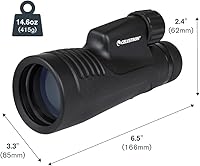
  • Weight: The unit weighs 14.6 oz (415g), making it portable enough for day hikes while still heavier than ultralight compact monoculars.
  • Dimensions: Overall body dimensions measure 7.48 x 4.33 x 3.35 inches, fitting comfortably in one hand and into most belt cases or day packs.
  • Housing Material: Rubber-armored polycarbonate body provides impact resistance and a secure, non-slip grip in wet or cold conditions.
  • Weather Protection: Fully waterproof construction and nitrogen purging prevent moisture ingress and internal fogging when temperatures shift or during rain exposure.
  • Tripod Mount: Standard tripod-adaptable threading allows attachment to most tripod heads for stable, hands-free observation during extended sessions.
  • In the Box: Package includes the monocular, a smartphone digiscoping adapter, a belt-compatible carry case, and a cleaning cloth.

Related Reviews
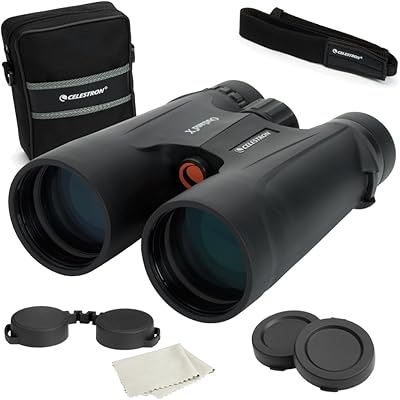
Celestron Outland X 10x50 Binoculars
81%
88%
Optical Clarity
83%
Low-Light Performance
86%
Build Quality
84%
Weather Resistance
91%
Value for Money
More
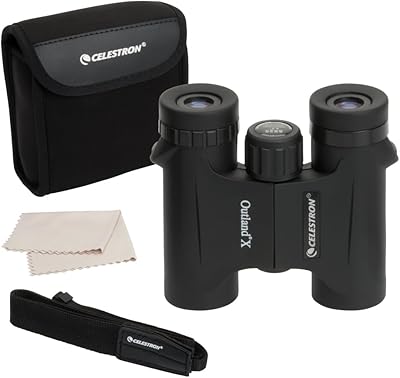
Celestron Outland X 8x25 Binoculars
84%
92%
Portability
89%
Image Quality
90%
Waterproof Performance
87%
Ease of Use
83%
Magnification
More
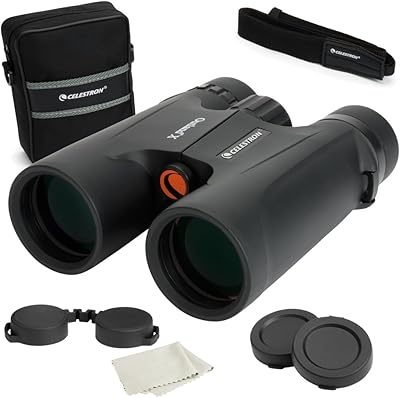
Celestron Outland X 10x42 Binoculars
81%
88%
Optical Clarity
91%
Build Quality & Durability
93%
Weatherproofing
89%
Value for Money
61%
Eye Relief & Eyeglass Compatibility
More
Celestron Outland X 8x42 Binoculars
82%
88%
Optical Clarity
83%
Low-Light Performance
91%
Field of View
86%
Build Quality
89%
Weather Resistance
More
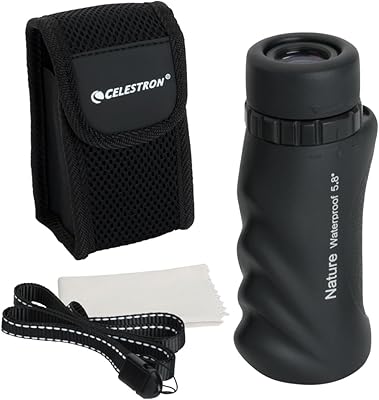
Celestron Nature 10x25 Monocular
79%
83%
Optical Clarity
61%
Low-Light Performance
88%
Build Quality
91%
Weather Resistance
94%
Portability & Size
More
Celestron CM1000C Monocular Compound Microscope
81%
91%
Value for Money
88%
Image Clarity and Magnification
85%
Ease of Use for Beginners
90%
Build Quality and Durability
83%
Focus Control Precision
More
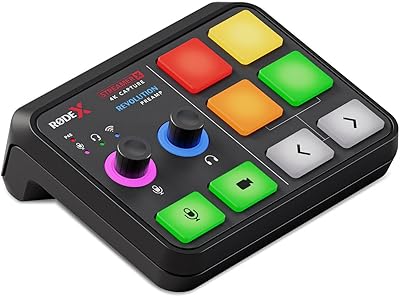
RØDE X Streamer X
RØDE X Streamer X
83%
94%
Audio Quality
90%
Video Capture Performance
88%
Build Quality
91%
Portability
86%
Connectivity Options
More
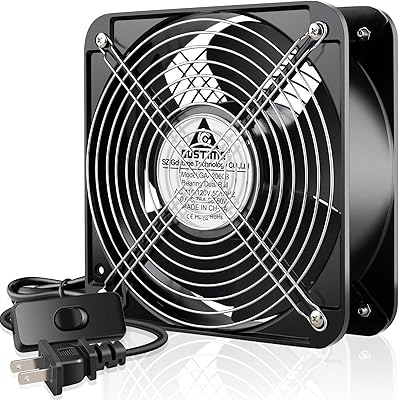
GDSTIME 17251 172mm AC Axial Fan
78%
93%
Build Quality
91%
Airflow Performance
41%
Noise Level
89%
Durability & Longevity
67%
Ease of Installation
More
Amazon Basics 25x30 Photo Studio Light Box
81%
88%
Lighting Quality
93%
Setup & Ease of Use
86%
Image Quality Output
67%
Build Quality & Durability
71%
Interior Size & Capacity
More
GDSTIME 200mm 120V AC Axial Fan
82%
93%
Build Quality
91%
Bearing Longevity
88%
Airflow Performance
41%
Noise Level
84%
Ease of Installation
More

FAQ

It is genuinely waterproof, not just splash-resistant, so light to moderate rain is not a concern. The nitrogen purging also means the interior will not fog up when you move between cold and warm environments, which is a real advantage in field conditions. Just avoid fully submerging it.

Yes, and this is one of the Outland X 10x50's more practical strengths. The twist-up eyecup provides 16.8mm of eye relief, which is enough for most glasses wearers to see the complete field of view without pressing their lens directly against the eyecup. Twist it down fully if you are not wearing glasses, up if you are.

It works, but manage your expectations. The adapter attaches your phone camera over the eyepiece and can produce decent shots in stable conditions — ideally mounted on a tripod. Hand-held phone photography through it is hit-or-miss, and alignment varies depending on your phone's camera placement. Buyers with larger or oddly shaped phones have reported the most frustration. If casual, occasional digiscoping is the goal it is fine; if reliable phone photography is a priority, a dedicated digiscoping setup would serve you better.

The optical performance at 10x is comparable to a similarly priced binocular. What you give up is depth perception and the eye-fatigue advantage of two-eyed viewing over long sessions. What you gain is size, weight, and the ability to use it one-handed. For casual use, travel, and short observation sessions, the trade-off is reasonable.

It is the most consistently mentioned complaint among real buyers. The wheel can feel stiff, particularly when new, and requires deliberate effort to turn. This matters most if you are tracking fast-moving birds or wildlife that won't hold still. For slower subjects — landscapes, stationary animals, distant scenery — it is less of a problem. Some users find it loosens slightly with regular use.

Yes. The body has a standard tripod-adaptable thread, so it mounts directly onto most tripod heads without an adapter. This is useful for extended observation sessions, astronomy, or getting steady shots through the smartphone adapter.

It is worth understanding what drives it. A meaningful portion of lower ratings appear to relate to shipping and packaging issues rather than defects in the optics or build. Among buyers who received the unit undamaged, the ratings trend noticeably higher. That said, the stiff focus wheel and smartphone adapter frustrations are legitimate recurring complaints, so the rating is not entirely a packaging artifact. If you buy from a reputable seller with good packaging practices, the optics themselves are generally well-regarded for the price.

The minimum close focus distance is 8.2 ft, which is about 2.5 meters. That is close enough for larger insects like butterflies at a comfortable working distance, though you won't be able to focus on something just a foot or two in front of you. For most garden and field naturalist use it should be adequate.

BaK-4 glass has a higher refractive index, which means light passes through more cleanly and with less scattering, especially near the edges of the image. In practical terms you get a brighter, more even image circle — the center and the edges look more consistent. BK-7 prisms, common in cheaper monoculars, can produce a slightly dimmer or vignetted edge. At this price point, BaK-4 is genuinely a step up worth having.

Always use the included cleaning cloth or a dedicated optical microfiber cloth — never paper towels or clothing fabric. For dust, blow it off gently first using a lens blower before any contact. For smudges, breathe lightly on the glass to add a tiny amount of moisture, then wipe in gentle circular motions from center outward. Avoid pressing hard or using household glass cleaners, as these can damage the multi-coating over time.

Where to Buy

B&H Photo Video Audio
In stock $94.95
Academy Sports + Outdoors
In stock $89.95
New Jersey Audubon
In stock $89.95
AtlantaHobby.com
In stock $89.95
Cloud Break Optics
In stock $94.95
Camera Concepts & Telescope Solutions
In stock $94.95