Overview

The Celestron AstroMaster 130EQ-MD Reflector Telescope sits comfortably in the mid-range beginner segment — a meaningful step above the flimsy toy scopes that frustrate new stargazers and end up gathering dust after a month. Built by a California optics company with more than six decades in the industry, it brings a genuine differentiator to its price class: a motorized equatorial mount that actually follows the sky. Most entry-level scopes hand you a basic alt-azimuth mount and wish you luck. This one ships with tracking hardware, bundled astronomy software, and a practical accessory set right out of the box. That said, it is aimed squarely at curious beginners, not astrophotographers chasing faint targets with long exposures.
Features & Benefits

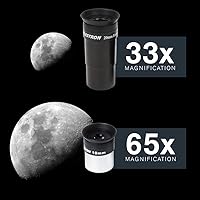
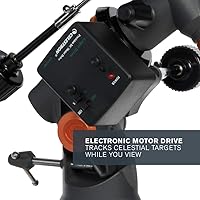
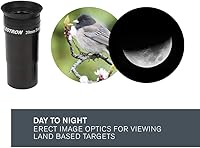
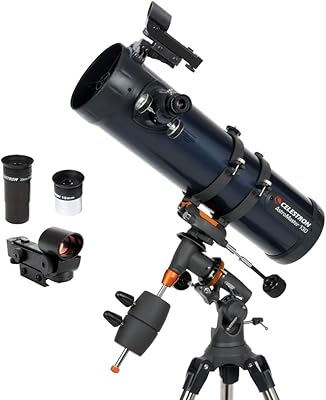
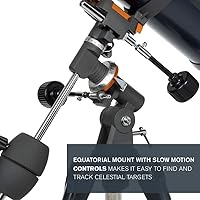
The heart of this beginner equatorial telescope is its 130mm Newtonian reflector, coated with aluminum and silicon dioxide for crisp, bright planetary views. At 33x through the 20mm eyepiece — which includes a built-in erect image corrector — the Moon is stunning, and Saturn's rings resolve with real clarity. Switch to the 10mm for 65x and Jupiter's cloud bands start to emerge. The CG-3 equatorial mount lets you dial in your target precisely using slow-motion control knobs on both axes, while the RA motor drive, running off a single 9V battery, keeps objects centered automatically. The StarPointer red dot finderscope makes initial alignment quick and approachable. No tools are needed for assembly, and most people are set up and outside in under 15 minutes.

Best For

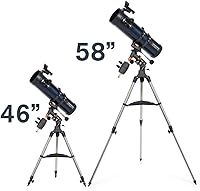
The AstroMaster 130EQ-MD is a strong fit for adults and teens who are ready to take astronomy seriously but not yet looking to spend on advanced gear. It shines for suburban observers who want to study Saturn's rings and Jupiter's moons from a backyard or a nearby dark-sky spot. The motorized tracking is a real quality-of-life upgrade for anyone who has watched a planet drift out of frame mid-observation and had to chase it manually. Families will find the adjustable tripod practical — it works comfortably at different heights for both adults and kids. It also makes a considered gift from a brand that backs purchases with a two-year warranty and US-based expert support.

User Feedback

Buyers consistently point to two highlights: lunar and planetary image quality that genuinely impresses at stock magnifications, and a motor drive that transforms solo observing sessions by eliminating the constant manual nudging. The criticism worth taking seriously centers on collimation — mirrors can shift in transit, and getting them properly aligned requires some patience, especially early on. A fair number of reviewers also mention that the bundled eyepieces are functional starters but that swapping in quality glass produces a noticeable improvement. The tripod can feel slightly unsteady at higher magnifications in any wind. On balance, the overall sentiment skews clearly positive among buyers who invest time in learning polar alignment before their first night out.

Pros

  • The 130mm aperture delivers genuinely sharp, bright views of the Moon and planets right out of the box.
  • Motorized RA tracking keeps celestial objects centered automatically, removing a major frustration for solo observers.
  • The CG-3 equatorial mount offers slow-motion control knobs on both axes for smooth, accurate manual pointing.
  • No-tool assembly means most users are set up and observing in under 15 minutes.
  • The StarPointer red dot finderscope makes lining up targets fast and intuitive for complete beginners.
  • Backed by a two-year US warranty and domestic expert support from a brand with decades of credibility.
  • The adjustable tripod accommodates observers of different heights comfortably, adults and kids alike.
  • Bundled astronomy software adds genuine educational value beyond what the hardware alone provides.
  • At its price point, including a motor drive is a real advantage over comparably priced competitors.

Cons

  • Mirrors can shift during transport, requiring collimation before nearly every serious observing session.
  • The included eyepieces are functional starters but noticeably limit optical performance compared to quality aftermarket glass.
  • The tripod can feel wobbly at higher magnifications, especially in any wind above a light breeze.
  • Polar alignment is required to get the most from the equatorial mount, and learning it takes time and patience.
  • The single-axis RA motor drive is unsuitable for astrophotography, even basic planetary imaging setups.
  • Light pollution significantly reduces what the 5-inch aperture can reveal from typical suburban backyards.
  • At 28 lbs assembled, portability to remote dark-sky sites requires genuine effort and planning.
  • The 9V battery powering the motor drive can drain faster than expected during long winter observing sessions.

Ratings

The scores below reflect AI-synthesized analysis of verified global buyer reviews for the Celestron AstroMaster 130EQ-MD Reflector Telescope, with spam, bot-submitted, and incentivized feedback actively filtered out before scoring. Each category captures what real owners experienced across months of actual use — not just first impressions. Both the highlights and the honest frustrations are reflected here so you can make a fully informed call.

Optical Performance
83%
For a beginner reflector, the 130mm aperture genuinely impresses. Owners consistently report crisp views of lunar craters, Saturn's ring gap, and Jupiter's equatorial bands at mid-range magnifications — the kind of details that keep new astronomers hooked through their first season.
Performance drops noticeably if the mirrors are even slightly out of collimation, and suburban light pollution erodes contrast on fainter targets. Buyers expecting galaxy detail from a city backyard will be underwhelmed regardless of the optics quality.
Motor Drive Tracking
78%
22%
The RA motor drive is the reason many buyers chose this scope over cheaper alternatives, and it earns that loyalty. Once polar alignment is reasonably dialed in, objects stay centered long enough to enjoy extended observation sessions without constant manual correction — a real comfort during solo nights out.
The tracking is only as good as the polar alignment beneath it, and a rough setup produces noticeable drift within minutes. Some users also reported the motor occasionally stuttering in cold weather, likely tied to reduced battery performance.
Mount & Tracking Mechanics
74%
26%
The CG-3 equatorial mount gives this beginner scope a legitimate mechanical foundation. The slow-motion control knobs on both axes feel deliberate and smooth, letting observers fine-tune pointing without the jarring overshooting common on cheaper alt-azimuth designs.
Polar alignment has a real learning curve that catches many first-time equatorial mount users off guard. The process is not difficult once understood, but the documentation could do a better job of walking beginners through it step by step.
Build Quality
69%
31%
The optical tube feels solid and the overall construction is appropriate for the price tier. The CG-3 mount head has a reassuring heft to it, and the slow-motion cables connect securely without obvious play or slop in normal observing conditions.
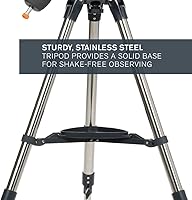
The tripod legs are the weakest link — at higher magnifications or in even a moderate breeze, vibration damps slowly enough to disrupt the view. Several buyers noted that the tripod feels noticeably underpowered relative to the weight of the tube and mount it supports.
Tripod Stability
61%
39%
The adjustable height is legitimately useful for families or mixed-height observers, and the no-tool leg adjustment works reliably. For low-to-mid magnification work on a calm night, the tripod holds a steady enough platform.
At magnifications above 100x, tripod vibration becomes a real issue — footsteps nearby or a gust of wind can send the image bouncing for several seconds. This is one of the most frequently cited frustrations in real user feedback and it cannot be fully resolved without aftermarket modifications.
Included Eyepieces
63%
37%
The 20mm and 10mm eyepieces cover a practical magnification range for a beginner, and the erect image corrector in the 20mm is a thoughtful inclusion that makes terrestrial viewing more intuitive. They are functional enough to produce rewarding views of the Moon and planets from day one.
Experienced observers consistently describe the stock eyepieces as entry-level glass that noticeably limits the optical potential of the 130mm primary. Edge sharpness and contrast both improve substantially with even a modest aftermarket upgrade, making this an early and recommended additional expense.
Ease of Assembly
88%
The no-tool assembly is straightforward enough that most buyers report going from box to backyard in under 20 minutes on their first attempt. The key parts connect logically, and the included documentation covers the physical assembly process clearly enough for true beginners.
Assembly of the hardware is easy; understanding the equatorial mount and polar alignment process is a separate challenge that the included materials handle less thoroughly. Buyers who skip that learning step often end up frustrated that the motor drive does not perform as expected.
Collimation Stability
57%
43%
When the mirrors are properly aligned, the optical quality speaks for itself — sharpness and contrast at the eyepiece are genuinely satisfying for the aperture class. Many users describe the collimation process itself as a manageable skill once learned.
The mirrors shift out of alignment during transport more readily than many buyers expect, and checking collimation before each session quickly becomes routine maintenance. For owners who move the scope regularly between home and a dark-sky site, this is a recurring inconvenience rather than a one-time issue.
StarPointer Finderscope
81%
19%
The red dot finderscope is intuitive enough that most beginners can start acquiring targets on their very first night without any prior experience. It eliminates the steep learning curve of a traditional peep-hole or optical finderscope, which is a meaningful advantage for new astronomers.
The red dot offers zero magnification, which makes centering faint or closely spaced targets less precise than a proper optical finder would allow. Battery life for the LED is generally adequate, but the unit itself feels plasticky compared to the rest of the scope.
Value for Money
76%
24%
In the context of beginner telescopes with motorized equatorial mounts, this beginner equatorial telescope offers genuine value. The inclusion of the motor drive, two eyepieces, finderscope, and astronomy software at this price tier is hard to match with competing models.
Buyers who factor in the near-inevitable cost of aftermarket eyepieces and possibly a spreader tray or vibration pads to improve tripod stability may find the total investment creeping higher than the initial price suggests. It is good value, but not a complete out-of-the-box solution.
Setup Time After Learning
82%
18%
Once a user has completed a few sessions and internalized the polar alignment process, the overall setup routine becomes efficient and repeatable. Experienced owners report being observing-ready in 20 minutes or less from a cold start, including alignment.
The first few sessions carry a steeper time investment than the marketing implies, primarily due to polar alignment. Buyers expecting a truly plug-and-play experience may feel misled before they build the necessary familiarity with equatorial mount mechanics.
Portability
66%
34%
The optical tube and mount can be separated for transport, which makes fitting everything into a standard vehicle manageable. For backyard use or short car trips to a nearby dark-sky site, portability is adequate for the aperture class.
At 28 lbs assembled, this motorized reflector is not a grab-and-go instrument. Users who want to hike to an observing location or transport the scope frequently without a dedicated vehicle setup will find the bulk and weight a consistent inconvenience.
Brand & Warranty Support
89%
Celestron's two-year US warranty and domestic support team are frequently cited as genuine confidence builders among buyers. Owners who contacted support for collimation guidance or technical questions generally report helpful, knowledgeable responses without being bounced through a frustrating process.
A two-year warranty is solid for this category, but some buyers noted that warranty claims involving shipping the scope back are logistically cumbersome given the size and weight of the package. Response times can vary during peak periods like the holiday season.
Astronomy Software Bundle
71%
29%
The included software download adds real educational value for beginners who want to plan sessions, identify objects, and understand the night sky beyond what the eyepiece shows them. It is a meaningful bonus rather than a token filler inclusion.
The software is a download code for a third-party program rather than a native Celestron application, which means compatibility and long-term support depend on the software developer rather than the telescope brand. A handful of users reported minor installation issues on newer operating systems.

Suitable for:

The Celestron AstroMaster 130EQ-MD Reflector Telescope is an excellent match for adults and teenagers who are stepping into astronomy with genuine curiosity but without the experience — or budget — to justify a serious observing rig. If your goals are watching the Moon's craters sharpen into detail, catching Saturn's rings for the first time, or tracking Jupiter's moons across a few evenings, this scope delivers those moments reliably. The motorized RA tracking is a genuine quality-of-life feature for anyone observing alone, since it keeps targets centered while you take notes or adjust your eyepiece without constantly nudging the scope. Families will appreciate how the adjustable tripod accommodates observers of different heights, making it a shared instrument rather than one that only works comfortably for adults. Gift buyers can feel confident in the purchase knowing a two-year US warranty and accessible customer support are part of the package — not an afterthought.
Not suitable for:

The Celestron AstroMaster 130EQ-MD Reflector Telescope is not the right tool for anyone serious about astrophotography. The CG-3 equatorial mount with its single-axis motor drive is built for visual observing, not the precise, vibration-free long-exposure tracking that imaging requires. Observers who want to reach faint galaxies or globular clusters will also find that suburban light pollution limits what the 130mm aperture can pull in — this scope benefits considerably from dark or semi-dark skies. If you are already comfortable with basic astronomy concepts and have used a beginner scope before, you will likely outgrow this instrument faster than you expect and may be better served by stepping up to a more capable mount or larger aperture from the start. Buyers who are not prepared to learn polar alignment and occasional collimation — both legitimate but real requirements — may find the early learning curve frustrating compared to simpler alt-azimuth designs.
Specifications

  • Optical Design: The telescope uses a Newtonian Reflector design, which gathers light via a parabolic primary mirror rather than lenses.
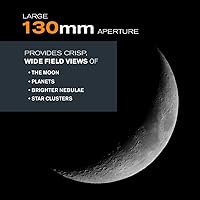
  • Aperture: The primary mirror measures 130mm (5.11-inch) in diameter, providing enough light-gathering ability to resolve planetary detail and brighter deep-sky objects.
  • Focal Length: The optical tube has a focal length of 650mm, contributing to a relatively wide, bright field well suited for low-to-mid power observing.
  • Focal Ratio: At f/5, this is a fast reflector that performs well at lower magnifications and delivers bright, wide views of extended objects like star clusters.
  • Magnification Range: The included eyepieces produce 33x with the 20mm and 65x with the 10mm; the theoretical maximum usable magnification reaches 307x under ideal conditions.
  • Limiting Magnitude: Under dark skies, the 130mm aperture can theoretically reach a limiting stellar magnitude of 13.1, enough to reveal many deep-sky objects beyond naked-eye visibility.
  • Mirror Coatings: The primary and secondary mirrors feature aluminum coatings with a silicon dioxide (SiO2) overcoat for improved reflectivity, durability, and resistance to tarnishing.
  • Tube Length: The optical tube measures 21.7 inches in length, keeping the overall assembled footprint manageable for storage and transport.
  • Mount Type: The scope rides on a CG-3 equatorial mount with separate slow-motion control knobs for right ascension and declination adjustments.
  • Motor Drive: An RA-axis motor drive is included and runs on a single 9V alkaline battery, automatically tracking celestial objects as Earth rotates.
  • Eyepieces: Two eyepieces are included — a 20mm with a built-in erect image corrector and a 10mm — both using standard 1.25-inch barrel sizing.
  • Finderscope: A StarPointer red dot finderscope is mounted on the tube, projecting a non-magnifying red dot onto a small window to help with target acquisition.
  • Tripod: The aluminum tripod is height-adjustable with no tools required, accommodating seated and standing observers of varying heights.
  • Total Weight: The fully assembled system weighs approximately 28 lbs, which includes the optical tube, mount, and tripod together.
  • Power Source: The motor drive is powered exclusively by one 9V alkaline battery, which is included in the box at purchase.
  • Software Bundle: A free download code for a well-regarded third-party astronomy software program is included to assist with sky mapping and object planning.
  • Warranty: Celestron covers this telescope with a 2-year US warranty, backed by a dedicated team of US-based customer support experts.
  • Assembly: The scope requires no tools for assembly and can be set up from the box to a usable observing configuration in approximately 15 minutes.

Related Reviews

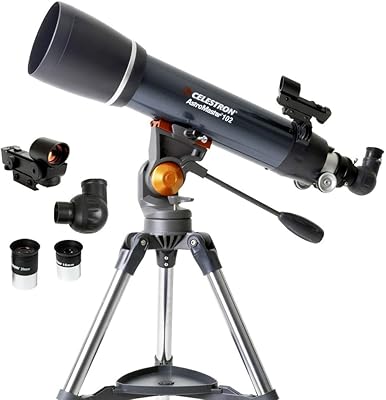
Celestron AstroMaster 102AZ Refractor Telescope
77%
78%
Optical Clarity
91%
Ease of Setup
74%
Mount Usability
71%
Tripod Stability
83%
Value for Money
More
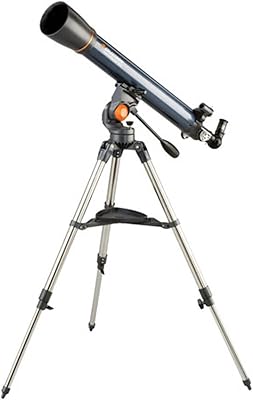
Celestron AstroMaster 90AZ Refractor Telescope
75%
83%
Optical Clarity
91%
Ease of Setup
78%
Mount Usability
62%
Tripod Stability
76%
Value for Money
More
Celestron AstroMaster 114EQ Reflector Telescope
70%
83%
Optical Performance
78%
Mirror & Coating Quality
81%
Equatorial Mount
51%
Collimation Consistency
58%
Included Eyepieces
More
Celestron ExploraScope 114AZ Reflector Telescope
78%
83%
Optical Performance
91%
Ease of Setup
78%
Mount Usability
62%
Included Accessories
57%
Focuser Quality
More
Celestron AstroMaster LT 70AZ Telescope
84%
91%
Ease of Use
88%
Optical Quality
92%
Setup and Installation
85%
Portability
80%
Build Quality
More
Celestron Omni XLT 150 Reflector Telescope
84%
91%
Optical Clarity
89%
Ease of Setup
85%
Mount Precision
88%
Build Quality
84%
Included Accessories
More
SOLOMARK Polaris 130EQ
69%
88%
Optical Clarity
91%
Aperture & Light Gathering
74%
German Equatorial Mount
82%
Build Quality & Materials
61%
Ease of Assembly
More
Celestron PowerSeeker 70EQ Refractor Telescope
71%
78%
Optical Clarity
83%
Mount Quality & Stability
61%
Ease of Assembly
74%
Accessory Bundle Value
86%
Portability
More
Celestron NexStar 90SLT Computerized Telescope
73%
78%
Optical Performance
83%
GoTo Accuracy
81%
Ease of Setup
86%
Portability
67%
Build Quality
More
MEEZAA 150EQ Reflector Telescope
70%
83%
Optical Performance
89%
Aperture & Light Gathering
61%
Equatorial Mount Usability
58%
Collimation Out of the Box
67%
Tripod Stability
More

FAQ

Once you have the equatorial mount reasonably polar-aligned and a target centered in the eyepiece, the RA motor drive does take over and keeps the object in view as the sky moves. It won't be perfect if your polar alignment is rough, but even a close alignment makes a real noticeable difference compared to chasing objects by hand all night.

Assembly itself is genuinely straightforward — no tools, and the main parts connect in a logical order that most people figure out in 10 to 15 minutes. The trickier part is polar alignment of the equatorial mount, which takes a little reading and practice. Plan on spending your first couple of nights learning that process before expecting the motor drive to track smoothly.

Honestly, not in any serious way. The Celestron AstroMaster 130EQ-MD Reflector Telescope has a single-axis motor drive on the RA axis only, which is not precise or stable enough for long-exposure imaging. You can snap casual photos of the Moon through a smartphone adapter, but anyone looking to image planets or deep-sky objects will need a much more capable mount.
Yes, both are well within reach. Saturn's rings become clearly defined even at the lower 33x magnification with the 20mm eyepiece, and bumping to 65x sharpens the view considerably. Jupiter's four Galilean moons appear as distinct points of light, and the planet's cloud bands are visible with a little patience and steady air.

Collimation is the process of aligning the telescope's mirrors so they reflect light precisely to the eyepiece. Reflectors like this one can fall out of alignment during transport or if bumped, so you may need to check it before an observing session. Celestron's website has clear guides on how to do it, and once you've done it a couple of times it only takes a few minutes.

The bundled 20mm and 10mm eyepieces will get you started and are perfectly usable for early sessions. That said, a quality aftermarket eyepiece — even a modestly priced one — will show you a noticeably sharper, wider, more comfortable view. It's worth getting comfortable with the scope first, then upgrading once you know what you want.

It's manageable but not lightweight — the full system comes in around 28 lbs assembled. The tripod and optical tube can be separated and transported in a regular vehicle without much trouble, but you'll want a carry bag or padded case for the tube if you're doing this regularly, since the optics need protection during transport.

The tripod adjusts in height, so kids can use it seated or at a lower position without issue. The motor drive also helps younger observers since objects don't drift away the moment they step back. It's a good family instrument as long as an adult handles the initial polar alignment and setup.

Significantly, for anything beyond the Moon and bright planets. The Moon, Saturn, Jupiter, and Mars look great even from a suburban backyard. But fainter targets — nebulae, galaxies, dimmer star clusters — become much harder or invisible depending on how bad your local sky glow is. If you have reasonably dark skies nearby, the 130mm aperture will show you a lot more.

Celestron offers a two-year US warranty on this scope and runs their support through a US-based team, which is genuinely useful if you have a technical question about setup or collimation. For damage on arrival, contacting the seller quickly with photos is the fastest path to a resolution. Celestron's support line is also known for being responsive to direct inquiries.

Where to Buy