
Overview

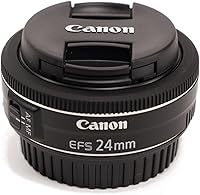
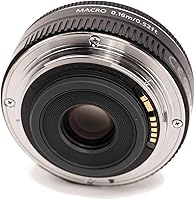
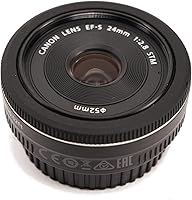
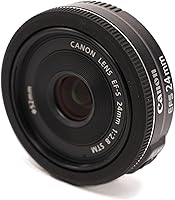
The Canon EF-S 24mm f/2.8 STM Lens is about as unassuming as a lens gets — and that's precisely the point. Slide it onto an APS-C Canon body and you end up with a roughly 38mm equivalent field of view, close enough to how the human eye naturally frames a scene that shooting just feels intuitive. This compact prime isn't trying to do everything. There's no zoom ring, no weather sealing, no image stabilization. What it offers instead is a sharp, lightweight option that slips into a jacket pocket and disappears into a crowd — and for many shooters, that trade-off is entirely worth it.

Features & Benefits

The STM autofocus motor is one of the standout practical advantages here. It's nearly silent, which matters enormously if you're recording video — you won't hear the lens hunting on your audio track. The f/2.8 aperture gives you enough light-gathering ability to shoot comfortably indoors or in dim evening settings, and the seven-blade circular diaphragm produces a reasonably smooth background blur on close subjects. It won't blow anyone away with dramatic bokeh, but it's genuinely pleasing. The full-time manual focus override is a small but welcome touch, letting you nudge focus by hand without toggling any switches. At under an inch thick and barely 4.4 ounces, this pancake lens barely registers on your camera.

Best For

Street photographers will find this pancake lens particularly compelling. It's small enough to avoid drawing stares, and that 38mm-equivalent angle of view captures context without distorting faces the way an ultra-wide would. Travelers packing light will appreciate how little space it demands — it barely changes the profile of the camera body. For someone upgrading from a kit zoom for the first time, the 24mm STM offers a real lesson in the discipline of a fixed focal length: you move your feet, you think harder about framing, and your photos often improve for it. Video creators running a solo setup will value the quiet motor above almost everything else.

User Feedback

Owners consistently praise the sharpness they get from the 24mm STM, often expressing surprise at how well it holds up corner to corner. The size reduction compared to a kit lens gets mentioned constantly — people genuinely love how their camera feels with it attached. That said, the plastic construction comes up repeatedly as a point of disappointment; it doesn't feel as substantial as some buyers expect. Vignetting wide open is a known quirk, though stopping down to f/4 clears most of it. Low-light autofocus occasionally hunts, which frustrates some shooters. Video users, however, are almost unanimously positive about the near-silent focusing performance.

Pros

  • The pancake form factor is genuinely transformative — your DSLR suddenly becomes a camera you carry everywhere.
  • Corner-to-corner sharpness consistently impresses, especially considering the accessible price point.
  • Near-silent STM autofocus makes this compact prime a reliable choice for video work without external audio gear.
  • The 38mm equivalent field of view feels natural and versatile for everyday shooting situations.
  • Full-time manual focus override gives shooters precise control without breaking their autofocus workflow.
  • At just 4.4 ounces, travel photographers can pack it without any meaningful weight penalty.
  • The seven-blade circular aperture delivers smooth, organic background blur at closer focusing distances.
  • Minimum focus distance of 0.16 meters adds unexpected versatility for close-up lifestyle and detail shots.
  • Works natively with every APS-C Canon DSLR body, with full electronic communication out of the box.
  • For first-time prime lens buyers, it delivers a noticeable and immediate upgrade over standard kit zoom optics.

Cons

  • The all-plastic barrel feels noticeably less solid than the price might reasonably lead buyers to expect.
  • Autofocus hunts in dim or low-contrast environments, which can cost you shots at events or indoors.
  • Vignetting wide open is visible enough to require correction in post when shooting light-colored backgrounds.
  • No weather sealing makes outdoor shooting in rain or dusty conditions a calculated risk.
  • The lens hood is sold separately, which feels like a small but unnecessary additional cost.
  • EF-S mount limits future use — full-frame or mirrorless Canon upgrades will leave this lens behind.
  • Maximum magnification of 0.27x falls short for anyone wanting to shoot fine detail or small objects closely.
  • No optical image stabilization means handheld video without a gimbal requires careful technique.
  • Background blur is pleasant at close range but underwhelming in typical shooting distances — manage expectations.
  • Low-light performance lags behind faster primes, pushing you toward higher ISO than ideal on some bodies.

Ratings

The Canon EF-S 24mm f/2.8 STM Lens has been evaluated through AI-driven analysis of thousands of verified global user reviews, with spam, bot activity, and incentivized submissions actively filtered out to ensure the scores reflect genuine buyer experiences. This compact prime earns high marks in several areas while showing clear limitations in others — and both sides of that picture are reflected honestly below. From street photographers to video creators, the feedback spans a wide range of real-world shooting conditions, giving these ratings meaningful depth.

Image Sharpness
88%
Users frequently describe being genuinely surprised by how crisp this pancake lens renders detail across the frame, even wide open. For street shots and travel photography, the corner-to-corner consistency holds up well in good light, and stopped down to f/5.6 it becomes genuinely difficult to fault.
Wide open at f/2.8, some softness appears at the extreme edges, which shows up most in architectural shots where straight lines and fine detail extend to the corners. It's not a dealbreaker, but pixel-peepers shooting landscapes will notice it.
Autofocus Performance
82%
18%
For everyday stills shooting — people on the street, candid family moments, quick travel snaps — the STM motor locks on fast and quietly enough that it rarely gets in the way. Video shooters in particular appreciate how smooth and near-silent the focus transitions are during continuous recording.
Push it into dim restaurant lighting or a dimly lit event space and the lens can hunt noticeably before locking. It's not a chronic issue, but in low-contrast, low-light situations the AF hesitates in ways that faster, pricier lenses simply don't.
Build Quality
61%
39%
The lens is light and well-assembled for what it is — nothing rattles, the mount feels solid on the camera body, and the overall fit is clean enough for daily carry. Plenty of users have been throwing it in bags and jacket pockets for years without incident.
The all-plastic barrel is a recurring disappointment, especially for buyers coming from metal-barreled lenses. It doesn't feel fragile exactly, but it lacks the confidence-inspiring solidity that the price might lead some to expect, and there's no weather sealing of any kind.
Portability & Size
96%
This is where the 24mm STM genuinely stands apart from the rest of the EF-S lineup. At under an inch thick and just 4.4 ounces, it transforms a DSLR into something you'll actually carry every day. Travelers and street shooters consistently describe it as the lens that stays on the camera permanently.
The compact form factor does mean you're working without a zoom ring, which takes adjustment if you're used to kit lenses. A small handful of users also find the lens hood — sold separately — awkward to source, adding a minor nuisance to an otherwise perfect travel setup.
Low-Light Capability
74%
26%
The f/2.8 aperture gives this pancake lens a real edge over slower kit zooms in mixed or dim lighting. Shooting in a café, a dim gallery, or at a family dinner, it pulls in enough light to avoid reaching for flash in situations where an f/5.6 kit lens would struggle.
f/2.8 on an APS-C sensor is decent but not exceptional — don't expect the separation and light-gathering of a fast 50mm or 35mm prime. Users chasing true low-light performance often find themselves wishing for one more stop, particularly when photographing moving subjects indoors.
Bokeh & Background Blur
71%
29%
The seven-blade circular aperture produces a smooth, rounded out-of-focus quality that looks genuinely pleasant on close subjects — a coffee cup on a table, a portrait from a short distance, a product shot. The blur is organic rather than harsh, which matters in real use.
At 24mm on APS-C, background blur is always going to be modest. Users expecting lush, creamy separation will be underwhelmed — the effect is visible and pleasing at close distances, but backs off quickly as subject-to-background distance shrinks. Expectations need to be calibrated accordingly.
Video Performance
91%
The near-silent STM motor is a genuine practical advantage for video work. Whether you're recording a travel vlog, a sit-down interview, or a quick documentary-style clip, the lens focuses without intruding on your audio. Smooth, step-free focus pulls are achievable in live view, which impresses even experienced video shooters.
There's no image stabilization, which becomes an issue when shooting handheld video without a gimbal or stabilized body. At 24mm the shake is manageable, but for smoother footage you'll need to compensate externally, and the f/2.8 aperture isn't wide enough to fully compensate in all lighting conditions.
Value for Money
87%
Measured against what it actually delivers — sharp images, quiet AF, a dramatically smaller footprint than any zoom — this compact prime represents solid value at its price point. For a first prime lens purchase, buyers consistently feel they got meaningful real-world gains over their kit glass.
A small number of users feel the plastic build doesn't quite justify the cost when compared to some third-party alternatives. If you're coming from higher-end glass, the overall package can feel underwhelming in the hand even when it performs well optically.
Ease of Use
89%
The fixed focal length forces a shooting discipline that beginners find genuinely educational — you learn to move, reframe, and think compositionally in ways a zoom doesn't demand. The full-time manual focus override is intuitive and adds a layer of control without any mode-switching.
Transitioning from a zoom lens requires an adjustment period, and some users report frustration in the early days when they can't physically reach for a wider or tighter frame. It's not a flaw exactly, but first-time prime users should expect a learning curve.
Vignetting
63%
37%
When you stop the lens down to f/4 and beyond, the corner shading largely disappears and the image takes on a clean, even look across the frame. For photographers comfortable correcting in post or using in-camera lens correction profiles, this is a non-issue in practice.
Vignetting wide open at f/2.8 is noticeable, particularly against bright skies or light backgrounds. Users shooting JPEG without lens correction profiles will see definite corner darkening, and those preferring to shoot wide open consistently for aesthetic reasons will encounter it regularly.
Compatibility
84%
It pairs natively with every APS-C Canon DSLR body on the market — from entry-level Rebels to more capable mid-range bodies — with full electronic communication, EXIF data, and in-camera correction profiles supported out of the box. No adapters, no workarounds.
The EF-S mount means it is strictly incompatible with full-frame Canon bodies, and it cannot be used on Canon's mirrorless RF-mount lineup without an adapter that still won't make it a native fit. Users eyeing an eventual system upgrade should factor this limitation into their buying decision.
Distortion Control
69%
31%
For a wide-angle lens at this focal length and price tier, barrel distortion is reasonably well controlled. With in-camera correction enabled or a lens profile applied in Lightroom, straight lines in architectural and interior shots clean up convincingly without heavy manual intervention.
Shoot with correction disabled and the barrel distortion becomes visible, particularly along the edges of frames containing architectural elements or horizon lines. It's within the expected range for a wide-angle prime, but users expecting a distortion-free result straight out of camera will need to adjust their workflow.
Minimum Focus Distance
77%
23%
A 0.16-meter minimum focus distance is genuinely useful for a wide-angle lens — it lets you move in tight on small objects, food, or details in a way that many primes at this focal length simply don't allow. Travel and lifestyle photographers find it particularly handy for contextual close-up shots.
It's not a macro lens and shouldn't be treated as one. The 0.27x maximum magnification means fine detail work — jewelry, insects, small text — will push the limits of what the lens can render cleanly. Users wanting true close-up capability will need a dedicated macro solution.

Suitable for:

The Canon EF-S 24mm f/2.8 STM Lens is purpose-built for Canon APS-C DSLR shooters who prioritize portability and image quality over flexibility. Street photographers will find it particularly well-suited to their needs — it's small enough to keep a low profile in busy public spaces, and the roughly 38mm equivalent field of view captures scenes in a natural, unforced way without the distortion of a true ultra-wide. Travelers packing light will appreciate how little this pancake lens changes the size and weight of their kit; it genuinely fits in a jacket pocket alongside the camera body. For video creators working solo or run-and-gun, the near-silent STM motor is a practical asset that avoids ruining audio tracks with focus noise. Beginners making their first step from a kit zoom into the world of prime lenses will also find it a rewarding teacher — shooting with a fixed focal length forces more intentional, compositionally aware decisions that tend to accelerate growth as a photographer.

Not suitable for:

Photographers who need the versatility of a zoom, work heavily in low light with fast-moving subjects, or expect a build quality that feels truly premium should think carefully before committing to this compact prime. The Canon EF-S 24mm f/2.8 STM Lens is an EF-S mount lens only, meaning it will not work natively on Canon full-frame bodies like the 5D or 6D series, and it offers no compatibility path for Canon's mirrorless RF ecosystem without compromises — shooters planning a future system upgrade should weigh that limitation seriously. The plastic barrel, while functional, will disappoint anyone accustomed to the feel of more expensive glass. Wildlife and sports photographers who depend on fast, confident autofocus in challenging lighting will encounter the lens's limits fairly quickly. And if you're hoping for dramatic background blur across a wide range of situations, f/2.8 on APS-C produces pleasing but modest separation — this isn't the lens for that cinematic portrait look.

Specifications

  • Focal Length: Fixed 24mm focal length, equivalent to approximately 38mm on a full-frame camera when used on an APS-C sensor body.
  • Maximum Aperture: f/2.8 maximum aperture allows for reasonable light gathering in mixed lighting conditions and modest background separation on close subjects.
  • Minimum Aperture: The lens stops down to a minimum aperture of f/22, offering a wide exposure range for varied shooting environments.
  • Aperture Blades: Seven circular aperture blades produce a rounded diaphragm opening that contributes to smoother, more natural-looking out-of-focus areas.
  • Autofocus Type: STM (Stepping Motor) autofocus delivers near-silent, smooth focus transitions well suited to video recording and live view shooting.
  • Manual Focus: Full-time manual focus override allows shooters to adjust focus by hand at any time while remaining in One Shot AF mode.
  • Min Focus Distance: The minimum focusing distance is 0.16 meters (0.5 feet), enabling relatively close-up framing for a wide-angle prime lens.
  • Max Magnification: Maximum magnification ratio is 0.27x, suitable for contextual close-up shots but not intended for dedicated macro photography.
  • Lens Mount: Canon EF-S mount — compatible exclusively with Canon APS-C DSLR bodies; not compatible with full-frame or RF-mount mirrorless cameras natively.
  • Filter Thread: 52mm front filter thread accepts standard circular polarizers, ND filters, and UV protective filters of that size.
  • Dimensions: The lens measures 2.68 inches in diameter and just 0.91 inches in depth, making it the slimmest optic in the EF-S lineup.
  • Weight: At 4.4 oz (125g), this pancake lens adds minimal weight to any Canon APS-C body, making it ideal for all-day carry.
  • Construction: The lens barrel is constructed primarily of engineering-grade plastic with a metal EF-S mount interface for secure body attachment.
  • Weather Sealing: No weather or dust sealing is present; the lens should be used with caution in rain, dusty, or high-humidity environments.
  • Image Stabilization: This compact prime does not include optical image stabilization; camera body-based stabilization or steady shooting technique is required for sharp handheld results.
  • Lens Elements: The optical formula consists of 6 elements arranged in 4 groups, a compact design that supports the lens's thin pancake profile.
  • Release Date: The lens was first made available in September 2014 and remains in active production as of its current listing status.
  • Compatibility: Compatible with all Canon APS-C EOS DSLR bodies including the Rebel series, 90D, 80D, 77D, and similar non-full-frame models.
  • Model Number: Canon's official model identifier for this lens is EF-S2428STM, used for warranty registration and parts identification.
  • Lens Hood: A dedicated lens hood is not included in the standard retail package and must be purchased separately as an optional accessory.

Related Reviews
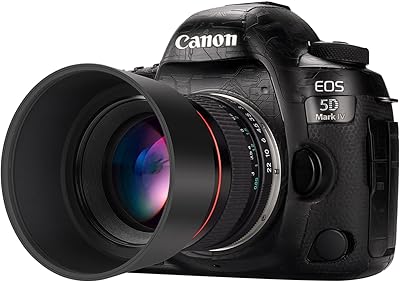
JINTU 85mm f/1.8 Portrait Lens for Canon EF/EF-S Mount
81%
91%
Image Quality
88%
Build Quality
85%
Manual Focus Control
92%
Aperture Performance
87%
Value for Money
More
Canon EF 50mm f/1.8 STM Lens
79%
83%
Image Sharpness
88%
Bokeh & Background Separation
81%
Low-Light Performance
72%
Autofocus Speed & Accuracy
91%
Autofocus Noise
More
Canon EF-S 10-18mm STM Wide-Angle Lens
75%
83%
Image Sharpness
86%
Autofocus Performance
81%
Image Stabilization
58%
Distortion & Vignetting
54%
Low-Light Capability
More
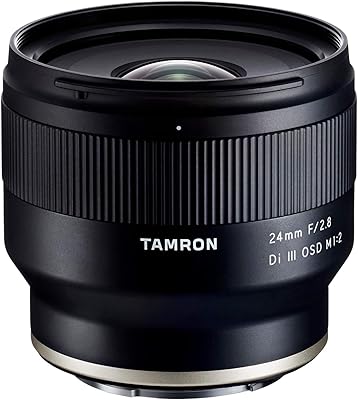
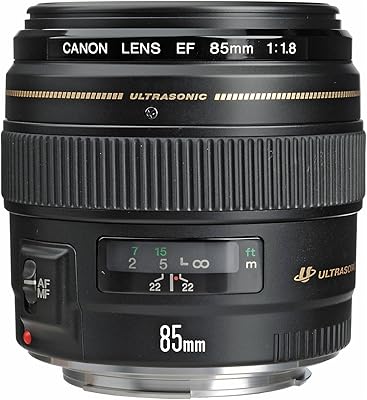
Tamron 24mm F/2.8 Di III OSD Lens
79%
91%
Image Sharpness
93%
Value for Money
74%
Build Quality & Durability
71%
Autofocus Performance
88%
Macro Capability
More
Canon EF 85mm f/1.8 USM Lens
86%
91%
Image Sharpness
93%
Bokeh Quality
88%
Autofocus Speed
94%
Autofocus Noise
86%
Low-Light Performance
More
Canon EF 100mm f/2.8L IS USM Macro Lens
88%
96%
Image Stabilization
92%
Autofocus Speed & Accuracy
94%
Sharpness & Detail
91%
Build Quality & Durability
88%
Weather Resistance
More
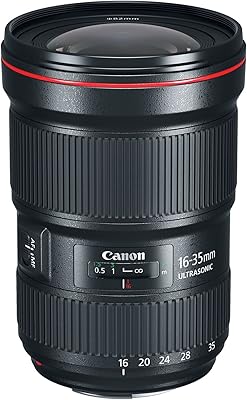
Canon EF 16–35mm f/2.8L III USM Lens
88%
95%
Image Quality
93%
Build Quality & Durability
91%
Autofocus Speed & Accuracy
89%
Low-Light Performance
90%
Weather Sealing
More
Nikon NIKKOR Z 70-200mm f/2.8 S Telephoto Zoom Lens
84%
96%
Optical Sharpness
93%
Autofocus Performance
91%
Image Stabilization
94%
Build Quality
89%
AF Motor Noise
More
Canon EF 24-70mm f/2.8L II Zoom Lens
78%
94%
Optical Sharpness
91%
Autofocus Performance
93%
Build Quality & Durability
62%
Value for Money
38%
Image Stabilization
More
JINTU 500-1000mm f/8 Telephoto Lens for Canon EF Cameras
79%
88%
Value for Money
91%
Sharpness at Distance
82%
Manual Focus Control
84%
Build Quality
95%
Compatibility with Canon EF Cameras
More

FAQ

Yes, it works perfectly on any Canon APS-C DSLR, including the entire Rebel lineup. The EF-S mount connects natively with full electronic communication, so autofocus, EXIF data, and in-camera lens correction all function as expected straight out of the box.

No — EF-S lenses are designed exclusively for APS-C sensors and cannot be mounted on full-frame Canon bodies. The EF-S mount has a physical tab that prevents attachment to full-frame EF-mount cameras. If a full-frame upgrade is on your roadmap, this is worth factoring into your buying decision now.

It's genuinely quiet — quiet enough that a standard camera microphone placed on the hot shoe won't pick up focus noise during normal recording. The STM motor is one of the most practical features of this pancake lens for video work, and vloggers consistently rate it as a real-world strength rather than a marketing claim.

It can work for environmental portraits — the kind where you want to show the person in their setting — but it's not ideal for tight headshots. At 24mm on APS-C you'll need to get fairly close to fill the frame with a face, which can introduce some minor distortion. A 50mm or 85mm prime is a more traditional choice for dedicated portrait work.

The blur is pleasant but shouldn't be oversold. At close focusing distances with a subject well separated from the background, you'll get smooth, rounded out-of-focus areas thanks to the seven-blade aperture. But f/2.8 on an APS-C sensor doesn't produce the same dramatic separation as a fast 50mm or 85mm — the physics of the shorter focal length work against it. Expect tasteful rather than striking bokeh.

It's worth knowing about upfront, but it's not a reliability issue for most shooters. The lens has been on the market since 2014 and plenty of users have carried it daily without problems. What the plastic does affect is the tactile experience — picking it up, it doesn't feel as confidence-inspiring as a metal-barreled lens. If that matters to you, it's a genuine consideration; if you prioritize performance over feel, it's easy to overlook.

The minimum focus distance is 0.16 meters, which is about half a foot. For a wide-angle prime, that's actually quite close — close enough to fill a meaningful portion of the frame with a coffee cup, a small object, or a detail shot. It won't replace a dedicated macro lens, but it adds more close-up capability than you might expect from this type of optic.

No, it doesn't. The lens ships without a hood, and you'll need to purchase one separately. For a lens at this price point, that omission is a minor frustration. The 52mm filter thread is standard enough that third-party options are easy to find, but it's an extra step and expense worth budgeting for if you plan to shoot in bright outdoor conditions.

The difference is noticeable. This compact prime resolves detail more crisply, handles the f/2.8 aperture with better consistency than a kit zoom wide open, and the STM motor is smoother and quieter. You also gain a dramatically smaller, lighter package. The trade-off is obviously that you lose the ability to zoom — but for many photographers that constraint becomes an advantage over time.

Continuous autofocus during video works well in good light and is genuinely one of the stronger use cases for this pancake lens. The STM system tracks smoothly without the jerky, step-like focus hunting you get from older AF motors. In lower light the system can occasionally hesitate, so for critical video work in dim environments, manual focus may give you more predictable results.

Where to Buy

B&H Photo-Video-Audio
In stock $169.00
Full Compass Systems
In stock $169.99
SHI International
In stock $210.00
Precision Camera and Video
In stock $149.00
Willoughby's Photo Emporium
In stock $149.00