Overview

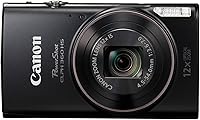
The Canon PowerShot ELPH 360 Digital Camera sits comfortably in Canon's ELPH lineup as a camera aimed at everyday shooters who want more reach and image quality than a smartphone can offer without lugging around a larger camera. This compact Canon feels solid in hand despite weighing under a third of a pound — genuinely pocketable in a jacket or small bag. At its pricing tier, buyers reasonably expect reliable performance in good light, responsive controls, and a polished feature set. What this point-and-shoot is not, and never pretends to be, is a replacement for an interchangeable-lens camera. Think of it as a capable, travel-ready companion.

Features & Benefits

The 20.2-megapixel sensor paired with Canon's DIGIC 4+ processor delivers genuinely crisp images in bright daylight — detail is sharp enough that prints and social shares look excellent. The 12x optical zoom is where this point-and-shoot earns its keep; spanning the equivalent of 25 to 300mm, it handles everything from wide street scenes to distant subjects, and the Optical Image Stabilizer keeps handheld shots steady at longer focal lengths. Built-in Wi-Fi and NFC make transferring photos to a smartphone quick and cable-free. The 3-inch LCD is comfortable indoors but can wash out under direct sunlight. Continuous shooting at 7.2 FPS and 1080p Full HD video round out a solid, well-balanced spec sheet.

Best For

The ELPH 360 is a natural fit for travelers who find smartphone zoom genuinely limiting but have no desire to carry a larger camera system. It also works well as a first dedicated camera for someone upgrading from a phone — the fully automatic modes handle the heavy lifting, so no manual photography knowledge is needed. Older users or beginners will appreciate the generous screen size, which makes navigating menus and reviewing shots noticeably easier than on smaller displays. Anyone who shares photos frequently online or via messaging apps will find the wireless transfer options a practical daily convenience rather than a gimmick.

User Feedback

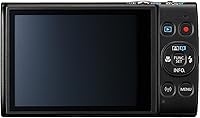
Owners who shoot primarily outdoors consistently praise the zoom reach and image sharpness in good light, and many appreciate how slim and unobtrusive this compact Canon is to carry. Where things get critical, battery life is the most frequently mentioned frustration — roughly 0.9 hours of real shooting means a spare battery is nearly essential for any full day out. Low-light performance draws mixed reactions; the small sensor handles noise reasonably well up to moderate indoor light but struggles in dim conditions, which is worth knowing upfront. Wi-Fi setup divides users — some find it intuitive, others less so. Video quality is rated as decent but rarely exceptional.

Pros

  • The 12x optical zoom covers a 25–300mm equivalent range, giving you reach that no smartphone can match.
  • A 20.2MP sensor with Canon's image processor delivers genuinely sharp, detailed images in good daylight.
  • Optical Image Stabilization keeps handheld shots steady, even at the longer end of the zoom range.
  • Wi-Fi and NFC make wireless photo transfers to a smartphone fast and completely cable-free.
  • Weighing under a third of a pound, the ELPH 360 slips into a pocket or small bag without a second thought.
  • Fully automatic shooting modes make this one of the least intimidating cameras available for complete beginners.
  • The 3-inch LCD screen is large and easy to read, a real advantage for users who find smaller displays frustrating.
  • Continuous shooting at 7.2 FPS is more than capable for capturing kids, pets, or fast-moving subjects.
  • A wide range of creative modes — including miniature effect and Hybrid Auto — add variety without complexity.
  • SDXC card compatibility means storage capacity is not a limiting factor for extended trips.

Cons

  • Battery life of roughly 0.9 hours is genuinely short — a spare battery is almost a required accessory.
  • Low-light performance is mediocre; indoor and evening shots often show visible noise and soft detail.
  • The LCD screen washes out noticeably in direct sunlight, making outdoor composition harder than it should be.
  • There is no raw file support, so post-processing options for serious editors are essentially off the table.
  • Wi-Fi pairing can be inconsistent depending on the device, and some users find the setup unnecessarily fiddly.
  • Video quality, while technically 1080p, lacks the dynamic range and stabilization quality of newer competitors.
  • The fixed LCD means no tilting or articulation for shooting at awkward angles or low to the ground.
  • At this price point, the sensor size is the same as far cheaper compact cameras, which limits its long-term value.
  • No touchscreen functionality limits the speed of menu navigation compared to similarly priced rivals.
  • The maximum aperture of f/3.6 is modest, contributing to the camera's struggles in anything below good light.

Ratings

The scores below for the Canon PowerShot ELPH 360 Digital Camera were generated by our AI system after analyzing thousands of verified global buyer reviews, with spam, incentivized submissions, and bot activity actively filtered out before any scoring was applied. Each category reflects the full spectrum of real user experience — not just the highlights — so both the genuine strengths and the recurring frustrations are represented with equal honesty.
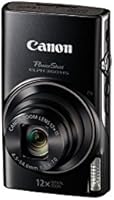
Image Quality in Daylight
84%
In good natural light, the ELPH 360 consistently produces sharp, well-exposed shots that hold up well when viewed on a large screen or printed at standard sizes. Travelers and day-trippers frequently praise the color accuracy and fine detail, particularly for landscapes and outdoor portraits where the 20.2MP sensor has room to perform.
Results drop off noticeably once the light becomes overcast or flat, with images taking on a slightly soft, over-processed look. Users who compared output side by side with newer smartphone cameras in daylight conditions noted that the gap is narrower than expected at this price tier.
Low-Light Performance
51%
49%
The DIGIC 4+ processor does apply reasonable noise reduction at mid-range ISO settings, and for casual indoor shots under typical ceiling lighting the results are usable for social sharing. The Handheld Night Scene mode helps somewhat by stacking multiple exposures to reduce grain.
The 1/2.3-inch sensor is a hard physical ceiling on what this camera can achieve in dim conditions, and no amount of processing fully masks that at ISO 1600 or above. Restaurant interiors, evening events, and any setting without strong artificial light tend to produce noticeably noisy, detail-soft images that disappoint buyers expecting more.
Zoom Range & Versatility
89%
The 12x optical zoom covering a 25–300mm equivalent range is by far the most celebrated aspect of this point-and-shoot among actual owners. Whether pulling in a bird perched across a park, a performer on a distant stage, or an architectural detail high on a building facade, the reach is genuinely impressive for a camera this small.
At the far end of the telephoto range, subject motion and even minor camera movement can cause blur, and the Optical Image Stabilizer only partially compensates. A handful of users also noted that autofocus slows down when zoomed in fully, occasionally missing fast-moving subjects like children or animals.
Image Stabilization
77%
23%
For stationary or slow-moving subjects, the Optical IS works reliably enough that handheld shots at moderate zoom lengths are consistently sharp without requiring a tripod. Most owners shooting street scenes, architecture, or posed portraits found stabilization to be a practical and effective everyday asset.
Walking while shooting almost always introduces motion blur that stabilization cannot fully counteract, and panning shots of moving subjects at longer focal lengths remain tricky. A few users reported that the IS system produced occasional subtle warping artifacts in video footage when moving the camera slowly.
Battery Life
38%
62%
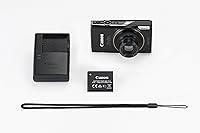
The battery charges fully in a reasonable time using the included charger, and the camera does provide a battery level indicator so you are not caught completely off guard. For very short outings or desk-side use, a single charge is technically adequate.
Roughly 0.9 hours of active shooting is a genuinely disruptive limitation, and it is the single most complained-about aspect across global user reviews without exception. Buyers on day trips, tours, or any extended outing report needing a spare battery almost immediately after purchase — it is less a nice-to-have accessory and more a practical necessity.
Portability & Form Factor
91%
At just 0.32 pounds, the ELPH 360 is light enough to forget it is in a pocket or small bag, which owners consistently note makes it far more likely to actually get used compared to heavier compact cameras. The slim, metal-accented body feels more premium in hand than its weight suggests.
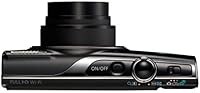
The compact size does mean controls are closely spaced, and users with larger hands occasionally report accidentally pressing adjacent buttons while operating the zoom or shutter. The small grip area also means the camera can feel slightly slippery without a case or strap.
Wi-Fi & Connectivity
66%
34%
Once set up correctly with Canon's Camera Connect app, wireless photo transfers to a smartphone are noticeably faster than using a card reader, and NFC pairing on compatible Android devices makes the connection nearly instant. Owners who regularly share images via messaging or social media found this feature genuinely useful in day-to-day use.
Initial setup trips up a meaningful portion of buyers, particularly those less comfortable with app-based pairing processes, and Canon's interface is not as intuitive as competitors. Several users noted that the connection occasionally drops and requires re-pairing, which becomes an annoyance in the field.
Video Quality
62%
38%
For casual applications — short clips for family archives, social media stories, or simple travel documentation — the 1080p footage is clear enough in good light and easy to share directly from the camera via Wi-Fi. The 7.2 FPS burst mode also supplements video for quick action sequences.
Dynamic range in video is limited, and footage shot indoors or in variable lighting often looks flat or overly processed. Rolling shutter is visible when panning quickly, and the lack of dedicated video stabilization while moving makes walking shots look noticeably shaky compared to even mid-range smartphones.
Display & Screen Usability
73%
27%
The 3-inch LCD is a standout feature for beginners and older users specifically — menus are easy to read, image review is comfortable, and the generous size makes navigating settings far less frustrating than on smaller compact displays. Indoor use is genuinely pleasant.
Outdoor visibility in direct sunlight is a consistent complaint, with the screen washing out enough to make precise composition difficult on bright days. The fixed position of the display also means shooting from low angles or overhead without guesswork is essentially impossible.
Autofocus Speed & Accuracy
74%
26%
In standard auto mode, the 9-point Hybrid AF locks onto faces and central subjects quickly enough for everyday candid shooting and posed portraits. Most users report that the camera rarely misses focus on cooperative subjects in decent light.
In low light or at the far end of the zoom range, autofocus slows and hunts noticeably before locking — a problem that becomes frustrating when photographing children, pets, or any subject that does not hold still. Continuous AF during video recording is also inconsistent and audible in quiet environments.
Ease of Use
88%
This point-and-shoot earns consistently high marks from first-time camera buyers and users who simply want to point and shoot without reading a manual. Fully automatic modes handle exposure, white balance, and focus with minimal input required, making it accessible to virtually anyone regardless of photography experience.
Advanced users who eventually want to explore manual controls will quickly find the options limited — Program mode is the extent of manual exposure adjustment, and there is no aperture or shutter priority. The menu system, while simple, can feel slow to navigate when trying to change settings quickly between shots.
Build Quality & Durability
69%
31%
The body feels reasonably solid for a camera at this size and weight class, and long-term owners generally report that internal components remain functional after a year or more of regular casual use. The fit and finish has a polished look that reads as more expensive than many competitors at a similar tier.
The plastic-and-resin exterior is prone to visible scratches and scuffs over time, particularly on the back panel around the LCD and control buttons. The camera has no water or dust resistance whatsoever, which limits its usability in rain, at the beach, or in any environment where exposure to moisture is a real possibility.
Shooting Modes & Creative Options
78%
22%
The selection of creative modes — including Miniature Effect, Fish-eye, Hybrid Auto, Creative Shot, and Face Self-Timer — gives casual users genuinely fun tools to experiment with beyond basic auto shooting. Hybrid Auto, which records a short video clip before each still, is a feature that owners frequently call a pleasant surprise.
While the variety of modes is broad, many are novelty-oriented rather than practically useful for improving everyday photography. Experienced shooters will find the creative controls shallow compared to cameras offering full manual exposure modes or raw capture capability.
Value for Money
61%
39%
For buyers whose primary need is a pocketable camera with meaningful optical zoom and a trusted brand name, the ELPH 360 delivers a coherent and dependable package that fulfills its core promise. Canon's brand reputation and widespread accessory availability add practical long-term value.
At its pricing tier, the 1/2.3-inch sensor, limited battery life, and absence of raw shooting or advanced controls are harder to justify against newer competitors offering larger sensors or significantly better low-light performance for a comparable or lower outlay. Buyers paying close attention to the market may find the value proposition weaker than the brand recognition implies.

Suitable for:

The Canon PowerShot ELPH 360 Digital Camera is a strong match for travelers who want a genuine zoom advantage over their smartphone without committing to a heavier camera system. If you regularly find yourself wishing you could pull in a distant landmark, wildlife, or a performer on a stage — and you want that image to actually look sharp — this compact Canon delivers where phone cameras simply cannot. First-time camera buyers and beginners will find the automatic shooting modes approachable enough that there is almost no learning curve, while the large 3-inch screen makes reviewing shots and navigating menus comfortable for users of all ages. The built-in Wi-Fi and NFC are genuinely useful for anyone who immediately shares photos to a phone or social media, removing the need for cables or card readers entirely. It is also a sensible choice for anyone attending events, festivals, or family outings where discretion matters and carrying a bulkier camera would feel impractical.
Not suitable for:

The Canon PowerShot ELPH 360 Digital Camera is not the right tool for anyone who shoots regularly in low-light environments — the small 1/2.3-inch sensor produces noticeable noise as the light drops, and no amount of processing fully compensates for that physical limitation. Serious photographers who want manual control, raw file output, or the flexibility of interchangeable lenses will quickly find this point-and-shoot restrictive. The battery life, at roughly 0.9 hours of active shooting, is a real operational problem for anyone planning a full day out without access to a charger or a spare battery. Video enthusiasts expecting cinematic quality will also be disappointed — 1080p footage is functional but not impressive by current standards. If your main concern is image quality in challenging conditions or advanced creative control, a mirrorless or DSLR system is a far more sensible investment at a comparable or only slightly higher price.
Specifications

  • Sensor: A 1/2.3-inch, 20.2-megapixel CMOS sensor captures fine detail in well-lit conditions with a maximum effective resolution of 20.2MP.
  • Processor: The DIGIC 4+ image processor handles noise reduction, color rendering, and autofocus calculations to produce clean, accurate images.
  • Optical Zoom: A 12x optical zoom lens covers a 25–300mm equivalent focal range, supported by built-in Optical Image Stabilization for steady handheld shots.
  • Aperture Range: The lens operates between f/3.6 and f/7.0 depending on focal length, with a maximum aperture of f/3.6 available at the wide end.
  • Display: A fixed 3.0-inch LCD screen with 461K dots provides the primary viewfinder experience for composing and reviewing images.
  • Autofocus: A 9-point Hybrid Autofocus system with Automatic AF mode handles subject detection across a range of shooting scenarios.
  • ISO Range: Sensitivity ranges from standard up to ISO 3200, covering typical daylight and moderately lit indoor environments.
  • Shutter Speed: Shutter speed spans from 1 second down to 1/2000 second, accommodating general action and some low-light long-exposure situations.
  • Burst Shooting: The camera supports continuous shooting at up to 7.2 frames per second for capturing fast-moving subjects.
  • Video: Video is recorded in 1080p Full HD at standard frame rates, saved in MP4 and MPEG-4 formats with a maximum clip length of 30 minutes.
  • Connectivity: Built-in Wi-Fi and NFC enable wireless photo and video transfer to compatible smartphones, while a Micro-HDMI port allows direct TV output.
  • Storage: The camera uses a single SDXC memory card slot and is compatible with cards up to 512GB in capacity.
  • Battery: The rechargeable Lithium Ion NB-11LH battery pack provides approximately 0.9 hours of active shooting per charge and weighs 9.07 grams.
  • Weight: The body weighs 0.32 pounds, making it one of the lighter compact cameras available for everyday carry.
  • File Formats: Still images are stored as JPEG files at Fine or Normal quality levels, with a maximum image size of 4608 pixels on the long edge.
  • Shooting Modes: Available modes include Auto, Program, Hybrid Auto, Portrait, Low Light, Handheld Night Scene, Creative Shot, and several special effects such as Miniature and Fish-eye.
  • Flash: A built-in flash supports Auto, On, Off, and Slow Sync modes, with an effective range of approximately 0.5 to 4 meters at wide angle.
  • Self-Timer: A built-in self-timer offers a 10-second delay, with additional smart options including Face Self-Timer and Wink Self-Timer shooting modes.
  • White Balance: White balance settings include Auto, Daylight, Cloudy, Tungsten, Fluorescent, and Custom to accommodate varied lighting conditions.
  • Water Resistance: The camera body has no water resistance rating and should be kept away from rain, splashing, and humid environments.

Related Reviews
Canon PowerShot G10 Digital Camera
80%
90%
Image Quality
85%
Optical Zoom Performance
88%
Ease of Use
93%
Build Quality
80%
Portability
More
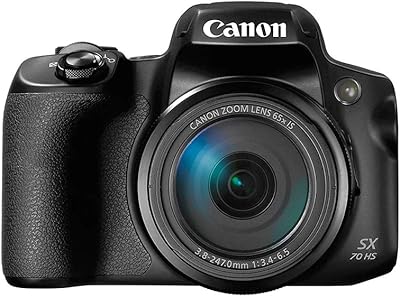
Canon Powershot SX70 HS Digital Camera
84%
92%
Zoom Performance
88%
Image Quality
85%
Ease of Use
90%
Portability & Size
70%
Battery Life
More
Canon PowerShot SX740 HS Point-and-Shoot Camera
73%
93%
Zoom Range
74%
Image Quality
52%
Low-Light Performance
47%
Battery Life
94%
Portability
More
Canon PowerShot V10 Vlogging Camera
77%
86%
Video Quality
89%
Audio Performance
93%
Portability & Form Factor
82%
Built-in Stand
78%
Image Stabilization
More
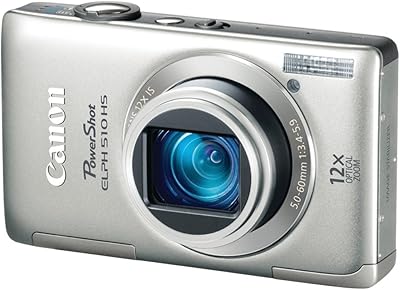
Canon PowerShot ELPH 510 HS
85%
88%
Image Quality
91%
Ease of Use
85%
Zoom Performance
84%
Video Quality
93%
Portability/Size
More
Canon EOS 40D Digital SLR Camera
84%
90%
Image Quality
85%
Build Quality & Durability
87%
Battery Life
84%
Ease of Use
88%
Autofocus Performance
More
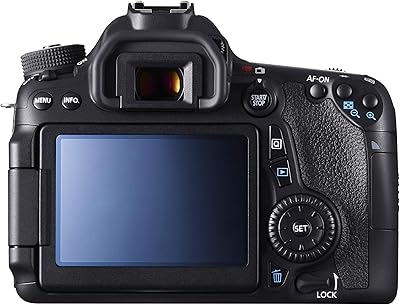
Canon EOS 70D
Canon EOS 70D
82%
91%
Autofocus Performance
87%
Image Quality
78%
Video Capability
83%
Build Quality & Ergonomics
88%
Battery Life
More
Canon EOS 7D Mark II
82%
93%
Autofocus Performance
88%
Continuous Shooting & Buffer
91%
Build Quality & Weather Sealing
86%
Image Quality (Base ISO)
67%
High-ISO & Low-Light Performance
More
myFirst Camera 3 Kids Digital Camera
72%
76%
Image Quality (Daylight)
51%
Low-Light Performance
74%
Video Quality
83%
Macro Lens
81%
Ease of Use
More
ROQIOO A9
ROQIOO A9
67%
83%
Value for Money
61%
Image Quality
58%
Video Quality
81%
Flip Screen Usability
54%
Build Quality & Durability
More

FAQ

For most travel scenarios, yes — particularly when zoom range matters. The ELPH 360 reaches the equivalent of 300mm, which means you can pull in distant architecture, wildlife, or performers on a stage in a way that phone cameras simply cannot replicate optically. Image quality in good daylight is also genuinely strong and holds up well for large prints or on-screen viewing. That said, if you rarely need zoom and shoot mostly in mixed or low light, a modern flagship smartphone may actually compete more closely than you would expect.

Honestly, the battery life is the most significant practical weakness of this camera. Around 0.9 hours of active shooting means that a full day out will almost certainly drain it before you are done. The most common advice from long-term owners is to buy at least one spare NB-11LH battery — they are inexpensive and small enough to carry without any inconvenience. Packing a spare makes this a non-issue; ignoring it makes for a frustrating experience.

It works, but it requires some patience during initial setup. Canon's Camera Connect app handles the pairing process, and once a connection is established it tends to stay reliable for future sessions. Where people run into trouble is the first-time setup, which can be finicky depending on the smartphone model and operating system version. It is worth spending 10 minutes with the manual at home before a trip rather than troubleshooting it on location.

In reasonably lit indoor settings — like a well-lit restaurant or a room with ceiling lights on — results are acceptable, though you will notice some softness and noise compared to outdoor shots. In dimmer conditions, like a candlelit dinner or a darkened event venue, the small sensor does struggle and the built-in flash becomes necessary. If indoor, low-light shooting is a priority for you, this compact Canon is not the strongest choice at its price point.

No memory card is included in the box, so you will need to purchase one separately before shooting. The camera accepts SDXC cards with a capacity up to 512GB, which gives you plenty of flexibility. For most users, a Class 10 or UHS-I card in the 32GB to 128GB range is more than sufficient for stills and 1080p video clips.

The 1080p video capability is functional and perfectly fine for casual use — family moments, travel clips, and short social media videos will look decent. It is not a camera you would choose if video quality is the primary reason you are buying. There is no significant background blur, the dynamic range is limited, and stabilization while walking is inconsistent. Think of video as a bonus feature rather than a core strength.

It is actually one of the more approachable options for first-time camera users of any age. The fully automatic mode handles all exposure decisions without requiring any input, and the 3-inch screen is large enough to make reviewing photos and navigating settings much easier than on smaller compact cameras. The physical controls are minimal and clearly labeled. Many buyers have purchased this point-and-shoot specifically as a gift for parents or grandparents for exactly these reasons.

At full 12x zoom, some softness is normal with any compact camera in this class — physics and sensor size play a role. That said, the Optical Image Stabilization does a respectable job of reducing camera shake on stationary or slow-moving subjects. Shooting in adequate light at the telephoto end produces results that most casual photographers will be happy with. Fast-moving subjects at full zoom, however, are harder to capture cleanly.

The body feels reasonably solid for a plastic compact camera, but the finish is prone to light scratches over time, especially if carried loose in a bag alongside keys or other items. A small drawstring pouch or a fitted case is worth the minimal cost to protect it. Long-term owners generally report that it holds up well mechanically as long as it is kept dry and protected from hard impacts.

Yes — the camera has a Micro-HDMI output port, so you can connect it directly to a TV or monitor with a Micro-HDMI to standard HDMI cable (sold separately). This is a handy way to share a slideshow with family without needing to transfer files to a laptop first. Just note that the cable is not included in the box, so you would need to pick one up if you plan to use this feature.

Where to Buy