Overview

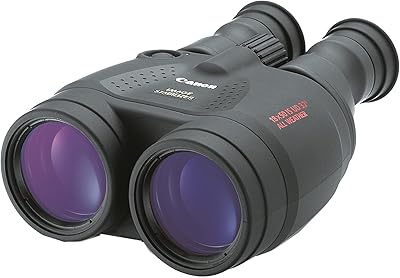
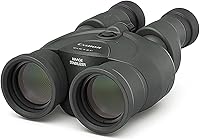
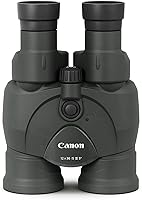
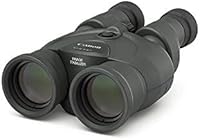
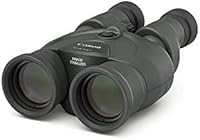
Canon 12x36 IS III Binoculars sit at the top of Canon's consumer IS lineup, and the reason image stabilization matters so much at 12x is straightforward: hand tremor that feels barely noticeable at 8x becomes a constant, distracting shimmer at higher magnification. These Canon IS binoculars are built around a Porro II prism design rather than the more compact roof prism layout, which means they're wider than they are long — a shape some find ergonomically natural and others find slightly awkward. Build quality feels solid without being exceptional. Needing one AA battery to power the stabilization system is either reassuring or limiting depending on how well-stocked your kit is before heading out.

Features & Benefits

The Vari-Angle Prism stabilization is the defining feature here — it works optically rather than digitally, meaning it doesn't crop your image or soften fine detail the way electronic IS can. Pairing 12x magnification with a 36mm objective is an honest trade-off: you gain reach but lose some low-light brightness compared to larger-objective alternatives. What stands out is the doublet field-flattener, which keeps stars, bird plumage, and distant foliage sharp out to the edges of the view rather than softening in the corners. Super Spectra multicoating on the glass adds noticeably to contrast and clarity. At under two pounds, this stabilized 12x optic is lighter than most competing IS units — a real difference you feel after an extended session in the field.

Best For

Canon's image-stabilized binos make the most sense for anyone whose viewing platform moves — birders on a rocking boat, hunters scanning from a truck window, or safari-goers bouncing across rough terrain. At 12x, you can read fine detail on distant raptors or antelope that an 8x pair simply can't resolve, and the IS keeps that detail locked. Casual stargazers and moon-watchers will also find it surprisingly capable, since the stabilization smooths out the atmospheric blur that shakes an unsupported 12x view. It's less ideal for dense woodland birding, where wide field of view and quick target acquisition matter more than raw reach. If you're a hiker wanting ultra-compact optics, the Porro II body shape may feel bulkier than expected.

User Feedback

Owners report the stabilization is the main reason they chose these Canon IS binoculars, and most say it exceeded their expectations — especially on cruises or while observing from a car. The narrow field of view is the most consistent complaint: at this magnification, tracking fast-moving birds through brush requires real patience. Long-term owners note there's no weatherproofing rating, and while many have used them in light drizzle without issue, that's a risk you take rather than a promise the manufacturer makes. Glasses wearers occasionally mention limited eye relief, and close focusing distance draws criticism from butterfly and nature enthusiasts. Most buyers consider the IS premium justified versus non-stabilized rivals, though a few feel the value case weakens against 10x IS alternatives.

Pros

  • Optical image stabilization locks the view steady in ways no amount of careful handholding can replicate.
  • At under two pounds, this stabilized 12x optic is meaningfully lighter than most IS competitors.
  • The Vari-Angle Prism IS preserves full optical sharpness — no digital cropping or softening involved.
  • Doublet field-flattener lenses keep images crisp and clear all the way to the edges of the frame.
  • Super Spectra multicoating produces noticeably high contrast and color fidelity in good light.
  • A single AA battery is universally available worldwide, making resupply simple on long trips.
  • Porro II prism design delivers outstanding light transmission and resolution for the body size.
  • Ideal for boat, vehicle, or any moving-platform observation where conventional binoculars struggle.
  • Lead-free glass construction reflects a thoughtful approach to materials without compromising clarity.
  • Battery efficiency improvements over earlier IS generations mean fewer mid-session interruptions.

Cons

  • No official weatherproofing rating — using these Canon IS binoculars in rain is a calculated risk.
  • The 12x field of view is narrow; tracking fast or close-moving subjects takes practice and patience.
  • Eye relief may be insufficient for comfortable extended use among eyeglass wearers.
  • Close focusing distance is longer than average, limiting usefulness for butterfly or macro nature observation.
  • The Porro II body shape is wider than roof prism alternatives, making bag or pocket carry less convenient.
  • Requires a battery to function at all — the stabilization circuit must be active for the optic to work as intended.
  • No tripod adapter included, which matters for extended stationary observation sessions.
  • The premium over non-IS 12x binoculars is significant, and buyers who rarely observe from moving platforms may not recoup that value.
  • Focusing speed can feel slower than premium roof prism rivals, a real disadvantage in fast-action birding.
  • Long-term durability data in harsh environments is limited, given the electronic component dependency.

Ratings

The scores below for the Canon 12x36 IS III Binoculars were generated by our AI after analyzing thousands of verified owner reviews from global markets, with spam, incentivized submissions, and bot activity actively filtered out. Each category score reflects the full picture — where real users consistently praised these Canon IS binoculars and where they ran into genuine frustrations. Nothing has been softened.

Image Stabilization
96%
Owners describe the stabilization as transformative, particularly on boats, cruise ships, and moving vehicles where ordinary 12x binoculars are essentially unusable. The optical Vari-Angle Prism approach preserves every bit of the lens resolution — users consistently note they can read fine detail at distance that simply shimmered into illegibility with their previous non-IS pair.
A small number of users note the IS button requires deliberate, sustained pressure, which can feel tiring during prolonged observation sessions. In very cold conditions, a few owners report the IS engagement feels slightly sluggish before the unit warms up.
Optical Clarity
91%
The combination of Super Spectra multicoating and doublet field-flattener lenses produces images that owners describe as sharp and high-contrast across most of the viewing circle. Colors render naturally without the cool or washed tones some competitors introduce, which matters for identifying plumage nuance or animal coat detail at distance.
A modest brightness trade-off at the 36mm objective becomes noticeable in heavy overcast or early dawn conditions, where a larger objective would gather more light. Some users with experience on premium European optics feel the very center of the image outperforms the periphery slightly more than they expected.
Field of View
58%
42%
For static, open-landscape subjects — scanning a distant hillside, watching birds on a feeder from a boat, or tracking large animals across a plain — the field of view is entirely adequate and the high magnification more than compensates for the narrower window.
At 12x, the field of view is inherently narrow, and owners who primarily watch fast-moving birds in dense woodland report real frustration trying to track subjects. Users coming from 8x binoculars frequently flag this as the single biggest adjustment period with this stabilized 12x optic.
Build Quality
78%
22%
The body feels solid and well-assembled for a consumer-tier optic, and long-term owners generally report that focusing mechanisms and hinge tension hold up well over years of regular use. The Porro II design feels sturdy in-hand without any creaking or flex that would signal cheap construction.
Compared to premium European binoculars at a similar price point, some experienced buyers describe the exterior finish and rubber armoring as functional rather than exceptional. The overall feel is more utilitarian than luxurious, which can sting a little at the premium price these command.
Weather Resistance
47%
53%
A meaningful number of owners have used Canon's image-stabilized binos in light mist and brief drizzle without any adverse effects, suggesting the seals offer some practical resistance to incidental moisture in everyday conditions.
There is no official weatherproofing or water-resistance rating, and Canon makes no manufacturer guarantee for wet conditions — a significant gap for a product at this tier. Buyers who work regularly in coastal spray, rain, or humid tropical environments report legitimate concern, and several have avoided using them on wet days specifically because of this limitation.
Weight & Portability
83%
At 1.76 pounds, this stabilized 12x optic sits well below most IS binocular competitors in mass, and travel-oriented owners appreciate being able to pack it without major bag-weight consequences. Day hikers and safari-goers consistently mention the weight as a genuine positive relative to what the optic delivers.
The Porro II body is wider than compact roof prism binoculars of similar weight, making it less pocket-friendly and slightly more awkward to stuff into a small daypack side pocket. Users expecting a slim profile for discreet urban or theater use tend to find the width noticeable.
Eye Relief & Comfort
63%
37%
For non-eyeglass wearers, the eye relief is comfortable enough for extended sessions, and the eyecups adjust adequately for most face geometries. Users who observe for thirty minutes or more at a stretch without glasses generally report no significant fatigue issues.
Eyeglass wearers are the most vocal critics of the ergonomics — the eye relief is not generous enough for some prescriptions, leading to clipped edges and a noticeably reduced effective image circle. Several owners who wear glasses have noted they ended up removing their spectacles during use, which is impractical for those who need correction for distance viewing.
Battery Dependency
72%
28%
The universal AA format means owners are never stranded without a replacement — you can buy batteries in almost any country, at any petrol station or corner shop, making resupply genuinely simple on international trips or remote outings.
The IS system requires battery power to function, and some owners find the psychological overhead of managing that dependency mildly irritating when compared to entirely passive non-IS binoculars. A handful of users have been caught off-guard by a dead battery mid-session and note that carrying a spare should be treated as non-optional rather than precautionary.
Focusing Speed
67%
33%
For methodical observation — scanning slowly across a tree line, watching a bird at a known perch, or tracking large slow-moving mammals — the focus wheel is smooth, well-damped, and easy to fine-tune with precision.
In fast-action birding scenarios, several owners note the focus throw feels longer than competing roof prism rivals, making rapid subject acquisition harder. Users who switch from faster-focusing binoculars to Canon's image-stabilized binos often describe a brief but real adjustment period for time-sensitive wildlife situations.
Close Focus Distance
54%
46%
For the primary use cases these binoculars are built around — mid-to-long distance observation of birds, wildlife, and landscapes — the close focus distance is never a practical limitation and most users in those scenarios never encounter it as an issue.
The minimum focus distance of roughly 5 meters is a meaningful constraint for butterfly enthusiasts, macro nature watchers, and anyone who frequently needs to examine subjects at arm's-length proximity. Multiple buyers who mentioned entomology or botanical observation in their reviews expressed clear disappointment with this limitation.
Value for Money
74%
26%
Buyers who specifically need optical image stabilization in a portable, handheld 12x package consistently conclude that the premium is justified — there is simply no equivalent experience available from a passive, non-IS binocular regardless of optical quality. For marine birding and vehicle-based wildlife watching in particular, owners call it money well spent.
Buyers who don't regularly observe from moving platforms sometimes feel the IS premium doesn't pay off relative to high-quality non-IS alternatives at a lower price point. The lack of weatherproofing and the narrower field of view amplify the value question for users who expected more comprehensive feature coverage at this tier.
Low-Light Performance
69%
31%
In good to moderate light conditions — which covers the vast majority of daytime wildlife and birdwatching — the Super Spectra coatings and Porro II prism design deliver noticeably bright, punchy images that hold color well even as light begins to fade in the late afternoon.
The 36mm objective imposes a physical limit on light gathering that becomes apparent in pre-dawn, deep shade, or heavily overcast conditions. Users who regularly observe crepuscular animals or do extended dawn birding sessions report the view dims earlier than they would like compared to 42mm or 50mm alternatives.
Long-Term Durability
76%
24%
Multi-year owners report that the optical and mechanical elements hold up well under regular non-extreme use — lenses stay clear, hinge tension is maintained, and focusing smoothness persists without requiring servicing. Canon's manufacturing consistency earns solid marks from experienced optics users who have owned multiple binocular brands.
The electronic IS component adds an inherent long-term risk that fully passive binoculars do not carry, and a small number of long-term owners have reported IS mechanism degradation after several years of heavy use. Without weatherproofing, exposure to moisture over time is also a legitimate concern for the internal electronics.

Suitable for:

Canon 12x36 IS III Binoculars are built for observers who need serious reach and can't — or won't — carry a tripod. Birdwatchers who spend time on boats, ferries, or pelagic trips will notice immediately how much the optical stabilization changes the experience; what used to be a nauseating blur becomes a locked, steady image. Safari travelers and open-country hunters who glass long distances will find 12x magnification resolves detail that lower-power alternatives simply can't match, and the sub-two-pound weight means they won't resent carrying them all day. Casual astronomers who want to pick out lunar craters or scan star clusters handheld will also get real value here, since the stabilization compensates for the natural fatigue-tremor that ruins high-magnification views. Anyone who has been frustrated by shaky high-power binoculars and wants an optical fix rather than an electronic workaround will feel right at home with this stabilized 12x optic.

Not suitable for:

Canon 12x36 IS III Binoculars will disappoint buyers who prioritize a wide, immersive field of view — at 12x, the viewing window is noticeably narrower than an 8x or 10x pair, which makes tracking fast-moving subjects through dense canopy genuinely frustrating. Woodland birders who need to snap quickly onto a warbler flitting through branches will likely prefer a wider-field 8x model. Buyers who frequently work in rain, fog, or wet coastal environments should also know upfront that these Canon IS binoculars carry no official weatherproofing rating — light drizzle may be fine in practice, but there's no manufacturer guarantee, and moisture risk is real. Spectacle wearers who need generous eye relief may find long viewing sessions uncomfortable. Finally, those who want to leave the house without thinking about batteries will find the AA power dependency a minor but recurring logistical consideration — it's not a dealbreaker, but it's worth planning for.

Specifications

  • Magnification: Provides 12x magnification, offering substantial reach for wildlife observation, birdwatching, and open-terrain hunting.
  • Objective Lens: 36mm objective lens diameter balances light-gathering capability with a compact, travel-friendly body size.
  • Prism Type: Porro II prism design delivers high optical resolution and strong light transmission through an efficient internal light path.
  • Image Stabilization: Vari-Angle Prism optical image stabilization corrects for hand tremor without degrading image sharpness or field clarity.
  • Lens Coating: Super Spectra multicoating is applied to all air-to-glass surfaces, enhancing contrast, color fidelity, and light throughput.
  • Field Flattener: Doublet field-flattener lenses minimize edge distortion, keeping subjects sharp across the full width of the image circle.
  • Glass Material: Optics use eco-friendly lead-free glass, meeting modern environmental standards without compromising optical performance.
  • Weight: The unit weighs 1.76 pounds (approximately 800g), making it one of the lighter options among optically stabilized 12x binoculars.
  • Dimensions: Body measures approximately 6.9 x 5 inches, reflecting the wider Porro II form factor rather than a slim roof prism profile.
  • Power Source: Operates on a single AA battery, which is included in the box and is universally available for travel resupply.
  • Battery Efficiency: The third-generation IS system draws less power than earlier Canon IS models, extending usable time per battery charge.
  • Weatherproofing: No official weatherproofing or water-resistance rating is specified by the manufacturer; users should exercise caution in wet conditions.
  • Model Number: Official Canon model number is 9526B002, listed under the Canon IS III product family for binoculars.
  • ASIN: Amazon Standard Identification Number is B00XOD5C1W, used to locate and verify the listing on Amazon's marketplace.
  • Target Users: Designed for adult users engaged in birdwatching, hunting, wildlife observation, travel, and casual astronomical viewing.
  • Availability: First made available in May 2015 and has not been discontinued by the manufacturer as of the most recent listing data.
  • Manufacturer: Designed and manufactured by Canon, a company with decades of optical engineering experience across cameras, lenses, and optics.

Related Reviews
Canon PowerShot G7 X Mark III
77%
91%
Image Quality
88%
Video Performance
93%
Portability & Form Factor
83%
Low-Light Performance
67%
Autofocus Performance
More
Canon EOS 5D Mark III
79%
93%
Autofocus Performance
89%
Image Quality
82%
Low-Light Capability
91%
Build Quality & Durability
61%
Video Capability
More
Canon 18x50 Image Stabilization Binoculars
86%
91%
Image Stabilization Performance
88%
Magnification Quality
86%
Build Quality and Durability
90%
Water and Shock Resistance
84%
Low-Light Viewing
More
Canon 10x30 IS II Binoculars
79%
94%
Image Stabilization
89%
Daytime Optical Clarity
51%
Low-Light Performance
91%
Portability & Weight
86%
Eye Relief & Eyeglass Compatibility
More
Canon 4625A002 15x50 IS Image Stabilized Binoculars
84%
88%
Image Stabilization Performance
91%
Optical Quality and Clarity
84%
Ease of Use and Comfort
78%
Build Quality and Durability
82%
Portability and Weight
More
Canon EF 16–35mm f/2.8L III USM Lens
88%
95%
Image Quality
93%
Build Quality & Durability
91%
Autofocus Speed & Accuracy
89%
Low-Light Performance
90%
Weather Sealing
More
Canon EF 75-300mm III Telephoto Zoom Lens
70%
74%
Image Sharpness
58%
Autofocus Speed
69%
Build Quality
83%
Zoom Smoothness
88%
Value for Money
More
Brightin Star 7.5mm F2.8 III Fisheye Lens
75%
78%
Image Sharpness
88%
Value for Money
71%
Low-Light & Astrophotography Performance
82%
Build Quality & Construction
61%
Manual Focus Usability
More
PISEZ 20x50 Binoculars
72%
72%
Optical Clarity
68%
Magnification Performance
74%
Low-Light Performance
71%
Build Quality & Durability
88%
Value for Money
More
WOZEL 20x70 Binoculars
72%
83%
Optical Clarity
78%
Magnification Performance
71%
Low-Light Performance
76%
Build Quality
52%
Handheld Stability
More

FAQ

Yes, the IS activates only while you hold the dedicated button, which actually gives you useful control — you can conserve battery during casual handheld use and engage stabilization only when you really need a locked, steady view. It takes a few outings to make it instinctive, but most owners say it quickly becomes second nature.

It varies depending on how frequently and how long you engage the IS, but most owners report getting several hours of active stabilized viewing from a single battery. The third-generation IS circuit is meaningfully more efficient than earlier Canon IS binoculars, so you're unlikely to burn through a battery in a single day of normal use. Carrying a spare on longer outings is still a smart habit.

There is no official weatherproofing or water-resistance rating from Canon for this model, which is worth knowing before you head out in wet conditions. Many owners have used them in light drizzle without any issues, but that's anecdotal experience rather than a manufacturer guarantee. If you regularly observe in rain, mist, or marine environments, a fully waterproofed alternative would be a safer long-term choice.

Eye relief on these Canon IS binoculars is adequate for some glasses wearers, but it's not particularly generous by premium optics standards. A number of eyeglass-wearing owners have reported that they need to position their eyes carefully to avoid vignetting at the edges. If you wear strong prescriptions or need longer eye relief, it's worth trying a pair in person before committing.

The body does have a tripod adapter socket, though a dedicated adapter is not included in the box. For static, long-duration use like astronomy or wildlife monitoring from a hide, a tripod setup works well — though at 12x with optical IS, many users find handheld viewing perfectly comfortable for most sessions.

The close focus distance on this stabilized 12x optic is on the longer side — roughly 5 meters or more — which makes it less than ideal for butterfly watching or detailed near-field nature work. If close-range subjects are a priority for you, a lower-magnification pair with a shorter close focus distance would serve you better.

A rock-solid tripod will always deliver a more completely motionless image than any handheld IS system, but that's not really the point. Canon 12x36 IS III Binoculars shine precisely in situations where a tripod is impractical — on boats, in vehicles, hiking through uneven terrain, or anywhere you need to move quickly and stay mobile. The optical IS removes the vast majority of everyday hand tremor and makes handheld 12x viewing genuinely relaxed rather than fatiguing.

At 12x magnification, the field of view is inherently narrower than you'd get from an 8x or 10x pair — that is a physical reality of higher magnification, not a flaw specific to these Canon IS binoculars. For open-landscape observation, distant wildlife, or astronomical targets, it rarely feels restrictive. In dense woodland birding, where you need to sweep quickly and pick up fast-moving birds, the narrow window can slow you down noticeably.

Yes, in a meaningful way. Digital IS compensates for shake by cropping and shifting the image electronically, which reduces effective resolution and can introduce a slight softening or lag. Optical IS using a moving prism element stabilizes the light path before it hits your eye, so you get the full resolution of the optic with no artificial processing applied. The difference is apparent, especially when viewing fine detail like feather patterns or distant text.

Long-term owners generally report good mechanical durability from Canon's image-stabilized binos when used in normal conditions — the focusing mechanism stays smooth and the optics remain clear with basic care. The main variable is the electronic IS component: any battery-powered mechanism adds a potential failure point that purely optical binoculars don't have. There are no widespread reports of premature IS failure, but it's a reasonable consideration if you're buying for multi-decade use in demanding environments.

Where to Buy

B&H Photo-Video-Audio
In stock $749.99
newegg.com
In stock $757.29
Newegg.com
In stock $779.00
Full Compass Systems
In stock $879.99
Cardinal Camera
In stock $699.99
TriStateCamera.com
In stock $748.99