Overview

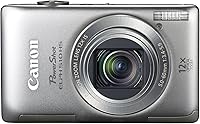
The Canon PowerShot ELPH 510 HS Digital Camera arrived at an interesting moment — when pocket cameras were beginning to feel real pressure from smartphones, yet still held a clear edge in zoom range and dedicated sensor quality. This Canon compact sits within Canon's ELPH family as a slim, well-constructed shooter with a 12.1MP CMOS sensor and DIGIC 4 processor handling the image work behind the scenes. The 3.2-inch touchscreen makes navigation genuinely comfortable, even for people who have never picked up a dedicated camera before. It carries a mid-to-premium price tag, and the build quality reflects that positioning — though context matters when stacking it against today's alternatives.
Features & Benefits

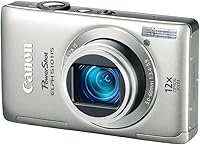
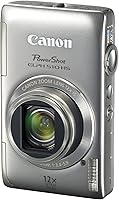
The 12x optical zoom is the headline feature here, and it earns its place. Starting at 28mm on the wide end, you can frame an entire landscape, then pull in tight on a distant subject without switching anything out. Optical image stabilization keeps shots acceptably sharp even when you are shooting handheld from a moving vehicle. Switch to video and you get Full HD 1080p with stereo sound — genuinely practical for documenting travel. Smart AUTO reads the environment and selects from 32 scene types automatically, which cuts down on menu-fumbling considerably. EyeFi card support also adds wireless transfer capability that the hardware itself does not offer natively.

Best For

The ELPH 510 HS is a natural pick for travelers who want real zoom reach without packing a bulkier camera. It suits parents and grandparents equally well — the touchscreen removes much of the friction that physical dials and nested menus tend to create for less experienced users. If you are stepping up from a basic point-and-shoot and want HD video and extra zoom reach, this pocket camera makes that progression feel straightforward. It also holds up well as a gift: the Canon name carries weight, the design looks polished, and it does not overwhelm a new owner with a steep learning curve right out of the box.

User Feedback

Owners consistently praise image sharpness in daylight and the zoom reach for outdoor and travel shooting — both come up repeatedly in long-term user reviews. Low-light performance is where expectations need managing: noise becomes noticeable above ISO 800, which limits usefulness at dusk or indoors without flash. Battery life is another genuine caveat — the NB-9L cell does not last a full day of active shooting, and carrying a spare is practical advice worth passing along. Some users also miss the tactile confidence of physical buttons compared to the touchscreen. A handful of buyers note that current smartphone cameras have closed the gap, particularly in challenging lighting conditions.

Pros

  • The 12x optical zoom range is a genuine advantage over smartphones and basic compacts for outdoor and travel shooting.
  • Full HD 1080p video with stereo sound holds up well for documenting trips and family events.
  • Smart AUTO mode handles scene selection reliably, making it easy for less experienced shooters to get consistent results.
  • The 3.2-inch touchscreen is responsive and makes navigating menus and tapping to focus feel natural.
  • Optical image stabilization noticeably reduces blur when shooting handheld, especially at longer zoom lengths.
  • Daylight image sharpness regularly earns praise from long-term owners who use it for outdoor photography.
  • The slim, lightweight body slides into a jacket pocket or small bag without bulk or hassle.
  • Canon build quality gives this pocket camera a solid, well-finished feel that justifies its market positioning.
  • EyeFi card support provides a workable wireless transfer option for users willing to set it up.
  • Face detection and touch-to-track autofocus make it practical for candid family and group shots.

Cons

  • Low-light and indoor performance is a consistent weak point, with noise appearing early as ISO climbs.
  • The NB-9L battery drains faster than most users expect during a full day of active shooting.
  • No built-in Wi-Fi means wireless image sharing requires purchasing and configuring a compatible EyeFi card separately.
  • Some users miss the tactile confidence of physical control buttons, finding touch-only operation less reliable in bright sunlight.
  • The lens cover mechanism has drawn occasional durability complaints from owners who use the camera heavily over time.
  • Current smartphone cameras have narrowed the image quality gap considerably, particularly in mixed and low-light conditions.
  • Continuous shooting tops out at 3.3fps, which limits usefulness for capturing fast-moving subjects like sports or active children.
  • No RAW file support means limited post-processing flexibility for anyone who edits photos beyond basic adjustments.

Ratings

The scores below reflect an AI-driven analysis of thousands of verified global user reviews for the Canon PowerShot ELPH 510 HS Digital Camera, with spam, incentivized, and bot-generated feedback actively filtered out before scoring. Both the genuine strengths and the recurring frustrations owners have reported are transparently factored into every category — nothing is glossed over to paint a rosier picture than reality warrants. Whether this Canon compact earns a place in your bag ultimately depends on how closely your shooting habits align with what it was designed to do well.

Zoom Range & Reach
88%
The 12x optical zoom spanning 28mm to 336mm is consistently one of the most praised aspects among travel and outdoor photographers who own this pocket camera. Users frequently highlight how much flexibility it offers — framing a wide beach shot one moment and pulling in tight on a bird perched across a lake the next, all without swapping lenses or carrying extra gear.
At the fully extended telephoto end, even small hand movements translate into visible blur, and while optical stabilization helps, it does not fully compensate in lower-light telephoto situations. A small number of users also noted slight softness and chromatic fringing at maximum zoom reach.
Daylight Image Quality
83%
In good outdoor light, this Canon compact consistently delivers sharp, vibrant images that exceed what most buyers expect from a pocket camera. Colors are rendered with natural warmth, and the DIGIC 4 processor handles contrast well enough that straight-out-of-camera JPEGs often need no editing for casual sharing or printing.
Detail rendering starts to soften in overcast conditions where light is flat and contrast is low, and the JPEG-only output means there is no RAW file to recover lost detail in post-processing. Users who edit photos regularly find this limitation genuinely frustrating compared to even entry-level interchangeable-lens cameras.
Low-Light Performance
51%
49%
The optical image stabilization does provide meaningful help indoors at moderate shutter speeds, and the Smart AUTO mode usually makes reasonable exposure decisions in dim environments without requiring any manual input from the user.
High-ISO noise becomes a real problem above ISO 800, and by ISO 1600 or 3200 fine details in shadow areas are largely swallowed by color noise and smearing. Indoor birthday parties, restaurant meals, and evening events are exactly where this pocket camera struggles most, and it is the single most common disappointment reported by long-term owners.
Video Quality
81%
19%
Full HD 1080p recording with stereo sound is a genuinely capable feature for a compact of this size, and travel photographers regularly praise the footage quality for vacation documentation and family event recording. The optical zoom works during recording, giving users compositional flexibility that fixed-lens alternatives cannot match.
In mixed or low-light environments the video output shares the same noise and exposure limitations as still photography, and the zoom motor produces audible mechanical noise that the onboard microphones pick up during rapid zooming. There is also no external microphone input for users who want cleaner audio.
Ease of Use
91%
Smart AUTO mode with 32 scene types makes this one of the more approachable compact cameras available for non-technical users, and grandparents and first-time camera buyers frequently describe the learning curve as nearly nonexistent. The touchscreen interface for tap-to-focus and menu navigation feels natural and reduces the intimidation factor considerably.
The heavy reliance on the touchscreen means users in cold weather or with gloves struggle more than they would with a button-based layout, and bright sunlight washing out the LCD display makes framing and menu navigation noticeably harder outdoors on sunny days.
Battery Life
54%
46%
The NB-9L lithium-ion battery charges fully in a reasonable time using the included charger, and for light shooting sessions — a walk around a neighborhood or a short museum visit — it typically holds up without issue.
For full-day travel or event shooting, the battery capacity falls clearly short, and this is one of the most consistently flagged concerns across user reviews worldwide. Carrying at least one spare NB-9L is essentially a necessity for anyone planning to use the ELPH 510 HS heavily throughout a day, which adds cost and the inconvenience of battery management.
Build Quality & Feel
73%
27%
The slim metal-accented body feels noticeably more substantial in hand than similarly priced plastic-bodied competitors, and the overall fit and finish reflects Canon's attention to detail at this market tier. Most users who handle it describe it as a polished, premium-feeling device.
The automatic lens cover has drawn repeated durability concerns from owners who use the camera daily over extended periods, with some reporting misalignment or sticking after a year or more of regular pocket carry. It is not a universal failure, but it appears often enough in long-term reviews to be worth noting.
Touchscreen Responsiveness
76%
24%
For basic navigation and tap-to-focus operations, the touchscreen registers input reliably and responds at a speed that feels smooth in normal conditions. Users who predominantly shoot indoors or in shaded environments find it consistently usable and intuitive.
Direct sunlight significantly reduces screen visibility, making touch input a somewhat blind exercise on bright outdoor days. A handful of users also report that the screen occasionally requires a second tap to register commands, which becomes mildly frustrating during fast-moving shooting situations.
Autofocus Speed & Accuracy
78%
22%
In well-lit environments, the face detection and multi-area autofocus lock on quickly and accurately, making it practical for casual portraits and group shots where subjects are relatively still. Touch-to-focus works reliably for off-center compositions without requiring menu changes.
In lower contrast or dimly lit scenes, the autofocus hunts noticeably before locking, and tracking fast-moving subjects like running children or pets indoors produces a higher-than-ideal rate of soft or missed focus shots. It is a known limitation of contrast-detection AF systems at this generation of hardware.
Portability & Size
93%
Weighing under half a pound and genuinely slim enough for a shirt pocket, the ELPH 510 HS goes places that larger cameras simply cannot, and this is one of the most universally praised qualities across every user demographic. Travelers especially value being able to carry real zoom capability without dedicating bag space to camera gear.
The slim profile, while excellent for portability, means the grip is minimal and the camera can feel a little precarious to hold one-handed, particularly when shooting at full zoom reach. Users with larger hands occasionally describe the handling as slightly awkward during extended shooting sessions.
Value for Money
67%
33%
At the time of release, the combination of 12x zoom, HD video, and a touchscreen interface in a pocket-sized body represented a strong value proposition compared to peer compacts of that era. For buyers finding this camera at a reduced secondary market price today, the value calculation improves considerably.
Evaluated against current alternatives at its original price point, the ELPH 510 HS faces tough competition from both newer compact cameras and the vastly improved cameras built into modern smartphones. Buyers paying close to the original retail price would be better served by a current-generation model.
Wireless Connectivity
38%
62%
EyeFi card compatibility at least provides a functional path to wireless photo transfer for users willing to invest in the separate card and manage the initial setup process, which is more than some contemporaries offered at the same price point.
The absence of built-in Wi-Fi or Bluetooth is the most glaring omission by today's standards, and even by the expectations of buyers who purchased it relatively recently. Requiring a proprietary third-party card to achieve basic wireless sharing feels dated and adds unnecessary friction and cost to a feature buyers now consider standard.
Flash Performance
66%
34%
The built-in flash covers the automatic, fill, red-eye reduction, and slow-sync scenarios that casual shooters encounter most frequently, and it performs adequately for subjects within a few feet of the camera in dimly lit indoor settings.
Flash range is limited, which is a consistent complaint at indoor events like concerts or large family gatherings where subjects are beyond a few meters away. Red-eye reduction, while available, does not always eliminate the effect completely on the first attempt.
Continuous Shooting
61%
39%
The 3.3fps continuous burst mode is functional for capturing a sequence of moments at a birthday candle blow-out or a child opening gifts, giving users a reasonable buffer of frames to select the best expression from.
For genuinely fast action — team sports, wildlife, or active toddlers at full speed — 3.3fps falls short of what is needed to reliably freeze the decisive moment. Users who specifically need action performance will find this rate limiting compared to slightly larger cameras in adjacent categories.

Suitable for:

The Canon PowerShot ELPH 510 HS Digital Camera is a genuinely good fit for travelers who want meaningful zoom reach and HD video capability without committing to a larger camera bag. If your photography happens mostly outdoors — national parks, family vacations, day trips, sporting events at a distance — the 12x optical zoom and optical stabilization give you flexibility that no smartphone of its era could match in the same pocket-friendly form factor. Parents and grandparents will find the touchscreen interface and Smart AUTO mode particularly forgiving, since the camera makes most of the shooting decisions automatically and competently in good light. It also works well as a step-up gift for someone moving beyond their first basic point-and-shoot, offering a noticeable jump in zoom range and video quality without demanding any technical knowledge to operate day-to-day.
Not suitable for:

Buyers who shoot frequently indoors, at evening events, or in any environment where light is limited will find the Canon PowerShot ELPH 510 HS Digital Camera falls short of expectations — high-ISO noise becomes a real problem above ISO 800, and the flash coverage is modest at best. Photographers who want full manual control, RAW file output, or interchangeable lenses will outgrow this pocket camera almost immediately, as it is built around convenience rather than creative flexibility. Those expecting wireless sharing straight out of the box should also note that built-in Wi-Fi is absent, and EyeFi card compatibility, while functional, adds cost and setup friction. Perhaps most importantly, anyone comparing this camera purely on image quality against a current mid-range smartphone is likely to come away disappointed — modern phone computational photography has advanced well past what this sensor and processor combination can produce in mixed or difficult lighting.

Specifications

  • Image Sensor: The camera uses a 12.1-megapixel CMOS sensor measuring 1/2.3-inch, which captures more light per pixel compared to older CCD designs at this resolution.
  • Processor: Canon's DIGIC 4 image processor handles noise reduction, color rendering, and autofocus calculations, contributing to faster shot-to-shot response times.
  • Optical Zoom: A 12x optical zoom lens spans a focal range of 28mm to 336mm, covering wide-angle landscapes through telephoto close-ups without digital quality loss.
  • Aperture Range: The lens opens to f/3.4 at the wide end and narrows to f/5.6 at full telephoto, which is typical for a compact zoom of this reach.
  • Display: A fixed 3.2-inch LCD touchscreen with 461,000 dots provides the primary interface for framing shots, adjusting settings, and reviewing images.
  • Video Resolution: Full HD video records at 1080p with stereo sound, and the camera supports frame rates of 24, 30, or 60 fps depending on the selected mode.
  • Image Stabilization: Optical image stabilization physically compensates for camera shake, making it more effective than digital stabilization, especially at longer zoom lengths.
  • ISO Range: Sensitivity runs from ISO 100 to ISO 3200, with cleaner output concentrated in the ISO 100–400 range and visible noise increasing above ISO 800.
  • Autofocus System: The autofocus system supports center, multi-area, face detection, touch, tracking, and continuous modes, with up to 150 AF points available via AiAF TTL.
  • Storage Media: The camera accepts SD, SDHC, and SDXC memory cards with a recommended speed class of 6 or higher for smooth video recording.
  • Connectivity: One USB 2.0 port handles data transfer and charging, while an HDMI output allows direct playback on compatible televisions and monitors.
  • Wireless Transfer: No built-in Wi-Fi is included; wireless image transfer requires a compatible EyeFi SD card purchased separately.
  • Battery: Power comes from a Canon NB-9L rechargeable lithium-ion battery weighing 15.6 grams, with the charger included in the box.
  • Continuous Shooting: The camera captures continuous bursts at 3.3 frames per second, which is adequate for casual action but limiting for fast-moving subjects.
  • Shutter Speed: Shutter speed ranges from 15 seconds for long-exposure shots down to 1/4000 of a second for freezing fast action in bright conditions.
  • Scene Modes: Smart AUTO automatically selects from 32 predefined shooting scenes based on the subject and environment detected through the lens.
  • File Formats: Still images are saved as JPEG files; video is encoded in AVC format and saved as MP4, with audio stored in AAC format.
  • Body Weight: The camera body weighs approximately 0.45 pounds without accessories, keeping it genuinely pocketable for daily carry and travel use.
  • Flash: A built-in flash supports auto, on, off, and red-eye reduction modes, with a sync speed tied to a minimum shutter speed of 15 seconds.
  • Warranty: Canon covers this camera under a one-year limited warranty through Canon Cameras US, applicable to manufacturing defects under normal use conditions.

Related Reviews
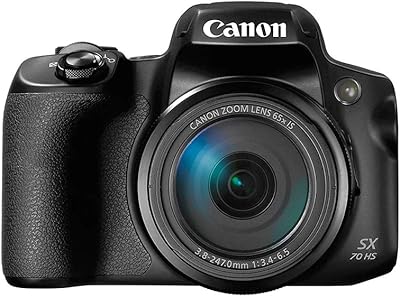
Canon PowerShot SX70 HS Digital Camera
69%
94%
Zoom Range & Reach
78%
Daytime Image Quality
51%
Low-Light Performance
72%
Autofocus Performance
76%
Burst Shooting
More
Canon PowerShot SX740 HS Point-and-Shoot Camera
73%
93%
Zoom Range
74%
Image Quality
52%
Low-Light Performance
47%
Battery Life
94%
Portability
More
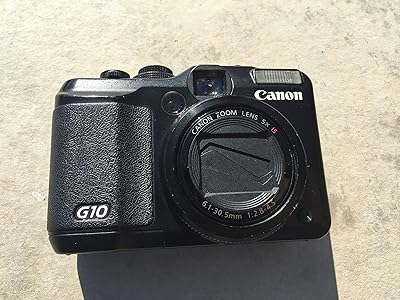
Canon PowerShot G10 Point-and-Shoot Camera
68%
84%
Image Quality
88%
Build Quality
91%
Control Layout
89%
RAW File Performance
47%
Low-Light Performance
More
Canon PowerShot ELPH 360 Digital Camera
72%
84%
Image Quality in Daylight
51%
Low-Light Performance
89%
Zoom Range & Versatility
77%
Image Stabilization
38%
Battery Life
More
Canon PowerShot V10 Vlogging Camera
77%
86%
Video Quality
89%
Audio Performance
93%
Portability & Form Factor
82%
Built-in Stand
78%
Image Stabilization
More
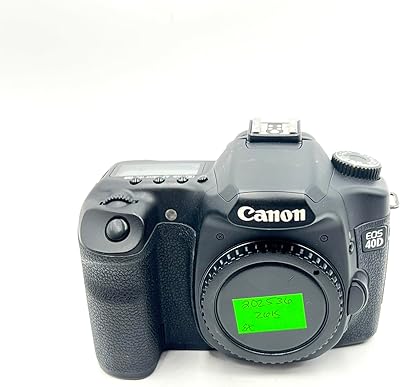
Canon EOS 40D Digital SLR Camera
72%
91%
Build Quality
83%
Autofocus Performance
88%
Continuous Shooting
79%
Image Quality
84%
Battery Life
More
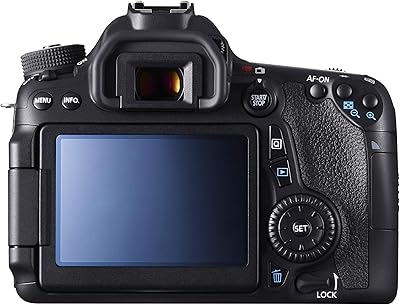
Canon EOS 70D
Canon EOS 70D
82%
91%
Autofocus Performance
87%
Image Quality
78%
Video Capability
83%
Build Quality & Ergonomics
88%
Battery Life
More
Canon EOS 7D Mark II
82%
93%
Autofocus Performance
88%
Continuous Shooting & Buffer
91%
Build Quality & Weather Sealing
86%
Image Quality (Base ISO)
67%
High-ISO & Low-Light Performance
More
myFirst Camera 3 Kids Digital Camera
72%
76%
Image Quality (Daylight)
51%
Low-Light Performance
74%
Video Quality
83%
Macro Lens
81%
Ease of Use
More
ROQIOO A9
ROQIOO A9
67%
83%
Value for Money
61%
Image Quality
58%
Video Quality
81%
Flip Screen Usability
54%
Build Quality & Durability
More

FAQ

No, it does not include built-in Wi-Fi. However, it is compatible with EyeFi wireless SD cards, which handle the wireless transfer once inserted. You will need to purchase that card separately and do a short one-time setup through the EyeFi app.

Any SD, SDHC, or SDXC card will physically fit and work. For video recording at 1080p, Canon recommends a card rated at speed class 6 or faster to avoid dropped frames or recording interruptions. A Class 10 card is a safe, widely available choice.

Realistically, expect somewhere between 200 and 250 shots on a single NB-9L charge under normal conditions. If you are shooting a lot of video or reviewing images frequently on the screen, that number drops noticeably. Carrying a spare battery is genuinely worth the small extra cost for full-day outings.

There are physical buttons for core functions like power, shutter, zoom, playback, and a few menu shortcuts. The touchscreen supplements those controls for things like tap-to-focus, browsing images, and navigating the menu system. Most users find the hybrid setup comfortable, though bright sunlight can make the screen harder to read.

Honestly, in good daylight the ELPH 510 HS still produces sharp, well-colored images with noticeably more zoom flexibility than any phone. Where it falls behind current smartphones is in low light — computational photography on modern phones handles dark scenes considerably better than this camera's sensor and processor can. For outdoor and travel shooting in decent light, it holds its own well.

Yes, you can zoom during video recording, and the optical image stabilization stays active throughout. The zoom motor does produce some operational noise that the stereo microphones may pick up if you zoom quickly, so slow, gradual zooms during recording tend to produce cleaner audio results.

It can work, but with some caveats. The face detection and tracking autofocus are genuinely helpful for moving subjects, and the burst mode at 3.3fps lets you grab a few frames quickly. The limitation is low-light performance — indoor shooting often pushes the ISO into ranges where noise becomes obvious, so well-lit rooms give much better results than dim ones.

The box includes the camera, the NB-9L battery, a battery charger, a wrist strap, and an HDMI cable. The one thing not included is a memory card, so you will need to purchase one before you can take photos. A Class 10 SD or SDHC card in the 32GB range is a practical starting point.

Yes, the included HDMI cable lets you connect directly to any HDTV or monitor with an HDMI input. Playback is straightforward through the camera's built-in menu — no software or computer needed for that step.

It is actually one of the more beginner-friendly compact cameras you will find, largely because the Smart AUTO mode handles almost every shooting decision automatically. New users can leave it in that mode for months and still get consistently decent results. As confidence grows, there are manual exposure options available to explore without the camera feeling overwhelming from day one.

Where to Buy