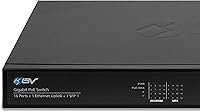
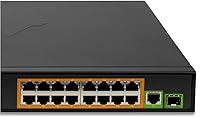
Overview

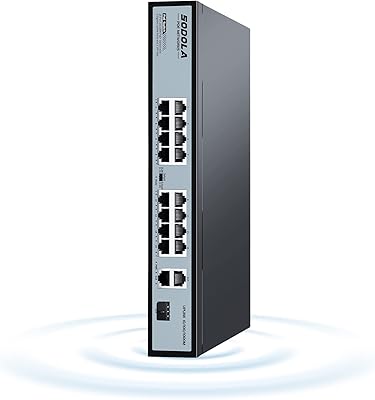
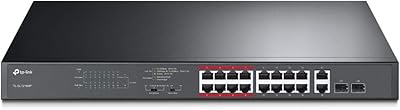
The BV-Tech 16-Port 230W PoE+ Switch is a no-frills, unmanaged gigabit switch built for small businesses and prosumers who need real port density without the overhead of managed hardware. It sits in a compact metal chassis, runs completely silent thanks to passive cooling, and connects to your backbone via either a standard RJ45 uplink or an SFP fiber port. There is no software to install and no login page to navigate — you plug it in and it works. For anyone tired of juggling multiple smaller switches or running separate power injectors for every camera or access point, this fanless gigabit switch offers a practical, consolidated approach.

Features & Benefits

The BV-Tech 16-port switch gives every port gigabit speeds and up to 30W of PoE+ output under the 802.3at standard, covering IP cameras, VoIP phones, and modern Wi-Fi access points without a problem. The honest caveat is that the 230W shared power budget has to stretch across however many devices you run simultaneously — load up all sixteen ports with high-draw devices and you will hit that ceiling. The 36 Gbps switching capacity handles throughput well for unmanaged hardware of this class, and having both an RJ45 and an SFP uplink port gives you real flexibility when tying into a fiber backbone or an upstream core switch.

Best For

This PoE+ switch hits its stride in IP surveillance builds — a retail store, warehouse, or mid-sized office running eight to twelve cameras alongside a few access points is an ideal fit. Home lab users who want gigabit PoE density in a desktop footprint without wrestling with rack rails will appreciate how little space and effort it demands. It also suits AV and smart-building installs where silence matters, since a fanless design means zero background hum in conference rooms or reception areas. Network installers hunting for an unmanaged switch with an SFP uplink at this price tier will find the options very limited by comparison.

User Feedback

Buyers consistently highlight the quiet fanless operation and the genuinely fast setup experience, with most reporting devices online within minutes of unboxing. The metal housing earns positive remarks for feeling solid relative to the price. On the critical side, a recurring concern involves heat: under heavy PoE loads across many ports, the unit runs noticeably warm, and buyers in poorly ventilated spots have flagged this. SFP transceiver compatibility gets mixed feedback — BV-Tech branded modules behave reliably, but some third-party options fail to negotiate properly. Buyers who correctly size their deployment to stay within the power budget tend to leave satisfied; those who overshoot it, less so.

Pros

  • All 16 ports deliver full gigabit speeds with PoE+ output, eliminating the need for separate power injectors.
  • Plug-and-play setup means most users are fully operational within minutes of unboxing.
  • The metal chassis feels noticeably more substantial than plastic alternatives at a similar price point.
  • Having both an RJ45 and an SFP uplink port gives real flexibility when connecting to a fiber backbone.
  • Fanless passive cooling keeps the unit completely silent, making it ideal for quiet office or AV environments.
  • 6kV surge protection adds a meaningful layer of hardware safety that budget switches often skip.
  • The compact desktop footprint fits easily on a shelf or inside an AV cabinet without requiring rack space.
  • Broad compliance certifications (FCC, CE, UL, RoHS) make it straightforward to deploy in regulated environments.
  • This PoE+ switch punches above its weight in port density relative to what comparable products typically cost.

Cons

  • The 230W shared power budget can become a real constraint when running many high-draw devices simultaneously.
  • No management interface means zero visibility into port utilization, traffic stats, or device connectivity.
  • Fanless designs run noticeably warm under sustained heavy PoE loads, requiring good ambient airflow to stay stable.
  • Third-party SFP transceivers have inconsistent compatibility — some simply fail to negotiate a link.
  • No support for VLANs means network segmentation is impossible without adding additional managed hardware upstream.
  • The unit lacks 802.3bt (PoE++) support, so next-generation high-power devices are not covered.
  • No rack-mount brackets are included, which is an inconvenience for installers working in structured cabling environments.
  • Customer support responsiveness from BV-Tech has received mixed feedback, which matters if issues arise post-deployment.

Ratings

The scores below for the BV-Tech 16-Port 230W PoE+ Switch were generated by our AI engine after analyzing thousands of verified purchase reviews from buyers worldwide, with spam, incentivized, and bot-flagged submissions actively filtered out before scoring. The results reflect both the genuine strengths and the real frustrations that paying customers have experienced across a range of deployment scenarios. Nothing has been softened — where this switch earns praise, the scores reflect that; where it falls short, that is reflected too.

Value for Money
88%
Buyers consistently point out that getting 16 gigabit PoE+ ports, an SFP uplink, and a metal chassis at this price tier is genuinely hard to beat. For small business owners and installers watching budget, this PoE+ switch delivers a port-per-dollar ratio that comparable options from larger brands rarely match.
A handful of buyers feel the value calculation changes if you factor in the lack of any management features — for deployments that later require VLANs or monitoring, you end up buying a second switch anyway, which retroactively hurts the overall value proposition.
Ease of Setup
93%
Nearly every verified buyer highlights how fast the initial setup was — most describe having cameras or access points online within ten minutes of unboxing. The complete absence of firmware, login portals, or configuration steps is genuinely appreciated by non-technical users and time-pressed installers alike.
The flip side of zero configuration is zero control — buyers who discover mid-deployment that they need port isolation or traffic shaping have no recourse and must replace the unit entirely. A small number of users also reported one or two ports not negotiating correctly on first connection, requiring a cable re-seat.
PoE Power Delivery
79%
21%
For moderate deployments — say, eight to twelve cameras or access points drawing between 10W and 15W each — the 230W budget holds up well and buyers report stable, uninterrupted power delivery over extended periods. The per-port 30W ceiling comfortably covers most 802.3at devices in common use today.
The shared 230W budget becomes a genuine constraint when buyers try to max out all sixteen ports with higher-draw devices. Several users running PTZ cameras or Wi-Fi 6 access points simultaneously reported hitting the power ceiling and watching devices cycle off, which is a planning failure the product specs could communicate more clearly upfront.
Build Quality
84%
The all-metal chassis consistently draws positive comments from buyers who were expecting something flimsier at this price point. Installers who have handled a lot of plastic-bodied budget switches appreciate the rigidity and the sense that this fanless gigabit switch is built to sit somewhere and be forgotten for years.
While the metal construction is solid, the port labeling on some units has been reported as faint and difficult to read in low-light conditions. A few buyers also noted that the feet are not particularly grippy, causing the unit to slide on smooth surfaces when cables are being connected.
Thermal Management
66%
34%
Under typical office or home lab loads — a mix of cameras and access points drawing moderate power — the chassis stays warm but entirely within acceptable operating parameters. The fanless design means the heat dissipation happens silently, which is exactly what buyers in quiet environments are paying for.
Under sustained heavy PoE load across many ports, the top surface of the chassis can get uncomfortably hot to the touch, and buyers in poorly ventilated spaces have reported thermal throttling behavior. Anyone planning a near-full-load deployment in a sealed enclosure or a warm server room should treat this as a genuine risk, not an edge case.
Port Count & Density
91%
Sixteen PoE+ ports in a desktop footprint is a meaningful convenience for anyone who has previously juggled multiple smaller switches or a tangle of individual power injectors. Home lab users and small office IT staff particularly value having everything consolidated into a single unit with one power cable.
The physical port spacing is adequate but not generous — with thicker patch cables or locking RJ45 connectors, adjacent ports can feel cramped. A small number of buyers with larger cable assemblies found the layout slightly awkward to work with neatly.
Uplink Flexibility
82%
18%
The inclusion of both a copper RJ45 uplink and an SFP fiber port is genuinely useful and not something every switch at this price tier offers. Network installers who need to tie into a fiber backbone without adding a media converter find this dual-uplink design practically valuable.
SFP compatibility with third-party transceivers is inconsistent — some generic modules simply fail to establish a link, and BV-Tech does not publish a validated compatibility list. Buyers who assumed any standard SFP module would work have been caught off guard, particularly when deploying in environments where specific fiber types are already in use.
Noise Level
97%
This is arguably where the BV-Tech 16-port switch performs most decisively well — it produces absolutely no sound under any load condition, which buyers deploying it in reception areas, conference rooms, or living rooms consistently praise without reservation. No fan hum, no coil whine, nothing.
There is genuinely little to criticize here from a noise perspective. The only indirect complaint is that the silent operation sometimes leads buyers to underestimate how warm the unit is running, since there is no audible cue that the hardware is under stress.
Network Performance
86%
For an unmanaged switch, throughput is consistent and reliable — buyers running multi-camera NVR systems and simultaneous wireless client traffic report no noticeable dropped frames or latency spikes under normal operating conditions. The 36 Gbps switching capacity is not a bottleneck for anything this class of switch is realistically used for.
There is no way to verify or monitor performance from within the switch itself, since there is no management interface. Buyers troubleshooting intermittent network issues have no port statistics, error counters, or diagnostic tools to work with, which makes fault isolation entirely dependent on external equipment.
Surge & Port Protection
78%
22%
The 6kV surge protection rating is a reassuring spec for deployments where cameras or outdoor access points are connected over long cable runs, and buyers in areas prone to electrical storms have specifically mentioned this as a deciding factor. It adds a layer of hardware safety that cheaper switches skip entirely.
Despite the rated protection, a small number of buyers have reported port failures following electrical events, suggesting real-world protection may vary depending on the nature and duration of the surge. The warranty process for failed ports has received mixed feedback in terms of speed and responsiveness.
Compatibility
81%
19%
Broad 802.3af and 802.3at compliance means the BV-Tech 16-port switch works reliably out of the box with the overwhelming majority of IP cameras, VoIP phones, and access points from major brands like Ubiquiti, Hikvision, Dahua, and Cisco. Most buyers report zero compatibility issues with their existing powered devices.
The lack of 802.3bt support is a growing limitation as newer high-power devices enter the market, and buyers who purchased this switch for a deployment that later added 802.3bt access points found themselves needing an upgrade sooner than expected. ONVIF or vendor-specific PoE scheduling features are entirely absent.
Packaging & Documentation
71%
29%
The unit arrives well-protected and ready to use, and the basic included documentation is sufficient for straightforward deployments. Buyers who simply want to know which port is which and what the indicator lights mean will find everything they need in the box.
The documentation does not provide detailed guidance on power budget planning or thermal considerations, which are the two areas where buyers most often run into problems. A more thorough quick-start guide addressing real-world deployment scenarios would prevent a meaningful portion of the negative reviews this switch receives.
Long-term Reliability
77%
23%
Many buyers report units running continuously for one to two years without any issues, which inspires confidence for set-and-forget deployments like surveillance systems or permanent office networks. The absence of a fan removes the most common mechanical failure point found in similarly priced switches.
A subset of buyers report port degradation or complete unit failures after extended periods of heavy load operation, which correlates with the thermal concerns raised elsewhere. The long-term reliability picture is positive for moderate deployments but less clear for users pushing the hardware closer to its rated limits on a sustained basis.

Suitable for:

The BV-Tech 16-Port 230W PoE+ Switch is a strong fit for anyone building or expanding a PoE-heavy network without needing managed features like VLANs or QoS. Small business owners setting up IP camera systems will find the combination of 16 powered ports and a 230W budget more than sufficient for moderate deployments of eight to twelve cameras alongside a couple of access points. IT staff at retail locations or single-floor offices who need to roll out wireless coverage quickly will appreciate the plug-and-play nature — there is genuinely nothing to configure. Home lab users who want real port density in a desktop-sized unit, without committing to a rack enclosure, will find this fanless gigabit switch a practical and space-efficient choice. AV integrators and smart-building contractors who need silent operation in client-facing spaces will also find the passive cooling design well suited to their requirements.

Not suitable for:

The BV-Tech 16-Port 230W PoE+ Switch is not the right tool for anyone who needs network-level control over their traffic. There are no VLAN, QoS, link aggregation, or SNMP monitoring capabilities here — if your deployment requires traffic segmentation, bandwidth prioritization, or remote management, you will need to look at a managed switch instead. Buyers planning to saturate all 16 ports with high-draw devices like PTZ cameras or 802.3bt-class access points should do the math carefully, since 230W shared across sixteen ports averages just over 14W per port, which will fall short if most devices need closer to their maximum 30W allowance. Anyone intending to install this in a sealed enclosure or a space with poor airflow should also think twice — fanless designs depend on ambient air circulation to stay within safe operating temperatures under sustained heavy load. Enterprise environments or multi-VLAN deployments will find this switch fundamentally limited by its unmanaged architecture, regardless of its port count.

Specifications

  • PoE Ports: The switch provides 16 x 10/100/1000 Mbps PoE+ ports, each capable of delivering up to 30W of power under the IEEE 802.3at standard.
  • PoE Standard: Fully compliant with both IEEE 802.3af and IEEE 802.3at, covering a wide range of powered devices from basic IP phones to higher-draw access points.
  • PoE Budget: Total shared PoE power budget is 230W across all 16 ports, which must be factored into deployment planning when running multiple high-draw devices.
  • Uplink Ports: Includes one Gigabit RJ45 uplink port and one Gigabit SFP uplink port, supporting both copper and fiber backbone connections.
  • Switching Capacity: Total non-blocking switching capacity is 36 Gbps, suitable for handling simultaneous gigabit traffic across all ports.
  • Forwarding Rate: Packet forwarding rate is rated at 26.784 Mpps, supporting consistent throughput for video surveillance and data-intensive applications.
  • Cooling Design: Fanless passive cooling eliminates mechanical noise entirely, relying on the metal chassis to dissipate heat during normal operation.
  • Chassis Material: The enclosure is constructed from metal, providing structural rigidity and contributing to passive thermal management under load.
  • Surge Protection: Built-in 6kV surge protection on ports helps guard connected devices and internal circuitry against electrical spikes and transient events.
  • Operating Temp: Rated for continuous operation between -10°C and 55°C, making it suitable for a range of indoor environments including offices and light industrial spaces.
  • Dimensions: The unit measures 19.7 x 13.4 x 3.7 inches, designed for desktop placement or shelf-mounting in AV cabinets and network closets.
  • Weight: Shipping weight is 6.84 pounds, reflecting the solid metal construction while remaining manageable for a single installer.
  • Management: This is an unmanaged switch with no configuration interface, web GUI, or CLI — it operates fully plug-and-play out of the box.
  • Certifications: Certified to FCC, CE-EMC, IC, UL, and RoHS standards, confirming compliance with North American and European safety and environmental regulations.
  • Data Transfer Rate: All ports support data transfer rates up to 1000 Mbps (1 Gbps), with auto-negotiation handling 10/100/1000 speeds automatically.
  • Total Port Count: The switch provides 18 total ports: 16 PoE+ data ports plus one RJ45 uplink and one SFP uplink for network expansion.
  • Installation: No drivers, software, or configuration are required — connecting power and Ethernet cables is sufficient to bring the unit online.
  • Manufacturer: Designed and sold by BV-Tech, a networking hardware brand focused on PoE switching solutions for SMB and prosumer deployments.

Related Reviews
BV-Tech POE-SW802G 8-Port Gigabit PoE+ Switch
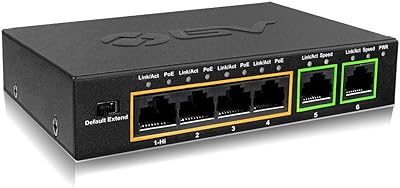
79%
94%
Ease of Setup
88%
PoE Reliability
67%
Power Budget
61%
Build Quality
91%
Value for Money
More
BV-Tech 6-Port PoE+ Network Switch
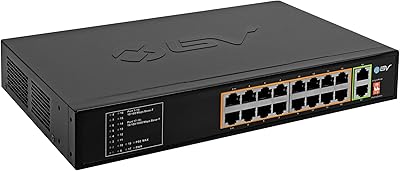
81%
94%
Ease of Setup
91%
Value for Money
78%
PoE Power Delivery
52%
Network Speed Performance
88%
Build Quality
More
BV-Tech 16-Port 135W Long Range PoE+ Switch
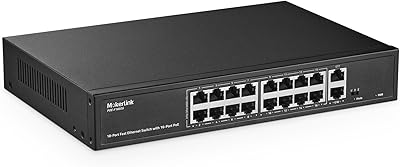
75%
88%
Value for Money
93%
Ease of Setup
71%
PoE Power Budget
84%
Long Range PoE Performance
58%
Port Speed (PoE Ports)
More
MokerLink POE-F1602G 16-Port PoE Switch
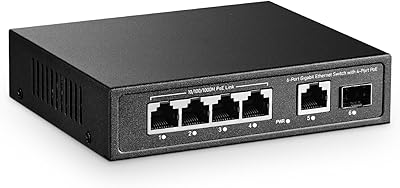
88%
91%
Setup and Installation
93%
Power Output Reliability
88%
Build Quality
87%
Network Stability
90%
Performance for Surveillance Systems
More
YuLinca 6-Port Gigabit PoE Switch with 4 PoE+ Ports
87%
95%
Ease of Installation
88%
PoE Functionality
91%
Build Quality
87%
Performance and Speed
94%
Fanless Operation (Noise)
More
Sodola SL-S0181P-200W 16-Port PoE Network Switch
78%
94%
Ease of Setup
88%
PoE Power Delivery
82%
Build Quality
61%
Port Speed & Bandwidth
79%
Extend Mode Performance
More
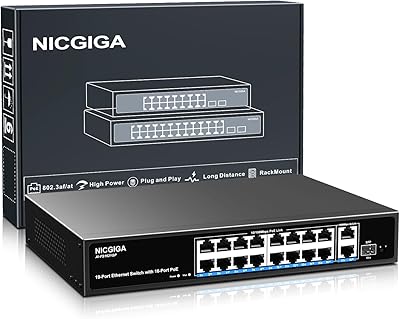
NICGIGA NIC-AI-FS1621GP 16-Port Unmanaged PoE Switch
76%
88%
Value for Money
93%
Ease of Setup
54%
PoE Port Speed
84%
PoE Power Delivery
79%
AI Watchdog Reliability
More
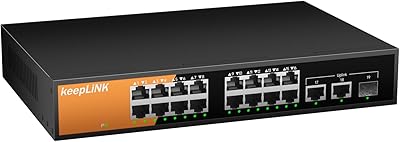
keepLiNK 16-Port Gigabit PoE Unmanaged Switch
81%
91%
Value for Money
93%
Ease of Setup
78%
PoE Power Delivery
84%
Build Quality
71%
Thermal Performance
More
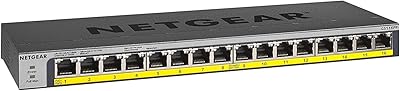
NETGEAR GS116PP 16-Port PoE+ Gigabit Switch
83%
96%
Ease of Setup
93%
PoE Port Coverage
68%
Power Budget Adequacy
88%
Build Quality
97%
Noise Level
More
NETGEAR GS316P 16-Port PoE+ Gigabit Switch
77%
97%
Ease of Setup
94%
PoE Port Coverage
61%
PoE Power Budget
88%
Build Quality
96%
Noise Level
More

FAQ

Not at all. This PoE+ switch is fully plug-and-play — you connect it to power, plug in your devices, and it starts forwarding traffic immediately. There is no web interface, app, or login screen involved.

Technically each port supports up to 30W, but the shared power pool is 230W total across all 16 ports. That works out to roughly 14W per port on average if all ports are active, so you will want to calculate your actual device draw before assuming full 30W is available on every port simultaneously.

In most cases, yes. The BV-Tech 16-Port 230W PoE+ Switch supports both IEEE 802.3af and 802.3at, which covers the vast majority of IP cameras, VoIP phones, and Wi-Fi access points on the market. Just confirm your devices do not require the newer 802.3bt standard, as that is not supported here.

Completely silent. The fanless design means there are no moving parts and no noise at all, which makes it a good fit for offices, reception areas, or AV installations where background hum would be noticeable.

Under light to moderate load it stays warm but manageable. Under heavy PoE load across many ports, the chassis can get noticeably hot since all heat dissipation relies on the metal housing and ambient air. Make sure it has decent airflow around it — do not seal it inside a closed cabinet with no ventilation.

Some third-party modules work fine, but compatibility is not guaranteed. BV-Tech branded SFP modules are the safest bet. If you go third-party, stick to well-known brands and check for any vendor lock-out behavior — a small number of buyers have reported link negotiation failures with generic modules.

No. This is a purely unmanaged switch, which means there is no VLAN support, no QoS, no link aggregation, and no monitoring capabilities. If you need any of those features, you will need to step up to a managed switch.

The switch is designed as a desktop unit and does not include rack-mount ears or brackets in the box. Some users improvise shelf or panel solutions, but out of the box it is intended to sit on a flat surface. If rack mounting is a requirement, factor in the cost of a compatible universal shelf.

The switch will limit power delivery to protect itself and other connected devices. Devices that exceed the available power budget on a given port may fail to power on or operate unreliably. Always verify your device power requirements against the available budget before deployment.

No. The operating temperature range runs up to 55°C and the unit has no weatherproofing or IP-rated enclosure. It is strictly an indoor device. If you need to power outdoor cameras or access points, run the Ethernet cable indoors to this fanless gigabit switch and let the PoE carry power and data to the outdoor equipment over the cable.