Overview

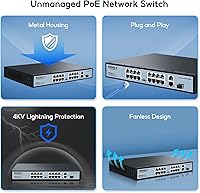
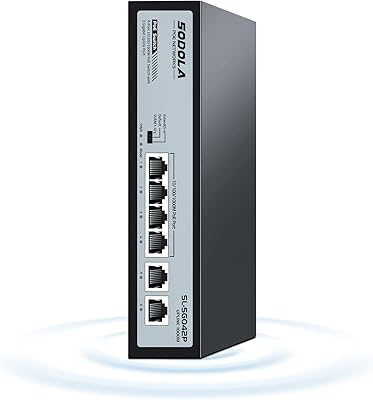
The Sodola SL-S0181P-200W 16-Port PoE Network Switch is a no-frills, plug-and-play option built for home security setups and small business surveillance installations. It sits in the budget-to-mid-range tier, competing on port count and power delivery rather than advanced network management. The metal chassis feels surprisingly solid, and the rack-mount brackets mean it fits neatly into a 1U space without any hassle. One thing worth knowing upfront: the PoE ports top out at 100Mbps. That is perfectly adequate for IP cameras, but if you are pushing high-bandwidth devices through those ports, you will hit a ceiling quickly.
Features & Benefits

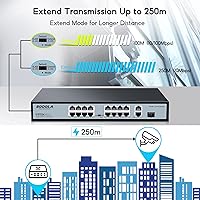
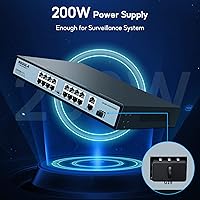
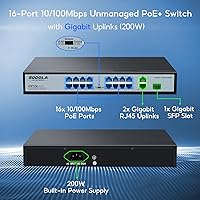
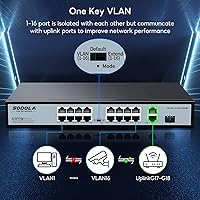
The 200W total power budget is the headline spec here, and it holds up in practice — you can run all 16 cameras simultaneously without the switch struggling, provided each device stays within the 30W per-port ceiling of the 802.3af/at standard. Beyond power, the two Gigabit uplink ports and a dedicated SFP slot give real flexibility in how you connect this unit to your backbone network. The Extend Mode is a genuinely useful addition for larger properties, stretching cable runs to 250 meters at 10Mbps — more than enough for a fixed camera feed. Toggling between Normal, Extend, and port isolation modes is handled by a physical DIP switch on the unit itself, no laptop required.

Best For

This unmanaged PoE unit is a natural fit for anyone building a 16-camera surveillance system who wants to keep things simple. Security installers who have wrestled with overcomplicated managed switches will appreciate that there is nothing to configure — power on, plug in the cameras, and you are done. The Extend Mode makes it especially well-suited to sites where cameras are spread across a large property and cable runs cannot stay under 100 meters. Port isolation is a nice touch for basic network segmentation without tackling true VLAN management. It is not the right pick for anything demanding full network control or high-throughput PoE endpoints.

User Feedback

Buyers tend to land in one of two camps with the Sodola 16-port switch. Those running standard IP cameras consistently praise the easy plug-and-play setup and the fact that cameras simply power up without any tinkering — build quality also draws more positive comments than you might expect at this price level. On the other side, users running high-resolution cameras feeding a busy NVR sometimes notice that the 100Mbps ports create a real bottleneck. Heat management during 24/7 operation comes up occasionally, though most owners report no issues past the one-year mark. The DIP switch indicators are functional but small, which a few users found tricky to read in dimly lit rack spaces.

Pros

  • Plug-and-play setup means cameras are live within minutes of unboxing, with zero software required.
  • The 200W power budget comfortably handles a full load of 16 standard IP cameras running simultaneously.
  • Extend Mode pushes PoE data and power to 250 meters, solving long cable-run problems without additional hardware.
  • Port isolation keeps cameras off each other, adding a practical layer of network security for surveillance setups.
  • Two Gigabit uplink ports plus an SFP slot give real flexibility for connecting to different backbone infrastructure.
  • Metal chassis and rack-mount brackets make it feel and install like a proper piece of network equipment.
  • CE, FCC, and RoHS certifications, plus 4KV/8KV lightning protection, offer meaningful reassurance for an entry-level unit.
  • Wide operating temperature range makes it viable in non-climate-controlled spaces like garages or outdoor enclosures.
  • The 1-year replacement warranty policy prioritizes getting buyers a working unit fast rather than lengthy repair cycles.
  • Users consistently report reliable, stable power delivery to cameras over extended always-on operation.

Cons

  • 100Mbps PoE ports can bottleneck high-bitrate camera streams feeding a busy NVR with multiple channels.
  • No management interface means zero visibility into port status, traffic, or power draw from a computer.
  • The port isolation mode is fixed and non-configurable — it is not a replacement for true VLAN management.
  • DIP switch mode indicators are small and difficult to read in poorly lit rack or closet installations.
  • The 2K MAC address table is tight and could cause issues if the switch is used in more complex network topologies.
  • Sodola is a lesser-known brand with limited presence in professional IT support communities.
  • No dedicated fan or active cooling information is clearly documented, making thermal planning harder for enclosed rack builds.
  • Extend Mode drops port speed to 10Mbps, which may not suit newer high-resolution cameras that need more throughput at distance.

Ratings

The scores below reflect our AI-powered analysis of verified global buyer reviews for the Sodola SL-S0181P-200W 16-Port PoE Network Switch, with spam, bot activity, and incentivized feedback actively filtered out before scoring. Each category captures both what real users genuinely praised and where frustrations surfaced in practice, giving you an honest, unvarnished picture of how this unmanaged PoE unit performs in the field.

Ease of Setup
94%
Buyers consistently describe getting cameras online within minutes of opening the box — no app download, no browser login, no configuration screen to navigate. Installers running multi-site jobs particularly appreciate that every unit behaves identically and predictably right out of the packaging.
A small number of users were briefly confused by the DIP switch mode labels, which are not always intuitive if you have never worked with a switch that uses physical toggles instead of software menus. The printed indicators on the chassis are functional but small.
PoE Power Delivery
88%
Real-world testing by buyers confirms that the 200W power budget holds up under a full camera load, with standard IP cameras powering on reliably across all 16 ports simultaneously. Users running mixed setups of bullet and dome cameras report stable, consistent power without unexpected drops or resets.
A handful of buyers who tried running higher-wattage PoE devices — PTZ cameras drawing close to the 30W ceiling on multiple ports at once — reported occasional instability when the aggregate draw pushed near the total budget limit. Staying within realistic camera power profiles avoids this.
Build Quality
82%
18%
The all-metal chassis draws genuine surprise from buyers who expected something flimsier at this price tier. Several installers note it feels dense and well-assembled, and the included rack-mount brackets align cleanly without requiring any modification.
The finish and labeling quality is not on par with name-brand networking hardware — some users noticed paint scuffing easily on the edges and the port numbering text being slightly difficult to read under poor lighting conditions in a rack cabinet.
Port Speed & Bandwidth
61%
39%
For its core intended use — running a dedicated camera network — the 100Mbps PoE ports are genuinely adequate. Buyers deploying standard 1080p or even 4MP cameras report no dropped frames or stream lag under normal operating conditions.
This is the most polarizing limitation in user feedback. Buyers running 4K multi-stream NVR systems or high-bitrate camera arrays hit bandwidth ceilings that cause buffering and recording gaps. Anyone pushing more than a handful of high-resolution streams through a single uplink needs to plan carefully around this constraint.
Extend Mode Performance
79%
21%
Users who specifically needed to reach cameras at 150 to 200 meters call Extend Mode a practical lifesaver, especially on large residential properties or commercial lots where trenching new cable runs is expensive. The 250-meter capability works as advertised for standard camera feeds.
The 10Mbps speed reduction in Extend Mode rules it out for anything beyond basic camera streams, and users who did not read the manual carefully were caught off guard by the speed drop. A clearer on-box warning about this trade-off would prevent buyer frustration.
Thermal Management
77%
23%
The fanless design is widely praised, particularly for installations in living spaces, small offices, or noise-sensitive environments where a spinning fan would be disruptive. Most buyers report the chassis running warm but never alarmingly hot under sustained full-port PoE loads.
In enclosed rack enclosures with poor airflow, a minority of users reported the unit getting uncomfortably hot during summer months or in warmer climates. There is no thermal throttling indicator, so buyers in hot environments have no warning before heat becomes an issue.
Port Isolation (VLAN Mode)
71%
29%
For a plug-and-play switch, having any form of port isolation at all is a genuine differentiator, and security-conscious buyers appreciate that cameras are walled off from each other by default in this mode. It adds a meaningful layer of network hygiene for surveillance setups.
The labeling as VLAN mode creates expectations it cannot meet — users familiar with managed switches were disappointed to find there is no configuration, no port grouping, and no ability to assign uplink exceptions. The feature is fixed and binary, which limits its usefulness beyond basic camera isolation.
Value for Money
91%
Across hundreds of reviews, the price-to-port-count ratio is the single most praised aspect of this switch. Buyers compare it favorably to alternatives with similar specs that cost significantly more, and installers running budget-constrained residential jobs cite it as a go-to recommendation.
The value proposition holds only if you stay within the product's intended use case. Buyers who purchased it expecting managed-switch capabilities or Gigabit PoE speeds feel the savings came at too high a functional cost, dragging perceived value down for that segment of users.
Longevity & Reliability
74%
26%
A meaningful number of buyers report units running continuously for 18 months or longer without port failures, power delivery degradation, or unexpected reboots. The metal chassis appears to contribute to durability in always-on deployments where cheaper plastic-body switches tend to fail sooner.
There are enough reports of units failing between 12 and 18 months to make long-term reliability a mild concern, particularly for always-on commercial deployments. The 1-year replacement warranty covers the highest-risk window but leaves buyers without coverage if failures occur just after expiry.
Lightning & Surge Protection
83%
The 4KV/8KV lightning protection rating provides real confidence for outdoor surveillance installations where cameras on long cable runs are exposed to weather and electrical surges. Buyers in storm-prone regions specifically call this out as a deciding factor.
While the certification is legitimate, some technically minded buyers note that true protection also depends on the quality of the connected cameras and cabling, and a direct strike is likely to overwhelm any consumer-grade protection regardless of rating.
Compatibility
86%
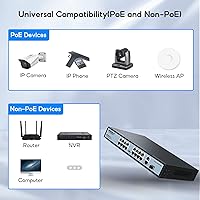
The switch works reliably out of the box with the most widely deployed IP camera brands including Hikvision, Dahua, Reolink, and Amcrest — buyers rarely report compatibility headaches when using standard 802.3af/at compliant devices. The universal AC input also makes it usable internationally.
Passive PoE devices are explicitly not supported, and buyers who discovered this after purchase were understandably frustrated. The product listing warns about this, but it is easy to miss, and passive PoE cameras remain common in budget surveillance setups.
DIP Switch Usability
65%
35%
Having a physical hardware toggle to switch between operating modes is genuinely useful in field installations where pulling out a laptop to change a software setting is impractical. Experienced installers adapt to it quickly and appreciate the tactile feedback.
First-time users frequently find the DIP switch confusing, and the tiny mode indicator labels are difficult to read in a dim networking closet. There is no digital confirmation that the mode change was registered, which creates uncertainty for less experienced installers.
Uplink Flexibility
81%
19%
Having two Gigabit uplinks plus a dedicated SFP slot at this price point gives installers genuine options for connecting to a fiber backbone, a separate router, or a secondary switch — a level of connectivity versatility that most competing budget units at this port count do not offer.
The SFP slot requires a separately purchased transceiver, which adds cost that budget buyers sometimes overlook. Additionally, both Gigabit uplinks sharing the same bandwidth pool as 16 active PoE ports means careful traffic planning is needed in busier installations.
Documentation & Support
58%
42%
The included user manual covers the basic DIP switch modes adequately, and buyers who stuck to plug-and-play operation never needed to consult it. For straightforward camera installations, the learning curve is essentially zero.
Buyers who encountered edge cases — unusual camera compatibility issues, unexpected power behavior, or questions about SFP module compatibility — found Sodola's support resources thin compared to established networking brands. Online community knowledge about this specific unit is also limited given the brand's lower profile.

Suitable for:

The Sodola SL-S0181P-200W 16-Port PoE Network Switch is purpose-built for anyone setting up a dedicated IP camera system at home or in a small office — and it genuinely delivers on that narrow brief. If you have a property with up to 16 PoE cameras and want them powered and networked without touching a single software configuration screen, this unmanaged PoE unit removes all the friction. Security installers who run recurring residential or small commercial jobs will appreciate how fast deployment becomes when there are no login portals, no VLAN templates, and no firmware wizards to navigate. The Extend Mode is a real practical bonus for sprawling layouts — warehouses, farms, or large homes where some cameras simply cannot sit within a standard 100-meter cable run. The port isolation feature also makes it a sensible pick for anyone who wants basic device segmentation on their camera network without needing the overhead of a fully managed switch.
Not suitable for:

The Sodola SL-S0181P-200W 16-Port PoE Network Switch is not the right tool if your network demands go beyond a dedicated camera system. The 100Mbps ceiling on all PoE ports is the most important limitation to understand — if you are feeding a high-resolution NVR that pulls simultaneous streams from multiple cameras at peak bitrates, those ports can become a genuine bottleneck. IT administrators who need true VLAN management, SNMP monitoring, QoS controls, or remote configuration access will find this switch simply does not have those capabilities; the port isolation mode it calls VLAN is fixed and non-configurable, not a substitute for real managed switching. Anyone running bandwidth-intensive PoE devices beyond cameras — such as PoE-powered access points serving dense wireless environments — should look at a switch with Gigabit PoE ports instead. The brand is also relatively unknown in enterprise circles, so buyers who require vendor support contracts or long-term firmware maintenance commitments should factor that into their decision.
Specifications

  • PoE Ports: The switch provides 16 x 10/100Mbps PoE ports, each capable of delivering up to 30W of power to connected devices compliant with IEEE 802.3af or 802.3at standards.
  • Uplink Ports: Two 10/100/1000Mbps Gigabit Ethernet uplink ports are included for connecting the switch to a router or network backbone at full Gigabit speeds.
  • SFP Slot: One Gigabit SFP uplink slot is available for fiber or long-distance backbone connections using a compatible SFP transceiver module.
  • Power Budget: The built-in power supply provides a total PoE budget of 200W shared across all 16 PoE ports, with a maximum of 30W available per individual port.
  • Switching Capacity: Total switching capacity is 9.2Gbps with a forwarding throughput of 6.884Mpps, suitable for unmanaged surveillance network traffic loads.
  • MAC Table: The MAC address table supports up to 2,000 entries, which is adequate for dedicated camera network deployments but limited for complex multi-device environments.
  • Extend Mode: When Extend Mode is active via the DIP switch, PoE ports 1 through 16 support cable runs up to 250 meters at a reduced transmission speed of 10Mbps.
  • Port Isolation: A port isolation mode (referred to as VLAN mode on the unit) prevents PoE ports from communicating with each other while allowing all ports to reach the Gigabit uplinks.
  • Lightning Protection: The unit is rated for 4KV contact discharge and 8KV air discharge lightning protection, meeting EN61000-4-2 ESD and EN61000-4-5 surge standards.
  • Certifications: The switch carries CE, FCC Part 15 Class A, and RoHS certifications, confirming compliance with electromagnetic interference and environmental safety regulations.
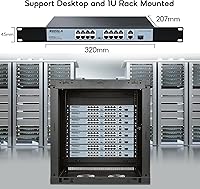
  • Chassis Material: The enclosure is constructed from metal and ships with a pair of rack-mount brackets and screws for standard 1U rack installation.
  • Dimensions: Physical dimensions are 12.6 x 8.15 x 1.77 inches, making it a compact 1U form factor suitable for shallow rack cabinets and wall-mount enclosures.
  • Weight: The unit weighs 4.73 pounds fully assembled, which is typical for a metal-chassis unmanaged switch of this port count.
  • Power Input: The switch accepts universal AC input from 100V to 240V at 50/60Hz, making it compatible with standard power supplies across different regions.
  • Operating Temperature: The rated working temperature range is -20°C to 50°C, allowing deployment in non-climate-controlled environments such as garages or outdoor-adjacent enclosures.
  • Network Protocols: Supported protocols include IEEE 802.3 (10Base-T), IEEE 802.3u (100Base-TX), IEEE 802.3ab (1000Base-TX), IEEE 802.3z (1000Base-FX), and IEEE 802.3x flow control.
  • Cable Requirements: PoE ports require Cat5 or better UTP cabling for 100Base-TX operation up to 100 meters, or Cat3 and above for 10Base-T connections.
  • LED Indicators: The front panel includes a PWR indicator for power status, a W indicator for DIP switch mode, and individual green Link/Data LEDs for all 19 ports.
  • Warranty: Sodola provides a 1-year replacement warranty on this unit, with a stated policy of replacing defective units rather than requiring repair and return.
  • Package Contents: The box includes the switch, a power cord, a user manual, one pair of rack-mount brackets, and the necessary mounting screws.

Related Reviews
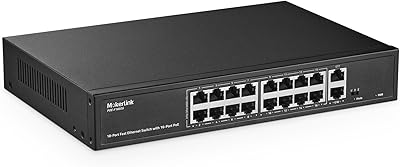
MokerLink POE-F1602G 16-Port PoE Switch
88%
91%
Setup and Installation
93%
Power Output Reliability
88%
Build Quality
87%
Network Stability
90%
Performance for Surveillance Systems
More
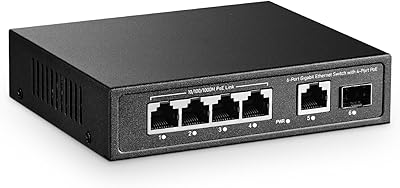
YuLinca 6-Port Gigabit PoE Switch with 4 PoE+ Ports
87%
95%
Ease of Installation
88%
PoE Functionality
91%
Build Quality
87%
Performance and Speed
94%
Fanless Operation (Noise)
More
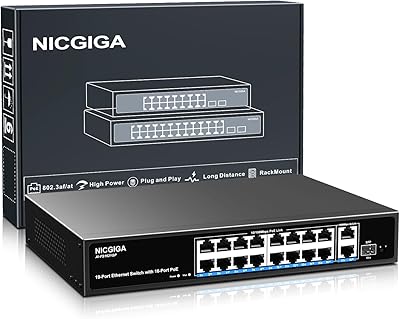
NICGIGA NIC-AI-FS1621GP 16-Port Unmanaged PoE Switch
76%
88%
Value for Money
93%
Ease of Setup
54%
PoE Port Speed
84%
PoE Power Delivery
79%
AI Watchdog Reliability
More
NETGEAR GS116PP 16-Port PoE+ Gigabit Switch
83%
96%
Ease of Setup
93%
PoE Port Coverage
68%
Power Budget Adequacy
88%
Build Quality
97%
Noise Level
More
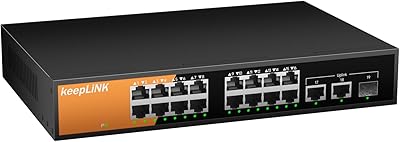
keepLiNK 16-Port Gigabit PoE Unmanaged Switch
81%
91%
Value for Money
93%
Ease of Setup
78%
PoE Power Delivery
84%
Build Quality
71%
Thermal Performance
More
BV-Tech 16 Ports PoE+ Switch 230W
87%
92%
Power Delivery
88%
Ease of Installation
90%
Build Quality
86%
Reliability
94%
Fan Noise
More
Sodola 4-Port Gigabit PoE Unmanaged Switch
76%
88%
Value for Money
93%
Ease of Setup
84%
PoE Reliability
79%
AI Watchdog Performance
82%
Build Quality
More
TP-Link TL-SL1218MP 16-Port PoE Network Switch
79%
91%
Value for Money
88%
PoE Performance
79%
Extend Mode Reliability
93%
Ease of Setup
62%
Build Quality
More
NETGEAR GS316P 16-Port PoE+ Gigabit Switch
77%
97%
Ease of Setup
94%
PoE Port Coverage
61%
PoE Power Budget
88%
Build Quality
96%
Noise Level
More
NETGEAR GS316PP 16-Port PoE+ Gigabit Ethernet Switch
85%
92%
Value for Money
89%
Ease of Use
86%
Energy Efficiency
76%
PoE Power Delivery
90%
Quiet Operation
More

FAQ

No, there is nothing to configure at all. You plug it in, connect your cameras, and they power up and go online automatically. The switch detects connected devices on its own — there is no app, no browser login, and no driver to install.

If your cameras draw typical amounts of power — most standard IP cameras pull between 7W and 15W each — you can absolutely run all 16 simultaneously with headroom to spare. Where you need to be careful is if you mix in cameras or devices that push close to 30W per port, since the 200W total is a shared pool. Do the math on your specific camera models before assuming the worst.

Yes, that is exactly what Extend Mode is designed for. By flipping the DIP switch to Extend, you can push PoE data and power out to 250 meters on any of the 16 PoE ports. The trade-off is that the port speed drops to 10Mbps in that mode, which is fine for a camera stream but not for high-throughput devices.

The VLAN label on this switch is a bit misleading if you are used to managed switches. What it actually does is isolate the PoE ports from each other, so cameras cannot talk to one another directly — they can only reach the uplink ports. You cannot create named VLANs, assign port groups, or manage it in any way. It is a fixed, all-or-nothing port isolation feature.

In almost all cases, yes. Both brands manufacture cameras that comply with IEEE 802.3af and 802.3at PoE standards, which is exactly what this switch supports. Just double-check that your specific camera models are not 24V passive PoE only — passive PoE is not supported and plugging a passive-only device into a standard PoE port can cause damage.

This switch is fanless, which means it runs silently. That is a genuine advantage for installations in living spaces or quiet office environments. The metal chassis acts as a passive heatsink, and the operating temperature range is wide enough to handle most real-world installation spots without active cooling.

Generally yes, as long as the module is a standard Gigabit SFP transceiver. The slot supports both multimode and single-mode fiber depending on the transceiver you insert. Just note that the SFP slot is an uplink port, not a PoE port, so it will not power anything — it is purely for data connectivity to your backbone or NVR.

User reports suggest it holds up reasonably well for an entry-level unit. Most owners who have run it continuously for over a year report no significant issues with port failures or power delivery degradation. Like any always-on networking hardware, keeping it in a ventilated space rather than a sealed box will help it last longer.

Rack-mount brackets are included in the box, so you do not need to buy anything extra. The unit fits a standard 1U rack space. If you are not mounting it in a rack, the switch can also sit flat on a shelf — just make sure there is airflow around it since the chassis does get warm under full PoE load.

The switch follows the 802.3af/at standard negotiation process, so it will allocate up to 30W per port based on what the device requests. If a device requests more than the port or total budget can provide, the switch will either not power that device or prioritize already-active ports depending on load conditions. It will not damage the camera — the PoE negotiation process is designed to handle this safely.