Overview

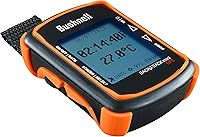
The Bushnell BackTrack Mini Handheld GPS Navigator is built for one specific job: getting you back to where you started when your phone dies or loses signal deep in the backcountry. Bushnell has been equipping outdoor enthusiasts for decades, and the BackTrack line carries real trail credibility among serious hikers and hunters. This pocket GPS is impressively small — just 3x2x1 inches and 2 ounces — light enough to clip onto a pack strap and forget about until you need it. It sits in a mid-range price bracket, competing with similarly focused units from Garmin. One thing worth clarifying upfront: this trail navigator is a waypoint tracker, not a topographic mapping device.
Features & Benefits

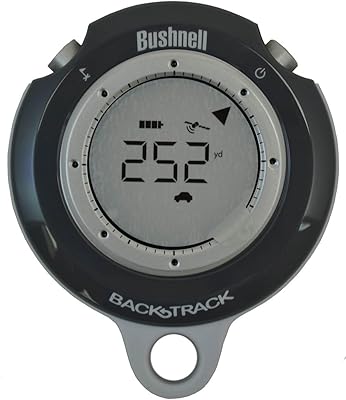
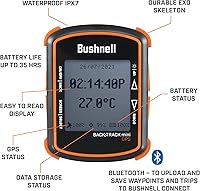
The BackTrack Mini does its most important work the moment you tap the waypoint button at your trailhead or basecamp — it locks that location and guides you back using GPS satellite tracking, independent of any cell signal. The rechargeable battery, charged via standard Micro-USB, holds up to 35 hours between charges, so you are not hunting for proprietary batteries mid-trip. The housing is rugged and waterproof, which matters when the weather turns without warning. Beyond basic navigation, this trail navigator also reports barometric pressure, elevation changes, and sunrise and moonrise times — useful context on longer expeditions. Glove-friendly buttons and a clear 2.25-inch display mean cold fingers are not a problem.

Best For

This pocket GPS is the right fit for a specific kind of outdoor user — someone who wants a reliable safety net without the weight or complexity of a full-featured mapping device. Day hikers and backpackers heading into areas with spotty or zero cell coverage will appreciate having a dedicated backup unit that just works, no signal bars required. Hunters navigating dense woods or unmarked private land get a clean, straightforward point-and-return tool without wading through complicated menus. If you already rely on your phone for primary navigation and simply want something that clips to a carabiner as a fail-safe option, this trail navigator fits that role well.

User Feedback

Buyers generally respond well to how quickly the BackTrack Mini locks onto satellites and how little it demands in terms of setup — most people are navigating within minutes of taking it out of the box. Field durability also earns consistent praise; users describe it surviving rain, drops, and mud without complaint. That said, two frustrations surface regularly. Buyers expecting a map display tend to be let down once they discover this is purely a waypoint-back tool. The Bluetooth sync with the Bushnell Connect app is functional, but several reviewers flag the app itself as underdeveloped and occasionally unreliable. Real-world battery life also tends to fall short of the advertised ceiling under active GPS use, worth planning around on longer outings.

Pros

  • Satellite lock-on is fast and reliable, even in dense tree cover.
  • At 2 ounces, the BackTrack Mini is light enough to carry on every outing without thinking twice.
  • Micro-USB charging means you can top it up from the same power bank you already carry.
  • Waterproof construction holds up to genuine field conditions, not just light drizzle.
  • Glove-friendly buttons work as advertised in cold-weather situations where touch screens fail.
  • Barometric pressure and elevation readings add practical value beyond simple waypoint tracking.
  • Setup is minimal — mark a point, navigate back, done. No manual required.
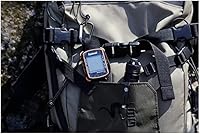
  • Includes a carabiner and adapter plate, so you have mounting options right out of the box.
  • Sunrise, sunset, moonrise, and moonset data is a genuinely useful bonus for hunters and early-start hikers.
  • Battery life is strong enough for multi-day trips with conservative use.

Cons

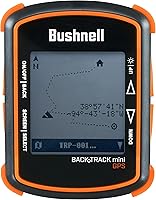
  • No map display whatsoever — this trail navigator shows direction and distance, not terrain or trails.
  • The Bushnell Connect app is underdeveloped and has frustrated users with sync failures and crashes.
  • Real-world battery life under continuous GPS use tends to fall meaningfully short of the 35-hour claim.
  • Waypoint storage capacity is limited, which can be a problem on complex multi-destination trips.
  • No altimeter calibration or storm-alert feature, despite showing barometric pressure data.
  • The screen is small enough that readability in bright direct sunlight can be a challenge.
  • No route planning or breadcrumb trail visualization on the device itself.
  • Micro-USB charging is becoming outdated as USB-C becomes the standard across outdoor gear.

Ratings

Our AI-generated scores for the Bushnell BackTrack Mini Handheld GPS Navigator are built by analyzing thousands of verified buyer reviews from global markets, with spam, bot submissions, and incentivized feedback actively filtered out before any scoring takes place. Each category below reflects the genuine range of user experience — the things that genuinely impressed outdoor users and the friction points that came up repeatedly in the field. Nothing has been smoothed over or inflated to paint a rosier picture than buyers actually reported.
GPS Accuracy
83%
Most hikers and hunters report that the BackTrack Mini locks onto satellites reliably and returns directional data that gets them back to their marked waypoint without significant error. In open terrain and moderate woodland, the accuracy is consistently praised as more than adequate for its intended purpose.
In very dense forest canopy or deep canyon terrain, a handful of users noted drift and sluggish acquisition that made them second-guess the reading. It does not match the positional precision of premium dedicated GPS units, which matters if you are navigating tight unmarked terrain.
Ease of Use
91%
This is one area where this trail navigator earns near-universal credit. Buyers describe getting from unboxing to their first saved waypoint in under five minutes, with no manual required. The straightforward interface removes the intimidation factor that keeps some outdoors people away from dedicated GPS units entirely.
A small number of users noted that switching between data screens — barometric pressure, elevation, waypoints — is not immediately intuitive and required a few rounds of button-pressing to figure out. The learning curve is shallow, but it does exist.
Battery Life
67%
33%
The rechargeable battery via standard Micro-USB is a genuinely appreciated design choice, since it means any power bank you already carry handles a top-up in the field. For day hikes with intermittent use, most buyers find the charge more than adequate for a full outing.
The gap between the advertised 35-hour ceiling and what buyers experience under continuous GPS tracking — often closer to 20 hours — is a recurring complaint. Users on multi-day trips who expected to go several days without charging were caught off guard, and a few flagged it as a trust issue with the product claims.
Build Quality
79%
21%
The BackTrack Mini has taken genuine punishment in the field and come back for more. Buyers regularly describe dropping it on rocky trails, soaking it in unexpected downpours, and returning it from muddy hunts with nothing more than cosmetic wear. For its size and weight class, the housing feels purposefully built.
Some buyers found the plastic casing felt slightly hollow or light in the hand, which creates an impression of fragility even when the unit proves otherwise in use. A few longer-term owners reported that the button covers showed wear after a full season of regular use.
Waterproofing
82%
18%
Rain, river spray, and wet-handed operation in a downpour are all scenarios where this pocket GPS holds up without issue, based on what buyers consistently report. Hunters in particular appreciated being able to use it without worrying about light moisture during early-morning outings.
Bushnell does not publish a specific IPX depth rating for this model, which leaves full-submersion scenarios in question. A small number of users who brought it kayaking or through shallow stream crossings reported moisture-related issues that would not have occurred with a device carrying a clearly defined waterproof certification.
Navigation Features
54%
46%
For its stated purpose — mark a point, navigate back to it — this trail navigator does the job cleanly and reliably. Buyers who understood what they were buying appreciate the focused simplicity, and the directional arrow system is easy to interpret even while moving.
Users who expected any form of map display, trail overlay, or turn-by-turn routing are consistently disappointed, and this is the most common source of negative reviews by a wide margin. There is no breadcrumb trail visible on-screen, no route planning capability, and no way to preview the terrain between you and your waypoint.
Bluetooth & App Integration
51%
49%
When the Bushnell Connect app behaves, trip sync and waypoint sharing work as advertised and add a useful layer of post-trip review capability. Buyers who use it primarily on Android have reported more stable experiences than iOS users in some feedback clusters.
The Bushnell Connect app has a noticeably poor reputation among buyers who rely on it regularly. Connectivity drops, outdated app design, and failed syncs are mentioned frequently enough to suggest this is a systemic issue rather than isolated incidents. For many users, the Bluetooth feature is effectively unused after the first failed pairing attempt.
Satellite Acquisition Speed
84%
Quick satellite lock is one of the more consistently praised technical aspects of this device. In open-sky conditions, buyers report being ready to navigate within 60 to 90 seconds of powering on, which is reassuring when you need to act fast after realizing you are turned around.
Acquisition slows noticeably in heavy canopy or when used at first power-on after extended storage, sometimes taking several minutes to establish a reliable lock. This is not unusual for GPS units in this category, but it is worth knowing before you are standing at a trailhead in a hurry.
Portability & Form Factor
93%
At 2 ounces and roughly the footprint of a large matchbox, the BackTrack Mini has almost no presence in a pack or on a belt clip. Ultralight backpackers specifically mention this as the reason they chose it over heavier alternatives with more features they did not actually need.
The compact size does come with a tradeoff: the screen real estate is limited, and users with larger hands or poorer eyesight occasionally note that reading data on the 2.25-inch display while moving takes a moment more than they would like.
Display Readability
71%
29%
For basic directional and distance data, the display is clear enough under overcast skies and in shaded trail conditions that most buyers had no readability complaints during standard use. The high-contrast layout is straightforward and uncluttered.
Bright midday sunlight significantly reduces display visibility for a meaningful portion of buyers, and no backlight mode is available for dawn or dusk use — a notable gap for hunters who are often active in low-light conditions at both ends of the day.
Value for Money
73%
27%
For buyers who need a dependable, lightweight GPS backup and go in with clear expectations about its feature scope, the price feels fair relative to what it delivers. The inclusion of a carabiner and adapter plate adds practical out-of-box utility without requiring extra accessories.
Buyers who compare it against entry-level Garmin units at a similar price point often feel the BackTrack Mini gives up too much in navigation depth without delivering enough in return. The limited app experience and battery life gap make the value proposition more fragile than it first appears.
Glove Compatibility
88%
The physical button layout was clearly designed with cold-weather outdoor use in mind, and buyers who use this pocket GPS during winter hunts or cold-morning alpine starts consistently praise the ability to navigate menus without removing gloves. It is a detail that sounds minor until you actually need it.
A few users with bulkier expedition-weight gloves noted that precision on smaller secondary buttons still required some care. For the majority of hiking and hunting glove types, though, operation is reliably comfortable.
Barometric & Elevation Data
76%
24%
Having barometric pressure and elevation gain data in a device this small is a genuine bonus that buyers did not always expect. Weather-aware hikers and backcountry hunters mentioned using the pressure readings to anticipate incoming fronts, which adds real practical value on multi-day outings.
The barometric sensor is not paired with any storm-alert function or trend graphing, so interpreting the pressure data requires some baseline knowledge on the user's part. A few buyers noted that elevation figures can drift over time without manual calibration, which limits their precision on technical terrain.
Setup & Initial Configuration
89%
The out-of-box experience is about as friction-free as it gets for a GPS device. Buyers report charging it, powering it on, stepping outside, and being fully operational with a saved waypoint within minutes — no account creation, no software installation, no pairing required just to use the core function.
Users who want to explore the full feature set, including astronomical data screens and Bluetooth pairing, note that the included documentation is thin and the onscreen menus are not always self-explanatory. A more thorough quick-start guide would reduce the trial-and-error phase.

Suitable for:

The Bushnell BackTrack Mini Handheld GPS Navigator is a smart buy for anyone who spends real time in areas where cell coverage is unreliable or nonexistent. Day hikers and backpackers who already use a smartphone as their primary navigation tool will find this pocket GPS to be an ideal insurance policy — something lightweight enough to forget about until it genuinely matters. Hunters moving through unmarked woods or remote private land will especially appreciate how quickly it locks a waypoint and guides them back without requiring any menu-diving or prior GPS experience. At just 2 ounces, ultralight packers can toss it in a hip belt pocket or clip the included carabiner to a shoulder strap without adding meaningful weight to a loaded pack. If your priority is a straightforward, reliable get-me-back device that works independently of signal and does not require a steep learning curve, this trail navigator fits that brief well.
Not suitable for:

The Bushnell BackTrack Mini Handheld GPS Navigator is not the right tool for anyone expecting full navigation features on par with dedicated mapping units from Garmin or similar brands. This device does not display topographic maps, trail networks, or turn-by-turn routing — it tracks and returns you to marked waypoints, and that is the extent of its navigation repertoire. Technical hikers, mountaineers, or backcountry skiers who need detailed terrain data and route planning on the device itself will find this pocket GPS frustratingly limited. Buyers who intend to rely heavily on the Bluetooth syncing and app integration should also go in with tempered expectations, as the Bushnell Connect app has a reputation for inconsistent performance. If you need a primary navigation device rather than a capable backup, the BackTrack Mini is likely to leave you wanting considerably more.
Specifications

  • Dimensions: The unit measures 3 x 2 x 1 inches, making it small enough to fit in a jacket pocket or clip to a pack strap without bulk.
  • Weight: At just 2 ounces, this is one of the lightest dedicated GPS units available for outdoor use.
  • Screen Size: The display measures 2.25 inches and is designed for clear readability during active outdoor use.
  • Battery Life: Bushnell rates battery life at up to 35 hours, though the spec sheet lists 24 hours under standard GPS usage conditions.
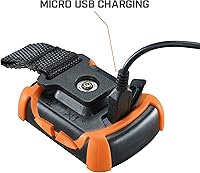
  • Charging: The unit charges via Micro-USB, compatible with most standard cables and portable power banks.
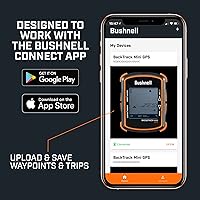
  • Connectivity: Bluetooth connectivity allows the device to sync waypoints and trip data with the Bushnell Connect app on a paired smartphone.
  • Water Resistance: The housing is constructed to be waterproof, capable of handling rain, splashes, and wet trail conditions.
  • Navigation Type: The device uses GPS satellite technology to record and return to marked waypoints; it does not display topographic or road maps.
  • Elevation Data: The unit tracks and displays elevation gain and decline throughout a recorded trip.
  • Barometric Sensor: An onboard barometric pressure sensor provides real-time pressure readings useful for tracking incoming weather changes.
  • Astronomical Data: The device displays daily sunrise, sunset, moonrise, and moonset times based on current GPS position.
  • Button Design: Physical buttons are sized and spaced for glove-friendly operation in cold or wet conditions.
  • Color: The unit is finished in black and orange, consistent with Bushnell's outdoor product line aesthetic.
  • Included Items: Each unit ships with a BackTrack Mini GPS, a carabiner for clip-on carry, and an adapter plate for mounting flexibility.
  • Compatibility: The device is compatible with the Bushnell Connect app, available for iOS and Android smartphones.
  • Intended Use: Designed for backpacking, camping, hiking, and hunting in environments where smartphone navigation is unreliable.
  • Warranty: Bushnell covers this unit under a limited manufacturer warranty; specific terms should be confirmed directly with Bushnell.
  • Model Year: This unit was introduced in 2022 under the part number GPSBTM.

Related Reviews

Bushnell GPS BackTrack Personal Locator
85%
90%
Ease of Use
88%
GPS Accuracy
85%
Weather Resistance
92%
Portability
89%
Battery Life
More
Garmin eTrex 32x Handheld GPS Navigator
78%
93%
Satellite Performance
91%
Battery Life
88%
Build & Durability
74%
Map Quality & Coverage
89%
Navigation Accuracy
More
Garmin eTrex Solar Handheld GPS Navigator
80%
91%
Battery Life
88%
GPS Accuracy
93%
Build Quality
58%
Display Quality
67%
Solar Performance
More
Garmin eTrex SE Handheld GPS Navigator
81%
97%
Battery Life
91%
GPS Accuracy
88%
Build Quality
63%
Display Quality
79%
Ease of Use
More
Garmin eTrex 30x Handheld GPS Navigator
87%
93%
Build Quality & Durability
87%
Battery Life
91%
Ease of Use
75%
Display & Visuals
90%
Mapping & Navigation Features
More
Garmin GPS 73
Garmin GPS 73
80%
93%
Battery Life
88%
SailAssist Features
91%
Build Quality & Durability
54%
Display Quality
82%
Ease of Use
More
OHREX N900 9-Inch Truck GPS Navigator
68%
74%
Truck Routing Accuracy
81%
Screen Clarity
41%
Map Update Process
58%
Satellite Acquisition
79%
FM Transmitter
More
Garmin GPS 18x USB Navigation Receiver
67%
91%
Signal Accuracy
47%
Software Compatibility
78%
Build Quality
63%
Ease of Setup
84%
Long-Term Durability
More
Garmin DriveSmart 55 GPS Navigator
74%
88%
Screen Readability
83%
Routing Accuracy
79%
Live Traffic Updates
91%
Ease of Use
57%
Voice Recognition
More
Garmin Nuvi 2539LMT GPS Navigator
84%
91%
Ease of Use
89%
Display Quality
75%
Traffic Update Accuracy
85%
Bluetooth Connectivity
93%
Navigation Accuracy
More

FAQ

The Bushnell BackTrack Mini Handheld GPS Navigator does not display maps of any kind. It works by saving a waypoint at your starting location and then giving you a directional arrow and distance to guide you back. Think of it as a high-tech breadcrumb trail rather than a navigation map.
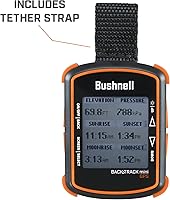
Bushnell advertises up to 35 hours, but in practice, users doing continuous GPS tracking tend to see something closer to 20 to 24 hours of active use. If you are turning it on periodically to check your position rather than leaving it running constantly, the battery will last considerably longer. For multi-day trips, bringing a small USB power bank is a smart precaution.

Absolutely, and that is largely the point. The BackTrack Mini operates fully independently from your phone — no app, no signal, no pairing required for basic GPS navigation. The Bluetooth and app features are optional extras for reviewing or sharing your trip data after the fact.

The unit is rated waterproof and handles rain and wet conditions reliably based on what buyers report in the field. That said, Bushnell does not publish a specific IPX rating for this model, so submerging it fully in a river crossing would be pushing beyond what the manufacturer specifies. For trail rain and light splashing, most users have had no issues at all.

The BackTrack Mini supports saving multiple waypoints, though the storage capacity is limited compared to more advanced GPS units. For most day hikes or hunting trips where you are marking a truck, a stand, or a camp, the available slots are sufficient. If you regularly need to manage dozens of complex waypoints across multiple trips, a full-featured Garmin unit would serve you better.

Honest answer: it is functional but not polished. Some users sync their trips without any trouble, while others report the app dropping connections, failing to update, or feeling outdated compared to mainstream navigation apps. The core GPS functions on the device itself work fine regardless of the app, so connectivity issues there are an inconvenience rather than a dealbreaker.

The BackTrack Mini uses standard GPS satellite technology, which is globally accessible. It will work anywhere in the world with a clear view of the sky, making it a solid travel companion for international hiking or hunting trips.

Satellite acquisition is one of the more consistently praised aspects of this trail navigator. In open or semi-open terrain, most users report a lock within a minute or two of powering on. In very dense tree canopy, it can take a little longer, but it generally performs well compared to other units in this price range.

Yes, this was clearly a design priority. The physical buttons are large enough and well-spaced enough that you can navigate the interface wearing standard hiking or hunting gloves without fumbling. It is a meaningful advantage over touchscreen devices in cold conditions.

The box includes the GPS unit itself, a carabiner for clipping to a pack or belt, and an adapter plate for mounting. You will need a Micro-USB cable to charge it, which most people already own. Beyond that, no subscription, no maps to purchase, and no additional hardware required — it is ready to use right out of the box.

Where to Buy