Overview

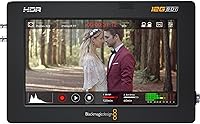
The Blackmagic Design Video Assist 5″ 12G HDR is a professional-grade field monitor and recorder built for videographers who need reliable, accurate tools on set — not consumer-grade approximations. Its 5-inch IPS touchscreen hits 2500 nits of brightness, which means outdoor shooting in direct sunlight is actually workable rather than a squinting exercise. Beyond monitoring, it records high-bitrate footage directly, effectively replacing a separate recorder in your kit. This is gear priced and designed for working professionals — camera operators, documentary crews, DITs — not someone picking up their first mirrorless camera.
Features & Benefits

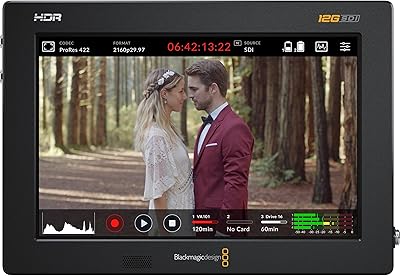
The 12G-SDI and HDMI 2.0a connections handle signals up to 4K60, keeping this field monitor-recorder compatible with virtually every professional cinema camera on the market. Scope overlays — waveform, vectorscope, histogram — are built right in, so you can catch exposure or color problems while rolling rather than discovering them in post. Recording to SD UHS-II cards or via USB-C in Blackmagic RAW or Apple ProRes means footage arrives in an edit-ready format without transcoding headaches. The touchscreen handles metadata tagging and playback cleanly, and monitoring 16 channels of embedded SDI audio adds serious utility for complex sound setups.

Best For

This Blackmagic monitor makes the most sense for documentary and narrative filmmakers who need a dependable on-camera reference that holds up in real shooting conditions. Camera operators paired with ARRI, RED, or Sony FX bodies will appreciate the 12G-SDI connectivity that many competing monitors still lack at this price tier. DITs and colorists doing on-set confidence monitoring benefit from the accurate HDR rendering, while solo shooters gain a real efficiency win by letting the device handle recording duties their camera might not manage as gracefully. For small crews, consolidating monitor and recorder into one unit meaningfully reduces rig weight and cable complexity.

User Feedback

Owners consistently praise the screen brightness outdoors — it comes up repeatedly, and for daylight shoots it genuinely separates this unit from dimmer competitors. Build quality earns positive marks too, with users noting solid mounting and a rugged feel suited to field work. The honest criticism centers on battery life: extended shooting days demand multiple batteries, which catches some buyers off guard. New users also report a moderate learning curve with the touchscreen menus before navigation feels natural. A handful of owners have noted occasional firmware quirks, though most describe these as resolved through updates. Overall, sentiment is strongly positive among professionals who approach it with clear expectations.

Pros

  • The 2500-nit screen performs reliably in direct sunlight, solving a real problem for outdoor location work.
  • Combining monitor and recorder in one unit meaningfully reduces rig weight and cable complexity on busy shoots.
  • 12G-SDI connectivity covers virtually every professional cinema camera system without adapters.
  • Built-in waveform, vectorscope, and histogram overlays replace a separate scope unit on location.
  • Recording in Blackmagic RAW and ProRes delivers edit-ready files with no transcoding step required.
  • HDR10 and Hybrid Log Gamma support enables genuine on-set confidence monitoring for HDR deliverables.
  • 16-channel embedded SDI audio handling exceeds what most competing monitors at this size offer.
  • The chassis feels solid and field-ready, with mounting hardware that holds up to repeated production use.
  • USB-C recording expands storage options beyond SD cards for demanding high-bitrate capture scenarios.
  • Firmware updates from Blackmagic have historically addressed bugs and occasionally added meaningful functionality.

Cons

  • Battery life on full-day outdoor shoots reliably requires purchasing two or more additional batteries.
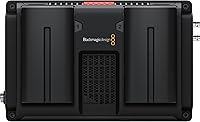
  • The Micro BNC SDI connectors require adapters for users accustomed to standard full-size BNC cables.
  • New users face a genuine learning curve with the menu system that can cause friction during early paid jobs.
  • A single SD card slot means no redundant recording safety net for high-stakes productions.
  • The unit generates noticeable heat during extended 4K RAW recording sessions in enclosed rigging configurations.
  • Early firmware versions had documented codec compatibility issues that eroded confidence among some early adopters.
  • At 5 inches, the screen limits detailed critical focus assessment compared to larger field monitors.
  • Some firmware updates have introduced new issues while fixing existing ones, creating hesitancy around pre-shoot updates.
  • Total cost of ownership rises noticeably once quality SD UHS-II cards and extra batteries are added to the budget.
  • Users outside the Blackmagic and Apple editing ecosystems may find codec support narrower than expected.

Ratings

The Blackmagic Design Video Assist 5″ 12G HDR earns strong marks overall from working professionals who have put it through real production conditions — from sun-drenched documentary shoots to controlled studio environments. These scores are generated by AI after analyzing verified user reviews worldwide, with spam, bot-driven, and incentivized feedback actively filtered out. Both the genuine strengths and the recurring frustrations are reflected transparently below.
Screen Brightness & Visibility
93%
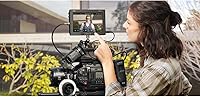
The 2500-nit output is the feature users mention most enthusiastically. Camera operators shooting in direct sunlight — on location documentaries, outdoor events, run-and-gun news work — consistently report being able to read exposure and focus details without improvising shade solutions. It genuinely outperforms most competitors in this brightness tier.
A handful of users note that peak brightness draws noticeably on battery, shortening runtime during outdoor shoots where you need it most. A small number also report slight color temperature shifts at maximum brightness, though this was rarely a dealbreaker for experienced operators.
Build Quality & Durability
88%
Users across professional productions praise the solid, dense feel of the chassis and the reliability of the mounting hardware. It survives the bumps of field work — rigged on cameras, packed in run bags, pulled out repeatedly on long shoot days — without showing signs of premature wear or connector looseness.
The unit runs noticeably warm during extended 4K recording sessions, which gives some users pause about long-term thermal stress. A few reviewers also noted that the Micro BNC connectors, while secure, require careful handling compared to full-size BNC alternatives found on larger monitors.
Recording Capability
91%
Recording Blackmagic RAW and Apple ProRes directly to SD UHS-II cards is a real workflow advantage that editors and DITs appreciate deeply. It eliminates a dedicated external recorder from the rig, saving weight and simplifying signal chains on busy sets where every cable is a potential point of failure.
The single SD card slot means no redundant recording, which makes some professionals uncomfortable on high-stakes shoots. Users also note that top-tier SD UHS-II cards are expensive, and the unit does not support CFast or CFexpress, which limits maximum sustained write speeds for very high-bitrate RAW capture in demanding scenarios.
HDR Monitoring Accuracy
86%
Colorists and DITs working with HDR deliverables find the HDR10 and Hybrid Log Gamma support genuinely useful for on-set confidence monitoring. Being able to toggle between HDR and SDR views in real time helps catch blown highlights before they become a post-production problem, especially on drama productions grading for streaming platforms.
At 5 inches, the screen real estate limits how much HDR grading nuance you can actually evaluate on set compared to a larger reference monitor. Some experienced colorists treat it as a useful check rather than a definitive reference, particularly for shadow detail in challenging lighting scenarios.
Battery Life
51%
49%
The battery system itself is standardized and widely available, which means spares are easy to source globally. Users on shorter shoot days — half-day corporate gigs, controlled studio sessions — report that a single charge is typically adequate without causing anxiety mid-job.
This is the most consistent complaint across user reviews by a significant margin. Full-day documentary shoots, event coverage, and extended location work almost always require two or more batteries, and the power draw increases noticeably when recording at higher bitrates with brightness cranked up. Buying into this unit realistically means budgeting for a multi-battery setup from day one.
Connectivity & I/O
89%
Having both 12G-SDI and HDMI 2.0a on a monitor this compact gives operators genuine flexibility across camera systems. It pairs naturally with ARRI, RED, Sony FX, and Blackmagic cinema cameras without adapters, and the loop-through outputs allow flexible signal routing in multi-monitor setups on larger productions.
The Micro BNC format for SDI, while compact, is a point of friction for operators accustomed to standard BNC connectors. Adapters are inexpensive but add one more thing to manage, and a few users reported that third-party Micro BNC cables showed intermittent reliability issues that standard BNC cables would not typically produce.
Touchscreen Interface & Usability
72%
28%
Experienced users who invest time learning the menu structure report that day-to-day operation becomes fluid and fast. The touchscreen is responsive enough for on-set adjustments, and metadata tagging during playback is a genuinely useful feature for organized workflows on documentary and multi-camera shoots.
The learning curve is steeper than users expect at this price point. New owners frequently report spending significant time in the manual during early shoots, and the menu hierarchy feels counterintuitive compared to competing monitors. Operators switching from other brands mention a noticeable adjustment period of several shooting days before navigation feels natural.
Scope & Monitoring Tools
92%
The built-in waveform, vectorscope, and histogram are accurate and fast enough to be genuinely useful rather than decorative. Cinematographers use them actively to nail exposures in tricky mixed-lighting situations without reaching for a separate dedicated scope unit, which is a meaningful rig simplification on location.
Scope display options, while comprehensive, are not as customizable in layout as some competing professional monitors. Users who prefer specific overlay configurations can find the fixed display options limiting, particularly when monitoring in tight frame or working with very small on-screen scopes alongside a full image.
Size & Portability
84%
The 5-inch form factor is genuinely well-suited to rigged on-camera use without creating excessive front-heavy imbalance. Solo operators and run-and-gun crews appreciate being able to build a functional monitoring and recording rig that stays compact enough for handheld shooting and easy travel packing.
For users who primarily work at a fixed studio position or off a heavy support rig, the 5-inch screen can feel restrictive for detailed critical focus assessment. Some users specifically note they keep a larger field monitor available for setups where screen size matters more than portability.
Codec & Format Compatibility
87%
Supporting Blackmagic RAW, Apple ProRes, and DNxHD covers the dominant professional workflows without requiring separate recording devices per codec preference. Editors working in DaVinci Resolve — the natural pairing with Blackmagic gear — find BRAW files arrive ready for grading with minimal preparation overhead.
Users embedded in workflows outside the Blackmagic and Apple ecosystems occasionally note friction, particularly with certain legacy broadcast formats. The codec list, while strong for film and streaming work, is less comprehensive than some dedicated recorders that support a wider range of broadcast and acquisition formats for specialized delivery requirements.
Audio Monitoring
79%
21%
Supporting 16 channels of embedded SDI audio is meaningfully above average for a monitor-recorder at this size, and sound recordists working with multi-channel productions appreciate not hitting a channel ceiling mid-shoot. Basic audio level metering on-screen catches gross problems quickly during fast-moving production days.
The unit lacks physical audio inputs beyond embedded signal, so it cannot serve as an independent audio recorder for sound-only captures. Users who want to monitor discrete mix outputs from a sound cart find the embedded-only architecture limiting, and the on-screen audio metering is functional but less detailed than a dedicated audio monitor would provide.
Firmware & Software Stability
74%
26%
Blackmagic has a reasonable track record of issuing firmware updates that address bugs and occasionally add features, which longtime users of the ecosystem appreciate. Users who keep firmware current generally report stable performance without significant operational disruptions during critical shoots.
Early firmware versions drew notable criticism for occasional codec compatibility issues and UI bugs that affected professional confidence in the unit. Some users report that specific firmware updates introduced new issues while resolving others, creating hesitancy around updating immediately before important productions — a real concern for professionals who cannot afford surprises on set.
Value for Money
77%
23%
Compared to purchasing a quality field monitor and a separate dedicated recorder as individual units, the combined functionality represents a defensible investment for professionals who will use both capabilities regularly. The screen quality and recording specs are aligned with what the price tier historically commands in the professional video market.
Buyers who primarily need a monitor and plan to record only occasionally may find the price harder to justify against capable monitor-only alternatives at lower price points. The battery situation also adds real total cost of ownership beyond the unit price, which some buyers factor in only after purchase.
Heat Management
63%
37%
During standard monitoring use without active recording, thermal output is unremarkable and does not interfere with normal operation. Users running the unit as a pure monitor on longer corporate or event shoots rarely flag heat as an issue in those use cases.
Extended 4K RAW recording sessions generate noticeable warmth that several users describe as concerning during marathon shoot days. While no users reported thermal shutdowns in normal conditions, the heat accumulation during intensive recording use is a real characteristic that operators need to account for in enclosed rigging configurations or hot climate locations.

Suitable for:

The Blackmagic Design Video Assist 5″ 12G HDR is built for working professionals who need a dependable, capable tool rather than a casual accessory — and the buyers who get the most out of it reflect that. Documentary cinematographers shooting in variable outdoor conditions will immediately appreciate the 2500-nit screen, which makes exposure and focus assessment practical without hunting for shade. Camera operators paired with cinema-grade cameras from ARRI, RED, Sony, or Blackmagic's own lineup benefit directly from the 12G-SDI connectivity, avoiding the signal degradation and adapter headaches that come with HDMI-only monitors. DITs and colorists doing on-set HDR confidence checks will find the HDR10 and Hybrid Log Gamma support genuinely reliable for catching grading problems before they compound in post. Solo shooters and small crews gain a meaningful practical advantage by consolidating monitor and recorder into one unit, cutting rig complexity and reducing the number of devices that need charging, syncing, and troubleshooting between setups.
Not suitable for:

Buyers who are newer to professional video production, or who do not yet have established SDI-based workflows, are likely to find the Blackmagic Design Video Assist 5″ 12G HDR more complex and expensive than their current needs require. The touchscreen menu system has a real learning curve that experienced users absorb over several shoots, but it can be genuinely frustrating during a first paid job where there is no margin for confusion. Budget-conscious shooters who primarily need a basic on-camera monitor and rarely or never record externally will find it difficult to justify the price when capable monitor-only alternatives exist at a lower cost. Users working on full-day productions expecting to run a single battery through an entire location shoot will be caught short — this unit demands a multi-battery investment that should be factored into the total purchase cost upfront. Anyone whose primary workflow sits outside Blackmagic RAW, ProRes, or DNxHD — particularly those in specialized broadcast environments requiring different acquisition formats — may find the codec coverage narrower than a dedicated external recorder would offer.
Specifications

  • Screen Size: The display measures 5 inches diagonally with a 1920×1080 pixel IPS panel.
  • Brightness: Peak screen brightness reaches 2500 nits, enabling practical use in direct sunlight conditions.
  • HDR Support: The monitor supports HDR10 and Hybrid Log Gamma (HLG) HDR formats for accurate on-set monitoring.
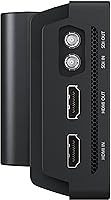
  • Video Inputs: One 12G-SDI input via Micro BNC and one HDMI 2.0a input are provided for signal ingestion.
  • Video Outputs: One 12G-SDI output via Micro BNC and one HDMI 2.0a output enable signal loop-through to additional devices.
  • SDI Standards: The SDI connection supports video standards up to 2160p60 and 4Kp30 DCI over a single 12G cable.
  • HDMI Standards: The HDMI 2.0a connection supports video standards up to 2160p60 and 4Kp25 DCI.
  • Supported Codecs: Recording is supported in Blackmagic RAW, Apple ProRes (multiple variants), and Avid DNxHD formats.
  • Media Recording: One SD UHS-II card slot is provided for on-board media recording directly from the device.
  • USB-C Recording: A USB-C port enables recording to compatible external drives as an alternative to SD card storage.
  • SDI Audio: Up to 16 channels of embedded audio are supported via the 12G-SDI input and output connections.
  • HDMI Audio: Up to 8 channels of embedded audio are supported via the HDMI 2.0a input and output connections.
  • Built-in Scopes: Waveform monitor, vectorscope, and histogram overlays are built into the device for on-set exposure and color analysis.
  • Touchscreen: The 5-inch display is a touchscreen interface supporting direct control of menus, playback, and metadata tagging.
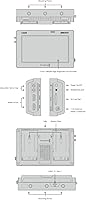
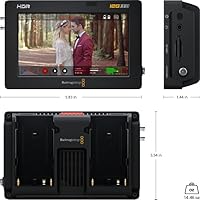
  • Dimensions: The unit measures approximately 8.3 × 7.8 × 3.3 inches (length × width × height).
  • Color: The unit is finished in black with a predominantly matte professional-grade housing.
  • Brand: Manufactured by Blackmagic Design, an Australia-based professional video technology company.
  • Availability: The product was first made available in September 2019 and is not discontinued as of the latest confirmed status.

Related Reviews

Blackmagic Design Video Assist 7″ 12G HDR
82%
91%
Display Quality
93%
Build Quality
88%
Recording Performance
89%
SDI Connectivity
86%
HDR Monitoring Accuracy
More
Blackmagic Design Video Assist 5″ 3G
75%
84%
Screen Clarity
89%
Scope Accuracy
91%
Connectivity & Compatibility
81%
Recording Performance
83%
Build Quality
More
Blackmagic Design UltraStudio Monitor 3G
80%
93%
Portability & Form Factor
81%
Setup & Installation
89%
SDI Output Quality
76%
HDMI Output Quality
84%
Software Integration
More
Blackmagic Design Intensity Pro 4K
83%
94%
Video Capture Quality
68%
Setup & Installation
82%
Software Performance
89%
System Compatibility
90%
Reliability & Durability
More
Blackmagic Design UltraStudio Recorder 3G
86%
88%
Performance
91%
Ease of Setup
93%
Portability
89%
Build Quality
85%
Compatibility with Software
More
Blackmagic Design Web Presenter HD
86%
91%
Ease of Use
88%
Streaming Quality
68%
Mobile Data Connectivity
85%
Portability
94%
Setup Process
More
Blackmagic Design UltraStudio Mini Recorder
87%
88%
Performance
90%
Build Quality
92%
Video Quality
85%
Audio Quality
94%
Connectivity
More
Blackmagic Design DeckLink SDI 4K
87%
94%
Video Capture Quality
83%
Software Compatibility
89%
Build Quality
91%
Performance & Speed
87%
Cross-Platform Compatibility
More
Blackmagic Design DaVinci Resolve Micro Panel
85%
92%
Portability
85%
Ease of Use
88%
Precision Control
86%
Build Quality
91%
USB Power Convenience
More
Blackmagic Design DaVinci Resolve Mini Panel
87%
94%
Build Quality
91%
Portability
88%
Ease of Use
93%
Performance in Color Grading
89%
Compatibility
More

FAQ

Yes, the 12G-SDI Micro BNC input is compatible with professional cinema cameras including Sony FX series, ARRI, RED, and Blackmagic's own URSA lineup. You will need a Micro BNC to standard BNC adapter cable if your camera outputs full-size BNC, which is an inexpensive and widely available accessory.

It does both. The Blackmagic Design Video Assist 5″ 12G HDR records directly to SD UHS-II cards or via USB-C to an external drive, capturing in Blackmagic RAW, Apple ProRes, or DNxHD. This makes it a genuine dual-function device — you get a high-brightness field monitor and an external recorder in a single unit.
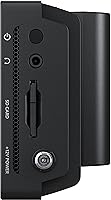
Honestly, plan for multiple batteries if you are shooting a full day. Most users running the monitor at high brightness while recording find that a single battery covers a few hours at best. Buying two or three batteries alongside the unit is a practical necessity, not an optional upgrade.

You need SD UHS-II cards specifically — standard UHS-I cards will not sustain the write speeds required for high-bitrate RAW or ProRes recording. Look for cards with a V60 or V90 speed rating for reliable performance; they cost more than everyday SD cards but are the appropriate media for this workflow.

Absolutely. You can use this Blackmagic monitor entirely as a display device without inserting a card or enabling recording. Many operators use it purely for its bright screen and built-in scopes, only activating recording when they need a backup or primary capture source.

There is a real adjustment period, especially if you are coming from a different monitor brand. The touchscreen menus are logically organized once you understand the structure, but first-time users frequently report confusion during initial shoots. Spending a couple of hours with the device before your first paid job is strongly recommended.

The unit handles audio exclusively through embedded channels — 16 channels via SDI and 8 via HDMI. There are no physical XLR or TRS audio inputs, so it cannot function as a standalone audio recorder or monitor discrete analog sources independently of the video signal.

This is a legitimate concern that experienced users take seriously. The common practice among professionals is to avoid installing new firmware immediately before critical productions — let others test new releases first, then update during a quieter period. Blackmagic does release fixes, but some updates have introduced new issues alongside resolving old ones.

Yes, the HDMI 2.0a input works with mirrorless cameras that output clean HDMI signals. However, this field monitor-recorder is priced and designed for professional production contexts, so if your workflow is primarily HDMI-based with a consumer or prosumer camera, a less expensive monitor-only option may suit your needs more efficiently.

This is consistently the most praised aspect by users who shoot outdoors. At 2500 nits, the screen is bright enough to make exposure and focus assessment genuinely workable in most outdoor lighting conditions, including harsh midday sun. It meaningfully outperforms monitors in lower brightness tiers for daylight location work.