Overview

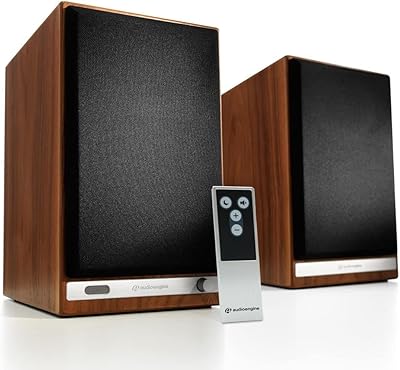
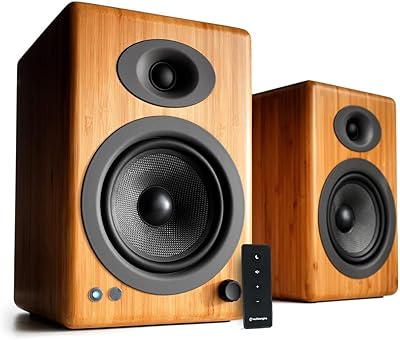
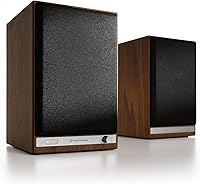
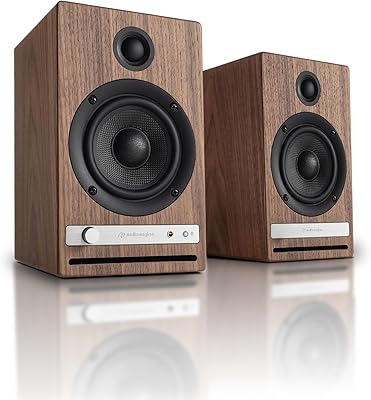
The Audioengine HD5 sits in a comfortable but demanding spot — premium enough to attract serious listeners, practical enough not to require a rack of supporting gear. These Audioengine bookshelf speakers come as a powered stereo pair with a built-in amplifier, so there's nothing extra to buy before you can start listening. The wood cabinet feels substantial and looks the part on a desk or shelf, avoiding the plasticky appearance that plagues most Bluetooth speakers at lower price points. Audioengine has built a real reputation in desktop and home audio, and this speaker reflects that history without feeling like it's coasting on brand name alone.

Features & Benefits

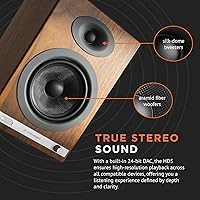
The HD5 uses aptX-HD over Bluetooth 5.0, which means wireless audio at up to 100 feet without the compression artifacts you'd notice on a cheaper wireless speaker. The amplifier runs Class A/B — a topology that runs warmer than the more common Class D designs but rewards you with noticeably lower distortion and a fuller, more musical character. A 24-bit DAC handles the digital side, and the signal-to-noise ratio is high enough that background hiss simply isn't an issue. You also get optical, RCA, and 3.5mm inputs alongside Bluetooth, so connecting a turntable, TV, or laptop requires no adapters. Everything you need to get started ships in the box.

Best For

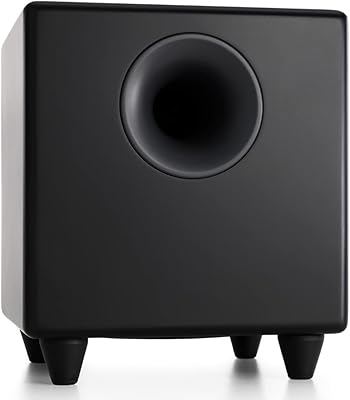
This powered speaker pair makes the most sense for people who want real listening quality without building a full component system. If you're streaming Spotify or Tidal from a phone across the room, the aptX-HD connection handles that well. If you'd rather plug in directly — a TV via optical, a turntable via RCA — that works too. The included subwoofer output means you can expand the low end down the road if needed. Casual listeners who just want background noise might find this overkill. But if you've ever felt your current speakers were holding your music back, these Audioengine bookshelf speakers are worth serious consideration.

User Feedback

Across nearly 1,900 ratings and a 4.4-star average, buyers are largely satisfied — and the praise centers on sound character rather than specs. The warm, full presentation gets mentioned repeatedly, as does Bluetooth reliability over distance. Where people push back, it's almost always about the low end: the speakers roll off around 50Hz, so heavy bass genres or movie soundtracks can feel a bit lightweight without a subwoofer. A smaller group questions whether the price is justified compared to passive speakers at a similar cost paired with a budget amp. The aluminum remote gets consistent praise as a thoughtful inclusion that feels intentional rather than tacked on.

Pros

  • Warm, natural sound character that works especially well for vocals, acoustic, and jazz.
  • aptX-HD Bluetooth delivers noticeably cleaner wireless audio than standard SBC connections.
  • Class A/B amplifier produces less distortion and a fuller sound at moderate to high volumes.
  • Built-in DAC means no external box needed for a clean digital audio source.
  • Four distinct input options cover practically every source device in a home setup.
  • Subwoofer output allows you to expand the system later without replacing the speakers.
  • Solid wood cabinet feels and looks premium — appropriate for the price tier.
  • Aluminum remote is well-built and genuinely useful for daily listening sessions.
  • Everything needed for setup ships in the box, including cables for multiple connection types.
  • Bluetooth range holds up reliably across a full room or into an adjacent space.

Cons

  • Low-end rolls off at 50Hz, leaving bass-heavy genres sounding thin without a subwoofer.
  • No USB audio input is a recurring frustration for desktop users with modern computers.
  • Price is harder to justify if you are already comfortable building a passive speaker system.
  • Remote range is shorter than the Bluetooth range, which creates an awkward inconsistency.
  • The amplifier runs warm, which can be a concern in enclosed shelving or tight spaces.
  • Reconnection speed after sleep mode is slower than expected on some Android devices.
  • Limited color options mean the design may not suit all room aesthetics.
  • Heavier than it looks at over 15 pounds, so placement and shelf strength need consideration.

Ratings

The scores below for the Audioengine HD5 were generated by our AI engine after analyzing thousands of verified global buyer reviews, with spam, bot activity, and incentivized submissions actively filtered out. The result is an honest, data-grounded picture of where this powered speaker pair genuinely excels — and where real users have run into friction. Both strengths and recurring complaints are reflected transparently in every category.

Sound Quality
91%
The warm, layered presentation of the HD5 comes up in review after review — listeners describe a fullness that feels more like a proper hi-fi setup than a desktop speaker. Midrange clarity is a consistent highlight, making vocals and acoustic instruments feel grounded and present rather than thin or hyped.
At the low end, the 50Hz floor becomes noticeable on bass-heavy tracks or cinematic content. Users who push the volume in larger rooms report that the low frequencies can feel politely restrained rather than physically satisfying without a subwoofer in the chain.
Bluetooth Performance
88%
The aptX-HD connection over Bluetooth 5.0 earns genuine praise for both range and stability. Buyers regularly mention streaming from a phone in an adjacent room — or across a large open-plan space — without dropouts, which is a real differentiator compared to cheaper Bluetooth speakers.
A small number of users report initial pairing friction with certain Android devices, and a handful note that reconnection after sleep is slower than expected. These are edge cases, but they surface often enough to mention for buyers who rely heavily on wireless day-to-day.
Amplifier & Power
89%
The Class A/B amplifier design is something buyers notice even if they cannot name it — the sound has a body and composure at moderate to high volumes that Class D-based competitors rarely match at this price tier. Running warm is a feature here, not a flaw.
The amplifier runs physically warmer than modern Class D designs, which matters in tight shelving or enclosed spaces. A few users have flagged heat buildup during extended high-volume sessions, though no reliability issues were reported at scale.
Build Quality
86%
The wood cabinet is a consistent bright spot in user commentary — it feels dense and purposeful, not like a hollow prop. The aluminum remote is repeatedly called out as a genuinely premium touch, and the overall fit and finish reads as appropriate for the price tier.
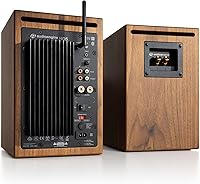
Some buyers feel the input panel and rear connections, while functional, look utilitarian compared to the refined front face. A few reviewers also noted minor cosmetic inconsistencies in the walnut veneer finish on units received, though structural complaints are rare.
Value for Money
72%
28%
For buyers coming from soundbars or budget Bluetooth speakers, the HD5 represents a significant and immediately audible step up, and most in that group feel the price is justified. The all-in-one nature — amp, DAC, speakers, cables, and remote included — removes the hidden cost of building a separate system.
Users familiar with passive speaker setups point out that similarly priced passive bookshelf speakers paired with a budget amp can outperform these in raw fidelity. The convenience premium is real, and for price-conscious audiophiles, that trade-off is a genuine sticking point.
Connectivity & Inputs
93%
Having Bluetooth, optical, RCA, and 3.5mm AUX on a single powered speaker pair is genuinely versatile. Users connect everything from turntables and TVs to laptops and phones without needing a hub or additional DAC, which is exactly the kind of friction-free setup this speaker is designed around.
There is no USB audio input, which is a small but recurring request from desktop users who would prefer a direct digital connection from a computer rather than routing through a 3.5mm cable. It does not break the use case, but it is a gap some buyers notice.
Setup & Ease of Use
94%
The included accessories cover every likely connection scenario out of the box — speaker wire, RCA cables, a 3.5mm cable, and a Bluetooth antenna are all in the package. Multiple reviewers describe being up and running within minutes, with no configuration headaches or driver installations.
The speaker wire connectors require a bit of care to seat correctly, and a small number of users found the manual less helpful than expected for first-time powered speaker buyers. Nothing that a five-minute video cannot solve, but it occasionally causes a rough first impression.
Remote Control
87%
The aluminum remote is one of the most mentioned accessories in positive reviews — buyers appreciate that it feels proportionate to the price of the speakers rather than like an afterthought. Volume and source switching from across a room is a small but meaningful quality-of-life improvement.
The remote has a limited range compared to the Bluetooth wireless range, and a few users report it becoming less responsive over time. There is no companion app or digital control option, which some modern buyers have come to expect from premium wireless audio.
Bass Performance
67%
33%
For a bookshelf speaker of this size, bass is well-controlled and textured — it does not boom or distort, and on acoustic, jazz, or vocal-heavy material it sounds genuinely balanced. The included subwoofer output means adding a sub later is straightforward if needs change.
The 50Hz low-end limit is a documented constraint, and buyers who listen to hip-hop, EDM, or film soundtracks regularly call it out as the single biggest shortcoming. Without a subwoofer, low frequencies feel polite rather than present, and that gap is audible on the right material.
Wireless Range
91%
Rated for 100 feet, and buyers broadly confirm that figure holds in real home environments. Streaming from a back bedroom to speakers in a living room, or from a phone on a desk to speakers across a studio, works reliably — that kind of practical range stands out in this category.
Range degrades in environments with dense Wi-Fi congestion or thick walls, as expected with Bluetooth. A small subset of users in apartment buildings with heavy wireless interference report occasional stuttering, though this is more a Bluetooth limitation than a product-specific flaw.
Soundstage & Imaging
84%
Reviewers with some listening experience note that the HD5 casts a wider, more three-dimensional soundstage than its footprint suggests. Instrument separation is frequently praised on well-recorded material, and the speaker pair benefits from careful placement a foot or so from walls.
The imaging does not quite reach the precision of similarly priced passive speaker setups driven by a quality amplifier. Listeners upgrading from dedicated hi-fi rigs may notice a slight compression of the stereo field at louder volumes, particularly on complex orchestral recordings.
Design & Aesthetics
88%
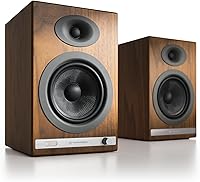
The walnut finish and clean rectangular cabinet look considered rather than generic — these speakers work visually in a home environment in a way that many studio-oriented speakers do not. Buyers frequently mention them as something they are happy to display rather than hide.
The design vocabulary is conservative, which suits most rooms but will not appeal to buyers looking for something visually expressive. Color options are limited, and the rear panel aesthetic — functional but plain — does not quite match the refinement of the front baffle.
Longevity & Reliability
83%
Long-term owners report sustained performance without channel imbalance or power issues, and Audioengine has a consistent reputation for after-sale support. The full warranty and the brand's standing in the enthusiast community give buyers reasonable confidence in the investment.
Class A/B amplifiers run warmer by nature, and a handful of long-term users have raised questions about heat management over years of use. The sample size for reliability complaints is small relative to the total ratings, but it is a consideration for buyers planning heavy daily use.

Suitable for:

The Audioengine HD5 is the right call for anyone who listens seriously but does not want to build a multi-component audio rack to do it. If your current setup is a soundbar, a Bluetooth speaker, or a pair of budget desktop speakers, these Audioengine bookshelf speakers will represent a meaningful and immediately audible upgrade. They suit home office or bedroom setups particularly well — somewhere you sit close enough to appreciate the clarity, and where a separate amplifier, DAC, and speaker pair would be overkill in both cost and desk space. Streaming listeners on Spotify, Tidal, or Apple Music who use aptX-HD-capable devices will get real benefit from the Bluetooth connection quality, not just convenience. The optical and RCA inputs also make this powered speaker pair a natural fit for anyone connecting a TV, turntable, or other source device without the hassle of extra adapters. And because the subwoofer output is built in, there is room to grow the system later without replacing the speakers themselves.

Not suitable for:

The Audioengine HD5 is not the right fit for buyers who prioritize deep, physical bass — whether that is for electronic music, hip-hop, film soundtracks, or home theater use. The 50Hz low-end floor is a real and consistent limitation that no amount of volume adjustment compensates for, and without adding a subwoofer, bass-heavy listening is going to feel unsatisfying. Dedicated audiophiles who have spent time with well-matched passive speaker setups will also find the value proposition harder to justify, since a quality passive pair plus a budget integrated amplifier at a comparable total price can outperform this powered speaker pair in raw resolution and dynamic range. If you need USB audio input directly from a computer, the HD5 does not offer it — a small but genuine gap for desktop-first users. And buyers who need truly compact speakers for a tight shelf or small desk should be aware of the dimensions and weight before committing; this is not a lightweight mini speaker by any measure.

Specifications

  • Power Output: Total amplifier output is 150W, driven by a Class A/B design that prioritizes low distortion and a warm, full character over raw efficiency.
  • Amplifier Type: Class A/B amplification runs warmer than Class D alternatives but delivers measurably lower harmonic distortion across all volume levels.
  • Bluetooth Version: Bluetooth 5.0 with aptX-HD support enables high-resolution wireless audio transmission at significantly higher quality than standard SBC Bluetooth.
  • Wireless Range: Rated wireless range is up to 100 feet in open conditions, though dense walls or heavy RF interference will reduce effective range.
  • Inputs: Accepts four input types: Bluetooth, optical (TOSLINK), RCA stereo, and 3.5mm AUX — covering virtually every common source device.
  • Outputs: Includes a dedicated RCA subwoofer output, allowing the system to be expanded with a powered subwoofer at any point without replacing the speakers.
  • DAC Resolution: The onboard DAC supports 24-bit audio processing, meaning it can resolve fine detail in high-resolution audio files and lossless streaming formats.
  • Signal-to-Noise Ratio: SNR measures greater than 95dB (A-weighted), which in practice means background hiss is inaudible under normal listening conditions.
  • Distortion: Total harmonic distortion plus noise (THD+N) is rated below 0.05% at all power settings, indicating a very clean amplifier signal chain.
  • Frequency Response: Frequency response begins at 50Hz, which covers most music well but means very deep bass below that threshold requires a subwoofer to reproduce.
  • Woofer: Each speaker houses a 5.25-inch dynamic woofer driver, handling midrange and bass frequencies in the cabinet-tuned enclosure.
  • Tweeter: A 0.75-inch tweeter handles high-frequency reproduction and was voiced alongside the woofer for a coherent, balanced tonal character.
  • Cabinet Material: Cabinets are constructed from wood, which contributes to resonance control and gives the speakers a noticeably more substantial feel than plastic-bodied alternatives.
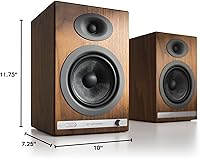
  • Dimensions: Each speaker measures 11″ x 7.16″ x 7.79″, making them a proper bookshelf size — substantial but manageable on a desk or shelf.
  • Weight: The speakers weigh 15.4 lbs as a pair, with a shipping weight of 17.5 lbs including packaging and accessories.
  • Input Voltage: Power supply is auto-switching between 100–240V at 50/60Hz, making these speakers compatible with power standards worldwide without an adapter.
  • Included Accessories: The box includes a Bluetooth antenna, aluminum remote control, 4m speaker wire, power supply and cord, a 2m 3.5mm audio cable, and a 2m RCA audio cable.
  • Warranty: Audioengine provides a full manufacturer warranty, and the brand has a documented track record of responsive customer support within the enthusiast audio community.

Related Reviews
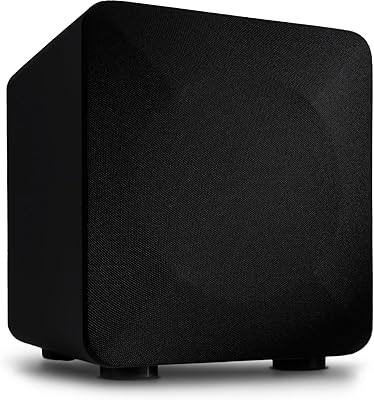
Audioengine S6 210W Subwoofer
89%
96%
Bass Performance
91%
Build Quality
89%
Setup & Installation
85%
Connectivity Options
93%
Sound Clarity
More
Audioengine HD6 Wireless Bookshelf Speakers
85%
94%
Sound Quality
92%
Bluetooth Connectivity
89%
Ease of Setup
90%
Build Quality
88%
Design & Aesthetics
More
Audioengine A2+
Audioengine A2+
79%
91%
Sound Quality
93%
Build Quality
84%
Bluetooth Performance
76%
Value for Money
88%
Connectivity & Inputs
More
Audioengine P4 Passive Bookshelf Speakers
84%
92%
Sound Quality
89%
Build Quality
80%
Ease of Setup
74%
Bass Response
82%
Compatibility with Amplifiers
More
PreSonus HD5
PreSonus HD5
79%
83%
Sound Accuracy
87%
Comfort & Wearability
61%
Build Quality
91%
Value for Money
74%
Isolation & Bleed Control
More
Audioengine A5 Powered Bookshelf Speakers
83%
94%
Sound Quality
89%
Bass Performance
91%
Build Quality
85%
Ease of Setup
72%
Connectivity Options
More
Audioengine A1-MR Desktop Speakers
86%
92%
Sound Quality
85%
Bass Performance
90%
Build Quality
88%
Ease of Setup
87%
Connectivity Options
More
Audioengine HD4
Audioengine HD4
83%
91%
Sound Quality
88%
Bluetooth Performance
93%
Build Quality
89%
Amplifier Performance
86%
Input & Connectivity Flexibility
More
Audioengine S8 Subwoofer
84%
93%
Bass Accuracy & Musicality
94%
Build Quality
91%
Integration & Setup Ease
86%
Crossover Flexibility
89%
Low-Frequency Extension
More
Audioengine N22 100W Mini Desktop Power Amplifier
86%
88%
Sound Quality
77%
Bluetooth Performance
92%
Ease of Setup
85%
Connectivity Options
89%
Build Quality
More

FAQ

No — the Audioengine HD5 is a powered speaker pair with a built-in Class A/B amplifier. You plug them in, connect a source, and they are ready to go. There is no need for any additional audio equipment.

Yes, and it works well. The optical (TOSLINK) input is the cleanest option for TV connection — most modern televisions have an optical output. You can also use RCA if your TV has analog outputs.

Quite good, especially if your phone or computer supports aptX-HD. The connection holds reliably across a full room and even through a wall or two. Initial pairing is straightforward, though a small number of Android users have reported slower reconnection after the speakers wake from standby.

It depends on what you listen to. For vocals, acoustic music, jazz, classical, and most rock, the bass is well-balanced and satisfying. If you listen to a lot of hip-hop, EDM, or watch movies through these speakers, you may eventually want to add a subwoofer — and there is a dedicated output on the back to make that easy.

You can connect a turntable with a built-in phono preamp via the RCA input. If your turntable does not have a built-in preamp, you will need an external phono stage between the turntable and these speakers, as there is no phono preamp built into the speakers themselves.

It is genuinely useful and noticeably well-made — it is aluminum rather than plastic, which feels appropriate at this price. It handles volume and input switching from across the room without any fuss. The range is decent, though it is shorter than the Bluetooth wireless range, which some users find slightly inconsistent.

For a typical living room at normal to moderately high listening levels, yes. At 150W the headroom is real. Very large rooms or open-plan spaces where you want high volume across a wide area might eventually reveal limits, but for focused listening in a standard-sized room these Audioengine bookshelf speakers have more than enough output.

Absolutely — this is actually one of the most common use cases. You can connect via Bluetooth, or use the 3.5mm AUX input from a headphone jack. The one gap to note is that there is no USB audio input, so users who prefer a direct USB digital connection from a computer will need to route through one of the analog or Bluetooth inputs instead.

The Class A/B amplifier runs warmer than a Class D design by nature, so some heat from the active speaker cabinet is normal and expected. It is not a concern in open placement on a shelf or desk. If you are considering placing this powered speaker pair inside a closed cabinet or tightly enclosed shelving, you should ensure there is adequate airflow around the unit.

The cabinets use a wood veneer finish over an MDF or wood composite cabinet — which is standard practice across the bookshelf speaker category, including products at significantly higher price points. The result looks and feels genuine, and the overall build quality is consistently praised by buyers as appropriate for what you are paying.