Overview

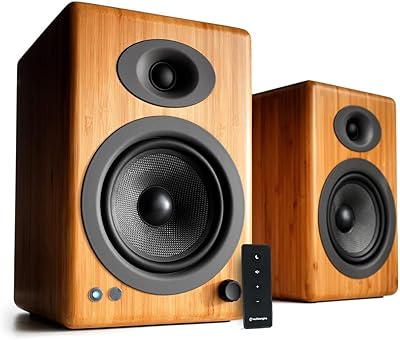
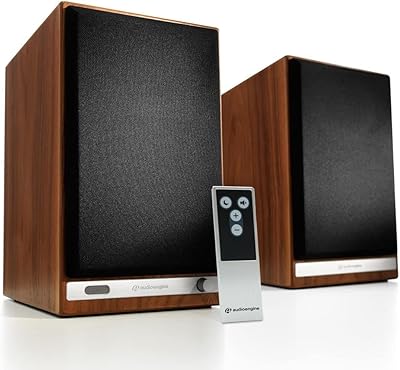
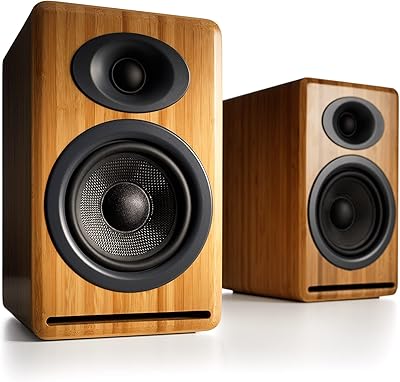
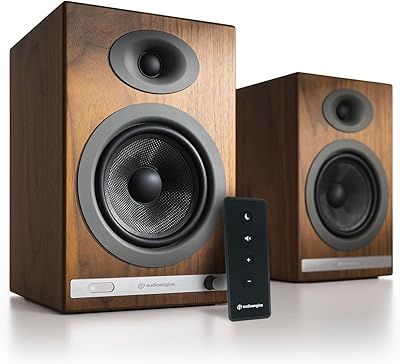
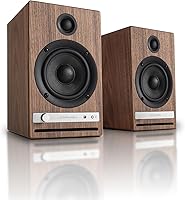
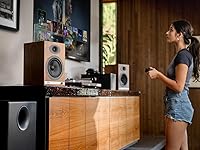
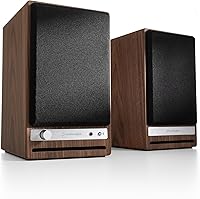
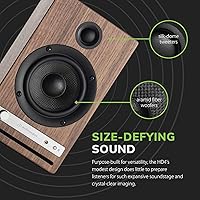
The Audioengine HD4 is a powered bookshelf speaker that takes a clear stance: you shouldn't have to choose between wireless convenience and genuine hi-fi performance. Built around a Class A/B amplifier and 24-bit audio processing, these Audioengine bookshelf speakers occupy a market position well above typical desktop audio. The handcrafted wood enclosure looks at home on a desk, a shelf, or inside a proper stereo rack — not like an afterthought. Audioengine is a US veteran-owned company out of Texas, and that background shows in the attention to build quality and actual human customer support. This is a considered purchase, not an impulse buy.

Features & Benefits

At the core of this powered speaker pair is an amplifier section that punches well above its compact footprint — distortion stays impressively low across the volume range, and the signal-to-noise performance means background hiss simply isn't an issue at normal listening levels. The aptX Adaptive Bluetooth 5.3 connection handles high-resolution wireless audio with enough range to cover a large room without dropouts. Input flexibility is genuinely broad: Bluetooth, 3.5mm, RCA, and USB are all handled natively. The 4-inch aramid fiber woofers paired with silk dome tweeters produce a balanced character that doesn't fatigue over long sessions. A subwoofer pre-out means bass extension is an upgrade path, not a permanent limitation.

Best For

These Audioengine bookshelf speakers are an easy recommendation for anyone building a wireless desktop setup who wants to skip the receiver, the DAC, and the cable tangle that usually comes with serious audio gear. TV listeners who've outgrown their soundbar will find the stereo imaging a real step up. Gamers focused on positional accuracy and clean dialogue reproduction will appreciate the low-distortion character more than any simulated surround effect. The input range also makes it a natural fit for listeners who split time between a turntable and a streaming service. Where it falls short is in truly large rooms or for anyone needing deep bass without adding a subwoofer.

User Feedback

Across verified buyers, praise centers on two consistent themes: soundstage and midrange clarity that exceed expectations for a speaker this size, and Bluetooth range that genuinely holds up across a whole floor. Build quality gets noted repeatedly — the walnut finish reads as furniture-grade rather than consumer electronics. The main sticking point is ergonomic: no remote control means adjusting volume requires walking to the speaker or relying on your source device, which gets old quickly. A handful of users also find the low-end thin in larger spaces, though the RCA subwoofer output addresses that directly. At 4.3 out of 5, satisfaction is high, but both friction points come up often enough to take seriously.

Pros

  • Midrange clarity and soundstage width consistently exceed what buyers expect from a speaker this compact.
  • The aptX Adaptive Bluetooth connection holds up reliably across large spaces and multiple source devices.
  • A full accessory kit is included, so there is nothing extra to buy before you can start listening.
  • The walnut wood enclosure looks and feels furniture-grade, not like typical consumer electronics.
  • Multiple input types mean one system handles a turntable, a TV, a computer, and a phone without adapters.
  • The built-in Class A/B amplifier keeps distortion inaudible even during extended listening sessions.
  • An RCA subwoofer output lets you expand the low end later without replacing the entire system.
  • US-based customer support with real staff is a meaningful differentiator for a premium-priced purchase.
  • These Audioengine bookshelf speakers ship ready to use with no complex calibration or app setup required.
  • Low noise floor makes them equally good for quiet late-night listening and higher-volume room-filling use.

Cons

  • No remote control of any kind — not IR, not app-based — is a real daily inconvenience for non-desk setups.
  • Bass-heavy music genres expose the low-frequency limits of the enclosure size without a subwoofer added.
  • No optical or HDMI ARC input complicates direct wired connection to many modern televisions.
  • Switching between multiple paired Bluetooth devices can require a manual reconnect more often than expected.
  • The walnut finish shows fingerprints and surface marks more readily than a matte alternative would.
  • Volume and input adjustments require physical access to the speaker or control from the source device.
  • At high volume levels in larger rooms, dynamic headroom starts to feel constrained.
  • Only one finish option limits how well the HD4 speakers integrate with lighter or darker room palettes.
  • The fabric grille attracts dust and requires periodic cleaning to maintain its appearance.
  • Long-term reliability data is still limited given the product launched in mid-2020.

Ratings

The Audioengine HD4 earned its scores through AI analysis of verified global buyer reviews, with spam, bot-submitted, and incentivized feedback actively filtered out before any category was scored. What you see here reflects how real owners experience these Audioengine bookshelf speakers day-to-day — the genuine strengths and the friction points that show up repeatedly across different listening setups and use cases.

Sound Quality
91%
Buyers who use this powered speaker pair for critical listening consistently single out the midrange clarity and soundstage width as standout traits for a speaker this compact. Vocals and acoustic instruments reproduce with enough accuracy that listeners moving up from consumer-grade desktop speakers describe the difference as immediately obvious.
The low-frequency response has limits without a subwoofer in the chain — bass-heavy genres like electronic or hip-hop can feel lean at moderate-to-high volumes. This is a physics constraint of the enclosure size, not a flaw in the amplifier section, but it is worth setting expectations around.
Bluetooth Performance
88%
The aptX Adaptive implementation on these HD4 speakers delivers noticeably stable connectivity across larger spaces — users in open-plan apartments report holding a solid connection from an adjacent room without interruptions. High-resolution wireless streaming lands with enough fidelity that switching to a wired connection does not always reveal a meaningful difference.
A small number of buyers experienced occasional pairing inconsistencies when switching between multiple source devices, particularly phones and laptops sharing the same Bluetooth profile. Initial pairing is straightforward, but the multi-device workflow can require a manual reconnect more often than ideal.
Build Quality
93%
The walnut wood enclosure is consistently described by owners as feeling furniture-grade — not the hollow, plasticky finish common at this speaker category. Buyers note that the cabinet rigidity contributes to a quieter noise floor during playback, and the removable magnetic grille attaches and detaches cleanly without wobble.
The finish, while handsome, does show fingerprints and minor surface marks more readily than a matte or textured cabinet would. A few long-term owners noted that the walnut veneer near the rear panel can show wear around cable connection points with frequent plugging and unplugging.
Amplifier Performance
89%
The Class A/B amplifier keeps distortion inaudible across the practical volume range, which matters most during extended listening sessions where ear fatigue accumulates. At moderate listening levels the amp runs cool and quiet, with no audible hiss or hum even in a silent room at night.
At the upper end of the volume range, a small number of users report a slight compression in the dynamics, suggesting the amplifier is working closer to its limits than the rated output implies. This only becomes noticeable in larger rooms pushing beyond a comfortable listening level.
Input & Connectivity Flexibility
86%
Having Bluetooth, 3.5mm, RCA, and USB inputs on a single compact speaker pair means this powered speaker pair handles almost every source scenario without adapters — turntables, televisions, computers, and phones all connect natively. The RCA subwoofer output is a genuine upgrade path rather than a token inclusion, letting buyers expand the low-end later without replacing the whole system.
There is no optical or HDMI ARC input, which limits direct integration with modern televisions that have moved away from analog outputs. Users with newer smart TVs may need an additional DAC or adapter to make a wired connection work cleanly.
Value for Money
78%
22%
For buyers who understand what a Class A/B amplifier, aptX Adaptive Bluetooth, and 24-bit audio processing cost when purchased separately, the all-in pricing of these HD4 speakers reads as defensible. The included accessory kit — cables, antenna, power supply — means the out-of-box cost covers everything needed to start listening.
For buyers comparing on price alone against cheaper powered speakers, the gap is hard to justify without an audition. This is unambiguously a premium-tier purchase, and buyers who don't prioritize audio fidelity or build longevity will likely feel the cost is steep relative to more affordable alternatives.
Setup & Ease of Use
84%
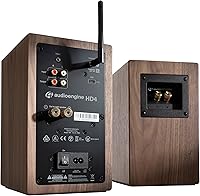
The unboxing-to-listening process is well thought out — all necessary cables are included, the Bluetooth antenna screws in without tools, and the speaker wire connectors accept bare wire without special terminations. Most buyers describe being up and running in under fifteen minutes regardless of their technical background.
The absence of any companion app or onscreen display means input switching and EQ adjustments are handled entirely at the speaker or through the source device. This is not a problem for experienced users, but newcomers expecting a digital interface may find the setup less intuitive than modern wireless speakers.
Remote & Volume Control
47%
53%
The volume knob on the primary speaker is well-weighted and responds smoothly, which is appreciated during focused listening sessions at a desk where the speaker is within arm's reach. Source-based volume control via a phone or computer works as a functional workaround for most day-to-day adjustments.
The lack of any remote control is the single most recurring complaint across user reviews, and it is a legitimate daily inconvenience — particularly for TV setups or scenarios where the speakers are across the room. There is no app, no IR remote, and no third-party workaround that replicates standard remote functionality.
Bass Response
67%
33%
For a bookshelf-format speaker without a dedicated subwoofer, the low-end extension is respectable and well-integrated — the 4-inch woofers handle bass guitar and lower-register piano without sounding bloated or disconnected from the midrange. Acoustic and vocal-focused genres rarely expose any limitation.
EDM, film scores, and bass-forward genres reveal the ceiling fairly quickly. Users who listen at higher volumes in medium-sized rooms describe the low end as thin rather than balanced. The RCA subwoofer output solves this, but that adds cost and complexity that buyers should factor into the total investment.
Midrange Clarity
92%
This is the aspect of these Audioengine bookshelf speakers that draws the most unsolicited praise. Voices — whether in podcasts, vocal-heavy music, or film dialogue — come through with a presence and definition that makes extended listening genuinely enjoyable rather than tiring. Instrument separation in dense mixes stays coherent at moderate volumes.
At very high volume levels, the midrange can edge toward brightness, which some listeners find fatiguing after long sessions with certain music genres. This is a characteristic of the silk dome tweeter tuning rather than a defect, and most users at normal listening levels will not encounter it.
Treble & High-Frequency Detail
83%
The 0.75-inch silk dome tweeters produce a smooth, controlled top end that avoids the harshness that plagues many competing speakers in this size category. Cymbal decay, string harmonics, and high-frequency ambient detail come through cleanly without exaggeration.
Listeners coming from speakers with larger or more aggressive tweeters may find the top end slightly polite. The treble trades excitement for accuracy, which is the right call for a hi-fi-oriented speaker but may disappoint buyers expecting an energetic or bright sound signature.
Design & Aesthetics
90%
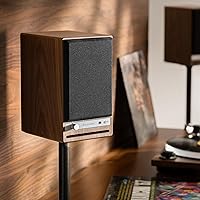
The walnut finish and compact rectangular form factor fit naturally into home environments where most powered speakers look conspicuously like electronics. Buyers place these on bookshelves, on desks next to monitors, and in living rooms alongside actual furniture without them looking out of place.
The design is only available in the walnut colorway for the wood finish variant, which limits matching flexibility for rooms with lighter or darker furniture palettes. The speaker grille, while magnetically attached and cleanly designed, is made of fabric that can attract dust and requires occasional care.
Wireless Range
87%
The 100-foot Bluetooth range claim holds up in real-world use better than most comparable speakers — buyers in two-story homes describe maintaining a clean signal from an upper floor to a lower-level listening room. Multi-device households benefit from the range when a phone or tablet is used from across the house.
Concrete walls, metal shelving, and dense furniture layouts reduce effective range noticeably, as with any Bluetooth implementation. A small number of buyers in older buildings with thick walls report the practical range falling below expectations in specific room configurations.
Long-Term Reliability
85%
Audioengine's reputation for durable components is reflected in buyer comments — a meaningful share of reviewers mention having owned previous Audioengine models for years without hardware failures, and describe the HD4 speakers as feeling built to a similar standard. The full warranty and US-based support add meaningful confidence for a premium purchase.
The sample size for long-term reliability data is still relatively limited given the product's launch date. A few buyers mention that the Bluetooth antenna connection point can loosen slightly over time, though this appears to be an edge case rather than a systematic failure mode.

Suitable for:

The Audioengine HD4 is the right call for anyone who wants a serious stereo listening setup without building a rack full of separate components. Desktop listeners who work or game in a small to medium room will get the most out of it — the all-in-one amplification means no receiver, no DAC, and no mess of interconnects, just a clean desk and genuinely good sound. TV owners who have outgrown the flat audio of a built-in panel or a mid-range soundbar will notice an immediate improvement in dialogue clarity and stereo imaging. It also suits vinyl enthusiasts who want to bring a turntable into a modern, Bluetooth-capable system without compromising the analog signal path, since the RCA input handles both duties equally well. Anyone who values longevity and real customer support over the lowest possible price will find the Audioengine brand philosophy aligns with how they want to spend their money on audio gear.

Not suitable for:

Buyers who need deep, room-pressurizing bass for electronic music, home theater explosions, or bass-heavy gaming will likely find the Audioengine HD4 falls short without the addition of a separate subwoofer — which adds both cost and setup complexity to the equation. If the speakers will live across the room from where you sit, the absence of any remote control becomes a genuine daily frustration; there is no app, no IR option, and no practical workaround beyond controlling volume at the source device. Listeners building out a large room — anything significantly bigger than a medium-sized living room — may find the output headroom insufficient to fill the space at realistic listening levels without strain. Buyers on a tight budget who are primarily comparing specs-per-dollar should look elsewhere; these HD4 speakers occupy a premium price tier and only make sense if audio quality and build longevity are genuine priorities. Finally, anyone expecting smart speaker features — voice assistants, multi-room audio grouping, or an onscreen display — will be disappointed, as this is a focused, no-frills hi-fi product rather than a connected home device.

Specifications

  • Driver Configuration: Each cabinet houses a 4-inch aramid fiber woofer and a 0.75-inch silk dome tweeter, delivering a balanced stereo output without a separate subwoofer.
  • Amplifier Class: The built-in amplifier operates in Class A/B, a design that prioritizes low distortion and accurate dynamics over energy efficiency.
  • Total Output Power: Combined amplifier output reaches 120 watts, which is sufficient to fill a small to medium room at comfortable listening levels.
  • Bluetooth Version: Bluetooth 5.3 with aptX Adaptive codec support enables high-resolution wireless streaming with adaptive bitrate and low latency.
  • Wireless Range: Bluetooth connectivity is rated for a maximum range of 100 feet in open-space conditions.
  • Bit Depth: Audio processing runs at 24-bit depth, which supports a wider dynamic range than standard 16-bit CD-quality playback.
  • Frequency Response: The speaker pair reproduces audio frequencies starting from 60 Hz, with the upper limit extending across the full audible range.
  • Signal-to-Noise Ratio: The SNR measures above 95 dB, meaning background noise and hiss are effectively inaudible during normal listening sessions.
  • Distortion Rating: Total harmonic distortion plus noise (THD+N) is rated below 0.05% at all power settings, indicating a very clean amplifier output.
  • Inputs: Available inputs include Bluetooth, USB, 3.5mm stereo mini-jack, and stereo RCA, covering virtually every common source device.
  • Outputs: A stereo RCA output is provided for connecting a powered subwoofer, enabling low-end expansion without replacing the main speakers.
  • Enclosure Material: The cabinet is constructed from wood with a handcrafted walnut veneer finish, contributing to both resonance control and visual appeal.
  • Dimensions: Each speaker measures 9″ tall by 5.5″ wide by 6.5″ deep, making it compact enough for desk or shelf placement.
  • Weight: Each speaker weighs 7.2 pounds, reflecting the solid wood construction rather than a lightweight plastic enclosure.
  • Surround Configuration: The system is a standard 2.0 stereo configuration with no built-in surround processing or additional satellite channels.
  • Input Voltage: The power supply auto-switches between 100 and 240 volts at 50/60 Hz, making it compatible with outlets in most countries.
  • Grille Type: A removable magnetic fabric grille is included on each speaker and can be detached for a cleaner visual profile.
  • Included Accessories: The package includes a Bluetooth antenna, 4-meter speaker wire, power supply and cord, 2-meter 3.5mm cable, and a 2-meter RCA cable.
  • Warranty: Audioengine provides a full warranty backed by US-based customer support staffed by real agents rather than automated systems.
  • Mounting Type: The speakers are designed for tabletop or shelf placement and do not include integrated wall-mount hardware.

Related Reviews
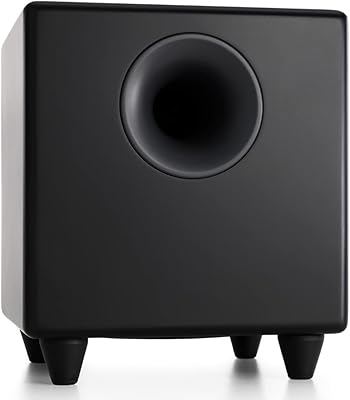
Audioengine S6 210W Subwoofer
89%
96%
Bass Performance
91%
Build Quality
89%
Setup & Installation
85%
Connectivity Options
93%
Sound Clarity
More
Audioengine A2+
Audioengine A2+
79%
91%
Sound Quality
93%
Build Quality
84%
Bluetooth Performance
76%
Value for Money
88%
Connectivity & Inputs
More
Audioengine A1-MR Desktop Speakers
86%
92%
Sound Quality
85%
Bass Performance
90%
Build Quality
88%
Ease of Setup
87%
Connectivity Options
More
Audioengine HD6 Wireless Bookshelf Speakers
85%
94%
Sound Quality
92%
Bluetooth Connectivity
89%
Ease of Setup
90%
Build Quality
88%
Design & Aesthetics
More
Audioengine P4 Passive Bookshelf Speakers
84%
92%
Sound Quality
89%
Build Quality
80%
Ease of Setup
74%
Bass Response
82%
Compatibility with Amplifiers
More
Audioengine A5 Powered Bookshelf Speakers
83%
94%
Sound Quality
89%
Bass Performance
91%
Build Quality
85%
Ease of Setup
72%
Connectivity Options
More
Audioengine S8 Subwoofer
84%
93%
Bass Accuracy & Musicality
94%
Build Quality
91%
Integration & Setup Ease
86%
Crossover Flexibility
89%
Low-Frequency Extension
More
Audioengine HD5
Audioengine HD5
86%
91%
Sound Quality
88%
Bluetooth Performance
89%
Amplifier & Power
86%
Build Quality
72%
Value for Money
More
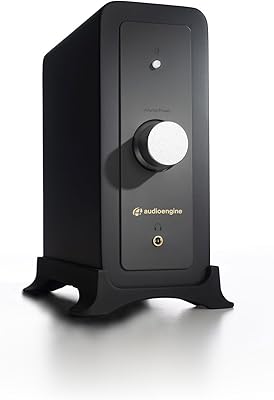
Audioengine N22 100W Mini Desktop Power Amplifier
86%
88%
Sound Quality
77%
Bluetooth Performance
92%
Ease of Setup
85%
Connectivity Options
89%
Build Quality
More
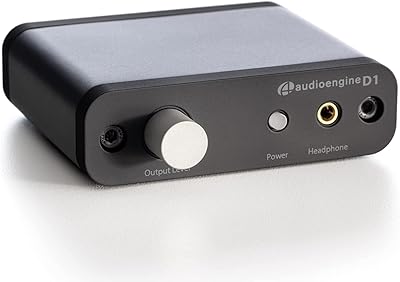
Audioengine D1
Audioengine D1
84%
93%
Audio Quality
88%
Headphone Amplifier Performance
84%
Build Quality
96%
Ease of Setup
79%
Value for Money
More

FAQ

No, that is one of the main practical advantages of the Audioengine HD4. The amplifier is built directly into the primary speaker cabinet, so you plug in, connect a source, and you are done. No receiver, no external DAC, no extra boxes on the shelf.

That depends on your turntable. If it has a built-in phono preamp or a line-level output, yes — the RCA input will handle it without any additional hardware. If your turntable only has a raw phono output, you will need an external phono preamp in between, which is a separate, typically inexpensive purchase.

No, and this is worth knowing before you buy. There is no remote of any kind — no IR handset, no app-based control, nothing. Volume is adjusted at the speaker knob or through your source device. For a desk setup where the speaker is within arm's reach, most users adapt fine. For a couch-to-speaker-shelf setup, it becomes a daily friction point.

Most buyers in average home layouts report the connection staying solid across a full floor, including through interior walls. The 100-foot rating is a best-case open-air figure, so expect somewhat less in practice — but in typical home use, a dropped connection is uncommon unless there is significant structural interference like concrete or metal framing.

Yes, and this is one of the strongest use cases for this powered speaker pair. Connect via the 3.5mm or RCA input from your TV's audio output and you get true stereo imaging that surpasses almost any soundbar at a comparable price. The main limitation is that modern TVs with only HDMI ARC outputs may require an additional adapter.

For acoustic music, jazz, vocals, and most rock or pop, the bass is well-balanced and sufficient. For bass-heavy electronic music, action movie soundtracks, or gaming with a lot of low-frequency effects, you will likely want a subwoofer. Conveniently, there is an RCA subwoofer output built in, so adding one later is straightforward without replacing the whole system.

The speakers can be paired with multiple devices, but active multi-device switching requires some manual management — it is not a seamless one-tap swap. Most users handle this by disconnecting from one device before connecting from the next. It works, but it is not as fluid as premium wireless headphones that manage multi-device automatically.

There is an input selector knob on the primary speaker that cycles between the available sources. You cannot mix inputs simultaneously, but switching between them is simple and immediate. Bluetooth, USB, 3.5mm, and RCA each have their own selectable position.

In a 150 to 200 square foot room, the HD4 speakers produce more than enough output for comfortable listening and occasional louder sessions. In rooms significantly larger than that, you may find the volume headroom starts to feel limited at the higher end of the dial. These are optimized for near to mid-field listening, not filling an open-plan great room.

The finish holds up well under normal use, but it shows fingerprints and light marks more visibly than a matte or painted surface would. For cleaning, a dry or very slightly damp microfiber cloth is all that is needed — avoid any solvent-based cleaners or furniture polish that could damage the veneer. The fabric grille can be removed and gently brushed or vacuumed to clear dust.