Overview

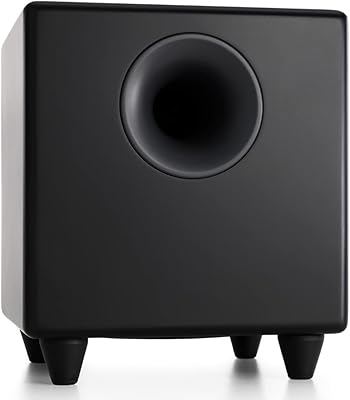
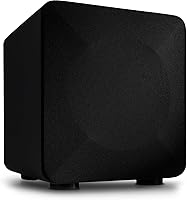
The Audioengine S6 Compact Powered Subwoofer is Audioengine's answer to a real problem: how do you get genuine, room-filling bass when you have no room to spare? Audioengine has built a loyal following among desktop audio enthusiasts, and the S6 fits squarely into that tradition. The cube-shaped MDF cabinet sits unobtrusively on a desk or tucked behind a sofa without demanding attention. This is a wired, plug-and-play unit — not a wireless lifestyle gadget — aimed at near-field listeners and small-room setups. It sits above budget subwoofers in price and build quality, but well below the kind of dedicated home-theater hardware that requires its own corner of the room.
Features & Benefits

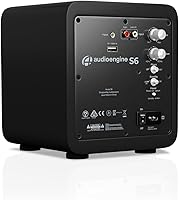
The S6 runs on a Class D amplifier pushing 210 watts — Class D matters here because it generates far less heat than older designs, which is significant when everything is packed into a cabinet barely 10 inches across. The 6-inch driver reaches down to 33Hz, covering bass guitar, kick drums, and cinematic rumble convincingly. The adjustable crossover, sweepable from 40Hz to 130Hz, lets you blend the sub with whatever speakers you already own rather than forcing a fixed handoff point. A phase switch handles timing mismatches between the subwoofer and your main speakers, and RCA inputs ensure compatibility with virtually any analog source: receiver, turntable, or desktop DAC.

Best For

The S6 is a natural fit for desktop audiophiles running bookshelf speakers who feel something is missing in the low end. Apartment dwellers and gamers will appreciate that the bass it produces is controlled rather than boomy — you get the impact of an explosion or a bass drop without shaking the walls. Turntable users and anyone running a small stereo receiver in a modest room will find integration straightforward. That said, this compact subwoofer is not built for large open-plan spaces or listeners who want to feel EDM bass physically in their chest. If your room is bigger than a standard bedroom or home office, the S6 will likely run out of headroom before it runs out of content to play.

User Feedback

With a 4.5-star average across roughly 150 reviews, the Audioengine S6 earns solid marks — though that sample is still small enough that the picture could shift. Buyers consistently praise tight, accurate bass that does not overwhelm the midrange, and several note how quick the setup actually is straight out of the box. The compact footprint gets mentioned often as a genuine selling point, not just a compromise. On the critical side, a handful of owners feel the 6-inch driver falls short in larger rooms or with bass-heavy music — an honest limitation worth weighing. A few users also wish the crossover dial offered finer adjustment. Most buyers find the S6 worth its price for a compact, quality-built subwoofer, provided they match it to the right space.

Pros

  • Clean, accurate bass that blends with bookshelf speakers rather than overpowering them.
  • The Class D amplifier runs cool and efficient, a real advantage in a compact, enclosed cabinet.
  • Adjustable crossover from 40Hz to 130Hz gives genuine flexibility when pairing with different speakers.
  • A phase switch prevents the muddiness that often plagues subwoofer integration in small rooms.
  • RCA and auxiliary inputs cover virtually every common analog audio source out of the box.
  • The MDF cabinet with an anti-resonant steel frame keeps unwanted vibration coloration to a minimum.
  • Compact cube shape fits on a desk, under a console, or behind a sofa without dominating the space.
  • Setup is straightforward enough that most buyers report being up and running within minutes.
  • Auto-switching power supply works on both 110V and 240V, making it travel-friendly internationally.
  • Audioengine’s build quality feels substantially more solid than similarly priced competing units.

Cons

  • A 6-inch driver will run out of headroom in rooms larger than a standard bedroom.
  • No wireless connectivity at all — Bluetooth or Wi-Fi users will need to look elsewhere.
  • At 15.4 pounds, the S6 is heavier than it looks, which can be awkward for desktop repositioning.
  • The crossover dial lacks fine-grained detents, making precise repeat adjustments harder than it should be.
  • Bass-heavy music genres like EDM or trap can expose the driver’s limits at higher volume levels.
  • Only one subwoofer output — no daisy-chaining or dual-sub configuration is supported.
  • The wired-only design may feel limiting for buyers building a clean, cable-free desk setup.
  • The review sample size is still relatively modest, so long-term reliability data is not yet definitive.

Ratings

The scores below reflect our AI-driven analysis of verified buyer reviews for the Audioengine S6 Compact Powered Subwoofer, sourced globally and filtered to remove incentivized, duplicate, and bot-generated submissions. Each category is scored independently to surface both the genuine strengths and the real-world frustrations that actual owners have reported. Nothing is smoothed over — where buyers pushed back, the scores reflect it.

Bass Accuracy
91%
Buyers consistently describe the low end as tight and musical rather than loose or one-dimensional — a distinction that matters most when listening to acoustic bass, jazz, or orchestral recordings at a desk. The S6 tracks bass lines cleanly instead of just adding a generic rumble beneath everything.
A small but vocal group of users who primarily listen to EDM or hip-hop feel the bass lacks the physical punch they expected at this price. The driver simply cannot move as much air as a larger woofer, and that ceiling becomes noticeable at higher playback levels.
Build Quality
93%
The hand-painted MDF cabinet feels noticeably more solid than competitors in a similar price range — owners frequently mention that it does not rattle or flex under load, even during extended bass-heavy sessions. The rubber surround and anti-resonant steel frame reinforce that impression of careful construction.
At 15.4 pounds, the dense build makes casual repositioning on a desk more awkward than expected. A few buyers also noted that the matte paint finish, while attractive, can show fingerprints and minor scuffs over time without regular cleaning.
Setup & Integration
88%
Most buyers report being up and running within five to ten minutes — the RCA connections are universally familiar, and the quick start guide covers the basics without unnecessary complexity. Users pairing it with bookshelf speakers and a stereo receiver found the process especially smooth.
Buyers connecting directly from a computer or TV without a dedicated receiver occasionally struggle to identify the correct output to use, and the guide does not walk through those edge cases in much detail. The crossover dial also lacks numbered markings, making it harder to return to a known setting after adjusting.
Crossover Flexibility
79%
21%
The sweep from 40Hz to 130Hz gives meaningful real-world range, covering setups from small satellite speakers that roll off high to larger bookshelf drivers with reasonable low-end extension. Buyers with mixed speaker collections appreciate not being locked to a fixed handoff point.
The physical dial lacks detents or printed frequency markers, which makes precise, repeatable adjustments genuinely difficult. Several users mention having to re-tune by ear every time they switch between speaker pairs, which is a minor but recurring inconvenience in multi-use setups.
Value for Money
76%
24%
For buyers who prioritize audio accuracy and build quality over raw output, the S6 delivers a clear and tangible step above budget compact subwoofers. Audiophile-leaning desktop users tend to rate it as fairly priced given the component quality and Audioengine's reputation.
Buyers coming from budget subs who expected dramatically louder or deeper bass output sometimes feel the premium is hard to justify on output alone. At this price point, buyers are right to compare carefully — the value proposition depends heavily on whether tonal accuracy matters to your listening style.
Compact Form Factor
89%
The cube-shaped cabinet genuinely fits where most subwoofers simply cannot — behind a monitor, on a bookshelf, or tucked beside a desk leg without dominating the space. Apartment dwellers and home office users repeatedly cite the footprint as a primary reason they chose the S6 over larger alternatives.
The 15.4-pound weight means it is not as easy to reposition as its dimensions suggest. A few buyers in very tight desk setups also noted that the cable routing from the back panel can be awkward when the unit is placed close to a wall.
Low-End Extension
74%
26%
The 33Hz lower limit is respectable for a 6-inch driver and comfortably covers the practical bass range for music, gaming sound effects, and film dialogue moments that most listeners care about in a small room. For near-field listening, the extension feels satisfying on most content.
Users expecting cinema-grade sub-bass rumble — the kind you feel physically below 25Hz — will find the S6 underwhelming. The physics of a compact 6-inch driver in a sealed cabinet simply cannot replicate what a larger floor-standing subwoofer delivers in terms of raw depth and pressure.
Volume & Output Headroom
71%
29%
In a standard bedroom or home office, the S6 provides ample volume for comfortable listening without ever sounding strained. The 210W Class D amplifier ensures that at moderate levels, the output remains clean and controlled rather than compressed.
Push the unit hard in a medium-to-large room and the headroom starts to run thin — particularly with bass-heavy genres where the driver is asked to move significant air. Buyers who like to listen at high volumes in rooms larger than roughly 15 by 15 feet should temper their expectations.
Noise Floor & Clarity
87%
The SNR exceeding 100dB translates to a very quiet background in practice — owners note that there is no audible hiss during quiet musical passages or in silent gaps between tracks, which is a genuine differentiator from cheaper amplified subwoofers. The low THD+N figure reinforces this in real listening.
A small number of users reported a faint electronic hum after extended use, though it is unclear whether this reflects unit-to-unit variation or grounding issues in their own setups. It was not a widespread complaint, but it appears often enough across reviews to be worth noting.
Phase Correction Usability
68%
32%
Having a physical phase switch rather than no option at all is genuinely useful — buyers who encountered bass cancellation issues when placing the S6 at desk level found that flipping the switch immediately resolved the thinness they were hearing.
The binary 0 or 180 degree choice is a blunt instrument compared to variable phase controls found on higher-end subwoofers. Some users in acoustically tricky rooms found that neither setting felt perfectly dialed in, and a continuously adjustable phase knob would have been a meaningful upgrade.
Connectivity Options
66%
34%
RCA and auxiliary inputs cover the vast majority of traditional analog audio setups, and the auto-switching power supply is a small but practical bonus for buyers who travel or use the unit in different countries.
The complete absence of wireless connectivity is a genuine sticking point for an increasing number of buyers building cable-free desk setups. No Bluetooth, no optical input, and no speaker-level inputs means buyers with modern TVs or game consoles often need an additional adapter or receiver to make it work.
Gaming Performance
82%
18%
Buyers who game in a desktop setup with a receiver in the chain consistently praise the S6 for adding tactile weight to explosions, engine rumble, and cinematic low-end effects without overwhelming dialogue or mid-range audio cues. The controlled bass character works well for competitive and story-driven gaming alike.
Connecting the S6 directly to a gaming console requires an additional receiver or audio converter, which adds both cost and complexity. Buyers expecting a direct HDMI or optical hookup will be disappointed, and this extra step is not clearly communicated in the product listing.
Apartment & Neighbor Friendliness
84%
Multiple apartment-dwelling buyers specifically called out the S6 as a subwoofer they can actually use in a shared building — the output is precise enough to feel satisfying at low-to-moderate volumes without transmitting heavy vibration through walls or floors.
Even at modest levels, placing the unit directly on a hardwood or laminate floor can transmit noticeable vibration through the structure. Most users who noted this solved it by placing the sub on a foam or rubber isolator pad, but that is an additional purchase not included in the box.
Long-Term Reliability
78%
22%
Audioengine has a solid reputation for durable hardware, and buyers with earlier Audioengine products report years of trouble-free use. The limited warranty provides at least a baseline of post-purchase confidence for new buyers.
With only around 150 reviews on record, the long-term ownership data for this specific model is still relatively thin. A handful of buyers reported minor channel noise after several months of use, though it remains unclear whether that points to a systematic issue or isolated units.

Suitable for:

The Audioengine S6 Compact Powered Subwoofer is an excellent choice for desktop listeners who already own a solid pair of bookshelf speakers but feel the low end is missing — the kind of person who notices the absence of bass on acoustic recordings or in movie soundtracks, not just on hip-hop. Apartment dwellers and gamers with close neighbors will appreciate how the S6 adds genuine low-frequency weight without turning into a noise complaint waiting to happen. Turntable enthusiasts running a stereo receiver in a study or bedroom will find the RCA inputs and adjustable crossover make integration surprisingly straightforward. Home office workers who use their computer speakers for both video calls and casual music listening will get a meaningful upgrade without giving up desk space. If your listening room is roughly the size of a standard bedroom or smaller, this compact subwoofer can genuinely transform what your existing speakers are capable of.
Not suitable for:

The Audioengine S6 Compact Powered Subwoofer is not the right tool for anyone expecting to fill a large, open-plan living room with chest-thumping bass. A 6-inch driver in a cabinet this size has a physical ceiling — it performs well within its range, but if you regularly listen to bass-heavy genres like EDM, trap, or deep house at high volumes, you will likely push it past its comfort zone. Dedicated home theater enthusiasts who want sub-bass response below 30Hz should look at larger, purpose-built floor units instead. Buyers who prefer a wireless setup will need to look elsewhere entirely, as the S6 is strictly a wired connection device with no Bluetooth or Wi-Fi option. If you are comparing it against budget subwoofers purely on paper specifications, the price difference may feel harder to justify — this unit rewards listeners who value build quality and tonal accuracy over raw maximum output.
Specifications

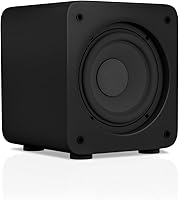
  • Driver Size: The S6 uses a 6-inch woofer driver designed to deliver accurate low-frequency reproduction in compact near-field environments.
  • Amplifier: A built-in 210W Class D amplifier powers the driver, offering high efficiency and minimal heat output within the sealed cabinet.
  • Frequency Response: The S6 covers 33Hz to 132Hz at ±1.5dB, providing solid bass extension for music, gaming, and film soundtracks in small rooms.
  • Crossover Range: The continuously adjustable crossover sweeps from 40Hz to 130Hz, allowing precise blending with a wide variety of main speaker systems.
  • Phase Switch: A selectable 0 or 180 degree phase switch helps align the subwoofer's output with connected speakers to prevent bass cancellation.
  • Signal-to-Noise: The signal-to-noise ratio exceeds 100dB (A-weighted), meaning background hiss is effectively inaudible during normal listening levels.
  • Distortion: Total harmonic distortion plus noise (THD+N) measures below 0.05% at all power settings, indicating clean, low-coloration bass output.
  • Inputs: Connectivity is provided via RCA and auxiliary inputs (wired only), compatible with stereo receivers, turntables, DACs, and most desktop audio setups.
  • Cabinet Material: The enclosure is constructed from hand-painted, hand-finished MDF reinforced with an anti-resonant steel frame to minimize cabinet vibration.
  • Dimensions: The cabinet measures 8.7″ deep by 10″ wide by 10″ tall, making it genuinely compact for a powered subwoofer in this power class.
  • Weight: The unit weighs 15.4 pounds, reflecting the dense MDF construction and internal amplifier hardware.
  • Input Voltage: The auto-switching power supply accepts 100–240V AC at 50/60Hz, making the S6 compatible with power standards worldwide.
  • Amplifier Class: Class D amplifier topology is used specifically for its thermal efficiency, which is critical in a tightly enclosed compact cabinet.
  • Color: The S6 ships in a black finish with a hand-painted MDF exterior that gives it a clean, premium appearance on a desk or shelf.
  • In the Box: Each unit includes the subwoofer itself, a power cable, a quick start guide, and a warranty card.
  • Warranty: Audioengine provides a limited warranty with the S6, covering manufacturing defects under normal use conditions.
  • Impedance: The S6 has an input impedance of 10,000 ohms, ensuring it draws minimal load from connected preamplifier or receiver outputs.
  • Driver Type: The S6 uses a dynamic driver design with a heavy-duty rubber speaker surround for long-throw bass excursion and durability.
  • Power Source: The subwoofer is corded electric only — there is no battery or wireless power option available.
  • Sales Rank: The S6 holds a Best Sellers Rank of #11 in Home Audio Subwoofers on Amazon, indicating strong market traction in its category.

Related Reviews
KICKER 46HS10 Hideaway Compact Powered Subwoofer
86%
89%
Bass Performance
92%
Value for Money
94%
Size and Portability
88%
Build Quality
85%
Ease of Setup
More
Audioengine S8 Subwoofer
84%
93%
Bass Accuracy & Musicality
94%
Build Quality
91%
Integration & Setup Ease
86%
Crossover Flexibility
89%
Low-Frequency Extension
More
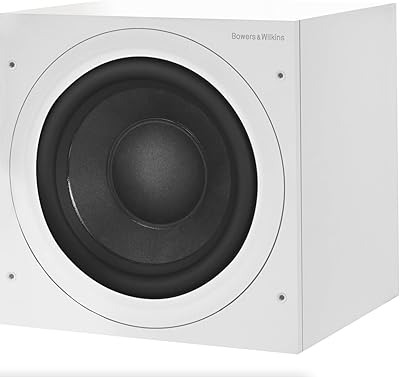
Bowers & Wilkins ASW608 8-Inch Subwoofer
81%
91%
Bass Accuracy & Musicality
88%
Build Quality & Finish
93%
Integration with 600 Series Speakers
67%
Output for Room Size
63%
Value for Money
More
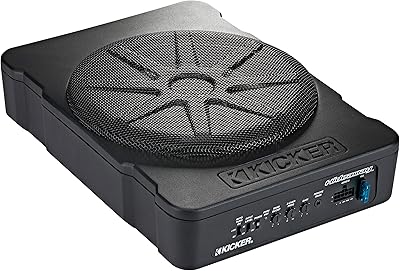
Kicker Hideaway HS10 10-Inch Powered Subwoofer
82%
92%
Build Quality
81%
Bass Output
94%
Installation Ease
88%
Sound Tuning Flexibility
91%
Factory Stereo Compatibility
More
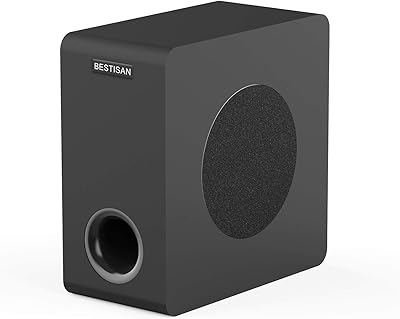
BESTISAN SW65D 6.5-inch Powered Subwoofer
72%
93%
Ease of Setup
67%
Bass Performance
88%
Connectivity & Compatibility
79%
Build Quality
82%
Value for Money
More
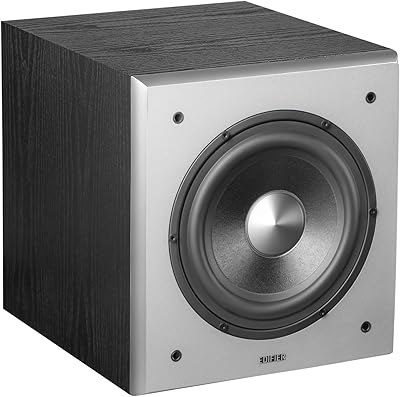
Edifier T5 8-inch Powered Subwoofer
76%
78%
Bass Performance
88%
Build Quality
74%
Value for Money
91%
Setup & Connectivity
83%
Low-Pass Filter Accuracy
More
JBL SUBBP12AM 12-inch Powered Subwoofer
75%
86%
Bass Output Quality
81%
Ease of Installation
78%
Amplifier Performance
67%
Long-Term Durability
73%
Value for Money
More
Nobsound G2
Nobsound G2
80%
88%
Audio Clarity
74%
Build Quality
92%
Value for Money
71%
Ease of Setup
89%
Bass Performance
More
Rockville RTB80A 8″ Powered Car Subwoofer
69%
88%
Ease of Installation
71%
Bass Output
82%
Value for Money
67%
Build Quality
44%
Power Accuracy
More
Polk Monitor XT12 Powered Subwoofer
85%
94%
Bass Performance
90%
Sound Quality
88%
Build Quality
86%
Ease of Setup
89%
Connectivity Options
More

FAQ

Yes, in most cases. The S6 connects via RCA inputs, which are standard on the vast majority of stereo receivers and amplifiers. If your receiver has a preamp output or a tape output, you can run that directly to the subwoofer. If you’re connecting to a pair of passive bookshelf speakers without a receiver, you’ll need a receiver or amplifier in between — the S6 does not accept speaker-level inputs.

In a typical bedroom or home office, the S6 has more than enough headroom for comfortable listening without audible strain. Where it starts to show limits is in larger rooms or at very high volumes with bass-heavy content — that’s simply the physical constraint of a 6-inch driver, not a flaw in the design. For near-field and small-room use, distortion is rarely an issue.

Yes, provided your turntable is connected through a phono preamp or receiver with a phono stage that outputs a standard line-level RCA signal. The S6 takes a line-level input, so plugging directly from a turntable cartridge without a phono preamp in the chain will not work correctly.

The S6 does include a standby mode that allows it to power down when no signal is detected and wake up when audio resumes. This means in most practical setups you won’t need to manually toggle it on and off every listening session.

It’s more straightforward than it sounds. A good starting point is to set the crossover dial to roughly match the low-end limit of your main speakers — for example, if your bookshelf speakers roll off around 80Hz, start the crossover there and adjust by ear until the bass sounds natural and blended. Most people find a workable setting within a few minutes of listening.

The phase switch (0 or 180 degrees) corrects for timing mismatches between the subwoofer and your main speakers that can cause bass frequencies to partially cancel each other out, resulting in a thin or uneven low end. Whether you need it depends on your specific room placement and speaker pairing — try both settings and use whichever makes the bass sound fuller and more cohesive.

Yes, but you’ll need a receiver or audio interface in the chain since gaming consoles typically output audio via HDMI or optical, not RCA. If you’re already running your console through an AV receiver with RCA preamp outputs, connecting the S6 is straightforward. For a direct connection from console to subwoofer, you’ll need a converter or a headphone amp with RCA outputs.

Most users report that the MDF cabinet and rubber surround do a good job of keeping resonance in check on a hard surface. That said, placing any powered subwoofer directly on a glass or hollow desk will transmit some vibration — putting it on a rubber mat or moving it to the floor usually resolves any buzz or rattle if you encounter it.

The 210W rating reflects peak amplifier capacity, not what the unit constantly draws or produces — in a typical bedroom listening session, you’ll be using a small fraction of that. More amplifier headroom generally means cleaner, less strained bass at moderate volumes, so having that reserve is a benefit rather than overkill.

The difference is most apparent in bass accuracy and cabinet quality. Budget subs in that range often produce bloated, one-note bass that sounds fine with action movies but muddies music. The S6 tends to produce tighter, more articulate low end that works better across genres — jazz bass lines, acoustic instruments, and orchestral content all benefit. Whether that difference justifies the higher cost depends on how seriously you listen, but for music-first setups, most buyers find it a clear step up.

Where to Buy