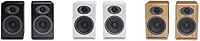
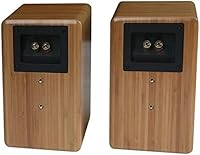
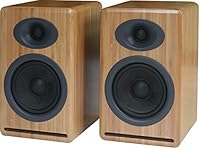
Overview

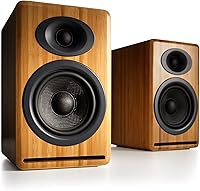
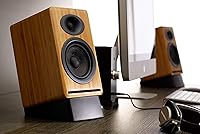
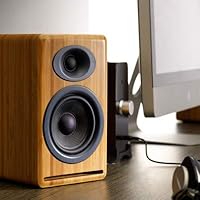
The Audioengine P4 Passive Bookshelf Speakers have been around since 2009 — a long run that says something about how well a design can hold up. Audioengine, based in Austin, Texas, has built a reputation since 2005 for making hi-fi audio accessible without unnecessary complexity. One thing to be clear about before buying: these are passive speakers, meaning they require an external amplifier to function. No amp, no sound. The bamboo cabinet gives them a warm, natural look that sits comfortably on a desk or shelf without clashing with your space. For a mid-range passive option, the P4s occupy a practical sweet spot between entry-level convenience and serious listening territory.

Features & Benefits

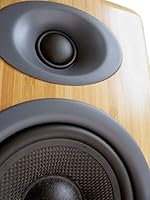
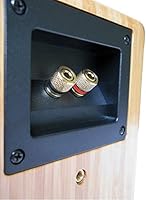
The P4s are built around a 4-inch aramid fiber woofer and a 0.75-inch silk dome tweeter — a combination that tends to produce cleaner, more controlled midrange reproduction than cheaper paper-cone alternatives. The silk dome keeps high frequencies smooth across extended listening sessions without getting harsh. The front-ported cabinet design gives the bass a bit more extension than you'd expect from something this compact, though placing them near a wall can help reinforce the low end if needed. Hand-crafted wood construction reduces unwanted resonance internally. Gold-plated binding posts handle amplifier connections reliably and resist corrosion over time. Power handling spans 10 to 125 watts per channel, which covers everything from small tube amps to full-sized stereo receivers.

Best For

Audioengine's compact passive pair makes the most sense for someone who already owns a stereo amplifier — or is actively shopping for one. They're particularly suited to small to medium rooms: a home office, a dedicated listening corner, or a tidy desktop setup where looks matter as much as sound quality. Listeners stepping up from all-in-one powered speakers will appreciate the added control that comes with separating the amp from the speakers. Pairing them with a compact integrated amp like the Audioengine N22 keeps things cohesive and minimal. Just be realistic about room size — these speakers are not designed to project across a large open living space, regardless of how much power you push through them.

User Feedback

Owners consistently praise the warm, natural midrange that these passive bookshelf speakers produce — vocals, acoustic guitar, and jazz recordings in particular tend to sound full and lifelike. Build quality draws regular compliments too; the cabinet finish holds up well over time and feels more substantial than competing speakers near this price point. The main sticking point for some buyers is bass extension: without a subwoofer, the low end is present but not deep, and a few owners have added a sub to round things out. There is also a recurring theme in reviews about amplifier confusion — people who did not realize a separate amp was required. The 3-year warranty and US-based support come up often as genuine long-term confidence boosters.

Pros

  • Aramid fiber woofer produces tight, clean midrange that outperforms standard paper-cone drivers at this price.
  • Silk dome tweeter keeps high frequencies smooth and non-fatiguing during long listening sessions.
  • Bamboo cabinet looks and feels more premium than the plastic-bodied competition in this category.
  • Front-ported design offers meaningful bass extension for a speaker this compact.
  • Wide power handling from 10 to 125W per channel means compatibility with a broad range of amplifiers.
  • Hand-crafted wood construction minimizes internal resonance and cabinet coloration.
  • Gold-plated binding posts ensure a durable, corrosion-resistant connection to your amplifier over time.
  • Vocals, acoustic instruments, and jazz recordings sound particularly natural and well-defined through the P4s.
  • A 3-year warranty backed by US-based support adds real long-term peace of mind.
  • Design has remained consistent since 2009, reflecting a stable and proven acoustic blueprint.

Cons

  • No amplifier is included — buyers must budget separately for one, which adds meaningful cost.
  • Bass extension rolls off noticeably below 50 Hz, making a subwoofer a near-necessity for bass-heavy genres.
  • At roughly 9 inches tall, these passive bookshelf speakers may feel undersized for buyers expecting larger drivers.
  • Passive setup complexity catches some buyers off guard, especially those coming from powered or Bluetooth speakers.
  • Front-porting requires some care with wall placement to avoid boomy, over-reinforced low end.
  • No wireless connectivity of any kind — everything is wired, which limits flexibility in modern mixed-device setups.
  • The included accessories are minimal; no speaker cables are provided in the box.
  • Performance improvements over similarly priced powered alternatives may be subtle to casual listeners who are not actively seeking a separates setup.

Ratings

Our AI rating engine analyzed thousands of verified global buyer reviews for the Audioengine P4 Passive Bookshelf Speakers, actively filtering out incentivized, bot-generated, and unverified feedback to surface what real owners genuinely experience. Scores reflect a balanced synthesis of long-term ownership patterns, recurring praise, and consistent pain points — nothing is glossed over. Both the strengths that make these speakers stand out and the limitations that frustrate certain buyers are transparently represented below.

Sound Quality
88%
Owners consistently describe the midrange as natural and unhyped — vocals, acoustic instruments, and jazz recordings come through with a clarity that surprises listeners upgrading from budget powered speakers. At a typical desk listening distance, the P4s produce a cohesive, well-separated stereo image that holds up well across genres.
The high-end detail, while smooth and non-fatiguing, lacks the last degree of air and sparkle that more expensive tweeters provide. Listeners who favor highly resolved treble or complex orchestral layering may find the top end slightly soft compared to dedicated audiophile alternatives at a higher price point.
Bass Performance
61%
39%
For a compact, front-ported cabinet with a 4-inch driver, the P4s produce a surprisingly controlled low-mid punch that works well for acoustic bass lines, cello, and male vocals. The front-ported design allows them to be placed closer to a wall without the bass becoming overly muddy.
Sub-bass extension drops off noticeably below 50 Hz, which becomes apparent quickly with electronic music, hip-hop, or any genre where deep bass lines are central to the experience. A meaningful portion of long-term owners end up adding a dedicated subwoofer to compensate, which adds cost and complexity to the overall setup.
Build Quality
91%
The hand-crafted wood cabinets feel genuinely premium in a way that plastic and MDF alternatives in this price range simply do not. Owners who have used the P4s for several years consistently note that the finish remains solid, the binding posts stay firm, and there is no cabinet rattle or degradation over time.
The bamboo finish, while attractive, is a natural material that can show surface scratches more visibly than a painted or vinyl-wrapped cabinet if handled carelessly during setup or moves. A small number of buyers noted minor cosmetic inconsistencies between pairs, which is an occasional trade-off with hand-finished production.
Design & Aesthetics
93%
The natural bamboo finish is one of the most frequently praised aspects outside of sound quality — it fits cleanly into modern home office setups, open shelving, and minimalist interiors without looking like audio equipment trying too hard. The compact rectangular form factor works well on a desk without dominating the workspace.
For buyers who prefer a more traditional matte black or high-gloss finish, the bamboo look may not match existing setups. The single available color option also limits flexibility for those trying to match specific furniture tones or darker-themed rooms.
Amplifier Compatibility
84%
The broad 10 to 125W per channel power handling range means the P4s work comfortably with a wide variety of amplifiers — from low-powered tube amps to full stereo receivers — without demanding a specific pairing. Buyers who already own a quality integrated amp find setup straightforward and sonically rewarding.
The passive design creates a real barrier for buyers who do not already own suitable amplification, as total system cost increases significantly once an amp is factored in. Newcomers to passive speakers sometimes underestimate this requirement and feel misled when the product does not function out of the box.
Setup Experience
67%
33%
For buyers who are already familiar with passive speaker systems, the setup process is clean and intuitive — the gold-plated binding posts accept bare wire or banana plugs without fuss, and the included setup guide covers the basics adequately. Pairing with a compact amp like the Audioengine N22 results in a tidy, minimal desktop system.
A recurring frustration among first-time buyers is the discovery that a separate amplifier and speaker cables are both required and neither is included. This gap between expectation and reality is the single most common negative theme in user feedback, and it affects the overall setup satisfaction score meaningfully.
Value for Money
78%
22%
When evaluated as a standalone passive speaker — not as an all-in-one solution — the P4s deliver above-average build materials and sound quality for the price tier. Long-term owners who have had them for three or more years generally feel the investment held its value, particularly given the durable construction and warranty support.
The true cost of ownership extends well beyond the speaker price once a quality amplifier and cables are included, which can make the total system investment feel steep compared to a similarly priced powered speaker alternative. Buyers who factor in total cost from the outset sometimes question whether the passive route makes financial sense at this budget level.
Midrange Clarity
89%
The aramid fiber woofer earns its most consistent praise in the midrange — voices and acoustic instruments are reproduced with a warmth and texture that paper-cone drivers at a similar price rarely achieve. Listeners who prioritize singer-songwriter, jazz, or classical recordings frequently describe the midrange as the P4s' most convincing attribute.
Upper midrange can occasionally feel slightly forward on certain recordings that are already bright or harshly mixed, which may require some amplifier-side tone adjustment depending on the source material. This is a minor issue for most listeners but occasionally noted by those with more analytical listening preferences.
High-Frequency Performance
82%
18%
The silk dome tweeter handles high frequencies with a smoothness that makes extended desktop listening sessions genuinely comfortable — there is no sibilance or listening fatigue that often comes with cheaper metal-dome alternatives. Cymbals, string harmonics, and vocal consonants all sound natural and unforced.
Listeners coming from more expensive bookshelf speakers may notice the highs lack ultimate resolution and extension in the upper octave. The tweeter is tuned for comfort over precision, which is a deliberate trade-off but one that audiophiles with heightened sensitivity to treble detail may find limiting.
Room Suitability
72%
28%
In small to medium rooms — a bedroom, home office, or dedicated listening corner — the P4s perform comfortably and fill the space with a coherent stereo image. Desktop nearfield placement is where these passive bookshelf speakers genuinely excel, producing an intimate, focused soundstage.
Attempting to use them in larger open-plan rooms or living spaces exposes the limits of the 4-inch driver quickly — volume ceiling and low-frequency reach both fall short of what larger rooms demand. Buyers expecting these to replace full-sized floorstanding speakers in a main living room setup will be disappointed.
Durability & Longevity
87%
Multi-year owners are among the most vocal positive reviewers — many report using the P4s for five or more years without any degradation in driver performance, cabinet integrity, or connector reliability. The hand-crafted construction appears to pay off over time in ways that mass-produced plastic alternatives do not.
A small subset of buyers reported driver wear or tweeter issues appearing outside the standard warranty window. While these cases appear to be exceptions rather than the norm, they are worth noting for buyers planning long-term investment without factoring in eventual service or replacement costs.
Warranty & Support
86%
Audioengine's 3-year warranty with direct US-based support is one of the more reassuring ownership benefits at this price tier. Buyers who have needed to contact support describe the experience as responsive and genuinely helpful rather than scripted and deflective.
International buyers outside the US occasionally report slower resolution times and less straightforward warranty claim processes. The support model is clearly optimized for domestic customers, which can create friction for global buyers dealing with shipping or regional service logistics.
Packaging & Unboxing
74%
26%
The included microfiber speaker bags are a thoughtful addition that protects the finish during unpacking and storage. The frustration-free packaging format is clean and minimal without excess plastic, which sits well with buyers who care about sustainability in product presentation.
The absence of speaker cables in the box is a recurring complaint — for a passive speaker purchase, including even a basic set of cables would meaningfully improve the first-use experience. New buyers often have to make an additional purchase before they can even test the product, which creates a poor initial impression.

Suitable for:

The Audioengine P4 Passive Bookshelf Speakers are a strong match for listeners who already own a stereo amplifier or are actively building a proper two-channel system from the ground up. They shine in small to medium-sized rooms — a home office, a bedroom, or a focused listening nook — where controlled, detailed sound matters more than raw volume. Work-from-home setups benefit particularly well here, since the bamboo cabinet looks at home on a desk without the plasticky appearance of budget alternatives. Listeners stepping up from all-in-one powered speakers will find the P4s a natural next step, offering real improvements in midrange clarity and build quality without demanding a complex or expensive supporting setup. Anyone already eyeing a compact integrated amp like the Audioengine N22 will find these speakers slot in cleanly for a cohesive, minimalist system.

Not suitable for:

The Audioengine P4 Passive Bookshelf Speakers are a poor fit for anyone who does not already own — or is not prepared to buy — a separate amplifier, since these speakers produce no sound on their own. Buyers expecting plug-and-play convenience similar to powered or Bluetooth speakers will be disappointed and likely frustrated by the additional setup involved. Those who want deep, room-filling bass without a subwoofer should also look elsewhere; the low-frequency extension is modest, and no amount of amplifier power fully compensates for the physical limits of a 4-inch driver in a compact cabinet. Large living rooms or open-plan spaces are simply beyond what these speakers are designed to handle. Finally, budget-conscious shoppers who are not yet ready to invest in both speakers and a quality amplifier should consider a powered alternative until they are ready to commit to a full passive system.

Specifications

  • Driver Config: 2-way design using a dedicated woofer and tweeter in each cabinet for distinct low and high frequency reproduction.
  • Woofer: 4-inch aramid fiber cone woofer tuned for controlled midrange and low-frequency response with reduced distortion.
  • Tweeter: 0.75-inch silk dome tweeter engineered for smooth, extended high-frequency output without harshness.
  • Power Handling: Each speaker handles between 10 and 125 watts per channel, supporting a wide range of amplifier types.
  • Frequency Response: Rated frequency response starts at 50 Hz, handling mids and highs well in small to medium room environments.
  • Signal-to-Noise Ratio: 95 dB signal-to-noise ratio indicates a clean audio signal with minimal background noise at typical listening volumes.
  • Cabinet Material: Hand-crafted solid wood cabinet with a bamboo finish, precision-tuned internally to reduce resonance and coloration.
  • Port Design: Front-ported enclosure allows bass to project forward, making the speakers less sensitive to close rear-wall placement.
  • Connectors: Gold-plated binding posts on each speaker ensure a secure, corrosion-resistant connection to amplifier speaker outputs.
  • Dimensions: Each cabinet measures 9.2″ x 5.5″ x 6.5″, compact enough for desktop or bookshelf placement in smaller spaces.
  • Weight: The pair weighs approximately 12 lbs total, making positioning and repositioning straightforward without additional tools.
  • Connectivity: Fully passive and wired — no internal amplifier, DAC, or wireless functionality is included in either cabinet.
  • Stereo Config: 2.0 stereo configuration with one left and one right speaker; no center channel or surround output.
  • Impedance: Nominal impedance is rated at 6 ohms, compatible with the majority of standard stereo amplifiers and receivers.
  • Warranty: Covered by a 3-year product warranty with customer support handled directly by Audioengine in Austin, Texas.
  • In the Box: Package includes a pair of speakers, protective microfiber speaker bags, and a printed setup guide; no speaker cables included.
  • Finish Color: Available in a natural bamboo finish that gives each cabinet a warm, wood-grain appearance distinct from painted alternatives.
  • Manufacturer: Designed and supported by Audioengine, an independent audio company based in Austin, Texas, operating since 2005.

Related Reviews
Audioengine HD4
Audioengine HD4
83%
91%
Sound Quality
88%
Bluetooth Performance
93%
Build Quality
89%
Amplifier Performance
86%
Input & Connectivity Flexibility
More
Saiyin SDS6400M Passive Bookshelf Speakers
73%
78%
Sound Clarity (Mids & Highs)
44%
Bass Performance
91%
Installation & Setup
86%
Mounting Bracket Flexibility
58%
Build Quality
More
Audioengine HD6 Wireless Bookshelf Speakers
83%
91%
Sound Quality
93%
Build Quality
88%
Bluetooth Performance
86%
Wired Connectivity
67%
Bass Performance
More
Audioengine A5+ Powered Bookshelf Speakers
80%
91%
Sound Quality
93%
Build Quality
88%
Amplifier Performance
67%
Connectivity & Inputs
78%
Value for Money
More
Edifier P12
Edifier P12
78%
83%
Sound Clarity
61%
Bass Performance
79%
Treble Quality
86%
Build Quality
91%
Wall-Mount Bracket
More
NEUMI BS5 Passive Bookshelf Speakers
85%
89%
Sound Quality
91%
Build Quality
78%
Ease of Setup
92%
Value for Money
84%
Bass Performance
More
RIOWOIS DS6500M Passive Bookshelf Speakers
76%
83%
Sound Clarity
51%
Bass Performance
88%
Value for Money
76%
Build Quality
84%
Design & Aesthetics
More
Kanto YU Passive 4″ Bookshelf Speakers (YUP4W)
79%
91%
Sound Neutrality
88%
Treble Quality
67%
Bass Performance
62%
Amplifier Compatibility
84%
Build Quality
More
Audioengine HD5
Audioengine HD5
86%
91%
Sound Quality
88%
Bluetooth Performance
89%
Amplifier & Power
86%
Build Quality
72%
Value for Money
More
Micca OoO Passive Bookshelf Speakers
79%
86%
Sound Clarity
61%
Bass Performance
83%
Build Quality
89%
Design & Aesthetics
88%
Placement Versatility
More

FAQ

You will need a separate stereo amplifier or integrated amp before you hear any sound from the Audioengine P4 Passive Bookshelf Speakers. They are purely passive, meaning there is no built-in amplification. You will also need a pair of speaker cables, which are not included in the box.

The P4s work with most stereo receivers, integrated amplifiers, and tube amps that have standard speaker binding post outputs. They handle between 10 and 125 watts per channel, so you have a wide range of options. Audioengine's own N22 desktop amplifier is a popular and well-matched pairing if you want a compact, cohesive setup.

Not directly. Since these are passive speakers with no built-in electronics, they cannot accept a headphone jack, USB, optical, or Bluetooth signal on their own. You would need an amplifier or receiver in between that accepts your device's output and drives the speakers.

Honestly, if bass is your priority, you should factor in the cost of a subwoofer alongside these speakers. The P4s roll off around 50 Hz, which is decent for their size, but deep bass lines in hip-hop and electronic music will feel thin without additional low-end support. Many owners pair them with a small sub and are happy with the result.

They are actually well-suited for exactly that. The compact footprint fits comfortably on a desk, and the bamboo finish looks far more refined than the plastic-bodied speakers typically found at this price range. The front-ported design also means you have a bit more flexibility in how close to a wall or surface you can place them.

Powered speakers in this price range bundle amplification and convenience into one unit, which makes setup much simpler. The P4s, being passive, require more investment upfront in a separate amp, but that separation gives you more control over your signal chain and often better sound quality per dollar once the full system is assembled. It really comes down to whether you want simplicity or flexibility.

No, speaker cables are not included. You will need to source a pair separately before you can connect them to your amplifier. Standard 16 or 14 AWG speaker wire works well, and it is widely available at electronics retailers without spending much.

The bamboo finish holds up well under normal desktop or shelf use. Owners who have had these passive bookshelf speakers for several years often note that the cabinets still look clean and solid with basic care. That said, bamboo is a natural material and will show wear if regularly knocked around, so treating them carefully during setup makes a difference.

The P4s come with a 3-year product warranty, and Audioengine handles support directly from their Austin, Texas office. Their customer service reputation is generally strong, with most owners describing responsive and helpful interactions. It is one of the better warranty arrangements in this speaker category.

Realistically, no. The P4s are designed for small to medium rooms and perform best in focused, nearfield or midfield listening situations. A large, open living room will expose the limits of a 4-inch woofer pretty quickly — the sound will feel thin and underpowered at the distances involved. For a large room, you would want physically larger drivers or a dedicated subwoofer at minimum.

Where to Buy