
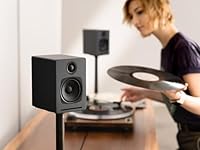
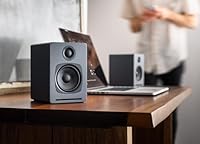
Overview

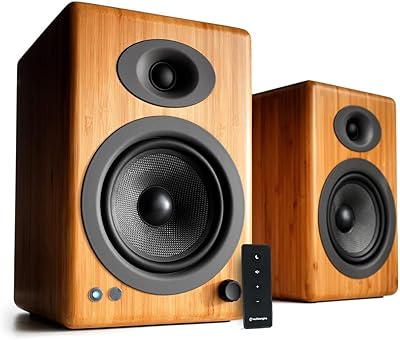
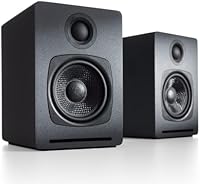
The Audioengine A1-MR Desktop Speakers occupy a genuinely appealing middle ground — compact enough to fit on a crowded desk, yet built with enough intent to satisfy listeners who've grown tired of cheap plastic computer speakers. Audioengine has earned a real reputation among musicians and audio enthusiasts for tuning their speakers to sound musical, not just loud. What distinguishes the A1-MR speakers from the competition at this price point is their wood cabinet construction — an unusual and meaningful choice — combined with an unexpected Wi-Fi multi-room feature that's rare to find in powered desktop speakers. Compact ambitions, real audio results.

Features & Benefits

The A1-MR speakers punch above their size in several ways. At 60 watts peak power, they can genuinely fill a medium-sized room without distortion — something most compact desktop speakers can't claim honestly. The wood cabinet keeps resonance low, which translates to a cleaner, more accurate midrange in daily listening. A dedicated subwoofer output is a smart inclusion: built-in low-end is limited at 65Hz, but pairing with a separate sub solves that cleanly. Wi-Fi connectivity pairs with a companion app for multi-room audio control, and the 3.5mm input keeps wired connections simple. A 95dB signal-to-noise ratio and CD-grade DAC round out a genuinely capable specification sheet.

Best For

These Audioengine desktop speakers are a natural fit for home office setups where sound quality actually matters — if you're spending hours a day in front of a screen, better audio makes a real difference. Music streamers who care more about stereo imaging than bass-heavy profiles will appreciate the tuned, balanced output. The Wi-Fi multi-room support makes these speakers particularly useful if you already run a connected home audio setup and want your desk in the loop. Gamers who prefer positional clarity over booming effects will find them capable. And for smaller apartments where large bookshelf speakers aren't practical, this Wi-Fi powered speaker set offers a surprisingly complete solution.

User Feedback

With 67 reviews and a 4.0-star average, the buyer response to this Wi-Fi powered speaker set is positive but measured — not the kind of landslide praise that removes all doubt. Common themes from buyers point to strong sound clarity and solid build quality as highlights, with several noting how easy the initial setup was. On the other side, some users have raised concerns about app reliability and Wi-Fi connectivity consistency, which is worth keeping in mind if a stable wireless connection matters to you. A handful of buyers have gone on to add a subwoofer, suggesting the base low-end leaves some wanting more — honest, but not surprising for speakers this size.

Pros

  • Wood cabinets reduce resonance and add a build quality rarely seen at this price tier.
  • 60W peak output genuinely fills a medium-sized room without straining.
  • The dedicated subwoofer output gives you a clear upgrade path without replacing the speakers.
  • A CD-grade DAC and 95dB signal-to-noise ratio mean streaming music sounds noticeably cleaner.
  • Wi-Fi multi-room support lets the A1-MR speakers integrate into a broader home audio network.
  • A 3.5mm input keeps wired connections universally simple alongside the wireless options.
  • Audioengine's musician-tuned voicing produces a balanced, natural sound rather than an artificially boosted one.
  • Compact dimensions make these Audioengine desktop speakers genuinely practical on a real desk.
  • Setup is straightforward enough that non-technical users report getting up and running quickly.

Cons

  • Bass extension bottoms out at 65Hz, leaving low-frequency performance noticeably thin without a separate subwoofer.
  • Some buyers report inconsistent Wi-Fi connectivity that requires reconnection more often than expected.
  • The companion app experience has drawn mixed reactions, with reliability being a recurring concern.
  • Buyers coming from Bluetooth-only speakers may find the Wi-Fi setup more involved than anticipated.
  • With 67 reviews, the overall rating lacks the large sample size needed to fully trust consensus opinions.
  • No Bluetooth option means this Wi-Fi powered speaker set does not pair easily with phones or tablets on the go.
  • Adding a subwoofer for full-range sound means an additional purchase and cable management on the desk.
  • App-dependent volume control may frustrate users who prefer simple hardware knobs for quick adjustments.

Ratings

The scores below were generated by our AI review engine after analyzing verified buyer feedback for the Audioengine A1-MR Desktop Speakers from global sources, with spam, incentivized, and bot-flagged reviews actively filtered out. The result is an honest cross-section of real ownership experiences — covering what users genuinely praised and where frustrations surfaced. Both strengths and trade-offs are reflected transparently in each category score.

Sound Clarity
88%
Buyers consistently single out midrange definition and vocal reproduction as standout qualities, particularly when streaming high-quality audio. Music listeners report that instruments feel spatially distinct rather than blended together, which is uncommon at this size and price tier.
A small group of users found the treble slightly forward at higher volumes, which can introduce listener fatigue during extended sessions. Those coming from warm-sounding speakers may need an adjustment period before appreciating the more neutral tuning.
Bass Performance
61%
39%
For spoken word, acoustic music, and lighter pop, the low-end response is clean and controlled without muddiness. Users who listen primarily to podcasts or vocal-forward genres rarely flag bass as a concern, finding it adequate for their daily listening habits.
Hip-hop, electronic, and cinematic content regularly expose the 65Hz floor, leaving bass-heavy material sounding noticeably thin. A meaningful portion of buyers ended up purchasing a separate subwoofer, which suggests the built-in low-end does not fully satisfy on its own for many use cases.
Build Quality
91%
The wood cabinet construction draws repeated praise from buyers who have owned cheaper plastic desktop speakers — the units feel dense, solid, and premium when handled. Several users noted that the finish held up well after months of daily desk use with no visible wear or rattling.
A small number of buyers reported minor cosmetic inconsistencies on arrival, such as slight finish variations or a loose rear port. These appear to be isolated quality control incidents rather than a systemic issue, but they are worth noting given the price point.
Wi-Fi Connectivity
63%
37%
When the Wi-Fi connection holds, users appreciate being able to group these Audioengine desktop speakers into a multi-room setup alongside other compatible devices. The range is solid enough for typical apartment or home office environments without signal drop in normal conditions.
Connectivity reliability is the single most cited pain point in user feedback — buyers report that the speakers occasionally drop from the network and require a manual reconnection process. In homes with congested Wi-Fi networks or older routers, the issue appears more frequent, which is a real friction point for daily use.
App Experience
58%
42%
The companion app handles basic tasks like volume control, input switching, and multi-room grouping in a reasonably intuitive layout. Users who invested time in the initial setup generally found the core features accessible once everything was configured correctly.
App stability is a recurring concern, with several buyers reporting crashes, delayed responses, or the need to re-pair the speakers after app updates. The dependency on an app for basic volume control feels unnecessarily limiting to users who expect a more hardware-driven experience.
Setup Ease
79%
21%
For wired use via the 3.5mm input, most buyers report being up and running within minutes — plug in, power on, done. Even for Wi-Fi setup, the guided in-app process is straightforward enough that non-technical users have completed it without outside help.
A subset of buyers encountered friction specifically during the Wi-Fi pairing stage, particularly on networks with 2.4GHz and 5GHz band separation. The process is manageable, but it is not as plug-and-play as a standard Bluetooth speaker would be.
Value for Money
74%
26%
Buyers who prioritize sound quality and build materials tend to feel the price is fair relative to what is delivered — the wood cabinets and tuned audio performance stand out clearly against cheaper plastic alternatives. For home office listeners who spend hours each day with audio playing, the investment feels justified.
Users comparing this Wi-Fi powered speaker set to Bluetooth alternatives at similar prices sometimes question whether the added Wi-Fi feature set justifies the cost difference, especially if multi-room audio is not something they actively need. Adding a subwoofer to address the bass limitations raises the effective total cost noticeably.
Stereo Imaging
83%
Gamers and music producers who commented specifically on stereo width found the soundstage wider and better defined than expected for speakers of this physical size. Left-right separation is clean enough that positional audio in competitive gaming registers accurately without any processing tricks.
Optimal imaging requires careful desk placement — too close to walls or angled poorly, and the stereo separation collapses noticeably. Users in cluttered or asymmetrical desk setups may not get the full spatial benefit without some deliberate positioning.
Volume Output
82%
18%
The 60W peak rating translates to genuinely useful output levels in real rooms — buyers in medium-sized home offices and studios report filling the space comfortably without pushing the speakers to their limits. At moderate listening volumes, dynamic headroom feels natural and uncompressed.
At maximum volume, a small number of buyers noticed some compression and a slight hardening of the high frequencies, suggesting the amplifier section is working near its ceiling. For large open-plan rooms or louder listening preferences, the output ceiling may feel restrictive.
Connectivity Versatility
77%
23%
The combination of Wi-Fi and 3.5mm input covers the two most common desktop listening scenarios without requiring adapters or extra hardware. Buyers who switch between a desktop computer via cable and wireless streaming from their phone found the dual-input approach genuinely practical.
The absence of Bluetooth is a meaningful gap for users who want to pair casually with a phone or tablet without going through a network. There is also no optical or USB-C digital input, which limits direct connection options for users with modern audio interfaces or monitors.
Desk Footprint
86%
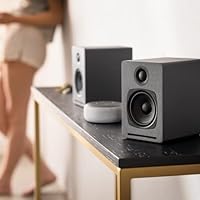
At under 6 inches tall and roughly 4 inches wide per speaker, the A1-MR speakers fit comfortably on crowded desks without demanding a dedicated cleared zone. Buyers in small apartment workspaces specifically praised the compact dimensions as one of the deciding factors in their purchase.
The depth measurement of just over 5 inches means they do protrude more than ultra-slim desktop speakers, which can be an issue on shallow desks or shelves. Users with very tight setups may find cable management at the rear more awkward than expected given the compact front profile.
Audio DAC Quality
84%
The onboard CD-grade DAC is a genuine asset for streaming listeners — buyers note that high-resolution streams from Tidal, Spotify, and Apple Music come through with noticeably more texture and detail than through a laptop's built-in audio output. It removes the need for a separate external DAC for most users.
Audiophiles who already own a high-end external DAC will not benefit from the onboard chip, and there is no way to bypass it when using the 3.5mm analog input. For casual listeners the DAC is more than adequate, but it is not a substitute for dedicated audiophile-grade converters.
Multi-Room Integration
66%
34%
Users who run a connected home audio system found it genuinely useful to have their desk speakers participate in whole-home playback rather than operating as an isolated source. When the feature works as intended, synchronizing audio across rooms adds real everyday convenience.
The multi-room experience is only as reliable as the Wi-Fi connection and app stability, both of which have drawn criticism from a portion of buyers. Users without an existing smart home audio ecosystem may find the feature more complex to configure than the benefit warrants.
Long-Term Durability
78%
22%
The wood construction and Audioengine's reputation for quality components give reasonable confidence in longevity — buyers who have used Audioengine speakers for years report minimal degradation in sound quality or build integrity over time. The brand also has a track record of honoring their limited warranty without major friction.
With only 67 reviews available and the product launched in late 2021, there is not yet a large enough long-term ownership pool to make strong durability claims with confidence. Software-dependent features like app control and Wi-Fi firmware carry an inherent risk of becoming unsupported in future years.

Suitable for:

The Audioengine A1-MR Desktop Speakers are a strong match for home office workers and everyday music listeners who want genuinely good sound without building a full hi-fi setup around their desk. If you spend long hours streaming music, podcasts, or video content and find yourself constantly noticing how flat or harsh cheap computer speakers sound, these will make a real difference in your daily experience. They suit people already invested in a Wi-Fi smart home ecosystem, since the multi-room audio feature lets the desk become part of a connected whole rather than an isolated listening point. Gamers who favor competitive clarity and precise stereo imaging over exaggerated bass will find the tuned, balanced output a better fit for longer sessions. And for anyone living in a smaller space where large bookshelf speakers simply aren't practical, this speaker set offers a compact footprint with output power that genuinely matches the room.

Not suitable for:

Buyers who need deep, authoritative bass from the speakers alone should look elsewhere — the Audioengine A1-MR Desktop Speakers bottom out at 65Hz, and while the dedicated subwoofer output is a helpful escape valve, it means spending more to get the low-end many listeners expect. If you rely exclusively on Bluetooth and have no interest in Wi-Fi audio or a companion app, the connectivity setup here may feel unnecessarily involved compared to simpler Bluetooth speaker alternatives at similar price points. These Audioengine desktop speakers are also not the right call for anyone who wants to fill a large living room or open-plan space — 60 watts peak is respectable for a desk environment, but it is not a substitute for a proper floor-standing or surround sound setup. Users who find app-dependent audio control frustrating, or who have experienced inconsistent Wi-Fi in their home, may hit friction points that undercut the otherwise solid hardware.

Specifications

  • Peak Power: The speakers deliver up to 60W of total peak output power, enough to fill a medium-sized room without audible strain.
  • Frequency Response: Audio reproduction starts at 65Hz on the low end, which covers most midrange and high-frequency content but leaves deep bass to an optional subwoofer.
  • Signal-to-Noise Ratio: A 95dB signal-to-noise ratio ensures the background is quiet and clean, making low-level detail in music clearly audible.
  • DAC Quality: An onboard CD-grade digital-to-analog converter handles audio decoding, supporting high-fidelity playback from streaming services and local audio libraries.
  • Connectivity: The speakers connect via Wi-Fi for wireless multi-room audio and include a 3.5mm analog input for direct wired connections from any compatible device.
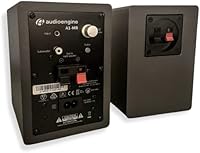
  • Subwoofer Output: A dedicated wired subwoofer output port allows users to connect a compatible external subwoofer for extended low-frequency performance.
  • Cabinet Material: Cabinets are constructed from wood, which naturally damps internal resonance and reduces coloration that plastic enclosures typically introduce.
  • Dimensions: Each speaker measures 5.12″ deep, 3.94″ wide, and 5.91″ tall, making the pair compact enough for most standard desk setups.
  • Weight: The pair weighs 6 pounds combined, making them easy to position or relocate without assistance.
  • Audio Channels: The system operates in 2.0 stereo configuration, with no built-in surround processing or center channel output.
  • Woofer Size: Each cabinet houses a 6.98cm dynamic driver woofer responsible for midrange and upper-bass reproduction.
  • Tweeter Size: A 1.91cm tweeter handles high-frequency detail, contributing to the speakers' clear and extended treble response.
  • Driver Type: Both woofer and tweeter use dynamic driver technology, a reliable and well-understood design for accurate music reproduction.
  • Control Method: Volume, source selection, and multi-room grouping are managed through a companion smartphone app rather than physical knobs on the unit.
  • Power Source: The speakers are corded electric powered and include a 6ft AC power cord in the box, requiring a standard wall outlet.
  • Impedance: The rated impedance is 10,000 ohms, relevant when pairing with external amplifiers or stereo receivers.
  • Compatible Devices: These speakers are designed for use with desktop computers, laptops, and stereo receivers, covering the most common home and office listening setups.
  • Included Accessories: The package includes a 6.5ft speaker wire, 6ft AC power cord, 5ft mini-jack audio cable, and a setup guide alongside the pair of speakers.
  • Warranty: Audioengine covers the speakers with a limited manufacturer warranty; buyers should confirm current terms directly with Audioengine at time of purchase.
  • Market Rank: The speakers hold a Best Sellers Rank of #323 in the Computer Speakers category on Amazon, indicating consistent and active sales volume.

Related Reviews
Audioengine A2+
Audioengine A2+
79%
91%
Sound Quality
93%
Build Quality
84%
Bluetooth Performance
76%
Value for Money
88%
Connectivity & Inputs
More
NZXT Relay Speakers
NZXT Relay Speakers
78%
86%
Sound Staging & Clarity
61%
Bass Performance
83%
Treble & High-Frequency Quality
89%
Build Quality & Cabinet Construction
58%
Touch Controls Usability
More
Audioengine A5+ Powered Bookshelf Speakers
80%
91%
Sound Quality
93%
Build Quality
88%
Amplifier Performance
67%
Connectivity & Inputs
78%
Value for Money
More
Audioengine HD4
Audioengine HD4
83%
91%
Sound Quality
88%
Bluetooth Performance
93%
Build Quality
89%
Amplifier Performance
86%
Input & Connectivity Flexibility
More
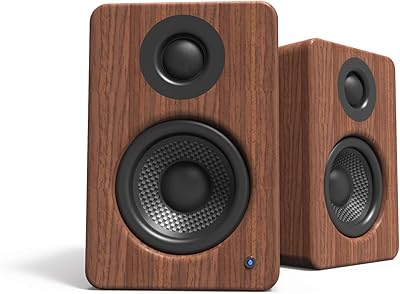
Kanto YU2 Powered Desktop Speakers
85%
88%
Sound Quality
73%
Bass Performance
91%
Design and Build Quality
85%
Connectivity and Versatility
95%
Ease of Setup
More
Redragon GS814
Redragon GS814
75%
71%
Sound Quality
58%
Bass Performance
83%
Bluetooth Connectivity
88%
RGB Lighting
67%
Touch Controls
More
Audioengine P4 Passive Bookshelf Speakers
81%
88%
Sound Quality
61%
Bass Performance
91%
Build Quality
93%
Design & Aesthetics
84%
Amplifier Compatibility
More
Redragon GS510 Waltz
85%
78%
Acoustic Clarity
94%
Ease of Setup
86%
Lighting Customization
79%
Build Quality
91%
Volume Control
More
Audioengine HD6 Wireless Bookshelf Speakers
83%
91%
Sound Quality
93%
Build Quality
88%
Bluetooth Performance
86%
Wired Connectivity
67%
Bass Performance
More
XKX XKX112A USB Computer Soundbar
82%
96%
Space Efficiency
93%
Setup Simplicity
88%
Vocal Clarity
84%
Volume Ceiling
82%
Clamp Security
More

FAQ

You can use the 3.5mm analog input without any Wi-Fi connection at all — just run a cable from your computer or phone and you get audio immediately. Wi-Fi is only required if you want multi-room audio or app-based control. For straightforward desktop use, the wired input works fine on its own.

The Audioengine A1-MR Desktop Speakers use Wi-Fi rather than Bluetooth for wireless connectivity. That means better range and audio quality over a network, but it also means you cannot pair them directly with a phone or tablet the way you would a standard Bluetooth speaker. If Bluetooth is a must-have for your setup, these are not the right fit.

Honestly, bass-heavy genres will expose the limits of these speakers fairly quickly without a subwoofer. The frequency response bottoms out at 65Hz, which means you will hear upper bass but miss the sub-bass punch that hip-hop and electronic music rely on. The dedicated subwoofer output is there for exactly this reason — pairing with a compatible sub makes a noticeable difference if bass depth matters to you.

Audioengine makes their own S6 subwoofer, which is designed to pair well with the A1-MR speakers and connects through the dedicated output port on the back. Third-party subwoofers with a line-level input will also work, though matching volume levels and crossover points may require some manual adjustment.

At 60W peak, they can get genuinely loud for a desk or small room, but a large open-plan space will stretch them. They are designed and tuned for near-field or mid-field listening — the kind of environment where you are sitting within a few feet of the speakers. For a bedroom or home office they perform well; for a living room they may feel underpowered.

Several buyers have noted that getting started is fairly straightforward. For wired use, it is just a cable connection and powering on. For Wi-Fi setup, you will use the companion app to connect the speakers to your network, which follows a standard guided process similar to setting up a smart home device. Most users report completing it without any special technical knowledge.

Volume and source management are app-dependent, which is worth factoring in before you buy. There is no physical volume knob on the speakers themselves. If you find app-based audio controls frustrating in everyday use — like needing to unlock your phone just to turn the volume down — that is a real usability trade-off to consider.

Wood cabinets are a functional choice, not just an aesthetic one. A well-constructed wood enclosure resonates differently than plastic — it tends to produce less unwanted cabinet coloration, meaning the sound you hear is more accurately representing what the drivers are producing. It is one of the reasons these Audioengine desktop speakers are tuned the way they are, and it is a genuine differentiator at this price range.

If your TV has a 3.5mm output or an RCA output with an appropriate adapter cable, yes — you can connect the speakers directly using the analog input. They are not natively designed as a TV speaker system, but the wired input is flexible enough to handle it. Just be aware there is no remote-friendly volume control, so adjusting levels will require the app.

The wood cabinet construction and Audioengine's reputation for quality components suggest these are built to last longer than budget plastic alternatives. That said, with 67 reviews on Amazon, there is not yet a large enough long-term ownership sample to make strong claims about multi-year durability. Audioengine does offer a limited warranty, and the brand has a track record of supporting their products, which is reassuring for a mid-range investment.