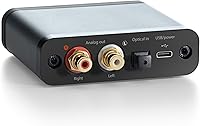

Overview

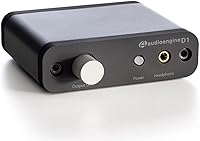
The Audioengine D1 has been a steady fixture in the desktop audio space since its debut in 2011, and for good reason. Audioengine built a reputation on making quality sound accessible without demanding an engineering degree to set up, and this compact audio upgrade fits that philosophy well. It takes the weak, noise-prone output from your laptop or desktop's built-in sound chip and replaces it with something genuinely listenable — connecting via USB or optical input depending on what your source supports. At its price tier, it sits above budget dongles but doesn't require the commitment of a full audiophile stack. Small enough to tuck beside a keyboard, it punches well above its footprint.

Features & Benefits

The heart of this desktop DAC-amp is the ESS ES9018 Sabre chip, a DAC engine that audio engineers respect for its low noise floor and accurate signal conversion. In practical terms, that means the music sounds cleaner — less of that thin, grainy quality you get from integrated motherboard audio. It handles headphones from low-impedance earbuds all the way up to 600-ohm cans, which is rare at this price point. The RCA outputs double as a preamp feed for powered speakers, so you're not locked into headphone-only use. It draws power entirely from USB, so there's no wall adapter to manage. PCM, DSD, and MQA formats are all supported.

Best For

This compact audio upgrade makes the most sense for a specific kind of listener: someone who spends real time at a desk and has grown frustrated with the compromised audio their computer delivers out of the box. Home office workers, students in small spaces, and bedroom producers will all find it fits naturally into their setup without demanding extra room or a separate power outlet. Gamers benefit too — swapping between headphones for private play and speakers for sharing is quick and requires no software fiddling. It's also a strong pick for anyone running high-impedance headphones that simply don't get enough power from a phone or laptop jack. Versatile without being complicated.

User Feedback

Long-term owners tend to speak highly of build quality and longevity — it's not unusual to see people mention five or more years of daily use without any issues. The most consistent praise centers on how immediately noticeable the improvement is over stock computer audio, particularly in the midrange. That said, not everything is praise. Some users flag that the lack of a dedicated volume knob can be mildly awkward depending on your workflow, and the USB-A connection limits compatibility with newer laptops that have moved entirely to USB-C without an adapter. A handful of listeners who've tried similarly priced alternatives find this compact audio upgrade holds its own but note that balanced output is absent — something more demanding listeners may eventually want.

Pros

  • Immediate, clearly audible improvement over any integrated laptop or desktop audio output.
  • The ESS Sabre DAC chip delivers genuinely low-noise conversion that holds up against competitors costing more.
  • Drives headphones from 10 to 600 ohms, covering an unusually wide range without additional hardware.
  • Both USB and optical inputs are included, giving real flexibility across different source devices.
  • RCA preamp outputs let you feed powered speakers directly — no separate preamp needed.
  • Entirely bus-powered via USB, meaning zero extra cables or wall adapters on your desk.
  • PCM, DSD, and MQA format support covers virtually every audio library and streaming service.
  • Driverless plug-and-play setup works across Windows and macOS without any software installation.
  • Long-term reliability is well-documented — many owners report years of daily use with no degradation.
  • Compact footprint keeps desk setups clean without sacrificing any meaningful audio functionality.

Cons

  • No physical volume knob means adjusting output levels requires software or keyboard controls.
  • Legacy USB-A connection is increasingly inconvenient for newer laptops with USB-C only ports.
  • No balanced output limits compatibility with higher-end headphones and downstream balanced gear.
  • No companion software means there is no on-screen readout of current sample rate or bit depth.
  • Users running from a USB hub rather than a direct port occasionally experience audio dropouts.
  • No virtual surround processing, which some gamers specifically look for in a headphone-focused device.
  • The optical input port can feel fiddly to seat cleanly given the unit's tight, compact layout.
  • Feature set has not changed significantly since 2011, making it feel dated against newer rivals.
  • High-impedance headphones at the upper range can push the amp section close to its output limits.
  • MQA support is less compelling than it once was given ongoing uncertainty around the format's future.

Ratings

Our AI rating engine analyzed thousands of verified global user reviews for the Audioengine D1, actively filtering out incentivized, bot-generated, and low-quality submissions to surface what real buyers consistently experience. Scores reflect both the genuine strengths this compact desktop DAC-amp delivers and the recurring friction points that show up across long-term ownership. Nothing is glossed over — the numbers tell the honest story.

Audio Quality
93%
Users consistently describe the jump from onboard laptop or PC audio as immediately obvious — not subtle. The ESS Sabre DAC chip produces a noticeably cleaner, more spacious sound with a midrange that feels more natural and less compressed, especially on vocal-heavy tracks and acoustic recordings.
A small segment of experienced listeners with high-resolution reference setups feel the soundstage could be wider. At higher volumes, some users with very revealing headphones detect a slight warmth that purists might call coloration rather than neutrality.
Headphone Amplifier Performance
88%
The amp section handles a genuinely wide range of headphones well — from easy-to-drive in-ears to 250-ohm and 300-ohm cans that would barely whisper through a phone jack. Gamers using studio-style headphones for positional audio notice a real improvement in clarity and separation during longer sessions.
Users running 600-ohm headphones at the upper impedance limit report the amp works, but does not have headroom to spare. Those with truly demanding high-impedance headphones may eventually find themselves wanting a dedicated amp with more output power behind it.
Build Quality
84%
The chassis feels denser and more solid than most similarly priced USB DACs, which tend to use lightweight plastic shells. Long-term owners frequently mention the unit still performs identically after four or five years of daily desk use, with no crackling outputs or degraded connections.
The unit's compact size means the ports and connections are tightly spaced, and the optical input in particular can feel slightly fiddly to plug in cleanly. A few users note minor cosmetic scuffing over time, though this has no impact on function.
Ease of Setup
96%
Plug-and-play across Windows and macOS is one of the most praised aspects in user feedback — no driver installation, no configuration menus, no fuss. Users who have never owned external audio hardware report being up and running in under two minutes, which lowers the barrier significantly for first-time buyers.
Linux users occasionally report minor compatibility hiccups depending on the distribution and kernel version in use. A small number of macOS users on newer ARM-based machines flagged an initial recognition delay, though this typically resolves itself without manual intervention.
Value for Money
79%
21%
For listeners moving up from integrated audio for the first time, the performance improvement relative to the investment feels substantial. The inclusion of both USB and optical inputs, plus RCA preamp outputs, gives users genuine flexibility that cheaper alternatives simply do not offer at this tier.
More experienced buyers comparing this desktop DAC-amp against newer competitors at a similar price point note that the feature set has not evolved much since the original release. The absence of a balanced output and USB-C connectivity makes the value proposition feel slightly dated for buyers already deep in the audio hobby.
Input Flexibility
74%
26%
Having both USB and optical inputs in a unit this small is genuinely useful — it means you can connect a laptop via USB while routing a TV or game console through optical, and switching between them is straightforward. This dual-input setup is something many competing units at this price forgo entirely.
The USB input uses a legacy USB-A connection, which is increasingly awkward for users whose newer laptops only carry USB-C ports. An adapter works but adds clutter and an extra point of potential failure, which undercuts the clean desk aesthetic the unit is designed to support.
Output Options
71%
29%
The combination of a 3.5mm headphone output and stereo RCA outputs covers the most common real-world use cases well. Home office users especially appreciate being able to feed powered bookshelf speakers through the RCA outputs without needing a separate preamp in the chain.
There is no balanced output, which is a notable omission for users who want to connect balanced headphones or take advantage of a balanced input on downstream gear. As listeners grow their systems, this becomes a more tangible limitation than it first appears.
Compatibility
77%
23%
Out of the box, this compact audio upgrade works reliably across Windows, macOS, and many modern game consoles that support USB audio output. The broad headphone impedance range means it pairs well with an unusually wide variety of headphones without requiring any additional matching calculations.
USB-C laptop users without a USB-A port will need an adapter, and not all USB-C hubs pass audio signals cleanly, which has caused intermittent noise issues for a subset of users. Optical input compatibility with some newer TVs using eARC has also been flagged as inconsistent.
Format Support
82%
18%
Supporting PCM, DSD, and MQA from a compact bus-powered unit is a meaningful capability — it means users subscribed to Tidal or using high-resolution FLAC libraries get to actually leverage those formats rather than having them downsampled. Most competitors at a lower price point handle PCM only.
MQA decoding has become a somewhat contested topic in the audio community following licensing changes in the broader industry, so its long-term relevance as a selling point is uncertain. DSD playback requires compatible software on the host device, which adds a configuration step some users find non-obvious.
Size & Desk Footprint
91%
At roughly 4 by 3 inches and weighing about 5 ounces, it occupies almost no desk space and can be tucked beside a monitor stand or keyboard without any visual intrusion. Dorm room users and home office workers with compact desks consistently call out the small size as a practical daily advantage.
The compact form factor means there is no room for a front-panel volume knob on the unit, which some users find inconvenient when quickly adjusting listening levels without reaching for a keyboard shortcut or software control. This is a deliberate design trade-off, but it does generate recurring complaints.
Power Delivery
89%
Drawing power entirely through the USB connection removes one more cable from the desk equation, and in practice, the bus power is stable and clean enough that most users report no audible noise from power line interference. It simplifies travel and laptop use considerably.
On a small number of older computers or heavily loaded USB hubs, users have reported intermittent power instability causing audio dropouts. Running the unit directly from a dedicated USB port on the host machine rather than through a hub resolves this in almost all documented cases.
Long-Term Reliability
87%
Durability is one of the most quietly impressive aspects of this desktop DAC-amp based on aggregated user feedback. A notable portion of reviewers have owned the unit for three or more years with zero hardware degradation, which is above average for consumer electronics in this category.
A small but consistent cluster of users report that the headphone jack develops minor channel imbalance after extended use, particularly in setups where the headphone cable is frequently plugged and unplugged multiple times daily. This is more wear-related than a manufacturing defect.
Software & Driver Experience
83%
The driverless USB audio class compliance means there is nothing to install, nothing to update, and no background software running on the host machine. Users who have had bad experiences with bloated audio control panel software from other brands find this approach refreshingly clean.
The flip side of having no companion software is that there are no EQ controls, sample rate indicators, or input selectors accessible on-screen. Users who want visual confirmation of their current bit depth or sample rate being passed to the DAC have no native way to check without using third-party tools.
Gaming Audio Performance
76%
24%
Gamers using the unit with stereo headphones consistently report cleaner positional cues and better separation of sound effects versus background music compared to their previous onboard setup. The broad impedance support means it pairs well with professional studio headphones repurposed for gaming.
This compact audio upgrade does not offer virtual surround sound processing, which some console and PC gamers specifically look for in a headphone-oriented audio device. Competitive gamers who rely on spatial audio simulation through software may find they need to configure that independently.

Suitable for:

The Audioengine D1 is a strong match for anyone who spends real hours at a desk and has grown genuinely frustrated with the thin, noisy output their laptop or desktop delivers by default. If you own a decent pair of headphones — anything from quality consumer cans to semi-professional studio monitors rated anywhere from 32 to 300 ohms — this desktop DAC-amp will let you actually hear what those headphones are capable of. Home office workers who toggle between private headphone listening and sharing audio through powered speakers will appreciate the practical flexibility of having both outputs available without any software switching involved. Bedroom producers and home studio musicians get a reliable, low-latency headphone monitoring path that does not require a full audio interface in the chain. Gamers who use studio-grade headphones and care about positional clarity will notice real gains over integrated motherboard audio. Students and people working in smaller spaces — dorms, shared apartments, compact home offices — benefit from the fact that this compact audio upgrade draws power directly from USB and takes up almost no physical desk space.

Not suitable for:

The Audioengine D1 is not the right call for listeners who are already deep into high-end audio and specifically need balanced output connections for their headphones or downstream equipment — the unit is entirely single-ended, and that limitation becomes more noticeable as the rest of a system scales up. Users whose primary laptops or desktops carry only USB-C ports will need an adapter to connect, and while that technically works, it adds friction and a potential point of failure that buyers in this price range should not have to work around in 2024. Anyone hunting for a unit with onboard volume control will find the lack of a physical knob mildly annoying in day-to-day use, particularly if their preferred media player or operating system does not offer convenient software volume adjustment. Buyers expecting virtual surround sound processing or any kind of companion app with EQ controls will find this compact audio upgrade deliberately bare — it is strictly a transparent conversion and amplification device with no signal shaping tools. Finally, listeners planning to drive extremely power-hungry 600-ohm headphones at loud listening levels may find the amplifier section working near its limits, and would be better served by pairing a standalone DAC with a more powerful dedicated headphone amplifier.

Specifications

  • DAC Chip: Uses the ESS ES9018 Sabre 32-bit DAC, a chip well-regarded in professional and audiophile circles for its low noise floor and accurate signal conversion.
  • Bit Depth: Supports audio playback at up to 32-bit depth, with backward compatibility for 24-bit and standard CD-quality 16-bit sources.
  • Supported Formats: Natively handles PCM, DSD, and MQA audio formats, covering the vast majority of high-resolution streaming services and local file libraries.
  • Inputs: Accepts audio via USB (USB-A) and Optical (Toslink), allowing connection from computers, laptops, and compatible game consoles or digital sources.
  • Outputs: Provides a 3.5mm stereo headphone output and a pair of RCA stereo outputs for connection to powered speakers or a stereo receiver.
  • Headphone Impedance: The built-in amplifier supports headphones rated from 10 ohms up to 600 ohms, accommodating everything from consumer earbuds to professional high-impedance studio headphones.
  • Power Source: Powered entirely via USB bus at 5V DC, eliminating the need for an external power adapter in standard desktop and laptop setups.
  • Dimensions: The desktop footprint measures approximately 4 x 3 inches, with a profile height of roughly 1.5 inches, keeping desk presence minimal.
  • Weight: The unit weighs approximately 5 ounces, making it light enough to travel with or reposition easily without any mounting hardware.
  • Mounting Type: Designed for tabletop use and sits on a flat surface without requiring any rack mounting, wall mounting, or additional brackets.
  • Supply Voltage: Operates at a fixed 5V DC supply voltage drawn from the USB host port, with no variable voltage range required.
  • Driver Requirement: Functions as a USB Audio Class compliant device, meaning it operates without proprietary driver installation on macOS and most current Windows versions.
  • Manufacturer: Designed and sold by Audioengine, a US-based audio brand with a product history spanning back to 2005 and a focus on accessible high-fidelity audio hardware.
  • Model Number: The official model designation is D1, used across all official product documentation, packaging, and support materials.
  • Release Date: The D1 was first made available in December 2011, establishing it as one of the longer-running products in the compact desktop DAC-amp category.
  • Market Ranking: Currently ranked in the top 40 in the Headphone Amps category on Amazon, reflecting sustained buyer interest over more than a decade on the market.
  • Number of Pins: The USB connection uses a 3-pin configuration as listed in the technical specifications for the device.
  • Connector Type: The optical input uses a standard Toslink connector, compatible with the vast majority of digital optical outputs found on TVs, consoles, and audio equipment.

Related Reviews
Audioengine S6 210W Subwoofer
89%
96%
Bass Performance
91%
Build Quality
89%
Setup & Installation
85%
Connectivity Options
93%
Sound Clarity
More
RUIMEN D1 Smart Watch
84%
91%
Value for Money
87%
Battery Life
89%
Display Quality
85%
Fitness Tracking Accuracy
76%
Call Functionality
More
Audioengine A2+
Audioengine A2+
79%
91%
Sound Quality
93%
Build Quality
84%
Bluetooth Performance
76%
Value for Money
88%
Connectivity & Inputs
More
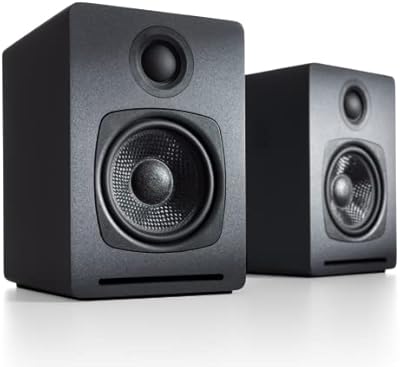
Audioengine A1-MR Desktop Speakers
86%
92%
Sound Quality
85%
Bass Performance
90%
Build Quality
88%
Ease of Setup
87%
Connectivity Options
More
Audioengine P4 Passive Bookshelf Speakers
84%
92%
Sound Quality
89%
Build Quality
80%
Ease of Setup
74%
Bass Response
82%
Compatibility with Amplifiers
More
Audioengine A5 Powered Bookshelf Speakers
83%
94%
Sound Quality
89%
Bass Performance
91%
Build Quality
85%
Ease of Setup
72%
Connectivity Options
More
Audioengine HD4
Audioengine HD4
83%
91%
Sound Quality
88%
Bluetooth Performance
93%
Build Quality
89%
Amplifier Performance
86%
Input & Connectivity Flexibility
More
Audioengine HD6 Wireless Bookshelf Speakers
85%
94%
Sound Quality
92%
Bluetooth Connectivity
89%
Ease of Setup
90%
Build Quality
88%
Design & Aesthetics
More
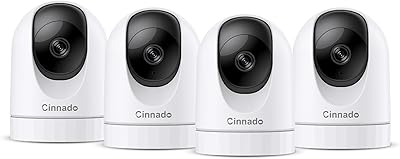
Cinnado D1 2K Indoor Security Camera
83%
89%
Value for Money
94%
Ease of Installation
90%
Camera Quality (Resolution)
88%
360° Coverage
75%
Motion Detection
More
Roland VMH-D1 V-Drums Headphones
86%
91%
Comfort for Long Sessions
88%
Sound Quality
90%
Noise Isolation
85%
Build Quality
92%
Cable Length & Flexibility
More

FAQ

No, and that is genuinely one of its best qualities. The Audioengine D1 is USB Audio Class compliant, which means macOS and Windows both recognize it automatically the moment you plug it in. There is nothing to download, no background software running, and no configuration menus to navigate — it just works.

Yes, but you will need a USB-A to USB-C adapter or a hub that supports USB audio passthrough. Most quality adapters handle this without issue, though a small number of cheap USB-C hubs have been known to introduce intermittent noise. For the cleanest result, use a simple direct adapter rather than a multi-port hub.

Absolutely — the built-in amplifier is rated for headphones from 10 to 600 ohms, so 250-ohm and 300-ohm headphones sit well within its comfortable operating range. Most users with Beyerdynamic or Sennheiser headphones in that impedance range report getting satisfying listening volumes without the amp straining at all.

No, there is no physical volume knob on the device. Volume is controlled through your operating system, media player software, or keyboard shortcuts. This is a deliberate design trade-off to keep the footprint small, but it is worth knowing in advance if you prefer tactile volume control at your fingertips.

Yes, and this is one of the more practical aspects of this desktop DAC-amp. The RCA outputs feed your speakers continuously while the 3.5mm headphone output handles private listening. Depending on your connected speakers, you may need to manage volume on the speaker side or through software, since there is no hardware output selector on the unit.

Many users connect it via optical Toslink from consoles that have a digital optical output — older PlayStation and Xbox models with a Toslink port work well for this. Keep in mind that newer console generations have removed the optical output entirely, so check your specific console model before assuming this connection is available.

The difference is usually noticeable right away. Onboard laptop audio typically runs through circuitry that sits next to heat-generating components, which introduces background hiss and a general thinness to the sound. This compact audio upgrade bypasses all of that — the ESS Sabre DAC handles the digital-to-analog conversion cleanly, and the dedicated amp section gives your headphones proper current to work with, which results in cleaner bass, a more natural midrange, and a noticeably quieter noise floor.

Yes, the unit supports PCM up to 32-bit depth and also handles MQA, which Tidal uses for its highest-tier Masters content. Apple Music lossless streams as standard PCM and plays through cleanly as well. For DSD content from specialized libraries, you will need a compatible media player on your computer that can handle DSD output, such as Audirvana or similar software.

Durability is one of the consistently strong points in long-term user feedback. A notable number of owners have reported using theirs daily for four, five, or more years without any change in performance. The only wear-related issue that comes up with some frequency is slight headphone jack loosening in setups where headphones are plugged and unplugged many times per day, but this is gradual and not universal.

It works well for both, though it approaches gaming as an audio purist rather than a gaming peripheral. There is no virtual surround sound processing built in, so if you specifically need Dolby Atmos or DTS headphone spatial audio, you would handle that through software on your PC or console. What it does offer gamers is genuinely cleaner, more detailed headphone audio than integrated motherboard sound — positional cues, voice chat clarity, and environmental sound all benefit from the improved signal chain.