Overview

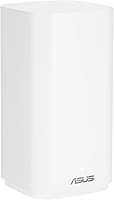
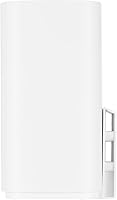
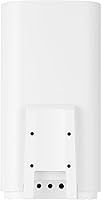
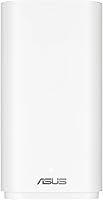
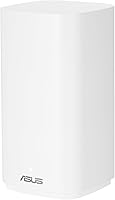
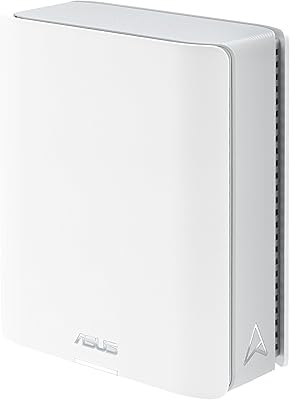
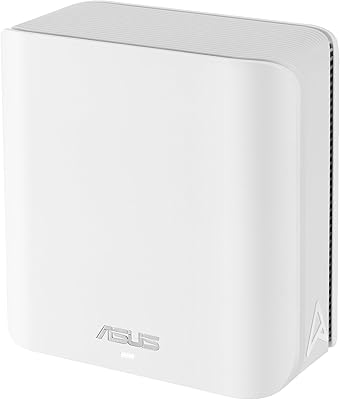
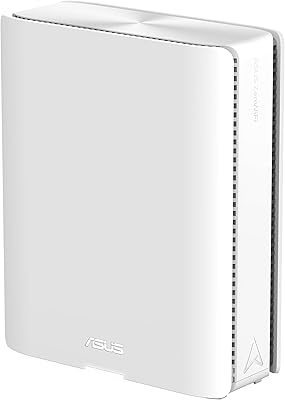
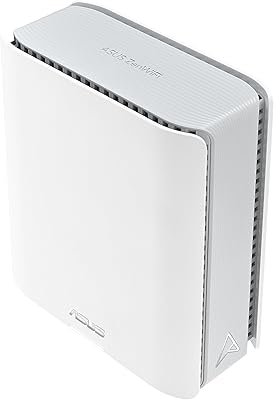
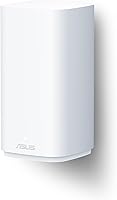
The ASUS ZenWiFi BD5 Outdoor WiFi 7 Router is ASUS's first dedicated outdoor mesh node designed to push the AiMesh ecosystem beyond your walls. Built around dual-band WiFi 7 with MLO (Multi-Link Operation) and 4K-QAM, it delivers noticeably more stable throughput than older AC or AX gear — think fewer dropped video calls on the patio, not just bigger numbers on a spec sheet. The compact cylindrical housing mounts on walls, poles, or flat surfaces, fitting neatly into most outdoor setups. At its price point, it competes with a small handful of purpose-built outdoor access points. One thing to be clear about upfront: this outdoor mesh node works best as an extension node, not a standalone solution.
Features & Benefits

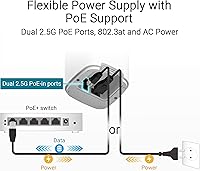
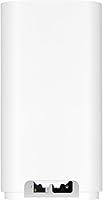
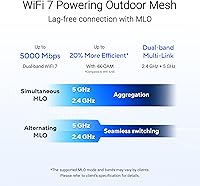
What makes the ZenWiFi BD5 Outdoor stand out technically is how it handles interference. Unlike older WiFi standards that juggle one band at a time, Multi-Link Operation lets the router transmit across bands simultaneously, which translates to more consistent speeds when your neighbor's network or a backyard smart device is competing for airspace. The IP65 enclosure is legitimately rugged — it handles driving rain, garden hose splash, and dust without issue. Power delivery runs through dual 2.5G PoE ports, meaning a single ethernet cable handles both data and power, a real advantage when drilling through exterior walls. It also spans an operating range that covers most real-world temperature extremes, and AiProtection Pro adds genuine threat filtering rather than a checkbox security label.

Best For

This weatherproof WiFi 7 extender is a genuinely niche buy — and that's not a criticism. If you already run an ASUS AiMesh system indoors, extending it outdoors with this node is a natural, relatively clean upgrade. It's also a solid pick for small business deployments: outdoor seating areas, warehouse edges, or parking lots where you need reliable coverage but can't run AC power lines everywhere. PoE support makes cable management far less painful than it sounds. Anyone managing a fleet of outdoor smart devices — security cameras, smart speakers, connected irrigation — will also appreciate the ability to segment those devices onto a dedicated IoT SSID. For everyone else without an ASUS ecosystem already in place, there are simpler options worth considering first.

User Feedback

Early adopter reviews are largely positive about the mounting hardware and installation process — the included kit handles wall and pole installs without improvisation. The ASUS app earns decent marks for guided setup, though a handful of less technical users report friction when first adding this node to an existing mesh. The ecosystem dependency is the most consistent gripe: buyers who don't already own an ASUS AiMesh router quickly discover this unit isn't plug-and-play as a primary router. The advertised coverage figure holds up under ideal conditions, but obstacles, tree cover, and mounting height all affect real-world range. Long-term durability reports from users in rainy and freezing climates have been encouraging, though the product is still relatively new to market.

Pros

  • WiFi 7 with Multi-Link Operation delivers noticeably more stable outdoor connections than older AC or AX extenders.
  • IP65 weatherproofing holds up against driving rain, garden hose splash, and dusty environments without any ingress issues.
  • PoE support means a single ethernet cable handles both data and power, eliminating the need for outdoor AC outlets.
  • The operating temperature range covers genuine extremes, making the ZenWiFi BD5 Outdoor viable in freezing winters and hot summers alike.
  • AiMesh integration handles indoor-to-outdoor roaming automatically, so devices stay connected as you move through the house and yard.
  • AiProtection Pro adds commercial-grade threat filtering that most consumer outdoor access points at this price do not offer.
  • Triple SSID support lets you segment IoT cameras and smart devices onto their own isolated network with minimal configuration.
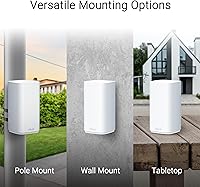
  • The compact cylindrical form and included mounting kit cover wall, pole, and flat-surface installs cleanly without extra hardware.
  • White finish and unobtrusive profile make it look intentional rather than industrial when mounted in visible outdoor areas.

Cons

  • Requires an existing ASUS AiMesh router to unlock full functionality — it is not a capable standalone primary router.
  • PoE deployment also requires a compatible high-wattage PoE switch or injector, adding cost that is easy to overlook at purchase.
  • Real-world outdoor range drops sharply with obstacles like dense hedgerows, fencing, or brick walls between the node and devices.
  • Non-technical buyers report friction during initial setup, particularly when pairing the node at distance from the primary router.
  • Advanced security features and VPN configuration require manual setup outside the standard app workflow, which is not beginner-friendly.
  • The white finish accumulates visible grime and pollen staining faster than darker enclosures in typical outdoor environments.
  • No alternative color option limits discretion in certain installation contexts where white stands out undesirably.
  • Some AiProtection features tie into ASUS cloud services, which raises ongoing dependency concerns for privacy-focused users.
  • Sustained operation under direct sun in peak summer heat can push temperatures toward the upper tolerance limit, causing occasional throttling.

Ratings

The ASUS ZenWiFi BD5 Outdoor WiFi 7 Router has been scored across 13 categories by our AI system after analyzing verified purchase reviews from buyers worldwide, with spam, bot-submitted, and incentivized feedback actively filtered out. Scores reflect the full spectrum of real ownership experiences — not just the enthusiastic early adopters, but also the frustrated non-technical buyers and those who hit genuine limitations. Where this outdoor mesh node shines, the data is clear; where it falls short, we have not softened the numbers.

Wireless Performance
88%
Users running WiFi 7-capable devices report a meaningful step up in outdoor connection stability compared to their previous AC or AX extenders. Multi-Link Operation keeps latency low even when multiple devices are active simultaneously — backyard video calls and 4K streaming on the patio held up well in congested suburban environments.
The dual-band limitation means there is no dedicated backhaul band, which can create bottlenecks when the node is placed far from the primary router. Users with older WiFi 5 or WiFi 6 devices see more modest real-world gains than the headline throughput figure suggests.
Build Quality & Durability
91%
The IP65-rated enclosure has held up convincingly for users in genuinely harsh conditions — Pacific Northwest rain seasons, Midwest ice storms, and high-humidity coastal climates. The housing feels solid and well-sealed, and the finish resists UV discoloration better than some competing outdoor access points in the same bracket.
A small number of long-term users in extremely hot climates report the white exterior showing minor surface yellowing after extended direct sun exposure. The unit is also heavier than it looks, which can make pole mounting solo a slightly awkward two-hand job.
Weather Resistance
93%
The IP65 certification is not just a sticker here — buyers in rainy regions report zero ingress issues after months of outdoor exposure. Garden hose splashback, heavy downpours, and even ice accumulation have not caused failures in verified long-term user reports.
IP65 covers water jets but not full submersion, so installations in flood-prone low-lying areas carry some residual risk. A few users also noted that the cable entry points require careful sealing during installation to fully maintain weather integrity.
Temperature Range & Climate Versatility
89%
The operating range covering extreme cold through intense heat makes this one of the more climate-versatile outdoor nodes available at this price tier. Canadian users running it through sub-zero winters report consistent performance without the cold-boot failures that plague some competing units.
While rated for high temperatures, sustained operation in direct sun during peak summer in hot climates can push internal temperatures toward the upper end of tolerance. A few Arizona and Southern European users noted occasional thermal throttling during the hottest afternoon hours.
Installation & Mounting
86%
The included mounting kit is well-designed and covers wall, pole, and flat-surface scenarios without requiring additional hardware trips. Most buyers with basic DIY comfort rate the physical installation as straightforward, and the compact cylindrical form fits neatly on a standard fence post or exterior wall bracket.
The mounting hardware instructions assume a degree of familiarity with exterior cabling that can trip up first-time installers. Pole diameter compatibility is not exhaustively specified in the box, and a handful of users needed aftermarket clamps for non-standard pole sizes.
PoE & Power Flexibility
87%
PoE support is a genuine practical win for this type of deployment. Running a single ethernet cable through a soffit or conduit is dramatically cleaner than dealing with outdoor-rated AC extension setups, and users consistently praise how much easier it makes long cable runs to detached garages or outbuildings.
PoE requires a compatible PoE switch or injector, which is an additional cost that first-time buyers sometimes overlook. The dual 2.5G PoE ports demand a higher PoE wattage budget than standard 802.3af gear, meaning budget PoE switches may not deliver enough power.
AiMesh Ecosystem Integration
82%
18%
For buyers already invested in the ASUS AiMesh ecosystem, adding the ZenWiFi BD5 Outdoor as a node is relatively smooth. Roaming handoffs between indoor and outdoor nodes are handled automatically, and most users report their devices stay connected without any manual switching as they move through the house and into the yard.
The ecosystem dependency is the single most cited frustration in reviews. Buyers who purchase this unit expecting it to function as a standalone primary router are frequently disappointed when they discover its capabilities are significantly reduced without an ASUS AiMesh parent router in the setup.
Setup & App Experience
74%
26%
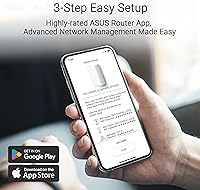
Tech-savvy users and existing ASUS router owners generally find the ASUS router app guided setup clear enough to complete without consulting documentation. Adding this as a new AiMesh node is largely automated once the app recognizes the hardware on the network.
Non-technical buyers, particularly those upgrading from simpler ISP-provided routers, report confusion during the initial pairing and node configuration steps. The app occasionally struggles to detect the outdoor node when the device is installed at distance during setup, requiring a temporary closer placement to complete the process.
Coverage Range
71%
29%
In open, obstacle-free outdoor environments — flat backyards, open parking areas, rooftop deployments — verified users do achieve coverage figures close to the advertised range. When mounted at height on a pole, the coverage footprint expands noticeably compared to ground-level wall placement.
Real-world outdoor range drops significantly with typical obstacles: dense hedgerows, brick walls, HVAC equipment, or even thick wooden fencing can cut effective range by 30 to 50 percent. Buyers expecting the full marketed coverage figure in a densely landscaped yard will likely need more than one node.
Security Features
84%
AiProtection Pro provides commercial-grade threat detection and network monitoring that goes well beyond what typical consumer outdoor access points offer at this price. The triple SSID capability lets users keep IoT cameras and smart locks on a fully isolated network segment, which security-conscious buyers specifically highlight in reviews.
Some of the more advanced AiProtection features require an active subscription or are tied to ASUS cloud services, which creates ongoing dependency concerns for privacy-focused users. VPN configuration, while supported, is not beginner-friendly and requires manual setup outside the standard app flow.
Value for Money
76%
24%
For buyers who need a purpose-built, IP65-rated, PoE-powered WiFi 7 outdoor node and are already on ASUS AiMesh, the value proposition is reasonable — comparable outdoor-grade alternatives with similar specs tend to sit at similar or higher price points. The inclusion of a solid mounting kit adds practical value to the package.
For buyers without an existing ASUS ecosystem, the effective cost of ownership rises sharply when you factor in the need for a compatible primary router and a PoE switch. In that scenario, the total outlay to get this node working properly can feel steep relative to alternatives that operate more independently.
IoT & Smart Home Compatibility
79%
21%
The ability to establish dedicated SSIDs for IoT devices makes this weatherproof WiFi 7 extender particularly useful for users running outdoor smart cameras, smart irrigation controllers, or connected lighting systems. Alexa compatibility rounds out the smart home integration story for voice-first households.
The IoT segmentation features, while genuinely useful, require navigating deeper into the ASUS interface to configure correctly. Buyers expecting one-tap smart home setup from the main app will find the process more involved than competing routers with more consumer-friendly IoT onboarding flows.
Form Factor & Aesthetics
81%
19%
The compact cylindrical profile looks considerably more intentional than the utilitarian boxes that define most outdoor networking hardware. Wall-mounted in white, it reads as an architectural fixture rather than an eyesore, which matters to homeowners installing it in visible outdoor areas like front porches or entertainment patios.
The white finish, while clean indoors, can accumulate visible grime and weathering stains faster than darker enclosures in dusty or high-pollen outdoor environments. There is currently no alternative color option, which limits discretion in certain installation contexts.

Suitable for:

The ASUS ZenWiFi BD5 Outdoor WiFi 7 Router is a strong fit for a fairly specific but real set of buyers. If you already run an ASUS AiMesh system inside your home and have been frustrated by dead zones the moment you step outside — onto the patio, into the backyard, or around to the garage — this is the cleanest way to extend that network without rebuilding your whole setup. It is equally well-suited to small business owners who need reliable wireless coverage in outdoor commercial spaces: a restaurant patio, a small warehouse loading bay, or a property management office extending WiFi to a parking area. Tech-comfortable users who want to run a single ethernet cable rather than dealing with outdoor AC wiring will find the PoE power delivery genuinely practical. Anyone managing a cluster of outdoor smart devices — security cameras, smart sprinkler controllers, connected outdoor speakers — will also benefit from the ability to partition those devices onto their own isolated network segment, keeping them off the same SSID as laptops and phones.
Not suitable for:

The ASUS ZenWiFi BD5 Outdoor WiFi 7 Router is not the right call for buyers who do not already own a compatible ASUS AiMesh router. Without one, this outdoor mesh node cannot function as a fully capable primary router, and the purchase quickly becomes frustrating rather than useful. It is also a poor fit for buyers expecting plug-and-play simplicity: the setup process, particularly for less technical users, requires navigating the ASUS app with some patience, and adding a PoE switch to the equation adds both cost and configuration steps that can trip up newcomers. If your outdoor space is densely landscaped with heavy hedgerows, stone walls, or multiple structures between the node and your devices, the real-world coverage will fall noticeably short of the marketed figure — one node may not be enough. Budget-conscious buyers who need only basic outdoor coverage should also look at simpler, less expensive options; the full value of this hardware only becomes apparent when it is deployed within a properly configured AiMesh ecosystem with PoE infrastructure already in place.
Specifications

  • WiFi Standard: Supports WiFi 7 (802.11be), WiFi 6 (802.11ax), WiFi 5 (802.11ac), WiFi 4 (802.11n), and legacy 802.11g and 802.11a protocols.
  • Band Configuration: Dual-band architecture operating across both 2.4 GHz and 5 GHz frequency bands simultaneously.
  • Max Throughput: Combined wireless throughput reaches up to 5000 Mbps using Multi-Link Operation and 4K-QAM modulation under ideal conditions.
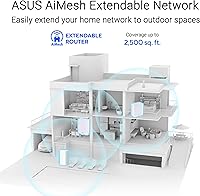
  • Coverage Area: Rated for up to 2,500 sq ft of wireless coverage, though real-world results vary based on obstacles, mounting height, and environmental interference.
  • Ethernet Ports: Equipped with two 2.5G RJ45 ports supporting Power over Ethernet input and AI-assisted WAN detection.
  • Power Input: Accepts both Power over Ethernet (PoE) and standard AC power, providing flexible installation options for outdoor deployments.
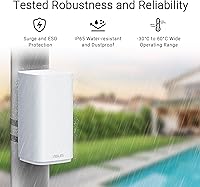
  • IP Rating: IP65 certified, meaning the enclosure is fully dustproof and protected against water jets from any direction.
  • Operating Temp: Rated for continuous operation from -30°C to 60°C, covering extreme cold and high-heat outdoor environments.
  • Dimensions: Measures 4.2 x 4.2 x 7.9 inches in its compact cylindrical form factor.
  • Weight: Weighs 2.3 pounds, which is manageable for wall and pole mounting but benefits from a second pair of hands during installation.
  • Mounting Options: Ships with a mounting kit supporting wall-mount, pole-mount, and flat-surface placement configurations.
  • Mesh Compatibility: Functions as an AiMesh node and integrates with compatible ASUS AiMesh routers for unified indoor and outdoor mesh coverage.
  • SSID Support: Supports up to three simultaneous SSIDs, enabling network segmentation for IoT devices, guests, and primary users.
  • Security: Includes AiProtection Pro with commercial-grade threat detection, malicious site blocking, and real-time network monitoring.
  • VPN Support: Supports multiple VPN protocols for encrypted remote access and privacy tunneling, configurable via the ASUS router interface.
  • Voice Assistant: Compatible with Amazon Alexa for basic voice-controlled network management functions.
  • Included Items: Package contains the BD5 Outdoor router unit, power cord, RJ45 cable, mounting kit, quick start guide, and warranty card.
  • Color: Available exclusively in white; no alternative colorway options are currently offered.

Related Reviews

ASUS ZenWiFi BT6 Tri-Band WiFi 7 Mesh Router
83%
91%
WiFi Performance
88%
Security Features (AiProtection Pro)
84%
Mesh Network Expansion
75%
Setup and Installation
89%
Build Quality
More
ASUS ZenWiFi BD4 Dual-Band WiFi 7 Mesh Router
86%
93%
Wi-Fi Performance
89%
Setup & Installation
91%
Security Features
88%
Gaming & Streaming Performance
84%
Value for Money
More
ASUS ZenWiFi BT8 WiFi 7 Mesh Router
77%
83%
Wireless Performance
71%
Coverage & Range
54%
Firmware Reliability
88%
Setup Experience
67%
App & Management
More
ASUS ZenWiFi BQ16 Pro WiFi 7 Mesh Router
77%
91%
Wireless Performance
78%
Coverage & Range
86%
Setup & App Experience
63%
Firmware Stability
88%
10G Port Utility
More
ASUS RT-BE86U BE6800 Dual-Band WiFi 7 Router
77%
83%
Wireless Performance
91%
Wired Connectivity
77%
Setup & Ease of Use
58%
Mobile App Experience
62%
Firmware Stability
More
ASUS RT-BE58U WiFi 7 Router
80%
83%
Wireless Performance
81%
Range & Coverage
91%
Setup & Ease of Use
88%
Security Features
86%
Smart Home & IoT Management
More
ASUS RT-BE82U WiFi 7 Dual-Band Router
84%
88%
Wireless Performance
93%
Wired Connectivity
82%
Setup & Ease of Use
74%
Firmware & Software
86%
AiMesh Integration
More
ASUS RT-BE92U WiFi 7 Router
81%
88%
Wireless Performance
83%
Coverage & Range
84%
Setup & Initial Configuration
91%
Network Security (AiProtection)
86%
Latency & Gaming Performance
More
ASUS ROG Rapture GT-BE98 Pro
81%
93%
Wireless Performance
91%
Wired Connectivity
89%
Gaming Performance
78%
Setup & App Experience
86%
Build Quality & Design
More
ASUS RT-AXE7800 Tri-Band WiFi 6E Router
79%
88%
Wireless Performance
83%
Setup & Installation
79%
Signal Range & Coverage
91%
Network Security
84%
Parental Controls
More

FAQ

Technically it can function in standalone router mode, but its capabilities are significantly reduced that way. The ASUS ZenWiFi BD5 Outdoor WiFi 7 Router is really engineered to work as an AiMesh extension node alongside a compatible ASUS primary router. If you do not already own an ASUS AiMesh-compatible router indoors, you will not get the full roaming, management, or performance benefits this hardware is designed to deliver.
You will need a PoE switch or injector that supports the 802.3bt standard (also called PoE++), as the dual 2.5G ports require more wattage than standard 802.3af or 802.3at PoE gear can provide. Budget PoE switches may not supply enough power, so check the wattage rating carefully before buying. If you already have a mid-range managed PoE switch, it is worth verifying compatibility before assuming it will work.

The IP65 rating means it is genuinely sealed against dust and water jets — this is not a cosmetic specification. Users in rainy Pacific Northwest climates and Canadian winters have reported no ingress or performance failures after extended outdoor exposure. The hardware is rated down to -30°C, which covers most residential cold-climate use cases comfortably.

Yes, within an AiMesh setup, roaming between nodes is handled automatically. Your phone or laptop should hand off between the indoor router and the outdoor node without you needing to manually switch networks. That said, the speed and smoothness of roaming depends on signal overlap between your nodes, so placement matters more than most people expect.

In an open, flat outdoor space with the node mounted at height, buyers do get close to that figure. However, a typical landscaped backyard with fencing, hedges, a garden shed, or a masonry wall can cut that range by 30 to 50 percent. If your yard has significant obstacles between the node and where your devices will be, treat the coverage spec as an optimistic ceiling rather than a guarantee.

Absolutely — this is actually one of its more practical strengths. The ZenWiFi BD5 Outdoor supports up to three separate SSIDs, so you can put your cameras and other IoT devices on a fully isolated network segment away from your main devices. This limits the exposure if any of those smart devices are ever compromised, which is a real security consideration for always-on outdoor cameras.

If you are already running an ASUS AiMesh router, the ASUS router app walks you through adding a new node, and most users find it manageable. Where it gets tricky is the physical distance during initial setup — the app sometimes struggles to detect the outdoor node when it is mounted far from the primary router, so you may need to temporarily bring it closer to complete the pairing before moving it to its final position. Configuring advanced features like VPN or AiProtection settings does require more comfort with router interfaces.

The box includes a mounting kit that covers wall mounting and pole mounting for standard pole diameters. For wall mounting on typical exterior surfaces, most users report having everything they need out of the box. For pole mounting, a small number of buyers with non-standard pole sizes have needed to source aftermarket clamps, so it is worth measuring your pole before assuming compatibility.

No — AiMesh is an ASUS proprietary mesh protocol, and this outdoor mesh node will not integrate as a mesh node with routers from other manufacturers. It will still broadcast WiFi that any device can connect to, but the mesh management, roaming, and unified network features only work within the ASUS ecosystem. If your primary router is from another brand, this unit is not the right fit.

The hardware is rated up to 60°C operating temperature, which covers most real-world outdoor conditions. However, a few users in very hot climates — particularly where the unit is mounted in direct sun with no shade — have reported occasional performance dips during peak afternoon heat, which suggests the internal temperature is approaching its upper tolerance. If possible, shaded mounting or a location with some airflow will help maintain consistent performance through hot summers.

Where to Buy