Overview

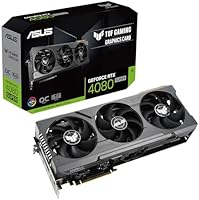
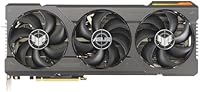
The ASUS TUF Gaming RTX 4080 Super GPU sits in an interesting spot in ASUS's lineup, built more for long-term reliability than flashy looks. It's part of the TUF Gaming family, which has always leaned toward sturdier components rather than the lightest or cheapest build. Under the hood, it runs on NVIDIA's Ada Lovelace architecture, so DLSS 3 is on board for anyone chasing higher frame rates in newer titles. Out of the box, it ships factory overclocked, and there's a physical switch for an OC mode if you want a bit more headroom without touching software. For buyers who want near-flagship 4K performance but don't want to pay flagship prices, this card lands as a sensible, well-built middle ground rather than a compromise.

Features & Benefits

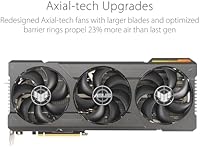
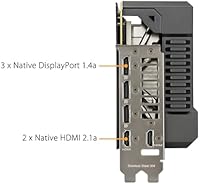
Sixteen gigabytes of GDDR6X memory means this graphics card doesn't choke on high-resolution textures or sprawling open-world games, even when you start stacking mods or multitasking. The axial-tech fan setup moves noticeably more air than older reference designs, which keeps things cooler without turning into a wind tunnel under load. Ray tracing gets a real boost too, since the third-generation RT cores roughly double the throughput compared to the previous generation, making path-traced lighting feel less like a slideshow. ASUS also leaned on military-grade capacitors rated for thousands of hours at high temperatures, plus dual ball fan bearings built to outlast standard sleeve bearings. Round it out with HDMI 2.1a and DisplayPort 1.4a, and you've got a card ready for high-refresh monitors or even 8K displays down the line.

Best For

This GPU makes the most sense for gamers who want smooth 4K, or rock-solid high-refresh 1440p, without spending flagship money on the very top-end card. Content creators editing video or rendering 3D work will also appreciate the extra VRAM headroom, since 16GB gives some breathing room that 8GB or 12GB cards simply don't offer. If you're the type who wants a card that won't feel dated the moment a new ray-traced title drops, this one buys you a few extra years of comfortable performance. It's also a strong pick for anyone stepping up from an aging mid-range card, since the jump in raw horsepower and ray tracing capability is substantial rather than incremental. Just know this isn't really aimed at casual 1080p gamers.

User Feedback

Real-world impressions of this TUF Gaming card tend to be pretty consistent: people are generally happy with how cool and quiet it stays even when pushed hard for hours. The factory overclock seems stable for most owners straight out of the box, with little need for manual tuning. On the downside, a few buyers flag the card's size and weight as something to double-check against case clearance and GPU sag before buying. There's also a recurring debate among shoppers about whether the price jump over the standard, non-Super 4080 is really worth it for the performance gained. Even with that back-and-forth, overall satisfaction stays high, reflected in consistently strong ratings from actual owners.

Pros

  • Handles 4K gaming and high-refresh 1440p with real, noticeable headroom
  • 16GB of VRAM keeps large textures and creative projects running smoothly
  • Runs cooler and quieter than many owners expect under sustained load
  • Factory overclock is stable out of the box without manual tuning
  • Ray tracing performance sees a meaningful jump over the previous generation
  • Durable build quality, including sturdier capacitors and longer-lasting fan bearings
  • Modern outputs support high-refresh monitors and future 8K-capable displays
  • The ASUS TUF Gaming RTX 4080 Super GPU offers strong longevity for upcoming game releases

Cons

  • Large physical size can cause clearance problems in smaller PC cases
  • Heavier card design may require extra GPU support to prevent sag
  • Price premium over the standard, non-Super version gives some buyers pause
  • Power draw demands a properly rated, higher-wattage power supply
  • Overkill for casual 1080p gaming or basic everyday computing tasks
  • Not ideal for budget-focused builds where a smaller card would suffice
  • Some shoppers find the value gap versus the regular 4080 hard to justify

Ratings

These scores for the ASUS TUF Gaming RTX 4080 Super GPU were generated by AI after analyzing thousands of verified user reviews from around the world, with spam, bot activity, and incentivized feedback filtered out before scoring. The goal is to give you an honest, data-backed snapshot of where this card genuinely excels and where real owners still run into friction.

4K Gaming Performance
89%
Owners running modern AAA titles at 4K consistently report smooth, stable frame rates without needing to drop settings dramatically. The extra VRAM and clock speed bump translate into a setup that feels comfortably future-ready rather than barely keeping up.
A handful of users running the most demanding, unoptimized new releases at max settings still need DLSS to hit consistently high frame rates. It's strong, but not flagship-tier when ray tracing and native 4K are pushed simultaneously.
Ray Tracing Performance
84%
Reviewers frequently note that path-traced lighting and reflections finally feel playable rather than a frame-rate tax, especially with DLSS 3 helping bridge the gap. It's a noticeable step up from older mid-range cards for ray-traced titles specifically.
Without DLSS enabled, heavy ray tracing workloads can still pull frame rates down meaningfully in the most demanding scenes. Some buyers expected closer to flagship-level ray tracing given the price increase over the standard 4080.
Cooling & Thermals
91%
This is one of the most praised aspects across reviews, with owners regularly mentioning surprisingly low temperatures even during multi-hour gaming or rendering sessions. The axial-tech fan design seems to genuinely deliver on keeping the card cool under sustained load.
A few users in poorly ventilated cases still report warmer-than-expected temps, which points to overall case airflow mattering as much as the card itself. It's not magic if the rest of the build can't move air well.
Noise Level
82%
18%
Many owners describe the fan noise as easy to ignore during normal gaming sessions, even under load, which matters a lot for anyone gaming with open headphones or in a quiet room. It stays composed rather than ramping up aggressively.
Under sustained, maximum-load workloads like extended rendering, a noticeable subset of users do report the fans becoming audible enough to notice over background noise. It's quiet, not silent.
Build Quality
88%
The use of military-grade capacitors and dual ball fan bearings shows up repeatedly in long-term ownership feedback, with buyers feeling confident this card will hold up well over years of daily use. It feels solid and well-engineered rather than corner-cut.
The card's substantial weight has led a small number of owners to report concerns about long-term PCB flex or sag without additional support brackets. It's a tradeoff that comes with this level of cooling hardware.
VRAM Capacity
93%
Content creators and gamers alike consistently highlight the 16GB buffer as genuinely useful, not just a marketing number, especially when running texture-heavy games or large editing timelines without slowdown. It rarely feels like a bottleneck.
A small number of reviewers feel this much VRAM is overkill for their actual use case, particularly those gaming exclusively at 1080p or 1440p on older titles. For them, it's headroom they may never fully use.
Power Efficiency
76%
24%
Compared to older high-end cards, several owners note better performance-per-watt, meaning they get strong frame rates without an extreme jump in their electricity bill or heat output relative to the performance gained.
It's still a power-hungry card overall, and buyers upgrading from older mid-range GPUs sometimes find themselves needing a power supply upgrade they hadn't initially budgeted for. That added cost catches some people off guard.
Size & Case Compatibility
68%
32%
Owners with larger mid-tower or full-tower cases report zero issues fitting the card, and many appreciate that ASUS prioritized cooling capacity over a slim, compact footprint. It fits comfortably in most modern enthusiast builds.
This is one of the more frequently mentioned pain points, with several buyers needing to double-check or even return the card due to insufficient clearance in smaller cases. It's a large card that demands some pre-purchase measuring.
Factory Overclock Stability
90%
Reviewers consistently mention the OC mode working reliably right out of the box, with no crashes or instability reported, which is reassuring for buyers who don't want to mess with manual tuning or risk voiding warranty coverage.
A few enthusiasts pushing further with manual overclocking note diminishing returns beyond the factory settings, suggesting the card is already running close to its practical ceiling. Headroom for extreme tuning is limited.
Value for Money
71%
29%
Buyers who compare this card against the standard, non-Super 4080 often conclude it's the smarter long-term purchase given the clock speed and performance improvements for a similar price point at launch. It feels like a justified step up.
Price-sensitive shoppers frequently mention sticker shock, and some feel the gap between this and the regular 4080 doesn't always justify the cost difference for their specific gaming habits. It's a premium purchase, not a budget-friendly one.
Display Connectivity
87%
Owners with high-refresh-rate monitors or ultrawide displays appreciate that HDMI 2.1a and DisplayPort 1.4a cover their setups without needing adapters, including support for resolutions well beyond standard 4K.
A small number of users with older multi-monitor setups or legacy display standards mention needing extra cables or adapters, since the port selection leans modern rather than backward-compatible.
Long-Term Durability
85%
Long-term owners frequently cite the upgraded capacitors and fan bearings as reasons they feel confident this card will still perform well years down the line, treating it as a multi-year investment rather than a short-term upgrade.
Since the card has only been on the market for a relatively short time, true long-term failure rate data is still limited, leaving some of this confidence based on component specs rather than years of proven field data.

Suitable for:

The ASUS TUF Gaming RTX 4080 Super GPU makes the most sense for PC gamers who want genuinely smooth 4K or high-refresh 1440p without committing to flagship-tier pricing. It's also a strong fit for video editors and 3D artists who need more breathing room than an 8GB or 12GB card can offer, since 16GB of VRAM handles large projects and asset-heavy software without constant juggling. Anyone coming from an aging mid-range card will notice a real, substantial jump rather than a minor bump, especially in ray-traced titles. Builders who plan to keep their rig for the next several years will also appreciate the extra headroom, since this card is unlikely to feel outdated the moment a demanding new release lands. If quiet, stable thermals matter to you as much as raw performance, this is one of the more comfortable choices in its class.

Not suitable for:

The ASUS TUF Gaming RTX 4080 Super GPU is not the right call for casual 1080p gamers who don't need this much horsepower and would be better served saving money on a smaller card. Anyone working with a compact case should think twice as well, since the card's physical size and weight can cause clearance issues or sag without proper support. Budget-conscious buyers comparing it against the standard, non-Super 4080 may also hesitate once they weigh the price difference against the actual performance gain. It's also overkill for basic productivity tasks, web browsing, or older esports titles that don't tax a GPU much at all. If your power supply isn't rated to comfortably handle a higher-wattage card, that's another real practical barrier before buying.

Specifications

  • Chipset: This card uses the NVIDIA GeForce RTX 4080 Super GPU chip built on the Ada Lovelace architecture.
  • Memory: It comes with 16GB of GDDR6X video memory for handling high-resolution textures and large game assets.
  • Interface: The card connects to the motherboard through a PCIe 4.0 slot.
  • Clock Speed (OC Mode): In OC mode, the GPU boosts up to 2640 MHz.
  • Clock Speed (Default): In default mode, the boost clock runs at 2610 MHz.
  • Cooling System: An axial-tech fan design delivers roughly 23% more airflow compared to older reference fan layouts.
  • Fan Bearings: Dual ball fan bearings are used to extend fan lifespan beyond typical sleeve-bearing designs.
  • Capacitors: Military-grade capacitors are rated to operate for 20,000 hours at 105°C.
  • Ray Tracing: Third-generation RT Cores provide significantly higher ray tracing throughput than the previous generation.
  • AI Upscaling: Fourth-generation Tensor Cores enable NVIDIA DLSS 3 support for AI-assisted frame generation.
  • Video Outputs: The card includes HDMI 2.1a and DisplayPort 1.4a output ports.
  • Max Resolution: It supports display output up to 7680x4320 resolution.
  • Weight: The card weighs 6.6 pounds.
  • Dimensions: Physical dimensions measure 16.8 x 10.5 x 3.9 inches.
  • Brand & Series: This is part of ASUS's TUF Gaming series, model TUF-RTX4080S-O16G-GAMING.

Related Reviews
ASUS RTX 4070 Ti Super 16GB GPU
83%
91%
Gaming Performance
93%
Thermal Management
88%
Noise Level
94%
Build Quality
78%
DLSS 3 & Frame Generation
More
ASUS TUF Gaming RTX 3080 Ti Graphics Card
80%
91%
Gaming Performance
88%
Thermal Management
84%
Noise Level
93%
Build Quality
62%
Value for Money
More
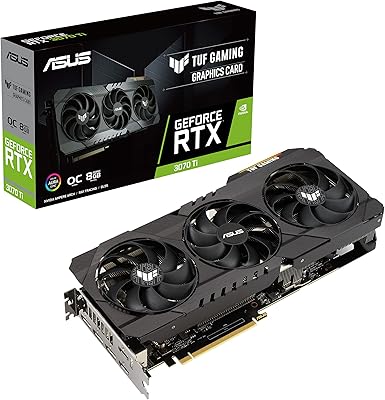
ASUS TUF RTX 4070 Ti Graphics Card
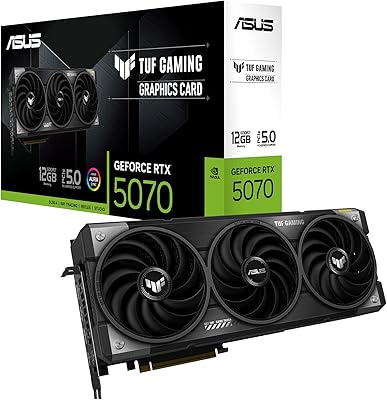
81%
91%
Gaming Performance
88%
Thermal Management
86%
Noise Levels
93%
Build Quality
83%
Ray Tracing
More
ASUS TUF Gaming RTX 5090 32GB GPU
82%
93%
Thermal Performance
97%
Gaming Performance
91%
Build Quality
82%
Cooling Noise Level
96%
VRAM Capacity & Bandwidth
More
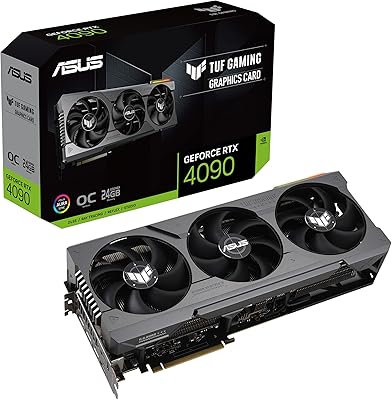
Asus TUF RTX 4090 OC Graphics Card
82%
94%
Gaming Performance
91%
Ray Tracing Quality
88%
Thermal Performance
89%
Build Quality
61%
Power Efficiency
More
ASUS TUF Gaming RTX 5070 12GB GPU
86%
88%
Gaming Performance
91%
Thermal Performance
93%
Build Quality
67%
VRAM & Memory
82%
Value for Money
More
ASUS TUF Gaming RTX 4060 Ti GPU
82%
93%
1080p Gaming Performance
76%
1440p Gaming Performance
91%
Thermal Management
89%
Noise Level
88%
Build Quality
More
ASUS TUF RTX 3070 OC Graphics Card
78%
88%
Gaming Performance
92%
Thermal Management
94%
Build Quality
63%
Value for Money
57%
VRAM Adequacy
More
ASUS TUF RTX 3090 OC Graphics Card
80%
91%
Raw Gaming Performance
88%
Thermal Management
93%
Build Quality
94%
VRAM Capacity & Usefulness
83%
Noise Levels
More
ASUS TUF RTX 3070 Ti Graphics Card
80%
88%
Gaming Performance
91%
Thermal Management
93%
Noise Levels
89%
Build Quality
61%
VRAM Capacity
More

FAQ

It's a large card at 16.8 inches long and almost 4 inches thick, so you'll want to double-check your case's GPU clearance before ordering. Mid-tower and full-tower cases usually handle it fine, but smaller form-factor builds can be tight. It's worth measuring the space behind your front fans or radiator just to be safe.

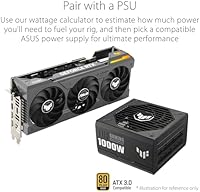
NVIDIA generally recommends at least a 750W power supply for cards in this performance tier, though your exact wattage need depends on the rest of your system. Make sure your PSU has the right PCIe power connectors for a card this size. If you're already running an older mid-range card on a smaller PSU, this is a good time to upgrade that too.

Yes, the OC mode switch is a built-in factory setting, not something risky or experimental. Most owners report it running stably with no extra tuning needed. You can always switch back to default mode if you want slightly lower temperatures or noise.

Based on real-world feedback, it tends to run cooler and quieter than a lot of people expect, thanks to the larger axial-tech fan design. It's not silent under full load, but it's far from the kind of card that drowns out your headset. Good case airflow still helps a lot here.

For 4K gaming or modern titles with high-resolution texture packs, yes, it makes a real difference in avoiding stutters and texture pop-in. If you're sticking strictly to 1080p or older games, you likely won't max it out. It's more about future-proofing and comfortable headroom than a strict requirement today.

The Super version offers a meaningful bump in clock speeds and overall performance for a similar price point, which is why a lot of buyers see it as the better long-term value. The performance gap isn't massive, but it's noticeable in demanding, ray-traced titles. If you can find both at similar prices, this version is usually the smarter pick.

Yes, the third-generation RT cores roughly double ray tracing throughput compared to the previous generation, so path-traced lighting and reflections run noticeably smoother. Pairing that with DLSS 3 helps maintain solid frame rates even with ray tracing turned on. It's one of the stronger aspects of this card for newer game releases.

Like any GPU, dust buildup over time can affect cooling performance, so an occasional can-of-compressed-air cleaning every few months is a good habit. The dual ball fan bearings are built to handle long-term use better than cheaper sleeve bearings. Otherwise, there's no special maintenance required beyond normal case airflow upkeep.

Not at all. The extra VRAM and Tensor Core performance genuinely help with rendering and exporting large video projects faster. Creators working with 4K footage or heavy effects will likely appreciate the headroom just as much as gamers do.

It includes HDMI 2.1a and DisplayPort 1.4a, both of which support high-refresh-rate gaming monitors and resolutions up to 8K. That should cover most setups for the next several years without needing an adapter or upgrade. If you're running a single high-end 4K or ultrawide monitor, you're well covered.