Overview

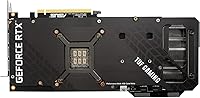
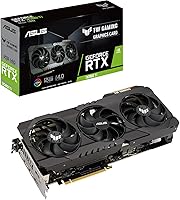
The ASUS TUF Gaming RTX 3080 Ti Graphics Card is ASUS's durability-focused take on NVIDIA's high-end Ampere silicon, built for buyers who want serious performance without compromising on longevity. Sitting firmly in the premium GPU tier, this TUF 3080 Ti competes directly with flagship offerings from MSI, Gigabyte, and Zotac. The military-grade certification is not just a marketing badge — it means board components have been tested against temperature extremes, humidity, and vibration cycles. The 12GB of GDDR6X memory keeps demanding titles and creative workloads from hitting a hard ceiling sooner than they should. Make no mistake: this is a high-investment card aimed squarely at serious enthusiasts.
Features & Benefits

The Ampere architecture inside the ASUS TUF card effectively doubles FP32 throughput compared to the previous Turing generation — a difference you actually feel in frame rates, not just on paper. Second-generation RT Cores keep ray tracing performance usable rather than decorative, and third-generation Tensor Cores power DLSS upscaling that recovers lost frames without an obvious visual penalty. The triple-fan Axial-tech cooler uses a reversed central fan direction to reduce air turbulence across the heatsink, and dual ball fan bearings give the cooler a significantly longer service life than sleeve-bearing alternatives. PCIe 4.0, HDMI 2.1, and DisplayPort 1.4a cover current and near-future display needs, while GPU Tweak II lets you adjust fan curves and clocks without third-party tools.

Best For

This high-end GPU is best matched to builders targeting high-refresh 1440p gaming or consistent 4K output in demanding titles. The generous VRAM buffer also makes it a capable companion for video editors, 3D artists, and machine learning hobbyists who can put Tensor Core acceleration to practical use. Reliability-focused enthusiasts planning a four-to-five-year build cycle will find the construction reassuring. One thing worth flagging early: the card draws substantial power, and a 750W or stronger PSU is the realistic minimum — not a suggestion. Those stepping up from a GTX 1080 or RTX 2080 will notice a sharp, across-the-board improvement that makes the upgrade feel worthwhile.

User Feedback

Across roughly 84 ratings, the ASUS TUF card holds a 4.2-star average — a score that points to broad satisfaction rather than polarized opinions. Buyers consistently highlight thermal performance under sustained gaming loads, noting the fans stay quieter than expected at typical operating temperatures. Long-term owners report no meaningful degradation after extended use, which adds some real credibility to the durability claims. On the other side, a handful of reviewers flag the card's physical length and weight as a genuine challenge in compact cases. A few also question whether the value holds against newer GPU generations now on the market. Feedback on GPU Tweak II is mixed but workable, with some users preferring alternative monitoring software.

Pros

  • Handles demanding 4K gaming with comfortable frame rate headroom in most modern titles.
  • 12GB of GDDR6X memory future-proofs the card for increasingly VRAM-hungry games and creative software.
  • Military-grade component certification gives genuine confidence in long-term hardware reliability.
  • Thermal performance under sustained load consistently impresses, with temperatures staying well-controlled.
  • Fan noise remains lower than expected even during extended, demanding gaming sessions.
  • DLSS support delivers a meaningful performance boost with minimal visual quality trade-off.
  • PCIe 4.0 and HDMI 2.1 ensure the card stays relevant as displays and platforms advance.
  • Dual ball fan bearings extend cooler lifespan well beyond typical sleeve-bearing designs.
  • GPU Tweak II provides solid manual tuning and monitoring without requiring third-party software.
  • Owners upgrading from older Pascal or Turing cards report an immediately impactful performance jump.

Cons

  • At nearly 12 inches long, the card physically cannot fit in many mid-tower and compact cases.
  • High power draw under load demands a robust power supply — budget builds often fall short here.
  • The card's weight puts real stress on the PCIe slot without a GPU support bracket in place.
  • Newer GPU generations have since launched, making the price-per-performance calculation less straightforward.
  • GPU Tweak II software receives mixed reviews, with some users finding the interface clunky.
  • The card runs hot in poorly ventilated cases, so chassis airflow is not optional — it is mandatory.
  • Resale value has softened noticeably as the GPU market has shifted toward newer architectures.
  • Users in regions with limited ASUS service centers may face frustrating warranty claim experiences.

Ratings

The scores below reflect AI-assisted analysis of verified global buyer reviews for the ASUS TUF Gaming RTX 3080 Ti Graphics Card, with spam, incentivized submissions, and bot activity actively filtered out before any scoring was applied. Each category captures both what real owners genuinely appreciate and where frustrations have emerged over time. Nothing has been smoothed over — the pain points are scored just as transparently as the strengths.

Gaming Performance
91%
Owners consistently report that this TUF 3080 Ti handles demanding AAA titles at 4K with frame rates that feel smooth rather than marginal. High-refresh 1440p gaming in particular leaves nearly all headroom to spare, and users note that even two to three years into ownership the card has not become a bottleneck in their setups.
A handful of users running heavily ray-traced titles at native 4K without DLSS report that frame rates dip below their target thresholds, requiring some settings compromises. The performance gap versus newer-generation cards has also widened since launch, which matters if you are comparing options today rather than at the original release date.
Thermal Management
88%
The Axial-tech triple-fan cooler keeps junction temperatures well within safe operating ranges during extended gaming sessions, which real users describe as genuinely impressive for a card drawing this much power. Several long-term owners note that thermal performance has remained consistent after years of use, with no sign of degradation in cooling efficiency.
In poorly ventilated cases or compact enclosures without adequate airflow, temperatures climb noticeably and the fans respond by ramping up more aggressively. A few users in warmer climates report that ambient room temperature has a disproportionate effect on GPU temps with this card compared to their previous builds.
Noise Level
84%
Most buyers are pleasantly surprised by how quiet the ASUS TUF card stays during typical gaming workloads — the fans are rarely audible over headphones at standard desktop distances. The reversed central fan design appears to make a practical difference in reducing the coil whine and turbulence noise that some competing cooler designs produce.
Under sustained full-load conditions — extended benchmark runs or long rendering jobs — the fans do spin up to speeds where they become clearly audible in a quiet room. This is a minor issue for gamers who use headsets, but content creators running the GPU at full utilization for hours at a time may find the noise level less acceptable.
Build Quality
93%
The military-grade component certification translates into a card that feels meaningfully more robust than average AIB designs, and long-term owners consistently report that the hardware holds up without any sign of component failure or physical degradation. The reinforced frame and premium capacitors give the card a solidity that is immediately noticeable when handling it.
The card is heavy enough that without a GPU support bracket, noticeable slot sag develops over time in vertical-mounted builds — ASUS does not include a brace in the box. A small number of buyers have also noted that the backplate, while solid, picks up minor cosmetic scratches during installation in tight cases.
Value for Money
62%
38%
At reduced market prices compared to its original launch, this high-end GPU offers a compelling performance-per-dollar argument for buyers who specifically need a proven, reliable 4K-capable card without paying current-generation premiums. Owners who purchased it during price dips report feeling satisfied with what they received relative to what they spent.
At or near its standard asking price, the value case becomes genuinely difficult to make when newer GPU architectures are available at similar or only slightly higher price points. Several reviewers who purchased near launch feel the generational progression has made the pricing harder to justify retrospectively, and this sentiment drives a meaningful portion of the lower ratings in the pool.
Driver & Software Stability
74%
26%
The card benefits from NVIDIA's broadly stable driver ecosystem, and most users report a trouble-free experience once initial drivers are installed. For those who stick with Windows and mainstream game titles, driver-related issues are rarely raised as a concern in long-term ownership feedback.
GPU Tweak II, ASUS's bundled tuning software, draws consistent criticism for feeling outdated and occasionally unreliable compared to third-party alternatives like MSI Afterburner. A subset of users report that GPU Tweak II failed to apply fan curve settings correctly after system restarts, forcing them to abandon it entirely.
Installation Experience
79%
21%
Owners with mid-tower or full-tower ATX builds generally describe installation as straightforward, noting the card slots in and is recognized immediately without any unusual driver behavior. The standard dual 8-pin power connector configuration is familiar to anyone who has built a high-end PC in the past several years.
The card's physical length and weight make installation in tighter cases a two-person job in some builds, and several buyers report scraping adjacent components during fitting. Users who did not verify GPU clearance beforehand — a surprisingly common oversight — found themselves needing to return the card or replace their case entirely.
Cooling Longevity
86%
The dual ball fan bearing design delivers on its durability promise according to multi-year owners, with fans remaining quiet and effective well past the warranty period in most reported cases. This is one of the more credible long-term advantages the TUF line holds over AIB cards using sleeve bearings.
There is limited long-term data beyond two to three years of real-world use in the current review pool, making definitive five-year durability claims harder to fully verify. A small number of users report bearing noise developing in one fan after extended use, though this appears to be an outlier rather than a systemic issue.
4K & High-Res Display Support
89%
HDMI 2.1 and DisplayPort 1.4a outputs give this card genuine compatibility with 4K 144Hz monitors and even 8K displays, which users who have upgraded their panels since purchase particularly appreciate. The output flexibility means the card does not become a display bottleneck even as monitor technology advances.
Driving three or four 4K monitors simultaneously at high refresh rates pushes the card's limits more than single-display gaming does, and frame rates in demanding multi-monitor game setups are noticeably lower than on a single panel. Users expecting full 8K gaming performance without resolution scaling will find it underwhelming.
Ray Tracing Performance
77%
23%
Second-generation RT Cores make ray tracing a genuinely usable feature rather than a toggle that tanks performance into unplayable territory, and DLSS Quality mode effectively recovers most of the lost frames in supported titles. Owners who game in titles like Cyberpunk 2077 or Control specifically call out ray tracing quality as a highlight.
Native 4K with full ray tracing and no upscaling remains a stretch for this card in the most demanding titles, requiring a drop to 1440p or reliance on DLSS to maintain acceptable frame rates. Buyers expecting ultra-setting, native-resolution ray tracing across all titles will run into disappointment in a meaningful portion of their library.
DLSS & AI Upscaling
87%
Third-generation Tensor Cores handle DLSS 2.x upscaling with results that most users describe as visually acceptable or better at Quality and Balanced modes, turning what would be marginal 4K performance into a smooth experience. This is one area where the generational upgrade from older NVIDIA cards delivers a perceptible quality difference.
DLSS 3 with Frame Generation is not supported on this card, as that feature is exclusive to the RTX 40-series architecture — a limitation that is becoming increasingly relevant as more game developers adopt it. Buyers aware of DLSS 3 from marketing material sometimes discover this incompatibility only after purchase.
Power Efficiency
58%
42%
For the raw performance delivered, power draw is not unusual relative to the competitive landscape at the time of launch, and owners who planned their builds with adequate PSU headroom report no stability issues whatsoever. The card does its job without throttling when power delivery is correctly provisioned.
The card is genuinely power-hungry by any standard, and real-world draw under sustained gaming load regularly exceeds 350W — a figure that catches underprepared builders off guard. Buyers who ran this card on a 650W supply without checking their full system power budget reported instability or outright shutdown under load, which is among the more avoidable negative experiences in the review pool.
Case Compatibility
61%
39%
For anyone building in a standard full-size ATX tower, the card fits without any meaningful challenges, and the vast majority of mainstream gaming case designs accommodate its dimensions without modification. Builders who verify clearance specs in advance report zero compatibility issues.
At nearly 12 inches long and over four pounds, this high-end GPU is simply incompatible with a wide range of popular compact mid-towers and any mini-ITX or micro-ATX small-form-factor case. This is one of the most frequently mentioned buyer regrets in negative reviews, and it is an issue that is entirely avoidable with basic pre-purchase research.
Long-Term Reliability
88%
Multi-year owners report that the card continues to perform as expected without any degradation in frame rates, thermal behavior, or hardware stability, lending real credibility to the TUF line's durability positioning. The military-grade certification appears to translate into an above-average hardware lifespan based on actual owner experience.
The review pool skews toward buyers within the first two years of ownership, so data on five-year-plus reliability remains thin. A very small number of DOA (dead on arrival) reports exist in the feedback, though these appear isolated rather than indicative of a manufacturing quality pattern.

Suitable for:

The ASUS TUF Gaming RTX 3080 Ti Graphics Card is a strong match for PC enthusiasts who are building a high-performance rig intended to last several years without needing another GPU upgrade. Gamers targeting consistent 4K frame rates or high-refresh 1440p play in visually demanding titles will find this TUF 3080 Ti has the headroom to handle both today and the near future comfortably. The 12GB of fast GDDR6X memory makes it equally appealing to content creators working in video editing, 3D rendering, or any application that benefits from GPU-accelerated compute. Buyers who care deeply about build quality and long-term reliability will appreciate the military-grade component certification, which goes beyond cosmetic branding. Anyone upgrading from a GTX 1080, RTX 2070, or similar vintage card will experience a dramatic and immediately noticeable performance improvement across virtually every workload.

Not suitable for:

The ASUS TUF Gaming RTX 3080 Ti Graphics Card is a harder sell for buyers working within a tight budget or those who primarily game at 1080p, where the performance on offer is simply more than the resolution demands. At nearly 12 inches long and over four pounds, this high-end GPU requires a full-size ATX case with adequate clearance — compact or mini-ITX builds are largely incompatible. The card also draws significant power under load, meaning anything below a 750W power supply is a genuine risk, not just a soft recommendation. Casual gamers who play lighter titles or spend most of their time in esports games at modest resolutions will find the cost hard to justify against more affordable alternatives. Buyers already running a current-generation Ada Lovelace or RDNA 3 GPU should also look elsewhere, as a lateral move at this price point rarely makes practical sense.
Specifications

  • GPU Model: The card is powered by the NVIDIA GeForce RTX 3080 Ti processor, built on the Ampere architecture.
  • VRAM: 12GB of GDDR6X memory provides substantial headroom for 4K gaming textures and GPU-accelerated creative workloads.
  • Memory Speed: The onboard memory operates at 1695 MHz, delivering fast data throughput for both rendering and compute tasks.
  • Interface: PCIe 4.0 connectivity ensures the card is compatible with current and near-future motherboard platforms without bandwidth bottlenecks.
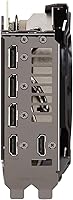
  • Display Outputs: The card offers one HDMI 2.1 port and three DisplayPort 1.4a ports to support multi-monitor and high-refresh setups.
  • Max Resolution: Output resolution support extends to 7680x4320 (8K), covering the full range of current consumer display standards.
  • RT Cores: Second-generation RT Cores handle real-time ray tracing calculations at roughly twice the throughput of the first-generation design.
  • Tensor Cores: Third-generation Tensor Cores power DLSS upscaling and AI-driven features, improving frame rates without proportional quality loss.
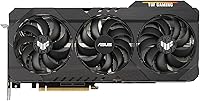
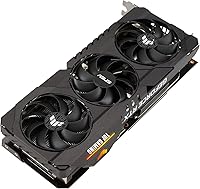
  • Cooling System: A triple-fan Axial-tech cooler with a reversed central fan direction reduces air turbulence across the heatsink surface.
  • Fan Bearings: Dual ball fan bearings are used across all three fans, extending operational lifespan compared to standard sleeve-bearing designs.
  • Certification: The board carries military-grade MIL-STD certification, meaning key components have been validated against temperature, humidity, and vibration stress.
  • Card Length: The card measures 11.81 inches in length, requiring a full-size ATX chassis with adequate GPU clearance.
  • Card Weight: At 4.18 pounds, the card is substantial enough to benefit from a PCIe slot support bracket in most builds.
  • Tuning Software: GPU Tweak II is included for fan curve adjustment, clock tuning, and real-time performance monitoring without third-party tools.
  • Brand and Series: Manufactured by ASUS under the TUF Gaming product line, which emphasizes component durability and long-term build reliability.
  • Model Number: The official model identifier is TUF-RTX3080TI-12G-GAMING, used for warranty registration and compatibility verification.
  • Power Supply: A minimum 750W power supply unit is strongly recommended to handle sustained load without risking system instability.
  • Architecture: The NVIDIA Ampere architecture delivers approximately double the FP32 compute throughput compared to the previous Turing generation.

Related Reviews

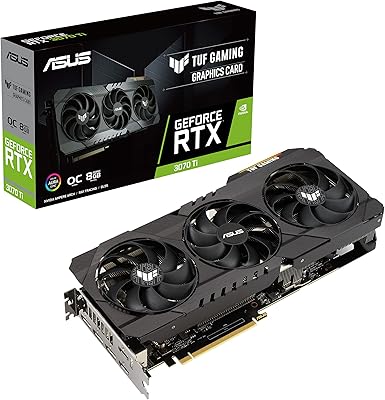
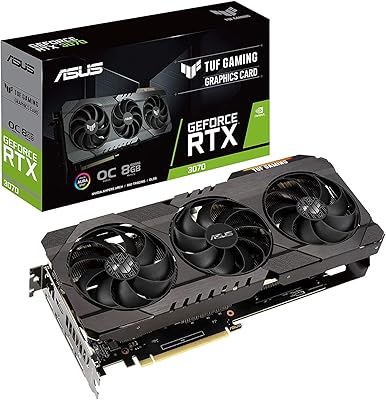
ASUS TUF Gaming NVIDIA GeForce RTX 3070 Ti OC Edition Graphics Card 8GB GDDR6X
87%
92%
Performance
88%
Cooling Efficiency
94%
Build Quality & Durability
90%
Value for Money
76%
Thermals (Under Load)
More
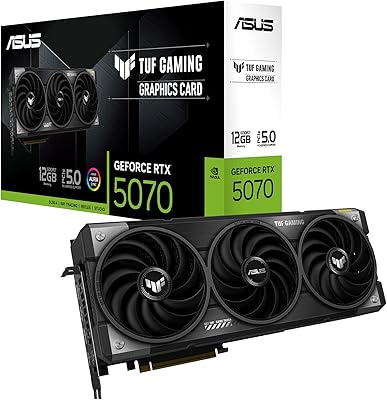
ASUS TUF Gaming GeForce RTX 5070 12GB GDDR7 Graphics Card
87%
94%
Gaming Performance
91%
Cooling Performance
88%
Noise Levels
93%
Build Quality & Durability
80%
Setup & Installation
More
ASUS TUF Gaming NVIDIA GeForce RTX 3070 OC Edition Graphics Card
88%
94%
Gaming Performance
92%
Cooling Efficiency
88%
Setup & Installation
91%
Build Quality & Durability
90%
Ray Tracing & DLSS
More
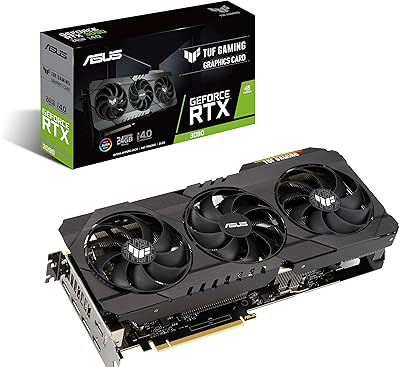
ASUS TUF RTX 3090 OC Graphics Card
80%
91%
Raw Gaming Performance
88%
Thermal Management
93%
Build Quality
94%
VRAM Capacity & Usefulness
83%
Noise Levels
More
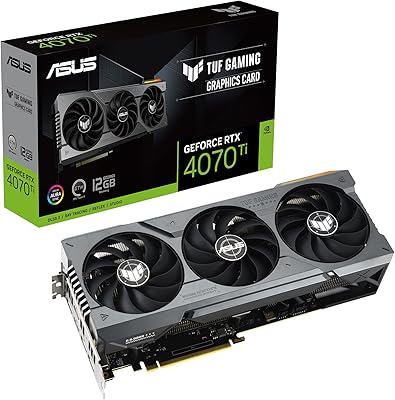
ASUS TUF Gaming GeForce RTX 4070 Ti 12GB
86%
95%
4K Gaming Performance
92%
Ray Tracing & DLSS 3 Support
88%
Cooling System
87%
Build Quality
73%
Size & Fit for PC Builds
More
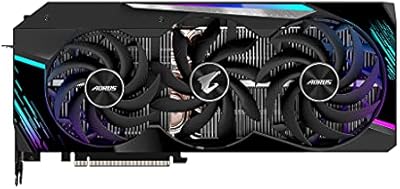
Gigabyte AORUS GeForce RTX 3080 Ti Master 12GB Graphics Card
88%
93%
Overall Performance
96%
4K Gaming Experience
91%
Ray Tracing Capabilities
88%
Cooling Efficiency
89%
Build Quality
More
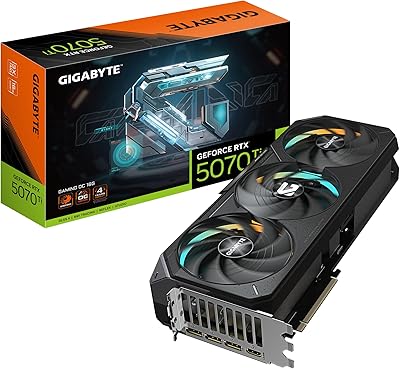
GIGABYTE GeForce RTX 5070 Ti Gaming OC 16G
86%
91%
4K Gaming Performance
89%
Ray Tracing & DLSS 4
93%
Cooling Efficiency
94%
VRAM & Memory Speed
87%
Acoustic Performance
More
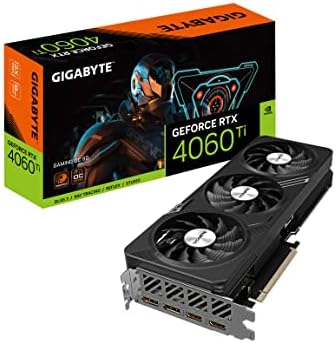
GIGABYTE GeForce RTX 4060 Ti Gaming OC 8GB Graphics Card
86%
92%
Performance
88%
Cooling Efficiency
89%
Value for Money
85%
Build Quality
91%
Ease of Setup
More
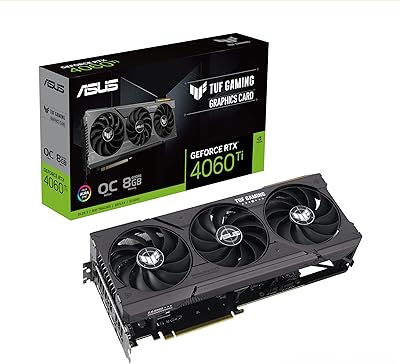
ASUS TUF Gaming GeForce RTX 4060 Ti OC Edition 8GB GDDR6
85%
92%
Performance
88%
Cooling Efficiency
91%
Value for Money
89%
Overclocking Capability
84%
Ray Tracing Quality
More
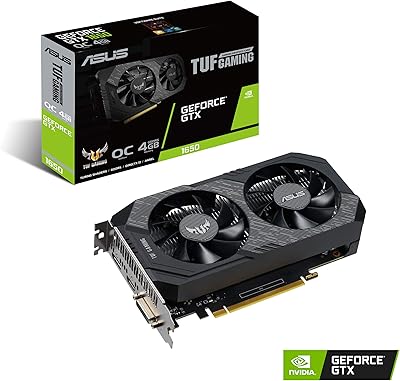
ASUS TUF Gaming GeForce GTX 1650 OC Edition 4GB Graphics Card
83%
86%
Performance at 1080p
90%
Cooling Efficiency
88%
Build Quality and Durability
84%
Noise Levels
92%
Ease of Installation
More

FAQ

A 750W unit is the realistic floor, but 850W gives you a comfortable margin if your CPU or other components draw meaningful power. Do not try to run this card on a 650W supply — under sustained gaming load, the system will likely become unstable or shut down unexpectedly.

It depends on the specific case. The card is just under 12 inches long, which fits most standard mid-tower and full-tower ATX enclosures, but some mid-towers have GPU length limits below that. Check your case specifications before ordering — it is one of the more common compatibility oversights with large cards like this.

Honestly, it depends on where prices land. The ASUS TUF Gaming RTX 3080 Ti Graphics Card is still a genuinely capable GPU for 4K gaming and creative work, but newer architectures from both NVIDIA and AMD have since launched. If you can find this card at a meaningfully reduced price compared to current-generation options, it can still represent solid value — just compare carefully before committing.
Yes, for most titles it handles 4K at high to ultra settings with strong frame rates. Very demanding games with ray tracing fully enabled may require some settings adjustments, but for general 4K gaming it sits comfortably in the capable tier.

Most owners describe the fan noise as lower than expected, even during extended gaming sessions. The Axial-tech design manages thermals efficiently enough that the fans rarely have to spin at their highest speeds in a well-ventilated case.

No. The card is backward compatible with PCIe 3.0 motherboards and will work fine in that configuration. You lose a small amount of theoretical bandwidth, but in practical gaming and creative workloads the real-world difference is negligible for most users.

The card has four display outputs — one HDMI 2.1 and three DisplayPort 1.4a — and can drive up to four monitors simultaneously. That covers most multi-monitor gaming and productivity setups without needing an adapter.

GPU Tweak II is optional. Many users skip it entirely and use MSI Afterburner or HWiNFO64 for monitoring and overclocking, both of which work perfectly well with this card. GPU Tweak II is there if you prefer staying within the ASUS ecosystem.

ASUS does not include a dedicated GPU support bracket in the standard retail box for this model. Given the card weighs over four pounds, picking up an inexpensive third-party GPU brace is a reasonable precaution, especially in horizontal or display-mounted builds.

The ROG Strix RTX 3080 Ti typically runs slightly cooler and quieter due to a larger cooler and higher-quality fan array, and it often comes with a more aggressive factory overclock. The TUF variant prioritizes durability and value within the premium tier rather than chasing peak cooling metrics — both use the same GPU die, so raw performance differences are minor.

Where to Buy