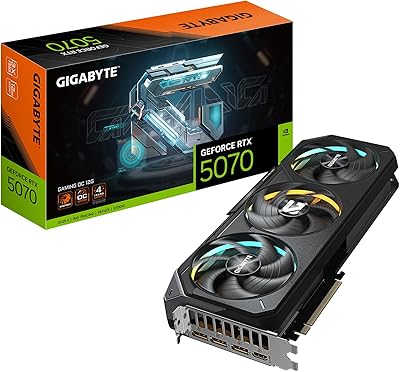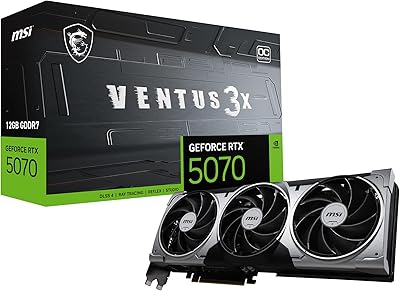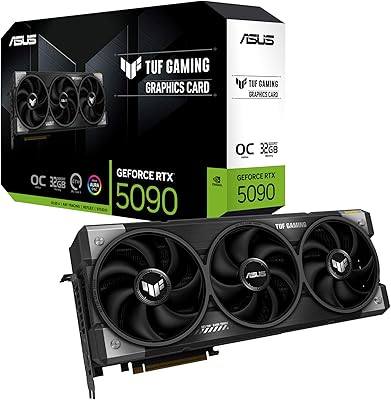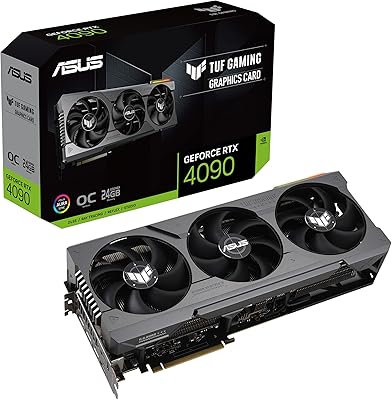



Overview

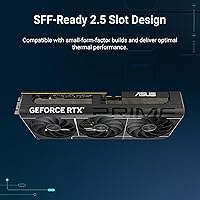
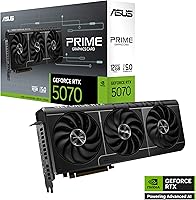
The ASUS TUF Gaming RTX 5070 12GB GPU sits in a competitive sweet spot, targeting builders who want Blackwell-generation performance without spending flagship money. Within ASUS's own lineup, TUF occupies the value-durability tier below ROG Strix, and against AIB rivals it holds its own through build quality rather than raw clock speed. Coming from an RTX 4070, the generational jump is genuine — Blackwell's architecture rethinks how frames are rendered and upscaled. The 2.5-slot design is also worth noting; it opens doors for small-form-factor builds that a triple-slot card would close. The 12GB GDDR7 frame buffer is fast, but at 4K ultra in VRAM-hungry titles, that ceiling is real and worth factoring into your buying decision.

Features & Benefits

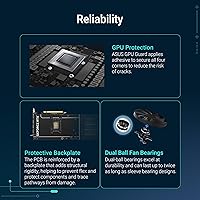
DLSS 4's Multi Frame Generation is the headline feature here, and in supported titles it genuinely transforms frame rates — particularly in fast-paced competitive and open-world games. Worth noting: older titles without DLSS integration see zero benefit, so check your library first. The Phase Change thermal pad is a meaningful upgrade over traditional compound; temperatures stay more stable under sustained load, and the material degrades far more slowly over years of use. Military-grade components and a protective PCB coating add real insurance against humidity and dust — not just marketing words for a card you plan to keep for several years. A GPU Guard bracket handles sag, and five display outputs cover everything from ultrawide triple-monitor rigs to 8K single-display setups.

Best For

This Blackwell-generation card is a natural fit for 1440p and 4K gamers who are still on a 30-series GPU and feel that itch for a meaningful upgrade — the performance, efficiency, and feature gap is large enough to justify the move. It is also well-suited to builders who treat reliability as a priority over peak overclocking margins; TUF's component spec is genuinely aimed at longevity, not benchmark bragging rights. The compact dimensions make it viable in tighter cases where most mid-range cards simply will not fit. Content creators using DaVinci Resolve or Premiere will benefit from Blackwell's AI acceleration, though gains vary by application. If you are upgrading from an RTX 3070 or 3080, the efficiency and feature improvements here are hard to ignore.

User Feedback

With a 4.7-out-of-5 rating across more than 200 verified buyers, the ASUS TUF 5070 earns consistent praise for quiet operation and thermals. Most users find installation straightforward — the GPU Guard bracket makes seating confident, and buyers appreciate not having to fuss with aftermarket anti-sag solutions. That said, a recurring complaint involves the PCIe 5.0 power connector placement, which can be awkward to route in compact cases. A handful of users running 4K ultra settings in titles like Cyberpunk 2077 at maximum ray tracing have bumped into the 12GB VRAM ceiling — not a frequent issue for most buyers, but worth knowing if your workload skews toward extremely VRAM-hungry scenarios. Overall, the feedback picture is genuinely positive and the criticisms are specific rather than fundamental.

Pros

  • Substantial performance and efficiency jump for anyone upgrading from an RTX 3070 or 3080.
  • DLSS 4 Multi Frame Generation delivers real frame rate gains in supported competitive and open-world titles.
  • The Phase Change thermal pad keeps temperatures more stable under sustained load than traditional compound.
  • Military-grade components and a moisture-resistant PCB coating back up the longevity claims with substance.
  • At 2.5 slots, this Blackwell-generation card fits compact and small-form-factor builds most AIB variants cannot.
  • Five display outputs, including three DisplayPort 2.1b ports, make multi-monitor and 8K setups genuinely practical.
  • The GPU Guard anti-sag bracket removes a real installation concern that heavier cards commonly cause.
  • Runs quietly under typical gaming loads — barely audible outside of full stress-test scenarios.
  • Strong real-world reliability track record for the TUF line, with minimal out-of-box quality complaints.

Cons

  • The 12GB VRAM ceiling is a genuine constraint in ray tracing-heavy titles at 4K ultra settings.
  • DLSS 4 Multi Frame Generation requires developer support — most of your existing game library may see no benefit.
  • PCIe 5.0 power connector placement can be awkward to route cleanly inside smaller or tighter cases.
  • Buyers upgrading from an RTX 4080 or higher will not find enough of a performance shift to justify the cost.
  • The TUF cooler prioritizes quiet longevity over peak overclocking headroom, which limits ceiling for enthusiast tuning.
  • At 3.37 pounds, the card is on the heavier end and may need additional sag support in looser PCIe slots.
  • No significant factory overclock compared to higher-tier AIB variants targeting maximum boost clock results.
  • Some users have flagged DLSS 4 frame pacing inconsistencies in highly dynamic or fast-motion scenes.

Ratings

Our AI-powered rating system analyzed verified buyer reviews of the ASUS TUF Gaming RTX 5070 12GB GPU from markets worldwide, actively filtering out incentivized, duplicate, and bot-generated submissions to reflect what genuine owners actually experienced over time. Scores capture both the card's standout strengths and its honest limitations — particularly around VRAM headroom, DLSS game compatibility, and installation nuances — so nothing is glossed over to inflate the overall picture. Whether you are comparing this against competing AIB options or deciding if the Blackwell generation justifies the upgrade cost, these scores are built to give you a transparent and grounded read.

Gaming Performance
88%
At 1440p, this Blackwell-generation card handles virtually every current title at maximum settings with meaningful headroom to spare, and the gap over the RTX 4070 is tangible in both frame rates and rendering efficiency. In fast-paced titles with DLSS 4 active, the experience moves from smooth to genuinely effortless.
At native 4K ultra with ray tracing fully engaged in the most demanding titles, performance is strong but not dominant — this is not an RTX 5080, and some scenes in heavily GPU-bound workloads will expose that ceiling. Buyers chasing no-compromise 4K at maximum settings across every title in their library should budget higher.
Thermal Performance
91%
Users running extended sessions report temperatures staying well within safe ranges even during multi-hour gaming marathons, a direct result of the Phase Change thermal pad holding up under sustained load far better than standard compound degrades over time. The triple-fan setup provides enough airflow that the card rarely needs to work hard to stay cool.
A subset of users in hot ambient environments or poorly ventilated cases reported higher-than-expected temperatures, suggesting the cooler's results are meaningfully tied to overall case airflow quality. In a sealed or dust-heavy environment, real-world thermals will not match those achieved inside a well-ventilated mid-tower.
Build Quality
93%
The military-grade component spec and moisture-resistant PCB coating are not just marketing claims — buyers who have owned previous TUF cards for years consistently report strong hardware reliability, and this Blackwell-generation card carries that reputation forward with a noticeably solid and dense feel straight out of the box.
A few buyers noted that the cooler shroud feels marginally less premium than the ROG Strix equivalent, with slight flex in the plastic trim during handling. It is not a structural issue, but those who weigh aesthetics and material feel equally alongside functional build integrity may notice the difference.
VRAM & Memory
67%
33%
The GDDR7 memory running at 2512 MHz is genuinely fast — in GPU-bound 1440p and standard 4K workloads, the bandwidth rarely becomes a bottleneck, and most buyers running typical game libraries at those resolutions report never encountering a performance wall directly traceable to memory capacity.
In VRAM-intensive scenarios — heavily modded open-world games, 4K with maximum ray tracing active, or newer texture-heavy releases — 12GB starts to feel constrained, and the memory pressure tends to appear as frame time spikes before raw FPS numbers drop visibly. This is the card's most honest long-term concern.
Value for Money
82%
18%
Relative to flagship RTX 5080 and 5090 pricing, this TUF RTX 5070 occupies a genuinely accessible tier that still delivers the full Blackwell architecture, DLSS 4 support, and a premium build specification. For buyers upgrading from 30-series cards, the performance-per-dollar argument is convincing and rarely contested.
At its pricing tier, the card competes with AIB alternatives offering comparable performance at different price-to-feature ratios, and some buyers feel the TUF premium over the reference Founders Edition is harder to justify if long-term durability features are not a specific priority. The value case is strong but not without challengers.
DLSS 4 & AI Features
84%
In titles that actively support Multi Frame Generation — particularly fast-paced shooters and graphically demanding open-world games — DLSS 4 delivers frame rate uplifts that feel tangible during actual play, not just on benchmark charts. Users frequently cite this as one of the most compelling reasons to step up to a Blackwell-generation card.
The core limitation is strict game support dependency — a large portion of installed libraries, especially older or indie titles, see zero benefit from DLSS 4. Some users have also noted occasional visual artifacts in fast-motion scenes under Multi Frame Generation, requiring per-title setting adjustments rather than a single set-and-forget configuration.
Noise Levels
87%
During standard gaming sessions at 1440p and 4K, the card operates quietly enough that most users report their case fans as the dominant noise source in the system. The triple-fan array is tuned to ramp gradually rather than aggressively, which makes long gaming sessions noticeably more comfortable aurally.
Under sustained full-load workloads such as extended 4K rendering jobs or GPU stress tests, the fans spin up to audible levels. Users in quiet home office setups who push the card hard for productivity work may find the noise ramp more intrusive than it is during typical gaming use.
Form Factor & Fit
89%
The 2.5-slot design with SSF certification makes the ASUS TUF 5070 a genuinely rare find for compact ITX and small mid-tower builders who want meaningful performance without sacrificing case compatibility. At just under 13 inches in length, it fits comfortably in builds that would reject a standard three-slot competitor.
While relatively compact for its performance class, the 2.5-slot width still excludes the most space-restricted mini-ITX cases on the market. A recurring installation note involves the PCIe 5.0 power connector exiting the card at an angle that demands more side-panel clearance than buyers in snug builds typically anticipate.
Installation Experience
83%
The GPU Guard bracket makes seating the card a noticeably more confident process than on cards without structural reinforcement — users consistently report not needing to reach back inside the case to recheck alignment or add aftermarket sag support after the initial install. The process is clean and self-contained.
PCIe 5.0 power connector routing drew the most frequent installation complaints, particularly in mid-towers with limited cable management space behind the motherboard tray. Users with modular PSUs relying on older adapter cables were especially affected, with some reporting connector flex that required careful routing to resolve without tension on the port.
Long-term Durability
94%
TUF's reliability track record across multiple GPU generations is well-established, and the combination of military-grade component selection, moisture-resistant PCB treatment, and Phase Change thermal interface signals a card engineered for years of consistent output rather than optimized purely for launch-window benchmark performance.
Long-term durability data specific to the Blackwell generation remains limited given the card's relatively recent release date, meaning scores here partly reflect the TUF line's historical record rather than direct multi-year evidence for this specific silicon and cooler pairing. Outcomes in persistently humid or dust-heavy environments may vary despite the PCB coating.
Display Connectivity
92%
Five outputs — three DisplayPort 2.1b and two HDMI 2.1b — cover virtually every monitor configuration a buyer in this tier would realistically run, from triple 1440p gaming arrays to a single 4K television over HDMI. The bandwidth headroom on DisplayPort 2.1b makes native 8K output practical without adapters.
The output layout does not include a USB-C or Thunderbolt video connection, which is a minor but real gap for users whose newer ultrawide or portable monitors ship with USB-C as the primary video input. It is an edge case, but one that catches some buyers off guard at this performance and price tier.
Power Efficiency
86%
Blackwell's architectural efficiency gains over Ampere are genuinely perceptible — users upgrading from RTX 3070 and 3080 cards report lower overall system power draw despite substantial performance increases, which translates to cooler running systems and quieter auxiliary fan behavior across long sessions.
The card still requires a well-specified power supply, and older 650W units or those with degraded capacitors may struggle under sustained peak load in systems with power-hungry processors. A small number of reported system instability cases were traced to PSU headroom rather than any defect in the card itself.
Driver & Software
76%
24%
For the majority of buyers, NVIDIA's driver stack has been stable and predictable, with DLSS 4 integration accessible through GeForce Experience or direct in-game menus without manual configuration. Competitive gaming users in particular cite consistent driver reliability across a wide range of titles as a genuine strength.
A recurring complaint involves NVIDIA software occasionally defaulting to suboptimal DLSS quality settings on first launch in certain titles, requiring manual correction. Early Blackwell driver releases also carried frame pacing quirks in specific DirectX 12 titles that were resolved in subsequent updates — checking driver version is advised before attributing issues to hardware.
Upgrade Value
85%
For 30-series owners, the step up to this TUF RTX 5070 covers every meaningful improvement: raw throughput, memory technology, display bandwidth, AI upscaling access, and power efficiency in a single generational move. The feature gap between Ampere and Blackwell is wide enough that upgrade regret is rare among this cohort of buyers.
For RTX 4070 owners, the calculus is tighter — the performance uplift is real but not transformative, and the financial case depends heavily on how central DLSS 4 game support is to their specific library. Anyone running a 4070 Ti Super or higher will find the argument for upgrading genuinely difficult to construct.

Suitable for:

The ASUS TUF Gaming RTX 5070 12GB GPU is the right call for PC builders who want a meaningful generational upgrade without committing to top-tier pricing. It hits the sweet spot for 1440p gaming and holds up well at 4K in most titles when DLSS 4 is in play, making it a strong pick for players who want high-fidelity visuals without chasing the absolute bleeding edge. Buyers upgrading from an RTX 3070 or 3080 will feel a genuine difference in efficiency, frame rates, and feature access — the gap here is wide enough to justify the investment. The 2.5-slot form factor makes this one of the more versatile RTX 5070 AIB options for compact or small-form-factor builds where a three-slot card simply will not fit. Content creators running AI-accelerated workflows in DaVinci Resolve or Adobe Premiere will also benefit, as Blackwell handles those workloads noticeably better than the previous generation. For builders who prioritize long-term hardware reliability over peak overclocking results, TUF's military-grade component spec and protective PCB coating offer genuine peace of mind.

Not suitable for:

The ASUS TUF Gaming RTX 5070 12GB GPU is harder to recommend if you are routinely pushing 4K ultra settings in the most VRAM-demanding titles available. Games with heavy ray tracing loads or high-resolution texture mods can brush against the 12GB frame buffer in ways that cause noticeable performance dips, and this constraint will only become more relevant as titles grow more demanding over the next few years. Buyers already running a high-end RTX 4080 or 4090 are unlikely to feel a performance delta meaningful enough to justify replacing their existing card. Hardcore overclockers chasing maximum sustained clock speeds will find the TUF tier limiting compared to the ROG Strix variant or other flagship AIB coolers tuned specifically for headroom over longevity. If your case has very restricted airflow or an unusually tight GPU bay, the PCIe 5.0 power connector routing may add installation friction that is worth researching carefully before committing to a purchase.

Specifications

  • GPU: The card is powered by the NVIDIA GeForce RTX 5070 chip, built on the Blackwell architecture.
  • VRAM: 12GB of GDDR7 memory delivers fast bandwidth for both gaming and AI-accelerated creative workloads.
  • Memory Speed: The GDDR7 frame buffer operates at 2512 MHz.
  • Interface: The card uses a PCIe 5.0 x16 interface and is backward-compatible with PCIe 4.0 and 3.0 motherboards.
  • Slot Width: The cooler assembly occupies 2.5 expansion slots, making it compatible with tighter chassis that a full three-slot card would not fit.
  • Display Outputs: Five video outputs are provided: three DisplayPort 2.1b and two HDMI 2.1b connectors.
  • Max Resolution: Maximum supported output resolution is 7680x4320 (8K) across compatible displays.
  • Cooling: Three axial-tech fans work alongside a solid fin heatsink arrangement to manage heat under sustained gaming sessions.
  • Thermal Pad: A Phase Change GPU thermal pad replaces traditional thermal compound between the die and heatsink for more stable long-term temperatures.
  • PCB Coating: The printed circuit board features a protective coating that guards against short circuits caused by moisture, dust, and dirt.
  • Anti-Sag: An integrated GPU Guard bracket reinforces the PCIe slot connection and resists downward sag from the card's weight.
  • Form Factor: The 2.5-slot design carries SSF (Super Small Form Factor) compatibility for use in compact and small-form-factor chassis.
  • Dimensions: The card measures 12.95 x 5.51 inches in length and width.
  • Weight: Total card weight including the cooler assembly and bracket is 3.37 pounds.
  • DLSS Support: DLSS 4 with Multi Frame Generation is supported, enabling AI-driven frame rate upscaling in titles with active DLSS 4 integration.

Related Reviews
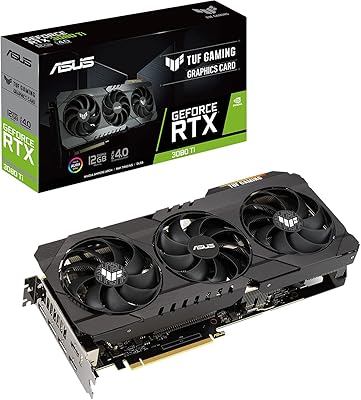
ASUS TUF Gaming RTX 3080 Ti Graphics Card
80%
91%
Gaming Performance
88%
Thermal Management
84%
Noise Level
93%
Build Quality
62%
Value for Money
More
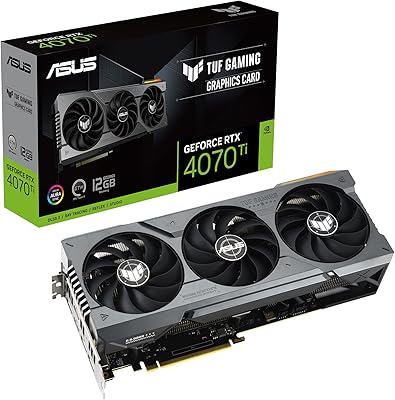
ASUS TUF RTX 4070 Ti Graphics Card
81%
91%
Gaming Performance
88%
Thermal Management
86%
Noise Levels
93%
Build Quality
83%
Ray Tracing
More
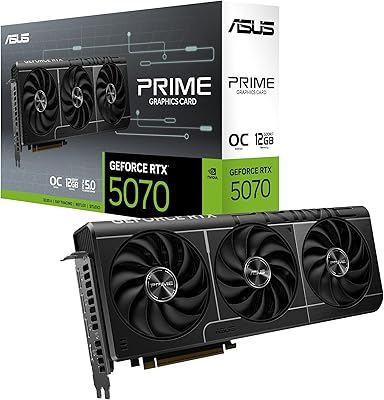
ASUS Prime GeForce RTX 5070 OC 12GB
83%
88%
Thermal Performance
91%
Noise Levels
93%
Build Quality
84%
SFF Compatibility
89%
Gaming Performance
More
GIGABYTE RTX 5070 Gaming OC 12GB GPU
83%
93%
Gaming Performance at 1440p
76%
4K Gaming Capability
91%
Thermal Performance
94%
DLSS 4 and Multi Frame Generation
89%
Build Quality and Construction
More
Asus TUF Gaming NVIDIA GeForce RTX 4090 OC Edition 24GB
90%
98%
Gaming Performance
94%
Cooling Efficiency
96%
4K Gaming Experience
92%
Build Quality
87%
Value for Money
More
ASUS TUF Gaming RTX 5090 32GB GPU
82%
93%
Thermal Performance
97%
Gaming Performance
91%
Build Quality
82%
Cooling Noise Level
96%
VRAM Capacity & Bandwidth
More
MSI RTX 5070 Ventus 3X OC 12GB
82%
88%
Gaming Performance
86%
Thermal Management
83%
Noise Levels
84%
Build Quality
79%
Value for Money
More
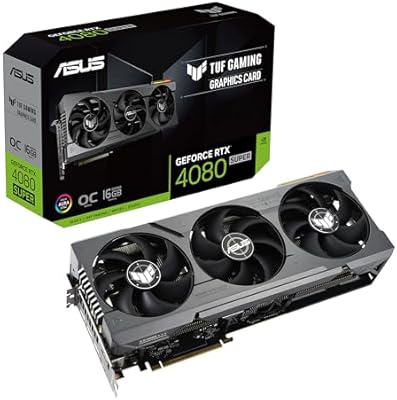
ASUS TUF Gaming NVIDIA GeForce RTX 4080 SUPER OC Edition 16GB
87%
96%
Gaming Performance
94%
Content Creation Performance
91%
Cooling Efficiency
93%
Ray Tracing Quality
88%
Overclocking Potential
More
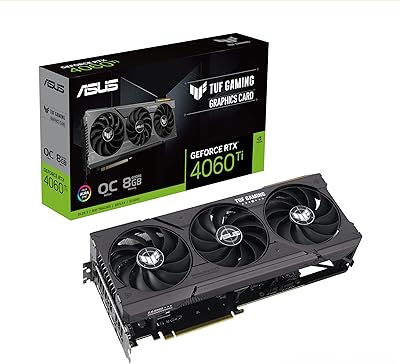
ASUS TUF Gaming RTX 4060 Ti GPU
82%
93%
1080p Gaming Performance
76%
1440p Gaming Performance
91%
Thermal Management
89%
Noise Level
88%
Build Quality
More
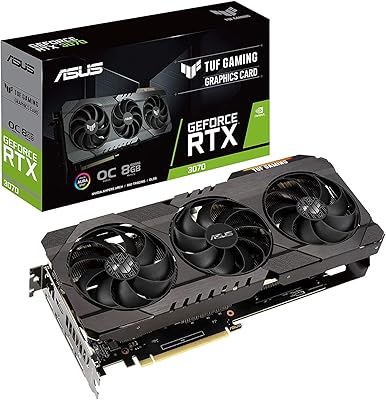
ASUS TUF RTX 3070 OC Graphics Card
78%
88%
Gaming Performance
92%
Thermal Management
94%
Build Quality
63%
Value for Money
57%
VRAM Adequacy
More

FAQ

For most 4K titles at high to ultra settings, 12GB is sufficient, and the fast GDDR7 bandwidth helps push frames efficiently. Where it gets tighter is in titles that load large texture packs alongside heavy ray tracing simultaneously — demanding open-world games at their most extreme presets are where this limit surfaces. If your library leans toward competitive multiplayer, action-RPGs, or esports titles, you are unlikely to hit the ceiling with any regularity. For serious future-proofing at the highest possible 4K settings over a five-plus-year horizon, it is a real but honest trade-off to consider.

No — DLSS 4 and its Multi Frame Generation feature require per-game developer support; it is not a driver-level toggle that applies universally across your library. Newer titles from major studios are increasingly adding integration, and technically demanding games in the action, open-world, and shooter genres tend to benefit most. If a significant portion of your library is older titles or indie games, many will not see any DLSS 4 benefit at all. Check NVIDIA's official supported game list before assuming this feature will transform your entire collection.

It is designed to be SSF-compatible, which is a genuine advantage at this performance tier. At 12.95 inches long and 2.5 slots wide, it clears many compact mid-tower and ITX chassis that a standard three-slot card would not. That said, always cross-reference your specific case's maximum GPU length spec before purchasing — SSF certification addresses slot width, but length clearance is entirely case-dependent.

Both sit within ASUS's RTX 5070 AIB range, but they target different buyers. The ROG Strix is built for enthusiast overclockers and comes with more aggressive factory clock speeds, a larger cooler, and premium aesthetics at a higher price. The TUF version prioritizes component longevity, stable sustained performance, and a more accessible price point — it is the stronger pick if reliability and value matter more to you than chasing maximum boost clock headroom.

PCIe 5.0 is fully backward-compatible, so this card will seat and run correctly in PCIe 4.0 and PCIe 3.0 motherboards without any modification. In a PCIe 3.0 slot there is a small theoretical bandwidth reduction under the most extreme loads, but in practical gaming scenarios this gap is negligible and unlikely to be perceptible.

Under typical gaming workloads at 1440p or 4K, most users describe it as quiet enough that case fans are more noticeable than the GPU itself. The triple-fan setup with solid fin heatsink has enough thermal mass that the fans rarely need to ramp up aggressively during normal gaming sessions. Under sustained full-load stress tests, fan noise does climb, but that is not a real-world scenario for the vast majority of users.

NVIDIA recommends a minimum 650W PSU for an RTX 5070-based system, though 750W or higher gives you more headroom if you have a power-hungry processor or several storage drives. The card uses a 16-pin PCIe 5.0 power connector, so verify your PSU either has a native 16-pin cable or a high-quality adapter before completing your build.

Yes — the GPU Guard bracket is built directly into the card's mounting hardware, not a separate accessory you need to track down separately. It reinforces the PCIe slot attachment and counteracts the downward lean that heavier cards develop over time, particularly in full-tower builds where the leverage on the slot is greater. For most standard mid-tower installations it handles the job well on its own.

The generational jump is meaningful across several dimensions: the Blackwell architecture introduces DLSS 4 support, a more efficient rendering pipeline, faster GDDR7 memory, and PCIe 5.0 connectivity — none of which the RTX 4070 offers. At 1440p the headroom improvement is noticeable, and at 4K it is the difference between a comfortable and a compromised experience in demanding titles. If you are gaming at 1080p and satisfied with current performance, the case for upgrading is weaker, but for anything above that resolution the step up is substantive.

The card carries three DisplayPort 2.1b and two HDMI 2.1b outputs, allowing up to five simultaneous displays. DisplayPort 2.1b supports high refresh rates at 4K and even 8K resolutions thanks to its UHBR (Ultra High Bit Rate) bandwidth, while the HDMI 2.1b ports are fully compatible with modern gaming monitors and 4K televisions. Triple-monitor 1440p gaming rigs, single high-refresh 4K displays, and ultrawide setups are all configurations this Blackwell-generation card handles comfortably.

Where to Buy