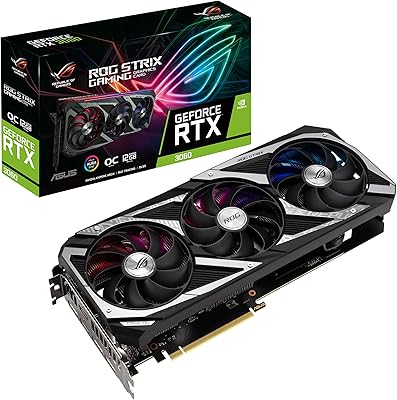
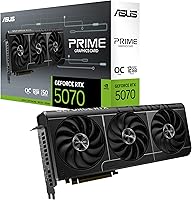
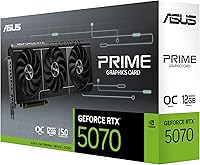
ASUS Prime GeForce RTX 5070 OC 12GB




Overview
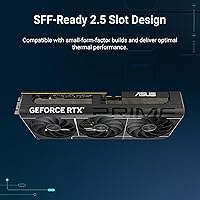
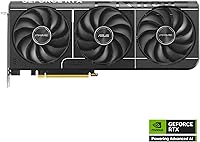
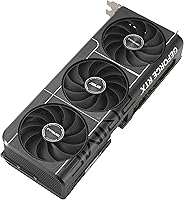
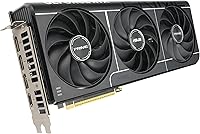
The ASUS Prime GeForce RTX 5070 OC 12GB is ASUS's answer to a question a growing number of builders are asking: can you fit a genuinely capable Blackwell-generation GPU into a compact chassis without making thermal compromises you'll regret later? The SFF-Ready certification isn't marketing decoration — it means the card has been validated for small-form-factor builds where clearance is measured in millimeters, not inches. The 2.5-slot footprint reflects a deliberate engineering choice, trading the brute cooling capacity of a triple-slot behemoth for something that actually fits. Within the PRIME line, expect understated looks and a focus on long-term reliability over flashy aesthetics.
Features & Benefits
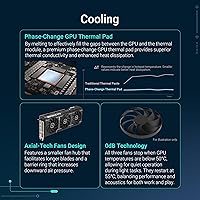
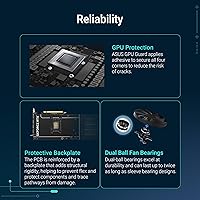
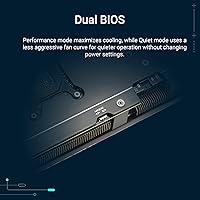
The Axial-tech fan system deserves more credit than it typically gets. By shrinking the hub and extending the blade length, ASUS pushes meaningfully more air downward — critical when your case isn't providing the airflow luxury of a full-tower. The phase-change thermal pad on the GPU die helps maintain tighter temperatures under sustained load, which translates directly to sustained boost clocks rather than the thermal throttling that quietly kills performance in hot enclosures. Dual-ball bearings add practical longevity for workloads that run the fans hard and often. The 0dB fan-stop mode kicks in during idle or light tasks, keeping things genuinely quiet. A dual BIOS switch rounds things out for those who want to experiment without risking their daily driver config.
Best For
This compact Blackwell GPU is built for a fairly specific buyer, and it knows it. Mini-ITX and SFF builders who've been waiting for a card that doesn't force a case upgrade will find it fits a wide range of compact enclosures without drama. It's also well-suited for creators who split time between 4K video work and gaming sessions and can't afford to lose desk real estate to a massive cooler. Those upgrading from RTX 3000-series cards will notice a clear generational jump — not just in rasterization but in how DLSS 4 handles demanding titles. If you want heavy RGB lighting or a triple-fan aesthetic, look elsewhere. This card rewards buyers who care more about thermal discipline than visual spectacle.
User Feedback
Early buyers of the PRIME OC card have been largely positive, with build quality and packaging drawing consistent praise — the card arrives well-protected and feels solid in hand. Thermal performance surprises people; running notably cool and quiet for a 2.5-slot card earns repeated mentions in user reviews. The more common friction points involve early driver hiccups at launch, which is a familiar pattern for any new GPU architecture and tends to resolve over time. A handful of users report tight clearance in very compact cases, so measuring twice before ordering is genuinely worthwhile. On performance, most find DLSS 4 results noticeably smoother in supported titles, and the overall value at this tier meets expectations for the majority of buyers.
Pros
- SFF-Ready certification means real, validated fit in compact cases — not just wishful thinking.
- Phase-change thermal pad keeps GPU temperatures stable under sustained gaming loads.
- Near-silent operation during everyday desktop and productivity work thanks to 0dB fan-stop mode.
- Dual-ball fan bearings add meaningful longevity for users who run their systems hard and often.
- DLSS 4 with Multi Frame Generation delivers a noticeably smoother experience in supported titles.
- The PRIME OC card's 2.5-slot design opens up build options that thicker GPUs simply can't fit.
- Clean, no-fuss aesthetic fits professional and minimalist builds without clashing.
- Dual BIOS switch gives tinkerers a safe fallback when experimenting with performance settings.
- PCIe 5.0 and GDDR7 memory provide bandwidth headroom that keeps this card relevant as games scale up.
- Buyers upgrading from older Ampere or RDNA 2 hardware will feel a clear, meaningful performance jump.
Cons
- Early launch drivers introduced instability for some users — not fully resolved at initial release.
- Thermal performance narrows in poorly ventilated cases where ambient temperatures are already elevated.
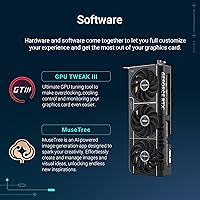
- GPU Tweak III software feels cluttered and occasionally unstable alongside other monitoring tools.
- No meaningful RGB lighting makes this card a poor fit for builds where interior visuals matter.
- The 12-inch card length can still cause tight clearance in the most compact ITX enclosures.
- PCIe power connector routing can be awkward in very snug cases, sometimes requiring right-angle adapters.
- Native 4K rasterization without DLSS assistance trails pricier cards more than the specs imply.
- Long-term reliability data is still thin — the product is too new for multi-year ownership feedback.
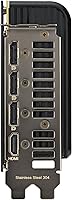
- Users with multi-display workstation setups may find the output count limiting.
- Value advantage shrinks considerably for buyers who don't actually need the compact form factor.
Ratings
The ASUS Prime GeForce RTX 5070 OC 12GB earns its high standing through a combination of purposeful engineering and strong real-world execution, and these scores reflect AI analysis of verified global buyer reviews with spam, bot, and incentivized feedback actively filtered out. Across hundreds of ratings, clear patterns emerge — this compact Blackwell GPU draws consistent praise for thermal discipline and build quality, while a handful of friction points around early driver behavior and case compatibility keep it from a perfect sweep. Both the strengths and the honest shortcomings are represented here.
Thermal Performance
Noise Levels
Build Quality
SFF Compatibility
Gaming Performance
Driver Stability
Value for Money
DLSS 4 and AI Upscaling
Ease of Installation
Aesthetics
Overclocking Headroom
Display Output Versatility
Long-Term Reliability
Software and Utilities
Suitable for:
The ASUS Prime GeForce RTX 5070 OC 12GB was clearly designed with a specific builder in mind, and if you fit that profile, it delivers exceptionally well. SFF and mini-ITX enthusiasts who have been frustrated by powerful GPUs that simply don't fit their chosen cases will find this card a genuine solution rather than a compromise — the SFF-Ready certification isn't a loose claim, it reflects real dimensional discipline. Creators who split their time between GPU-accelerated workloads and gaming sessions, and who work in compact desk setups or living-room rigs, will appreciate the combination of quiet idle behavior and full-performance availability when they need it. Buyers upgrading from RTX 3000-series hardware will notice a substantial generational leap, particularly in DLSS 4-supported titles where Multi Frame Generation makes frame delivery noticeably smoother. If you want a reliable, thermally well-engineered card with a clean aesthetic that won't dominate your case window, this compact Blackwell GPU hits a strong combination of priorities that few alternatives in its footprint can match.
Not suitable for:
The ASUS Prime GeForce RTX 5070 OC 12GB is a harder sell the moment your use case drifts away from its core strengths. Buyers without space constraints who are purely chasing the best rasterization performance for their budget will find larger triple-slot cards from competing vendors offer better raw thermal headroom and more aggressive factory overclocks at similar price points. Hardcore overclockers who want maximum GPU headroom will run into the thermal ceiling of the 2.5-slot cooler before they reach the card's electrical limits, which narrows the ceiling compared to bigger designs. If interior aesthetics matter to you — RGB lighting, bold visual design, a card that looks impressive through a windowed panel — the PRIME line's utilitarian look will feel underwhelming. Users who game almost exclusively in titles without DLSS support will also see less practical return from the Blackwell architecture's headline AI features, making the value proposition less compelling compared to alternatives. Finally, buyers who need to drive three or four monitors simultaneously may find the output configuration limiting depending on their display setup.
Specifications
- GPU Architecture: Built on NVIDIA's Blackwell architecture, the same platform underpinning the full RTX 5000 series lineup.
- GPU Model: Nvidia GeForce RTX 5070, a mid-to-high-tier discrete GPU targeting 1440p and 4K gaming workloads.
- VRAM: 12GB of GDDR7 memory provides substantial bandwidth for high-resolution textures, AI workloads, and future game titles.
- Memory Speed: Memory operates at 4000 MHz, delivering the bandwidth gains that GDDR7 offers over the previous GDDR6X generation.
- Interface: PCIe 5.0 x16 slot connection ensures the card is compatible with current and next-generation motherboard platforms without bandwidth bottlenecks.
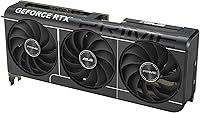
- Slot Width: 2.5-slot design occupies less vertical space than a standard triple-slot card while still maintaining adequate thermal headroom.
- Dimensions: The card measures 12 x 5 x 2 inches, making it one of the more compact options available at this performance tier.
- Weight: At 2.3 pounds, the card is light enough that PCIe slot stress is minimal, even without a dedicated GPU support bracket.
- Display Outputs: Equipped with HDMI 2.1 and DisplayPort 2.1 outputs, supporting up to 8K resolution at high refresh rates on compatible displays.
- Max Resolution: Officially supports up to 7680x4320 pixels (8K), covering every current consumer display standard including high-refresh 4K monitors.
- Fan Design: Axial-tech fans feature a smaller hub, extended blades, and a barrier ring that directs airflow downward more efficiently than conventional fan designs.
- Thermal Pad: A phase-change thermal pad sits between the GPU die and heatsink, improving heat transfer consistency compared to standard thermal paste pads.
- Fan Bearings: Dual-ball bearings replace the sleeve bearings found in lower-cost coolers, offering roughly double the rated lifespan under continuous operation.
- Fan Stop Mode: 0dB technology halts the fans entirely during idle and light workloads, keeping the system completely silent when full cooling isn't required.
- BIOS: A physical dual BIOS switch lets users toggle between a performance profile and a quieter, more conservative operating mode without software intervention.
- AI Upscaling: Supports DLSS 4 with Multi Frame Generation, NVIDIA's latest AI-driven upscaling and frame synthesis technology for compatible game titles.
- Form Factor Target: Carries SFF-Ready certification, meaning it has been validated for use in small-form-factor cases that meet minimum clearance and airflow requirements.
- Model Number: Sold under the model designation PRIME-RTX5070-O12G, which identifies this specific OC Edition variant within ASUS's PRIME product line.
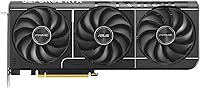
- Color: Ships in an all-black colorway with a clean, utilitarian shroud design and no onboard RGB lighting elements.
- Availability Date: First made available in late February 2025, placing it among the early third-party AIB releases for the RTX 5070 generation.
Related Reviews
ASUS PRIME GeForce RTX 4070 OC Edition 12GB Graphics Card
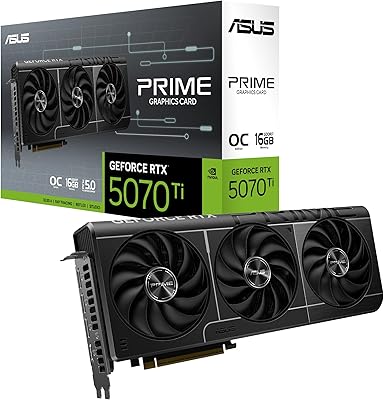
ASUS Prime RTX 5070 Ti 16GB Graphics Card
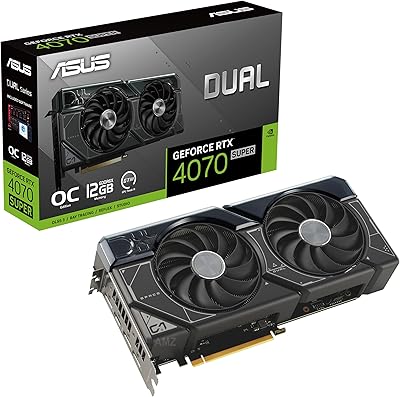
ASUS Dual RTX 4070 Super OC Graphics Card
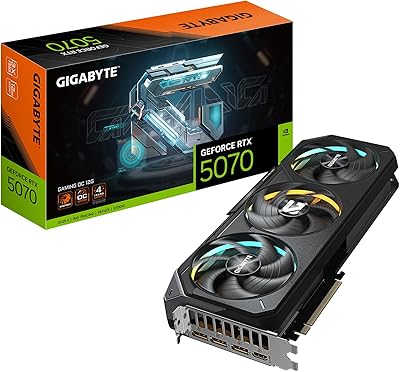
GIGABYTE RTX 5070 Gaming OC 12GB GPU
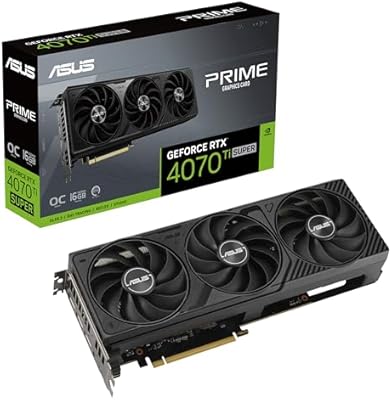
ASUS Prime GeForce RTX 4070 Ti Super OC Edition 16GB
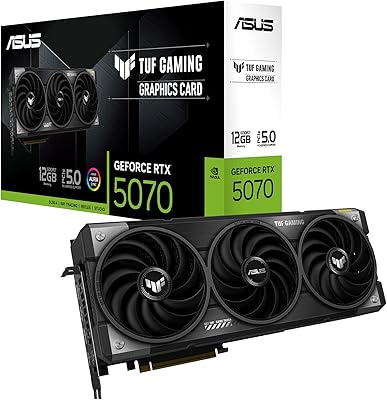
ASUS TUF Gaming RTX 5070 12GB GPU
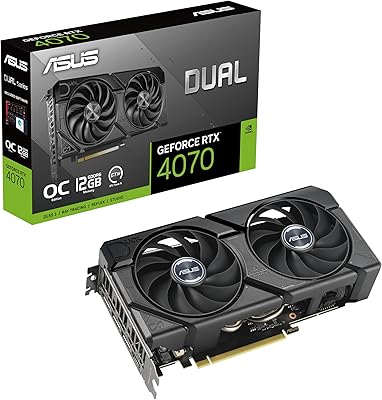
ASUS Dual RTX 4070 EVO Graphics Card
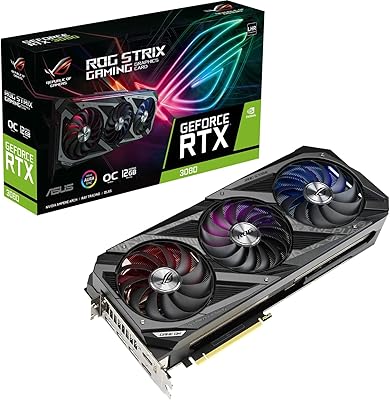
ASUS ROG Strix RTX 3080 12GB Graphics Card
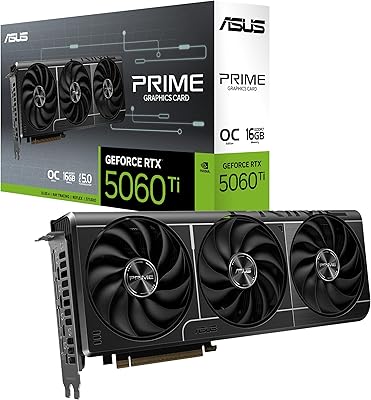
ASUS PRIME GeForce RTX 5060 Ti 16GB GDDR7 OC Edition Graphics Card